Tag: AI leadership

  • Why the Chief Robotics Officer Could Be the Next Big C-Suite Role

    Why the Chief Robotics Officer Could Be the Next Big C-Suite Role

    Robots are no longer confined to factory floors and warehouses. With advances in physical AI, they are moving into logistics, healthcare, manufacturing, agriculture, retail, and field services. That expansion raises a strategic question for business leaders: who should own the company’s robotics agenda?

    Most organizations still distribute robotics responsibilities across engineering, operations, technology, and innovation teams. A dedicated chief robotics officer (CRO) could eventually consolidate those duties into one C-suite role. While the title is not yet common, growing enterprise deployments could make it increasingly necessary.

    Robotics Is Becoming a Company-Wide Strategy

    For decades, robotics sat squarely in manufacturing. Industrial machines performed repetitive tasks in controlled environments. Physical AI changes that model. Modern robots can perceive their surroundings, learn new tasks, and adapt to unpredictable conditions.

    Capgemini found that 79% of surveyed organizations were already engaging with physical AI, and 27% had begun deploying or scaling solutions. The impact is no longer limited to manufacturing. Logistics, healthcare, agriculture, retail, and field services are all exploring robotics. As a result, robotics decisions now touch budgets, technology, safety, and workforce planning across multiple departments.

    Why Existing Executive Roles May Not Be Enough

    CTOs, CIOs, COOs, and innovation leaders each oversee pieces of the robotics puzzle. But a single deployment can require software, hardware, connectivity, maintenance, safety protocols, and workforce changes at the same time. That cross-functional complexity often leaves no one with end-to-end ownership.

    Intel’s research from August 2026 underscores the gap: 74% of surveyed leaders expect workforce planning and robotics strategy to become inseparable by 2030, while only 40% currently report having a formal human-robot workforce strategy.

    What a Chief Robotics Officer Would Actually Do

    • Set a company-wide robotics roadmap and identify the best automation opportunities
    • Evaluate vendors, robotics platforms, AI models, and infrastructure needs
    • Define measurable targets for productivity, quality, safety, service levels, and operating costs
    • Lead workforce planning and training for employees who supervise or collaborate with robots
    • Address cybersecurity, compliance, and risk management for connected robot fleets

    In practice, a CRO would act as a bridge between technology teams and operations, ensuring robotics investments deliver business value rather than existing in silos.

    Physical AI Expands the Leadership Challenge

    Physical AI is more adaptive than traditional automation. Capgemini describes the shift as a move toward context-aware robotics, with 67% of executives viewing physical AI as potentially game-changing. But flexibility brings risk. Robots operating near people require stronger safety controls, and data quality, integration, cybersecurity, and reliability remain major barriers.

    Deloitte similarly identifies these issues as constraints on broader robotics growth. A future robotics executive would therefore need business judgment and risk management skills, not just engineering expertise.

    Could Humanoid Robots Accelerate the Trend?

    Humanoid robots have captured attention in 2026. Xpeng’s CEO He Xiaopeng says he will personally lead the company’s robotics division, with mass production of the IRON humanoid targeted for late 2026. Agility Robotics has unveiled Digit 5 for commercial use and reports more than USD 300 million in multiyear orders.

    These announcements do not guarantee rapid adoption. Commercial economics, safety, reliability, and deployment timelines remain open questions. Still, more capable robots would likely increase the need for central leadership of robotics strategy.

    Will the Chief Robotics Officer Become Common?

    The title is likely to emerge gradually. Some companies may hire robotics heads or vice presidents first; others may keep robotics oversight with a CTO or COO for years. A dedicated CRO becomes more plausible when robot fleets are large, business-critical, and spread across multiple functions.

    The broader trend is already clear: organizations are moving from isolated automation projects toward integrated human-robot operations. Whether the title becomes a standard C-suite role remains uncertain, but the underlying responsibility is becoming harder to ignore.


  • How CEOs Can Build Truly AI-First Organizations: A Strategic Guide

    How CEOs Can Build Truly AI-First Organizations: A Strategic Guide

    Building an AI-first company requires more than adopting AI tools; it demands a fundamental shift in leadership, operations, governance, and business strategy. This guide explores the essential CEO strategies for creating an organization where artificial intelligence becomes a core driver of business value rather than just another technology initiative.

    Define AI-First Clearly Before You Declare It

    The most common mistake CEOs make when setting an AI-first direction is leaving the definition ambiguous. “We are becoming an AI-first company” means nothing without a clear internal answer to what, specifically, that means for your business model, your workforce, and your customer experience. Is AI-first about using AI to improve existing products? About building AI-native products your competitors don’t have? About using AI to restructure internal operations for a leaner cost base? The answer is probably all three, but each implies different investment priorities, different capability requirements, and different timelines. CEOs who define AI-first precisely and communicate that definition consistently build organizations that can execute against it. Those who keep it aspirational tend to produce a lot of pilots and not much else.

    Appoint an AI Leader with Real Authority

    The structure of AI leadership inside a company is one of the strongest predictors of whether AI investment produces material business results. A Chief AI Officer who sits three reporting levels below the CEO, manages a team of six, and has no budget authority over business unit AI spending will not build an AI-first company. They will run a team of AI enthusiasts that nobody listens to. CEOs building genuinely AI-first organizations are creating AI leadership roles that report directly to the CEO or at worst to the COO, with explicit authority to set AI standards across business units, approve or reject major AI deployments, and hold teams accountable for AI capability development. The Gartner 2026 CIO report found that 90% of organizations with a Chief AI Officer in place reported faster AI adoption than those without one.

    Rebuild Core Processes Around AI, Not Alongside It

    The difference between AI transformation and AI theatre is whether AI is being used to redesign the processes that generate revenue and serve customers, or simply overlaid on existing processes to make them marginally faster. Redesigning a sales process around AI-driven prospecting, predictive scoring, and automated pipeline management is transformation. Adding an AI chatbot to a customer service center that still routes most queries to human agents unchanged is theatre. CEOs building AI-first companies spend considerable time with their heads of product, operations, and commercial functions mapping exactly which core processes are being fundamentally redesigned and holding the organization accountable for completing those redesigns rather than accepting cosmetic improvements as success.

    Build AI Literacy into the Leadership Team

    An AI-first company cannot be led by executives who don’t understand AI well enough to make informed decisions about it. This doesn’t mean the CFO needs to understand transformer architecture. It means the CFO needs to be able to evaluate an AI investment proposal critically, understand what an AI system’s failure modes look like, and ask the right questions about data quality, model governance, and competitive differentiation. CEOs who build structured AI literacy programs for their leadership team—workshops, external speakers, required reading, and hands-on exposure to the tools the company is deploying—consistently report faster and less contested AI decision-making at the executive level.

    Make AI Governance Non-Negotiable From Day One

    The fastest way to slow an AI-first strategy is a high-profile AI failure: a biased model, an incorrect output that reached a customer, a regulatory breach, or a data privacy incident. CEOs who treat governance as something to implement after the AI is already in production are taking risks that consistently materialize into reputational and financial costs. The governance framework that belongs in an AI-first company from the beginning includes clear ownership of every AI system, documented escalation paths when a system behaves unexpectedly, mandatory human oversight for high-stakes outputs, regular auditing for bias and accuracy, and board-level visibility of the AI risk register. Governance is not a drag on AI adoption speed. In the long run, it is one of the things that makes sustained adoption possible.

    Why This Matters

    Becoming AI-first is ultimately a leadership challenge, not a technology project. Organizations that embed AI into strategy, operations, and decision-making from the top down will be better equipped to innovate, adapt to market changes, and build sustainable competitive advantages as AI becomes central to every industry.

    Frequently Asked Questions

    What does it mean to be an AI-first company?

    An AI-first company integrates artificial intelligence into its core business strategy, decision-making, operations, customer experience, and product development rather than treating AI as a standalone technology initiative.

    How is an AI-first company different from having an AI strategy?

    An AI strategy often consists of individual AI projects or pilots, whereas an AI-first company fundamentally redesigns its business model, workflows, and leadership approach around AI-driven value creation.

    Why should CEOs lead AI transformation?

    AI transformation affects business strategy, organizational structure, governance, culture, and investment decisions. Because these changes span the entire enterprise, CEOs play a critical role in setting direction and ensuring alignment across business functions.

    How can executives improve AI literacy?

    Leadership teams can strengthen AI literacy through executive workshops, hands-on experimentation with AI tools, expert-led training sessions, industry conferences, and continuous learning about AI capabilities, risks, and business applications.

    What are the biggest challenges in building an AI-first company?

    Common challenges include unclear strategy, poor data quality, employee resistance, skills shortages, governance gaps, legacy technology, regulatory compliance, and difficulty scaling successful AI pilots across the organization.

  • Key Executive AI Skills That Future Business Leaders Must Master

    Key Executive AI Skills That Future Business Leaders Must Master

    Why Executive AI Skills Are Now Essential

    Artificial intelligence is no longer confined to IT departments—it has become a boardroom priority. As businesses integrate AI into strategy, operations, customer experience, and growth, the skill set required from executives is rapidly evolving. Tomorrow’s leaders will be measured not only by financial acumen but also by their ability to leverage AI for innovation and manage technological change effectively.

    Strategic Thinking with AI

    The most effective executives view AI as a strategic growth tool, not just a software product. This involves identifying high-value use cases, aligning AI initiatives with organizational goals, prioritizing investments for maximum ROI, and ensuring that technology delivers a sustainable competitive advantage rather than becoming a costly experiment.

    AI Literacy

    Executives don’t need to code neural networks, but they must understand key AI concepts such as generative AI, predictive analytics, automation, and model limitations. This awareness enables them to ask better questions and make more informed decisions, even without deep technical expertise.

    Making Decisions with AI

    Many companies now use AI to analyze data for strategic decisions. Combining analytical insights with industry experience helps executives spot opportunities, anticipate customer needs, optimize pricing, and improve operational efficiency.

    Ethical AI Governance

    While AI offers tremendous opportunities, it also raises issues around privacy, security, bias, intellectual property, and regulation. Future leaders must develop governance frameworks that ensure ethical application of AI, building trust and minimizing risk.

    Humans and AI Working Together

    AI will not replace humans; the future workplace depends on collaboration. Leaders should redesign workflows so that AI handles routine tasks while humans focus on innovation, creativity, and relationship-building.

    Change Management with AI

    Most technology failures stem not from the technology itself but from resistance to change. Executives must clearly communicate the purpose of AI, address employee concerns, implement reskilling programs, and foster an experimental culture.

    AI Communication Skills

    An executive’s ability to articulate the benefits of AI—both inside and outside the organization—is as critical as their strategic knowledge. Clear communication builds buy-in and drives adoption.

    Continuous AI Learning

    AI evolves faster than most business technologies. Future-proof executives must stay updated on the latest advancements and adapt their strategies to leverage emerging opportunities.

    Business Benefits at a Glance

    • Informed decision-making
    • Improved business efficiency
    • Effective risk management
    • Enhanced innovation
    • Sustainable competitive advantage

    Bottom Line

    Being knowledgeable about AI alone is no longer sufficient for leadership. AI is becoming an integral part of executive capability. Those who combine business vision with AI expertise and a commitment to continuous learning will be best prepared for the future.

    FAQs

    1. Why should executives learn AI skills?
      Executives with AI skills make informed decisions, improve business efficiency, manage risks effectively, and drive innovation across their organizations successfully.
    2. Do business leaders need technical AI expertise?
      No. Executives need AI literacy, strategic understanding, and decision-making capabilities rather than deep programming or machine learning expertise.
    3. What is the most important executive AI skill?
      AI strategic thinking is crucial because it aligns technology investments with business objectives, ensuring measurable value and sustainable competitive advantage.
    4. How does AI improve executive decision-making?
      AI analyzes vast datasets, identifies trends, predicts outcomes, and provides actionable insights, enabling executives to make faster, smarter business decisions.
    5. Why is responsible AI governance important for businesses?
      Responsible AI governance minimizes bias, protects data privacy, ensures regulatory compliance, builds customer trust, and safeguards organizational reputation and growth.
  • Schneider Electric’s CAIO on Scaling AI with Business-First Strategy and Critical Thinking

    Schneider Electric’s CAIO on Scaling AI with Business-First Strategy and Critical Thinking

    Philippe Rambach, Chief AI Officer at Schneider Electric, discusses how the company integrates artificial intelligence across its global operations while maintaining a pragmatic, business-first approach. In an interview with AI Magazine, Rambach outlines the principles guiding AI adoption in over 160 factories and 140 countries.

    Rather than chasing the latest technology trends, Schneider Electric evaluates AI use cases based on business value and technical feasibility. Every project passes through gate reviews that assess these factors, preventing what Rambach calls “pilot purgatory.” The company prioritizes solutions that can scale from the start, avoiding lab experiments that fail in production.

    The rise of agentic AI is another key topic. Schneider recently launched Sera, an AI agent that allows users to interact with environmental data using natural language. Rambach emphasizes that generative AI agents complement, not replace, classical AI methods like forecasting and anomaly detection. He warns against the common mistake of treating generative AI as a one-size-fits-all replacement.

    To prepare employees for AI adoption, Schneider has implemented a training program called “AI for All.” The curriculum emphasizes critical thinking, helping staff evaluate AI outputs rather than trusting them blindly. The company also hosts “promptathons” and maintains a prompt library to share best practices across teams.

    On the technical side, Rambach explains the decision between edge and cloud AI deployment. Factors include data sovereignty, cybersecurity, and latency—especially in high-speed manufacturing processes where millisecond delays matter. Schneider builds solutions that work in both environments.

    The interview also touches on the energy demands of large AI models. As a supplier to data centers, Schneider Electric uses AI to optimize power management in collaboration with partners like NVIDIA. Rambach views AI as both a contributor to and a solution for the energy density problem.

    Regulatory compliance under the EU AI Act is managed through a responsible AI team, and Schneider has published a public Trust Charter that excludes uses like facial recognition. Rambach notes that regulation has not slowed down innovation.

    Looking ahead, Rambach sees the CAIO role evolving from overseeing all AI initiatives to setting technical policy and supporting large-scale use cases. He warns against becoming a bottleneck and stresses the importance of leveraging existing transformation teams rather than creating new ones.

    The key takeaway: AI in heavy industry must serve real business needs, and human critical thinking remains indispensable. As Rambach puts it, “We should not forget everything we have learned in the last 2,000 years, just because there’s a new technique.”

  • India’s Tech Titans and AI Frontier: Analytics Insight’s June 2026 Issue Highlights

    India’s Tech Titans and AI Frontier: Analytics Insight’s June 2026 Issue Highlights

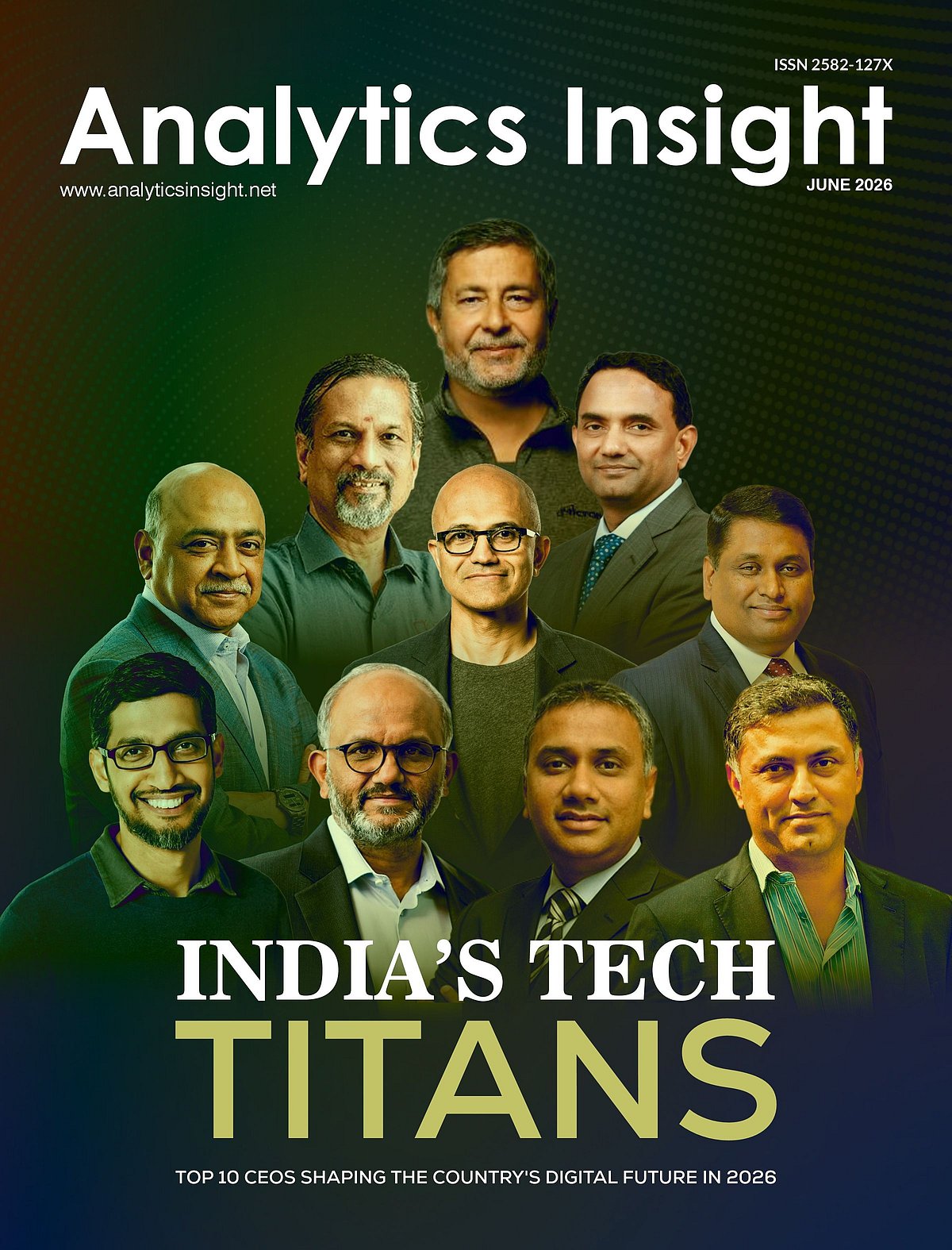
    Analytics Insight’s June 2026 issue delivers a comprehensive look at India’s rapidly evolving technology landscape, profiling the nation’s top 10 tech CEOs who are shaping the digital future—from Sundar Pichai to Bhavish Aggarwal. The edition dives deep into semiconductors, space startups, fintech, and AI leadership readiness.

    Key Articles in This Issue

    • Capability Over Scale: Piper Serica’s Ajay Modi argues that India’s most important startups are hidden inside supply chains.
    • Aravind Srinivas and the Rise of Perplexity: From IIT classrooms to the center of the AI search race.
    • Leading Without the Noise: The Salil Parekh way.
    • Semiconductor Dreams: Can India build a chip industry from scratch?
    • Roshni Nadar Malhotra’s Journey: From media to HCLTech leadership.
    • How Small-town India Became the World’s Most Exciting Fintech Market.
    • Building Intelligence for a Billion Voices: Vivek Raghavan’s next national infrastructure bet.
    • Bhavish Aggarwal’s Journey: From Ola Cabs to Ola Electric and Krutrim AI.
    • India’s Private Space Startups: Who will be the country’s SpaceX?

    This issue underscores India’s ambition to lead in AI, semiconductors, and space technology, with detailed analysis and exclusive interviews. Whether you’re tracking the fintech revolution or the rise of indigenous AI models, the June 2026 edition is a must-read.

  • June 2026 Issue: India’s Top Tech CEOs and the Rise of Semiconductor, Fintech & Space Startups

    June 2026 – Analytics Insight

    Analytics Insight’s June 2026 issue delivers a comprehensive look at India’s digital transformation, featuring in-depth interviews, industry analyses, and exclusive stories. The spotlight is on the country’s top ten tech CEOs—from Sundar Pichai to Bhavish Aggarwal—who are redefining the global tech landscape. Alongside these leadership profiles, the issue dives into groundbreaking developments in semiconductors, space startups, fintech, and AI readiness.

    Top Articles in This Issue

    • Capability Over Scale: Ajay Modi of Piper Serica explains why India’s most vital startups are hidden inside supply chains, from rocket igniters to edge AI chips.
    • From Rocket Igniters to Edge AI Chips: An exclusive look at Piper Serica’s bet on India’s industrial future.
    • Aravind Srinivas and the Rise of Perplexity: How an IIT alumnus built a leading AI search engine.
    • Leading Without the Noise: The Salil Parekh Way: A leadership lesson in quiet impact.
    • Semiconductor Dreams: Can India build a chip industry from scratch?
    • Roshni Nadar Malhotra’s Journey: From media to HCLTech leadership.
    • How Small-town India Became the World’s Most Exciting Fintech Market: A deep dive into the fintech revolution.
    • Building Intelligence for a Billion Voices: Vivek Raghavan’s next national infrastructure bet.
    • Bhavish Aggarwal’s Journey: From Ola Cabs to Ola Electric and Krutrim AI.
    • India’s Private Space Startups: Who will be the country’s SpaceX?

    This issue is a must-read for anyone tracking India’s ascent in technology, innovation, and entrepreneurship.