Tag: AI literacy

  • The Modern Computer Science Skill Set: What Students Need for a Tech Career

    The Modern Computer Science Skill Set: What Students Need for a Tech Career

    A computer science degree can open many technology career paths, but employers are looking for more than transcripts and basic coding exercises. Today’s tech roles demand strong fundamentals in programming and algorithms, plus practical experience with AI, cloud systems, databases, cybersecurity, and real-world software development. The World Economic Forum ranks AI and big data among the fastest-rising skill areas, followed closely by networks, cybersecurity, and technology literacy.

    Build Strong Programming and Problem-Solving Skills

    A successful developer needs more than syntax knowledge. Languages like Python, TypeScript, Java, C++, Go, and Rust serve different technology areas. Python plays a major role in AI, data science, automation, and back-end development. GitHub reports that TypeScript became its most-used language in August 2025, ahead of Python and JavaScript, while Python remains essential for AI and data science. Developing in-depth skill in one primary language and basic comfort with a second creates a solid foundation.

    Data structures and algorithms still matter. Arrays, trees, graphs, stacks, queues, recursion, dynamic programming, and Big-O analysis are valuable for technical interviews and system design. These skills also support code review, bug fixes, and architecture decisions. Algorithm knowledge should connect to real software work rather than stop at interview puzzles.

    Develop AI Literacy With Human Judgment

    AI now forms a major part of software development. The 2025 Stack Overflow Developer Survey found that 84% of respondents use or plan to use AI tools in development. However, 46% distrust AI output, while only 33% trust it. These numbers show why AI skills must be paired with human judgment.

    Useful AI knowledge includes large language models, AI APIs, embeddings, vector databases, retrieval-augmented generation, tool calling, AI agents, model evaluation, and foundational machine learning concepts. GitHub reports more than 1.1 million public repositories with an LLM software development kit, with more than 693,000 such projects created in the past 12 months. AI skills go beyond prompt writing. Code review, testing, security checks, and clear model limitations remain essential. AI can accelerate tasks, but technical knowledge determines whether the final result actually works.

    Master Software Engineering, Data, Cloud, and Security

    Real technology work requires professional software development skills. Git, GitHub, testing, debugging, APIs, code review, documentation, and continuous integration should all be part of a computer science education.

    Database knowledge also matters. SQL, PostgreSQL or MySQL, indexes, joins, transactions, query design, and data modeling provide a strong base. MongoDB and Redis add useful NoSQL options for specific system requirements.

    Cloud skills add another important layer. AWS, Microsoft Azure, and Google Cloud offer services for compute, storage, databases, networking, identity, serverless systems, and monitoring. Linux, Docker, CI/CD, basic Kubernetes, cloud deployment, and infrastructure tools help turn a local project into a reliable service.

    Cybersecurity needs daily attention. Authentication, authorization, HTTPS, encryption, secure passwords, API security, secrets management, dependency checks, and awareness of common web risks should be part of normal software work. The World Economic Forum places networks and cybersecurity among the fastest-rising skill areas for good reason.

    Understand Systems and Choose a Specialty

    Computer science fundamentals still form the technical foundation. Operating system concepts, computer networks, databases, computer architecture, concurrency, memory management, distributed systems, and system design explain what happens inside a real application. System design can begin with clients, servers, caches, queues, replicas, and databases, then expand to scaling, fault tolerance, and service architecture.

    A strong career path does not require mastery of every technology. Core computer science knowledge should be paired with one clear area of depth:

    • AI and machine learning: Python, statistics, neural networks, LLM systems, and model operations.
    • Software engineering: Data structures and algorithms, back-end or front-end development, databases, cloud, and system design.
    • Cloud and DevOps: Linux, networking, Docker, Kubernetes, CI/CD, and cloud platforms.
    • Cybersecurity: Network security, application security, cryptography, and incident response.

    Current data points to one clear career lesson: technical depth matters, but flexibility matters too. Stack Overflow reports that 69% of developers spent time in the past year learning a new coding technique or software language, while more than 36% studied AI-enabled tools for work or career growth. The World Economic Forum also identifies analytical thinking, creative thinking, resilience, flexibility, curiosity, and continuous learning as high-value skills.

    Why This Matters

    A computer science degree alone may not fully prepare students for modern technology roles. Employers need professionals with strong programming, problem-solving, AI, cloud, data, security, and software engineering skills. Learning these areas early helps students build meaningful projects, understand workplace expectations, adapt to new tools, and create a stronger foundation for long-term career growth.

    Frequently Asked Questions

    1. Which programming languages should computer science students learn?

    Python, TypeScript, Java, C++, Go, and Rust are all useful options across different technology fields.

    2. Does DSA still matter for tech careers?

    Yes. Data structures and algorithms support problem-solving, technical interviews, software design, code quality, and system architecture.

    3. Should every computer science student learn AI?

    Basic AI literacy has become valuable across many technology roles, even for students who do not plan to enter AI research.

    4. Why should students learn cloud computing?

    Cloud knowledge helps students understand how modern applications use computing, storage, databases, networking, and deployment platforms.

    5. Which skill should a student specialize in?

    Students should build core computer science knowledge first, then develop deeper expertise in an area such as AI, software engineering, cybersecurity, cloud, or data engineering.


  • Adobe Reaches 7.8 Million Students and Teachers Across India with Expanded AI and Digital Skills Programs

    Adobe Reaches 7.8 Million Students and Teachers Across India with Expanded AI and Digital Skills Programs

    Adobe is scaling up its AI and digital skills initiatives across India, aiming to reach 7.8 million students and teachers by 2026. The company is collaborating with seven state governments, UNICEF, and several learning platforms to equip learners with the skills needed for an AI-driven economy.

    The school program covers Delhi, Uttar Pradesh, Uttarakhand, Goa, Assam, Bihar, and Tamil Nadu. Adobe will provide Adobe Express for Education along with Digital Academy resources that focus on creative problem-solving and AI-assisted content creation. Teacher training is also a key component, helping educators integrate digital creativity and AI activities into everyday classroom learning.

    Adobe stated that the initiative aligns with India’s National Education Policy and the growing demand for future-ready digital skills. “Through this partnership, we’re bringing classroom-ready AI tools like Adobe Express directly into schools,” said Mala Sharma, Adobe’s Global Vice President and General Manager for Education.

    The program will extend across PM SHRI, CM SHRI, KGBV, and Kendriya Vidyalaya school networks in participating states. Adobe’s partnership with UNICEF adds another pathway for young learners seeking practical creative and AI-enabled skills.

    Nearly 400,000 young people in India have already accessed these programs through UNICEF’s Generation Unlimited partnership. More than 375,000 learners have completed Adobe’s Design Fundamentals with AI course, according to Adobe.

    Adobe also became the inaugural partner of Generation Unlimited’s Creative Academy, initially focusing on India and Brazil. The Creative Academy aims to connect digital skills training with employment, entrepreneurship, and livelihood opportunities for young people.

    Adobe Digital Academy courses are now available on Coursera, LinkedIn Learning, YouTube, and IBM SkillsBuild. IBM SkillsBuild offers self-paced courses and six-week Guided Learning Experiences with facilitator support and practical activities.

    The curriculum is expanding into digital marketing, content creation, and AI-powered creative workflows. Adobe’s wider India push includes free access to Photoshop, Acrobat, and Firefly through accredited higher education institutions.

    The company also works with NASSCOM FutureSkills Prime to provide free AI-focused courses and industry-relevant certifications. Adobe expects to reach three million learners globally during 2026 and targets 30 million learners by 2030.

    India’s program places practical creativity alongside AI literacy, creating a broader route into digital and creative careers.

  • EdTech Trends for 2027: AI Tutors, Digital Literacy, and Skills-Focused Learning

    EdTech Trends for 2027: AI Tutors, Digital Literacy, and Skills-Focused Learning

    Introduction

    As 2027 approaches, education technology is evolving beyond simply adding AI tools to classrooms. The focus is shifting toward personalized learning, AI literacy, teacher empowerment, skills development, and responsible use of technology. According to the OECD Digital Education Outlook 2026, generative AI can enhance learning when guided by clear pedagogical principles, but without such guidance, it risks improving task performance without genuine learning gains.

    Personalized AI Tutors

    AI-powered tutoring systems are becoming more common. Unlike traditional scripted programs, these intelligent tutors can engage in dialogue, ask questions, offer hints, and adapt their approach in real time. The OECD notes that when used with a clear teaching goal, generative AI acts as a tutor, learning partner, or assistant. Authoring tools also help teachers create customized lessons, questions, and simulations while maintaining oversight.

    Adaptive Learning and Student Fit

    Adaptive learning systems adjust content and support based on individual student performance. The goal is to help teachers identify learning gaps and provide tailored assistance, moving away from one-size-fits-all instruction.

    AI Literacy as a Core Skill

    As AI becomes ubiquitous in daily life and work, schools are treating AI literacy as essential. The OECD defines it as the ability to understand AI tools, critically evaluate their outputs, and use them responsibly. UNESCO’s guide outlines 12 student competencies across four themes: human-centered perspective, AI ethics, practical AI methods, and system building. Students progress through three stages: Understand, Apply, Create.

    Teacher Training and Support

    Teachers also need AI skills. UNESCO’s AI Competence Framework for Teachers includes 15 competences across categories like human-centered mindset, ethics, foundations, pedagogy, and professional development. Teachers progress through Acquire, Deepen, and Create stages. The OECD emphasizes that AI should support teachers without removing their agency.

    Skills-Based and Career-Focused Learning

    Education technology is increasingly tied to workforce demands. The World Economic Forum’s Future of Jobs Report 2025 projects a net gain of 78 million jobs by 2030, with 40% of skills in many roles changing. Employers cite skills gaps as a major barrier, and demand for AI, big data, cybersecurity, as well as soft skills like creative thinking and resilience, is growing.

    Privacy, Safety, and Responsible AI

    With greater AI adoption come concerns about privacy, bias, academic integrity, and transparency. The OECD reports that 72% of lower secondary teachers worry AI could harm academic honesty, while 57% say it improves lesson plans. UNESCO advocates for safe, ethical AI use.

    Immersive Learning and New Experiences

    Immersive technologies and simulations are expected to complement classroom learning, not replace it. However, as AI tutors become more autonomous, questions about how AI-generated information is created and verified will become critical.

    The Road Ahead

    In 2027, success in EdTech will depend not just on AI capabilities but on how schools choose to implement them. Clear teaching aims, proper training for staff, and student understanding of AI tools are essential. Schools must also address privacy, safety, and fairness. The next phase of EdTech will prioritize better learning outcomes with teachers maintaining control.

    Frequently Asked Questions

    What are the top EdTech trends for 2027?

    AI tutors, adaptive learning, AI literacy, skills-based education, immersive learning, and responsible AI use are expected to shape EdTech in 2027.

    How will AI tutors change education?

    AI tutors personalize learning, question students, provide guidance, and adapt teaching strategies through dialogue-based interactions and feedback.

    Why will AI literacy become important?

    AI literacy helps students and teachers understand AI systems, evaluate outputs critically, use technology responsibly, and develop essential future skills.

    Will AI replace teachers in 2027?

    AI is expected to support teachers by creating lessons, questions, and simulations while preserving human judgment, oversight, and teaching agency.

    Why are privacy and academic integrity important?

    Greater AI adoption raises concerns about student privacy, safety, bias, and academic integrity, requiring stronger safeguards and responsible technology policies.

  • From Music to AI Literacy: How Steven Jiang Transformed Overture into a School-Focused Education Company

    From Music to AI Literacy: How Steven Jiang Transformed Overture into a School-Focused Education Company

    Steven Jiang, co-founder and COO of Overture, started his entrepreneurial journey not in artificial intelligence but in music. He and his co-founder Aspen Buckingham met while studying music at Northwestern University. Their first venture, launched in 2022, was a video game designed to help children compose music. That early work, though seemingly unrelated to AI, laid the foundation for what Overture has become today: a company that partners with schools to teach AI literacy through hands-on, creative projects.

    The pivot from music education to AI enrichment wasn’t driven by trends. It came from direct feedback from school administrators who were struggling to introduce AI to young students responsibly. Jiang recalls one administrator who expressed fear not about AI’s importance but about the lack of a safe framework for teaching it. That practical concern—how to teach AI without handing children tools they weren’t ready to use—became the new mission for Overture.

    Jiang says the company didn’t pivot because AI was a trend; it pivoted because schools had a real problem and no clear solution. Overture now runs programs in more than 50 schools across Chicago and Boston, with plans to expand to over 120 programs in multiple states. The company’s approach is rooted in active learning, a philosophy Jiang traces back to his music background. “We teach kids to create with it, to make cool things,” he explains. “That’s rooted in how we think as artists: using your imagination and critical thinking to build something awesome.”

    Overture’s programs include a paper-and-pencil AI model for young children, emphasizing that the company builds around school problems rather than a single product. The company also creates part-time teaching jobs for local educators, artists, and musicians. Jiang has been recognized with Forbes 30 Under 30 and Inno 25 Under 25 honors, and he speaks at universities about AI education. His long-term goal is to bring high-quality AI education to every state through mission-aligned partners.

    For Jiang, the evolution of Overture is not a break from its origin but a widening of it. The company began by asking how children could make music in a new way. Now it answers the question that changed everything: how can schools help children meet AI responsibly?

  • How CEOs Can Build Truly AI-First Organizations: A Strategic Guide

    How CEOs Can Build Truly AI-First Organizations: A Strategic Guide

    Building an AI-first company requires more than adopting AI tools; it demands a fundamental shift in leadership, operations, governance, and business strategy. This guide explores the essential CEO strategies for creating an organization where artificial intelligence becomes a core driver of business value rather than just another technology initiative.

    Define AI-First Clearly Before You Declare It

    The most common mistake CEOs make when setting an AI-first direction is leaving the definition ambiguous. “We are becoming an AI-first company” means nothing without a clear internal answer to what, specifically, that means for your business model, your workforce, and your customer experience. Is AI-first about using AI to improve existing products? About building AI-native products your competitors don’t have? About using AI to restructure internal operations for a leaner cost base? The answer is probably all three, but each implies different investment priorities, different capability requirements, and different timelines. CEOs who define AI-first precisely and communicate that definition consistently build organizations that can execute against it. Those who keep it aspirational tend to produce a lot of pilots and not much else.

    Appoint an AI Leader with Real Authority

    The structure of AI leadership inside a company is one of the strongest predictors of whether AI investment produces material business results. A Chief AI Officer who sits three reporting levels below the CEO, manages a team of six, and has no budget authority over business unit AI spending will not build an AI-first company. They will run a team of AI enthusiasts that nobody listens to. CEOs building genuinely AI-first organizations are creating AI leadership roles that report directly to the CEO or at worst to the COO, with explicit authority to set AI standards across business units, approve or reject major AI deployments, and hold teams accountable for AI capability development. The Gartner 2026 CIO report found that 90% of organizations with a Chief AI Officer in place reported faster AI adoption than those without one.

    Rebuild Core Processes Around AI, Not Alongside It

    The difference between AI transformation and AI theatre is whether AI is being used to redesign the processes that generate revenue and serve customers, or simply overlaid on existing processes to make them marginally faster. Redesigning a sales process around AI-driven prospecting, predictive scoring, and automated pipeline management is transformation. Adding an AI chatbot to a customer service center that still routes most queries to human agents unchanged is theatre. CEOs building AI-first companies spend considerable time with their heads of product, operations, and commercial functions mapping exactly which core processes are being fundamentally redesigned and holding the organization accountable for completing those redesigns rather than accepting cosmetic improvements as success.

    Build AI Literacy into the Leadership Team

    An AI-first company cannot be led by executives who don’t understand AI well enough to make informed decisions about it. This doesn’t mean the CFO needs to understand transformer architecture. It means the CFO needs to be able to evaluate an AI investment proposal critically, understand what an AI system’s failure modes look like, and ask the right questions about data quality, model governance, and competitive differentiation. CEOs who build structured AI literacy programs for their leadership team—workshops, external speakers, required reading, and hands-on exposure to the tools the company is deploying—consistently report faster and less contested AI decision-making at the executive level.

    Make AI Governance Non-Negotiable From Day One

    The fastest way to slow an AI-first strategy is a high-profile AI failure: a biased model, an incorrect output that reached a customer, a regulatory breach, or a data privacy incident. CEOs who treat governance as something to implement after the AI is already in production are taking risks that consistently materialize into reputational and financial costs. The governance framework that belongs in an AI-first company from the beginning includes clear ownership of every AI system, documented escalation paths when a system behaves unexpectedly, mandatory human oversight for high-stakes outputs, regular auditing for bias and accuracy, and board-level visibility of the AI risk register. Governance is not a drag on AI adoption speed. In the long run, it is one of the things that makes sustained adoption possible.

    Why This Matters

    Becoming AI-first is ultimately a leadership challenge, not a technology project. Organizations that embed AI into strategy, operations, and decision-making from the top down will be better equipped to innovate, adapt to market changes, and build sustainable competitive advantages as AI becomes central to every industry.

    Frequently Asked Questions

    What does it mean to be an AI-first company?

    An AI-first company integrates artificial intelligence into its core business strategy, decision-making, operations, customer experience, and product development rather than treating AI as a standalone technology initiative.

    How is an AI-first company different from having an AI strategy?

    An AI strategy often consists of individual AI projects or pilots, whereas an AI-first company fundamentally redesigns its business model, workflows, and leadership approach around AI-driven value creation.

    Why should CEOs lead AI transformation?

    AI transformation affects business strategy, organizational structure, governance, culture, and investment decisions. Because these changes span the entire enterprise, CEOs play a critical role in setting direction and ensuring alignment across business functions.

    How can executives improve AI literacy?

    Leadership teams can strengthen AI literacy through executive workshops, hands-on experimentation with AI tools, expert-led training sessions, industry conferences, and continuous learning about AI capabilities, risks, and business applications.

    What are the biggest challenges in building an AI-first company?

    Common challenges include unclear strategy, poor data quality, employee resistance, skills shortages, governance gaps, legacy technology, regulatory compliance, and difficulty scaling successful AI pilots across the organization.

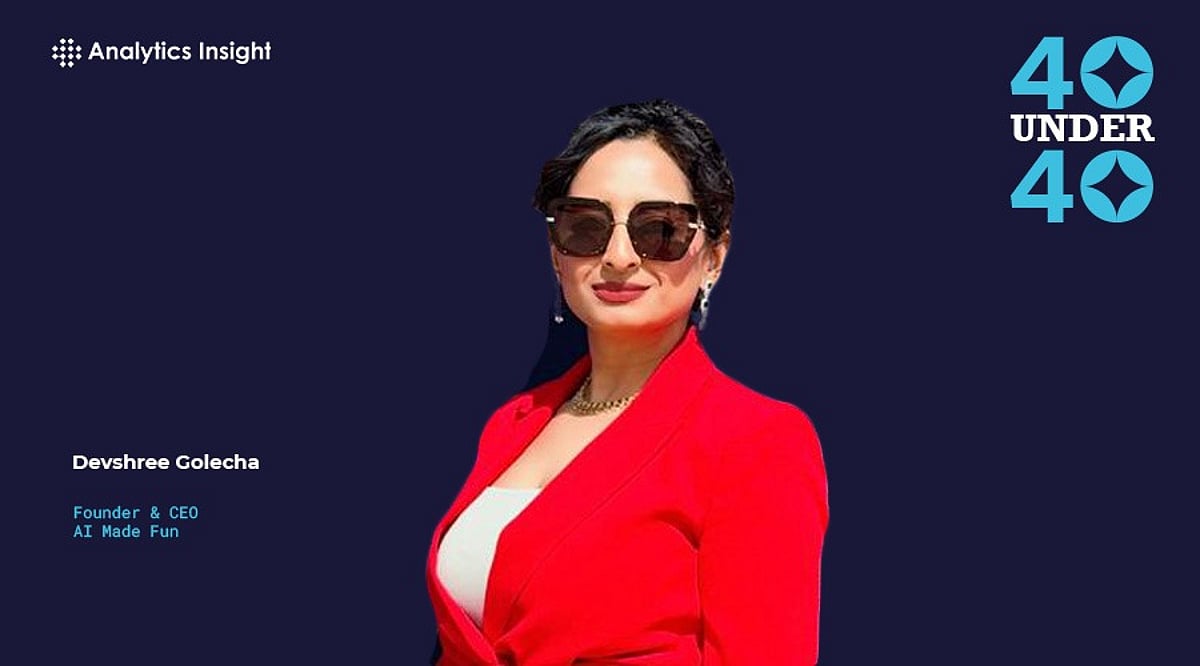
  • Why AI Literacy Must Start in Childhood: An Interview with Devshree Golecha

    Why AI Literacy Must Start in Childhood: An Interview with Devshree Golecha

    Devshree Golecha is the founder and CEO of AI Made Fun, an education technology company dedicated to building AI literacy for every K–12 learner. After 17+ years as a data and analytics executive leading enterprise data strategy, AI transformation, and governance, she left corporate leadership to focus on a mission she believed could not wait: helping children understand the technology that is already shaping their lives.

    Her journey to this work is anything but conventional. It began with door-to-door sales in India, where she learned how to earn trust by listening before speaking. It continued through a chapter as a homemaker in the United States, followed by a reinvention into an award-winning data and AI leader. Across each phase, one belief remained constant: technology only matters when it empowers people.

    That belief became the foundation for AI Made Fun. The company is building a comprehensive K–12 AI literacy curriculum with 60 interactive modules delivered through its own LMS, giving schools a structured and sequenced way to teach AI rather than relying on disconnected one-off activities. At the heart of the experience is an animated video universe featuring three mascots—two dogs and a child—who help students explore AI through stories, humor, and relatable real-world moments.

    Inside the curriculum, students engage through role play, case studies, interactive decision making, and a Socratic approach that encourages them to ask questions, challenge assumptions, and think critically about how AI works and how it should be used. The goal is not just to teach children what AI is, but to help them become thoughtful, creative, and ethical participants in an AI-powered world.

    In addition to building AI Made Fun, Devshree is the award-winning co-author of Data Made Fun for Kids, written with her daughter Kiara. The book has received the International Impact Book Award for Best in STEM, was named Best Math & Data Book 2025 by DataCamp, featured on Great Day Houston (KHOU 11), and adopted in more than 50 charter schools across Texas. Her work has also been recognized with honors including Global Data Power Women, 40 Under 40, Responsible AI Leader Award, High Flyer 50, Extraordinary Women in Tech, and Leading Academic Data Leaders.

    Today, she also serves as an adjunct professor of Data Science, a keynote speaker at global data and AI conferences, a WiDS Ambassador with Stanford University, and a Global CDO Ambassador and Editorial Board Member with CDO Magazine. Her goal is simple but urgent: to make it easy for schools and families to bring a rigorous, engaging AI literacy curriculum to every child.

    Q&A with Devshree Golecha

    Q: What motivated you to launch AI Made Fun?

    After years in data and AI leadership, one thing became impossible to ignore: AI was advancing quickly, but most people—especially children—were not being taught how it worked, how to question it, or how to use it responsibly. I was helping organizations adopt AI at scale while watching kids grow up surrounded by AI-powered tools with almost no real understanding of what was happening behind the screen. That gap is what motivated me to launch AI Made Fun. I wanted to take everything I had learned in enterprise data and AI and turn it into something children, families, and schools could actually use—something joyful, practical, and built for the real world.

    Q: What sparked the idea for AI Made Fun and your book Data Made Fun for Kids?

    It started with simple but powerful questions from children: How does this app know what I like? Why am I seeing this result? Is the machine really thinking? Those questions made it clear that kids were already interacting with data and AI every day, but no one was explaining it to them in a way that felt accessible or age-appropriate. Data Made Fun for Kids was the first step. It turned complex ideas into stories and relatable examples. As the book reached more families and schools, it became clear that the need was much bigger than one book. That is what sparked AI Made Fun—a full K–12 curriculum that helps students build AI literacy over time.

    Q: Why is it important for children to understand AI at an early age?

    Children are already growing up in an AI-shaped world. AI influences what they watch, what they buy, how they learn, and sometimes even how they are assessed. If we wait too long to teach AI literacy, we leave them vulnerable to systems they use every day but do not understand. Early AI literacy gives children the language and confidence to ask better questions: Who built this? What data trained it? Could it be biased? What should I trust? Those habits of thinking are essential not just for future careers, but for informed citizenship.

    Q: How does your platform help children learn AI in a fun and engaging way?

    We make AI feel human, relatable, and interactive. Our platform includes 60 modules across K–12 delivered through our LMS, and our animated video IP features three mascots—two dogs and a child—who guide students through AI concepts using stories and everyday scenarios. Students learn through role play, case studies, interactive decision-making, and a Socratic approach that constantly invites them to reflect, respond, and debate. Instead of passively receiving information, they actively step into the learning experience.

    Q: Why are human-centered skills becoming even more important in the age of AI?

    Because AI can generate answers, but it cannot replace judgment, empathy, values, or imagination. The more powerful AI becomes, the more important it is for children to know how to think critically, solve problems creatively, and make ethical decisions. That is why our curriculum focuses so intentionally on critical thinking, creativity, ethical reasoning, and problem-solving. We are not just teaching students how AI works—we are helping them understand how humans should work with AI.

    Q: What leadership lessons have remained constant throughout each chapter of your career?

    The biggest lesson is that listening comes first. Door-to-door sales taught me that trust is earned, not assumed. That same lesson has guided me in every role since—whether I was leading enterprise teams, teaching students, or building a company. The second lesson is resilience. Reinventing myself across countries, roles, and life stages taught me that a non-linear journey can still lead to meaningful impact. I have learned to see every chapter not as a detour, but as preparation.

    Q: What impact stories have been most meaningful to you?

    The stories that stay with me most are the ones where a child suddenly sees themselves differently. When a student realizes, “I can understand this,” or “I can question this,” that is powerful. It is not just about learning vocabulary; it is about building confidence and identity. Hearing that Data Made Fun for Kids has been adopted in more than 50 charter schools has been deeply meaningful, but even more meaningful are the moments when educators tell me their students are starting to question fairness, bias, and decision-making in the technology around them. That tells me the learning is sticking in a real way.

    Q: How do you envision AI reshaping K–12 education, and what role does AI Made Fun play?

    AI will absolutely reshape K–12 education, from personalization to content creation to teacher support. But the real question is whether students will simply use AI tools, or whether they will truly understand them. That is where AI Made Fun comes in. Our role is to give schools a structured, age-appropriate curriculum they can adopt across K–12 so students are not just consumers of AI, but thoughtful participants who know how to question, evaluate, and use it responsibly.

    Q: What advice would you give to aspiring entrepreneurs and young professionals?

    Start with a real problem, not just an exciting technology. AI is moving fast, but the strongest ideas come from understanding people deeply and building something that genuinely helps them. Also, do not wait for the perfect moment or a perfectly linear path. Some of the most meaningful work begins when you decide to take one small step with conviction, even before you feel fully ready.

  • 10 Essential Skills Freelancers Must Master by 2026

    10 Essential Skills Freelancers Must Master by 2026

    The freelance landscape is evolving rapidly, and staying competitive requires more than just technical expertise. As we approach 2026, freelancers need to cultivate a diverse skill set that blends technology, communication, business acumen, and adaptability. Here are the essential skills every freelancer should focus on to thrive in the coming years.

    AI Literacy

    Learning to use AI tools for research, content creation, automation, and productivity is crucial. However, the key is to deliver original, high-quality work that clients trust consistently, leveraging AI as a powerful assistant rather than a crutch.

    Communication Skills

    Clear writing, active listening, and timely responses build stronger client relationships, reduce misunderstandings, and improve project success and retention rates. Effective communication is the foundation of every successful freelance partnership.

    Personal Branding

    A professional portfolio, consistent online presence, and niche expertise help freelancers attract premium clients without relying solely on job platforms. Your brand is your most valuable asset in a crowded marketplace.

    Time Management

    Prioritizing tasks, meeting deadlines, and balancing multiple projects ensure consistent productivity while maintaining quality and reducing unnecessary stress. Master your schedule to master your freelance career.

    Sales and Negotiation

    Confidently pitching services, discussing project scope, and negotiating fair pricing increase earnings while creating mutually beneficial client relationships over time. These skills directly impact your bottom line.

    Financial Management

    Tracking income, budgeting expenses, managing taxes, and maintaining emergency savings create financial stability despite irregular freelance payment schedules and workloads. Financial literacy is non-negotiable for long-term success.

    Digital Marketing

    Understanding SEO, social media, email marketing, and content promotion helps freelancers generate leads and grow independent client acquisition channels effectively. Marketing yourself is as important as delivering great work.

    Adaptability

    Quickly learning new technologies, industry trends, and client requirements keeps freelancers competitive in rapidly changing markets driven by AI and innovation. Flexibility is a superpower in the freelance world.

    Problem-Solving

    Identifying challenges, proposing practical solutions, and handling unexpected situations professionally increases client confidence and encourages repeat business and referrals. Problem-solvers are always in demand.

    By investing in these skills, freelancers can future-proof their careers, command higher rates, and build lasting client relationships. The future belongs to those who continuously learn and adapt.

  • How Universities Are Redesigning Curricula for AI: Full Integration vs. Bolt-On Approaches

    How Universities Are Redesigning Curricula for AI: Full Integration vs. Bolt-On Approaches

    The AI revolution has exposed a critical divide in higher education. Some universities have redesigned learning across every discipline, while others have introduced AI as an additional subject. This comparison shows which approach is creating graduates ready for tomorrow’s workforce.

    Universities are splitting into two camps: those rebuilding degree programs around AI and those adding AI tools on top of unchanged curricula. Kogod, Arizona State, and Miami Dade show measurable gains from full redesign, including a 40% enrollment jump at Kogod. Barnard, Michigan, and Columbia chose speed and flexibility, but governance questions are still catching up to deployment.

    When AI becomes the curriculum, American University’s Kogod School of Business offers the clearest case study. In early 2024, its leadership gave faculty six weeks to rethink what AI-literate business education should look like. What emerged was not a bolt-on course but a full redesign. New AI Artisan classes cover foundational knowledge, while AI Sage courses embed hands-on AI work directly into finance, marketing, and accounting. Every incoming student now takes mandatory AI workshops. The school also created an AI Instruction Faculty Fellow role to keep teaching current and to train instructors before students were expected to use the tools. Three years on, undergraduate enrollment has climbed 40%, applications are up 50%, and more than 90% of faculty now use AI in their teaching. Kogod rebuilt courses first, invested in faculty second, and taught AI’s limitations before its strengths. The point was never just to teach students how to use AI—it was to teach them to question what it produces.

    Arizona State University took a different route to a similar outcome. After partnering with OpenAI in 2024, ASU rolled out ChatGPT Enterprise campus-wide but let individual departments decide how to use it. The AI Innovation Challenge invited faculty and staff to pitch their own projects rather than follow a top-down plan. Hundreds of proposals grew into more than 200 active initiatives spanning nearly every discipline, from research assistants to simulated patient conversations for health science students. By 2025, the partnership had expanded to ChatGPT Edu, backing more than 500 projects. ASU shows that large institutions can transform curricula without centralizing every decision, as long as shared tools and incentives exist.

    Miami Dade College proves that this kind of change doesn’t require a big budget. Starting in 2021, the college trained hundreds of faculty, partnered with IBM on AI for All, and launched Florida’s first associate’s and bachelor’s degrees in artificial intelligence. It later opened an AI center and is moving toward requiring every student to complete an applied AI course, with ethics built in from day one. Enrollment across its technology programs has hit record highs. The driver wasn’t honesty but leadership commitment.

    There is an interesting trend: not all of the universities that move faster are wealthy, but all of the ones that move faster have governance structures that enable curriculum decisions to be made quickly.

    Building skills without rewriting degrees: Barnard College chose a lighter touch. Instead of redesigning majors, it focused on giving every student access to AI tools through a partnership with Google, which brought Gemini and NotebookLM to campus, paired with a four-level literacy framework. This model moves faster and disrupts less. However, it has also exposed a weakness: faculty have raised concerns about privacy and oversight after the tools were already in students’ hands, a reminder that governance built after deployment tends to lag behind the technology it’s meant to manage.

    The University of Michigan and Columbia University follow a similar pattern. Michigan offers short AI courses through its Centre for Academic Innovation. Columbia provides professional AI certificates alongside tools like CU-GPT. In both cases, AI sits beside the degree rather than inside it, treated the way universities once treated coding or data science: a useful add-on, not a requirement.

    What the comparison shows: The overhaul schools moved on governance early. Kogod trained faculty before launching anything. Miami-Dade built ethics into required coursework from the outset. Barnard’s governance questions, by contrast, surfaced only after the tools were already deployed. Faculty adoption tells a similar story. Kogod tracks its numbers publicly and watched them rise from roughly half of the faculty to over 90% in a year. No comparable figures exist at the add-on schools, since participation there remains voluntary. The risks differ too. Curriculum redesign takes more coordination but produces consistent outcomes across students. Add-on strategies are quicker to launch but risk leaving preparation uneven and governance fragmented.

    The real divide in higher education isn’t public versus private, or large versus small. It’s between schools that treated AI as a reason to rebuild and schools that treated it as one more tool to fit into what already existed. Kogod, ASU, and Miami Dade can already point to enrollment gains and faculty adoption numbers. Barnard, Michigan, and Columbia bet on speed and flexibility, and their long-term results are still unfolding. The universities that remain competitive may not be those that adopted AI first but those that built academic systems capable of adapting every time AI evolves.

  • 7 Essential Leadership Skills for Business Success in 2026

    7 Essential Leadership Skills for Business Success in 2026

    Artificial intelligence is transforming workplaces, hybrid teams are becoming the norm, and economic uncertainty continues to test businesses worldwide. In this era, leadership is no longer measured solely by experience and decision-making capabilities. Today’s leaders must keep people engaged, customers satisfied, and the business competitive amid rapid technological change.

    The best business leaders in 2026 combine digital and human skills. They are proficient with technology yet never neglect empathy, ethical values, and innovation. Below are the key leadership skills every business leader needs to thrive.

    1. AI Literacy

    Leaders need to understand how artificial intelligence impacts processes, client communication, and decision-making. Technical expertise isn’t required, but knowing where AI can add value is essential.

    2. Strategic Thinking

    Organizations operate in ever-changing environments. Leaders must analyze market trends, anticipate threats, evaluate opportunities, and make strategic decisions to guide their firms.

    3. Emotional Intelligence

    Self-awareness, empathy, and relationship management are critical. Leaders with high emotional intelligence build effective, resilient teams and foster trust and collaboration.

    4. Adaptability

    The capacity to pivot in response to technological disruptions, regulatory changes, and customer demands is vital. Adaptable leaders embrace change rather than resist it.

    5. Effective Communication

    Clear communication ensures everyone understands organizational goals and priorities. Transparency earns trust and aligns teams toward shared objectives.

    6. Ethical Decision-Making

    Responsible leadership is a competitive advantage. Leaders must ensure technology adoption is ethical, protecting privacy and fairness to maintain reputation and customer trust.

    7. Employee Development

    Today’s leaders act as mentors, not just supervisors. Developing employees improves retention and prepares the workforce for future challenges.

    Why Human Skills Still Matter in the AI Era

    While AI excels at repetitive tasks, it lacks empathy, judgment, ethics, and the ability to inspire. Technology becomes far more productive when guided by leaders who understand people. The ideal combination of automation and emotional intelligence delivers superior results.

    Organizations must also ensure ethical use of AI: considering threats, complying with regulations, protecting private data, and maintaining transparency. Those that fail risk reputation damage and loss of client trust.

    Conclusion

    Leadership in 2026 goes beyond hierarchies. AI literacy alone is insufficient; emotional intelligence, ethics, adaptability, and strategy distinguish great leaders from good managers. Companies that cultivate these attributes will innovate, attract talent, navigate uncertainty, and grow in the digital age.

  • Elephant Robotics Debuts All-in-One Robotics Kits to Transform STEM Learning in the Americas

    Elephant Robotics Debuts All-in-One Robotics Kits to Transform STEM Learning in the Americas

    STEM education has seen explosive growth as demand for practical engineering skills and artificial intelligence literacy skyrockets. Yet schools, universities, and research labs have long struggled to assemble functional robotics environments, often spending weeks integrating disparate hardware and software from multiple vendors. Elephant Robotics is tackling this head-on with a new line of integrated educational robotics solutions that simplify deployment, reduce technical barriers, and accelerate hands-on learning across the Americas.

    Compound Robot Logistics Solution for Smart Logistics and Robotics Education

    The company’s Compound Robot Logistics Solution is a fully integrated training platform that combines hardware and software to teach robotics, automation, and intelligent logistics. Built around the 6-DOF collaborative robotic arm mechArm 270 and the mobile robot platform myAGV Jetson Nano, the system simulates real-world warehouse and production workflows. It covers mobile manipulation, material handling, path planning, and multi-component coordination. With one-click startup and visual demonstrations, instructors can launch lessons immediately, and students interact directly with the system. The solution includes a complete curriculum and lab manuals on robotic arm control, mobile robot navigation, machine vision, and system-level automation. Institutions can customize courses and build scenario-based applications for research or industry needs.

    Portable Artificial Intelligence Educational Workstation

    To lower the barrier to AI education, Elephant Robotics developed the Portable Artificial Intelligence Educational Workstation—a compact, suitcase-style system that deploys quickly in classrooms, labs, workshops, or exhibitions. At its core is the mechArm 270 with a modular quick-plug architecture, integrating machine vision, sensor interaction, and motion control. Five built-in vision algorithms let students explore object recognition, visual positioning, and automated tasks. A structured 15-week curriculum with tutorials, labs, and projects helps learners build skills in machine vision, sensor integration, and collaborative robotics. The workstation bridges theory and real-world engineering.

    Advanced Compound Robot Solutions for Research

    Beyond education, Elephant Robotics offers advanced compound robots for scientific research and high-level development. Based on the omnidirectional myAGV Pro chassis and myCobot Pro Series with harmonic drive joints, these platforms are equipped with precision LiDAR and cameras for perception-driven manipulation and autonomous navigation. Fully open interfaces support integration with major AI frameworks, machine learning models, reinforcement learning systems, and simulation environments. Research teams and tech companies have already adopted these systems for work in autonomous systems, embodied intelligence, and intelligent manufacturing.

    Expanding Access Across the Americas

    Elephant Robotics also offers a wide range of platforms for makers, educators, and developers, including the myPalletizer and myCobot series, myArm embodied intelligence robots, and the dual-arm semi-humanoid myBuddy. These products support everything from DIY projects to advanced research, creating an accessible robotics ecosystem tailored to local educational and research needs. By removing integration hurdles, the company aims to accelerate STEM talent development across the Americas.

    For more information, visit americas.elephantrobotics.com.