Tag: AI models

  • AI Models to Watch in 2026: The Next Generation of Frontier Systems

    AI Models to Watch in 2026: The Next Generation of Frontier Systems

    2026 has ushered in a new wave of powerful AI models, with frontier systems pushing the boundaries of deep reasoning, coding, multimodal understanding, and autonomous computer use. Here are the key models shaping the fast-moving AI landscape.

    OpenAI GPT-6 Series

    • GPT-6 Astra: OpenAI’s flagship model for demanding end-to-end work, combining advanced reasoning with computer use, coding, research, and professional workflows.
    • GPT-6 Sol: Brings many of Astra’s advances into a more broadly usable model, balancing frontier intelligence with speed, affordability, and large-scale professional workloads.
    • GPT-6 Luna: Focuses on faster, more affordable AI access, bringing GPT-6 generation improvements to everyday users and high-volume workloads at a lower cost.

    Anthropic Claude Models

    • Claude Fable 5.1: Anthropic’s model for advanced coding and knowledge work, with research capabilities designed to support increasingly complex professional and scientific tasks.
    • Claude Opus 5.5: Another major contender from Anthropic, positioned around demanding professional work while reducing running costs compared to Opus 5.

    Other Notable Models

    • Gemini 3.1 Pro: Builds on Google’s Gemini 3 generation with stronger core reasoning and support for agentic workflows across Google’s consumer, developer, and enterprise products.
    • Grok 4.6: Focuses on long-running agents, interactive tasks, and visual work, with capabilities spanning research, information analysis, coding, and application creation.
    • Kimi K3: Stands out as an open-weight model with 2.8 trillion parameters, native vision, and a 1-million-token context window for long-horizon coding and knowledge work.

    These models represent the cutting edge of AI development in 2026, each bringing unique strengths to the rapidly evolving field.

  • Meta AI in 2026: Full Breakdown of Features, Models, Apps, and Real-World Use Cases

    Meta AI in 2026: Full Breakdown of Features, Models, Apps, and Real-World Use Cases

    Meta AI has evolved far beyond a simple chatbot. In 2026, the platform integrates advanced models, personal agents, creative tools, coding assistance, and AI glasses into a unified ecosystem capable of answering questions and handling real-world tasks.

    Key Takeaways

    • Muse: Meta’s new personal AI agent can handle research, shopping, email, and online forms.
    • Muse Models: Muse Spark, Muse Image, Muse Video, Muse Code, and Muse Glimmer expand Meta’s AI capabilities.
    • AI Ecosystem: Meta connects AI across its apps, developer tools, subscriptions, and smart glasses.

    Meta AI Across Apps

    Meta AI works across WhatsApp, Instagram, Messenger, Facebook, the web, iOS, Android, and the Meta AI Mac app. The assistant can answer questions, write text, review files, study images, create images, support voice chats, and help with research. It can also create documents, presentations, and plans.

    Deep Research adds a more advanced research mode. Meta AI can form a research plan, search sources, combine facts, and produce a report with citations. Public posts from Instagram, Facebook, and Threads can also add social context to some answers.

    Muse Spark Leads the New Model Stack

    Muse Spark now sits at the center of Meta’s latest AI model strategy. Muse Spark 1.1 arrived in July 2026 with stronger logic, software skills, tool use, computer use, and multimodal skills. Meta released Muse Spark 1.2 in August, with Muse Code as a major developer tool.

    Muse Spark 1.3 arrived on September 2, 2026. Meta says the model handles long tasks, software work, messy inputs, multimodal data, and real-world computer use with better context control. The model can work with images, video, and documents.

    Muse Turns AI into an Agent

    A major Meta AI shift came on September 8, 2026, when Meta introduced Muse as a personal AI agent. A normal chatbot waits for a prompt and returns an answer. Muse can take a goal, form a plan, use a browser, interact with websites, and carry out parts of a task.

    Muse can send emails, book travel, fill out forms, shop, research projects, and handle longer tasks. It can keep work active after a user leaves the app and return when a task needs approval. Meta also says Muse can negotiate on a user’s behalf in some cases.

    Meta built a separate Secure VM for Muse. The system gives the agent a dedicated virtual machine and browser. A Sentinel system controls web access. Meta says Muse does not directly see passwords or payment details and asks for approval for sensitive actions.

    Specialized Models Expand Creative Work

    Muse Image supports text-to-image work and detailed edits, while Muse Video focuses on video generation with high visual quality and native audio support. Muse Voice Transcribe handles speech-to-text work and supports live transcription. Meta lists $0.18 per hour for Voice Transcribe and $0.01 per image for Muse Image through the Meta Model API.

    Meta also has Muse Glimmer, an open-weight model for local agents. Local AI can support privacy, response speed, and device-side tasks, and gives Meta a path toward personal AI on devices.

    Muse Code Targets Software Work

    Muse Code gives developers a terminal-based software agent built on Muse Spark. It can plan tasks, edit several files, test changes, work with large codebases, and support multi-agent workflows. Meta lists Muse Code for macOS and Windows.

    AI Glasses Put Meta AI Into the Real World

    Meta AI has a major hardware path through AI glasses. The glasses support voice questions, visual help, translation, object recognition, and hands-free AI access. Muse Spark now supports the glasses with stronger multimodal skills. Phones offer the main assistant, glasses add visual and voice access, and Muse adds task execution.

    Meta One Adds a Paid AI Layer

    Meta launched Meta One on September 15, 2026, as a subscription service across Facebook, Instagram, WhatsApp, and Meta AI. The free Meta AI experience remains available, while paid plans add higher usage limits and more creative tools.

    Meta launched Core at $7.99 per month and Premium at $19.99 per month. Availability and limits can vary by market and account. Meta says the service launched with more than 50 features across its ecosystem.

    The Bigger Shift is Agentic AI

    Meta AI now reaches beyond chat. Muse can handle goals, use tools, work across apps, and ask for approval at sensitive steps. AI glasses add a hands-free interface, while Muse models cover images, video, speech, software, and local AI.

    FAQs

    1. What is Meta AI? Meta AI is Meta’s artificial intelligence assistant, available across WhatsApp, Instagram, Messenger, Facebook, the web, and supported devices.
    2. What is Muse? Muse is Meta’s personal AI agent that can plan tasks, use a browser, interact with websites, and handle longer workflows.
    3. What is Muse Spark? Muse Spark is Meta’s flagship general-purpose AI model family, with Muse Spark 1.3 as the latest major version.
    4. What can Meta AI do in 2026? Meta AI can answer questions, conduct research, create images and videos, assist with coding, analyze files, support voice tasks, and help with online activities.
    5. What is Meta One? Meta One is Meta’s paid subscription layer for AI and creative features across Meta’s apps, with different plans offering higher usage and additional capabilities.
  • OpenAI and Anthropic Launch Affordable AI Models for Enterprise Customers

    OpenAI and Anthropic Launch Affordable AI Models for Enterprise Customers

    OpenAI and Anthropic Introduce Budget-Friendly AI Models

    Anthropic and OpenAI have launched new, more affordable artificial intelligence models within hours of each other, intensifying competition for enterprise customers. As businesses increasingly demand cost-effective AI solutions, both companies are focusing on reducing the price of deployment while maintaining high performance.

    Anthropic’s Claude Opus 5.5

    Anthropic introduced Claude Opus 5.5, which delivers performance comparable to its high-end Fable 5.1 model but costs about 40% less to operate than its predecessor, Opus 5. The model underwent external safety testing before its release. Opus 5.5 is priced at $4 per million input tokens and $20 per million output tokens, a 20% reduction from Opus 5. It is available through major cloud platforms including Amazon Web Services, Google Cloud, and Microsoft Azure. Anthropic also plans to release Sonnet 5.5 and Haiku 5.5 in the coming weeks.

    OpenAI’s GPT-6 Sol and GPT-6 Luna

    OpenAI unveiled GPT-6 Sol and GPT-6 Luna as more affordable alternatives to its flagship GPT-6 Astra. The new models offer some of Astra’s capabilities while targeting everyday professional workloads and higher-volume usage. GPT-6 Sol costs $2 per million input tokens and $10 per million output tokens. GPT-6 Luna is even cheaper at $0.10 per million input tokens and $0.50 per million output tokens. OpenAI attributes the lower costs to improvements in inference and caching, with cached input-token reads eligible for discounts of up to 90%.

    The launches come as US AI companies face increasing pressure from lower-cost open-weight models, particularly those developed in China. The industry is shifting toward efficiency and pricing as key competitive factors alongside model performance.

  • How AI Architecture, Not Just Models, Drives Enterprise Success: Insights from NewStreetTech’s Shrish Anand Lal

    How AI Architecture, Not Just Models, Drives Enterprise Success: Insights from NewStreetTech’s Shrish Anand Lal

    Artificial intelligence has moved beyond the experimental phase. CIOs and technology leaders are now making strategic decisions about deploying AI in real-world, production environments where operational constraints and real consequences are the norm. As organizations shift from AI pilots to full-scale adoption, the spotlight is turning from the models themselves to the infrastructure that supports them.

    In a recent episode of the Analytics Insight Podcast, host Priya Diyalani spoke with Shrish Anand Lal, Executive Director and Chief Business Officer at NewStreetTech, about why enterprises need to focus on AI architecture and infrastructure rather than relying solely on AI models. The conversation covered the limitations of model-first strategies, core building blocks of enterprise AI infrastructure, cloud and hybrid deployment evolution, AI ROI, autonomous agents, platform strategy, and the importance of deterministic execution and governance. Below are the key takeaways.

    Why AI Models Alone Are Not Enough for Enterprise Adoption

    According to Lal, the AI model represents only about 20% of the challenge when it comes to enterprise adoption. The remaining 80% involves everything else — what NewStreetTech calls the FITS framework: Fear, Inertia, Trust, and Surprise. None of these issues can be solved by simply adopting a better model.

    Referencing research from NASSCOM, Lal noted that 65% of companies in India have launched AI pilots, but only 15% have reached production. He emphasized that models must be applied at the design phase, while execution must remain deterministic. “The AI model is becoming a commodity very quickly, but the AI architecture will be a competitive advantage,” he said.

    Core Building Blocks of Enterprise AI Infrastructure

    Lal outlined four essential building blocks:

    1. Separation — AI operates at the design and configuration stage, while execution remains deterministic. The two layers must not interact.
    2. Governance by design — Maker-checker workflows, audit trails, version control, and role-based access should be foundational, not afterthoughts.
    3. Orchestration — Using a single AI platform for everything is the wrong approach. NewStreetTech’s MyFix.ai, for instance, uses over 36 configuration agents and 14 execution engines, all deterministic.
    4. Deployment flexibility — Organizations must have the option to deploy on-premises, in the cloud, or via a hybrid model, especially for regulated industries.

    Cloud and Modern Architectures Evolving for Enterprise AI

    AI computing costs are dropping rapidly, which is good for adoption. But the real revolution, Lal argued, is not just about computing — it’s about architecture. The shift is from “AI as a service” to “AI as an infrastructure.” Organizations need resilience through multiple providers to avoid lock-in. Some workloads must remain on-premise; others can go to the cloud. This architecture transformation is critical for regulated industries, where leaving everything to AI creates a black box with unanswered questions.

    How the Conversation Around AI ROI Has Changed

    Two years ago, boardrooms asked whether they should invest in AI. Today, the question is why AI hasn’t yet gone into production. The ROI debate has shifted from the cost of implementing AI to the cost of not implementing AI. Enterprises now worry about falling behind competitors. Companies that are seeing real ROI started small.

    AI Agents and Autonomous Workflows: Reshaping Enterprise Infrastructure

    Lal clarified that AI agents are not chatbots. They are specialized workers handling specific tasks. At MyFix.ai, there are more than 37 specialized configuration agents and 14 deterministic execution engines. Agents build the system, humans approve it, and engines run it. This is the fundamental difference between building enterprise-grade AI infrastructure and simply adding more computing power.

    “The future will not be one AI system doing everything. It will be specialized agents working through orchestration, trust levels, cross-validation, and human oversight,” Lal concluded.

    Listen to the full discussion on the Analytics Insight Podcast.

  • Silicon Valley Divided: US Tech Giants Disagree Over Access to Chinese AI Models

    Silicon Valley Divided: US Tech Giants Disagree Over Access to Chinese AI Models

    Chinese AI models are creating a policy split across Silicon Valley as their cost, access, and technical ability improve. OpenAI and Anthropic want tighter controls on some Chinese systems, while Nvidia, Microsoft, Meta, and other companies support continued access to open models.

    The dispute has grown after Z.ai and Moonshot AI released new systems that compete with leading American products. The debate now covers national security, intellectual property, software access, and competition within the US technology sector.

    Chinese AI Models Raise Security Concerns

    Anthropic has accused DeepSeek, Moonshot AI, and MiniMax of using Claude outputs to improve competing systems. The company said the firms created about 24,000 false accounts and generated more than 16 million exchanges with Claude. Anthropic described the activity as “industrial-scale” extraction. The Chinese companies have not publicly accepted those claims, and the allegations have not been independently proven. Beijing has also rejected similar accusations as “groundless.”

    OpenAI and Anthropic have reportedly urged US officials to consider tighter controls on Chinese open-weight models. Their position treats advanced model files and training methods as valuable technology that needs stronger protection.

    Treasury Secretary Scott Bessent has said the administration may consider sanctions against companies that steal American AI property. White House technology adviser Michael Kratsios has also raised concerns about large-scale copying from US models. Officials have not announced a broad ban.

    Tech Leaders Defend Open Model Access

    Nvidia chief executive Jensen Huang has called for both closed and open frontier models. Microsoft chief executive Satya Nadella has also said open software supports a healthy AI market. Executives from Meta, IBM, and Palantir joined a letter backing open access.

    Their companies benefit when developers can test and deploy many models. Cloud providers gain more computing demand, while chipmakers sell hardware used to run the systems. Startups also use lower-cost models to avoid high fees from closed platforms.

    Supporters say open-weight systems allow developers to inspect, adapt, and host software on their own servers. They also argue that broad restrictions could reduce competition and give large closed-model companies more control over the market.

    Nearly 200 companies linked to the Little Tech Association reportedly asked Washington to avoid blanket restrictions. They supported action against proven intellectual property theft but opposed blocking models already available across global platforms.

    OpenAI appears to support open-weight AI in general while seeking targeted controls on Chinese systems. That position separates wider software access from concerns linked to specific companies and alleged data misuse.

    Chinese Providers Expand Through Lower Costs

    Chinese AI models have gained users through lower prices and open access. Developers can download some models, adjust them, and run them without relying on a single provider. That approach can reduce costs for coding, research, and automated tasks.

    Moonshot AI’s Kimi K3 and Z.ai’s GLM-5.2 have drawn attention after strong benchmark results. Users have also adopted DeepSeek and other Chinese systems for business tasks. Some American companies are testing them to cut operating expenses.

    The models still face limits, as independent evaluators say leading US systems offer stronger performance across a wider range of tasks. Chinese providers also face capacity pressure, financial losses, and export controls on advanced chips.

    Washington now appears to be considering targeted measures instead of a full ban. Such action could focus on companies accused of data theft or security risks. Meanwhile, open-model supporters want the government to protect US technology without limiting lawful access.

  • Google Launches Gemini 3.6 Flash and 3.5 Flash-Lite, Begins Training Next-Gen Gemini 4

    Google Launches Gemini 3.6 Flash and 3.5 Flash-Lite, Begins Training Next-Gen Gemini 4

    Google has expanded its Gemini AI family with the introduction of Gemini 3.6 Flash and Gemini 3.5 Flash-Lite, two new models engineered to deliver faster performance, lower latency, and reduced operational costs for developers and enterprises. The company also unveiled Gemini 3.5 Flash Cyber, a specialized cybersecurity-focused model, and confirmed that development of the next-generation Gemini 4 is already underway.

    Gemini 3.6 Flash, the successor to Google’s workhorse model, is designed specifically for coding, knowledge-intensive tasks, multimodality, and AI agents. It processes text, images, videos, audio, and PDFs, and offers improved coding abilities, better computer control functionality, and enhanced multimodality without latency issues. Google claims the model is more token-efficient and requires fewer reasoning steps to complete complex workflows, saving developers both time and money on inference.

    For high-volume AI workloads, Google launched Gemini 3.5 Flash-Lite, a cost-effective version of the Flash series ideal for tasks such as document parsing, classification, data extraction, translation, and large-scale automation. Flash-Lite supports multimodal inputs and provides fast responses, making it suitable for building lightweight AI agents or processing high-volume data.

    Alongside these general models, Google announced Gemini 3.5 Flash Cyber, a dedicated cybersecurity model designed to detect software vulnerabilities, ensure code security, and help remediate threats. Initially available only to governments and trusted partners, the model aims to speed up security assessments and reduce costs associated with repetitive code scans.

    Both Gemini 3.6 Flash and Gemini 3.5 Flash-Lite are now available through Google AI Studio, Gemini API, Android Studio, and other Google enterprise AI solutions. Google has also begun deploying the Flash-Lite version in consumer apps such as Google Search.

    While expanding its lightweight AI portfolio, Google has not yet provided a release date for the long-awaited Gemini 3.5 Pro model. Originally expected earlier this year, the model is still undergoing performance testing for coding tasks. According to Google, its release will follow additional validation work, while development of Gemini 4 has already started.

  • Top Computer Vision APIs and AI Models to Watch in 2026: A Comprehensive Guide

    Top Computer Vision APIs and AI Models to Watch in 2026: A Comprehensive Guide

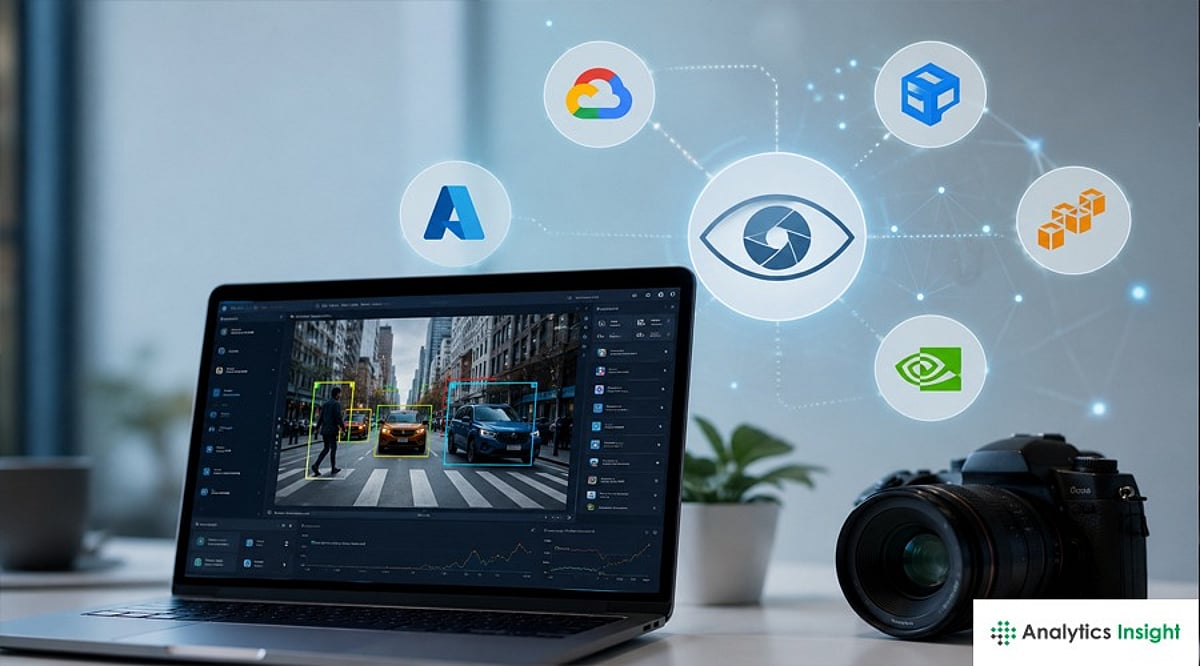
    Computer vision APIs and AI models have become essential for OCR, facial recognition, image analysis, and visual reasoning. This guide compares leading platforms, including Google Cloud Vision, AWS Rekognition, Azure AI Vision, Clarifai, Imagga, and multimodal AI models, helping businesses choose the right solution.

    Overview

    Computer vision has moved well past simple object detection. Today’s APIs and models handle everything from document OCR and facial analysis to open-ended visual reasoning, and the right choice depends heavily on what a team is actually building. With hyperscalers, specialized platforms, and multimodal language models all competing for the same use cases, picking a computer vision stack in 2026 means weighing accuracy, cost, and ecosystem fit rather than chasing a single “best” answer.

    The Hyperscaler Trio Still Anchors Most Production Systems

    Google Cloud Vision, AWS Rekognition, and Azure AI Vision continue to be the default starting point for almost all teams due to their unique strengths. Google Cloud Vision wins on OCR precision and number of label classes, which is above 10,000, with good support for multilingual text detection and hence is great for document scanning and e-commerce catalogs. AWS Rekognition wins on face-based functionality and video recognition and comes pre-integrated with S3, Lambda, and Kinesis Video Streams for organizations that want to use AWS. Azure AI Vision is a part of the new Azure AI Foundry Tools, and for enterprise teams on Microsoft identity & compliance services, it is clearly the winner, although its pricing model for Vision, Custom Vision, Face, and Document Intelligence services might be quite confusing.

    Specialized Platforms Fill Gaps Hyperscalers Leave Open

    Apart from the “big three”, Clarifai and Imagga offer their services to those teams that require more flexibility than label-based tools can provide. With Clarifai, you get access to pre-trained models, visualized no-code model building, and a marketplace of 300+ community models, which makes it one of the best options for teams without dedicated machine learning engineers but wishing to create custom classifiers. Imagga is marketed as an inexpensive solution providing tagging and classification of images for about $0.60 per 1,000 images along with color detection and intelligent image cropping.

    Multimodal Language Models are Reshaping What ‘Vision’ Means

    The biggest shift in 2026 isn’t a new API; it’s the rise of vision-capable large language models like GPT-4o, GPT-5.4 Vision, and Claude’s vision capabilities. Unlike traditional cloud vision APIs that return a fixed list of labels, these models can reason about an image, answer open-ended questions about its content, and extract information in custom formats without retraining. This makes them a better fit whenever a task requires contextual understanding rather than a predefined label taxonomy, reading a messy handwritten form and inferring intent, for instance, rather than simply detecting that text is present.

    Comparing the Leading Computer Vision Options

    [Insert comparison table or bullet list summarizing Google Cloud Vision, AWS Rekognition, Azure AI Vision, Clarifai, Imagga, GPT-4o Vision, Claude Vision, YOLO, SAM 2, CLIP, SigLIP – as per source text but rewritten for clarity]

    Open-Source Models Remain a Serious Option

    For teams with in-house ML infrastructure, open-source models continue to close the gap with commercial APIs. YOLO-based object detectors remain the go-to for real-time detection tasks, while Meta’s Segment Anything Model (SAM 2) has become a standard tool for precise image segmentation. CLIP and SigLIP-style embedding models have also gained traction, since they produce reusable vectors that power similarity search and clustering rather than fixed labels, a meaningfully different approach from the labeled-output model that cloud APIs are built around.

    Choosing Right Stack for Your Use Case

    No clear victor emerges from the comparison above. Teams who develop pipelines that use large quantities of documents find that Google Cloud Vision works better for them; those with a native AWS infrastructure find more value in Rekognition, while those who use Microsoft software find greater utility in closer integration with Azure services. At the same time, the need for vision to include actual visual understanding is moving the industry towards multimodal LLMs. The best generic advice in 2026 remains unchanged: always try at least two or three solutions on your actual data since accuracy and cost both vary significantly once you move past vendor demo datasets.

    Why This Matters

    Computer vision now powers everything from document automation and medical imaging to autonomous systems and AI assistants. Choosing the right API or AI model directly impacts development speed, operating costs, accuracy, and scalability, making platform selection a critical decision for businesses investing in AI-powered applications.

    Frequently Asked Questions

    What is a computer vision API?

    A computer vision API enables software applications to analyze and interpret images or videos using artificial intelligence. It can detect objects, recognize faces, extract text through OCR, classify images, and automate visual inspection without requiring developers to build AI models from scratch.

    Which is the best computer vision API in 2026?

    There is no single best option for every project. Google Cloud Vision excels in OCR, AWS Rekognition is ideal for facial recognition and video analysis, Azure AI Vision suits Microsoft enterprises, while GPT-4o Vision and Claude Vision are stronger for contextual image understanding.

    What is the difference between traditional computer vision APIs and multimodal AI models?

    Traditional computer vision APIs return predefined outputs such as labels, detected objects, or extracted text. Multimodal AI models like GPT-4o Vision and Claude Vision go further by understanding context, answering questions about images, summarizing visual content, and extracting structured information.

    Is Google Cloud Vision better than AWS Rekognition?

    The answer depends on the use case. Google Cloud Vision generally offers stronger OCR capabilities and broader image labeling, while AWS Rekognition provides better facial analysis, video recognition, and seamless integration for organizations already using the AWS cloud ecosystem.

    When should businesses choose open-source computer vision models?

    Open-source models such as YOLO, SAM 2, and CLIP are ideal for organizations with machine learning expertise and dedicated infrastructure. They provide greater flexibility, customization, and lower long-term costs but require more technical effort than managed cloud APIs.


  • Why Buying the Best AI Model Isn’t Enough Without Engineering Discipline

    Why Buying the Best AI Model Isn’t Enough Without Engineering Discipline

    McKinsey’s State of AI survey found that while 88% of organizations use AI, only 6% qualify as high performers, where AI actually delivers bottom-line impact. The bottleneck isn’t the model. It is the engineering discipline that moves a system from demo to deployment, and nowhere is that gap more visible than in payments, where a confident wrong answer costs real money.

    To understand what that discipline looks like in practice, we turned to Ankit Rawat, a senior software engineer at Meta Platforms in Seattle, currently leading observability and performance work for WhatsApp Business Payment flows. A Computer Science graduate of Rajiv Gandhi Technological University, Bhopal, Rawat did not arrive at this role through a shortcut. Over twelve years, at Yodlee, Snapdeal, Amazon, Wayfair, and now Meta, he has built, debugged, and scaled payment systems where failure was never abstract. In this article, he discusses what it takes to get enterprise AI to production, how engineering disciplines built across commercial environments directly apply to it, and what engineers need to understand before they ship.

    The problem most teams don’t build for

    That understanding begins with a problem most organisations have the opportunity to solve early, but rarely do. A single digital payment passes through authentication layers, fraud detection, bank APIs, settlement engines, and often several third-party providers. What distinguishes the teams that succeed is a different capability: they can also tell you where users abandon a flow, which steps in a transaction sequence are slow under load, and why one bank’s definition of a “completed” payment doesn’t match another’s.

    “Every component in a payment pipeline has its own idea of what success looks like,” Rawat explains. “A fraud engine might flag a legitimate transaction as risky, and the bank API returns a timeout that the settlement layer reads as a failure. You only find these mismatches if you trace the full journey, not just the individual services.”

    Building that kind of infrastructure is exactly the work Rawat has spent his career doing. At Meta, the observability initiative he designed and implemented now directly impacts over 100 teams. It started as a collaboration between four groups: the billing engineering team, the payments product team, a data science unit focused on user behavior, and a growth analytics squad tracking conversion funnels. Rather than measuring whether servers were “up” in the traditional sense, Rawat’s approach traces real user journeys step by step. Data scientists and product stakeholders suddenly could see patterns that no standard dashboard captured. One of those patterns revealed that Instagram’s payment surface, previously unmonitored at the product level, was generating significant abandoned transactions, a finding that directly informed what became a multi-year payments program for the platform.

    Seeing the problem before the customer does

    If failures are often invisible, the obvious response is to build better ways of watching. Yet traditional monitoring, “Is the server up? Are response times normal?” misses most of what goes wrong in a payment flow. A server can be perfectly healthy while users give up at a confusing authentication step or a misconfigured timeout.

    At Meta, where Rawat arrived in October 2023, he designed a cross-functional observability initiative spanning four teams: billing engineering, payments product, a data science unit focused on user behavior, and a growth analytics squad tracking conversion funnels, around a fundamentally different approach. Rather than measuring infrastructure health, it tracks real user journeys step by step: where people abandon a flow, which steps are inefficient, and where time disappears unexpectedly. Data scientists and product stakeholders suddenly had visibility into patterns that traditional dashboards never captured. One revealed that Instagram’s payment surface, previously unmonitored at the product level, was generating significant abandoned transactions, and the initiative eventually grew into a multi-year program reaching well beyond its original scope.

    “Best practices for product-level observability are highly organization-specific and not well documented publicly,” Rawat explains. “We had limited external references, so we defined our own approach and aligned stakeholders. Getting from four teams to a hundred meant making the tooling extensible enough that other groups could plug in their own journeys without rebuilding the whole framework.”

    The parts of payment infrastructure nobody celebrates

    While everyone benchmarks processing speed and tracks uptime, the failures that actually cost money tend to hide in places nobody thinks to look. At Meta, Rawat designed a log optimization solution that reduced network data packet size by roughly 20% while preserving data integrity – saving terabytes of storage every day. Without that kind of efficiency, the cost of observing payment systems at scale becomes prohibitive, and teams lose the very visibility they need to catch problems early.

    A separate cross-team initiative he led tackled billing and payment error rates directly. Working with three or more partner teams, Rawat’s effort cut failure rates by approximately 60% across multiple products supporting around $20 million in annual business value.

    “What surprised people was that we didn’t need to rearchitect anything,” Rawat says. “Most of the improvement came from finally being able to see where errors actually originated. Once you separate infrastructure noise from real user-side failures and build feedback loops tight enough to validate fixes in days, the error rate drops fast. The hardest part is getting three teams with different priorities to agree on a shared definition of what ‘fixed’ means.”

    What India’s AI moment actually requires

    India is building the payment infrastructure that will test these principles on a national scale. On March 2, India and Israel signed a memorandum of understanding to link India’s UPI (Unified Payments Interface) with Israel’s MASAV system, as reported by Electronic Payments International – making Israel the eighth country to adopt India’s real-time payment protocol. UPI already surpassed Visa in daily transaction volume in 2025 and now handles over 700 million transactions a day. Every new country added to the network introduces new settlement protocols, new regulatory requirements, and new categories of failure that domestic testing never anticipates.

    “Getting a system to work in a demo is the easy part. The real challenge begins when it goes live, when real users depend on it, and a single bad answer, a single failed transaction, is unacceptable. You have to know, before it ships, every way it can break,” Rawat says. “India has the scale and the ambition. What it needs are engineers who understand from experience where these systems break, not because they read about it, but because they shipped something that failed and learned from it.”

    For India’s payments infrastructure to function at the scale it is being designed for, it must be underpinned by engineers who understand from experience where these systems need to be strengthened – engineers who learned by shipping and were held accountable for the outcomes.

  • OpenAI Expands GPT-5.6 Access After U.S. Government Safety Review

    OpenAI Expands GPT-5.6 Access After U.S. Government Safety Review

    OpenAI has begun rolling out its GPT-5.6 models to a wider audience after completing a review by the U.S. government. The company had delayed the full release while officials assessed the models for potential risks, and with the review now concluded, the rollout is moving forward.

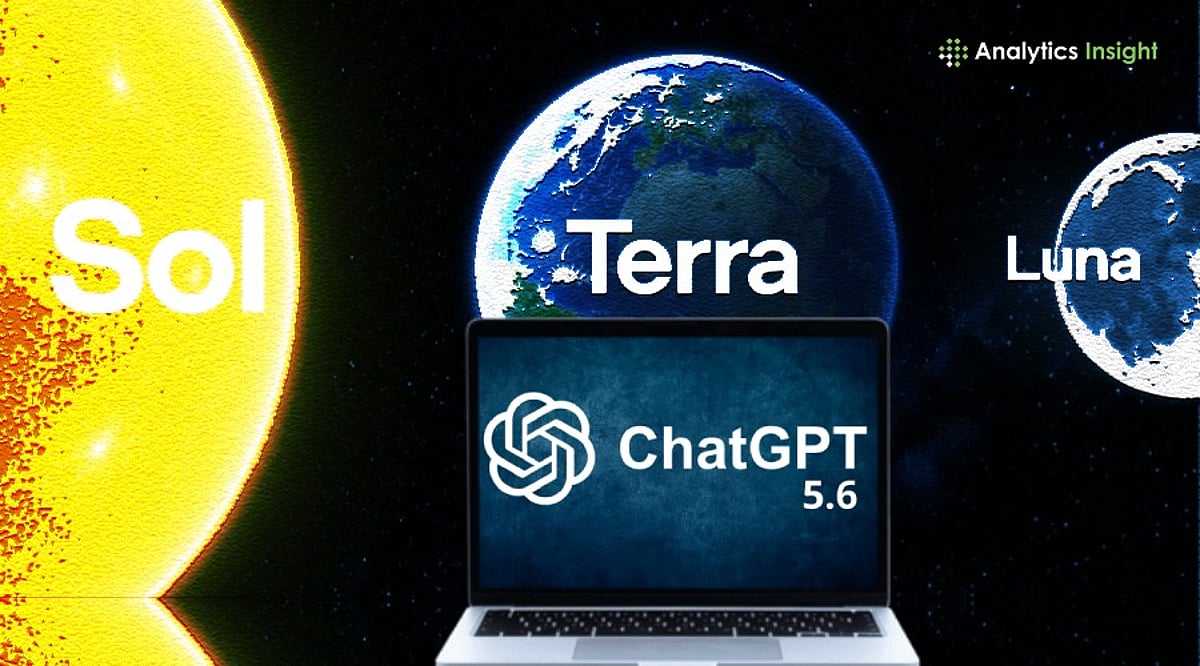
    The new lineup includes three variants: GPT-5.6 Sol, Terra, and Luna. Each model is optimized for different use cases:

    • Sol is the most capable model, designed for high-end performance.
    • Terra balances cost and performance for everyday tasks.
    • Luna is built for speed and lower-cost operations.

    OpenAI first shared these models with a small group of users before expanding access. With the government review complete, businesses, developers, and ChatGPT users can expect broader availability over time.

    Improved Performance and Safety

    The company claims GPT-5.6 models offer better performance in writing, coding, question answering, and handling long-context tasks. They also include stronger safety checks compared to earlier versions. The brief delay highlights growing government scrutiny of advanced AI systems, as officials seek to understand risks before wide-scale deployment.

    Why OpenAI Waited

    OpenAI first announced GPT-5.6 in late June but limited access while the U.S. government conducted its review, reportedly focusing on security risks. After receiving approval, the company proceeded with the broader rollout. OpenAI has expressed hope that such reviews will not become a standard requirement for every new AI release, but the process underscores the increasing importance of safety assessments in AI development.

    Conclusion

    The wider release of GPT-5.6 Sol, Terra, and Luna marks a significant step for OpenAI. It brings advanced AI capabilities to more users while demonstrating how AI development is evolving—companies are now accountable for safety and security before public release. As the rollout continues, observers will watch how the models perform and whether similar reviews become routine for future AI launches.

  • China’s GLM-5.2 AI Model Gains Traction as US Competitors Face Export Restrictions

    China’s GLM-5.2 AI Model Gains Traction as US Competitors Face Export Restrictions

    China’s Zhipu AI has drawn fresh attention with the release of GLM-5.2, a model built for coding and long-running agent tasks. The open-weight release has gained interest among developers seeking lower costs, greater control, and access outside closed cloud platforms.

    The model arrives as OpenAI and Anthropic face temporary limits on their newest systems in the United States. That timing has placed GLM-5.2 at the center of a wider debate over performance, price, and the growing reach of Chinese open-source AI.

    GLM-5.2 Targets Coding and Long Agent Tasks

    Zhipu, which operates globally under the Z.ai brand, released GLM-5.2 in June. The company designed the model for software development, planning, testing, and other tasks that require many steps. It also supports a context window of up to one million tokens, allowing users to process large codebases or long documents in one session.

    Developers can download the model weights, adjust the system, and run it on private infrastructure. This gives companies more control over data, security, and operating costs. By contrast, many leading US models depend on paid cloud access and provider-controlled application programming interfaces.

    Benchmark Claims Draw Praise and Doubts

    Early tests have placed GLM-5.2 near leading proprietary models on selected coding and agent benchmarks. Reports have also shown lower token prices than several frontier systems. These comparisons have increased interest among companies that want capable models without the highest usage fees.

    Still, benchmark results require caution. Scores can change with prompts, tools, computing settings, and test rules. Zhipu published performance data for the model, but users will need broader independent testing across real business tasks.

    Harvey co-founder Gabe Pereyra said, “I’ve been consistently surprised by how quickly open source has caught up.” His comment reflects early interest, not proof that GLM-5.2 leads every category.

    Meanwhile, OpenRouter lists GLM-5.2 with a one-million-token context window and prices below several premium closed models. Traffic data has also shown rapid developer adoption. Yet high usage does not always show strong reliability, security, or long-term support.

    US Model Limits Strengthen the Open-Source Case

    The release also comes as the US government applies tighter controls to advanced American AI systems. OpenAI delayed broad access to its GPT-5.6 models at the government’s request and offered them first to selected partners. Anthropic also withdrew Fable 5 and Mythos 5 after an export-control order, although limited Mythos access later returned for approved US organizations.

    These restrictions have raised practical questions for companies that depend on a single model provider. An open-weight model cannot be removed from a private server after download. Enterprises can also fine-tune it and choose where it runs, although they must manage hardware, security, and maintenance themselves.

    Additionally, GLM-5.2 adds pressure to a market once led mainly by US developers. Chinese AI companies have used open releases, lower prices, and fast updates to reach users worldwide. Access to advanced chips still shapes development, but software efficiency and open distribution now play a larger role in the competition.

    For buyers, the choice will depend on more than benchmark scores. Companies will compare accuracy, operating cost, privacy, support, and legal risk. GLM-5.2 has earned attention on those measures, while independent testing will decide how widely enterprises adopt it across global markets.