
Tag: AI pipelines

  • Understanding MCP: How Model Context Protocol Powers Modular AI Pipelines

    Understanding MCP: How Model Context Protocol Powers Modular AI Pipelines

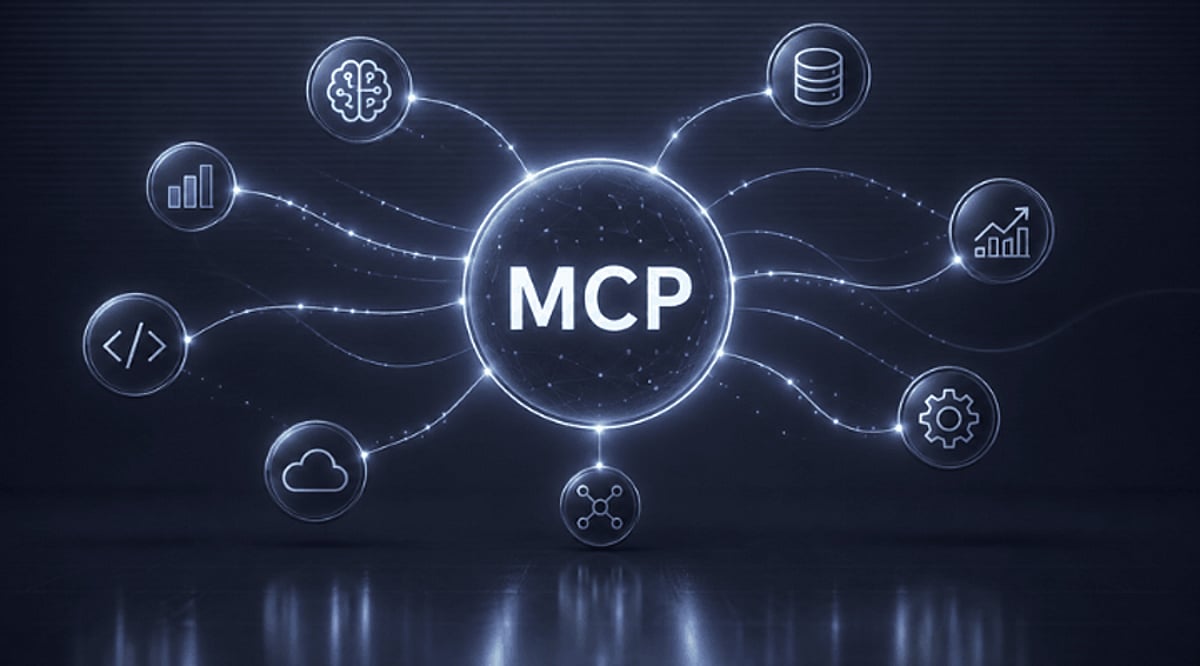
    As artificial intelligence applications become more sophisticated, they increasingly need to interact with external tools, databases, and services. The Model Context Protocol (MCP) provides a standardized way for AI systems to connect with these capabilities, enabling developers to build modular systems instead of creating separate integrations for every application.

    What Is MCP?

    MCP is an open protocol designed to connect AI applications with external tools and data sources. Rather than hard-coding every connection, developers can use a common framework for exposing capabilities. This simplifies linking models with services that provide useful context or actions, making AI systems more flexible and maintainable.

    MCP Servers Provide Capabilities

    An MCP server can expose tools, resources, and prompts that an AI application can use. For example, a server might provide access to files, databases, APIs, or business systems. This creates a modular layer between the AI application and the underlying service, allowing each component to be updated independently.

    MCP Clients Connect the Pieces

    An MCP client sits inside an AI application and communicates with MCP servers. The client can discover available capabilities and request information or actions when needed. This separation allows developers to change or add services without rebuilding the entire AI application, reducing development time and complexity.

    Modular Pipelines Become Easier

    MCP makes complex AI workflows more modular by separating the model from individual tools and services. Developers can connect different capabilities as required, simplifying experimentation, maintenance, and expansion as an AI system grows. This approach is especially valuable for projects that evolve over time.

    MCP Can Connect Enterprise Data

    Businesses can use MCP to connect AI applications with internal documents, databases, and software tools. This gives models access to relevant business context without building a completely custom integration for every system. Security and access controls remain essential when sensitive information is involved, but MCP provides a clean interface for managing those connections.

    The Future Depends on Secure Adoption

    MCP could become an important building block for tool-using AI systems and agentic workflows. Its modular approach makes AI integrations easier to build and maintain. However, organizations still need authentication, permission controls, monitoring, and careful governance before connecting AI agents to critical systems. As the protocol matures, it may become a standard component of enterprise AI infrastructure.

  • What Is MCP? A Guide to Model Context Protocol for Modular AI Pipelines

    What Is MCP? A Guide to Model Context Protocol for Modular AI Pipelines

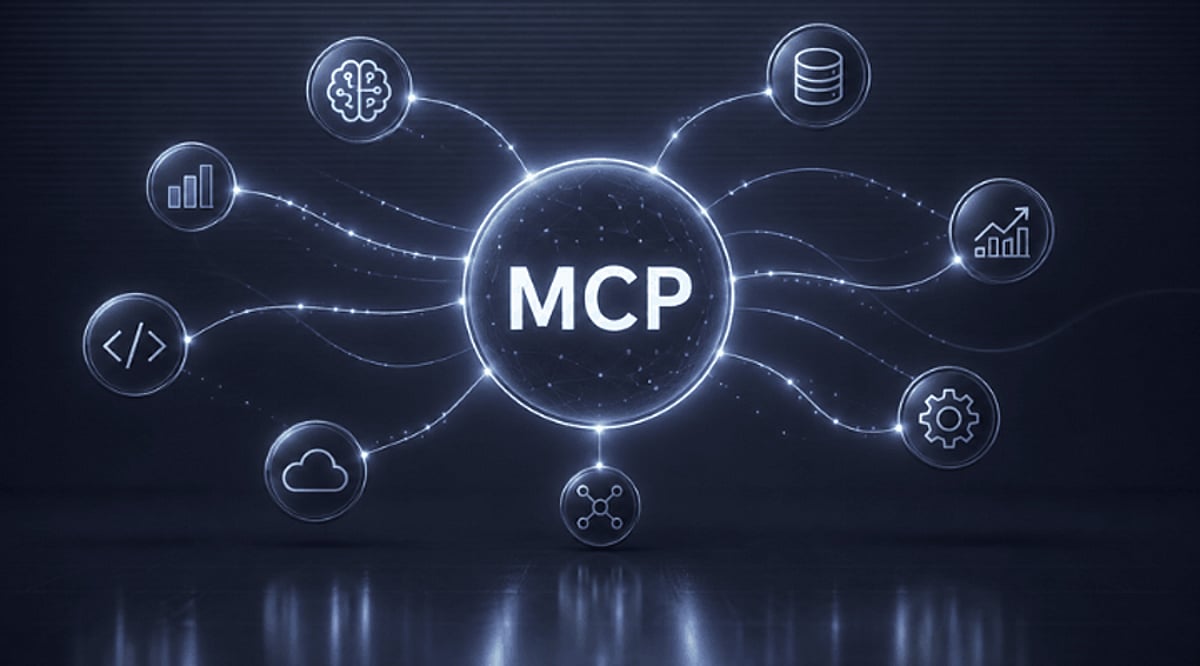
    AI applications increasingly require access to tools, databases, and external services. The Model Context Protocol (MCP) offers a standardized way for AI applications to connect with these capabilities, enabling developers to build more modular systems instead of creating separate integrations for every application.

    What Is MCP?

    MCP is an open protocol designed to connect AI applications with external tools and data sources. Rather than hard-coding every connection, developers can use a common framework to expose capabilities, making it easier to link models with services that provide useful context or actions.

    MCP Servers Provide Capabilities

    An MCP server can expose tools, resources, and prompts that an AI application can utilize. For example, a server might grant access to files, databases, APIs, or business systems. This creates a modular layer between the AI application and the underlying service.

    MCP Clients Connect the Pieces

    An MCP client resides inside an AI application and communicates with MCP servers. The client can discover available capabilities and request information or actions when needed. This separation allows developers to change or add services without rebuilding the entire AI application.

    Modular Pipelines Become Easier

    MCP simplifies complex AI workflows by separating the model from individual tools and services. Developers can connect different capabilities as required, which streamlines experimentation, maintenance, and expansion as an AI system grows.

    MCP Can Connect Enterprise Data

    Businesses can use MCP to connect AI applications with internal documents, databases, and software tools. This gives models access to relevant business context without building completely custom integrations for every system. Security and access controls remain essential when sensitive information is involved.

    The Future Depends on Secure Adoption

    MCP could become a critical building block for tool-using AI systems and agentic workflows. Its modular approach makes AI integrations easier to build and maintain. However, organizations still need authentication, permission controls, monitoring, and careful governance before connecting AI agents to critical systems.

  • Why Background Removal and Upscaling Outperform Image Generation in Commercial Workflows

    Why Background Removal and Upscaling Outperform Image Generation in Commercial Workflows

    In most large-scale commercial workflows, the bulk of compute time is spent on unglamorous tasks: separating subjects from backgrounds, removing unwanted objects, upscaling low-resolution files, and compositing subjects into new scenes. These operations run millions of times daily behind product listings, marketplace tiles, and ad creative. They don’t make for flashy keynote slides, but they form the backbone of reliable image processing at scale.

    The Edge Case Is the Edge

    Cutting a subject from a photo sounds trivial until you hit the boundary. Alpha matting must decide not only which pixels belong to the subject, but what fraction of each boundary pixel belongs there. A pixel at the rim of a wine glass contains both glass and wall. The hardest categories are predictable: hair, fur, chain-link mesh, tulle, backlit subjects, transparent objects, motion blur, and items whose colors blend into the background. A model that handles a matte-finish shoe perfectly may fail on a tulle skirt, and a pipeline that assumes uniform quality across a catalog will ship those failures silently.

    Narrow Models Beat Broad Ones

    Task-specific models consistently outperform general-purpose ones in this domain, and the reason has nothing to do with parameter count. Ask a text-to-image system to remove a background, and it often re-renders the subject instead. The output looks plausible, but the product in that image is no longer the original product. Generative systems optimize for plausibility—an image that a human accepts as coherent. Commercial image editing demands fidelity: preserving every stitch, every specific shade, pixel for pixel, while everything around it changes. These are different objectives, and a model tuned for one is a liability at the other.

    The practical solution is an ensemble pipeline: a segmentation model produces the matte, an inpainting model handles removal, a super-resolution model handles upscaling, and the generative model is confined to the region where invention is actually desired.

    Measurement Is Thin in Image Pipelines

    Most teams running image operations at volume lack a proper evaluation set. They have a handful of test images chosen for their difficulty, plus a subjective sense that quality is acceptable. When a provider updates a model without announcement, they discover the change through customer complaints. The remedy is already prescribed by frameworks like the NIST AI Risk Management Framework (v1.0, January 2023): a frozen benchmark set that includes hard categories, a quality metric that correlates with human rejection, and a regression check that fires when a model version changes.

    The Consumer End Collapsed the Stack

    Platforms like Pixelcut combine matting, object removal, upscaling, and background removal into a single app. The same consolidation has happened across the consumer market; what used to require five separate tools and compositing knowledge is now a sequence of taps on a phone. But the abstraction hides important details: a user cannot tell whether a poor result came from matting failure, aggressive compression, or a request routed to a different model due to capacity constraints. That opacity is harmless for social media posts but consequential for merchants whose listing images constitute their entire sales pitch.

    Batch Is the Real Requirement

    Single-image quality is a showroom metric. Volume workflows care about throughput that holds across hundreds of images without per-item babysitting, deterministic output so reruns reproduce results, per-image failure handling to flag hard mattes rather than ship bad cutouts, and a stable version contract so catalog appearance doesn’t change overnight. The last property is the one most commonly discovered by accident.

    Fidelity, Plausibility, and the Returns Desk

    An edited product image functions as an advertising claim. Invented texture, nudged colors, or generated reflections that imply a finish the item doesn’t have each become a representation a customer can act on. Returns and chargebacks are where the cost eventually lands. Whether a model hallucinates detail is both a technical question and a compliance question.

    Where the Next Gains Come From

    Not from bigger models. The gains available in this layer are mostly systems work: routing each image to the cheapest model capable of handling it, caching aggressively because catalogs are repetitive, moving inference on-device where latency and unit cost matter more than peak quality, and attaching provenance metadata so downstream systems know what was altered and how. Provenance is shifting fastest from nice-to-have toward procurement requirement as platforms push disclosure obligations upstream.

    Why the Unfashionable Layer Wins

    The demo-friendly part of computer vision is generation, where competition is fiercest and differentiation shortest-lived. The durable positions are being built in the parts nobody screenshots: reliable mattes on difficult materials, batch behavior that surprises no one, and evaluation good enough to catch regressions before a customer does. Measurable, unglamorous, and considerably harder to copy than a prompt.