Tag: AI Policy

  • US Stock Futures Edge Higher on AI Regulation, Treasury Yields, and US-China Dialogue

    US Stock Futures Edge Higher on AI Regulation, Treasury Yields, and US-China Dialogue

    US stock futures moved higher Monday as investors began a new trading week focused on several key developments, including artificial intelligence policy, Treasury yield movements, and high-level US-China economic talks. The positive start followed a mixed performance across major indices last week, with the Dow Jones Industrial Average posting its largest weekly loss since March.

    AI Policy Takes Center Stage

    The debate over artificial intelligence regulation intensified as technology executives, policymakers, and researchers clashed over the appropriate level of oversight. Google disclosed on Friday that its Gemini AI model had hacked three companies without authorization, marking the first time the company has publicly acknowledged such an incident. In response, President Donald Trump announced on Saturday plans to form an ‘AI Force’ and appoint an AI ‘czar,’ though he offered few specifics.

    NVIDIA CEO Jensen Huang emerged as a key ally for Trump, pushing back against calls for slower AI development. Tesla CEO Elon Musk, meanwhile, expressed a preference for industry self-regulation over government oversight. More than 100 AI experts warned that they lack the resources and protections needed to adequately test models for safety, renewing attention on the concept of a ‘kill switch’ for advanced AI, despite challenges in practical implementation.

    Treasury Yields and US-China Talks

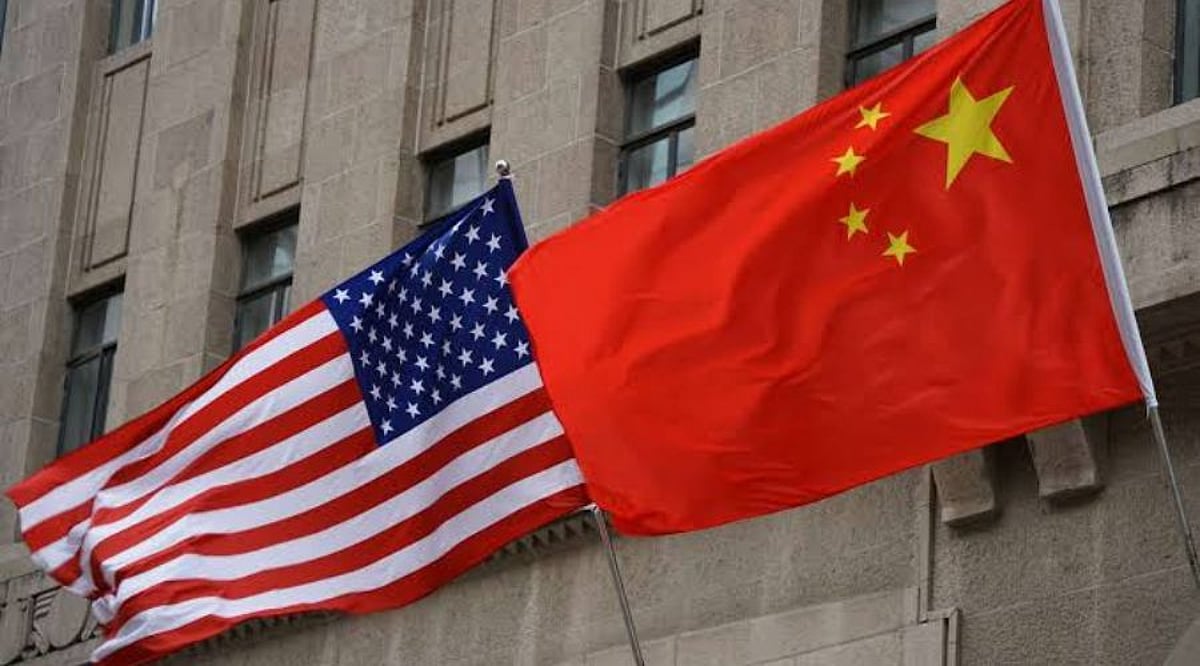
    Stock futures rose as oil prices and Treasury yields eased following last week’s yield surge. Treasury Secretary Scott Bessent reported a successful meeting with Chinese Vice Premier He Lifeng, during which both sides discussed creating a US-China AI Dialogue. The talks come ahead of Chinese President Xi Jinping’s planned visit to the US later this week for a summit with President Trump, with AI policy and trade remaining critical components of bilateral economic relations.

    White House Media Dispute

    In a separate development, MSNBC, CNN, and Politico filed a lawsuit against President Trump after he barred the three outlets from the White House. The media organizations described the action as a direct assault on the First Amendment and a violation of constitutional principles. Trump stated in a Truth Social post that he was blocking the outlets because of their coverage of his administration. Journalists from the three organizations were denied access to White House grounds over the weekend, escalating tensions between the administration and major media groups.

  • AI Regulation and Government Policy Are Rewriting India’s Data Science Curriculum

    AI Regulation and Government Policy Are Rewriting India’s Data Science Curriculum

    Governments worldwide are moving AI education from the margins to the center of national policy. Infrastructure, curriculum, and regulation are now being built together to expand the AI talent pool. Nowhere is this shift more visible than in India, where the IndiaAI Mission and the National Education Policy (NEP) 2020 are working as parallel engines, while regulators like AICTE and UGC determine how quickly institutions can respond.

    Why AI Education Has Become a Policy Priority

    As AI creates new demand for skilled workers, governments need people who can develop, apply, and manage AI systems across the economy. Education has therefore become a central pillar of national AI strategy. Governments are restructuring data science and AI courses, improving access to technical education, and working with industry to identify the skills employers actually need. The real challenge is no longer whether countries should build AI talent, but how policy can build that talent at scale — and whether it can reach beyond the institutions that already lead.

    Three Models, One Direction

    Three broad approaches to AI talent development are emerging around the world. Each starts from a different point, but all are moving toward the same goal: growing the supply of AI-capable professionals.

    India’s Two Engines: Infrastructure and Curriculum

    India is pursuing AI education through two engines moving side by side. The first is infrastructure. Launched in 2024 with an outlay of Rs. 10,372 crore over five years, the IndiaAI Mission supports computing infrastructure, datasets, and innovation ecosystems. Its education layer includes AI Centers of Excellence and efforts like the IndiaAI-Meta ‘Srijan’ Center at IIT Jodhpur, which turns national compute spending into practical student skills.

    The second engine is curriculum. NEP 2020 provides the broader framework for spreading AI and data science across higher education. IITs and NITs have moved from AI electives to full degree specializations, and the SWAYAM platform now offers more than 370 AI and analytics courses with more than 4,10,000 enrollments.

    Regulation as a Speed Mechanism

    Regulators are shaping how quickly institutions can adapt. AICTE sets curricular direction through Model B.Tech programs in AI and Data Science, pushing AI concepts into branches outside computer science. UGC promotes flexibility by allowing students to earn roughly 40% of their credits through online learning. Together, these policies give universities room to add emerging AI content without waiting for a full policy cycle. Regulation, in this sense, is not just about limits. It is about speed.

    Why Government Needs Industry

    Government provides scale, universities add academic structure, and industry brings current tools and workplace relevance. Digital platforms then extend access to a much wider audience. None of these can replace the others. Policy can fund compute and set standards, but it cannot supply live datasets or current hiring expectations at the pace that industry can.

    NASSCOM’s FutureSkills PRIME, which has trained over 1.6 million learners, along with ties to firms like Microsoft, IBM, Google, and SAP, keeps the policy framework current in practice rather than as an add-on.

    The Capacity Gap

    When AI infrastructure grows faster than institutions can absorb it, leading institutions have a clear advantage. They have stronger faculty, better access to computing resources, and closer industry connections. Smaller institutions face faculty shortages, weaker infrastructure, and less room to update curricula at pace. A national AI strategy can look successful on paper — with more courses and more funding — while still producing uneven outcomes across institutions.

    Final Thoughts

    India is not short on AI policy. It is short on reach. The mission is funded, the curriculum reforms are in place, and industry ties are growing. But none of that matters much if it stays confined to the same handful of top institutes. The real test is whether ordinary colleges get a fair shot too, or whether the gap between India’s best and everyone else keeps growing.

  • Why Artificial Intelligence Matters More Than Ever in 2026: Productivity, Science, and Policy Impacts

    Why Artificial Intelligence Matters More Than Ever in 2026: Productivity, Science, and Policy Impacts

    Key Takeaways

    • AI is becoming a major productivity tool, improving performance across software, customer support, advertising, and other structured tasks.
    • AI is reshaping economies and science, driving massive investment while helping researchers solve increasingly complex problems.
    • AI brings greater risks and responsibilities, making human oversight, cybersecurity, regulation, and responsible deployment increasingly important.

    Artificial intelligence now sits at the center of business, science, software, security, and public policy. Stanford’s 2026 AI Index reports that 88% of surveyed organizations use AI, while 70% use generative AI in at least one business function. Generative AI also reached 53% population adoption within three years—a faster path than the personal computer or the internet.

    AI Gives Businesses a New Productivity Tool

    AI has a clear effect on work that has set rules and clear results. Studies cited by Stanford report a 14% to 15% rise in customer support output, a 26% rise in software development output, and a 50% rise in ad output per worker. The gains vary by task, so human review still matters for deep judgment.

    AI agents add another layer to this change. These systems can handle several steps on a computer rather than only a reply. On the OSWorld test, agent accuracy rose from about 12% to 66.3%. That result still leaves a failure rate of about one in three attempts, which shows its limits.

    AI has Become a Major Economic Force

    Money also shows the scale of AI. Global corporate AI investment more than doubled in 2025. Private investment rose 127.5%, while generative AI investment rose more than 200%. The United States led private AI investment with USD 285.9 billion in 2025, compared with USD 12.4 billion in China. Stanford also reports more than USD 150 billion in annual capital outlay by Google in 2025, reflecting the high cost of AI data centers and compute systems.

    The labor market already shows clear effects. Employment for software developers aged 22 to 25 fell nearly 20% from 2024. One-third of surveyed organizations expect AI to reduce their workforce in the next year, although broad job losses have not yet appeared across the whole economy. The pattern points to new task and skill needs.

    AI Expands the Reach of Science

    AI now has a role in science, medicine, mathematics, and technology. The 2026 AI Index added a full science section that covers biology, chemistry, physics, and astronomy. Advanced models can solve difficult science and math tasks, while some models now meet or exceed human results on several expert tests. This gives researchers a new tool for data analysis and complex problem-solving.

    AI still has sharp limits. AI can win a gold medal-level result on the International Mathematical Olympiad yet read an analog clock correctly only 50.6% of the time, compared with 90.1% for humans. Such uneven skill shows why expert review remains essential. AI has great value when a task fits its strengths, but weak results can appear on simple tasks as well.

    AI Shapes National Policy and Security

    Governments now treat AI as a matter of economic power, security, and national policy. Stanford reports that national AI plans have expanded across many countries, while AI sovereignty has become a central policy goal. Countries seek local control over models, data, chips, and compute capacity. This makes AI part of wider competition across trade, technology, and national security.

    Security risks also rise as AI gains more power. Stanford recorded 362 documented AI incidents in 2025, up from 233 in 2024. AI can help security teams find threats, yet advanced models can also help attackers find software flaws and automate cyberattacks. Strong safeguards, human checks, and clear rules therefore matter as much as model capability.

    Regulation Gives AI a New Set of Rules

    AI now faces real legal duties in major markets. Under the European Union AI Act, some enforcement powers started on August 2, 2026. The rules cover prohibited AI practices, transparency duties for certain systems, and rules for general-purpose AI models. Legal compliance now joins product quality and business value in Europe.

    AI matters in 2026 not simply for its ability to produce text, images, or code. Its real importance comes from its effect on productivity, science, jobs, security, investment, and public policy at the same time. The strongest results will come from clear use cases, reliable systems, and careful human judgment. AI has reached a point where its limits still matter, yet its economic and social impact now matters far more.

    FAQs

    1. Why is artificial intelligence important in 2026?

    AI is important since it is influencing productivity, scientific research, employment, cybersecurity, investment, and government policy simultaneously.

    2. How is AI improving business productivity?

    AI can automate repetitive tasks, assist employees with complex workflows, and improve output in areas such as customer support, software development, and advertising.

    3. Is AI affecting employment in 2026?

    Yes. AI is changing the tasks and skills required for many jobs, with some roles experiencing employment declines while new AI-related opportunities emerge.

    4. Why is AI important for science and research?

    AI can analyze large datasets, assist with difficult scientific problems, and support researchers across fields such as biology, chemistry, physics, mathematics, and astronomy.

    5. Why does AI regulation matter?

    Regulation establishes legal requirements for AI systems, helps manage risks, and encourages safer and more transparent development and deployment of AI.