Tag: AI Pricing

  • DeepSeek V4-Flash Ignites AI Commodity Debate With Unprecedented Low Pricing

    DeepSeek V4-Flash Ignites AI Commodity Debate With Unprecedented Low Pricing

    The global artificial intelligence industry is witnessing an intense race where affordability is becoming as important as performance. Chinese AI startup DeepSeek has launched V4-Flash, an open-weight AI model designed for coding tasks that delivers competitive performance at one of the industry’s lowest operating costs. The launch comes as AI companies in the US and China continue to compete aggressively on pricing, efficiency, and model capabilities.

    Released under the MIT License, V4-Flash can be freely modified, commercially deployed, and run locally. The model uses a Mixture-of-Experts (MoE) architecture with 284 billion total parameters, while activating only 13 billion parameters during inference for greater efficiency. It also supports a one-million-token context window, allowing developers to process significantly larger datasets and longer conversations.

    AI Prices Continue to Fall

    The biggest highlight of V4-Flash is its pricing. According to Artificial Analysis, the model costs $0.14 per million input tokens and $0.28 per million output tokens, making it one of the world’s cheapest well-known AI models to operate. The research firm estimates that evaluating V4-Flash costs just $0.03 per benchmark test, compared with $0.86 for Moonshot AI’s Kimi K3, $1.86 for OpenAI’s GPT-5.6 Sol, and $3.15 for Anthropic’s Claude Fable 5.

    Despite its low price, V4-Flash remains highly competitive. According to Artificial Analysis, it scored 50 out of 100 on its Intelligence Index, matching Google’s Gemini 3.6 Flash while trailing Meta’s Muse Spark 1.1 and Z.AI’s GLM-5.2 by only one point. Reports also suggest the model outperformed Anthropic’s Claude Opus 4.8 on Arena.ai’s front-end coding leaderboard while costing roughly 99% less for similar coding workloads.

    AI Commodity Debate Gains Momentum

    The rapid decline in AI costs has strengthened the argument that AI models are gradually becoming commodities. As performance differences between leading models narrow, businesses may increasingly select providers based on pricing, flexibility, and deployment options rather than relying on a single AI platform.

    Microsoft CEO Satya Nadella has repeatedly argued that AI will eventually become a commodity. In a recent post on X, he urged organizations to build and retain their own AI capabilities instead of depending entirely on a handful of model providers. Meanwhile, OpenAI CEO Sam Altman said, “We will have so much usage of our models that we do not need to be a gigantically high-margin business to be able to afford model training.”

    Competition is also intensifying in China. DeepSeek now faces rivals including Alibaba, ByteDance, Moonshot AI, MiniMax, and Z.AI, while Alibaba recently introduced Qwen3.8-Max, its largest AI model so far. DeepSeek is also reportedly developing V4-Pro, a more powerful version of its latest model, indicating that the ongoing AI price war is likely to drive even lower costs and faster innovation across the industry.
  • Pega Infinity 26 Launches: Predictable AI Outcomes Without Token Fees

    Pega Infinity 26 Launches: Predictable AI Outcomes Without Token Fees

    Pegasystems Inc. (NASDAQ: PEGA) has announced the general availability of Pega Infinity™ 26, the latest version of its enterprise AI suite designed to help organizations scale artificial intelligence with confidence. The release tackles two critical barriers to AI adoption: unpredictable outcomes and unpredictable costs.

    Available through Pega Cloud® or in clients’ managed cloud environments, Pega Infinity 26 combines advanced agentic AI with built-in governance and a new pricing model that eliminates consumption-based AI charges. This enables enterprises to achieve both predictable AI performance and predictable expenses.

    Predictable AI with Flat-Fee Pricing

    At the heart of the release is the Pega Predictable AI™ architecture, which maximizes AI processing at design time to ensure runtime operations are extremely token-efficient. Clients pay a flat fee per resolved case—not per token—eliminating what Pega calls the “AI token tax.” This model allows enterprises to use as much AI as needed without worrying about runaway costs from token-based consumption.

    Pega also introduced a free AI Token Cost Calculator to help organizations estimate potential savings compared to traditional token-based models.

    Key Innovations in Pega Infinity 26

    • Pega Infinity Studio – An AI-native development environment that integrates clients’ preferred coding agents with built-in best practices from Pega Blueprint AI™, accelerating delivery of mission-critical applications while reducing risk.
    • Predictable AI agents and orchestration – New capabilities allow developers to connect and orchestrate both Pega and third-party AI agents within governed workflows, ensuring compliance and consistent outcomes.
    • Pega Customer Engagement Studio – A unified workspace for marketers to create personalized 1:1 campaigns in minutes at scale, with AI agents handling ideation through execution.
    • Design and runtime MCP support – Clients can use MCP (Model Context Protocol) to connect with tools like Claude Code, GitHub Copilot, and OpenAI Codex for building applications, and invoke agents from assistants like ChatGPT and Office 365 Copilot.

    Market Context: The Need for Cost Transparency

    Despite massive enterprise investment in AI, many organizations have struggled to realize meaningful business value. Concerns around trust, risk, and security have slowed large-scale deployment. Escalating costs and uncertain ROI threaten the viability of many AI initiatives. With Pega Infinity 26, every AI-driven interaction adheres to business rules and regulatory standards while removing pricing unpredictability.

    Executive Insight

    “Enterprises are seeing tremendous potential in AI and are now focused on turning that momentum into measurable business outcomes,” said Kerim Akgonul, chief product officer at Pega. “The next phase of AI adoption is about scaling results with confidence. Pega Infinity 26 removes two of the biggest barriers to success—unpredictable outcomes and unpredictable costs—by building governance into AI-driven workflows and aligning pricing with completed work.”

    Pega Infinity 26 is available now. For more details, visit www.pega.com/infinity.

  • Palo Alto Networks CEO: AI Token Prices Must Plummet 90% for Enterprise Scale Adoption

    Palo Alto Networks CEO: AI Token Prices Must Plummet 90% for Enterprise Scale Adoption

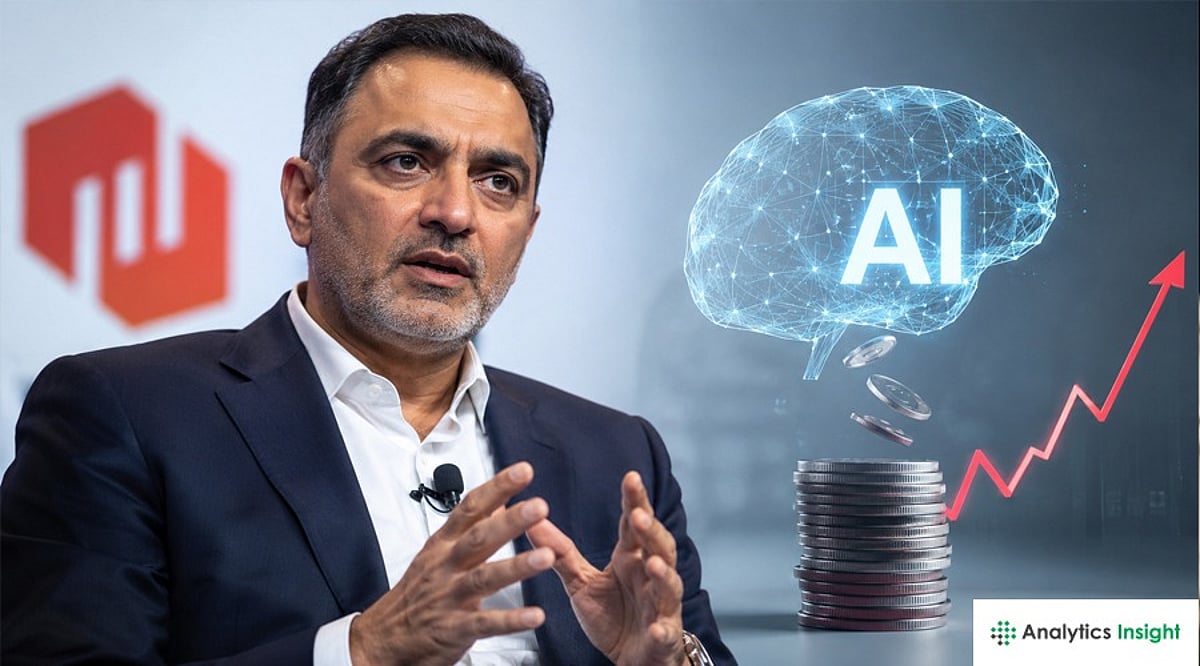
    Palo Alto Networks CEO Nikesh Arora has issued a stark warning: current artificial intelligence token pricing is too high to support broad enterprise adoption. In a recent interview, Arora argued that token costs need to fall by as much as 90% within the next two years before companies can deploy AI across daily operations at scale.

    Arora acknowledged that recent improvements in token efficiency—such as a 54% reduction in tokens used for agentic coding by OpenAI’s latest model—are “a good start.” However, he emphasized that the industry still requires another major reduction. He expects token costs to drop to about 20% of current levels within 12 months, and potentially to just 10% the following year. Lower prices would allow businesses to run more automated tasks without straining technology budgets and would enable longer-term AI project planning.

    Arora is not alone in questioning present AI pricing. Palantir CEO Alex Karp has also criticized token-based pricing from major AI developers, suggesting many companies may delay adoption while they evaluate value. Karp pointed to open-weight models as a cheaper alternative, giving firms more control over costs and infrastructure. Meanwhile, several Chinese developers have released lower-cost models that compete with U.S. products, expanding enterprise options for balancing performance, security, and operating expenses.

    Despite these pricing concerns, massive infrastructure investments continue. Companies like SpaceX and Amazon have raised billions in debt to fund data centers, chips, and energy capacity. Arora noted that strong demand for AI could sustain this spending while the market adjusts. “The demand continues to be infinite,” he said, adding that costs and investment levels may eventually balance as models become more efficient.

    For enterprises, the next wave of AI adoption hinges on how quickly providers reduce token costs. Companies are testing more tools, but predictable and lower pricing is essential before they can expand use across daily workflows.

  • Claude AI Free vs Pro: A Detailed Pricing Comparison to Help You Choose

    Claude AI Free vs Pro: A Detailed Pricing Comparison to Help You Choose

    Claude AI has become a go-to assistant for writers, students, developers, and business users. While the free version handles everyday tasks, the Pro plan unlocks higher usage limits and priority access for those who rely on AI throughout the day. This comparison breaks down both tiers to help you decide which best fits your workflow.

    Claude Free Plan: What You Get at No Cost

    The free tier is the ideal starting point. After signing up, you can chat with Claude for tasks like answering questions, drafting content, summarizing information, brainstorming ideas, or getting coding help—all without spending a dime. For casual users who need only a few conversations per day, the free plan is perfectly sufficient.

    Examples include a student writing an assignment, a content creator crafting social media captions, or someone composing emails and doing personal research. The free plan lets you experience Claude’s natural writing style and reasoning abilities without any commitment. However, regular users may soon hit usage caps, especially during peak hours when conversation attempts are limited.

    Claude Pro Plan: Features and Pricing

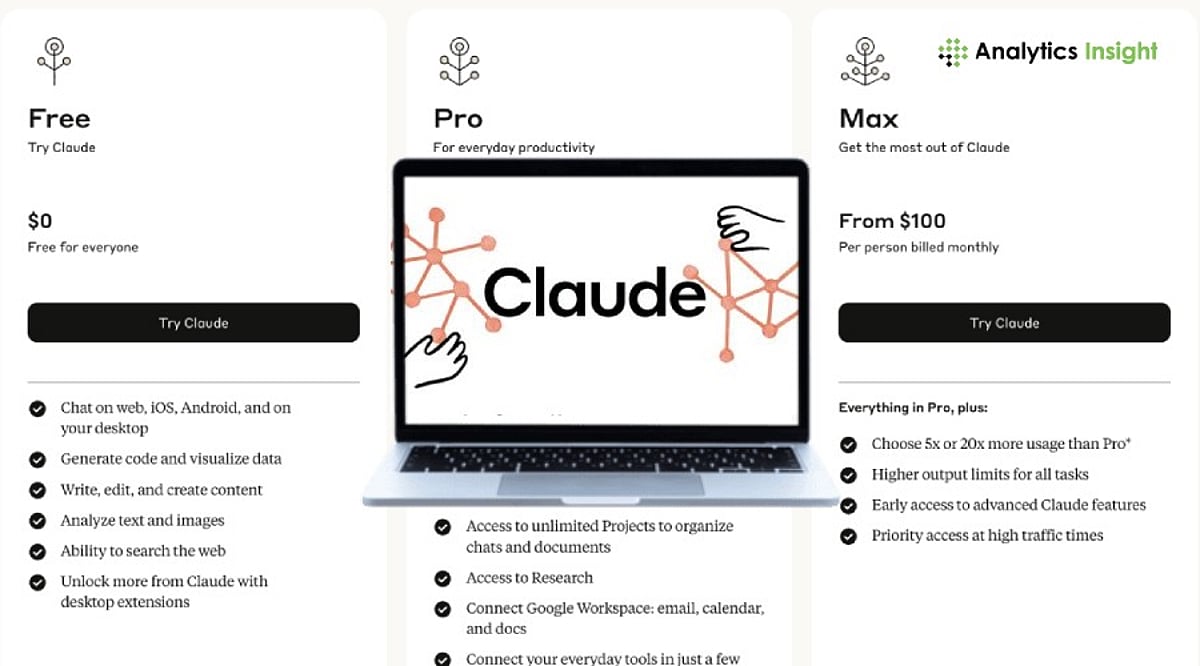
    Claude Pro costs $17 per month. It is designed for professionals and heavy users who depend on AI daily. Benefits include more conversations, better availability during busy times, and early access to the latest model improvements. Instead of worrying about limits, Pro subscribers can maintain uninterrupted workflows.

    Anthropic also offers a top-tier subscription called Claude Max at $100 per month for users with extreme demands, but the standard Pro plan meets the needs of most power users.

    Comparing Free vs Pro: A Quick Look

    Both plans share the same core AI capabilities for writing, summarizing, and explaining. The key difference lies in usage volume:

    • Free: Limited conversations, occasional throttling during peak times, no priority access.
    • Pro: Higher usage limits, reduced restrictions during peak hours, faster access to updates.

    A user who checks Claude a few times a week may never need the paid plan. In contrast, a content writer, developer, researcher, or marketer who works with AI for several hours each day will quickly exceed free tier limits. That makes Pro the logical choice for daily workflows.

    Which Plan Offers Better Value?

    The free plan is the best entry point for anyone new to AI. It allows you to test Claude’s capabilities without financial risk. The Pro plan, however, serves a clear purpose: uninterrupted productivity for frequent users. There’s no pressure to upgrade immediately. Start free, use it for a few weeks, and decide whether the added access justifies the cost.

    Frequently Asked Questions

    1. Is Claude AI worth using for free?

    Yes. The free plan offers enough features for writing, studying, researching, brainstorming, and everyday tasks. Many users never feel the need to upgrade unless they use Claude heavily.

    2. Who should pay for Claude Pro?

    Claude Pro is best for writers, developers, researchers, marketers, and professionals who use AI throughout the day and need higher usage limits with fewer restrictions.

    3. What is the main benefit of Claude Pro?

    The biggest advantage is higher usage limits. Pro users have more conversations and face fewer restrictions during busy periods.

    4. Can I upgrade from Free to Pro later?

    Yes. Users can start with the free plan and switch to Pro whenever they need more access or a smoother experience.

    5. Does Claude Pro have better AI than the free version?

    Both plans use Claude’s core AI technology. However, Pro users often receive access to newer improvements and features sooner than free users.