Tag: AI privacy

  • Microsoft Copilot Privacy Warning: Human Reviewers May See Your AI-Edited Photos

    Microsoft Copilot Privacy Warning: Human Reviewers May See Your AI-Edited Photos

    Microsoft Copilot users who rely on the AI assistant to edit photos may want to think twice before uploading sensitive images. Recent reporting highlights that human contractors can review user prompts, uploaded pictures, and AI-generated edits as part of Microsoft’s quality and safety procedures.

    Why Human Review Is Happening

    According to Microsoft’s privacy documentation, some Copilot conversations may be subject to automated and human review. The stated purpose is to improve product performance and ensure the AI follows safety guidelines. Trained AI experts may examine conversations to evaluate the accuracy and safety of Copilot’s responses.

    Microsoft also notes that limited human review can take place when investigating suspected violations of its Code of Conduct. In those cases, users cannot opt out.

    How Uploaded Images Are Handled

    Microsoft’s transparency documentation confirms that Copilot can analyze and edit uploaded images, using them to respond to user requests. For Copilot Vision specifically, Microsoft says images captured or shared during a session are processed to deliver the requested response and are deleted within 30 days after the conversation ends.

    The company says it removes identifying information from images and files before using them in AI model training. That process can include de-identification, metadata removal, and face blurring. However, privacy protections vary by product and use case, so users should review the applicable settings and terms before uploading material.

    What Users Should Do

    The practical takeaway is simple: avoid uploading confidential documents, highly sensitive photos, or images with private information unless you understand how the service handles data. If a photo contains identifiable people or personal details, consider whether the convenience of AI editing is worth the privacy risk.

    Microsoft’s terms of use also warn that Copilot may involve automated and manual processing of user data, and the company advises users not to share information they would not want reviewed.

  • OpenAI Launches Astra for Law: GPT-6 Powered Legal Research and Writing Platform

    OpenAI Launches Astra for Law: GPT-6 Powered Legal Research and Writing Platform

    On September 17, 2026, OpenAI announced Astra for Law, a new platform designed specifically for law firms and legal technology companies building AI-powered workflows. The offering is built on GPT-6 Astra, OpenAI’s most advanced model to date, and combines a comprehensive legal search index with specialized tools for legal research and writing.

    Comprehensive Legal Search Capabilities

    Astra for Law features a legal search index covering over 230 million URLs, including U.S. case law, statutes, regulations, court rules, and administrative decisions. OpenAI partnered with Free Law Project to integrate its CourtListener case-law collection, enabling users to find relevant authorities, locate specific passages, and understand their application to specific legal questions.

    Performance Benchmarks

    According to OpenAI, Astra for Law achieved a score of 54% on Vals AI’s Legal Research Bench, significantly outperforming GPT-6 Astra with standard web search, which scored 38.7%. The platform also found 24% more reference cases on case-law-focused queries and retrieved up to 54% more relevant passages from correct court opinions in audited tests.

    Legal Analysis and Writing Tools

    The platform includes custom instructions for legal analysis and writing. These tools assist in applying research to a client’s facts, developing arguments or deal terms, identifying weaknesses, and accounting for uncertainty. OpenAI states the system can distinguish a court’s holding from other observations and flag cases that could weaken an argument.

    Privacy Controls and Ecosystem Plugins

    For firms handling confidential client information, OpenAI introduced a Trusted Access Program for eligible law firms, providing Zero Data Retention on the API. ChatGPT Enterprise usage remains excluded from human review by default.

    Astra for Law also launches with 26 partner-built plugins covering legal practice and business operations, including integrations with iManage, Intapp, and Thomson Reuters (HighQ and CoCounsel Legal).

  • Google Gemini Now Uses Google Photos as References for Personalized AI Images

    Google Gemini Now Uses Google Photos as References for Personalized AI Images

    Google Gemini is taking personalized image creation further by tapping into your existing Google Photos library. With Personal Intelligence enabled, the AI can pull relevant photos as visual references and combine them with Nano Banana’s image-generation capabilities to produce images that reflect the people, pets, places, and moments you care about.

    Key Takeaways

    • Gemini can use relevant Google Photos as visual references when Personal Intelligence has access.
    • Private Google Photos libraries are not directly used to train Gemini models.
    • Personal Intelligence availability varies by country, and some Nano Banana features are limited to eligible US users.
    • Users can review and change the photo reference with the Sources option.

    A Photo Library That Does More Than Store Memories

    For years, Google Photos has been a place to organize and preserve memories. Now those same photos can act as source material for new AI-generated images. When Personal Intelligence is connected to Google Photos, Gemini can search the library for visual context, select a relevant image, and use it as a reference for a new creation.

    This removes the need to upload a separate photo for every request. You can simply describe a scene that involves a familiar person or pet, and Gemini will locate a suitable photo from the connected library, then transform it into a new style, setting, or situation.

    How Gemini Chooses the Right Photo

    Personal Intelligence gives Gemini access to selected Google services, including Google Photos. According to Google, the system works with named face groups in Google Photos, which helps Gemini recognize family members and pets. When you make a request, Gemini can search for relevant photo context and hand the chosen image to Nano Banana, the model family responsible for generating the final picture.

    The process supports far more than a single selfie. If your library contains years of family trips, celebrations, or pet photos, those images give Gemini extra context for producing a more personal result.

    Google also included a transparency feature: the Sources option shows which photo Gemini used as a reference. If the selection is off, you can choose another image from the library instead.

    Privacy and AI Training: What Google Says

    Privacy is the biggest question surrounding this feature. Google says Gemini does not directly train its models on private Google Photos libraries. The connected photo data is instead used as context for individual requests when Personal Intelligence has permission.

    This distinction matters: allowing Gemini to access a specific photo for a task does not mean the entire private library is treated as training material. At the same time, Google notes that some Gemini prompts and model responses may support service improvement, depending on the user’s settings and applicable policies.

    Users also have control over connected services. Through Personal Intelligence, you can connect or disconnect Google Photos, Gmail, YouTube, Search, or other services at any time. Control options may vary by feature, location, account type, and age.

    Availability: India, the United States, and Beyond

    Google expanded Personal Intelligence to India in April 2026. Users there can optionally connect Gemini to Google Photos, Gmail, YouTube, and Search. India also received a related Google Photos tool called Help me edit, which lets users describe changes in natural language, such as removing sunglasses or altering an expression.

    However, Personal Intelligence availability does not guarantee every Gemini photo feature is available in every market. Google’s help documentation currently describes the Nano Banana feature with Personal Intelligence as available in the United States for eligible users aged 18 and above.

    In January 2026, Google launched Personal Intelligence in the United States. By June, personalized image access expanded to all eligible US users, including free accounts. A July update added the ability to place a person into an image through an avatar, avoiding the need to upload a photo repeatedly.

    What This Means for the Future of AI Image Creation

    The shift is bigger than a smarter image editor. Gemini can now treat personal visual context as part of a creative request. The photo library supplies the reference, Personal Intelligence provides the context, and Nano Banana turns both into a brand-new image.

    This changes the role of a photo library. It is no longer just a record of what happened in the past. With permission, selected photos can become building blocks for new digital scenes, making AI image generation feel far more personal.

    FAQ

    Can Gemini use photos from Google Photos for AI images?

    Yes. Gemini can use relevant Google Photos as references when Personal Intelligence has access to the connected service.

    Does Google train Gemini directly on private Google Photos?

    Google says it does not directly train its models on private Google Photos libraries.

    Can Gemini show which photo it used?

    Yes. The Sources option shows which photo was selected as a reference, and you can replace it with another image.

    Is Personal Intelligence available in India?

    Yes. Google launched Personal Intelligence in India in April 2026, although specific features may differ by region.

    What role does Nano Banana play?

    Nano Banana provides the image generation capabilities that turn personal photo references and written requests into new AI images.

  • Apple Watch Series 12’s Audio Intelligence and Privacy Controls Hint at Smart Glasses Future

    Apple Watch Series 12’s Audio Intelligence and Privacy Controls Hint at Smart Glasses Future

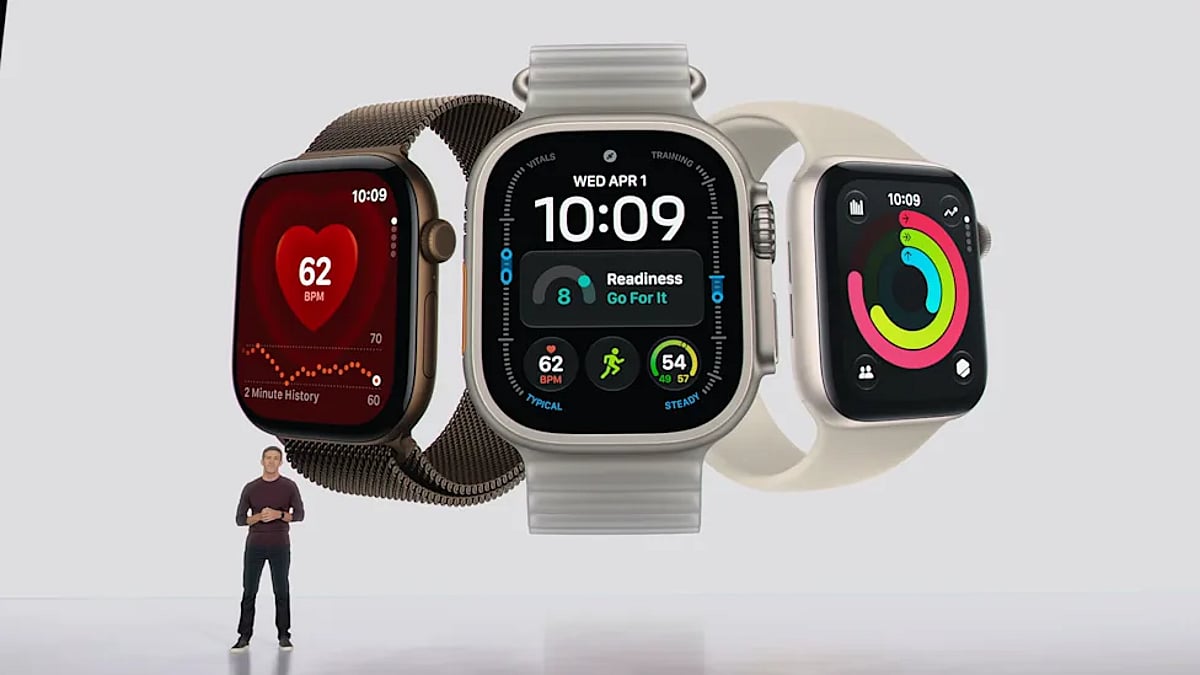
    Apple introduced new Audio Intelligence tools on the Apple Watch Series 12, allowing the device to listen for sounds, recall recent conversations, and create conversation summaries. However, the company built several privacy controls around the technology, offering a possible look at how it could handle similar concerns with future smart glasses.

    Audio Intelligence Features

    Apple’s Audio Intelligence package includes Sound Recognition, Live Rewind, Siri Recap, and Shazam. Sound Recognition listens for noises such as alarms, sirens, doorbells, and crying babies. Shazam can identify music playing near the user and display the song information on the watch.

    Live Rewind and Siri Recap take the technology further. Live Rewind keeps a rolling buffer of about 15 seconds of nearby conversation. When the wearer double-presses the Digital Crown, the watch converts the previous 15 seconds into text. Apple designed the feature for situations where users may have missed information during a conversation.

    Siri Recap can create short summaries of conversations that users can review later. Instead of producing a full transcript, the system generates a title and key points. Apple says the feature can help users stay engaged during meetings or conversations without constantly taking notes. Apple plans to release Siri Recap and Live Rewind in beta later this year.

    On-Device Audio Privacy

    Apple built Audio Intelligence around the Secure Exclave inside the S11 chip. The dedicated hardware compartment processes audio separately from watchOS and other apps. According to Apple, neither apps, the operating system, the user, nor Apple can directly access the raw audio.

    Live Rewind processes its transcription locally on the Apple Watch. Its temporary audio buffer is repeatedly overwritten rather than stored as a permanent recording. When the feature activates, the watch also plays an audible chime, even when the device is set to silent or connected to headphones.

    Siri Recap follows a different process. The watch converts speech into text before deleting the original audio. Apple then uses Private Cloud Compute to process the text and prepare the summary. The company says its cloud system prevents Apple from accessing the submitted data. Apple also says Siri Recap does not identify speakers or connect statements to specific people. The system is designed to leave out sensitive details such as financial information, authentication data, and government-issued identification numbers.

    Privacy Controls for Wearables

    The public-facing warning used by Live Rewind could provide a clue about how Apple may handle recording features on future wearable products. Apple did not announce consumer smart glasses, but reports have suggested the company is developing AI-powered glasses that could eventually enter the market.

    Wearable cameras and microphones have raised privacy concerns because people nearby may not always know when recording takes place. Apple’s approach on the Series 12 adds both visual and audible signals when Live Rewind activates. The watch displays a full-screen animation and microphone indicator while also playing its warning sound. Such controls could become useful if Apple adds similar listening or recording functions to smart glasses. Rather than relying only on software permissions for the wearer, the company could also provide visible or audible notices for people nearby.

    Apple Expands AI on Watch

    The privacy controls arrive as Apple broadens the Apple Watch beyond health and fitness. Series 12 introduces a new Health Sensing System, more frequent heart-rate and heart-rate variability measurements, a readiness score, and updated step tracking.

    The S11 chip also supports Siri AI through watchOS 27, bringing personal context features and broader knowledge functions to the watch. Apple Watch Series 12 starts at $399 in the U.S., with store availability beginning September 18. As Apple adds more AI tools to devices worn throughout the day, the Series 12 shows how the company is combining always-available intelligence with limits on how personal audio is processed, stored, and disclosed.

  • Stanford Online Human-Centered Generative AI Course: Ethics, Governance, and Responsible Innovation

    Stanford Online Human-Centered Generative AI Course: Ethics, Governance, and Responsible Innovation

    Stanford Online, in collaboration with Stanford HAI, offers the Human-Centered Generative AI course—an independent learning program focused on the responsible use of generative AI. Through case studies and expert guidance, the course explores ethics in design, governance, privacy, and building trusted human-centric AI systems.

    What You’ll Learn

    • Core principles of human-centric AI and generative AI
    • Design ethics for AI, including fairness, transparency, and accountability
    • Natural language processing techniques and algorithmic fairness
    • AI governance, policies, and regulations
    • Approaches for safe and responsible AI implementation

    Accessibility and Value

    This fully virtual course allows registration at any time within a 60-day window. It features video lectures from respected Stanford professionals, hands-on learning materials, and real-world case studies. Upon completion, participants receive a certificate of completion.

    Comprehensive Curriculum

    • Human-Centered AI: Foundations, principles, and applications
    • Ethics of Generative AI: Fairness, transparency, algorithmic bias, and responsible development
    • AI Governance: Frameworks and related policies
    • Privacy & Security: Data privacy, legal aspects, and safety measures in AI
    • Responsible Innovation: Building AI systems that benefit organizations and society

    Eligibility Criteria

    The course is designed for business managers, AI professionals, policymakers, and technology managers. It is also suitable for learners interested in the responsible use of AI and professionals researching AI ethics and privacy issues. No specific background in computer science is required.

    What Makes This Program Stand Out

    Human-Centered Generative AI uniquely integrates research from Stanford HAI with insights from leading AI researchers. Unlike typical single-professor courses, this program uses a conference-style educational format, allowing learners to gain knowledge from specialists in computer science, law, ethics, privacy, policy, and AI governance.

    Final Thoughts

    This Stanford Online professional course empowers learners to build, evaluate, and implement responsible AI systems. Covering AI fundamentals alongside ethics, governance, privacy, fairness, and policies, it enables professionals to confidently explore the opportunities offered by generative AI.

  • Claude AI Chat Conversations Leak Through Google and Bing Search Indexing

    Claude AI Chat Conversations Leak Through Google and Bing Search Indexing

    A newly uncovered privacy issue has emerged involving Anthropic’s Claude AI, where shared chat links have been discovered in Google and Bing search results. Users reported that public Claude conversations—covering topics such as political advice, legal questions, and personal discussions—could be found through simple search queries, sparking concerns about unintended data exposure.

    The issue came to light via a Reddit post highlighting that certain Claude chat links appeared in search engine results. Claude AI includes a feature allowing users to generate public shareable links for their conversations. While Anthropic stated that it had instructed Google’s crawler not to index these pages through a robots.txt file, experts note that this method alone does not guarantee exclusion from search listings.

    A spokesperson for Claude AI explained: “Shareable links are not guessable or discoverable unless people choose to share them themselves. When someone shares a conversation, they are making that content publicly accessible, and like other public web content, it may be archived by third-party services.” Both Google and Bing have emphasized that website operators should implement a noindex tag to prevent pages from appearing in search results. Analysts observed that the affected Claude chat pages lacked this additional security measure.

    Glenn Gabe, an SEO and AI search consultant at G-Squared Interactive, commented: “If you block Google or Bing from crawling your content, they can still index those URLs, just without crawling the content.” This suggests that even noindex directives may not fully prevent chat leaks if the URLs are publicly accessible.

    How Search Engines Indexed the Chats

    Search engines continuously scan public websites to discover new pages—a process called indexing. Once indexed, a page can appear in search results for relevant queries. Website owners can use tools like robots.txt or noindex tags to block indexing, but if these protections are missing, public links can be added to search results. This scenario unfolded with some shared Claude chat pages before Anthropic implemented changes.

    This incident underscores the importance of robust privacy controls for AI chat platforms and the need for users to be cautious when making conversations publicly accessible.

  • Tech News Roundup: Redmi K100 Teaser, Apple India Slowdown, Claude AI Privacy, Open Secure AI Alliance, Amazon Great Freedom Sale

    Tech News Roundup: Redmi K100 Teaser, Apple India Slowdown, Claude AI Privacy, Open Secure AI Alliance, Amazon Great Freedom Sale

    Here’s a quick roundup of today’s top tech stories.

    Redmi K100 Teaser

    Xiaomi’s Redmi brand has released a teaser for the upcoming K100 series, hinting at a flagship device with advanced features. The teaser has generated significant buzz among smartphone enthusiasts.

    Apple iPhone Shipment Decline in India

    Apple is facing a slowdown in iPhone shipments in India, a key growth market. The decline is attributed to increased competition from local brands and changing consumer preferences.

    Claude AI Privacy Concerns

    Anthropic’s Claude AI is under scrutiny over privacy issues, as users raise concerns about data handling and transparency. The company has yet to issue a detailed response.

    Open Secure AI Alliance Launches

    A new industry consortium, the Open Secure AI Alliance, has been formed to promote secure and transparent AI development. The alliance aims to establish best practices for AI safety and privacy.

    Amazon Great Freedom Sale Announced

    Amazon has announced its Great Freedom Sale in India, offering significant discounts on electronics, smartphones, and other products. The sale is expected to start soon.

  • How to Disable AI Data Sharing on Meta Apps: A Step-by-Step Guide

    How to Disable AI Data Sharing on Meta Apps: A Step-by-Step Guide

    Meta’s apps, including Facebook and Instagram, use artificial intelligence to power features like recommendations, moderation, and personalization. If you’re concerned about your data being used for AI training, you can adjust your settings to limit or remove AI data sharing. Follow this guide to take control of your privacy across Meta’s platforms.

    Step 1: Access Meta’s AI Privacy Settings

    Open the Meta app you use most, such as Facebook or Instagram. Navigate to the Settings menu and look for the Privacy Center or an AI-related section. Meta periodically updates these options, so the exact location may vary depending on the app version and your region.

    Step 2: Open the Privacy Center

    The Privacy Center consolidates many controls related to your account and personal information. From here, you can review how Meta uses your data across its services. Read each option carefully before making changes, as some settings affect how AI features work inside the apps.

    Step 3: Review AI Data Usage Options

    Find the section that explains how Meta AI may use your information. Depending on your location, you may see options to object to certain data processing or limit how your public information is used. Review every setting before submitting any request or preference.

    Step 4: Submit an Objection Request

    If your region supports it, Meta allows users to submit a request to object to AI training using their personal information. Complete the required form with accurate details and send it through the app or website. Meta may review the request before confirming any changes.

    Step 5: Limit Public Information Sharing

    Reduce the amount of public information available on your Facebook and Instagram profiles. Delete old public posts if needed, change future posts to Friends or Private, and review profile visibility. Less public content means less information that could potentially be available for AI systems.

    Step 6: Manage Connected App Permissions

    Check which third-party apps and websites are connected to your Meta account. Remove services you no longer use and revoke unnecessary permissions. This helps reduce the amount of personal information shared across platforms and improves your overall account privacy.

    Step 7: Keep Privacy Settings Updated

    Meta regularly changes its privacy tools and AI features. Review your account settings every few months to see if new controls have been added. Staying updated helps you keep better control over your personal information and understand how your data may be used.

  • Top 5 AI Pitfalls Businesses Must Sidestep in 2026

    Top 5 AI Pitfalls Businesses Must Sidestep in 2026

    Smart AI Adoption

    Artificial intelligence is becoming a key part of business operations in 2026. It helps companies automate tasks, improve customer experiences, and make faster decisions. However, AI delivers the best results only when it is used wisely. Avoiding these common mistakes can save time, reduce costs, and improve long-term business success.

    1. Using AI Without Clear Business Goals

    Many businesses rush to adopt AI because it is popular, not because it solves a real business problem. This often leads to wasted investments and disappointing outcomes. Start with a clear objective, identify the challenge you want to solve, and measure success using meaningful business results instead of hype.

    2. Ignoring Data Quality

    AI is only as good as the data it receives. Poor-quality, outdated, or incomplete data can produce inaccurate recommendations and unreliable predictions. Businesses should regularly clean, organize, and verify their data while maintaining consistent standards. Good data is the foundation of every successful AI strategy.

    3. Replacing People Instead of Supporting Them

    AI should enhance employees’ work rather than replace them entirely. Human judgment, creativity, emotional intelligence, and problem-solving skills remain essential in many business situations. Companies achieve the best outcomes when AI handles repetitive tasks, allowing employees to focus on innovation, customer relationships, and strategic decision-making.

    4. Forgetting Privacy and Security

    As AI systems process large amounts of business and customer data, security becomes more important than ever. Weak safeguards can lead to data leaks, legal issues, and loss of customer trust. Businesses should implement strong cybersecurity practices, limit data access, conduct regular audits, and follow all applicable privacy regulations.

    5. Skipping Employee Training

    Introducing AI without preparing employees often leads to confusion, low adoption, and misuse of the technology. Staff should receive practical training on how AI tools work, their limitations, and the best ways to use them responsibly. Continuous learning helps employees stay confident as AI continues to evolve.

    Bonus: Expecting Instant Results

    Many companies expect AI to transform their business overnight, but real success takes time. AI models require testing, fine-tuning, and regular improvements before delivering consistent value. Businesses that stay patient, monitor performance, and refine their AI strategy continuously are more likely to achieve sustainable growth and long-term competitive advantage.

    This article was originally published on Analytics Insight and has been adapted for our readers.

  • Stargate LLM: The First Community-Owned AI Platform Explained

    Stargate LLM: The First Community-Owned AI Platform Explained

    Nearly 9 in 10 companies globally now use artificial intelligence in at least one business function. Generative AI reached 53% global population adoption within three years of ChatGPT’s release – a faster curve than both the personal computer and the internet, according to Stanford HAI’s 2026 AI Index. The world will spend an estimated $2.52 trillion on AI this year alone. And yet, the economics of this industry remain strikingly one-directional. Users pay subscriptions, generate data, and build engagement. The companies capturing that value – OpenAI at a $300 billion valuation, Anthropic crossing $30 billion in annualized revenue – are entirely closed to retail participation. The people who built the user base own none of it.

    Stargate (STARGATE) is a crypto-native AI platform designed to change that structural equation. This guide covers what it is, how it works, and what prospective participants should understand before engaging with the project.

    What is Stargate LLM?

    Stargate is a full-stack AI ecosystem accessible through wallet-based login and powered entirely by crypto payments. At launch, the platform offers conversational AI with access to advanced language models, image generation using diffusion models, video generation for creative and commercial workflows, private AI search that does not log queries or link activity to user identity, creator tools for content generation and distribution, a developer-focused coding platform, the Stargate Grid (a DePIN compute network), enterprise compute services, and Stargate Studio and Market for AI agent creation and deployment.

    Users connect a wallet, fund their account with crypto, and access the full suite of tools without providing personal financial information, linking a bank account, or entering credit card details. No email signup is required. The platform is designed from the ground up for the 560 million people globally who hold cryptocurrency and the growing population of users who prioritize privacy in their interactions with AI.

    Utility of STARGATE Token

    The STARGATE token is designed as a hybrid utility token. It serves as both the native currency of the Stargate ecosystem and a mechanism for community participation in platform growth. The token is required or incentivized for AI subscriptions, chat credits, image and video generation, AI agent deployment, API access, private mode, premium model upgrades, staking, governance, referral rewards, and creator rewards.

    Total fixed supply is 150 billion tokens. No additional tokens will be minted. The allocation model is designed around community-first principles: 50% to Proof of Usage rewards, 33.3% to presale participants, 12.7% to community and ecosystem growth, 3% to liquidity, and 1% to the team. The 1% team allocation is locked for 24 months, one of the longest team locks in the industry at this stage.

    Understanding STARGATE Presale

    The presale is structured across ten batches with escalating entry prices. Batch 1 begins at $0.0005 per token, scaling through nine subsequent tiers to a launch price of $0.025, a 50x spread between the earliest entry and the public listing. Total raise target across all batches is $77.5 million, with hard caps on each batch that trigger automatic progression to the next price. Presale tokens vest with 40% unlocked at the token generation event and the remaining 60% released monthly over three months. Bonus tokens carry a 12-month lock followed by 12-month monthly vesting.

    Proof of Usage

    Traditional blockchain reward mechanisms compensate miners or validators for securing infrastructure. Stargate introduces a different model called Proof of Usage, which rewards real users who generate genuine value within the AI ecosystem. Qualifying activities include using conversational AI, generating images and videos, referring active users, staking tokens, providing structured model feedback, deploying AI agents, purchasing subscriptions, and creating templates used by others. Fifty percent of the total token supply, 75 billion tokens, is allocated to this rewards pool, the largest single allocation in the model.

    The Vault

    The Stargate Vault is the platform’s staking mechanism. Users lock tokens in the Vault to unlock enhanced benefits including free monthly AI credits proportional to staking amount, reduced generation costs, priority processing, higher usage limits, private AI mode, access to premium models before general release, early access to beta features, API credits, VIP support, and staking rewards drawn from platform revenue and the Proof of Usage pool.

    Privacy Architecture

    Stargate is built around privacy as a default rather than an optional setting. Login happens through a wallet, not an identity-linked email or government ID. AI queries are not logged in a way that links them back to the user. All payments run through crypto with no bank account or credit card trail. Sensitive conversations run through encrypted sessions. As stated in the whitepaper, Stargate is designed for the “opposite world” from mainstream AI platforms, one where privacy is the starting point.

    Revenue Sharing

    Platform revenue accumulates in a DAO treasury. Quarterly governance votes, controlled by token holders, allocate that revenue across staker distributions, development funding, ecosystem grants, and strategic partnerships. This is governance-style revenue alignment rather than contractual yield, as the whitepaper makes clear. As the platform grows, governance may introduce additional revenue-sharing mechanisms voted on by the community over time.

    The Bottom Line

    Stargate (STARGATE) is attempting something no major AI platform has done: combining a working AI product suite with crypto-native payment rails, privacy-first architecture, and a community ownership model that routes platform revenue back to token holders through governance. Whether it succeeds depends on execution, adoption, and regulatory clarity. But the structural gap it is targeting – 560 million crypto holders with no AI platform built for them, and billions of AI users with no ownership in the platforms they pay for – is real, documented, and growing.

    Explore Stargate LLM:
    Website: Stargate.org
    Buy: own.Stargate.com
    Telegram: https://t.me/StargatellmOfficial
    Twitter/X: https://x.com/StargatellmLLM