Tag: AI race

  • OpenAI vs Anthropic: Divergent Paths in the AI Race

    OpenAI vs Anthropic: Divergent Paths in the AI Race

    Two AI Giants, Divergent Visions

    OpenAI and Anthropic have emerged as two of the most influential forces in generative AI. Both develop cutting-edge language models and AI assistants, yet they pursue fundamentally different philosophies, product strategies, and commercial goals. While OpenAI has built a broad ecosystem spanning consumers and developers, Anthropic has carved a niche around safety, reliability, and controllable AI.

    OpenAI: Broad Adoption and Ecosystem Depth

    OpenAI’s approach centers on creating a comprehensive AI ecosystem that includes conversational assistants, developer tools, multimodal systems, and enterprise solutions. ChatGPT remains its flagship product, powering applications in writing, coding, research, and automation. The company’s strategy prioritizes widespread adoption, continuous model advancement, and deep integration across computing platforms.

    Anthropic: Safety-First with Claude

    Anthropic focuses on developing Claude, its primary AI assistant and model family, with a strong emphasis on safety, reliability, and controllability. Its Constitutional AI framework guides model behavior through explicit principles, making Claude particularly popular for writing, analysis, coding, and enterprise tasks that demand dependable AI interactions.

    Model Capabilities: A Moving Target

    Both companies compete on advanced capabilities including reasoning, coding, multimodal understanding, and long-context handling. Their model lineups evolve rapidly, meaning direct comparisons are fleeting. Performance varies by task, model version, and evaluation methodology, so the competition is less about a single winner and more about specialized strengths and practical utility.

    Safety Philosophies: Shared Goals, Different Emphases

    Safety is central to both organizations, but their approaches differ. Anthropic has prominently championed Constitutional AI and alignment research, while OpenAI invests heavily in safety, preparedness, and alignment. Both recognize the need for safeguards, evaluation, and monitoring as systems grow more powerful, though their organizational philosophies and implementation strategies diverge.

    Business Models and Ecosystems

    OpenAI has achieved significant reach through ChatGPT, developer APIs, and partnerships, spanning consumer and enterprise markets. Anthropic has concentrated on Claude, APIs, and business deployments, with partnerships with major tech companies strengthening its infrastructure and distribution. OpenAI’s ecosystem provides a broad platform, while Anthropic focuses on reliability and enterprise trust.

    The Broader AI Race

    The rivalry between OpenAI and Anthropic encapsulates a larger contest over AI’s future. It’s no longer just about chatbot performance—model efficiency, reasoning, safety, enterprise adoption, developer ecosystems, computing infrastructure, and product integration increasingly define leadership. This competition accelerates both innovation and scrutiny across the industry, shaping the trajectory of artificial intelligence for years to come.


  • Today’s Tech Roundup: Meta’s Privacy Challenge, Disney-Microsoft Deal, Apple’s Growth, and the AI Arms Race

    Today’s Tech Roundup: Meta’s Privacy Challenge, Disney-Microsoft Deal, Apple’s Growth, and the AI Arms Race

    Today’s top tech stories cover Zuckerberg’s Apple privacy concerns, Disney’s Microsoft shift, Apple’s strong quarter outlook, and the growing AI competition among tech giants.

    Mark Zuckerberg’s Meta is facing a new challenge as Apple tightens its privacy policies, impacting Meta’s advertising revenue. Meanwhile, Disney has made a strategic shift by partnering with Microsoft for cloud and AI services, signaling a major move in the entertainment-tech landscape.

    Apple continues to show strong growth with a promising quarterly outlook, driven by robust iPhone sales and expanding services. The AI race among tech giants is heating up, with companies like Google, Microsoft, and Meta investing heavily in generative AI and large language models.

    Stay tuned for more updates on these developing stories.

  • Which Nations Dominate the Global AI Race in 2026?

    Which Nations Dominate the Global AI Race in 2026?

    Key Takeaways

    • The US leads in advanced AI models, private investment, and AI infrastructure.
    • China dominates AI research, patents, and large-scale industrial AI deployment.
    • Countries like India, South Korea, Singapore, Japan, and the UAE are emerging as major AI innovators through focused national strategies.

    The global AI race in 2026 goes well beyond chatbots and image generators. Countries now compete to build faster AI chips, larger data centers, better cloud systems, smarter robots, and stronger research networks. Stanford’s AI Index 2026 puts the US ahead on private investment and advanced model development. China leads in AI research papers and patent filings, while South Korea ranks first in AI patents per person. No single country leads across every category.

    United States Stays Ahead in Advanced AI

    America is still at the forefront of the battle to dominate AI with a superior ecosystem of technology. Renowned AI corporations like OpenAI, Google DeepMind, Meta, Anthropic, Microsoft, and NVIDIA are based in the USA and continue to produce the most advanced AI models and chips worldwide. Private AI investments in the US reached $109 billion in 2024, far exceeding amounts in other countries, as reported in the Stanford AI Index 2026. These investments support startups, research laboratories, software, and computer systems. Major tech companies spend several billion dollars annually on data center construction, with analysts projecting AI infrastructure spending will soon reach $1 trillion.

    China Closes the Gap Quickly

    China has become the biggest challenger to the United States. The country now produces more AI research papers than any other nation and files the highest number of AI patents. Chinese universities, technology companies, and government-backed research centers continue expanding their AI work at a very fast pace. One of China’s greatest strengths is its ability to apply AI across many industries—factories, smart cities, healthcare, transport, and robotics—at scale, giving Chinese companies valuable real-world experience. During the 2026 World Artificial Intelligence Conference, China announced new international AI partnerships and placed greater focus on open-source AI models. Chinese technology companies also introduced more advanced AI systems and new AI chips that reduce dependence on foreign technology. Experts believe the performance gap between Chinese and American AI models has narrowed significantly compared to just a few years ago.

    South Korea Shows Big Results Despite Its Size

    South Korea may have a smaller population, but it continues to produce impressive AI results. According to the Stanford AI Index 2026, South Korea ranks first in the world for AI patents per person, demonstrating remarkable innovation relative to its population. The country also benefits from its leadership in semiconductor manufacturing. Strong electronics companies and government support have helped expand AI research and commercial use. AI now plays an important role in smart factories, healthcare, advanced electronics, and industrial automation. These strengths make South Korea one of the most important countries in the global AI supply chain.

    The United Kingdom and Europe Focus on Trusted AI

    The United Kingdom remains Europe’s strongest AI hub. London attracts large amounts of AI investment, while British universities continue to produce world-class research. The country also supports many successful AI startups developing business software, healthcare solutions, and advanced machine learning tools. Across Europe, countries such as France, Germany, and the Netherlands continue to invest in AI research, semiconductor technology, and public computing infrastructure. European governments place strong emphasis on safe and responsible AI, aiming to support innovation while protecting privacy, security, and public trust. This balanced approach has helped Europe build a strong reputation in responsible AI development.

    India Builds Strength Through Talent and Digital Growth

    India has established itself as one of the rapidly growing AI markets. A large technology workforce, a strong startup ecosystem, and increased digitalization have driven India’s quick development. International studies consistently confirm that India is among the best countries for AI business skills. AI is now utilized in healthcare, education, agriculture, banking, and government services. Public digital infrastructure has promoted AI adoption among millions of users. Business confidence is extremely high—Indian leaders are very willing to invest in AI. Supportive policies for AI research, education, and cloud development provide India with opportunities for further growth.

    Smaller Countries Also Make a Global Impact

    A UAE report notes that the nation is now among the highest AI adoption rates globally, with over 70% of the working-age population using AI tools regularly. National investments, international partnerships, and long-term AI policies have helped the UAE move toward becoming a global AI hub. Singapore strengthens its position with excellent digital infrastructure, research support, and business-oriented policies. Japan increases investments in AI-based robots to fill gaps caused by labor shortages. New partnerships between technology companies and manufacturers are driving rapid progress in industrial robots.

    The Global AI Race is Far From Over

    The AI race in 2026 is no longer only about who builds the smartest chatbot. The United States still leads in advanced AI models and private investment. China continues to expand its research strength and industrial use of AI at an impressive pace. South Korea, the UK, India, Japan, Singapore, and the UAE are all building focused national strategies to close the gap.

  • SpaceXAI Unveils Grok 4.5 to Challenge Rivals in the AI Race

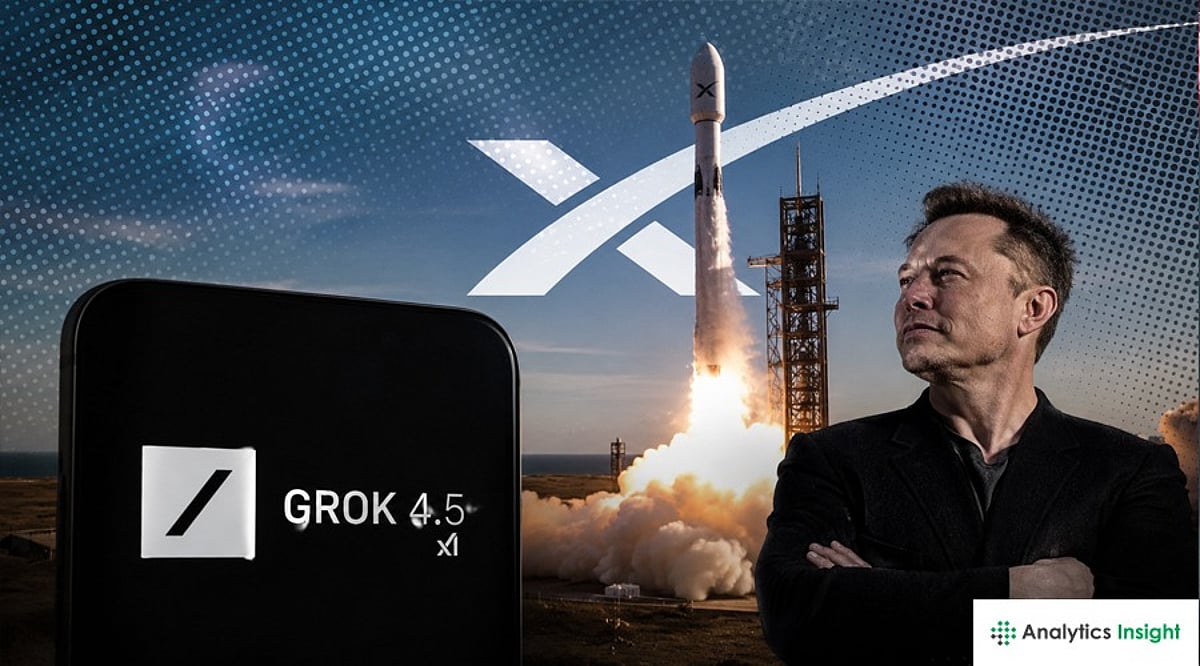
    SpaceXAI Unveils Grok 4.5 to Challenge Rivals in the AI Race

    The AI race has become even more intense. SpaceXAI will launch Grok 4.5, its latest language model, on July 9, 2026. The new model arrives before the expected release of next-generation AI systems from several rivals, making the timing hard to ignore.

    Elon Musk has been clear about his goal. He wants Grok to stand alongside the best AI models available today. With every new release, the company is trying to improve reasoning, speed, and the overall user experience. Grok 4.5 is another step in that plan.

    Grok 4.5 Brings New Upgrades to the AI Race

    Earlier this year, Elon Musk launched Grok 4.3 and stated that the company is preparing a more advanced model that will build on improved reasoning, stronger coding support, and better responses across tasks. In an official post, Musk has announced that the upcoming LLM is built on XAI’s new V9 foundation model, which features 1.5 trillion parameters. The model is also expected to handle longer conversations more naturally and provide more accurate answers.

    SpaceXAI says Grok is designed to be useful to both everyday users and developers. The company continues to expand its AI tools while keeping Grok closely connected to X. This gives users quick access to AI without leaving the platform.

    The launch also shows that Musk wants to compete directly with the biggest names in AI. OpenAI, Google, and Anthropic have all released stronger models over the past year. Grok 4.5 is SpaceXAI’s answer to that growing competition.

    Why Launch Grok 4.5 Now?

    The timing may be just as important as the technology. Several AI companies are expected to introduce major updates in the coming months. By releasing Grok 4.5 now, SpaceXAI keeps itself in the spotlight before its rivals make their next moves. Even Musk has mentioned that Grok 4.5 is ‘Opus-Class,’ which is a direct reference to its rival Claude’s general language model, Claude Opus.

    The company also wants developers and businesses to use Grok before newer models from competitors arrive. Companies often go for early releases to get feedback and improve performance. This helps them strengthen their user base before the next stage of the AI race begins.

    Competition in AI is moving faster than ever. Every launch now becomes part of a larger battle to attract users, developers, and businesses.

    What Grok 4.5 Could Mean for X Users?

    The most significant transformation isn’t the launch of the model; instead, it’s the implementation. If it works properly, tasks like searching, content discovery, and writing will be much more convenient on X.

    With the arrival of an advanced tool like Grok, the platform may grow larger than a mere social network. It can be a powerful solution to many tasks such as information discovery, post creation, and communication with users.