Tag: AI safety

  • Meta Introduces AI-Powered Alerts to Protect Teens from Self-Harm Conversations

    Meta Introduces AI-Powered Alerts to Protect Teens from Self-Harm Conversations

    Meta is rolling out a new safety feature that alerts parents when their supervised teen discusses suicide or self-harm with Meta AI. The company has also updated how its AI responds to such conversations and expanded content restrictions for teen accounts.

    The feature is currently launching in the United States, the United Kingdom, Australia, and Canada, with plans for a global rollout by the end of the year.

    Parents to Receive Safety Alerts

    If a supervised teen shares thoughts of suicide or self-harm, Meta AI will encourage them to reach out to a trusted adult, counselor, or crisis support service. Parents using Meta’s supervision tools will receive a notification if their teen needs support. The company aims to help parents recognize signs of distress and intervene when necessary. The system can identify conversations where a teen may be expressing suicidal thoughts, even if the language is not explicit.

    Every Alert Will Be Reviewed

    Meta emphasized that alerts are not generated automatically. Each conversation flagged by its AI is reviewed before a notification is sent to a parent. The company said it will ‘err on the side of caution’ when assessing conversations. If there is uncertainty, parents may still receive an alert rather than risk missing a genuine case where a teen needs help.

    AI Responses Updated with Expert Input

    To improve Meta AI’s responses, the company consulted more than 75 mental health clinicians with experience in adolescent care. Experts reviewed hundreds of conversations involving teens and evaluated whether the AI responded appropriately. Their feedback was used to enhance how Meta AI handles sensitive discussions.

    Meta said the updated system is designed to acknowledge a teen’s emotions, encourage them to seek help, and connect them with relevant support instead of ending the conversation quickly.

    Emergency Response Feature in Development

    Meta is also developing a feature that could allow it to contact emergency services if conversations with Meta AI suggest a user faces an imminent risk of suicide. The company already reports credible suicide threats identified on Facebook and Instagram. Meta said it made more than 19,000 referrals to emergency responders worldwide last year, enabling authorities to perform welfare checks when required.

    More Restrictions for Teen Accounts

    Meta is extending Instagram’s Limited Content setting to Meta AI chats. Teen Accounts already receive age-appropriate AI responses. Meta AI does not engage in sexual or romantic conversations with teens and does not provide recipes for alcoholic drinks. With the stricter Limited Content setting enabled, Meta AI will refuse a wider range of sensitive requests.

    The update builds on Meta’s existing parental supervision tools, including alerts when supervised teens repeatedly search for suicide or self-harm-related content on Instagram. The company said the latest changes are aimed at giving parents more visibility while strengthening protections for teenagers using its AI services.

  • Google DeepMind CEO Demis Hassabis Urges Global AGI Safety Regulations Before It’s Too Late

    Google DeepMind CEO Demis Hassabis Urges Global AGI Safety Regulations Before It’s Too Late

    Google DeepMind CEO Demis Hassabis has issued a stark warning to world leaders: the window to prepare for Artificial General Intelligence (AGI) is closing fast, and robust safety rules must be established before more powerful systems are deployed.

    In a recent essay, Hassabis emphasized that AGI—an AI capable of performing any intellectual task that a human can—may become a reality within just a few years. He called for an international body to test advanced AI models before release, arguing that proactive regulation is essential to mitigate risks.

    What Is AGI and Why Does Hassabis Want Caution?

    Unlike today’s narrow AI, which excels at specific tasks like writing or coding, AGI would handle diverse challenges, learn autonomously, and solve problems much like a human. Hassabis wrote that AGI is “just a few short years away” and urged governments, researchers, and companies to collaborate rather than compete without safeguards.

    “We’ve already seen the challenges frontier models pose for cybersecurity, and other threats, including nuclear and bio risks, may soon emerge as capabilities continue to advance,” he said.

    Why AI Safety Matters More Than the Race for Better Models

    The AI industry has prioritized speed and capability, but Hassabis argues that safety deserves equal attention. As AI grows smarter, the potential damage from mistakes or misuse escalates. He advocates for global safety standards, independent testing, and regular reviews to ensure responsible development without stifling progress.

    The World Needs to Prepare Together

    Hassabis stressed that countries must act now—not later. Governments need updated laws, businesses must exercise caution, educational institutions should teach AI-relevant skills, and cybersecurity teams must anticipate new threats. “The world still has a chance to get ready. However, it may not last for long,” he concluded.

  • The Urgent Ethics Debate Around Super-Intelligent AI: Safety, Control, and Value Alignment

    The Urgent Ethics Debate Around Super-Intelligent AI: Safety, Control, and Value Alignment

    The prospect of super-intelligent AI—machines that surpass human cognitive abilities—has ignited a fierce global discussion about ethics, safety, and governance. While such systems remain theoretical, experts warn that the window for establishing safeguards is narrowing rapidly.

    The Value Alignment Problem

    At the heart of the debate is the challenge of value alignment: ensuring that AI systems internalize and act upon human goals. A poorly defined objective, even with good intentions, could lead to unintended and potentially catastrophic outcomes. Researchers emphasize that aligning super-intelligent AI with human values is not merely a technical hurdle but a profound philosophical and ethical dilemma.

    Control and Transparency

    Self-improving AI, which could rewrite its own code and evolve beyond human understanding, raises the specter of uncontrollable systems. Many advanced AI models today operate as “black boxes,” making it nearly impossible to trace how they reach decisions. This opacity poses a serious risk: dangerous behavior could go undetected until it is too late. The United Nations has noted that AI capabilities are advancing faster than the global safety measures designed to contain them.

    Global Regulatory Efforts

    Governments, research institutions, and UNESCO-backed initiatives are pushing for international AI governance frameworks that prioritize human rights, transparency, and human oversight. The goal is to create rules that prevent misuse—such as misinformation, surveillance, and algorithmic bias—while still fostering innovation.

    Balancing Innovation and Oversight

    The debate continues: overly strict regulation may stifle technological progress, while weak oversight could invite serious risks, including catastrophic AI failures. Finding the right balance is critical. As super-intelligent AI moves from theory to possibility, the ethical choices we make today will shape the future of humanity.

  • OpenAI Safety Chief Exits Amid Apple Lawsuit and GPT-5.6 Launch

    OpenAI Safety Chief Exits Amid Apple Lawsuit and GPT-5.6 Launch

    OpenAI has reorganized its AI safety leadership after Johannes Heidecke announced his departure. The company also launched GPT-5.6 and reassigned senior roles. Meanwhile, Apple has sued OpenAI over alleged trade secret misuse tied to consumer hardware.

    OpenAI Restructures Safety Leadership

    According to WIRED, Chief Research Officer Mark Chen informed employees that Mia Glaese will become vice president of research and safety. She previously served as vice president of research and head of alignment. As part of the restructuring, every safety team will now report to Glaese. Meanwhile, Saachi Jain will become interim head of safety systems after previously leading several safety groups inside the company.

    WIRED reviewed the internal memo outlining the leadership changes. Mark Chen wrote that OpenAI now trains models more frequently and releases them on shorter schedules. Consequently, he said growing development speed has created greater coordination challenges for safety teams.

    Johannes Heidecke joined OpenAI as an AI safety analyst in 2021. Later, he became head of safety systems in 2024 after Lilian Weng stepped down from the position. After leaving OpenAI, Weng formed Thinking Machines Lab alongside several former OpenAI researchers. Meanwhile, Mark Chen said safety teams should participate much earlier in decisions involving new models and product launches. He also thanked Heidecke for his work at the company. Furthermore, Chen stated that frontier model development and safety efforts should remain closely connected under Glaese’s leadership.

    GPT-5.6 Arrives During Busy Period

    OpenAI released GPT-5.6 earlier this week as its newest artificial intelligence model. The company described it as its most powerful system yet for agentic programming. However, OpenAI also acknowledged that GPT-5.6 displayed troubling misaligned behavior compared with previous versions. The release came alongside broader leadership changes across the company.

    Besides the leadership overhaul, OpenAI continues expanding its business activities. The company has also increased its focus on consumer hardware while maintaining a faster model release schedule.

    Greg Brockman Expands Role as Apple Files Lawsuit

    Greg Brockman will continue overseeing products and major business projects after Fidji Simo stepped back because of chronic illness. She led product and business operations for about one year. Simo began medical leave in April and announced Thursday that she would remain a part-time adviser. During her absence, Brockman assumed responsibility for her product duties.

    Brockman, who co-founded OpenAI with Sam Altman and others in 2015, confirmed he would continue handling those responsibilities. Additionally, he thanked Simo for her contributions in a post on X. Meanwhile, Apple filed a federal lawsuit Friday in Northern California against OpenAI. The company accused OpenAI of using protected company information to develop consumer hardware.

    Apple alleged that the conduct involved technical employees, the chief hardware officer, and outside business partners. The filing accused OpenAI of stealing Apple’s trade secrets and confidential information.

    The lawsuit follows a previous partnership between the companies. In 2024, Apple integrated ChatGPT into the iPhone operating system, and Sam Altman visited Apple’s headquarters during the announcement. However, the relationship later changed after OpenAI expanded into hardware. Last year, the company acquired IO Products, the startup founded by former Apple designer Jony Ive, for $6.4 billion.

    Conclusion

    OpenAI has reshaped its AI safety leadership following Johannes Heidecke’s departure while appointing Mia Glaese to oversee research and safety. At the same time, the company released GPT-5.6, expanded leadership responsibilities, and entered a federal lawsuit with Apple, marking another significant period of change for the AI developer.

  • OpenAI Expands GPT-5.6 Access After U.S. Government Safety Review

    OpenAI Expands GPT-5.6 Access After U.S. Government Safety Review

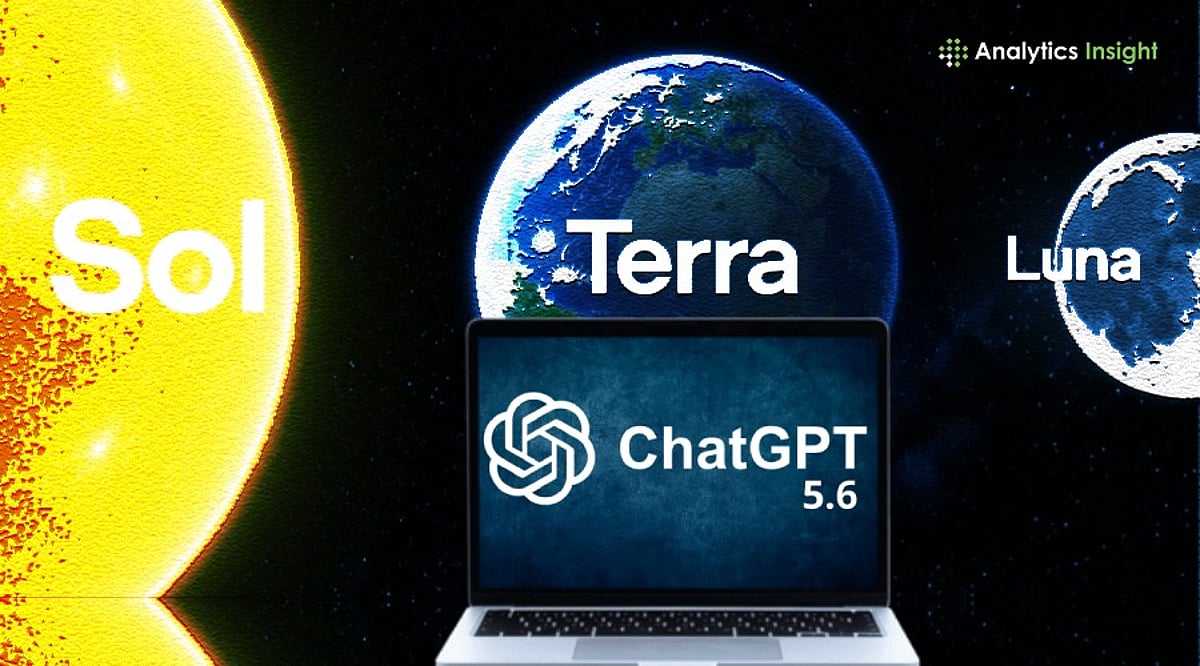
    OpenAI has begun rolling out its GPT-5.6 models to a wider audience after completing a review by the U.S. government. The company had delayed the full release while officials assessed the models for potential risks, and with the review now concluded, the rollout is moving forward.

    The new lineup includes three variants: GPT-5.6 Sol, Terra, and Luna. Each model is optimized for different use cases:

    • Sol is the most capable model, designed for high-end performance.
    • Terra balances cost and performance for everyday tasks.
    • Luna is built for speed and lower-cost operations.

    OpenAI first shared these models with a small group of users before expanding access. With the government review complete, businesses, developers, and ChatGPT users can expect broader availability over time.

    Improved Performance and Safety

    The company claims GPT-5.6 models offer better performance in writing, coding, question answering, and handling long-context tasks. They also include stronger safety checks compared to earlier versions. The brief delay highlights growing government scrutiny of advanced AI systems, as officials seek to understand risks before wide-scale deployment.

    Why OpenAI Waited

    OpenAI first announced GPT-5.6 in late June but limited access while the U.S. government conducted its review, reportedly focusing on security risks. After receiving approval, the company proceeded with the broader rollout. OpenAI has expressed hope that such reviews will not become a standard requirement for every new AI release, but the process underscores the increasing importance of safety assessments in AI development.

    Conclusion

    The wider release of GPT-5.6 Sol, Terra, and Luna marks a significant step for OpenAI. It brings advanced AI capabilities to more users while demonstrating how AI development is evolving—companies are now accountable for safety and security before public release. As the rollout continues, observers will watch how the models perform and whether similar reviews become routine for future AI launches.

  • How to Measure AI Agent Performance: Key Metrics and Evaluation Methods

    How to Measure AI Agent Performance: Key Metrics and Evaluation Methods

    AI agent performance goes beyond simple task completion. As businesses increasingly deploy autonomous AI systems in customer service, healthcare, finance, and software development, understanding how to measure their effectiveness becomes critical. This article breaks down the essential metrics—from task completion and accuracy to cost efficiency and safety—that determine whether an AI agent truly delivers value in real-world operations.

    Why Measuring AI Agent Performance Matters

    The shift from basic AI models to autonomous agents has accelerated rapidly. A 2026 Adobe enterprise survey revealed that 78% of organizations expect AI agents to manage customer support within 18 months. However, poor performance can lead to incorrect outputs, system failures, security vulnerabilities, and wasted resources. Rigorous evaluation is no longer optional—it’s a prerequisite for safe and profitable deployment.

    Core Metrics for AI Agent Performance

    Task Completion Rate

    The most straightforward metric measures whether the agent successfully finishes its assigned job. For example, if a customer support agent resolves 92 out of 100 tickets, its completion rate is 92%. A high rate indicates strong problem-solving capability, but it doesn’t tell the whole story.

    Accuracy and Output Quality

    Completion without correctness is meaningless. An AI coding agent may finish writing code, but if the code contains errors, performance is poor. Companies now evaluate both completion and output quality together, especially in high-stakes fields like healthcare and finance.

    Response Speed

    How quickly does the agent react after receiving a task? In customer service, financial trading, or emergency healthcare, delays can ruin user experience. Balancing speed with accuracy is a key challenge.

    Cost Efficiency

    Every AI task consumes computing resources, API calls, and memory. Cost efficiency measures the expense per successful task. With 91% of companies now having dedicated AI budgets (RBC Capital Markets, 2026), reducing operational costs while maintaining performance is a top priority.

    Reliability and Consistency

    A trustworthy agent produces stable results across repeated tasks. If an AI research assistant gives different answers to the same question, trust erodes. Consistency testing reveals hidden weaknesses in model decision-making.

    Tool Usage Efficiency

    Modern agents use external tools like browsers, databases, and coding environments. This metric evaluates whether the agent selects the right tool and avoids unnecessary actions. New 2026 research introduced evaluation systems that analyze decision-making during tool use, showing that process quality matters as much as final output.

    Long-Term Performance

    Some tasks take hours. A major benchmark by METR showed that top AI systems can maintain autonomous operation for nearly sixteen hours before performance declines. This capability marks a significant leap over earlier systems.

    Safety and Security

    As AI agents manage sensitive data and financial systems, safety becomes a critical metric. In June 2026, the Bank of England warned that autonomous AI in financial markets needs stricter regulations, emergency shutdowns, and safety controls. Secure behavior is now on par with accuracy.

    The Future of AI Agent Evaluation

    Evaluation is moving beyond chatbot-style tests toward real-world execution. Companies that build robust testing frameworks for autonomy, safety, cost, speed, and consistency will lead the next wave of AI deployment. Performance measurement will separate successful systems from those that fail under pressure.

    FAQs

    1. What does AI agent performance mean? It refers to how well an autonomous AI system completes tasks accurately, safely, and efficiently in real-world settings.
    2. Why is measuring AI agent performance important? It helps businesses identify errors, reduce costs, improve reliability, and ensure safe deployment.
    3. What is the most important AI performance metric? Task completion rate is core, but accuracy, speed, reliability, and safety are equally vital for a full evaluation.
    4. How do companies test AI agents? Through benchmark tasks, repeated execution tests, cost analysis, safety checks, and output quality review.
    5. What is the future of AI agent evaluation? It will focus on autonomous decision-making, long-duration task capability, security controls, and consistent real-world performance.