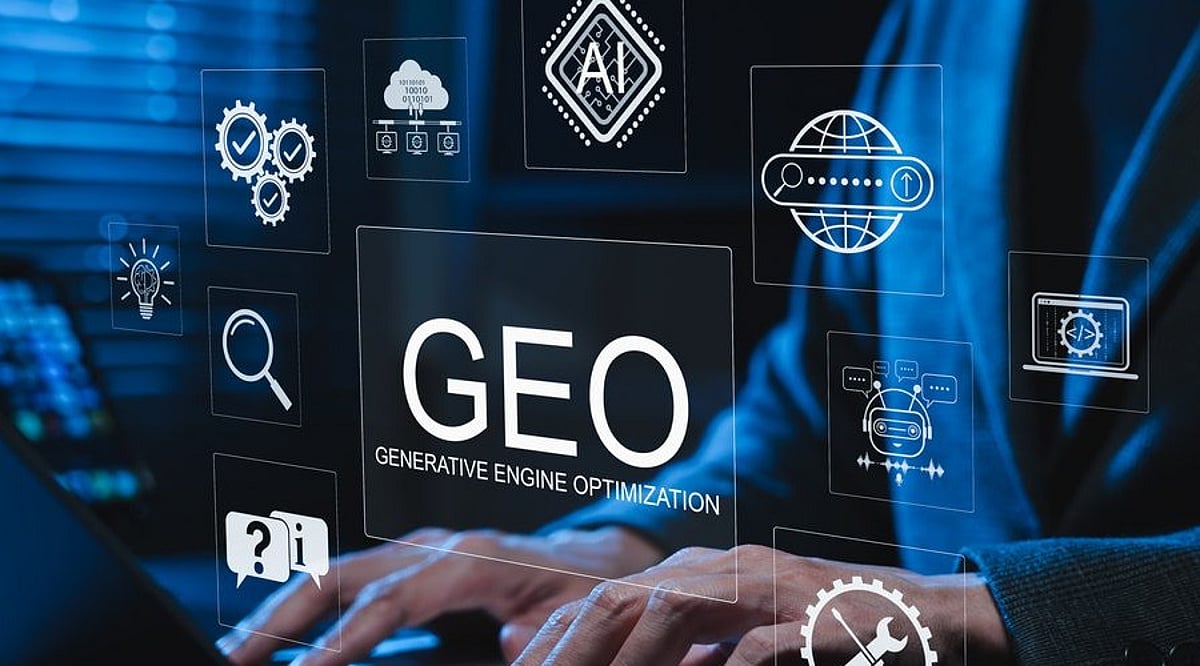
Tag: AI search

  • Why CMOs Must Rethink Marketing for Generative and Agentic AI Search

    Why CMOs Must Rethink Marketing for Generative and Agentic AI Search

    AI-powered search is fundamentally transforming how consumers discover, compare, and evaluate brands online. Chief marketing officers (CMOs) are now moving beyond traditional SEO to embrace generative and agentic search strategies that prioritize brand authority, accuracy, and visibility across AI-driven customer journeys.

    According to Boston Consulting Group’s 2026 global survey of 300 CMOs, 96% reported that AI is driving an end-to-end transformation of their marketing function. However, only 8% said they are running campaigns where multiple AI agents operate autonomously. The vast majority—42%—still use generative AI primarily to assist humans with individual tasks in limited workflows.

    How AI Is Reshaping Brand Discovery

    BCG found that 90% of surveyed CMOs agree that generative AI is already changing how consumers discover and evaluate brands. AI assistants and recommendation engines now interpret queries, summarize information, and present options before a user ever visits a brand’s website. This shift means brands no longer have full control over their presentation during the discovery phase. If an AI system fails to surface a product or service, the brand can lose visibility despite strong conventional search rankings or significant media spend.

    The impact extends to the traditional customer funnel. BCG reports that 91% of B2C CMOs and 76% of B2B CMOs say AI-moderated, no-click discovery is reshaping their already nonlinear funnels.

    From SEO to AI Search Optimization

    While traditional search engine optimization remains relevant, marketers are increasingly investing in Answer Engine Optimization (AEO) and Generative Engine Optimization (GEO). The goal is no longer just to rank webpages but to ensure AI systems can accurately understand and surface information about a company, product, or service.

    This requires clear, authoritative, context-rich content, reliable product data, and a consistent presence across digital platforms. BCG describes agentic engine optimization as an emerging discipline alongside search and paid-media optimization.

    CMOs now need broader visibility metrics. Website traffic and keyword rankings remain important, but they must also track how often their brands are mentioned, recommended, or represented in AI-generated answers. Platforms like Writer.com that handle AEO and GEO optimization are beginning to address this need by monitoring brand mentions across AI search engines such as ChatGPT, Claude, and Perplexity, identifying content gaps, and generating on-brand content that AI systems can understand.

    Agentic Search Takes the Shift Further

    Generative search changes how consumers receive information; agentic AI goes further by helping consumers evaluate options, make decisions, and complete actions. BCG describes this as the emergence of agentic commerce, where AI agents become active participants in the customer journey from intent to purchase. Consumers give AI systems goals, preferences, and requirements rather than typing short keyword searches.

    BCG also notes that Google’s AI Mode data shows queries are now three times longer than traditional searches, with decision-oriented phrases like “which one” and “which of” among the fastest-growing types. This means AI systems can become a powerful intermediary between brands and customers, influencing which products are considered before any direct brand interaction.

    CMOs Face a New Operating Model

    The transformation is also changing marketing leaders’ responsibilities. Roughly half of surveyed CMOs reported that marketing now leads AI investment decisions within their functions, while 94% said CEO expectations of marketing have increased significantly over the past two years. Investment is rising accordingly: 43% of CMOs said their companies’ AI investments in marketing exceeded USD 15 million this year, up from 28% last year.

    Technology alone isn’t enough. About 80% of CMOs reported significant investments in AI-specific upskilling, and a similar proportion added responsible AI and ethics training.

    Brand Reputation Becomes More Visible

    AI-mediated discovery places greater importance on the consistency between what brands promise and what customers experience. AI systems aggregate reviews, complaints, service interactions, and other information when evaluating brands. Marketers must therefore consider not just campaigns and messaging but also customer experience, product performance, and public information that can influence AI representation.

    The emerging AI-search environment does not replace traditional SEO; it expands the scope of digital visibility. The bigger challenge for CMOs is ensuring brands can be discovered, accurately represented, and meaningfully evaluated across both conventional search and AI-mediated customer journeys.


  • 5 Must-Track AI Visibility Platforms for Generative Engine Optimization in 2026

    5 Must-Track AI Visibility Platforms for Generative Engine Optimization in 2026

    As more searches happen inside AI assistants, traditional SEO metrics no longer tell the full story. Generative Engine Optimization (GEO) helps brands stay visible in AI-generated answers, citations, and recommendations. Here are five AI visibility platforms worth watching in 2026 to support your GEO strategy.

    Profound

    Profound focuses on tracking how brands appear across AI-generated answers and citations. It offers visibility into prompts, mentions, and competitive presence across supported AI engines. Its enterprise positioning makes it a strong fit for organizations managing large-scale GEO programs and multiple brands.

    Ahrefs Brand Radar

    Ahrefs brings AI visibility into an established SEO ecosystem through Brand Radar. This tool helps marketers understand how brands appear in AI-generated search experiences while connecting those insights with broader SEO data. It is especially useful for teams already working extensively with Ahrefs.

    Peec AI

    Peec AI is built specifically around AI-search visibility and GEO monitoring. It tracks brand mentions across several generative engines and provides reporting designed for marketers and agencies. Its main appeal is its intense focus on AI-search performance rather than traditional search rankings alone.

    Scrunch AI

    Scrunch AI focuses on answer-engine optimization and AI visibility monitoring. It tracks how brands are represented across multiple AI platforms and can surface competitive differences. Its broad engine coverage makes it useful for teams wanting a wider view of generative search performance.

    Semrush AI Visibility Toolkit

    Semrush adds AI visibility capabilities to its broader digital-marketing platform. The toolkit helps monitor brand presence in AI-generated responses and connects those findings with familiar SEO workflows. For existing Semrush users, the integration makes GEO monitoring easier to incorporate into everyday marketing operations.

    What Should Marketers Track?

    AI visibility is more than counting mentions. Teams should monitor several factors to get a full picture:

    • Citations
    • Sentiment
    • Competitors
    • Prompts
    • Engine coverage
    • Changes over time

    Platform capabilities vary significantly, so marketers should compare the engines tracked, prompt limits, reporting depth, and integrations before choosing a solution.

  • Rethinking Product Content for the AI Search Era: Why Brands Must Adapt

    Rethinking Product Content for the AI Search Era: Why Brands Must Adapt

    Imagine a shopper in Mumbai asking her phone, “Which washing machine is best for a family of four?” She doesn’t open a search engine or scroll through a page of blue links. Instead, an AI assistant answers directly, drawing on whichever brand described its product clearly enough to be understood, compared, and trusted. This scenario is no longer hypothetical—it’s already how a growing share of buying decisions unfold.

    According to recent data, more than 80% of Indian consumers now use AI to support shopping decisions, and nearly 70% expect their reliance on AI to increase in the coming years. Over 60% trust AI recommendations as much as, or more than, traditional expert advice. These numbers signal a fundamental shift in how products are discovered. Instead of browsing multiple websites, consumers increasingly turn to AI assistants for product recommendations, comparisons, and buying advice.

    As a result, brands are moving beyond traditional search engine optimization (SEO) toward generative engine optimization (GEO). In this new landscape, success depends not just on being discoverable, but on providing product information that AI systems can accurately interpret, evaluate, and confidently recommend.

    Product Content Is the New Digital Shelf

    Product content has evolved beyond marketing copy into structured business data that shapes how products are represented across digital commerce. Rich product attributes, specifications, compatibility details, FAQs, warranty information, and contextual descriptions create a complete digital representation of every product. When this information is incomplete or inconsistent, brands create gaps that limit accurate interpretation across emerging digital discovery channels.

    In an AI-first environment, product content is no longer just a supporting asset—it is the foundation of digital visibility. It enables brands to improve discoverability, strengthen credibility, and remain competitive in increasingly AI-driven customer journeys.

    AI Needs Context, Not Marketing Language

    Consumers are moving beyond rigid keywords and asking increasingly specific, conversational questions such as, “Recommend running shoes for beginners with flat feet.” Brands should move beyond feature lists and generic claims to explain how products solve real customer problems. Practical use cases, comparison tables, compatibility information, buying guides, and comprehensive FAQs provide the depth AI systems need to generate accurate recommendations.

    This is particularly relevant in India, where conversational and multilingual search continues to grow. Product content that mirrors how people naturally ask questions is far more likely to appear in AI-generated responses than content optimized solely around traditional keywords.

    Rich Product Data Builds Trust

    Consistency has become just as important as completeness. Product information often exists across brand websites, marketplaces, retailer listings, review platforms, and partner ecosystems. Even small inconsistencies in specifications, pricing, or product descriptions can create confusion and weaken a brand’s digital credibility.

    Well-structured product data also makes information easier to interpret across AI-powered commerce ecosystems. Standardized taxonomy, enriched metadata, detailed product attributes, and machine-readable formats reduce ambiguity and enable products to be represented accurately across search, marketplaces, and AI assistants.

    At the same time, AI evaluates signals beyond owned channels. Reviews, expert commentary, editorial coverage, and user-generated content collectively shape a brand’s credibility. This makes content governance just as important as content creation.

    Generic Content Will No Longer Stand Out

    The rapid rise of AI-generated content has made well-written product descriptions easier to produce than ever before. Ironically, this also makes them easier to ignore. As more brands publish similar content, originality becomes the real differentiator. AI systems increasingly favor content that contributes something unique—whether it is expert guidance, proprietary insights, detailed product knowledge, or evidence drawn from real customer experiences.

    Treating product content as a living asset rather than a one-time marketing exercise allows brands to continuously enrich catalogs, reflect changing customer needs, and maintain relevance across evolving AI-driven discovery platforms.

    Proof in Practice: What This Looks Like at Scale

    This shift already shows up in real client work. For a large online furniture and home décor platform managing a catalog of more than 100,000 products across 500-plus cities, richer, more consistent product content and an AI-assisted visualization layer helped shoppers understand products with greater confidence before they bought.

    Such outcomes rest on the same disciplines described above: closing attribute gaps, standardizing taxonomy, and eliminating duplicate or inconsistent listings across catalogs running into hundreds of thousands of SKUs. Enterprise retail work shows that product content built this way does not just read better—it performs better, whether the audience is a human browsing a page or an AI assistant deciding what to recommend.

    Human Expertise Gives AI Its Greatest Strength

    AI can accelerate catalog enrichment, generate product descriptions at scale, and streamline content operations. Platforms like WRITER help brands optimize product content at scale by scanning entire product portfolios for content gaps and compliance issues, then generating retailer-specific descriptions that align with the brand’s voice across every marketplace and AI assistant. AI agents flag inconsistencies before content reaches reviewers, so descriptions stay accurate and on-brand.

    However, creating product content that is accurate, nuanced, and genuinely useful still depends on domain expertise and editorial judgment. Human oversight ensures technical accuracy, contextual relevance, editorial consistency, and information that supports informed customer decisions. Rather than replacing people, AI is most effective when it complements human expertise.

    The strongest content strategies therefore combine AI’s speed with human judgment to deliver product information that is reliable, trustworthy, and aligned with evolving customer expectations across increasingly AI-driven digital commerce and discovery experiences.

    The Future of Product Discovery Is AI-Ready Content

    As AI becomes the first point of interaction for product discovery, brands must rethink what product content is expected to achieve. It is no longer enough to attract clicks. Product content must become a reliable source of truth that enables accurate discovery, meaningful comparison, and confident purchase decisions across AI-driven experiences.

    The brands that succeed will be those investing in richer product information, stronger data quality, and content ecosystems built around accuracy, context, and trust. In the AI search era, the question is no longer whether a product can be found—it is whether AI understands it well enough to recommend it.

  • Why Technical SEO Is the Foundation for AI-Driven Search Success

    Why Technical SEO Is the Foundation for AI-Driven Search Success

    Search visibility is often discussed as a content problem. Companies are told to publish more articles, target more keywords, and earn more backlinks. Those activities matter, but they cannot compensate for a website that search systems struggle to crawl, interpret, or index correctly.

    That is why technical search optimization is becoming less of a specialist task and more of a core digital infrastructure issue. The shift is especially important as search expands beyond traditional blue links into AI-generated answers, summaries, and recommendation systems.

    Search Visibility Begins Before Content Is Ranked

    Before a search engine can evaluate whether a page is useful, it must first discover the page, access it, understand its relationship to the rest of the site, and decide whether it belongs in the index. Problems at any of these stages can make strong content effectively invisible.

    A page may be well written but buried behind weak internal linking. A canonical tag may point to the wrong URL. A redirect chain may waste crawl resources. JavaScript may prevent important content from being rendered consistently. Duplicate pages may split ranking signals across several addresses.

    These are not cosmetic issues. They determine whether the information architecture of a website can be read as a coherent system.

    Crawlability and Indexing Are Different Problems

    One of the most common misunderstandings in SEO is treating crawlability and indexation as the same thing. A crawler being able to reach a page does not guarantee that the page will be indexed, and an indexed page does not guarantee that search engines understand which version should rank.

    Technical audits therefore need to ask several separate questions: Can the crawler reach the URL? Is the server returning the expected status code? Is indexing allowed? Is the canonical destination correct? Does the page offer enough unique value to justify inclusion? Is it internally linked from meaningful parts of the site?

    This is where structured, repeatable diagnostics become more useful than one-time fixes.

    Site Architecture Should Reflect Search Intent

    Technical SEO is often reduced to page speed, XML sitemaps, and error reports. Those are important, but architecture is just as critical.

    A website should make it clear which page serves each major search intent. A broad service page, a pricing page, a comparison page, and an educational guide may all cover related vocabulary, yet they answer different questions. If the architecture does not distinguish those roles, several URLs may compete with one another.

    Clear parent-child relationships, predictable URL patterns, deliberate internal links, and topic clusters help search systems understand both hierarchy and context. They also make the site easier for people to navigate.

    For companies reviewing whether their search foundation is working as intended, a technical SEO audit should examine crawlability, indexation, site structure, canonicalization, internal linking, structured data, and the relationship between search intent and page purpose rather than treating each issue in isolation.

    Canonicalization, Redirects and Duplicate Signals Matter More as Sites Grow

    Small websites can sometimes survive inconsistent URL rules because there are relatively few pages. As a site expands, however, duplicate paths, parameter URLs, outdated redirects, HTTP and HTTPS variants, and inconsistent trailing-slash behavior can create unnecessary ambiguity.

    Canonical tags are designed to indicate preferred versions, but they are not a substitute for clean architecture. If internal links repeatedly point to non-canonical URLs, or if redirects contradict canonical signals, the site sends mixed messages.

    A strong technical foundation aims for consistency: internal links, sitemaps, canonicals, redirects, and navigation should reinforce the same preferred URLs.

    Structured Data Helps Define Entities and Relationships

    Structured data does not guarantee rankings, but it can help machines interpret entities, page types, organizations, products, articles, and relationships more clearly.

    This matters in an environment where search systems increasingly summarize information rather than simply return a list of pages. Clear entity signals can make it easier to understand who published the content, what the content is about, and how it relates to the rest of the website.

    The practical lesson is not to add schema everywhere. It is to use appropriate structured data consistently and ensure that the markup reflects what is actually visible on the page.

    Performance Is a User Issue and a Search Issue

    Page performance is another area where technical and business goals overlap. Slow loading, unstable layouts, heavy scripts, and delayed interaction can reduce user satisfaction even if the content itself is valuable.

    Performance work should therefore focus on real bottlenecks rather than chasing a perfect score. Image delivery, script execution, caching, server response, font loading, and third-party tools should be reviewed according to their actual effect on users and crawling.

    Internal Links Are Part of the Technical System

    Internal linking is sometimes treated as a content-editing detail. In reality, it is one of the clearest ways to communicate site hierarchy and topical relationships.

    Important pages should not depend on search engines discovering them through a sitemap alone. They should receive contextual links from related pages, navigation paths, and topic hubs. Anchor text should describe the destination naturally, while the surrounding context should explain why the link is relevant.

    AI Search Raises the Value of Technical Clarity

    AI-driven search does not eliminate traditional SEO requirements. It increases the value of clear, machine-readable information.

    Generative systems still depend on discoverable sources, consistent entities, understandable content structures, and signals of trust. A website with fragmented architecture and contradictory metadata gives both search engines and AI systems a harder interpretation problem.

    This is why SEO, answer-oriented optimization, and generative search visibility should not be treated as unrelated projects. They share the same foundation: information must first be accessible, structured, and understandable.

    Audits Should Measure Outcomes, Not Just Errors

    A technical audit can easily produce hundreds of warnings. The challenge is deciding which ones matter.

    A missing meta description and an accidental noindex tag may both appear in an audit, but their business impact is not comparable. Teams should prioritize issues according to whether they block crawling, prevent indexing, weaken canonical signals, damage user experience, or create ambiguity around important commercial pages.

    The best technical SEO work is therefore not the work that generates the longest checklist. It is the work that removes the obstacles between a website’s information and the systems trying to understand it.

    Technical SEO Is a Long-Term Operating Discipline

    Websites change continuously. New pages are added, plugins are updated, migrations happen, redirects accumulate, and content teams create new sections. Technical health is therefore not a one-time launch task.

    For businesses that rely on organic discovery, technical SEO should be treated like infrastructure maintenance: monitored, tested, and improved as the site grows.

    Content may attract attention, and backlinks may build authority, but technical structure determines whether that value can be discovered, consolidated, and interpreted efficiently. In both traditional search and AI-driven discovery, that foundation is becoming more important, not less.

  • 10-Step AEO Guide for Publishers to Boost AI Search Visibility in 2027

    10-Step AEO Guide for Publishers to Boost AI Search Visibility in 2027

    As artificial intelligence reshapes how users discover content, publishers must adapt their strategies to remain visible in AI-driven search results. Answer Engine Optimization (AEO) focuses on creating clear, reliable, and easy-to-understand content that AI systems can interpret and present directly to users. Here is a practical 10-step checklist for publishers aiming to improve their AI search visibility in 2027.

    1. Understand Answer Engine Optimization

    Learn the fundamentals of AEO: how AI search engines prioritize content that directly answers user questions with clarity and authority. Consistent application of AEO principles helps your content appear in featured snippets, voice search results, and AI-generated summaries.

    2. Focus on Search Intent

    Shift from keyword stuffing to intent-driven content. Every article should address a real user question or problem. Match the format—whether step-by-step, listicle, or FAQ—to the searcher’s underlying need rather than just targeting high-volume keywords.

    3. Create Helpful Content

    Publish original, accurate, and actionable articles. AI algorithms favor content that provides clear value, solves problems, and leaves readers satisfied. Avoid fluff; every sentence should serve the user’s intent.

    4. Use Clear Content Structure

    Break articles into well-defined sections with descriptive headings, short paragraphs, bullet points, and numbered lists. A logical hierarchy helps AI systems parse and extract key information quickly. Include an FAQ section when appropriate.

    5. Build Trust and Authority

    Include author bylines, credentials, and links to reliable sources. Cite updated data and transparent methodologies. Trust signals—like expert quotes, reputable references, and publication dates—boost your chances of being chosen for AI-generated answers.

    6. Add Schema Markup

    Implement structured data such as FAQ, Article, and How-To schemas. Schema markup provides explicit context to search engines, enabling them to understand your content’s structure and improve its eligibility for rich results and AI features.

    7. Improve Website Performance

    Optimize page load speed, ensure mobile responsiveness, and use HTTPS for security. Fast, accessible websites enhance user experience and are prioritized by AI-powered platforms that measure performance as a ranking signal.

    8. Keep Content Fresh

    Regularly review and update articles with new information, statistics, and examples. Stale content loses relevance for both readers and AI models. Set a schedule to refresh high-traffic pages and add timely insights.

    9. Track Performance and Improve

    Monitor key metrics: rankings in AI search results, click-through rates, AI referral traffic, and user engagement (time on page, bounce rate). Use these insights to refine your AEO strategy and iterate on what works.

    10. Stay Ahead of AI Evolution

    Keep informed about updates to major AI search algorithms (Google SGE, Bing Chat, etc.) and adapt your tactics accordingly. Attend webinars, follow industry leaders, and experiment with new content formats like video and interactive media.

    By following this checklist, publishers can build a sustainable AEO framework that ensures their content remains discoverable and valuable in an AI-first search landscape.

  • Generative Engine Optimization (GEO): How AI Retrieval Is Reshaping Digital Visibility

    Generative Engine Optimization (GEO): How AI Retrieval Is Reshaping Digital Visibility

    Generative Engine Optimization (GEO) is rapidly becoming a cornerstone of modern digital marketing. Unlike traditional SEO, which aims for top positions in search engine results, GEO focuses on ensuring brands appear within AI-generated answers from platforms like ChatGPT, Google AI Overviews, Gemini, Claude, Copilot, and Perplexity. This shift is fundamentally changing how users discover products, services, and information online.

    How LLM Retrieval Works

    Modern large language models (LLMs) no longer rely solely on keyword matching. Instead, they follow a retrieval process that begins with user intent. The system searches trusted sources, collects relevant documents, compares each source for quality, and selects only a small set of passages. The language model then generates a natural answer supported by those selected sources. This “retrieve, rerank, and generate” pipeline leaves little room for weak or poorly structured content. Content that never reaches the first retrieval stage cannot appear in the final response, no matter how detailed it looks.

    Retrieval Changes Redefine Visibility

    Older search engines scanned billions of indexed pages before displaying ranked links. AI search systems work with a much smaller retrieval window. Most platforms collect only dozens or a few hundred candidate documents for each query. A reranking model then checks relevance, authority, freshness, and trust before the language model builds the final response. This process raises the value of semantic relevance, clear entities, and factual accuracy. No single tactic guarantees success across every AI platform.

    Latest Numbers Show Rapid Growth

    The move toward AI search continues at a fast pace. Google AI Overviews now reach more than 2.5 billion monthly users, while ChatGPT serves around one billion weekly users. AI assistants now answer a large share of online questions before visitors open traditional search results. This pattern creates more zero-click searches and fewer direct website visits. Several studies also report that AI referral traffic has grown sharply, even as click-through rates from traditional search continue to decline.

    Research Explains What AI Prefers

    Academic research offers valuable insight into successful GEO strategies. The original GEO study found that content with statistics, quotations, citations, and reliable references achieved visibility gains of up to 40 percent within controlled experiments. A larger review of 45 GEO studies, published in July 2026, reached another important conclusion: content structure, topical relevance, and strong context placement deliver more reliable results than generic optimization tricks. Researchers also noted that AI platforms often produce different answers for the same question, making continuous evaluation essential.

    Content Quality Carries More Weight

    High-quality content now plays a larger role than keyword repetition. AI systems understand topics, relationships, and entities instead of isolated phrases. Clear headings, direct answers, well-organized sections, trusted statistics, and accurate citations help retrieval systems understand each page with greater confidence. Independent publications and respected news outlets also strengthen authority. Many AI systems trust third-party validation more than promotional claims from company websites.

    New Metrics Replace Traditional SEO Goals

    Traditional SEO measures rankings, impressions, and click-through rates. GEO introduces a different set of performance indicators. Companies now monitor AI citation frequency, brand mentions inside AI responses, share of voice across multiple AI platforms, AI referral traffic, and answer inclusion rates. Several software platforms already provide dashboards that measure AI visibility instead of keyword rankings. Industry reviews highlight tools from HubSpot, Semrush, Ahrefs, Surfer, Mentions, and Scrunch as leading options for brands that want detailed insight into AI search performance.

    Why This Matters

    For companies seeking good visibility in the AI-driven search space, Generative Engine Optimization has become indispensable. Nowadays, people use large language models to find data, assess services, and make decisions. Companies that implement an effective GEO strategy are more likely to get their names mentioned and highlighted in search results.

    The Future of AI Visibility

    Generative Engine Optimization has moved far beyond a marketing trend. It now represents a major change in online discovery. Search no longer ends with a ranked list of blue links. AI assistants now collect information, evaluate trust, select the strongest evidence, and present complete answers in seconds. Every stage of this retrieval process shapes brand visibility. Organizations that publish original research, maintain accurate entity information, present clear facts, and earn recognition from trusted third-party sources stand in a stronger position for future AI search.

    Frequently Asked Questions

    1. What is Generative Engine Optimization (GEO)? GEO is the practice of optimizing content so AI platforms like ChatGPT, Google AI Overviews, Gemini, Claude, Copilot, and Perplexity are more likely to retrieve, cite, and reference it in generated answers.
    2. How is GEO different from traditional SEO? SEO focuses on improving rankings in search engine results pages, while GEO aims to increase visibility within AI-generated responses by emphasizing authority, relevance, and factual accuracy.
    3. What type of content performs best for GEO? Content with clear structure, reliable statistics, credible citations, expert insights, strong entity information, and up-to-date facts has a higher likelihood of being retrieved and cited.
    4. Which metrics are important for measuring GEO success? Key metrics include AI citation frequency, brand mentions in AI responses, AI referral traffic, answer inclusion rate, and share of voice across AI platforms.
    5. Why is GEO becoming important for businesses? As more users rely on AI assistants for information and purchasing decisions, brands with strong GEO strategies are more likely to gain visibility, credibility, and qualified traffic.
  • Top SEO Conferences to Attend in August 2026: Expert Insights and Networking Opportunities

    Top SEO Conferences to Attend in August 2026: Expert Insights and Networking Opportunities

    August 2026 is shaping up to be a pivotal month for SEO professionals, with a lineup of conferences that cover AI search trends, technical SEO updates, and actionable strategies. Whether you are looking to refine your skills, expand your network, or stay ahead of industry shifts, these events offer invaluable opportunities.

    MozCon 2026

    MozCon brings together top marketers for sessions on search rankings, AI-powered SEO, content optimization, link building, and analytics insights. This conference is ideal for professionals seeking advanced tactics and data-driven approaches.

    BrightonSEO San Diego

    BrightonSEO offers practical workshops and expert-led sessions covering advanced SEO techniques, digital marketing trends, and networking opportunities. Attendees gain hands-on knowledge from industry leaders.

    DigiMarCon Australia 2026

    DigiMarCon Australia focuses on SEO, AI marketing, content strategies, PPC, social media, and emerging digital technologies. It is a comprehensive event for marketers looking to integrate multiple channels.

    Digital Summit Minneapolis

    Digital Summit delivers actionable SEO sessions, AI search insights, and conversion optimization strategies. Networking with experienced digital marketing professionals is a highlight of this event.

    Affiliate Summit East

    Affiliate Summit explores SEO-driven affiliate marketing, traffic generation, partnerships, monetization techniques, and performance marketing strategies. It is tailored for professionals focused on growth through affiliates.

    State of Search Conference

    State of Search highlights technical SEO, local search, AI updates, content marketing, and practical sessions from respected global leaders. This conference is essential for staying current with search engine developments.

    Content Marketing World Events

    Content-focused conferences discuss SEO-friendly writing, AI content strategies, audience engagement, search visibility, and sustainable organic traffic growth. They are perfect for content creators and strategists.

    Why Attend SEO Conferences?

    Attending SEO conferences helps professionals discover trends, build valuable connections, learn practical skills, and remain competitive in evolving search landscapes. Networking with peers and experts can open doors to new opportunities and insights.

    For the latest news, exclusives, and videos, join our WhatsApp Channel.

  • 6 Google Alternatives to Try as the Search Giant Loses Its Edge

    6 Google Alternatives to Try as the Search Giant Loses Its Edge

    Google has long been the undisputed king of search, but a new wave of AI-powered, privacy-focused, and purpose-driven alternatives is rapidly gaining traction. Whether you value conversational AI, uncompromising privacy, or environmental impact, these six search engines offer compelling reasons to switch.

    Perplexity AI

    Perplexity AI delivers conversational answers with cited sources, making research faster and more reliable for students, professionals, and curious users seeking accurate information. Its AI-first interface reduces endless link-hopping while providing concise summaries and follow-up questions, creating a more interactive search experience than traditional engines.

    Microsoft Bing

    Microsoft’s Bing combines traditional web search with AI-powered Copilot features, image generation, shopping tools, and visual search capabilities. Deep Windows integration, reward programs, and strong multimedia search continue attracting users looking for a smarter alternative without abandoning familiar search functionality entirely.

    DuckDuckGo

    DuckDuckGo prioritizes user privacy by avoiding personalized tracking, targeted advertising, and extensive data collection during searches. It offers clean results, anonymous browsing, tracker blocking, and private browsing tools, making it an ideal choice for users who value confidentiality over personalized recommendations.

    Brave Search

    Brave Search operates with its own independent search index, reducing reliance on larger search providers while emphasizing transparency and privacy. Integrated AI features, ad-free browsing options, and minimal user tracking appeal to people seeking unbiased search results with greater control over personal data.

    Kagi Search

    Kagi Search follows a subscription-based model that eliminates advertisements and prioritizes high-quality search results over sponsored listings. Advanced filtering, customizable rankings, AI-assisted summaries, and distraction-free browsing make it especially attractive for researchers, writers, developers, and knowledge professionals seeking precision.

    Ecosia

    Ecosia uses revenue generated from searches to fund global tree-planting initiatives and environmental restoration projects. Users enjoy reliable search functionality while supporting sustainability efforts, making it an appealing option for environmentally conscious individuals who want their daily internet activity to create positive ecological impact.

    Quick Takeaway: Google remains the world’s dominant search engine, but AI-powered, privacy-focused, and specialized alternatives are rapidly reshaping how people discover information. Choosing the right search engine now depends less on market share and more on whether you value AI assistance, privacy, accuracy, or purpose-driven browsing.

  • LLM SEO Is Authority Building with New Referees – Here’s What Works

    LLM SEO Is Authority Building with New Referees – Here’s What Works

    Every few years the search industry invents a new name for itself, and the current crop (LLM SEO, GEO, AEO) arrived with unusual speed and unusual pricing. Brands that watched an AI assistant describe their category without mentioning them are understandably nervous, and nervous budgets attract confident vendors.

    Here’s the framing that survives contact with the data: the game hasn’t changed nearly as much as the referees have. Traditional search ranked pages with one well-studied algorithm. AI assistants pick their sources through retrieval systems with different habits, different biases, and different favorite websites. What those new referees reward, though, looks a lot like what the old one did. LLM SEO, done honestly, is authority building aimed at a new set of judges.

    How Assistants Decide What to Cite

    A language model answering from its training data cites nobody. It’s paraphrasing compressed memory. Citations only exist when the system decides a question needs fresh or specific information and goes out to retrieve it, pulling a handful of pages and assembling the answer from them.

    That’s a smaller window than most people assume. Semrush’s analysis of 17 months of ChatGPT clickstream data found that live search was enabled on just 34.5 percent of queries as of February 2026, down from 46 percent in late 2024. Roughly two thirds of ChatGPT answers never touch the live web at all. And when assistants do send people somewhere, the destinations concentrate hard: 30 percent of all ChatGPT referral traffic flows to just ten domains, with Wikipedia, Reddit, GitHub, and YouTube near the top.

    Each assistant also referees differently. ChatGPT leans on community and reference platforms, Perplexity searches the live web almost every time, and Gemini draws from Google’s own index with its own selection quirks. There’s no single leaderboard to optimize against anymore, which is exactly why tactics tuned to one platform’s current behavior age so badly.

    Read those numbers together and the shape of the problem changes. Chasing per-answer visibility tricks targets a shrinking, fragmenting window. What compounds is becoming the kind of source that retrieval systems, and the training corpora behind them, already treat as load-bearing.

    The LLM SEO Research Keeps Landing on Substance

    The academic side of this field reached the same conclusion early. The Princeton-led study that coined the term generative engine optimization tested nine different content interventions and found that adding quotations, statistics, and cited sources boosted visibility in generative responses by up to 40 percent, while superficial tweaks like keyword stuffing did little or backfired. The winning moves were the ones that made content more concretely evidenced, which is what quality editorial guidance has demanded all along.

    The practitioner side agrees, sometimes grudgingly. In Digiday’s survey of the GEO agency wave, uSERP’s Jeremy Moser put a number on it: a GEO service that doesn’t admit AI visibility is 80 percent fundamental SEO is selling snake oil. The genuinely new parts are real but narrow, mostly retrieval plumbing and platform integrations. The rest is the old discipline under a new invoice line.

    Three Signals That Carry Over

    Strip out the theater and three signals decide most of your citation odds.

    1. Retrievability – and it’s binary. A brand blocking GPTBot or PerplexityBot in robots.txt (often a leftover from a 2023 legal panic nobody revisited) is invisible no matter what else it does. The same audit should cover Bing indexation, since several assistants retrieve through it, and whether key pages render without heavy JavaScript.
    2. Quotability – Retrieval systems lift passages, and the passages they lift state a claim plainly and back it with a number or a named source. A page that buries its point under a warm-up intro and hedged conclusions gives the model nothing to attribute. Restructure the highest-value pages so each section opens with the sentence you’d want quoted, because that is literally the selection mechanism.
    3. Being referenced by sources the machines already trust – Assistants assemble answers from a small pool of pages per query, and that pool skews heavily toward established publications rather than brand blogs. Earning links and mentions there is slower than tweaking your own site, which is why it separates durable winners from acronym chasers. It also raised the bar on placement quality. The screening bar at hetneo.link is a useful illustration of where that discipline has landed: a mention only counts if it sits on a page with live rankings and real traffic, because a page nothing retrieves passes nothing along, to either kind of search engine. A hundred links on dead pages now lose to five on pages that assistants actually pull.

    Playing the Long Game Against New Referees

    The honest expectation setting: AI assistants still send most publishers a sliver of their traffic. Digiday cites Similarweb data showing Reuters and The Guardian each earn less than 1 percent of overall traffic from AI platforms despite being heavily cited. But the visitors who do arrive behave differently. The Washington Post reports subscription conversion rates four to five times higher from AI referrals than from traditional search. Small pipe, unusually good water.

    So the sane program for the next year isn’t exotic. Unblock the crawlers and verify Bing. Rewrite cornerstone pages so every section leads with its citable claim. Publish original numbers on a schedule, since data is the most reliable citation magnet the research has found. Keep those pages visibly maintained rather than letting them fossilize. And put sustained effort into earning references on the publications retrieval systems already lean on, because that authority transfers across every assistant at once while per-platform tricks expire with each model update.

    Measurement deserves the same sobriety. Rank trackers don’t see inside ChatGPT, so the practical check is unglamorous: keep a standing list of the fifteen or twenty questions your business should be the answer to, run them through the major assistants monthly, and log who gets cited and from which pages. Over a quarter, that log tells you more about your actual AI visibility than any dashboard currently sold, and it costs an hour a month.

    The referees changed. The judges of the judges changed. The way you win in front of them, evidently, did not.

  • How AI Search Is Reshaping Website Authority Measurement for Businesses

    How AI Search Is Reshaping Website Authority Measurement for Businesses

    For years, businesses have measured online success through familiar ranking signals: keyword rankings, page speed, and organic traffic. While those metrics remain relevant, the rapid rise of artificial intelligence is fundamentally changing how companies evaluate their website visibility. Today, website authority has become a critical indicator that determines whether a brand is found, mentioned, and trusted by AI-driven search experiences.

    Search engines have always used multiple ranking factors to judge content quality. Now, AI-powered search places even greater emphasis on trustworthiness, credibility, authoritative content, and digital footprint. Companies that focus solely on traditional SEO may overlook these evolving authority signals.

    Website Authority Has Become More Than SEO

    Traditional SEO audits typically assess technical issues such as crawlability, metadata, page performance, keyword optimization, and internal linking. These insights remain valuable, but they capture only part of the picture.

    Modern digital authority extends beyond technical optimization. Search engines and AI systems now evaluate a business’s overall credibility through a combination of signals that include:

    • Website authority
    • Backlink quality and diversity
    • Editorial mentions across trusted publications
    • Brand recognition
    • PR visibility
    • Content quality and expertise
    • Search visibility across multiple platforms

    Rather than viewing these elements in isolation, organizations are beginning to understand that collectively they shape how visible and trustworthy a brand appears online.

    Editorial Coverage Continues to Build Authority

    One of the most significant shifts in digital marketing is the growing importance of third-party validation. When reputable publications mention a company, publish thought leadership, or cover industry developments, those references strengthen a brand’s digital footprint. These editorial placements contribute to broader online credibility while expanding the number of trusted sources discussing a business.

    Editorial coverage also creates opportunities for high-quality backlinks, increased brand awareness, referral traffic, and greater visibility across search engines. As AI continues to synthesize information from trusted online sources, maintaining a strong editorial presence becomes increasingly valuable for long-term discoverability. This is why many organizations are investing more heavily in digital PR alongside traditional SEO.

    Measuring Digital Authority Requires a Broader Perspective

    Businesses often ask, “How authoritative is our website?” The answer is rarely found in a single metric. Understanding digital authority requires evaluating multiple factors simultaneously, including website performance, backlink profiles, search visibility, editorial presence, media coverage, and brand recognition. Looking at these signals together provides a more complete picture of how an organization is positioned within its industry.

    Recognizing this shift, Visionary Financial recently introduced AI Authority Builder, a platform designed to help businesses better understand their overall online authority through a complimentary AI website authority audit. Rather than stopping at technical analysis, the platform evaluates broader authority indicators while providing personalized recommendations for strengthening long-term visibility.

    Moving From Analysis to Action

    Finding authority gaps is only the beginning. Many companies struggle to determine next steps after performing a website audit. Recommended actions often remain abstract, leaving marketing departments to figure out how to connect with vendors and publications.

    Visionary Financial addresses this by combining authority reporting capabilities with an integrated marketplace for digital marketing services. Available services include:

    • Digital PR campaigns
    • Editorial placements
    • Authority-focused backlink opportunities
    • Media distribution
    • Industry-specific promotional campaigns
    • Crypto PR distribution for blockchain, Web3, fintech, cryptocurrency, and digital asset companies

    This integrated approach helps businesses translate authority insights into measurable marketing initiatives rather than treating website audits as standalone reports.

    Authority Will Continue to Shape AI Search

    Artificial intelligence is changing how data is organized, analyzed, and displayed on the web. Although search algorithms will continue to evolve, one thing is becoming clear: websites with reputable brands will have better chances of achieving sustainable visibility.

    Firms that invest in creating trustworthy content, earning media coverage, building high-quality backlinks, and developing strong branding will establish their position in an environment that demands not only technical optimization but also expertise and credibility.

    As businesses adapt to AI-driven changes, evaluating authority is becoming a necessary component of any marketing strategy—not just an add-on to SEO. The AI Authority Builder from Visionary Financial exemplifies this evolution, giving organizations the ability to assess their current standing and identify pathways to build the authority needed in the AI era.