
Tag: AI shopping

  • How AI Is Reshaping Festive Shopping in India: Smart Search, Virtual Try-Ons, and Personalized Picks

    How AI Is Reshaping Festive Shopping in India: Smart Search, Virtual Try-Ons, and Personalized Picks

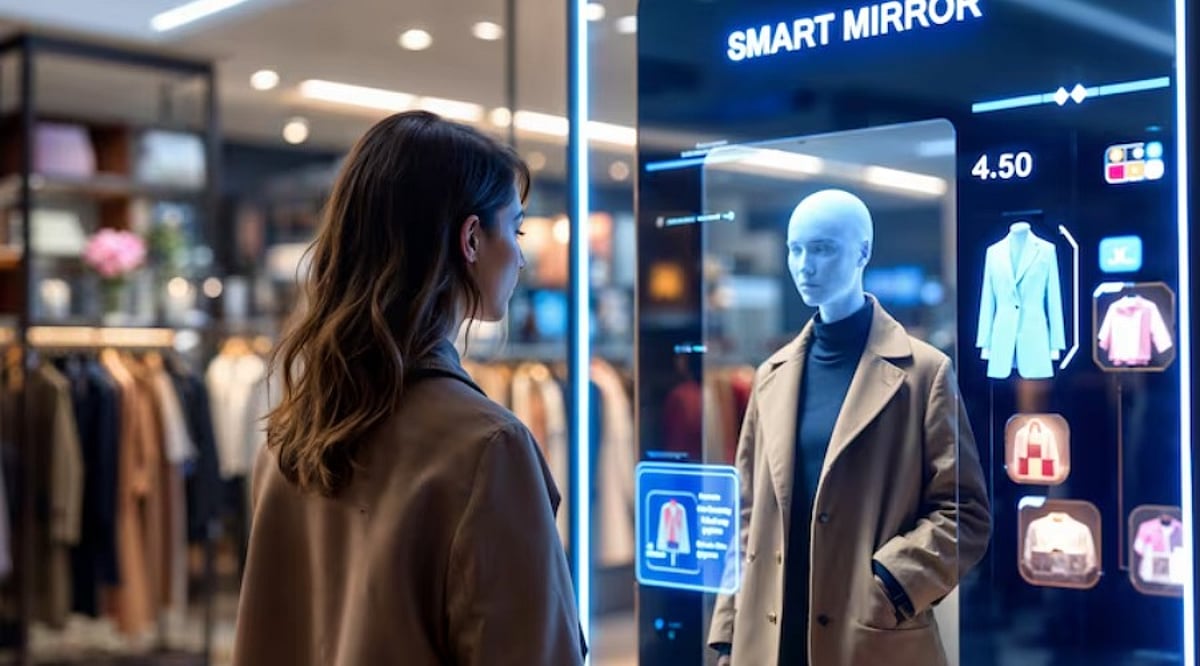
    Artificial intelligence is increasingly becoming a staple in the festive shopping journey in India, as consumers turn to smart search, virtual try-ons, and recommendation tools to guide their purchase decisions. A recent study by InMobi Advertising reveals that 80% of festive shoppers are interested in having an AI shopping assistant, with specific features gaining varying levels of traction across generations.

    Smart Search Emerges as the Top AI Feature

    According to the study, smart search suggestions are the most popular AI feature, attracting interest from 89% of respondents. Virtual product try-ons and “complete-the-look” suggestions follow closely, each capturing 81% of interest. AI-based recommendations are preferred by 75% of shoppers, while 73% show interest in voice search or chat assistants.

    The findings are based on an on-device consumer study conducted between August 7 and 11, covering 1,110 consumers across Android and iOS devices, spanning Tier 1 to Tier 4 cities and various age groups. The survey indicates that shoppers are not just looking for help finding products but also in narrowing down their choices.

    Virtual Try-Ons Drive Engagement

    Virtual try-on tools are gaining significant attention. The report notes that 79% of consumers are interested in personalized smart TV advertising that includes virtual try-on features. A case in point is fashion brand The Bear House, which reported that its AI-powered virtual try-on experience reduced website bounce rates by 50%, boosted add-to-carts by 2.5 times, and increased overall conversions by fivefold.

    Millennials vs. Gen Z: Divergent Interests in AI Recommendations

    When it comes to AI-based recommendations, generational differences become apparent. 82% of Millennials expressed interest in AI recommendations, compared to 71% of Gen Z. However, both groups show strong enthusiasm for smart search, with 90% of Millennials and 88% of Gen Z indicating they would use such suggestions.

    Interestingly, traditional shopping triggers remain influential across both demographics. Limited-time offers sway 66% of Millennials and 66% of Gen Z, while short-video ads engage 66% and 65%, respectively.

    Festive Shopping Moves Across Screens

    AI is just one component of a broader shift in how Indians shop during the festive season. The study reveals that 73% of shoppers make their final purchases online, with 58% researching and buying online, and another 15% researching in stores before purchasing online. Online reviews play a crucial role, with 75% consulting them before buying, while 53% rely on search engines and 47% on social or influencer content.

    For brands, the shopping path is becoming increasingly complex. Consumers may discover a product on social media, compare it through search, use an AI tool to evaluate it, and finally purchase online. This festive season, AI is becoming an integral step in that journey, rather than a standalone technology experience.

  • Banks Warn AI Shopping Bots Risk Wrong Purchases and Payment Data Exposure

    Banks Warn AI Shopping Bots Risk Wrong Purchases and Payment Data Exposure

    Major banks are sounding the alarm over the rise of AI shopping assistants that can search for products and even complete purchases on behalf of consumers. The concerns range from incorrect purchases and scams to exposure of payment data and weaker consumer protections, prompting calls for clearer standards around AI-driven commerce.

    AI Agents Could Make Purchases on Your Behalf

    The technology, often described as “agentic commerce,” allows an AI system to act on a shopper’s instructions rather than simply providing recommendations. Depending on the design, an agent could search for a product, select an option, and potentially complete the transaction. A group including NatWest, Bank of America, ING, Capital One, ASB Bank, and Commonwealth Bank of Australia has raised concerns about scams, fraud, and misuse of financial data.

    The warning comes as technology companies including OpenAI, Google, Anthropic, and Meta develop AI agents capable of assisting with or carrying out shopping tasks. The banks said adoption is outpacing existing industry standards and consumer protections.

    UK retailer John Lewis reported that searches originating from AI agents rose to 2.5% this year, up from 0.3% a year earlier, signaling rapid growth in AI-driven shopping.

    Card Details and Payment Risks

    Financial information is another major concern. The banking group highlighted situations in which AI agents could request customers’ card details and enter them directly into websites. There are also concerns that an AI agent could steer a shopper toward payment methods that provide weaker fraud or purchase protections. If a transaction goes wrong, consumers may not know whether the retailer, payment provider, or AI service is responsible.

    Banks Seek Clearer AI Commerce Rules

    The participating banks plan to discuss a set of proposals with policymakers. These include requiring businesses to disclose when an AI agent is involved in a transaction and providing greater transparency about how the technology makes purchasing decisions. The group also called for stronger safeguards around customer data, along with freedom for consumers and merchants to choose which AI-powered commerce services they use. Interoperability between different AI shopping systems was another principle included in the framework.

    As AI moves from recommending products to acting on shoppers’ behalf, the debate increasingly shifts toward who controls these transactions and who takes responsibility when something goes wrong.

  • UK Regulator Probes TikTok Over Child Safety and AI Shopping Video Concerns

    UK Regulator Probes TikTok Over Child Safety and AI Shopping Video Concerns

    Ofcom has launched a formal investigation into TikTok, questioning whether the platform’s age-checking systems adequately protect underage users. The regulator also faces pressure from brands and creators over AI-generated shopping videos that some say mislead consumers and erode trust.

    Ofcom Questions TikTok’s Child Age Checks

    Ofcom has expressed ‘serious doubts’ about TikTok’s ability to identify users under 18. The regulator believes the platform’s age inference system—which estimates age based on user activity—may fail to detect many children who provide false birth dates or bypass restrictions. Kate Davies, Ofcom’s group director for strategy and research, stated: “We have serious doubts about them, and so we have launched an investigation into TikTok.”

    The UK Online Safety Act requires platforms to use effective age checks when children may encounter harmful material. Ofcom will examine whether TikTok has taken suitable steps to identify young users and limit their access to restricted content. TikTok responded that it strictly enforces age-based experiences through platform rules and advanced technology, and remains confident it meets its duties under the act.

    TikTok Risks Major Financial Penalty

    If the investigation finds TikTok violated UK online safety rules, Ofcom can impose a fine of up to £18 million or 10% of TikTok’s qualifying worldwide revenue—whichever is higher. This follows broader regulatory action against platforms failing to protect children. Child safety groups, including the Molly Rose Foundation, have called for wider scrutiny of TikTok’s recommendation systems.

    AI Shopping Videos Raise Trust Concerns

    TikTok Shop faces separate criticism over AI-generated product videos using virtual models. Creators say these automated clips compete with genuine reviews from people who own and test products. Affiliate creator Rosemarie Soma described it as ‘very frustrating’ when AI videos receive advertising support and generate sales. SharkNinja has banned affiliates from using TikTok’s AI Video Maker to promote its products, warning that violators could lose commissions. Rare Beauty also distanced itself from AI-generated promotional content after an unauthorized affiliate posted such videos.

    TikTok Shop sales in the United States are expected to reach $23.41 billion this year, according to eMarketer, while its affiliate network has grown from 2.3 million creators in 2024 to 11.3 million in 2026, per Charm.io. This rapid expansion makes it harder for brands to control unauthorized AI product videos.

  • Amazon Prime Day 2026: 72 Hours of Massive Deals on Electronics, Fashion, and Home Appliances

    Amazon Prime Day 2026: 72 Hours of Massive Deals on Electronics, Fashion, and Home Appliances

    Amazon Prime Day 2026 is set to run from July 4 to July 6, offering Prime members a full 72 hours of discounts across smartphones, electronics, fashion, home appliances, and everyday essentials. This year also marks ten years of Prime in India, and Amazon is celebrating with a dedicated set of 10th Anniversary Deals covering over 15,000 products and 300 brands.

    New members can join Prime at Rs. 999 per year—a flat Rs. 500 off the standard annual plan. Existing members get instant bank discounts of up to 10% on SBI and Axis Bank cards, while Amazon Pay ICICI Bank credit card holders earn unlimited 5% cashback.

    Smartphones and New Launches

    Smartphones are a major focus this year. The Samsung Galaxy S25 Ultra is available at Rs. 84,999—a Rs. 15,000 discount with 9-month No Cost EMI—and the OnePlus 13 starts at Rs. 49,999. New launches include the Samsung Galaxy M47 and the OnePlus N6, both designed for Indian consumers. Buyers can also avail exchange offers worth up to Rs. 66,000 and up to 12 months of No Cost EMI across the smartphone category.

    Electronics, TVs, and Laptops

    Discounts go up to 80% on accessories, wearables, and headphones, and up to 75% on cameras. Laptops and tablets are available at up to 40% off, with deals on Dell and other leading brands. Smart TVs from Samsung, Sony, and LG carry discounts up to 65%, while projectors go up to 70% off.

    Fashion, Beauty, and Home

    Fashion deals include a minimum 65% off on tops, T-shirts, and jeans, and at least 50% off on sports shoes and sneakers. Beauty and skincare essentials from L’Oreal, Lakmé, and Korean brands see discounts of 30% to 60%. Home appliances are available at up to 65% off, covering washing machines, refrigerators, air conditioners, and dishwashers from brands like LG, Samsung, and Bosch. Air conditioners start at Rs. 20,490 and microwaves from leading brands start at Rs. 4,990.

    AI-Powered Shopping and Fast Delivery

    Amazon’s AI tools, including Rufus and Lens AI, are integrated into the shopping experience to help users compare products, read reviews, and search visually. Amazon Now will also deliver groceries and essentials within minutes to eligible pin codes during the sale.