Tag: AI skills

  • Verizon Pledges $70 Million to Provide Free AI Training Nationwide

    Verizon Pledges $70 Million to Provide Free AI Training Nationwide

    Verizon has announced a $70 million investment in its new ‘Verizon AI Skills for America’ initiative, designed to equip job seekers, early-career professionals, displaced workers, educators, and small businesses with the skills needed for the AI-driven economy.

    The initiative combines $50 million in fresh funding with Verizon’s existing $20 million Reskilling and Career Transition Fund for departing workers. All AI training will be offered at no cost to participants.

    AI Training from Leading Technology Companies

    Verizon is creating a centralized online portal that aggregates AI training content from major tech companies, including IBM, Google, Microsoft, Anthropic, Coursera, and OpenAI. The company noted that similar premium AI training can cost more than $700 per person annually, but this initiative makes it free for students, job seekers, small businesses, educators, and professionals in career transitions.

    Community Organizations to Provide Local Support

    Recognizing that online courses alone are insufficient to close the AI skills gap, Verizon is partnering with community-based organizations such as the Local Initiatives Support Corporation (LISC), the National Association for Community College Entrepreneurship (NACCE), and Goodwill Industries International. These groups will deliver hands-on coaching, curriculum guidance, and local support to help participants turn online learning into practical skills. Goodwill is described as the largest nonprofit provider of job training and career placement services in North America.

    Initiative to Launch Nationwide

    The program will roll out nationwide, with core wrap-around services initially available in select regional markets. Verizon plans to gather real-time feedback from community partners and participants to refine the program as workforce needs evolve. The company emphasized cross-sector collaboration among private, public, and nonprofit organizations to advance AI readiness.

    Verizon CEO Dan Schulman stated that companies have a responsibility to invest in people with the same urgency as they invest in technology. The initiative was announced on September 23, 2026, as part of Verizon’s broader efforts to support the American workforce and address the AI readiness gap.

  • Why Product Managers Must Develop AI Strategy Skills in 2026

    Why Product Managers Must Develop AI Strategy Skills in 2026

    AI is transforming product management beyond feature development. In 2026, product managers (PMs) need more than just the ability to use AI tools—they need a strategic framework to assess models, data, costs, metrics, and risks. This shift strengthens roadmap decisions and connects technology directly to customer and business value.

    The AI Strategy Gap

    A 2026 Productside survey of over 250 product professionals found that roughly four in five product managers use AI regularly. Yet only about one in four have a clear strategy behind that use. The real challenge is no longer AI adoption—it’s making strategic decisions about where and how AI should be applied.

    Why the Gap Exists

    Traditional PM skills—customer research, prioritization, stakeholder alignment—still matter. But AI systems behave differently from traditional software. Outputs can be probabilistic, performance varies across inputs, and results depend heavily on data quality. Treating an AI feature like a normal feature leads to misjudged timelines, underestimated risk, and unclear definitions of “done.” When PMs lack AI fluency, engineering and data teams increasingly take over strategic discussions, eroding the PM’s decision-making influence.

    What AI Strategy Means for Product Managers

    For a product manager, AI strategy involves deciding where AI creates measurable value, what data and model capabilities a feature needs, what risks need control, and how success gets measured. This definition gives the work structure rather than treating AI fluency as a vague catchall. Key components include:

    • Model judgment: Understanding model capabilities, limitations, and trade-offs.
    • Data readiness: Assessing whether available data is sufficient and reliable for the AI feature.
    • AI-specific metrics: Defining success metrics that account for probabilistic outputs.
    • Risk management: Identifying and mitigating ethical, operational, and performance risks.
    • User trust: Ensuring the AI system earns and maintains user confidence.

    Each of these areas involves real trade-offs, not a simple checklist. Skipping any one tends to surface after launch, when fixing it costs more.

    The Business Case, Not Just the Technical One

    Companies invest in AI expecting measurable returns—cost reduction, faster workflows, or new revenue. A PM who treats AI as a buzzword will struggle to defend roadmap decisions when finance leaders ask about return on investment. AI features carry inference, infrastructure, and monitoring costs that traditional features don’t. These costs can shift as usage scales, making cost a product metric, not just an engineering concern. A PM needs to judge whether a feature’s expected value justifies its ongoing running cost, not just its build cost. That is a business skill, not a technical one.

    How PMs Are Closing the Gap

    The most practical path is learning through live product work—pairing directly with data scientists on real projects, reading model evaluation reports, and testing prompts and failure cases firsthand. This approach doesn’t replace domain expertise or customer empathy; it complements them. A PM who understands both the customer problem and the AI system built to solve it holds a stronger position than one who only understands half the picture.

    Final Thought

    AI strategy doesn’t turn a product manager into an engineer. It changes the questions a PM is asked to answer. Someone who can connect customer value with model capability, data readiness, cost, and risk can participate in AI decisions from roadmap planning through launch. Closing the gap between using AI and having a strategy for it gives a team a stronger basis for faster, more defensible product decisions. In 2026, that connection is becoming a core part of product management.

  • Why AI Agents and Multi-Agent Systems Are the Must-Have GenAI Skills in 2026

    Why AI Agents and Multi-Agent Systems Are the Must-Have GenAI Skills in 2026

    Generative AI is evolving far beyond simple chatbots and prompt-based tools. In 2026, businesses are increasingly deploying AI agents that can execute multi-step tasks, interact with software tools, and collaborate across workflows. This shift is driving demand for professionals who not only use AI but also build, manage, and evaluate these complex systems.

    AI Skills Demand Surges

    The 2026 AI Index reveals a dramatic rise in job postings requiring agent-related skills in the United States. In 2025, 16,541 job postings mentioned Agentic AI, up from just 151 in 2024—a staggering 10,854% increase. Similarly, postings for AI agents grew 1,062% to 15,217, while multi-agent system mentions rose from 1,635 to 5,461. LangGraph-related postings jumped from 194 to 4,294. These numbers highlight the growing need for expertise in new AI architectures, particularly in tech and AI-specific roles.

    Multi-Agent Systems Transform Workflows

    Unlike conventional chatbots that respond to individual prompts, AI agents can perform multiple steps, use tools, and cooperate with other agents. Multi-agent systems extend this by assigning distinct tasks to separate agents. Microsoft’s 2026 Work Trend Index reports that active agents in the Microsoft 365 ecosystem grew 15× year-over-year, and 18× in large enterprises. The report identifies “Frontier Professionals” who leverage agents for multi-step workflows and build multi-agent systems. For learners, understanding agent communication, task division, information flow, and human oversight is becoming essential as companies integrate AI into complex processes.

    Beyond Prompting: Deeper GenAI Skills

    Learning generative AI in 2026 is increasingly about what happens behind the interface. Skills such as retrieval-augmented generation (RAG), orchestration, evaluation, observability, guardrails, and deployment are now critical for practical AI development. For instance, IIT Hyderabad offers an Applied AI Professional Certification Program covering RAG, orchestration, multi-agent systems, AI engineering tools, evaluation methods, observability, guardrails, and deployment strategies—all centered on building and deploying a production-style AI agent system. This reflects a broader shift: practical development skills are gaining importance alongside basic familiarity with generative AI tools.

    Human Skills Remain Vital

    Studying AI does not mean discarding traditional competencies. According to Microsoft’s research, 50% of AI users say quality control of AI output is becoming increasingly important as a human skill, while 46% cite critical thinking. Moreover, 86% view AI output as initial information. Assessing AI systems is crucial because they can produce incorrect data, misunderstand instructions, or behave unexpectedly—especially when given more autonomy. Recent news reinforces this: in September 2026, OpenAI released a framework for regularly disclosing when AI systems show unexpected or unauthorized behavior.

    What to Learn in 2026

    If you’re planning a career in AI, it’s about more than prompting. An AI roadmap should include: basics of generative AI, prompt engineering, RAG, AI agents, agent orchestration, tooling, evaluation, observability, security, and AI governance. The goal is not just to acquire new tools but to understand how to design, evaluate, and deploy these systems. As AI agent-related jobs and enterprise adoption grow, students and professionals should invest in learning these technologies to adapt to organizational changes—from experimenting with GenAI to integrating AI agents into daily workflows.

    Frequently Asked Questions

    What is Generative AI?
    Generative AI creates text, images, code, and other content using models trained on large datasets and user-provided instructions.
    What are multi-agent systems?
    Multi-agent systems involve multiple AI agents working together, with each agent handling specific tasks within a larger workflow.
    Why are AI agents becoming important in 2026?
    Businesses increasingly use AI agents for multi-step tasks, software tools, and workflows, creating demand for professionals with specialized skills.
    What skills should professionals learn alongside GenAI?
    Professionals can learn RAG, prompt engineering, orchestration, agent development, evaluation, observability, deployment, security, and AI governance.
    Are traditional human skills still important with AI?
    Yes, critical thinking and quality control remain important because AI systems can produce inaccurate information or misunderstand instructions.
  • Essential AI, GenAI, and Foundation Model Skills Reshaping Data Science Careers by 2026

    Essential AI, GenAI, and Foundation Model Skills Reshaping Data Science Careers by 2026

    Artificial intelligence is rapidly transforming the data science job market. A few years ago, most people associated the field with data scientists, analysts, and machine learning engineers. Today, the range of roles has expanded far beyond traditional expectations.

    According to the Analytics Insight Data Science Education Report 2026, new positions linked to generative AI, AI products, AI governance, and foundation models are emerging. These include GenAI Engineers, AI Product Managers, AI Governance Specialists, AI Solutions Architects, and Foundation Model Scientists. This shift also means the skills required for these jobs are evolving.

    The Rapid Growth of AI and GenAI Skills

    Generative AI has moved quickly from experimental projects to real-world business applications. Most companies now use AI for content creation, coding, or research. This growing adoption has created demand for professionals who can do more than just use AI chatbots. Businesses are looking for experts who understand and leverage these systems efficiently.

    For instance, GenAI Engineers work with large language models, data, AI applications, and testing. To streamline processes, they must understand how a model responds, where it can fail, and how its output can be improved.

    Prompt engineering has also gained popularity. Well-crafted prompts help AI tools produce clearer and more useful results. However, writing prompts is only part of the job. Professionals must also verify the accuracy of the output.

    Why does this matter? Because AI often makes mistakes. The report highlights that 56% of Indian companies see AI hallucinations as a challenge. An AI system may provide an answer that sounds correct but is actually wrong. This is why skills such as testing, fact-checking, and critical thinking are becoming increasingly important.

    Skills That Will Matter Most

    The report emphasizes that several technical skills remain essential, including machine learning, Python, big data, cloud computing, data engineering, deep learning, natural language processing, and computer vision.

    AI automation is also crucial. Many businesses want AI systems that handle routine tasks, helping employees save time. However, technical know-how alone is not enough. Professionals working with AI must be able to identify problems—whether poor data or models producing incorrect results. An AI system may behave differently when data or tasks change. In such cases, debugging and data-quality skills are vital for addressing issues.

    Responsible AI is another area gaining attention. Companies need people who can examine issues like bias, fairness, privacy, and how AI decisions are made. The report notes that nearly 51% of organizations have faced negative outcomes from unmanaged AI systems. It also points to a 53% talent gap in areas such as algorithmic bias audits and Explainable AI.

    The Road Ahead for AI Professionals

    The data science field is broader than it was a few years ago. AI and GenAI are creating new jobs and also transforming existing ones. For students and working professionals, the best approach is to build strong fundamentals. Machine learning, Python, data handling, and cloud skills still matter. These can then be combined with knowledge of GenAI, LLMs, AI automation, and foundation models.

    The Data Science Education Report 2026 shows where the market is heading. Future AI professionals will not just work with data; they will build AI systems, test them, fix problems, and help businesses use them responsibly.

    Frequently Asked Questions

    1. What are the most important AI skills in 2026? Machine learning, Python, cloud computing, data engineering, GenAI, AI automation, debugging, data quality, and critical thinking are among the top skills.
    2. What skills are needed for GenAI jobs? GenAI roles require knowledge of LLMs, AI applications, data, model testing, prompt design, and AI automation.
    3. What are Foundation Model skills? Foundation Model skills include understanding large AI models, testing their performance, adapting them for different tasks, and deploying them in real applications.
    4. Why is responsible AI important? Responsible AI helps companies address problems such as bias, privacy risks, unfair results, and unexplainable decisions.
    5. Will traditional data science skills still matter? Yes. Skills like Python, machine learning, statistics, and data engineering remain valuable. New AI skills build on these existing foundations.
  • AI Learning Roadmap: From Beginner to Advanced Skills in Four Stages

    AI Learning Roadmap: From Beginner to Advanced Skills in Four Stages

    An AI learning roadmap is a staged path that moves learners from basic literacy to advanced specialization. Rather than a random collection of courses, it provides a sequence where each level builds on the previous one. With AI skills increasingly demanded in entry-level roles, following the right progression is more important than simply accumulating knowledge.

    The Four Stages of an AI Learning Roadmap

    Stage 1: Building AI Literacy (Weeks 1–4)

    This foundation stage covers what large language models do, why they hallucinate, the difference between a model and an application built on it, and basic data and AI ethics. Employers value the ability to choose the right AI tool and verify its output over deep technical expertise. Free resources like Google’s AI Essentials, Anthropic’s documentation, and Andrew Ng’s introductory courses are excellent starting points. The goal is to be able to explain in plain terms what a model does and where its output needs a second check.

    Stage 2: Applying AI in Real Workflows (Months 2–4)

    Once the basics are set, hands-on use begins. Prompt engineering is part of this stage, but the real skill is workflow design: breaking tasks into steps, providing the right context, checking output, and automating repetitive parts. Building a pipeline that pulls data, summarizes it with AI, and flags anomalies for review is a practical achievement. A few finished workflows carry more weight than a certificate.

    Stage 3: Moving Into AI Engineering (Months 4–10)

    This is where technical depth starts. Python and SQL come first, then statistics, classical machine learning, neural networks, embeddings, and finally retrieval-augmented generation (RAG) and LLM-based applications. Each step supports the next. Learners should become comfortable with a major deep-learning framework like PyTorch or TensorFlow. Fast.ai’s practical deep learning course, DeepLearning.AI specializations, and Kaggle competitions provide strong open resources and a public portfolio.

    Stage 4: Choosing an Area of Specialization (Year 1 and Beyond)

    The field is too wide for anyone to cover all of it. This stage focuses on picking a problem to master, such as MLOps, AI security, multimodal systems, or agentic AI. Stanford’s 2026 Index shows agentic AI mentions in U.S. job postings grew over 280% in one year. Specialization turns general fluency into a defensible skill set. Advanced ability is measured by the complexity of problems solved, not the number of frameworks known.

    Why Sequence Matters

    The biggest risk in learning AI is not falling behind but learning the wrong things in the wrong order. Skipping stages explains why some self-taught learners can describe transformers but cannot ship a working chatbot. A roadmap ensures that each level builds a foundation for the next, turning scattered knowledge into practical, demonstrable skills.

    Final Thought

    The roadmap itself will shift as AI capabilities evolve—agentic AI barely existed as a hiring category two years ago. What stays fixed is the order: literacy, application, engineering, specialization. Learners who follow that sequence build something they can point to and explain, not just a list of finished courses.

  • 10 Must-Have Skills for Computer Engineers to Thrive in the AI Era

    10 Must-Have Skills for Computer Engineers to Thrive in the AI Era

    AI Literacy Is Becoming Essential

    AI is rapidly integrating into everyday software development, making AI literacy a critical skill for computer engineers. Current industry data shows that AI is now one of the most requested skills in job postings. Engineers should understand how AI models work and how to use them effectively in real-world development projects.

    Strong Programming Still Matters

    While AI tools can generate code, solid programming knowledge remains vital. Languages like Python, Java, and JavaScript continue to appear frequently in technology job requirements. Engineers need to understand code well enough to build systems, identify errors, test outputs, and improve applications with AI assistance.

    Data Skills Give Engineers an Edge

    AI systems depend heavily on reliable data, making data handling an important engineering skill. Engineers should know how to work with databases, analyze information, and build data pipelines. Understanding data quality also helps engineers identify problems before they affect AI models and software applications.

    Cloud Computing Is Now a Core Skill

    AI applications often require significant computing resources, making cloud knowledge increasingly important. India’s cloud-native developer community has grown rapidly, with hybrid cloud now widely used among developers. Engineers should understand cloud deployment, infrastructure, storage, and scalable application design.

    Cybersecurity Needs Stronger Attention

    AI is creating new opportunities for cyberattacks while also helping security teams detect threats. Computer engineers need to understand secure coding, system vulnerabilities, identity controls, and basic threat detection. Recent cyber incidents have highlighted how AI can make attacks faster and more sophisticated.

    Engineers Need to Work With AI Agents

    AI agents are evolving from simple question-answering systems toward tools that can perform multi-step tasks. Engineers will need to understand how these systems operate, connect with software, and work within controlled permissions. Verification and testing are becoming more important as AI systems take on more coding work.

    Critical Thinking Still Sets Engineers Apart

    AI can produce code, analyze information, and suggest solutions, yet engineers still need to judge whether the output is correct. Critical thinking helps identify errors, weak assumptions, security risks, and unreliable AI results. This human oversight is becoming especially important as companies use AI across software and business workflows.

  • Visa Reduces Workforce by 7% to Redirect Resources Toward AI Development

    Visa Reduces Workforce by 7% to Redirect Resources Toward AI Development

    Visa has announced a significant restructuring that will see approximately 7% of its global workforce laid off, affecting around 2,600 jobs. The payments giant is shifting its focus toward artificial intelligence, altering the engineering talent it seeks to hire.

    Unlike typical layoffs that target administrative or support roles, Visa’s cuts are concentrated in its core technology and product divisions. Software engineers, platform architects, and digital product teams—those responsible for building and maintaining the company’s core services—are the most impacted.

    The move is not purely about cost reduction. CEO Ryan McInerney explained in a memo that AI is accelerating how work is done at Visa, and the company is reallocating funds from traditional software projects to AI development. As AI tools become more capable of writing, testing, and reviewing code, the need for routine coding roles diminishes. Instead, Visa is seeking engineers skilled in building and managing AI-based systems.

    AI Skills Are Replacing Routine Coding

    The demand for software engineers is evolving. Companies still need engineers, but they now prioritize different competencies. Knowledge of AI tools, prompt engineering, AI integration, and system design is becoming more valuable than basic coding alone. Many routine tasks can now be handled by AI, so engineers who can collaborate with AI are likely to enjoy better career prospects. Experts emphasize that learning AI-related skills is becoming essential for anyone planning to stay in the software industry.

    Adapting Will Matter More Than Ever

    Visa’s latest layoffs highlight how rapidly the tech job market is changing. Companies are not halting hiring entirely—they are seeking a different set of skills. For software engineers, this serves as a reminder to continuously learn. Those who understand AI and can apply it in real-world projects will be in a stronger position as the industry evolves.

  • UPES and HPE Launch AI-Powered Centre of Excellence to Train Next-Gen Engineers

    UPES and HPE Launch AI-Powered Centre of Excellence to Train Next-Gen Engineers

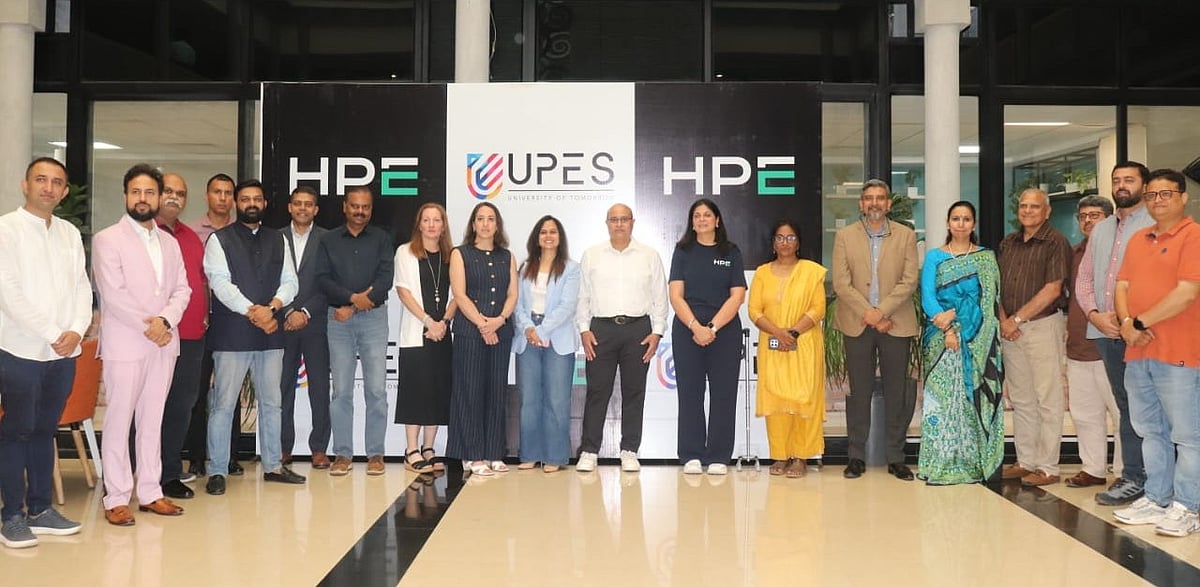
    Dehradun, July 24, 2026 – UPES has partnered with Hewlett Packard Enterprise (HPE) to inaugurate the HPE Networking AI-Driven Centre of Excellence (CoE), a milestone in the university’s AI-first educational strategy. The CoE is designed to bridge the gap between classroom theory and enterprise-grade practice in AI-driven networking, cloud infrastructure, cybersecurity, and other emerging technologies.

    The centre will offer a comprehensive learning ecosystem, including curriculum integration, faculty development, hands-on lab work, live demonstrations, project-based learning, HPE-led bootcamps, certification pathways, and opportunities for interdisciplinary research. Students will also gain access to HPE Networking training at Associate and Specialist levels, as well as potential internships and hiring pathways through HPE, its partners, and customers.

    According to a recent NASSCOM and Deloitte report, India will need over 1.25 million AI professionals by 2027, with an estimated shortfall of more than 600,000 skilled workers. The new CoE directly addresses this demand by preparing students for careers in AI, enterprise networking, cloud, and cybersecurity.

    For UPES, the CoE exemplifies its AI-first university strategy, which integrates AI across the curriculum, faculty, and industry partnerships rather than confining it to a single course or department. The partnership aims to produce graduates who are not just job-ready but capable of shaping enterprise AI adoption across multiple domains.

    The inauguration was the centerpiece of a day-long engagement between UPES and HPE’s global leadership. The event began with a welcome reception and a leadership roundtable on industry-academia collaboration. After the formal inauguration and showcase, an interactive student session featured a keynote by Shishir Singh, Senior Vice President and General Manager of Network Products & Advanced Technology at HPE, titled “The Bridge: Degree to Career.” The delegation also toured the Bajaj Engineering Skills Training (BEST) Centre before reaffirming the long-term partnership.

    Other senior HPE leaders present included M. Muthukumar, Vice President – Platform Software Engineering and Managing Director, HPE Networking India; Maria Delting, Human Resource Leader – HPE Networking; Shalini Dutta, Head of Global Talent Acquisition; Beth Kremer, Senior Manager – University Recruitment & Programs and TA Operations; Samuel Daniel, India Leader – University Relations & Strategy; and Archana Yadav, Senior Global Program Manager, HPE Academic Alliance.

    Speaking at the event, Shishir Singh said, “The future of enterprise technology will be shaped by professionals who can seamlessly combine AI, networking, cloud and cybersecurity to solve complex real-world challenges. We are delighted to partner with UPES to create an environment where students gain practical exposure to industry technologies, learn from practitioners, and build skills that are relevant to tomorrow’s digital economy. Strong industry-academia partnerships like this are essential to developing the next generation of innovators and technology leaders.”

    Dr. Abhishek Sinha, Pro Vice Chancellor – Student Success, UPES, added, “AI is fundamentally reshaping enterprise technologies, and universities have a responsibility to ensure students are prepared not just for today’s jobs, but for the careers and industries that are rapidly emerging. Through this partnership, our students will gain access to advanced technologies, global perspectives and experiential learning opportunities that will strengthen their ability to innovate, solve complex problems and lead in an AI-driven future. It is another important step in UPES’ vision as India’s AI-first university.”

    The partnership builds on UPES’s existing collaborations with global leaders including OpenAI, Google Cloud, Salesforce, and Harvard Business Impact. With the HPE Networking AI-Driven Centre of Excellence, the initiative aims to foster innovation, interdisciplinary learning, and future-ready talent prepared to lead the next wave of AI-driven enterprise transformation.

  • Top AI Skills Employers Will Demand Most in 2026

    Top AI Skills Employers Will Demand Most in 2026

    The artificial intelligence job market is heating up, and employers are already signaling which skills will be most valuable in 2026. From engineering robust AI systems to ensuring ethical governance, professionals who master these competencies will stand out. Here are the top AI skills that will shape career opportunities in the near future.

    AI Engineering

    Employers are prioritizing professionals who can build, deploy, optimize, and maintain scalable AI systems. Expertise in modern frameworks, cloud platforms, and automation tools is essential for this role.

    Prompt Engineering

    Crafting accurate prompts for generative AI models dramatically improves productivity, workflow automation, content quality, and enterprise AI application performance. This skill is becoming a cornerstone of efficient AI use.

    Machine Learning

    Strong machine learning expertise remains critical for developing predictive models, improving algorithms, handling large datasets, and solving complex business challenges effectively.

    Data Engineering

    Organizations are seeking experts who can manage data pipelines, ensure data quality, handle storage, integrate systems, and process information reliably to support AI model training and deployment.

    AI Governance

    As AI adoption grows, businesses increasingly value professionals who can ensure ethical AI practices, regulatory compliance, transparency, risk management, and responsible deployment across enterprise environments.

    Python Programming

    Python continues to be the preferred language for AI development, enabling automation, model building, data analysis, and seamless integration with AI frameworks efficiently.

    Cloud AI Platforms

    Experience with cloud-based AI services helps professionals deploy scalable applications, optimize infrastructure costs, and accelerate enterprise AI implementation across industries.

    Natural Language Processing (NLP)

    NLP expertise enables organizations to create advanced chatbots, language models, intelligent search systems, and multilingual customer engagement solutions successfully.

    Business Intelligence

    Employers favor professionals who combine AI knowledge with business intelligence to transform analytics into strategic decisions, operational improvements, and measurable organizational growth.

  • Complete Guide to Microsoft AI Certifications for Professionals in 2026

    Complete Guide to Microsoft AI Certifications for Professionals in 2026

    Artificial intelligence is reshaping the workplace, and companies across industries are actively seeking professionals who understand AI tools. Microsoft has developed a comprehensive certification program to help professionals acquire these in-demand skills. These certifications go beyond simple tests—they provide practical, job-ready knowledge that can be applied immediately.

    Different roles require different learning approaches. Managers, developers, data scientists, and IT specialists each have unique goals and challenges. Microsoft recognizes this and has designed separate learning paths tailored to each career type.

    What Microsoft’s AI Program Offers

    Microsoft provides a centralized learning hub for AI training, bringing together a wide range of courses in one accessible platform. Professionals can progress through the material at their own pace, whether they are complete beginners or have some foundational knowledge. The hub offers resources for both groups.

    Learners start with basic concepts about what AI is and gradually advance to more complex topics. The system flows naturally from one idea to the next, with each lesson building on the previous one.

    Different Paths for Different Jobs

    Each job role has distinct needs. A business leader wants to understand how AI can drive company growth. A developer focuses on writing code that leverages AI services. A data scientist works on improving prediction accuracy. IT professionals manage the infrastructure that runs AI applications. Microsoft has created separate learning paths for each role.

    • Business leaders take courses on applying AI to business strategy.
    • Developers learn to build applications using Azure AI tools.
    • Data scientists study machine learning and analytical methods.
    • IT professionals learn to maintain and optimize AI systems.

    This role-based approach ensures professionals learn only what is relevant to their work, saving time and keeping training focused on real-world goals.

    Learning the Basics First

    Microsoft emphasizes starting with fundamentals. Early courses explain what AI is and how AI systems operate. Key introductory courses include Introduction to AI in Azure and Introduction to Generative AI. These help professionals grasp core concepts.

    Training also covers responsible AI practices, teaching how to build fair and safe AI systems. This ethical component is a critical part of the curriculum, addressing concerns beyond just technology.

    Why Companies Value These Certifications

    The job market is evolving rapidly, and employers prioritize candidates with verified AI skills. A Microsoft AI certification demonstrates that a professional has invested time in learning and has passed a rigorous assessment. The certification process includes courses, hands-on practice labs, and a final exam.

    The exam tests practical ability, ensuring certified professionals are ready to contribute from day one. Employers trust this validation, and certified workers stand out to hiring managers.

    How to Get Started

    Professionals should begin with the fundamentals using Microsoft Learn, a free platform that requires only a Microsoft account. Learners choose a path aligned with their role and progress through courses at their own pace. Many courses include practice labs where users work with real tools in a safe environment, reinforcing skills through hands-on experience.

    Starting this journey is easier than many professionals think. The structured approach removes guesswork and provides a clear roadmap to certification.

    Final Thoughts

    Microsoft’s AI certification program prepares professionals for various job roles by teaching both technical skills and responsible AI practices. With self-paced learning and practical training, professionals gain skills that help them thrive in an AI-driven workplace.

    Frequently Asked Questions

    1. What are Microsoft AI Certifications? They are role-based learning programs that help professionals build practical AI, Azure, and machine learning skills through structured courses and certification exams.
    2. Who should take them? Developers, data scientists, IT professionals, business leaders, and anyone looking to build AI skills for career growth.
    3. Are Microsoft AI courses free? Many learning modules are free on Microsoft Learn, though certification exams typically require a separate fee.
    4. Do they help with career opportunities? Yes. They validate AI and cloud computing skills, making professionals more competitive for roles in AI, data science, software development, and IT.
    5. Where can I start? Begin with Microsoft Learn, choose a role-based AI learning path, complete the training modules, practice in hands-on labs, and prepare for the certification exam.