
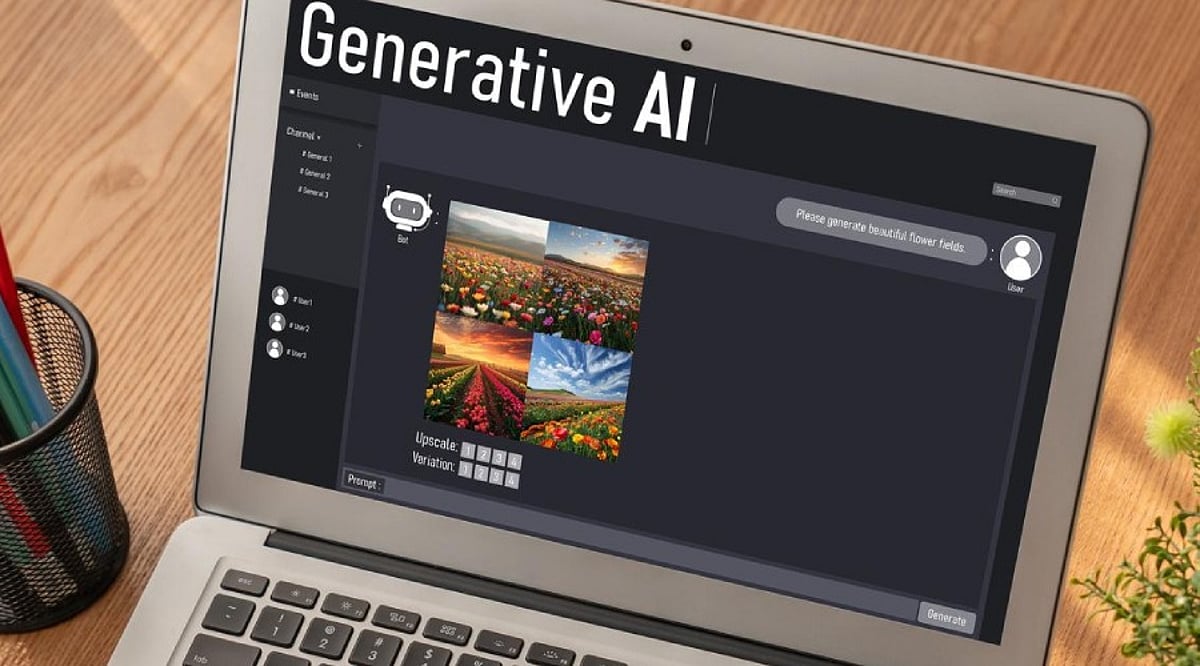
The internet is increasingly being flooded with content generated by artificial intelligence. Articles, images, videos, and entire webpages can now be produced in seconds, making online publishing faster and cheaper than ever before. However, this rapid growth of AI-generated material is raising serious concerns about quality, originality, and the overall diversity of information available online.
Known as “AI slop,” this term describes large volumes of low-quality or low-effort AI-generated content that offers little value to audiences. While not all AI-assisted content is poor, generative AI has made it significantly easier to mass-produce mediocre material with minimal human involvement.
AI Content Is Becoming More Common
A recent analysis by the Pew Research Center examined 490,000 English-language webpages from the Common Crawl archive, spanning January 2021 to July 2026. In a random sample of 10,000 webpages from July 2026, 10% showed significant signs of AI authorship. Among pages published after the release of ChatGPT in November 2022, more than one-third displayed AI authorship indicators.
The prevalence varies by domain type: about one in ten .com pages showed AI authorship signs in 2026, compared to 4.6% of .org pages and roughly 1% of .edu and .gov pages. While AI detection tools are not perfect, these patterns across large collections paint a clear picture of AI’s growing footprint.
What Makes AI Slop Different?
AI slop is not simply any content created with AI. AI can assist with research, editing, translation, and design while humans remain responsible for the final output. The problem arises when AI is used primarily to produce large volumes of content quickly, without original reporting, meaningful editing, or independent verification. This includes generic articles designed for search traffic, repetitive social media posts, and automatically generated images and videos.
Internet Could Become Monotonous
Research from Imperial College London, the Internet Archive, and Stanford University found that by the first half of 2025, about 35% of newly published websites were classified as AI-generated or AI-assisted. The study also revealed that AI-generated websites had nearly 33% higher semantic similarity than human-made sites, meaning AI-produced content tends to be more repetitive in ideas and meaning. Additionally, AI-generated sites exhibited 107% higher positive sentiment scores, likely due to language models’ tendency to produce agreeable and optimistic responses.
However, the study found no statistically significant evidence that AI-generated text reduced factual accuracy or stylistic diversity, countering some common fears.
AI Is Leaving Its Mark on Online Writing
Pew’s analysis also identified linguistic patterns associated with AI writing. Compared to 2023, em dashes appear about twice as frequently, Oxford comma usage has increased by 63%, and certain AI-favored words like “delve,” “interplay,” and “testament” have more than doubled in usage. The use of “negative parallelism”—constructions like “it’s not just X, it’s Y”—has nearly tripled, though it remains relatively uncommon overall.
These patterns do not prove that AI wrote a specific article, as humans also use these features, but they become meaningful when analyzed across hundreds of thousands of webpages.
Quality Must Remain a Priority
The rise of AI slop does not mean the internet is becoming entirely machine-generated or that AI-assisted content lacks value. AI can reduce production time, help small teams create material, and make creative tools accessible to more people. Human oversight can substantially improve the quality of AI-assisted work.
The larger concern is the incentive to produce content simply because it is cheap. When websites can publish thousands of pages with limited human involvement, finding original reporting, specialist knowledge, or genuinely useful information becomes harder. AI has changed the economics of online publishing, making it easier than ever to produce low-value content at scale.
The challenge for the internet is not just identifying whether AI made something, but maintaining the value of original reporting, human judgment, verification, and distinctive ideas as synthetic content becomes a larger part of what people encounter online.
Frequently Asked Questions
What is AI slop?
AI slop refers to large volumes of low-quality, low-effort content generated using artificial intelligence with limited human involvement or oversight.
Why is AI slop increasing online?
Generative AI makes producing articles, images, videos, and webpages faster and cheaper, encouraging large-scale automated content creation.
Does all AI-generated content qualify as AI slop?
No. AI-assisted content can be valuable when humans provide original research, editing, verification, creativity, and meaningful oversight.
How can AI slop affect the internet?
It can make useful information harder to find, increase repetitive content, and potentially reduce the diversity of online material.
Can AI slop be identified easily?
Not always. AI detection tools can make mistakes, and human writers may also produce patterns commonly associated with AI-generated content.