
Tag: AI Strategy

  • AI and Tech Innovation Take Center Stage at the 2026 Global Awards

    AI and Tech Innovation Take Center Stage at the 2026 Global Awards

    The 2026 Global Awards are set to celebrate the brightest minds in sustainability, procurement, and supply chain, with a strong emphasis on AI-led innovation and digital solutions. The event will take place on September 8 at the JW Marriott Grosvenor House in London, following Day 1 of The London Summit.

    This black-tie gala unites three major ceremonies: The Global Sustainability Awards, The Global Procurement Awards, and The Global Supply Chain Awards. It recognizes organizations and individuals driving responsible, efficient, and forward-thinking operations.

    Key AI and Tech Categories

    The Global Sustainability Awards – Tech & AI Award
    This award honors initiatives that leverage digital innovation, emerging technologies, and AI to accelerate sustainability. Judges evaluate how effectively technology addresses specific environmental or social challenges, with measurable outcomes like resource efficiency or emissions reduction.

    The Global Procurement Awards – AI in Procurement Award
    Celebrating organizations using AI to transform procurement, this category looks for smarter decision-making through AI integration. Entries are assessed on improvements in efficiency, forecasting, supplier management, cost optimization, and risk reduction.

    The Global Procurement Awards – Procurement Technology Award
    Recognizing innovative digital solutions that enhance procurement performance, this award emphasizes technology that improves visibility, automates processes, and drives business value.

    The Global Supply Chain Awards – Digital Supply Chain Award
    This category showcases digital innovation for smarter, more agile supply chains. It highlights the use of data, automation, and advanced technologies to boost visibility, connectivity, and resilience.

    Entries close June 29, 2026. Judging takes place in July, with the shortlist announced that same month. For more details, visit the official awards page.
  • India Pushes for Guaranteed Access to Anthropic’s Fable 5 as US-India AI Dialogue Opens

    India Pushes for Guaranteed Access to Anthropic’s Fable 5 as US-India AI Dialogue Opens

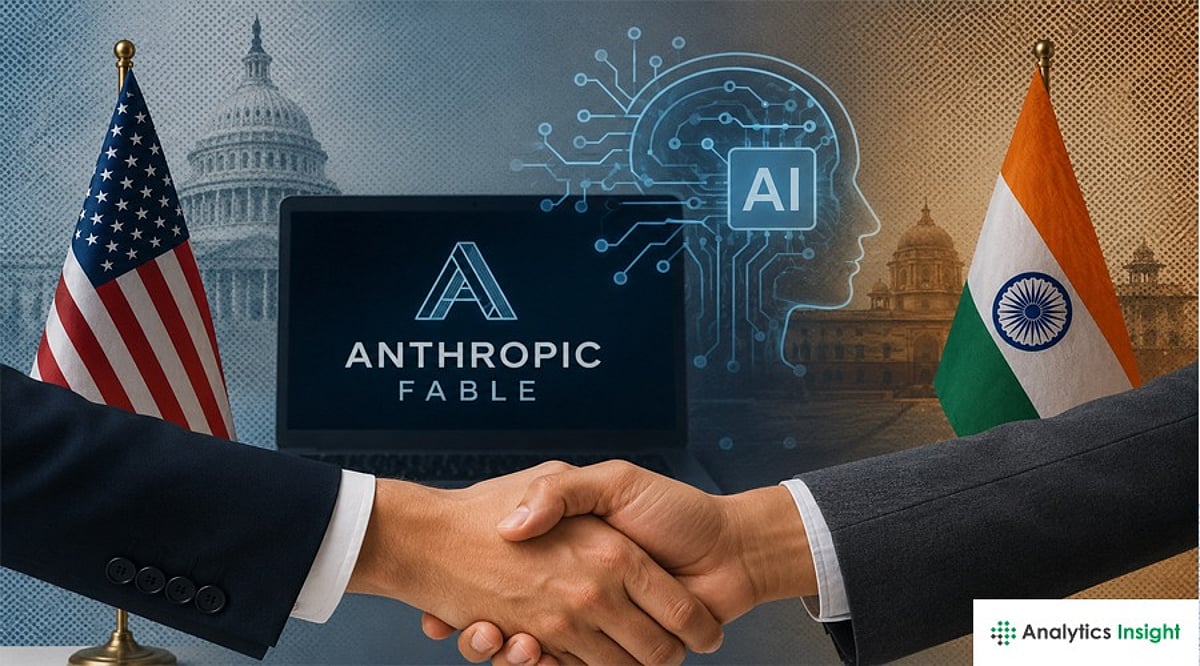
    India and the United States have launched high-level discussions focused on the rollout of Anthropic’s advanced Fable 5 AI model. The talks aim to balance the need for trusted partners to gain early, uninterrupted access to frontier AI while managing national security and infrastructure risks.

    Jacob Helberg, US Under Secretary for Economic Affairs, confirmed that both sides share a common understanding of the concerns at stake. The discussions center around national security safeguards, critical infrastructure protection, and the safe deployment of powerful AI systems.

    The US has advocated for a phased release of Anthropic’s latest models, including Claude Fable 5 and Mythos 5, arguing that a gradual approach will protect essential services such as power grids, digital networks, and government operations. India, for its part, has welcomed the dialogue but pressed for long-term assurance that trusted partners will not face sudden disruptions in AI access. Stable and predictable access is essential for India’s growing AI-driven projects in healthcare, education, finance, manufacturing, and public services.

    The negotiations come after the US introduced export controls limiting foreign access to Anthropic’s newest AI technology. MeitY Secretary S. Krishnan noted that India requested clarity on Washington’s long-term policy and commitments to uninterrupted supply for trusted allies. US officials have outlined a framework that could ensure reliable access moving forward.

    Industry experts see these talks as a potential blueprint for future global AI governance. As more nations view frontier AI models as strategic assets rather than ordinary software, the outcome of the Fable 5 discussions could shape how AI companies release advanced technology internationally. A successful agreement would also strengthen the broader technology partnership between India and the United States.

  • Microsoft CEO Satya Nadella Calls Out Hypocrisy in Tech’s AI Messaging

    Microsoft CEO Satya Nadella Calls Out Hypocrisy in Tech’s AI Messaging

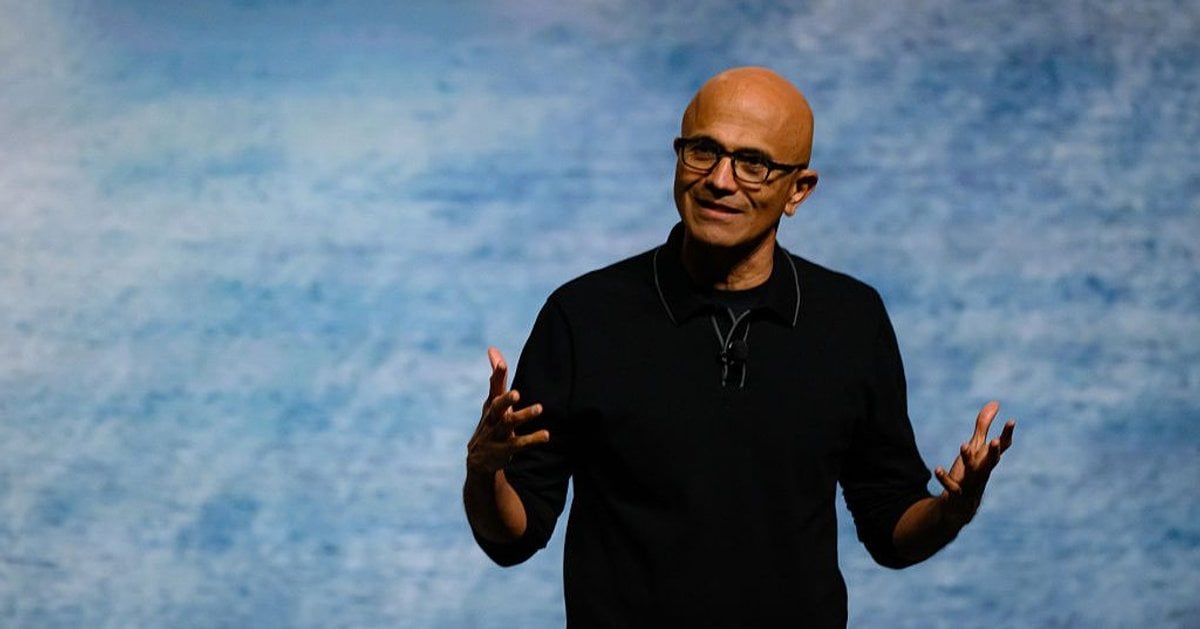
    Microsoft CEO Satya Nadella has publicly challenged the contradictory messaging from AI leaders who warn about job displacement while simultaneously pushing for unlimited expansion of costly AI systems. In an interview with The Wall Street Journal, Nadella highlighted a growing disconnect that he believes undermines public trust and threatens the long-term viability of AI.

    “You can’t warn that AI is coming for jobs and sell unlimited expansion in the same breath,” Nadella stated. He argued that companies demanding vast computational resources for AI development while cautioning about workforce displacement create an untenable position that erodes social permission.

    Nadella urged businesses to rethink their approach, advocating for AI as a tool to enhance rather than replace employees. He described a combination of human capital and “token capital”—the computational resources powering AI systems—as a “recipe” for effective collaboration. Success, he emphasized, depends on demonstrating tangible economic benefits rather than theoretical promises.

    Addressing cost barriers, Microsoft has launched more affordable AI models and introduced Copilot Cowork, an autonomous agent that uses cheaper models for larger tasks. The company has even considered hosting a version of DeepSeek, the cost-effective Chinese model criticized by competitors for allegedly copying proprietary technology.

    Other industry leaders have echoed concerns about AI’s workforce impact. Anthropic CEO Dario Amodei warned that AI could eliminate many entry-level white-collar jobs, while OpenAI’s Sam Altman has publicly acknowledged the risk of redundancies. Nadella, however, stresses that restructuring existing roles is the primary goal, stating, “Companies have to offer people real economic opportunity.”

  • AWS Co-Founder Matt Domo on Why Enterprise AI Pilots Fail and How to Scale

    AWS Co-Founder Matt Domo on Why Enterprise AI Pilots Fail and How to Scale

    According to a recent Forrester analysis, only 10-15% of artificial intelligence pilots successfully transition into long-term production. That means most enterprise AI investments stall before they ever deliver real impact. Matt Domo, a co-founder of Amazon Web Services (AWS) and creator of foundational Microsoft enterprise technologies, has a clear explanation: the problem is rarely the technology itself, but rather how organizations are structured around it.

    Now advising Fortune 500 companies, government agencies, and universities, Domo shared his insights with AI Magazine on moving from experimentation to enterprise-scale execution.

    Why Most AI Initiatives Fail at the Executive Level

    Domo identifies three root causes for AI failure: unclear ownership of outcomes, misaligned incentives across teams, and operating models that were not built for AI-driven decision-making. “Leaders fund pilots, but they don’t redesign how work happens. They treat them as technology projects instead of using them to change how the business operates,” he said. Without organizational alignment, AI simply gets layered onto existing processes, which looks like progress but yields no measurable results.

    Scaling AI from Pilot to Enterprise-Wide Deployment

    Scaling does not come from running more pilots; it comes from standardization. “Companies that succeed define a repeatable path from pilot to production, assign clear ownership of outcomes, and integrate AI into core workflows instead of layering it on top,” Domo explained. He warns that when every team starts from scratch, you end up with scattered experiments, not scale.

    ROI Metrics That Convince Boards

    To secure board-level investment, Domo advises focusing on metrics directly tied to financial results and strategic goals. “Boards aren’t convinced by activity. They’re convinced by measurable impact tied to the P&L,” he said. The metrics that matter include cost reduction, revenue lift, and faster decision cycles. Vague reporting like usage or engagement does not work; clear attribution of what changed, by how much, and how it ties to financial outcomes is essential.

    Avoiding AI-Washing and Misaligned Projects

    Organizations avoid AI-washing by starting with the desired outcome, not the tool. “Define the business result first, assign clear ownership of that outcome, and only then determine where AI actually improves the workflow,” Domo advised. Misalignment often happens when teams are incentivized to launch initiatives rather than deliver results. The fix is to tie every AI effort to a measurable objective and hold a single owner accountable.

    Speeding Up AI-Driven Decision-Making

    Speed in AI adoption comes from clearer ownership and fewer handoffs. In large organizations, decisions slow down due to fragmented accountability and excessive alignment steps. Domo recommends defining who owns the outcome, standardizing the inputs those decisions rely on, and reducing the number of required approvals. “AI can surface better insights, but unless the organization is structured to act on them quickly, those insights sit in dashboards,” he noted. Speed comes from aligning decision rights with the people closest to the outcome.