
Tag: AI talent

  • Top Hiring Platforms for AI Engineers in 2026: A Strategic Guide for Businesses

    Top Hiring Platforms for AI Engineers in 2026: A Strategic Guide for Businesses

    Finding experienced AI engineers has become a strategic challenge for businesses investing in artificial intelligence. Today’s hiring platforms range from enterprise-focused talent networks to flexible freelance marketplaces, each serving different needs. Comparing these options helps companies hire faster and build stronger AI teams.

    Almost every business wants AI. Fewer know how to hire the people who can actually build it. Experienced AI engineers are hard to find, cost more to recruit, and often juggle several offers at once. Lemon.io’s 2026 benchmark, which looked at over 2,500 real developer contracts across 71 countries, found that AI engineers now out-earn every other mainstream software role, with some earning up to 41% more than traditional developers.

    Companies that hire well don’t start with a job post. They start by picking the platform that actually fits their project, budget, and timeline. That raises a more important question: which hiring platform is better suited for the work your business needs done?

    Match the Platform to the Job, Not the Job to the Platform

    Not every AI role calls for the same hiring platform. An AI researcher, an ML engineer, and a developer building a chatbot need different skills and different levels of vetting. Premium platforms earn their keep on business-critical projects. Smaller projects usually don’t need that kind of spend. Define the role first, then pick the platform. Doing it backwards wastes time, money, and a lot of hiring effort.

    Five Platforms Compared

    Toptal: Paying for Vetting Upfront Instead of Chasing It Later

    Toptal is built for businesses that want hiring certainty more than hiring speed. Engineers get screened before a company ever sees a profile, which cuts down on the need for endless internal technical interviews. That level of vetting comes at a price. AI and ML specialists typically run $100 to $200 an hour, plus a $500 refundable deposit and a $79 monthly membership fee. The platform works best for business-critical AI projects, where hiring the wrong engineer gets costly. For small pilots or short experiments, that premium is a harder sell.

    Lemon.io: Built for Startup Speed

    Lemon.io pre-filters engineers who already work inside LLM stacks, vector databases, and agent frameworks, so a founder is not explaining what LangChain is on a first call. Its own 2026 benchmark, drawn from thousands of real contracts, puts senior AI engineers at roughly $50 to $80 an hour. The talent pool leans heavily toward Eastern Europe and Latin America, and there is no upfront deposit. Pricing stays well below Toptal at comparable seniority, though daily overlap with a US team usually runs four to six hours rather than a full working day.

    Andela: Built for Teams, Not Single Hires

    Andela leans toward assembling a distributed engineering squad rather than filling one seat, while Toptal generally suits a single senior contributor better. The company has stopped publishing rates on its own site, but recent third-party reviews put senior seats at $6,000 to $15,000 a month per engineer. That comes bundled with a 12-month minimum term and a $50,000 fee to convert an engineer into a direct hire later. The model fits a company scaling AI features across an entire product. It aligns poorly for a business that just needs one contractor for six weeks.

    Upwork: Flexibility, with the Screening Handed Off

    Upwork’s talent pool is the widest of any platform here, and posted rates for AI work run anywhere from $25 to $200 or more an hour. The catch is that Upwork does almost none of the technical vetting itself. A company without someone technical enough to review code samples and run a real test task will struggle to tell a strong AI engineer from a well-written resume. Treating every Upwork hire as a paid trial, rather than a decision made off a profile, closes most of that gap.

    SecondTalent: The Offshore Staffing Route to AI Talent

    SecondTalent works less like a freelance marketplace and more like an offshore staffing partner, drawing on AI engineers across Southeast Asia at rates typically 40 to 60 percent below equivalent US hires. Monthly costs run roughly $2,700 to $7,500 per engineer depending on seniority, with no upfront fee, and the platform promises a shortlist within 24 hours. Unlike Toptal or Andela, neither hourly billing nor a long minimum term applies here. This model suits a company that wants a full-time-equivalent AI engineer without US salary bands or a year-long contract. The trade-off is a shorter public track record than platforms that have been around for a decade, which makes reference checks worth the extra effort.

    Before Signing Off on Any Platform Hire

    A handful of checks matter no matter which platform a company chooses:

    • Review production code or shipped projects, not just a portfolio or resume.
    • Run a paid trial task before committing to a longer contract.
    • Confirm hands-on experience with the specific AI stack the role requires, not AI experience in general.
    • Check references for any engagement expected to run past a few months.

    Choosing Without Guessing

    High stakes and a real budget point toward Toptal. Startup speed on a leaner budget points toward Lemon.io. A long-term distributed team points toward Andela, with its 12-month terms weighed in from the start. A company that wants a full-time-equivalent AI engineer without US payroll costs fits SecondTalent’s model. Tight budgets paired with strong internal technical review can still work well on Upwork.

    Final Thoughts

    Hiring AI engineers will stay hard for the next few years, maybe getting harder. As demand climbs and specialized skills get scarcer, a bad hire costs more every year that passes. The companies that build strong AI teams won’t be the ones posting the most job ads. They’ll be the ones who pick the right platform, define the role clearly, and judge candidates against the actual work in front of them.

  • Today’s Tech Roundup: Google’s New AI Chip, Transition VC Fund, IT Hiring Shifts & Crypto Funding

    Today’s Tech Roundup: Google’s New AI Chip, Transition VC Fund, IT Hiring Shifts & Crypto Funding

    Good morning, tech fam! Here are the biggest headlines making waves today, from artificial intelligence and startup funding to hiring trends, global AI competition, and cryptocurrency.

    Google’s New AI Chip Could Make Gemini Faster and Smarter

    Google is reportedly building a new AI chip called Frozen v2 to run Gemini more efficiently. The chip promises better performance while using less power, potentially reducing Google’s reliance on external hardware and strengthening its AI infrastructure in the coming years.

    Transition VC Expands Support for Energy Startups

    Transition VC has launched its Rs. 1,500 crore Fund II to invest in energy technology startups across India. The fund aims to help early-stage companies grow, build clean energy solutions, and accelerate innovation in the country’s energy sector.

    IT Firms Change Hiring Plans as Freshers Face Longer Waits

    India’s IT hiring landscape is shifting: companies are slowing campus recruitment, delaying joining dates, and linking offers to business demand. Firms now prioritize graduates with AI and deep tech skills, leaving many freshers with longer waits and fewer entry-level opportunities.

    Countries Driving the Global AI Race in 2026

    The global AI race in 2026 is led by nations investing in research, chips, talent, and robust digital systems. The United States and China remain ahead, while the UK, Singapore, Canada, and India continue to grow through innovation, skilled workers, and government support.

    Luxxfolio Raises $1.55 Million for Crypto Expansion

    Luxxfolio has completed a $1.55 million private placement by issuing 7.77 million units. The company plans to use the funds to grow its crypto projects, support Litecoin mining, and meet general business needs while offering warrants to investors.

  • How AI Is Reshaping Enterprise Talent: Troogue CEO on Capability-Based Hiring and the Human-AI Future

    How AI Is Reshaping Enterprise Talent: Troogue CEO on Capability-Based Hiring and the Human-AI Future

    Artificial intelligence is redefining the future of enterprise hiring, workforce development, and project delivery by automating coding, testing, documentation, and talent evaluation. As AI takes over repetitive tasks, organizations are placing greater emphasis on human capabilities such as judgment, creativity, communication, and empathy to drive better business outcomes.

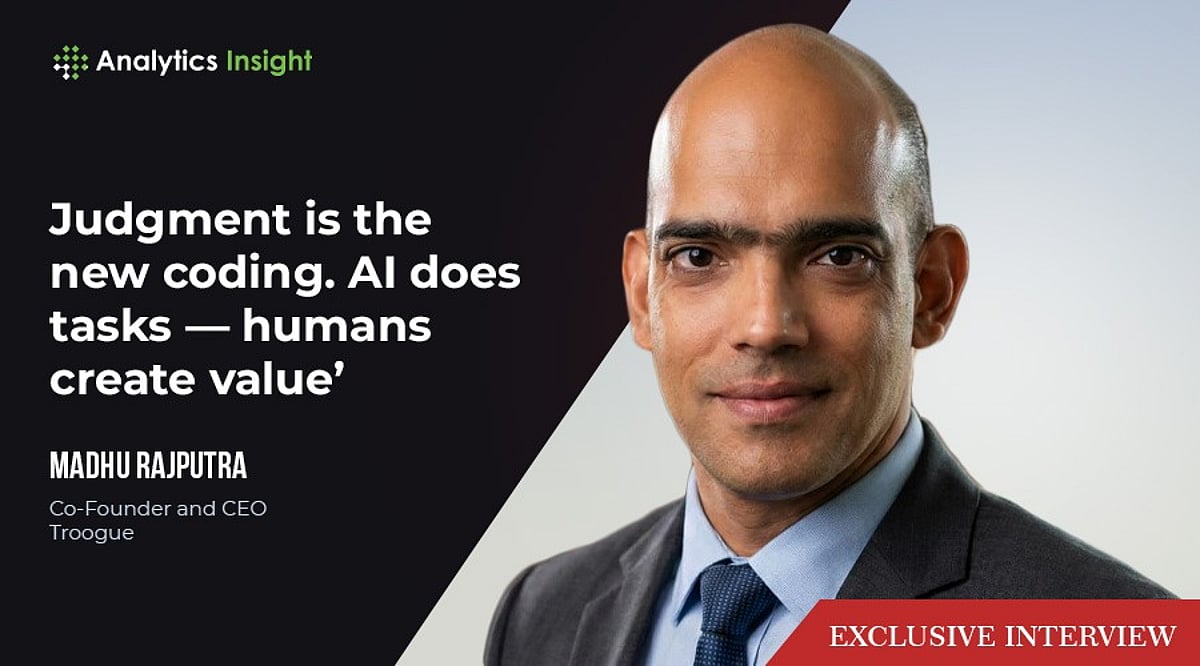
    Madhu Rajputra, Co-Founder and CEO of Troogue, believes the next phase of enterprise transformation will be led by professionals who can effectively combine AI capabilities with critical human skills. Rather than replacing talent, AI is reshaping how value is created by enabling people to focus on strategic thinking, problem-solving, and decision-making.

    In an exclusive interview with Analytics Insight, Rajputra discusses how Troogue is preparing enterprises and professionals for the Human-AI hybrid era through capability-based talent verification, AI-powered workforce solutions, modular AI agents, and responsible human intelligence data.

    How Troogue Is Preparing Professionals for the Human-AI Talent Shift

    AI is clearly changing how software gets built. Coding, testing, documentation and even parts of design are becoming faster because of AI. But Rajputra does not believe this reduces the importance of human capability. It changes where humans create value. AI is compressing the value of pure execution skills and increasing the premium on judgment skills.

    “AI will not replace capable people. But capable people who can use AI well will replace those who cannot.” — Madhu Rajputra

    At Troogue, professionals are prepared for this shift by evaluating and developing them beyond traditional CV-based skills. The assessments cover not just coding ability, but problem-solving, communication, role fit, learning agility, and the ability to work in real enterprise environments.

    Verifying and Curating Talent Through Real-World Assessments

    Troogue’s verification process starts with the enterprise requirement, not with a database search. Once the requirement is clear, a role-aware evaluation path is created. This can include technical assessments, coding challenges, scenario-based problem solving, communication evaluation, video Q&A, work-simulation tasks, and AI-assisted interview analysis.

    Profiles are curated based on verified capability, not just stated experience. Each Trooger is assessed across technical depth, problem-solving ability, communication, reliability, and fit for the role. All of these signals feed into a capability graph — an evidence-backed view of each professional’s verified skills, domain depth, assessment history, and deployment feedback.

    Delivering AI Agents Cost-Effectively

    One of the challenges with enterprise AI adoption is that many tools are priced as large organization-wide licenses. Troogue’s approach is different. AI agents are built around specific workflows and specific users, making intelligence available at the point of work. The AI layer is embedded into the engagement itself, rather than sold as a heavy standalone enterprise software rollout.

    This is structurally more cost-effective because the AI capability is linked to actual usage, roles, and outcomes.

    Leveraging Human-Generated Data for Better AI Models

    As foundation models become more commoditized, the scarce resource will be high-quality, domain-specific, expert-generated data. Every Trooger who goes through capability assessments, interview processes, work simulations, and deployment feedback loops creates signals about human capability. These signals help understand how people solve problems, communicate, respond to ambiguity, collaborate, and perform in real enterprise contexts.

    Over time, with consented, structured, and anonymized data, this can become a valuable evaluation and training layer for enterprise AI models.

    Preserving Human Qualities Alongside AI

    Troogue does not try to protect human-centric qualities from AI. Instead, the company works to make them visible, measurable, and rewarded. The capability framework looks at professional-fit dimensions such as communication under pressure, adaptability in ambiguous contexts, ownership mindset, stakeholder relationship signals, and feedback from deployment.

    Human-centric qualities matter even more when AI is involved. Someone still has to explain trade-offs to a client, mentor a junior team member, understand why a user is resisting a new system, and take accountability when an AI-generated answer is not good enough.

    “The AI handles throughput. The human handles consequence. Troogue’s job is to make sure enterprises can reliably find humans who understand that distinction.” — Madhu Rajputra

  • Anthropic Pays AI Researchers Over $1M Amid Mass Layoffs at Microsoft, Google, Amazon

    Anthropic Pays AI Researchers Over $1M Amid Mass Layoffs at Microsoft, Google, Amazon

    The race for top AI talent has reached new heights. Reports indicate that Anthropic, a leading artificial intelligence company, is now offering some of its researchers annual compensation packages exceeding $1 million. These packages include base salary, company stock, and other benefits, setting a new benchmark in the tech industry.

    The revelations come from H-1B visa filings, which show that Anthropic has been paying base salaries of $1.12 million and $1.38 million to two Members of Technical Staff during its first two fiscal years of 2026. Notably, these figures exclude bonuses and stock awards, meaning the total compensation is significantly higher. The filings do not disclose names, but they underscore the intense demand for specialized AI expertise.

    This surge in AI salaries contrasts sharply with a wave of layoffs sweeping through major tech companies. Microsoft, Google, Amazon, Meta, and Intel have all announced job cuts as they reallocate resources toward AI initiatives. While thousands of software engineers and support staff face unemployment, top AI researchers command unprecedented pay.

    The disparity highlights a fundamental shift in hiring priorities. Companies are aggressively cutting non-core roles while investing heavily in AI talent, which they view as critical to staying competitive. Beyond salary, firms like Anthropic, OpenAI, Meta, Google DeepMind, and xAI offer signing bonuses, large stock grants, and flexible work arrangements to attract the best minds.

    As the AI arms race intensifies, the competition for talent is expected to widen. For now, the biggest beneficiaries are the researchers at the center of this high-stakes battle.