

Tag: AI tutors

  • EdTech Trends for 2027: AI Tutors, Digital Literacy, and Skills-Focused Learning

    EdTech Trends for 2027: AI Tutors, Digital Literacy, and Skills-Focused Learning

    Introduction

    As 2027 approaches, education technology is evolving beyond simply adding AI tools to classrooms. The focus is shifting toward personalized learning, AI literacy, teacher empowerment, skills development, and responsible use of technology. According to the OECD Digital Education Outlook 2026, generative AI can enhance learning when guided by clear pedagogical principles, but without such guidance, it risks improving task performance without genuine learning gains.

    Personalized AI Tutors

    AI-powered tutoring systems are becoming more common. Unlike traditional scripted programs, these intelligent tutors can engage in dialogue, ask questions, offer hints, and adapt their approach in real time. The OECD notes that when used with a clear teaching goal, generative AI acts as a tutor, learning partner, or assistant. Authoring tools also help teachers create customized lessons, questions, and simulations while maintaining oversight.

    Adaptive Learning and Student Fit

    Adaptive learning systems adjust content and support based on individual student performance. The goal is to help teachers identify learning gaps and provide tailored assistance, moving away from one-size-fits-all instruction.

    AI Literacy as a Core Skill

    As AI becomes ubiquitous in daily life and work, schools are treating AI literacy as essential. The OECD defines it as the ability to understand AI tools, critically evaluate their outputs, and use them responsibly. UNESCO’s guide outlines 12 student competencies across four themes: human-centered perspective, AI ethics, practical AI methods, and system building. Students progress through three stages: Understand, Apply, Create.

    Teacher Training and Support

    Teachers also need AI skills. UNESCO’s AI Competence Framework for Teachers includes 15 competences across categories like human-centered mindset, ethics, foundations, pedagogy, and professional development. Teachers progress through Acquire, Deepen, and Create stages. The OECD emphasizes that AI should support teachers without removing their agency.

    Skills-Based and Career-Focused Learning

    Education technology is increasingly tied to workforce demands. The World Economic Forum’s Future of Jobs Report 2025 projects a net gain of 78 million jobs by 2030, with 40% of skills in many roles changing. Employers cite skills gaps as a major barrier, and demand for AI, big data, cybersecurity, as well as soft skills like creative thinking and resilience, is growing.

    Privacy, Safety, and Responsible AI

    With greater AI adoption come concerns about privacy, bias, academic integrity, and transparency. The OECD reports that 72% of lower secondary teachers worry AI could harm academic honesty, while 57% say it improves lesson plans. UNESCO advocates for safe, ethical AI use.

    Immersive Learning and New Experiences

    Immersive technologies and simulations are expected to complement classroom learning, not replace it. However, as AI tutors become more autonomous, questions about how AI-generated information is created and verified will become critical.

    The Road Ahead

    In 2027, success in EdTech will depend not just on AI capabilities but on how schools choose to implement them. Clear teaching aims, proper training for staff, and student understanding of AI tools are essential. Schools must also address privacy, safety, and fairness. The next phase of EdTech will prioritize better learning outcomes with teachers maintaining control.

    Frequently Asked Questions

    What are the top EdTech trends for 2027?

    AI tutors, adaptive learning, AI literacy, skills-based education, immersive learning, and responsible AI use are expected to shape EdTech in 2027.

    How will AI tutors change education?

    AI tutors personalize learning, question students, provide guidance, and adapt teaching strategies through dialogue-based interactions and feedback.

    Why will AI literacy become important?

    AI literacy helps students and teachers understand AI systems, evaluate outputs critically, use technology responsibly, and develop essential future skills.

    Will AI replace teachers in 2027?

    AI is expected to support teachers by creating lessons, questions, and simulations while preserving human judgment, oversight, and teaching agency.

    Why are privacy and academic integrity important?

    Greater AI adoption raises concerns about student privacy, safety, bias, and academic integrity, requiring stronger safeguards and responsible technology policies.
  • How AI Tutors Are Personalizing Education and Transforming the Classroom

    How AI Tutors Are Personalizing Education and Transforming the Classroom

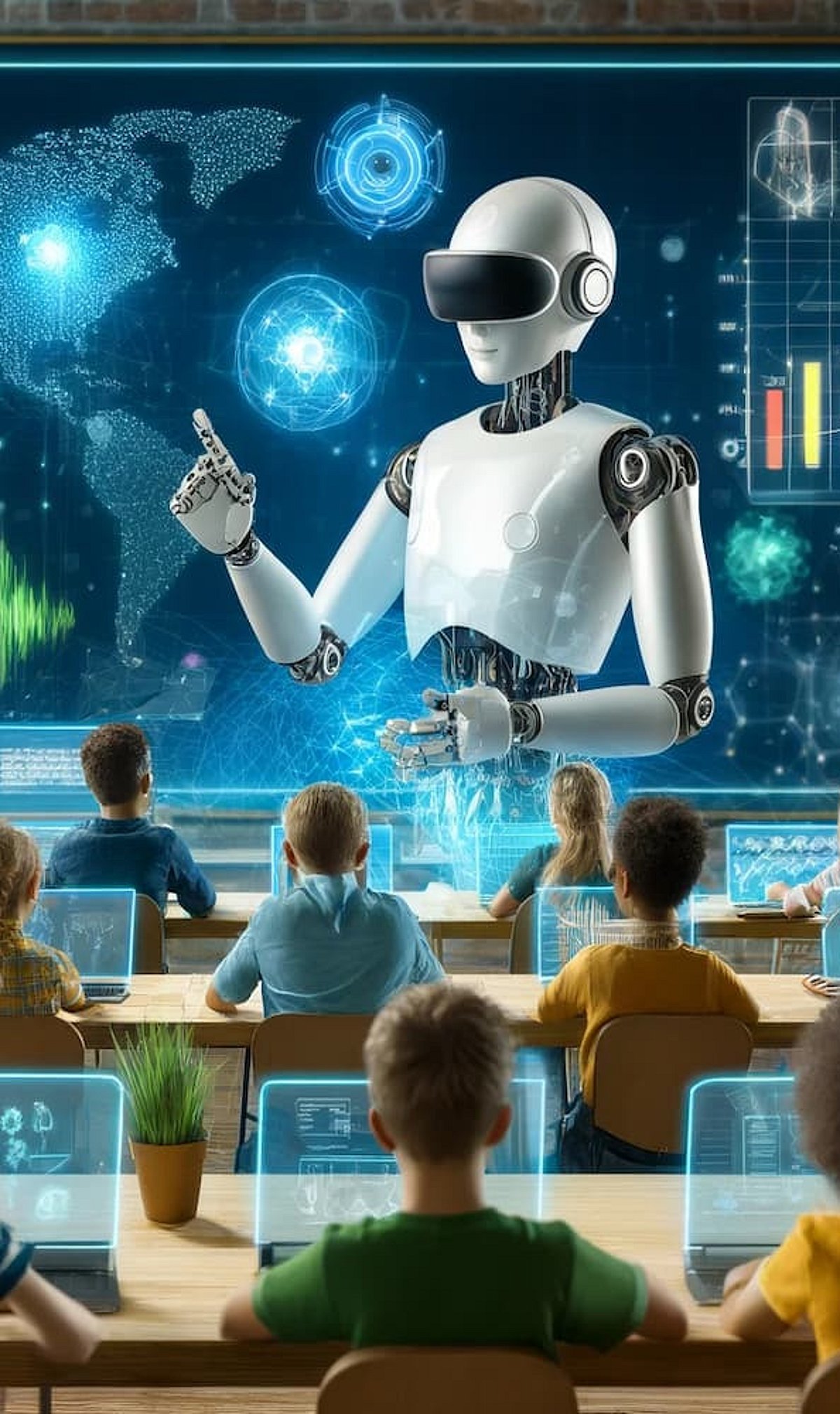
    Traditional classrooms have long operated on a one-size-fits-all model, where every student learns at the same pace regardless of individual strengths or weaknesses. AI tutors are changing that paradigm by delivering personalized lessons tailored to each learner’s unique needs, learning speed, and areas for improvement.

    These intelligent systems can explain difficult topics in multiple ways, provide instant feedback, and generate custom practice questions that reinforce understanding and memory retention. With AI tutors, students gain access to 24/7 support for homework, revision, exam preparation, and skill-building—without having to wait for the next class session.

    Popular AI-powered learning tools such as Khanmigo, Socratic, and Duolingo are already adapting lessons to individual needs, making education more engaging and effective. However, AI is not poised to replace human teachers entirely. Educators bring empathy, motivation, critical thinking, classroom discussions, and real-world mentorship—elements that technology cannot replicate.

    The future of education lies in a hybrid model where AI handles personalized practice and routine tasks, while teachers lead creativity, collaboration, and emotional support. This balanced approach promises to make learning more accessible, efficient, and human-centered.

  • AI Tutors Revolutionize Language Learning Apps: What Changed and What Didn’t

    AI Tutors Revolutionize Language Learning Apps: What Changed and What Didn’t

    For a decade, learning a language on a phone meant one loop: tap the matching word, keep the streak alive, climb a leaderboard of strangers. Then, large language models learned to hold a conversation, and the loop looked small. A tutor that chats, corrects, and roleplays in forty languages at any hour changes what an app can promise, and the incumbents knew it immediately. The result is the category’s fastest reinvention, worth understanding for what improved and what merely got new paint.

    From Flashcards to Conversation Partners

    The pivot has dates attached. Duolingo launched its Max tier in March 2023, built on GPT-4, with two features the old loop never offered: explanations of why an answer was wrong and open-ended roleplay with the app’s characters. A video-call feature followed, holding short spoken conversations in nine languages by early 2026. In April 2025, the chief executive declared the operation AI-first in a memo that leaked within hours, and AI-assisted generation roughly doubled the course catalog in a year. Conversational practice became the headline feature everywhere.

    The Engagement Machine Under the Lessons

    What did not change is the machinery that keeps people opening the app. Streaks and leagues run on the same variable-reward psychology tuned across online casino entertainment. Language apps borrowed that psychology to make grammar sticky. The borrowing was honest, since vocabulary survives only through repetition, and a streak manufactures repetition cheaply. But the mechanics answer to retention metrics, not fluency, and a tutor bolted onto the same loop inherits the incentive: keep the user returning, learning or not.

    When the Streak Becomes the Product

    Every long-term user knows the night the priority flips: the lesson gets chosen for speed rather than difficulty, because the streak matters more than the skill. That flip is the engagement machine working as designed, worth noticing without moralizing. A streak that drags you into the language on tired days does real pedagogical work, and turns hollow when preserving the number replaces practicing the skill. The difference lies in the five minutes, not the counter.

    What the Tutor Actually Changes

    Set the marketing aside, and the genuine differences between the classic app loop and an AI tutor turn out to be specific and measurable, which makes the upgrade decision easier than the hype suggests. Some of the old gaps the new tools close completely, others they barely touch at all, and one column of the comparison they actively complicate. The comparison below separates the categories honestly, including the part that the advertising skips.

    The last row is the honest asterisk on the whole revolution, and it deserves more attention than it gets. A model that converses fluently in any language can also explain its grammar wrongly while sounding completely certain of itself, which is why the serious products keep human-reviewed curricula underneath the chat layer, and why learners should treat any surprising correction as a claim to verify rather than a verdict to absorb.

    Using the Hybrid Without Fooling Yourself

    The practical playbook for the new era is short, and none of it requires a subscription decision first, because the daily habits matter far more than the subscription tier does. The new tools reward a very particular kind of user, the one who treats the app as a gym rather than a game, and the difference between those two kinds of users is built entirely from four behaviors that cost nothing at all:

    • Speak out loud daily — conversation features only build fluency when your mouth participates.
    • Spot-check surprising AI explanations against a course before adopting them.
    • Keep human contact in the diet — a tutor with infinite patience never supplies real stakes.
    • Use the streak as a doorman, not a goal — judge weeks by conversations held.

    Learners who follow these four consistently get the best of both machines: the familiar reward loop supplies the daily discipline, and the new tutor supplies the conversational practice that the loop never could. Skip them, however, and the shiny new tutor quietly becomes just one more way to feel productive for five minutes a day, which is precisely the same outcome the old flashcard loop was always criticized for producing.

    Fluency Still Charges the Same Price

    The arrival of AI tutors removed language learning’s best excuse — the lack of anyone to talk to — and none of the cost that was always the real obstacle: hundreds of hours of attention, most unglamorous. The apps are better than ever, the conversation practice is real, and the price of fluency has not dropped a cent. Open the app tonight, but order deliberately: pick the hard lesson, speak it out loud, and let the streak take care of itself.