Tag: AI

  • Huawei Deploys Specialized AI Model to Revolutionize Steel Manufacturing in China

    Huawei Deploys Specialized AI Model to Revolutionize Steel Manufacturing in China

    Huawei has taken a leading role in developing Guangxi’s first AI model tailored for the steel industry, introducing the Xuantie Steel Model to optimize production costs and efficiency through advanced neural networks.

    The Xuantie Model represents a major step forward in domain-specific artificial intelligence, being the first large language model designed specifically for the steel manufacturing sector in Guangxi, China. It was created through a collaboration between Guangxi Liuzhou Iron and Steel Group (Liuzhou Steel Group), Huawei, and China Mobile Guangxi Branch. This initiative demonstrates how general-purpose AI architectures can be fine-tuned for specialized industrial applications.

    The technical infrastructure supporting this deployment includes novel AI applications and a dedicated research facility focused on advancing machine learning capabilities within heavy manufacturing environments. Domain-specific large models like Xuantie address a critical challenge in industrial AI: adapting general-purpose architectures to understand the unique constraints, processes, and terminology of specific sectors. The steel industry presents particular technical challenges due to its complex, multi-stage production processes and the need for real-time decision-making under high-temperature, high-pressure conditions.

    Pre-training Architecture and Model Foundations

    The Xuantie Steel Model’s architecture builds upon Huawei’s Pangu foundation models through transfer learning and domain-specific pre-training. According to Li Bin, Chairman of Liuzhou Steel Group, the model implements a 20+N scenario-based model system that encompasses six critical production domains: pre-smelting, steelmaking, steel rolling, logistics, environmental protection, and safety. This modular architecture allows individual sub-models to be optimized for specific tasks while maintaining coherent integration across the production pipeline.

    The technical framework centers on three core computational paradigms: human-AI interaction systems, data processing and analysis capabilities, and manufacturing process optimization. This tripartite structure reflects current best practices in industrial AI deployment, where models must simultaneously interface with human operators, process vast quantities of sensor data, and make autonomous decisions within tightly constrained operational parameters.

    Jiang Wangcheng, Huawei’s Corporate Vice President and CEO of the Oil, Gas & Mining BU, explained during the recent launch that the development leveraged Huawei’s capabilities in AI, high-performance computing, and network connectivity to create a proprietary technological foundation. The integration of these components could enable end-to-end intelligent manufacturing, with large models deployed throughout the production chain rather than isolated to specific processes.

    Neural Networks in Production Environments

    The practical implementation of AI models within Liuzhou Steel Group’s operations reveals sophisticated applications of machine learning across multiple production stages. According to Shen Min, Vice President of Liuzhou Steel Group, 33 distinct AI models have been deployed in steelmaking processes alone. A 5G-enabled intelligent molten iron transportation system demonstrates end-to-end autonomous operation, while an intelligent scheduling model employs reinforcement learning to optimize inter-process coordination, reportedly improving productivity by 8.5%.

    Neural networks applied to basic oxygen furnaces and ladle argon blowing processes have achieved measurable improvements in product quality while reducing raw material consumption. These models likely employ predictive algorithms that analyze real-time sensor data to optimize chemical compositions and thermal profiles, reducing crude steel production costs by approximately CNY 5 (US$0.73) per metric ton.

    The intelligent refining solution represents a hybrid architecture combining mechanistic models—physics-based simulations of metallurgical processes—with AI prediction algorithms and parameter optimization. This approach could address a common limitation of pure machine learning systems: the need for explainability and physical consistency in safety-critical industrial environments. The system has reportedly reduced comprehensive steel costs by CNY 2 (US$0.29) per metric ton.

    Algorithmic Optimization and Future Developments

    Machine learning algorithms have been applied to plate and plywood assembly optimization, where production planning models have increased yield from 1% to 2%. Contract matching automation, achieving more than 90% accuracy, likely employs natural language processing and constraint satisfaction algorithms to align production capabilities with order specifications.

    Shi Mao, CEO of Huawei’s Steel & Non-ferrous BU, outlines a vision for intelligent manufacturing centered on three technical pillars: human-machine trust, multi-machine collaboration, and autonomous synergy. These concepts suggest advanced architectures where multiple AI agents coordinate across production systems with minimal human intervention while maintaining transparency and reliability.

    The Liuzhou Steel AI Research and Innovation Center could serve as a platform for continued model development and ecosystem collaboration. Plans include developing more than 10 high-level industrial agents for production lines and business domains, alongside more than 30 curated industrial datasets. These datasets could prove particularly valuable, as high-quality, domain-specific training data remains a critical bottleneck in industrial AI development.

    The Xuantie Model demonstrates how foundation models can be adapted to highly-specialized domains through careful pre-training, modular architecture design, and integration with existing industrial control systems. As the technology matures, such domain-specific large models could become increasingly prevalent across manufacturing sectors.


  • MIT Startup Spotlight: Breakthroughs in AI, Sustainability, and Engineering

    MIT Startup Spotlight: Breakthroughs in AI, Sustainability, and Engineering

    MIT continues to drive innovation through its vibrant startup ecosystem, with recent ventures spanning cooling systems for data centers, real-time retail tracking, reusable emergency housing, and AI-driven protein design. Here are the latest developments from the Institute’s entrepreneurial community.

    Sustainable Data Center Cooling

    Ferveret, a startup founded by two MIT researchers, uses a nuclear-inspired cooling system to reduce the energy and water required for AI chips in data centers.

    Real‑Time Retail Tracking

    Cartesian, based on MIT‑invented technology, helps retailers track products in real time, with potential applications in manufacturing, logistics, and robotics.

    Reusable Emergency Housing

    Uplift Microhome won the MIT $100K competition with modular housing units that provide their own power and water, enabling faster disaster response.

    AI‑Driven Protein Design

    OpenProtein.AI, co‑founded by MIT alumni, offers open‑source models and tools for protein engineering, making advanced design accessible to biologists everywhere.

    These stories are just a glimpse of how MIT’s research and entrepreneurial initiatives continue to solve real‑world problems across industries.

  • UN Chief Unveils AI Environmental Transparency Initiative to Curb Rising Energy and Water Use

    UN Chief Unveils AI Environmental Transparency Initiative to Curb Rising Energy and Water Use

    United Nations Secretary-General António Guterres has launched a new environmental initiative aimed at holding the technology sector accountable for the growing resource consumption of artificial intelligence. Speaking at London Climate Action Week, Guterres drew attention to what he called a ‘Tale of Two Crises’—the climate emergency and the global energy crisis—and positioned AI as a major driver of escalating demand for power and water.

    The proposed ‘AI Environmental Transparency Initiative’ calls on major AI companies to measure and publicly disclose the carbon, water, and land footprints of their systems. Guterres emphasized that data centers already consume more electricity than most individual nations and predicted that by 2030 their power usage could surpass that of all but five countries worldwide. He also warned that AI infrastructure could consume enough water by the end of the decade to meet the basic needs of all 1.3 billion residents of sub-Saharan Africa for a full year, while occupying vast land areas that often see little benefit.

    To address these hidden costs, Guterres urged every major AI firm to commit to powering all data centers with renewable energy by 2030. He stressed that clean energy—particularly solar and wind, whose costs have fallen dramatically since 2010—offers the most scalable solution to feed strained power grids. The initiative also calls for upgrades to outdated transmission systems, faster permitting for renewable projects, and treating electrical grids as strategic infrastructure.

    The UN initiative is part of a broader strategy to manage the inevitable energy transition while ensuring that AI contributes to climate solutions rather than exacerbating environmental burdens on vulnerable communities.

  • Pangaea Data and Sanofi Use AI to Detect Rare Disease Alpha-1 Antitrypsin Deficiency

    Pangaea Data and Sanofi Use AI to Detect Rare Disease Alpha-1 Antitrypsin Deficiency

    Pangaea Data, a provider of guideline-configured AI solutions, has partnered with Sanofi to deploy machine learning algorithms that analyze electronic health record (EHR) data. The collaboration aims to identify patients with Alpha-1 Antitrypsin Deficiency (AATD) earlier, addressing the chronic underdiagnosis of this rare genetic disorder across the United States.

    Research indicates that up to 90% of individuals with AATD remain undiagnosed, often waiting five to eight years for confirmation after symptoms appear. The AI platform processes real-time clinical data, including structured fields and unstructured physician notes, to flag patients who may need further evaluation without adding administrative burden.

    “We are pleased to support the deployment of innovative solutions like Pangaea’s platform that can help not only identify patients in need of evaluation earlier using real-time, real world data that remains securely within the health system, but also address workflow challenges,” said Lisa Sniderman King, Senior Director, Scientific Affairs and Diagnostics, US Medical at Sanofi.

    The technology integrates with existing EHR systems, scheduling tools, and communication platforms, delivering insights directly into clinical workflows. Population health dashboards further enable health system leaders to spot care gaps and ensure guideline adherence.

    While the initial focus is on AATD, both companies envision broader applications for respiratory and rare diseases such as severe asthma and COPD. Dr. Vibhor Gupta, CEO and Founder of Pangaea Data, commented, “We are excited to work with Sanofi beginning with AATD while advancing a broader vision for scalable, guideline-configured AI that can help scale earlier detection, screening and management across chronic and rare hard-to-diagnose conditions.”

  • MIT Researchers Unveil Ways to Cut Data Center Energy Use and Boost Sustainability

    MIT Researchers Unveil Ways to Cut Data Center Energy Use and Boost Sustainability

    A new study from MIT suggests that flexibility in the timing of electricity consumption at data centers could lower consumer costs. The research highlights how adjusting when energy is used can help manage demand and reduce strain on the grid.

    In related work, MIT researchers have developed a system called Murakkab that improves the speed and energy-efficiency of AI agents. This innovation optimizes the design and deployment of multistep workflows powering AI applications.

    Another project introduces a computer model that enables bridges and buildings to use less material while remaining buildable. The approach bridges the gap between optimized design and real-world construction constraints.

    MIT Professor Susan Solomon was named a 2026 Tang Prize laureate for her groundbreaking work on atmospheric chemistry, which helped lay the foundation for ozone layer recovery and demonstrated the lasting impacts of carbon emissions on climate.

    The MIT Environmental Solutions Journalism Fellowship has expanded climate reporting through local messengers, reaching nearly 3 million readers and listeners with community-centered coverage.

    A startup co-founded by two MIT researchers, Ferveret, uses a nuclear-inspired cooling system to reduce energy and water needed for cooling chips that power AI, making data centers more sustainable.

    Other MIT projects explore low-cost personal cooling and emissions-free air conditioning to address extreme heat, while researchers develop innovative carbon capture methods and a low-cost technique to extract lithium from rocks.

    A study on wetlands preservation shows that tradeoffs between conservation and development can be less stark with a policy featuring tradeable offsets and taxes. The MIT Asia Real Estate Initiative expands into booming Asian cities, and MIT Sloan fellows share insights on leading a sustainable future.

    For most U.S. drivers, electric vehicles offer emissions benefits and cost savings, with individual driving patterns and regional electricity mix playing key roles.

  • Anthropic Accuses Alibaba of Massive AI Model Distillation Attack

    Anthropic Accuses Alibaba of Massive AI Model Distillation Attack

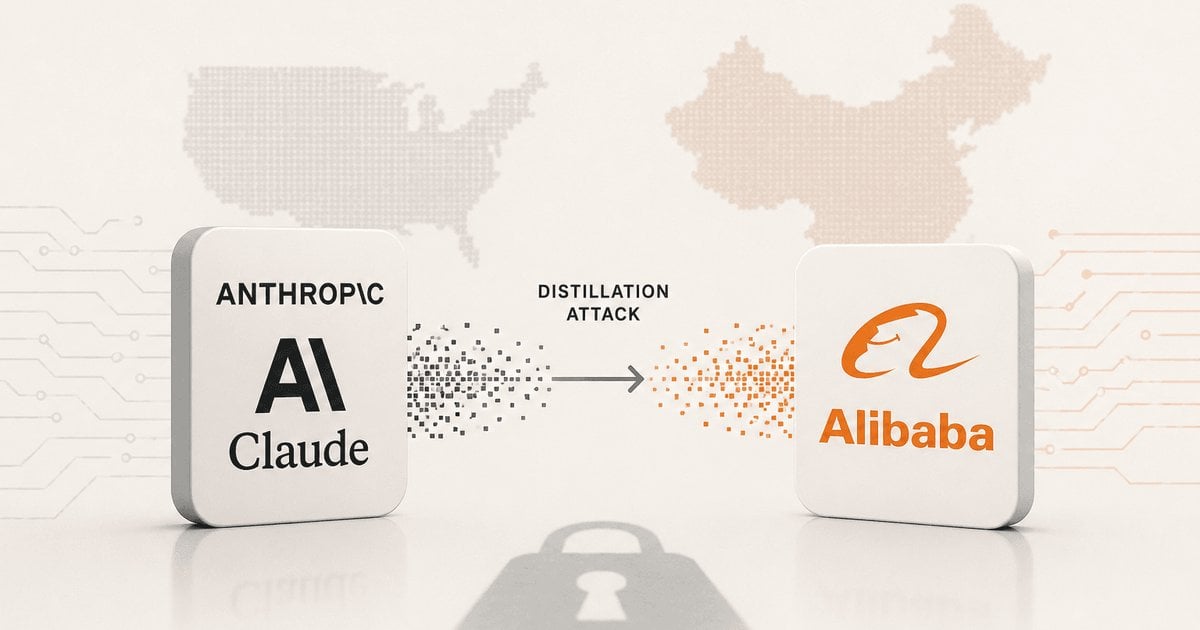
    Anthropic has publicly accused Alibaba of orchestrating a large-scale distillation campaign aimed at extracting capabilities from its Claude AI models. The allegation, detailed in a letter sent to U.S. senators, adds fresh tension to the ongoing technology rivalry between the United States and China.

    According to Anthropic, the e-commerce and technology giant used approximately 25,000 fraudulent accounts to generate over 28.8 million interactions with Claude between April 22 and June 5, 2026. The goal was to illicitly replicate the performance of Anthropic’s most advanced model, Claude Mythos Preview, using a technique known as knowledge distillation—a legitimate machine learning method that can be weaponized for model extraction attacks.

    This technique allows bad actors to feed input-output pairs from a proprietary “teacher” model into their own “student” model, effectively creating a cheap replica of the original system. Anthropic claims that Alibaba and its AI lab Qwen were behind the campaign, marking what it describes as the largest known instance of such an attack on the company.

    The accusation comes amid a rapidly closing frontier gap between Western and Chinese AI models. For example, Z.ai’s GLM-5.2 model, released shortly after Anthropic restricted global access to its most advanced model under U.S. government orders, has achieved benchmark performance nearly on par with leading Western frontier models. Z.ai has since captured a $128 billion market capitalization and plans to accelerate its pursuit of AGI.

    This is not the first time Anthropic has raised alarm over distillation attacks. Earlier in February, the company alleged that several Chinese AI firms—including DeepSeek, Moonshot AI, and MiniMax—had collectively generated millions of interactions with its Claude platform. Anthropic warned that such attacks are becoming more sophisticated and require closer coordination between AI companies and governments.

    The issue has also drawn attention in Washington. The Pentagon has added Alibaba to its list of Chinese military companies, a designation the company is contesting. Meanwhile, Reuters reported that the U.S. Commerce Department has so far held off adding DeepSeek to its trade blacklist, despite national security concerns, as officials weigh diplomatic repercussions.

    Alibaba has not yet responded to requests for comment on the allegations.

  • Microsoft CEO Satya Nadella Calls Out Hypocrisy in Tech’s AI Messaging

    Microsoft CEO Satya Nadella Calls Out Hypocrisy in Tech’s AI Messaging

    Microsoft CEO Satya Nadella has publicly challenged the contradictory messaging from AI leaders who warn about job displacement while simultaneously pushing for unlimited expansion of costly AI systems. In an interview with The Wall Street Journal, Nadella highlighted a growing disconnect that he believes undermines public trust and threatens the long-term viability of AI.

    “You can’t warn that AI is coming for jobs and sell unlimited expansion in the same breath,” Nadella stated. He argued that companies demanding vast computational resources for AI development while cautioning about workforce displacement create an untenable position that erodes social permission.

    Nadella urged businesses to rethink their approach, advocating for AI as a tool to enhance rather than replace employees. He described a combination of human capital and “token capital”—the computational resources powering AI systems—as a “recipe” for effective collaboration. Success, he emphasized, depends on demonstrating tangible economic benefits rather than theoretical promises.

    Addressing cost barriers, Microsoft has launched more affordable AI models and introduced Copilot Cowork, an autonomous agent that uses cheaper models for larger tasks. The company has even considered hosting a version of DeepSeek, the cost-effective Chinese model criticized by competitors for allegedly copying proprietary technology.

    Other industry leaders have echoed concerns about AI’s workforce impact. Anthropic CEO Dario Amodei warned that AI could eliminate many entry-level white-collar jobs, while OpenAI’s Sam Altman has publicly acknowledged the risk of redundancies. Nadella, however, stresses that restructuring existing roles is the primary goal, stating, “Companies have to offer people real economic opportunity.”

  • McKinsey Study Finds Scaling AI Across Functions Doubles Profit Margins Over Isolated Pilots

    McKinsey Study Finds Scaling AI Across Functions Doubles Profit Margins Over Isolated Pilots

    McKinsey & Company has released a report highlighting a significant performance gap between companies that scale artificial intelligence across their enterprise and those that limit AI to isolated pilots. The study, which surveyed 1,000 senior and midlevel executives across 696 manufacturing and service-sector businesses, reveals that while nearly 90% of organizations are experimenting with AI, only 7% have successfully scaled it across the entire enterprise.

    Rahul Shahani, McKinsey Partner and leader of the firm’s Manufacturing and Supply Chain Practice in North America, explains that the full value of AI is realized not through experimentation alone, but through deep integration into core operational processes. Companies with AI embedded across multiple functions generate nearly double the profit margins of peers using AI in only a few departments. The three-year return on invested capital for these firms is more than five times higher.

    The report emphasizes that operational excellence is a crucial complement to AI deployment. Leading companies combine advanced AI tools with robust management systems, clear operating principles, and disciplined execution. A notable example is Siemens’ Nanjing facility in China, a World Economic Forum Global Lighthouse Factory. By integrating digital twin capabilities with broader operational improvements, the site significantly increased throughput. The facility first tightened its operating backbone—integrating a manufacturing operations management system to govern data flows between virtual models and physical assets—before scaling the technology.

    McKinsey’s findings underscore that technology alone is not enough; the operating model around it is equally important. Companies that have built advanced technology into their operational excellence achieve higher productivity increases than those relying primarily on manual or analogue systems. The report serves as a call to action for organizations to move beyond fragmented AI pilots and pursue enterprise-wide AI integration to capture substantial performance gains.

  • Navigating AI Development at Breakneck Speed: Lessons from Two Six Technologies

    Navigating AI Development at Breakneck Speed: Lessons from Two Six Technologies

    In the rapidly evolving landscape of artificial intelligence, development cycles have compressed to what industry experts describe as “dog years.” Software upgrades that once took a year are now shipped in two months or less. This pace forces organizations to constantly adapt, especially when major LLM releases redefine the automation capabilities of software.

    Two Six Technologies, a company specializing in national security and AI innovation, offers a compelling case study in balancing speed with stability. Their new agentic orchestrator, Helix, went from concept to operational deployment on the most sensitive and secure systems in just three months. The company serves clients like the Department of War, DARPA, and intelligence agencies, where security is paramount.

    Key lessons from their approach include:

    • Embedding security from the start: By adopting a proactive security posture and using their zero-trust solution, Trusted Keep, they safely pilot cutting-edge capabilities without sacrificing compliance.
    • Leveraging larger, well-coordinated teams: Contrary to the trend toward smaller agile teams, Two Six found that larger teams provide the bandwidth to jump from low-fidelity concepts to polished features quickly.
    • Maintaining model flexibility: Systems must avoid lock-in to any single AI model, allowing seamless transitions as algorithms evolve. This is critical for tools like Helix that connect to diverse ecosystems.
    • Deep customer intimacy: Rapid development fails if the product misses the mark. Two Six combines deep national security expertise with AI to ensure customer intent guides every iteration.

    The company demonstrates that organizations don’t have to choose between speed and security. With the right foundation, they can achieve both, delivering immediate, decisive results in high-stakes environments.

  • World Council of Churches Contributes to Faith and AI Covenant Roundtable

    The World Council of Churches (WCC) recently participated in the Faith-AI Covenant Roundtable, where it shared insights on the intersection of faith and artificial intelligence. This engagement highlights the growing dialogue between religious institutions and technology sectors regarding the ethical implications of AI.