
Tag: Algorand

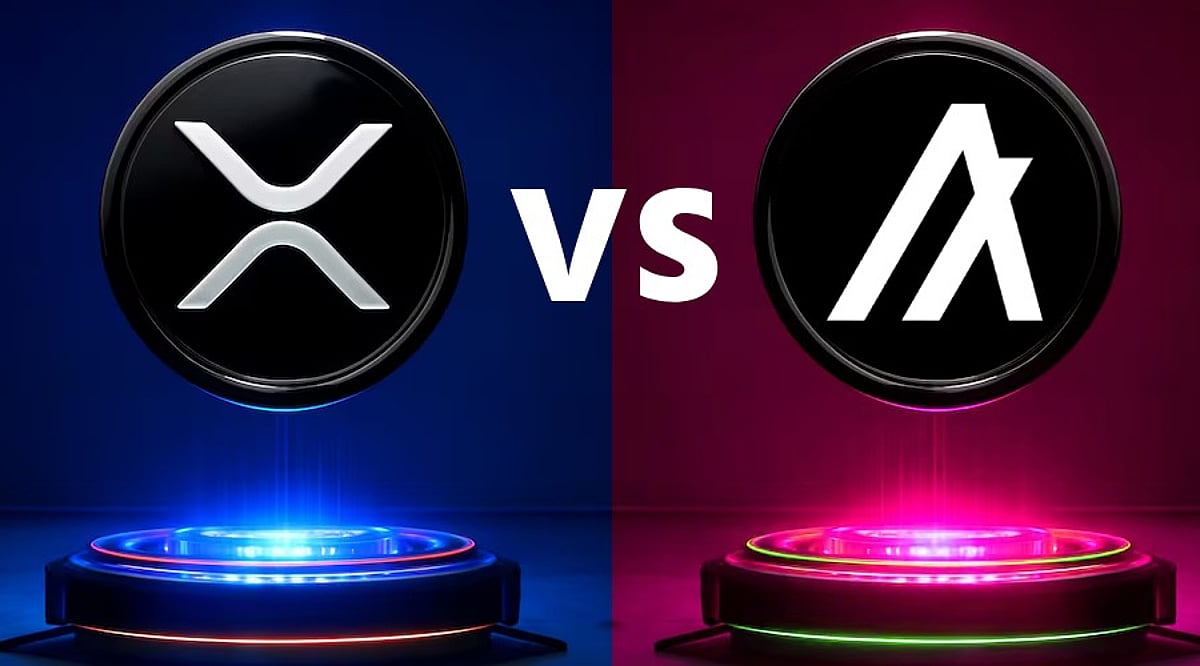
  • XRP vs Algorand: Which Blockchain Is Leading the Race for Quantum-Resistant Security?

    XRP vs Algorand: Which Blockchain Is Leading the Race for Quantum-Resistant Security?

    Quantum computing is becoming an increasingly important long-term security question for cryptocurrency networks. Today’s quantum computers cannot simply break XRP, Algorand or other major cryptocurrencies. However, sufficiently powerful future quantum computers could threaten some of the public-key cryptography used to protect blockchain accounts.

    Why Could Quantum Computing Threaten Crypto?

    Blockchain wallets rely on digital signatures to prove that transactions have been authorized by the legitimate owner. A sufficiently powerful fault-tolerant quantum computer could theoretically use Shor’s algorithm against certain public-key cryptographic systems. The immediate threat remains theoretical as existing quantum computers lack the scale and reliability necessary to perform such attacks against major blockchain networks. However, replacing cryptography across an entire decentralized ecosystem could itself take years.

    Algorand Has Established a Quantum Timeline

    Algorand has made post-quantum security a visible part of its development roadmap. In June 2026, the Algorand Foundation announced a target of achieving broad quantum resilience by the end of 2027, according to Algorand’s official post-quantum roadmap. The strategy includes post-quantum accounts and Falcon-based cryptographic signatures. Algorand has since released native post-quantum accounts, representing an important milestone toward its 2027 objective.

    Why Falcon Signatures Matter

    Falcon is a post-quantum digital-signature scheme designed to remain secure against attacks from both classical and quantum computers. Algorand has already used Falcon signatures within its State Proof infrastructure and is expanding post-quantum capabilities into user accounts. This is important as quantum preparedness requires more than publishing research. Wallets and users will eventually need practical mechanisms to migrate funds into quantum-resistant accounts.

    What About XRP?

    The XRP Ledger also relies on cryptographic signatures to authorize transactions. Like other blockchain networks using current public-key cryptography, XRP would eventually require upgrades if cryptographically relevant quantum computers become practical. The difference today is the roadmap’s visibility. Algorand has established specific milestones, deployed post-quantum infrastructure and attached a 2027 target to its broader migration strategy.

    XRP vs Algorand: Which Is Ahead?

    Based strictly on publicly announced and deployed post-quantum infrastructure, Algorand currently appears further along. That does not mean ALGO is necessarily a better investment than XRP. XRP has different advantages involving liquidity, payments infrastructure and ecosystem adoption. Quantum preparedness represents only one component of a blockchain’s long-term investment case. Investors should instead monitor whether networks develop post-quantum signatures, migration mechanisms, wallet support and consensus-level protections. Quantum computers may still be years away from threatening today’s cryptography. However, as blockchain migrations also take time, the networks preparing before the threat becomes urgent could have an important advantage.

    Why This Matters

    Quantum security could eventually determine whether blockchain networks can protect user funds and maintain trust as computing technology advances. Early preparation gives networks more time to upgrade infrastructure, migrate accounts and address vulnerabilities before quantum computing becomes a practical threat.

    Final Thoughts

    Algorand currently has a clearer and more advanced public roadmap for post-quantum security, while XRP has yet to demonstrate a publicly announced implementation at the same level. However, quantum readiness is only one factor when evaluating blockchain. For investors, the key will be watching how both networks turn quantum-security research into practical upgrades.

    FAQs

    1. Can quantum computers currently break XRP or Algorand? No. Current quantum computers lack the scale and reliability required to break the cryptographic protections used by major blockchains such as XRP and Algorand.
    2. Why could quantum computing become a threat to cryptocurrencies? Powerful fault-tolerant quantum computers could theoretically use algorithms such as Shor’s algorithm to attack certain public-key cryptographic systems used to secure blockchain accounts and transactions.
    3. How is Algorand preparing for quantum computing? Algorand is targeting broad quantum resilience by the end of 2027. Its strategy includes native post-quantum accounts, Falcon-based signatures and further upgrades to its cryptographic infrastructure.
    4. Is the XRP Ledger quantum-resistant today? XRP Ledger currently relies on conventional cryptographic signatures and would require future upgrades if quantum computers become capable of defeating those systems. There is no immediate practical quantum threat today.
    5. Is Algorand better prepared for quantum computing than XRP? Based on publicly announced roadmaps and deployed post-quantum infrastructure, Algorand currently appears further ahead. However, quantum readiness alone does not determine which blockchain or cryptocurrency is a better investment.
  • Top 10 Cryptocurrencies Under $1 to Watch in July 2026

    Top 10 Cryptocurrencies Under $1 to Watch in July 2026

    Many investors assume that a cryptocurrency priced below $1 is automatically a bargain. However, a low token price does not always indicate value—supply and market cap matter more. Smart investors look beyond the price tag, focusing on the project’s technology, real-world use, development roadmap, and team. In July 2026, several affordable projects stand out for their strong fundamentals, enterprise adoption, AI integration, DeFi growth, and long-term potential. Below are ten cryptocurrencies under $1 worth considering this month.

    Stellar (XLM) – Reliable in Global Payments

    Stellar has built a solid reputation by focusing on faster, cheaper international payments. In July 2026, XLM trades between $0.20 and $0.40, making it accessible. The network enables near-instant cross-border transfers at low cost. Banks and payment providers continue to explore Stellar, and the project is also expanding into asset tokenization. Its proven track record makes it one of the most dependable cryptocurrencies below $1.

    Hedera (HBAR) – Trust from Big Business

    Hedera’s governance council includes major global corporations, adding a layer of credibility. HBAR remains under $1, offering fast transactions, low energy consumption, and enhanced security—ideal for enterprise blockchain applications.

    VeChain (VET) – Blockchain for Real-World Business

    VeChain solves practical supply chain issues: tracking products, verifying authenticity, streamlining logistics, and monitoring carbon footprints. With partnerships across industries and a token price under $0.10, VET is a strong pick for those who value real-world utility.

    Algorand (ALGO) – Strong Technology, Quiet Growth

    Algorand rarely makes headlines but remains a top-tier blockchain. It offers fast, low-cost transactions and reliable performance. Governments and organizations are exploring Algorand for tokenized assets and digital financial systems. For fundamentals-focused investors, ALGO is an attractive option under $1.

    Sei (SEI) – Purpose-Built for Trading

    Sei is designed specifically for decentralized trading and financial applications. Its specialized architecture enables faster transactions for exchanges and DeFi projects. While still under $1, SEI carries higher risk but targets a rapidly growing sector, offering meaningful long-term potential.

    Arbitrum (ARB) – Scaling Ethereum

    Arbitrum solves Ethereum’s high gas fees by processing transactions faster and cheaper. ARB trades below $1, and developers continue to build on its Layer-2 network. Despite short-term volatility from token unlocks, Arbitrum’s long-term prospects remain strong as one of the largest Layer-2 ecosystems.

    Optimism (OP) – Ethereum’s Next Layer

    Optimism shares a similar scaling goal with Arbitrum but follows its own “Superchain” vision, connecting multiple blockchains into one ecosystem. It has drawn attention through its relationship with Coinbase’s Base network. Strong developer activity suggests Optimism will play a bigger role as blockchain adoption grows.

    Dogecoin (DOGE) – Enduring Popularity

    Dogecoin started as a joke but has survived multiple market cycles. In July 2026, DOGE trades near $0.07. Its loyal community, excellent liquidity, and broad exchange support keep it relevant, even though its price often moves with sentiment rather than technical progress.

    eCash (XEC) – High Risk, High Potential

    eCash appeals to investors with its extremely low price—fractions of a cent. The project focuses on digital payments and continues active development. However, the payment sector is highly competitive, so success is not guaranteed. eCash suits investors who understand the higher risk of smaller projects.

    JasmyCoin (JASMY) – Tapping the AI Economy

    JasmyCoin focuses on secure data ownership and IoT, allowing users to control their personal information. As connected devices and AI grow, the demand for secure data management may rise. JASMY faces tough competition, but its AI and data connection gives it an interesting market position.

    Final Thoughts

    Investing in sub-$1 cryptocurrencies should not be based solely on price. The best opportunities are projects with solid technology, ongoing development, and real-world adaptability. In July 2026, Stellar, Hedera, VeChain, Algorand, Arbitrum, and Optimism stand out for their established ecosystems. Sei, Dogecoin, eCash, and JasmyCoin offer higher potential but also greater risk. Key trends this year include AI, real-world asset tokenization, DeFi, enterprise blockchain, and Ethereum Layer-2 networks. Investors who focus on these trends rather than the cheapest tokens will be better positioned.

    FAQs

    1. Is a cryptocurrency under $1 automatically a good investment?
    No. A low token price doesn’t mean it’s undervalued. Always consider market cap, utility, adoption, and development.

    2. Which sectors look strongest in July 2026?
    AI, real-world asset tokenization, decentralized finance (DeFi), enterprise blockchain, and Ethereum Layer-2 ecosystems.

    3. Which coins are considered more established?
    Stellar (XLM), Hedera (HBAR), VeChain (VET), Algorand (ALGO), Arbitrum (ARB), and Optimism (OP).

    4. Which cryptocurrencies carry higher risk but higher potential?
    Sei (SEI), Dogecoin (DOGE), eCash (XEC), and JasmyCoin (JASMY) may offer greater upside but also increased volatility.

    5. What should investors evaluate before buying any cryptocurrency?
    Research the project’s technology, use cases, partnerships, tokenomics, development activity, roadmap, and overall market trends rather than focusing only on the token price.

  • Top Crypto Picks for 2026: Why BlockDAG, Arbitrum, Hedera, and Algorand Are Attracting Smart Money

    Top Crypto Picks for 2026: Why BlockDAG, Arbitrum, Hedera, and Algorand Are Attracting Smart Money

    The cryptocurrency market moves at breakneck speed, and investors who hesitate risk missing out on significant gains. Currently, several projects are drawing attention from both whales and retail traders due to their advanced technology, market mispricing, and timely buyback options. This article highlights four coins that smart money is rushing to accumulate before the window closes.

    1. BlockDAG (BDAG): AI-Powered Surge with Urgent Buyback

    BlockDAG has disrupted the market with the live launch of its AI capabilities, boosting network valuation by $500 million. The upgrade introduces machine learning to optimize smart contracts and transaction efficiency. The network is upgrading to handle 7,000 transactions per second within three days, and the upcoming BlockDAG Futures and Spot Exchange will launch in two weeks, providing immediate utility and liquidity.

    Time is critical: less than 24 hours remain to capitalize on the exclusive $0.05 buyback offer. Priced at an incredibly low $0.00000044, buyers can also use the World Cup Bonus to secure an additional 50% extra BDAG coins instantly. Investors are moving quickly to stack their portfolios as BlockDAG climbs toward the top spot.

    2. Arbitrum (ARB): Ethereum Layer 2 at a Deep Discount

    Arbitrum remains a powerhouse for decentralized finance, ranking among the busiest Layer 2 chains on Ethereum by total value locked. Using optimistic rollups, it offers lower gas costs and higher speed while retaining Ethereum’s security. Leading DeFi platforms like Uniswap, Aave, and GMX rely on Arbitrum. The native token hit $2.40 in January 2024 but has corrected sharply, now trading between $0.075 and $0.09—a 95–97% retracement. Despite the price weakness, Arbitrum’s chain has scaled enterprise use cases through its DAO STEP treasury program, partnering with Franklin Templeton, Spiko, and WisdomTree. With billions locked, buying ARB at these levels is a rare opportunity.

    3. Hedera (HBAR): Enterprise-Grade Infrastructure with Quantum Readiness

    Hedera uses a hashgraph consensus mechanism for fast, low-fee transactions. Its governance council includes Google, IBM, Boeing, and LG, ensuring enterprise trust. The network uses virtual voting with minimal environmental impact. HBAR reached an all-time high of $0.5692 in 2021, but mid-2026 prices range from $0.07 to $0.08, down about 50% year-over-year. With a market cap of ~$3 billion, it remains a top-30 asset. Hedera is actively transitioning to post-quantum security through hybrid event signing and post-quantum TLS, well ahead of regulatory deadlines. Purchasing HBAR now offers exposure to a safe, enterprise-approved platform.

    4. Algorand (ALGO): Institutional Speed and Green Credentials

    Algorand’s Pure Proof-of-Stake consensus delivers rapid transactions and negligible fees. It handles thousands of transactions per second with uninterrupted uptime and operates as a carbon-negative blockchain via a partnership with ClimateTrade. This makes it attractive to ESG-minded institutions, leading to digital asset pilots and tokenized-bond projects globally. ALGO hit an all-time high of $3.56 in 2021 but now trades near $0.09, a 45–50% year-over-year decline. Algorand has committed to achieving full quantum resilience by end of 2027. Backed by real-world pilots and strong developer activity, accumulating ALGO at these lows presents an undeniable entry point.

    Key Insights

    The window to buy these assets at rock-bottom prices is closing. While Arbitrum, Hedera, and Algorand offer deeply discounted entries into battle-tested networks, BlockDAG presents an urgent opportunity with its AI ecosystem, impending exchange launch, and network speed upgrade. Only 24 hours remain for the $0.05 buyback and 50% World Cup bonus. The market rewards decisive action—review these top crypto coins, pick your entries, and position your portfolio before the next rally.