Tag: Altcoins

  • Ethereum Holds Key $1,850 Support as Broader Crypto Recovery Lifts Altcoins

    Ethereum Holds Key $1,850 Support as Broader Crypto Recovery Lifts Altcoins

    Ethereum Price Tracks Broader Crypto Recovery

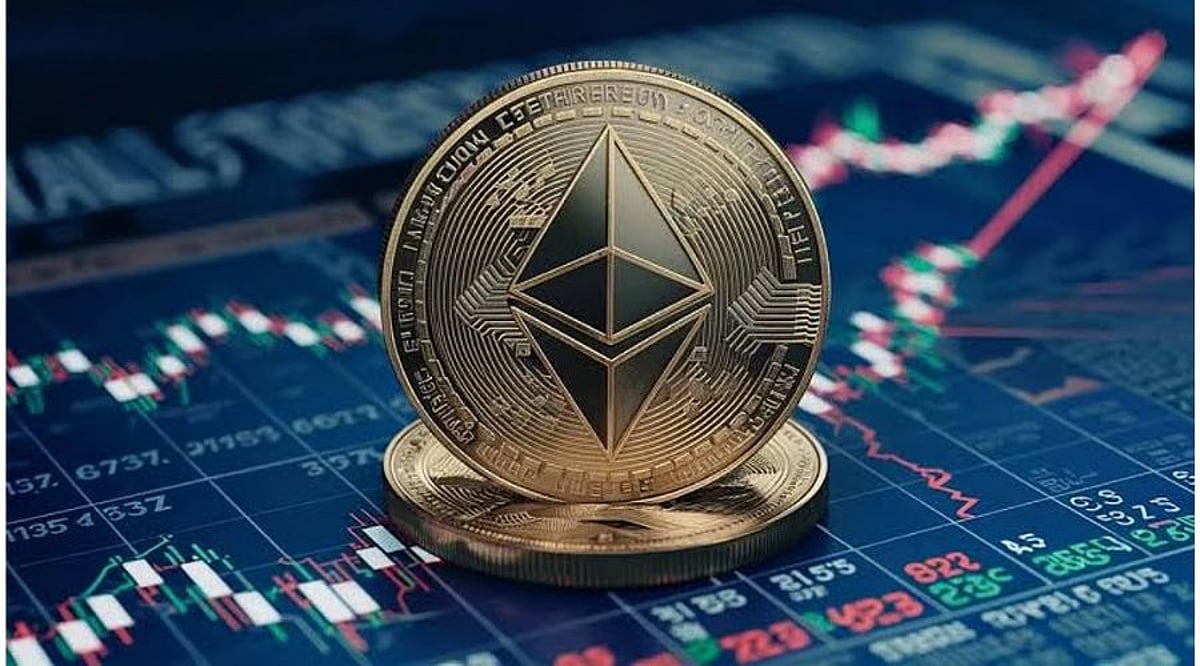
    Ethereum traded at $1,880.58 after gaining 1.57% in the last 24 hours, slightly outperforming Bitcoin’s 1.01% rise. The move came as the overall crypto market cap increased 1.07% to about $2.2 trillion, with traders shifting capital toward altcoins. However, weaker trading volume and outflows from US spot Ethereum ETFs kept the outlook cautious. ETH faces resistance near $1,920–$1,925 and support between $1,850 and $1,854.

    Ethereum ETFs End Five-Day Inflow Streak

    US spot Ethereum ETFs saw $70.62 million in net outflows on July 24, ending a five-day inflow streak that had attracted $211.25 million. Despite the daily outflow, weekly net inflows reached $103.9 million, extending the streak to three weeks. July inflows totaled $337.74 million, indicating sustained monthly demand. Bitcoin ETFs also recorded $240.08 million in outflows on Friday but still posted a third consecutive weekly inflow of $34 million. Market analyst Viktoras Karapetjanc noted that Ethereum continues to hold above key short-term levels, and if inflows remain steady, renewed upside momentum is possible.

    Technical Analysis: ETH Tests $1,925 Resistance

    Ethereum traded above its 20-hour and 50-hour moving averages but remained below the daily 200-day average near $2,147. The daily Ichimoku Kijun near $1,870 acted as immediate support. The Relative Strength Index reached 68.37, nearing overbought territory, suggesting strong buying pressure but potential for a slowdown if buyers fail to break above resistance. ETH could trade between $1,854 and $1,925 in the near term. A firm break above $1,925 with stronger volume could open the way for another upward move, while a drop below $1,854 would weaken the current structure and expose support near $1,800. Bitcoin’s stability above $64,000 remains a key trigger for Ethereum’s next move.

  • 5 Promising Altcoins to Consider Before Bitcoin’s Next Rally

    5 Promising Altcoins to Consider Before Bitcoin’s Next Rally

    As Bitcoin trades near $64,000 as of July 20, 2026, many investors anticipate the next major bull run. Historically, Bitcoin leads market rallies, but altcoins often deliver larger percentage gains afterward. This pattern has shifted focus toward projects with strong technology, real-world utility, and active communities. Here are five altcoins that stand out for their ecosystems and growth potential.

    Key Takeaways

    • Ethereum continues to lead smart contracts with institutional support.
    • Solana, XRP, Chainlink, and Sui each offer unique strengths in payments, infrastructure, and scalability.
    • Strong adoption and healthy ecosystems often matter more than short-term price movements.

    Ethereum (ETH) – $1,855.60

    Ethereum remains the largest smart contract blockchain, powering thousands of decentralized applications, DeFi platforms, and NFT projects. Layer-2 solutions have improved speed and reduced fees, while major financial institutions continue to build tokenization projects on the network. Analysts expect Ethereum to perform well in the next bull market due to strong retail and institutional demand.

    Solana (SOL) – $75.86

    Solana is known for its high throughput—processing thousands of transactions per second with low fees. It has attracted developers in gaming, payments, NFTs, and DeFi. After recovering from previous market challenges, the ecosystem shows healthy developer activity and new project launches, boosting investor confidence.

    XRP – $1.08

    XRP focuses on cross-border payments, enabling faster and cheaper international transfers for banks and financial institutions. Regulatory clarity in recent years has improved confidence, allowing Ripple to expand partnerships globally. If payment adoption grows, XRP could see increased demand during the next rally.

    Chainlink (LINK) – ~$18

    Chainlink provides oracle services that connect blockchains to real-world data, such as prices and weather. It is essential for DeFi and tokenized assets, where accurate data is critical. As blockchain adoption in traditional finance grows, Chainlink’s unique position attracts long-term investors.

    Sui (SUI) – $0.7499

    Sui is a fast-growing Layer-1 blockchain optimized for speed, low costs, and consumer applications like gaming. Active addresses on the network surged 92% in the past week, indicating rising user and developer interest. Strong network growth often precedes price strength in a broader market recovery.

    Latest Crypto Market News

    Despite price fluctuations, market optimism remains as Bitcoin holds near $64,000. Institutional accumulation and improving fundamentals support a potential bull run. Ethereum gains ground through tokenization, Solana stays strong in developer adoption, XRP benefits from regulatory clarity, Chainlink consolidates its oracle dominance, and Sui shows rapid network expansion.

    Final Thoughts

    While Bitcoin historically triggers rallies, altcoins with solid ecosystems, real use cases, and growing adoption often outperform. Ethereum leads smart contracts, Solana offers speed, XRP targets payments, Chainlink provides critical infrastructure, and Sui brings innovation. If Bitcoin surges again, these altcoins are well-positioned for significant gains.

    FAQs

    1. Why do altcoins usually rise after Bitcoin?

    Bitcoin attracts initial investment, and capital later flows into altcoins as market confidence grows.

    2. Which altcoin has the strongest ecosystem?

    Ethereum remains the largest smart contract platform with the biggest developer community and DeFi ecosystem.

    3. Why is Solana popular?

    Solana offers fast transaction speeds, low fees, and supports a wide range of decentralized applications.

    4. What makes Chainlink different?

    Chainlink provides real-world data to blockchain networks, essential for many decentralized applications.

    5. Is Sui a high-risk investment?

    Sui is a newer project with strong growth potential but may experience higher volatility than established cryptocurrencies.

  • Top Altcoins to Watch in July 2026: Beyond the Altcoin Season Slowdown

    Top Altcoins to Watch in July 2026: Beyond the Altcoin Season Slowdown

    Key Takeaways

    • Bitcoin dominance remains high, delaying a broad altcoin season.
    • AI, RWA, DeFi, and Layer-1 ecosystems continue to attract the strongest investor interest.
    • Ethereum, Solana, Chainlink, Sui, Ondo Finance, TAO, Render, Hyperliquid, Avalanche, and XRP are among the top projects to watch.

    As of July 2026, Bitcoin continues to dominate the cryptocurrency market, with many altcoins unable to match its recent performance. The long-anticipated altcoin season has yet to materialize. Experts note that Bitcoin dominance remains near 58–60%, while the Altcoin Season Index hovers around 30–35. A true altcoin season typically begins only when at least 75% of leading altcoins outperform Bitcoin over a 90-day period—a condition that has not been met. This suggests that most investors still favor Bitcoin over smaller cryptocurrencies. Market analysts believe the next rally may benefit only a select group of strong projects rather than the entire altcoin sector.

    Ethereum Holds Its Lead

    Ethereum continues to rank among the strongest altcoins despite the slow market. The blockchain supports decentralized finance (DeFi), stablecoins, and tokenized real-world assets. Its Layer-2 networks help lower transaction fees and improve speed. Large financial firms continue to choose Ethereum due to its trusted network and vast developer community. Although its price has lagged behind Bitcoin recently, Ethereum retains strong long-term value. Many experts believe it could be one of the biggest winners once market activity picks up.

    Solana Continues to Impress

    Solana has established a strong foothold through fast transaction speeds and low costs. It serves a growing variety of decentralized applications, including DeFi, NFT collectibles, blockchain gaming, and other user-facing services. New applications are constantly being built on Solana, fostering an ecosystem that thrives despite bearish sentiment. Institutions are also becoming more engaged with Solana, making it a highly discussed cryptocurrency heading into July 2026.

    Chainlink Benefits From Strong Demand

    Chainlink has become one of the most important infrastructure projects in blockchain. Its oracle system enables smart contracts to receive secure real-world data. The project also plays a key role in cross-chain communication and tokenized real-world assets. As banks and financial companies show greater interest in blockchain technology, demand for Chainlink’s services is likely to increase. Strong utility and widespread adoption continue to support its long-term outlook.

    Sui and Ondo Finance Stay Among Top Picks

    Sui has gained attention as one of the fastest-growing Layer-1 blockchains. The network has attracted many developers, blockchain games, and staking users. Strong ecosystem growth has helped Sui earn a place among leading altcoins this year. However, scheduled token unlocks may create short-term price pressure.

    Ondo Finance has become a major name in the real-world asset (RWA) sector. The platform offers tokenized Treasury products, bonds, and other financial assets. Since tokenized assets have become a hot trend in 2026, Ondo Finance continues to receive strong support from market analysts.

    AI Projects Keep Market Interest Alive

    Artificial intelligence remains one of the strongest themes in crypto. Bittensor (TAO) has attracted attention through its decentralized AI network that connects machine learning models with developers. Render has also become important by providing decentralized GPU power for AI, 3D graphics, and digital content creation. As AI technology expands across industries, both cryptocurrencies continue to attract investors seeking long-term opportunities beyond traditional blockchain projects.

    Hyperliquid, Avalanche, and XRP Stay Relevant

    Hyperliquid has emerged as one of the fastest-growing decentralized futures trading platforms. High trading volume and strong liquidity have helped the project gain popularity in DeFi.

    Avalanche remains an important blockchain focused on enterprise solutions, gaming, and custom blockchain networks. Many companies continue to test its technology for large-scale business use.

    XRP still holds a strong position due to its focus on cross-border payments. Financial institutions continue to explore its payment technology, while investors closely follow legal developments that may influence future adoption. Although price performance has been mixed, XRP remains among the largest cryptocurrencies by market cap.

    Strong Narratives Shape the Market

    In July 2026, the market is more selective than in prior cycles. Instead of a broad rally across hundreds of assets, capital is flowing into projects with tangible value and advanced technology. Areas that have outperformed—and are likely to continue if sentiment shifts—include artificial intelligence, tokenization of real-world assets, blockchain infrastructure, decentralized finance, and high-performance Layer-1 networks.

    Final Outlook

    July 2026 presents a cautious but promising outlook for altcoins. Bitcoin continues to dominate, yet several established projects stand out for their strong technology, active ecosystems, and practical use cases. Ethereum, Solana, Chainlink, Sui, Ondo Finance, Bittensor, Hyperliquid, Render, Avalanche, and XRP remain among the top cryptocurrencies to watch. A full altcoin season has not arrived, but these projects appear well-positioned to benefit if market conditions improve during the second half of the year.

    Frequently Asked Questions

    1. Why hasn’t the altcoin season started yet?

    Bitcoin dominance remains around 58–60%, and the Altcoin Season Index is well below the level typically associated with a broad altcoin rally.

    2. Which sectors are expected to lead the next crypto rally?

    Artificial intelligence (AI), real-world assets (RWA), DeFi, blockchain infrastructure, and high-performance Layer-1 networks are considered the strongest narratives.

    3. Why is Ethereum still a top altcoin?

    Ethereum continues to lead in DeFi, stablecoins, tokenized assets, and developer activity, making it one of the most established blockchain ecosystems.

    4. Which emerging altcoins are gaining momentum?

    Sui, Ondo Finance, Hyperliquid, Bittensor (TAO), and Render have attracted attention due to ecosystem growth, AI adoption, and real-world utility.

    5. Should investors expect all altcoins to rally together?

    Not necessarily. Current market conditions suggest capital is likely to favor fundamentally strong projects rather than the entire altcoin market.

  • Daily Tech Roundup: Cognizant’s AI Hiring Push, OpenAI Codex Micro, Chip Stock Dip & Crypto Lows

    Daily Tech Roundup: Cognizant’s AI Hiring Push, OpenAI Codex Micro, Chip Stock Dip & Crypto Lows

    Good morning! Here is your quick scan of the latest developments in AI hiring, global markets, developer tools, startup funding, and cryptocurrency.

    What’s New Today

    Asian stocks fell after semiconductor stocks came under selling pressure, even as softer US inflation data helped bonds. Cognizant announced it will recruit 1,500 US graduates by 2026 to build its AI talent pool. Meanwhile, OpenAI launched Codex Micro, an AI-based macropad for developers.

    Fast-Track Insights

    The speed at which artificial intelligence produces code now exceeds the pace at which human engineers can review it, prompting startup Graphite to raise $15 million to automate code reviews. In the crypto space, nearly 40% of all altcoins are trading near their lows.

    Asian Shares Fall Despite Cooler US Inflation

    Asian shares edged lower due to declines in the tech and semiconductor sectors, while government bonds gained amid better-than-expected US inflation readings. Despite positive data, investor sentiment remains negative regarding the chip sector and the global economy. The next focus will be on earnings reports and monetary policy moves. Read More…

    Cognizant to Hire 1,500 US Graduates for AI Roles

    Cognizant has announced plans to hire 1,500 graduates across the USA by 2026. This initiative aims to augment the firm’s artificial intelligence capabilities and create a robust pipeline of AI talent. The move responds to increasing demand for AI professionals as companies intensify their use of AI technology. Read More…

    Graphite Raises $15 Million to Fix AI Code Review Bottleneck

    Graphite, co-founded by engineers from Dropbox and Palantir, has raised $15 million to address one of the biggest challenges in AI development: reviewing code written by AI. With coding assistants producing software at an unprecedented pace, Graphite’s platform helps developers automate the code review process. Read More…

    OpenAI Launches Codex Micro for Developers

    OpenAI has introduced Codex Micro, a programmable macro keyboard that gives developers access to AI-based coding utilities. This compact device allows users to assign hotkeys for prompts, automation, and programming, providing a more efficient workflow when developing with AI. Read More…

    40% of Altcoins Near Historic Lows: Buying Opportunity?

    According to the latest market analysis, nearly 40% of altcoins are currently trading around their historic lows due to continued selling pressure. Some market analysts believe this correction could present a buying opportunity if sentiment improves in the coming months. Read More…

    Join our WhatsApp Channel to get the latest news, exclusives, and videos on WhatsApp.

  • Altcoin Season Index Breaks Above 50: Growing Momentum Beyond Bitcoin

    Altcoin Season Index Breaks Above 50: Growing Momentum Beyond Bitcoin

    Key Takeaways

    • The CoinGlass Altcoin Season Index currently stands at 58, while BlockchainCenter reports 59.
    • Bitcoin dominance has eased from around 58% to between 54% and 57%, showing broader market participation.
    • A reading above 75 is still required before the market officially enters altcoin season.

    The cryptocurrency market has entered a new phase where attention has started to move beyond Bitcoin. For many months, Bitcoin remained the strongest force in the market and attracted most of the investment. Now, fresh data shows that more investors have started to explore other digital coins, often called altcoins.

    This change does not mean Bitcoin has lost its position. Instead, it shows that interest has started to spread across a wider range of cryptocurrencies. Market experts believe this shift could become more important if the current trend continues.

    Altcoin Season Index Moves Higher

    One of the most watched tools in the crypto market is the Altcoin Season Index. This index helps measure whether altcoins perform better than Bitcoin over a certain period. A higher score usually means that more altcoins have started to beat Bitcoin in price performance.

    The latest numbers show steady progress. The CoinGlass Altcoin Season Index currently stands at 58. Earlier, it reached 64 on June 4, which marked one of its strongest readings in recent months. Even after a small decline from that level, the current score still shows healthy momentum across the altcoin market.

    Another popular measure comes from CoinMarketCap. Its Altcoin Season Index now stands at 53. Although this reading is lower than the CoinGlass figure, it also points to the same trend. More altcoins have started to perform better than before, even if the market has not reached a full altcoin season.

    BlockchainCenter offers another version of the same indicator. Its latest reading stands at 59. Despite this positive number, the platform still classifies the market as not yet in Altcoin Season since the score has not crossed the important level of 75.

    Bitcoin Still Holds the Top Position

    Bitcoin continues to lead the cryptocurrency market. It remains the largest digital asset by market value and still attracts major investment from institutions and retail buyers. However, fresh market data shows that some money has started to move toward other cryptocurrencies.

    This shift has become visible through Bitcoin dominance, a metric that shows Bitcoin’s share of the total cryptocurrency market. Recent figures show Bitcoin dominance has fallen from around 58% to between 54% and 57%. A lower dominance level often means that investors have started to place more money into altcoins instead of keeping most funds in Bitcoin.

    More Capital Reaches Altcoins

    Another important sign is the growing market value of cryptocurrencies outside Bitcoin, Ethereum, and stablecoins. This section of the market has grown in recent weeks, which suggests that investors have started to explore a wider range of projects.

    Large-cap altcoins have attracted a major share of this fresh interest. Ethereum has remained one of the strongest performers supported by continued confidence in its network. Solana has also received strong support, while XRP has returned to the spotlight after renewed investor interest.

    Many analysts believe exchange-traded fund (ETF) activity has also helped improve confidence in these major altcoins. Better investment access has encouraged more market participation and supported stronger price action across selected digital assets.

    The Market Has Not Reached Full Altcoin Season

    Although several indicators have improved, experts believe it is still too early to declare the arrival of a full altcoin season. The widely accepted rule states that the Altcoin Season Index must rise above 75 before the market officially enters that phase.

    Current readings between 53 and 59 show progress but remain below this important level. This means only part of the market has shown stronger performance while many smaller cryptocurrencies have yet to join the rally.

    Analysts also point out that most gains remain concentrated in well-known projects with strong market positions. A true altcoin season usually includes broad gains across a much larger number of cryptocurrencies.

    Market Conditions Still Matter

    The direction of the crypto market still depends heavily on Bitcoin and broader economic conditions. Inflation reports, central bank decisions, and global liquidity continue to influence investor confidence. Any major change in these factors could either support further growth in altcoins or slow the current trend.

    Bitcoin also remains an important guide for the rest of the market. A strong move in Bitcoin often affects price action across almost every major cryptocurrency. Given this close relationship, market participants continue to watch Bitcoin even as interest in altcoins grows.

    Several Altcoins Draw Fresh Attention

    Recent market reports highlight a few altcoins that have attracted strong interest. DeXe (DEXE) has gained attention after reaching new price highs. Zcash (ZEC) has approached an important resistance level that traders continue to watch closely. Uniswap (UNI) has also shown early signs of recovery, which has increased optimism around its future performance.

    These projects represent only part of the broader movement across the altcoin market. Many investors continue to search for coins with strong technology, active development, and long-term growth potential instead of chasing short-term price spikes.

    Why This Matters

    This shift signals a maturing crypto market where investors are moving beyond Bitcoin to seek diverse opportunities. As capital flows into major altcoins, it diversifies systemic risk and lays the foundation for broader, utility-driven digital asset adoption.

    Outlook Remains Positive but Cautious

    The latest market data points to growing momentum beyond Bitcoin. Altcoin Season Index readings from CoinGlass, CoinMarketCap, and BlockchainCenter all show that more cryptocurrencies have started to perform well. At the same time, Bitcoin dominance has eased, while fresh capital has entered several leading altcoins.

    Despite these positive developments, the market has not yet reached the official definition of a full altcoin season. The key threshold of 75 on the Altcoin Season Index remains out of reach. Until that level appears, the current phase represents a period of steady expansion rather than a broad market-wide rally. Even so, the latest data suggests that altcoins have started to build stronger momentum, which could create more opportunities if the trend continues in the months ahead.

    FAQs

    1. What is the Altcoin Season Index? The Altcoin Season Index is a financial metric that measures whether altcoins are outperforming Bitcoin in price growth over a specified period.
    2. Is the crypto market currently in altcoin season? No, the market is not there yet. Current index readings hover under 60, remaining well below the required 75-point threshold.
    3. Why has Bitcoin dominance declined? Bitcoin’s market share is dropping because investors are shifting fresh capital into altcoins, diversifying their holdings beyond the dominant digital asset.
    4. Which altcoins have attracted recent attention? Major assets like Ethereum, Solana, and XRP, alongside specific tokens like DeXe, Zcash, and Uniswap, have drawn strong investor interest.
    5. What could confirm a full altcoin season? A true altcoin season is confirmed when the index crosses 75, accompanied by widespread price rallies across a broad range of smaller cryptocurrencies.
  • July 2026’s Top Altcoin Performers: SOL, HYPE, ETH, ZEC, and ONDO Lead the Recovery

    July 2026’s Top Altcoin Performers: SOL, HYPE, ETH, ZEC, and ONDO Lead the Recovery

    Bitcoin has dropped nearly 20% in recent weeks, but several altcoins are bucking the downtrend. Projects with strong fundamentals, network upgrades, and institutional backing are drawing investor attention and spearheading the crypto recovery in July 2026.

    Solana (SOL)

    Solana remains one of July’s strongest performers, powered by its fast, low-cost blockchain, expanding developer ecosystem, and major upgrades such as Firedancer and Alpenglow. Rising institutional adoption and growing DeFi activity continue to bolster Solana’s long-term outlook despite market volatility.

    Hyperliquid (HYPE)

    Hyperliquid has emerged as a standout winner in July 2026. The decentralized perpetual trading platform dominates on-chain derivatives, supported by permissionless HIP-3 markets, surging trading volume, and upcoming native options features that have boosted investor confidence.

    Ethereum (ETH)

    Ethereum maintains its position as the leading smart contract network. Institutional demand, Real-World Asset (RWA) tokenization, DeFi growth, and ongoing scalability improvements help ETH outperform many large-cap cryptocurrencies during the current correction.

    Zcash (ZEC)

    Privacy-focused Zcash is gaining renewed interest as investors look beyond speculative assets. Upcoming network upgrades, Bitcoin-like supply scarcity, and improving institutional interest have helped ZEC hold relative strength while many cryptocurrencies remain under pressure.

    ONDO and Render (RENDER)

    Real-world utility continues to drive crypto investment in 2026. ONDO benefits from the rapid growth of tokenized real-world assets, while AI-focused projects like Render remain popular as decentralized GPU computing and AI infrastructure become major blockchain investment themes.

    July’s strongest altcoins are propelled by real catalysts rather than hype alone. While Solana, Hyperliquid, Ethereum, Zcash, and ONDO lead the market, investors should remember that crypto remains highly volatile. Diversification, thorough research, and risk management are essential before investing in any digital asset.

  • Nearly 40% of Altcoins Hit All-Time Lows: Could a Selective Recovery Be Next?

    Nearly 40% of Altcoins Hit All-Time Lows: Could a Selective Recovery Be Next?

    The cryptocurrency market has entered another challenging phase, especially for altcoins. Recent data from CryptoQuant shows that nearly 40% of altcoins now trade close to their all-time lows. During the latest market decline, this figure even reached 45% after Bitcoin dropped below $60,000 for a short period. These numbers show how much pressure the broader crypto market has faced over the past few months.

    Even though Bitcoin has managed to stay stronger than many other digital assets, thousands of altcoins have continued to lose value. Many projects now trade at only a small part of the prices they reached during previous market highs. This situation has raised an important question across the crypto community. Could such low prices lead to the next market rebound, or does more weakness still lie ahead?

    Why Many Altcoins Have Lost Value

    Several reasons have pushed altcoin prices lower. One of the biggest reasons is the huge rise in the number of new crypto projects. Reports suggest that nearly 60,000 new tokens enter the market every day. Such a massive supply spreads investor money across countless projects instead of allowing capital to flow into a smaller group of coins.

    This rapid growth has made competition much harder. Many projects fail to attract enough buyers after launch. Without fresh demand, prices continue to fall. Some projects also struggle to build useful products or active communities, which makes recovery even more difficult.

    At the same time, the total amount of new money entering the crypto market has not grown at the same speed as the number of new tokens. As a result, many altcoins receive very little attention, while only a limited number continue to attract strong interest.

    Bitcoin Continues to Lead the Market

    Another important reason behind weak altcoin performance is Bitcoin’s strong position. Investors have shown greater confidence in Bitcoin than in smaller cryptocurrencies. During uncertain market conditions, many traders prefer to keep funds in Bitcoin since it has a longer history and higher liquidity.

    Market data also shows that the Altcoin Season Index remains below the level that usually signals a broad altcoin rally. This means Bitcoin still controls most of the market’s attention. Until that balance changes, many altcoins may continue to struggle despite occasional short-term price gains.

    Global Conditions Affect Crypto Prices

    The crypto market does not move on its own. Economic conditions around the world also influence investor decisions. Inflation concerns, geopolitical tensions, changes in exchange-traded fund flows, and cautious market sentiment have reduced demand for risky assets.

    Even after Bitcoin recovered from recent lows, investors did not quickly shift money into altcoins. Instead, many preferred to wait for stronger signs of stability before taking additional risk. This cautious approach has kept pressure on smaller cryptocurrencies.

    Can Such Low Prices Lead to a Recovery?

    Market history offers both hope and caution. In previous crypto cycles, periods of extreme weakness sometimes came before strong recoveries. Very low prices often attracted long-term investors who believed that quality projects still had room to grow.

    Since almost 40% of altcoins now trade near their historical lows, some market experts believe attractive opportunities may appear for patient investors. If Bitcoin remains stable and fresh money enters the crypto market, some capital could move into selected altcoins. Such a shift has happened during earlier market cycles after Bitcoin completed the first stage of a recovery.

    However, history does not guarantee that the same pattern will repeat. Every market cycle develops under different conditions.

    Why This Cycle May Be Different

    CryptoQuant analysts believe this cycle has several unique features. The biggest difference is the enormous number of available tokens. Millions of investors now have thousands of projects to choose from, which makes it much harder for every altcoin to receive enough demand.

    Many projects also lack strong products, real users, or sustainable business models. Without clear value, some tokens may never return to their previous record prices. Instead of a market-wide rally, only projects with solid fundamentals may benefit from future growth.

    CryptoQuant founder Ki Young Ju has also suggested that future altcoin seasons could become much more selective. Rather than lifting almost every token, new investment may flow mainly into projects with strong use cases and healthy financial activity.

    Where Market Attention Could Move

    Recent analysis shows that investors have started to focus more on projects that deliver practical value instead of pure speculation. Areas such as decentralized finance, real-world asset tokenization, artificial intelligence, perpetual decentralized exchanges, and major blockchain infrastructure have received greater attention.

    One example often mentioned by analysts is Hyperliquid. The project has attracted interest for its revenue generation and token buyback model. Such features help separate stronger projects from many speculative tokens that depend only on market excitement.

    Why This Matters

    This trend signals a structural shift where historical, market-wide altcoin rallies are replaced by extreme dilution. With 60,000 new tokens daily, capital is fragmented, meaning future recoveries will selectively reward projects with genuine utility and revenue over pure speculation.

    The Road Ahead

    Several signals could show whether the altcoin market is ready for a broader recovery. Bitcoin must continue to hold key support levels, while Bitcoin dominance may need to decline before money spreads into smaller cryptocurrencies. The Altcoin Season Index would also need to rise toward levels that usually support a wider rally. Stronger trading activity and fresh investment across the crypto market could further improve market confidence.

    The latest data clearly shows that almost 40% of altcoins remain close to their all-time lows. This reflects one of the weakest periods for the sector in recent years. Although such conditions have sometimes appeared before market recoveries, no guarantee exists that history will repeat itself. The next recovery, if it arrives, may reward only projects with strong technology, real adoption, and lasting value instead of the entire altcoin market.

    Frequently Asked Questions

    1. Why are so many altcoins trading near their all-time lows? An overwhelming oversupply of roughly 60,000 new token launches daily has diluted available capital, while limited fresh market liquidity has failed to keep pace with the massive expansion.
    2. Does this extreme market drop guarantee a major altcoin rally? No. Historical cycles often showed broad recoveries from these lows, but current market saturation means many weak or purely speculative projects may never recover their previous valuation highs.
    3. Why is Bitcoin performing so much better than smaller cryptocurrencies? During periods of market uncertainty, investors treat Bitcoin as a safe haven due to its long history, deeper institutional liquidity, and the security of spot exchange-traded fund inflows.
    4. Which cryptocurrency sectors are currently attracting the most investor attention? Capital is increasingly shifting toward practical, revenue-generating sectors including decentralized finance, real-world asset tokenization, artificial intelligence, perpetual decentralized exchanges, and essential blockchain network infrastructure.
    5. What key signals could trigger a broader altcoin market recovery? A sustained recovery requires Bitcoin to maintain solid price floors, a visible decline in overall Bitcoin dominance, and a sharp rise in the official Altcoin Season Index.

  • Bitcoin Shows Independent Price Action: Is the Rebound a Trend Reversal or Just a Bounce?

    Bitcoin Shows Independent Price Action: Is the Rebound a Trend Reversal or Just a Bounce?

    Bitcoin has started to exhibit price action of its own following a recent rally from $57,742 to the current level at $62,770.67. However, macroeconomic uncertainty, derivatives hedging, and fresh geopolitical risks persist, keeping recovery pressure on the market.

    Fed Signals Ease Inflation Concerns

    The rebound started when Fed Chair Kevin Warsh avoided announcing a rate cut but said that the inflation outlook had eased slightly in recent weeks. He also reiterated the Fed’s policy of sustaining the 2% inflation target. The market focused more on the first half of the message. Traders started to ease back on hopes of further hikes after inflation concerns eased and US employment data weakened. For Bitcoin, this mattered because higher interest rate expectations usually reduce the valuation space for risk assets. The rebound above $60,000 was not just a technical bounce but rather a genuine step up. Rates signaled a repricing of “rate-hike pressure” and unwinding of previous panic trades.

    Liquidations Fuel the Bitcoin Rebound

    According to CoinGlass, Bitcoin’s drop toward $57,700 triggered nearly $395 million in liquidations. This indicates the sell-off was not triggered by normal selling but also by forced selling from leveraged sell positions. Markets often rebound after forced liquidations subside. Once macro news becomes less negative, short sellers begin to reduce risk. The short covering puts buying pressure and can speed up the buying trend. Similarly, Bitcoin hit $62,000 when both Ethereum and Solana also recovered, causing $281 million worth of bearish liquidations. This indicates that spot demand was not the only factor affecting the recovery rate, but rather the derivatives positioning as well.

    Options Market Still Signals Caution

    While the rally is underway, traders are not yet convinced that a trend change is underway. Traders on Deribit purchased around $50 million in put options, and Bitcoin and Ethereum put/call skew remained negative, indicating demand for downside protection. The derivatives market continues to buy insurance, but the spot market is rebounding. Traders who felt the trend had completely turned would probably see premiums declining more quickly. The broader trend is also looking fragile, with a ‘death cross’ on technical charts providing some caution.

    Altcoins Join the Recovery

    Bitcoin bounced back above $60,000, along with Ethereum, Solana, and Dogecoin. Capital is starting to move into the large-cap altcoins, and Ethereum has surged by approximately 12% during the past week. CoinMarketCap reported that the altcoin season index increased to its highest level in three months at 52. This is a sign of the increase in risk appetite, but it’s not an official altcoin season.

    Why This Matters

    This rebound highlights Bitcoin’s battle between macro relief and geopolitical friction. While easing Fed inflation concerns and short liquidations fuel short-term recovery, persistent options hedging and rising West Asia tensions prove that institutional investors still treat crypto as a high-risk asset.

    Technical Structure

    On Wednesday, the US military executed strikes against Iran in retaliation for three ships struck by Tehran in the Strait of Hormuz. Brent crude oil price rose 3.26% to $76.58, following a 5% jump the previous day, while Bitcoin was losing ground. Bitcoin trades below $63,000, reflecting a capped recovery below its 50-day Exponential Moving Average (EMA) at $65,581. The 200-day EMA at $75,459 sits well above the 50-day EMA, retaining a broader bearish bias. The Relative Strength Index (RSI) at 48 is moving flat near the midline while the Moving Average Convergence Divergence (MACD) holds above the signal line as the histograms contract, hinting at only residual buying interest. Bitcoin should clear the 50-day EMA at $65,581 for a steady bullish recovery that could target the $70,000 threshold, followed by the 200-day EMA at $75,459.

    FAQs

    1. Why did Bitcoin rebound from recent lows? Bitcoin rebounded after inflation concerns eased and weak US employment data reduced expectations of further rate hikes. Short-covering after heavy liquidations also added buying pressure.
    2. Is Bitcoin’s rebound a confirmed trend reversal? Not yet. Bitcoin has recovered above $60,000, but it remains below the 50-day EMA at $65,581 and the 200-day EMA at $75,459, keeping the broader trend cautious.
    3. What role did liquidations play in Bitcoin’s recovery? According to CoinGlass, Bitcoin’s fall near $57,700 triggered nearly $395 million in liquidations. After forced selling, short-covering helped accelerate the rebound toward $62,000.
    4. Why is the options market still cautious on Bitcoin? Traders continue to buy downside protection through put options, showing that the derivatives market has not fully accepted the rebound. This suggests investors still fear another downside move.
    5. What price level must Bitcoin clear for bullish momentum? Bitcoin needs to break above the 50-day EMA near $65,581 to strengthen recovery momentum. Above that, the next key upside levels are $70,000 and the 200-day EMA near $75,459.
  • Crypto Futures Overtake Spot Trading in India, Tier-2 Cities Lead Retail Surge

    Crypto Futures Overtake Spot Trading in India, Tier-2 Cities Lead Retail Surge

    India’s cryptocurrency market is undergoing a significant shift, with futures trading now outpacing spot trading for the first time. Data from Indian exchange Giottus, based on its 1.3 million users, shows that crypto futures accounted for 57.22% of total trading volume between September 2025 and May 2026, while spot trading made up 42.78%.

    The surge is being driven primarily by retail investors from smaller cities. According to Giottus analysis, 48% of futures participants come from Tier-2 cities, compared to 31% from Tier-1 metros and 21% from other areas. This marks a broadening of crypto derivatives engagement beyond metropolitan hubs.

    “India’s crypto participation story is becoming geographically broader. We are seeing increasing engagement from smaller cities in products that were once viewed as niche or high-complexity,” said Vikram Subburaj, CEO of Giottus.

    Monthly user growth in futures trading remained strong throughout 2026. Participation increased 42.5% in February, followed by 28.5% in March, 35.3% in April, and 30.3% in May. Despite the rapid growth, futures users represent only 24% of Giottus’ active users, indicating substantial room for further expansion.

    Shift Toward Altcoins and Regional Dominance

    Trading behavior is also evolving. Bitcoin and Ethereum futures combined accounted for just 15.35% of total futures volume. Ethereum contributed 7.07%, Solana 5.76%, and XRP 5.24%. The data suggests Indian traders are increasingly exploring altcoins and high-volatility assets beyond the top cryptocurrencies.

    Tamil Nadu emerged as the strongest regional market, contributing 46.6% of the total number of futures traders and 59.26% of the total futures volume. Kerala ranked second with a 10.23% share.

    Balanced Risk Profiles and Evolving Trader Behavior

    Risk appetite among futures traders appears measured. Long positions accounted for 52.79% of trades, short positions 47.21%. The average leverage stood at 10x, with over 30% of trades using leverage above 10x. However, monthly liquidation ratios remained low, ranging between 0.55% and 2.52%.

    “The liquidation trends are important because they suggest participation is not entirely speculative or reckless. Users are showing greater awareness around position sizing and risk management while using leveraged products,” Subburaj noted.

    Women represented 13.24% of futures traders and used lower average leverage than their male counterparts. The most active trading hours were between 7 pm and 10 pm, aligning with post-work activity and overlapping with U.S. market hours.

  • XRP Surpasses Bitcoin in Upbit Volume as $1.15 Becomes Next Target

    XRP Surpasses Bitcoin in Upbit Volume as $1.15 Becomes Next Target

    XRP has overtaken Bitcoin in 24-hour trading volume on Upbit, South Korea’s largest digital asset exchange, as the token holds above the reclaimed $1.10 level. The surge in activity places XRP among the busiest assets on the platform and shifts market focus toward the $1.15 resistance level.

    XRP Overtakes Bitcoin in Upbit Trading

    Over the past 24 hours, XRP recorded approximately 113.18 million XRP in trading volume on Upbit, surpassing Bitcoin during that period. South Korea has historically been a major hub for XRP trading, and sharp increases in activity on Korean exchanges often attract broader market attention.

    Rising volume alongside price typically signals wider market participation, suggesting that more buyers have entered the market rather than a narrow group of traders driving the move. However, volume alone does not guarantee sustained gains — price direction depends on whether buyers can maintain support and absorb renewed selling pressure.

    Break Above $1.10 Changes the Technical Setup

    XRP recently reclaimed the $1.10 level after struggling for weeks to break above it. Previous recovery attempts repeatedly stalled at that zone, making the latest breakout more significant for traders. Buyers have so far defended support above the former resistance, helping XRP form a sequence of higher highs and higher lows — a pattern often associated with strengthening bullish momentum.

    Still, the structure remains incomplete without sustained buying above the breakout zone. A quick drop below $1.10 could weaken the setup and return XRP to sideways trading. Conversely, continued support would keep the $1.15 level as the next critical test for buyers.

    Low Average Returns Fuel Relief Rally Expectations

    A recent Santiment Data post highlighted historically low average returns on the XRP Ledger, which analysts have linked to the potential for a relief rally. This development coincides with signs of altcoin rotation in the broader cryptocurrency market. XRP’s price action is therefore unfolding within a mixed market that continues to send uneven signals.

    Traders are closely monitoring average returns, trading activity, and nearby technical levels to gauge whether the current move develops into a stronger trend or loses momentum. Regulatory clarity and institutional interest have also kept XRP in focus throughout 2026, while ongoing development on the XRP Ledger supports continued attention on the asset.

    Cryptocurrency markets remain volatile, and prices can change rapidly. Readers should conduct independent research before making investment decisions.