
Tag: ambient computing

  • 10 Screenless Tech Devices Transforming Consumer Electronics in 2026

    10 Screenless Tech Devices Transforming Consumer Electronics in 2026

    Screenless gadgets are revolutionizing the way people interact with technology in 2026. These devices rely on artificial intelligence, voice commands, sensors, and ambient computing to operate seamlessly in the background without the constant distraction of traditional screens.

    PLAUD NotePin S

    The PLAUD NotePin S is a wearable AI recorder that turns conversations into structured notes without requiring a phone display. It captures meetings, identifies individual speakers, transcribes speech in 112 languages, and generates AI-powered summaries and action items, making it a powerful tool for professionals and multitaskers.

    Ray-Ban Meta Smart Glasses

    Ray-Ban Meta smart glasses combine AI, cameras, and open-ear audio into everyday eyewear. Users can interact with an AI assistant, capture hands-free photos and videos, and access real-time information without pulling out a smartphone.

    Fitbit Air

    Fitbit Air eliminates the traditional fitness tracker screen, focusing entirely on health monitoring. This lightweight wearable tracks heart rate, heart rate variability, sleep quality, blood oxygen levels, and more. All detailed insights are delivered through the Google Health app, and the device offers up to a week of battery life.

    Oura Ring 4

    Oura Ring 4 packs advanced health tracking into a discreet, screen-free ring. It monitors sleep patterns, activity levels, heart-related metrics, temperature trends, and recovery. Users access comprehensive data later via the companion app, avoiding screen time throughout the day.

    AI Earbuds

    AI-powered earbuds are evolving beyond music playback. The latest models integrate spatial audio, voice assistants, noise cancellation, and AI features, providing a fully hands-free way to manage digital interactions—no screen needed.

    Augmented Reality Glasses

    AR glasses such as VITURE and RayNeo offer a different path to screenless computing. These devices project large virtual displays for movies, gaming, and productivity while remaining compact and wearable, effectively replacing a portable monitor without a physical screen.

    Screenless Fitness Bands

    Fitness bands like WHOOP and Luna Band prioritize sleep, recovery, stress, and activity tracking over notifications. Data syncs to a smartphone app, allowing users to monitor their health without another glowing wrist display.

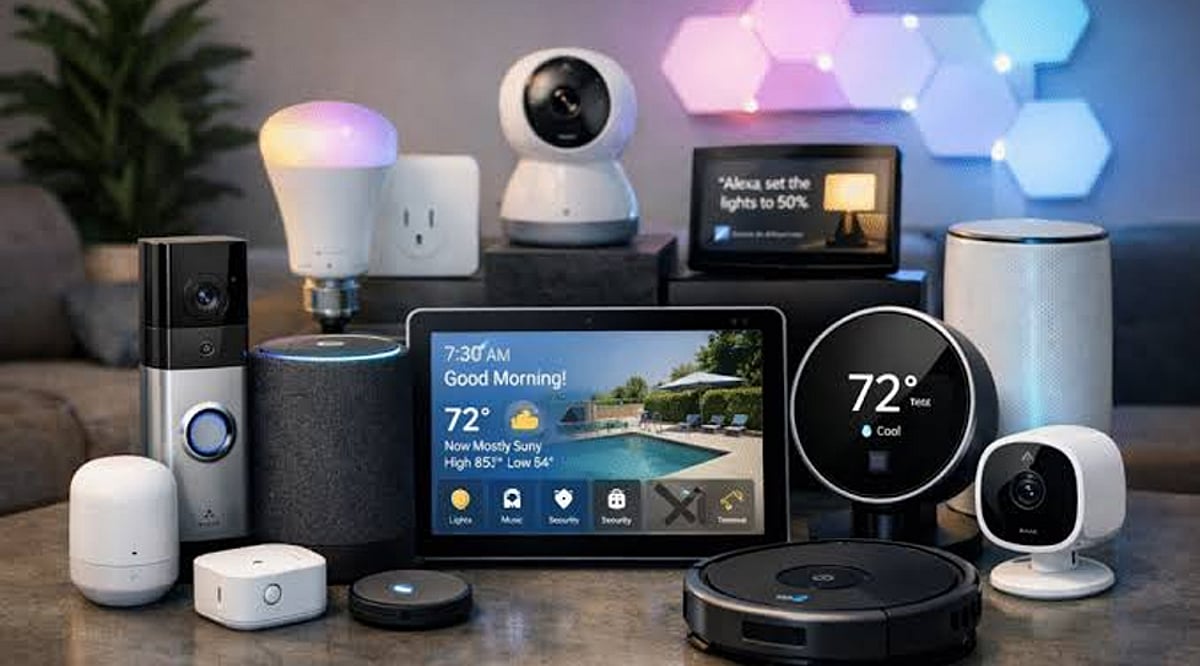
    Ambient AI Assistants

    Ambient AI assistants and wearable speakers are moving technology into the background. Voice commands, contextual AI, and smart-home automation handle tasks without requiring users to open apps or navigate menus, creating a truly uncluttered digital experience.

    Movement-Assist and Smart Energy Devices

    Screenless innovation extends beyond wearables. Exoskeletons assist physical movement, and portable power stations like EcoFlow offer quiet backup energy without adding another screen-based gadget to your routine.

    From health tracking to productivity and entertainment, screenless tech is reshaping consumer electronics by reducing screen time while increasing functionality. These devices prove that the best interface is often no interface at all.

  • Tech Giants Bet Big on a Screen-Free Future: The Rise of AI Wearables

    Tech Giants Bet Big on a Screen-Free Future: The Rise of AI Wearables

    Major tech companies—Apple, Meta, Google, OpenAI, and Snap—are pivoting from screen-centric devices to screen-free alternatives such as smart glasses, AI pendants, and audio-first wearables. The goal is to reduce reliance on smartphones by creating seamless, context-aware interactions powered by on-device artificial intelligence.

    Screens Are Hitting a Human Wall

    For six decades, displays have been the primary interface between people and machines. Now, screen fatigue and fractured attention are driving demand for hands-free alternatives. Research shows that continuous screen interaction is exhausting, pushing users toward less intrusive computing methods.

    The First Generation of Screenless Devices

    Each product category solves a distinct interaction problem. Smart glasses keep information in the user’s line of sight without pulling focus from the physical world. AI pendants offer conversational access to language models without any display. AI-enabled earbuds enable discreet, voice-first interaction. Meta’s Ray-Ban smart glasses and Snap’s AI glasses are early bets on persistent, low-friction wearables, while Apple is rumored to be exploring camera-equipped AirPods for ambient sensing.

    Intelligence Behind the Shift

    The enabler is not hardware but AI. With on-device processing, a device can infer user context—location, movement, time of day—and anticipate needs without manual input. Recent advances in compact AI models and low-power chips make screenless products commercially viable for the first time.

    The Privacy Problem

    Screenless devices that continuously listen or see raise unresolved privacy concerns. Bystanders cannot easily tell if smart glasses are recording. Companies must address trust through visible indicators, on-device processing, and strict data policies to achieve mainstream adoption.

    Platform Stakes

    As smartphone upgrade cycles slow, tech giants need a new interface layer to sustain growth. The shift from app-centric to AI-driven interaction redefines how platforms are built and monetized. Whoever controls the next everyday interface will shape the commercial layer built on top of it.

    What Changes for Users

    The near-term outcome is a hybrid world where phones remain central but are used less often. Wearables handle moments—walking, cooking, commuting—where pulling out a phone creates friction. The screen-free future is about removing the need for a screen when a better interface exists.

    Success depends on whether these devices save users time without creating new privacy or social acceptance concerns. Technology enables the transition, but trust and genuine usefulness will determine adoption.