Tag: AML

  • Balancing Crypto Privacy and Compliance: How Zero-Knowledge Proofs and Global Regulation Are Reshaping Digital Asset Privacy

    Balancing Crypto Privacy and Compliance: How Zero-Knowledge Proofs and Global Regulation Are Reshaping Digital Asset Privacy

    Cryptocurrency creates an unusual privacy challenge. Public blockchains can permanently expose transaction histories, while regulators increasingly require exchanges and other crypto businesses to identify customers and detect illicit activity. The long-term challenge is preserving legitimate financial privacy without making transactions completely untraceable.

    Public Blockchains Are Not Automatically Anonymous

    Bitcoin and Ethereum are not anonymous; they are pseudonymous. Addresses are anonymized, but transactions, counterparties and histories are not. If an address is connected to a person, blockchain analytics can follow up on the activity in relation to that person.

    Privacy technologies try to minimize this exposure in the following ways: confidential transactions, privacy-oriented cryptocurrencies, mixers, and zero-knowledge proofs. The privacy guidance from Ethereum, updated in August 2026, outlines selective disclosure and zero-knowledge technology as a method for verifying information without disclosing users’ personal information.

    Regulation Is Expanding

    The Financial Action Task Force’s July 2026 review found further progress in global virtual-asset regulation. According to FATF, 83% of surveyed jurisdictions had enacted legislation implementing the Travel Rule, up from 73% in 2025. Another 11 jurisdictions reported implementation was underway.

    However, major gaps remain. FATF identified stablecoins, offshore service providers, peer-to-peer transfers through unhosted wallets and decentralized finance as continuing risk areas. A separate March report said more than 250 stablecoins were circulating by mid-2025, with combined market capitalization exceeding USD 300 billion.

    DeFi presents another challenge. FATF reported in July that 132 of 143 surveyed jurisdictions, nearly 93%, had not implemented its standards for qualifying DeFi arrangements. Only two of 142 jurisdictions had licensed or registered a DeFi arrangement in practice.

    Can Zero-Knowledge Proofs Bridge the Gap?

    Zero-knowledge proofs can help achieve a perfect balance by allowing someone to validate a statement without revealing the details. By using zero-knowledge proofs, it is possible to demonstrate identity validation or eligibility without making other triggers of violation public.

    This method allows for selective disclosure rather than setting a choice between total transparency and anonymity. Still, regulators need to be assured that privacy methods will not be used to avoid practicing AML and sanctions. Custodial wallets become extraordinarily complex as users are able to make transactions directly without any intermediary who would perform KYC.

    Why This Matters

    Crypto regulation does not necessarily require eliminating privacy. The challenge is building systems that protect legitimate financial information while allowing regulated businesses to verify identity, sanctions compliance and anti-money-laundering requirements when legally required, without exposing unnecessary user data.

    Final Thoughts

    Crypto’s future may combine privacy-preserving cryptography, selective disclosure, regulated gateways and blockchain analytics. FATF’s 2026 findings show regulation is expanding, but implementation remains uneven. The balance will depend on whether privacy technologies can protect users while still supporting enforceable, risk-based compliance.

    Frequently Asked Questions

    1. Are Bitcoin and Ethereum transactions anonymous? No. Bitcoin and Ethereum are generally pseudonymous rather than anonymous. Blockchain addresses do not automatically reveal legal identities, but transactions and balances are public and can potentially be traced once an address is linked to someone.
    2. What is the FATF Travel Rule for cryptocurrency? The Travel Rule requires qualifying virtual-asset service providers to obtain and transmit specified information about transaction originators and beneficiaries. FATF reported that 83% of surveyed jurisdictions had enacted Travel Rule legislation in 2026.
    3. How can zero-knowledge proofs improve crypto privacy? Zero-knowledge proofs allow users to demonstrate that certain conditions are satisfied without revealing all the underlying information. They could potentially support identity, eligibility or compliance verification while keeping unrelated personal and financial information private.
    4. Why is DeFi difficult for regulators to oversee? DeFi can enable blockchain transactions without conventional centralized intermediaries responsible for KYC and transaction monitoring. FATF reported that 132 of 143 surveyed jurisdictions had not implemented its standards for qualifying DeFi arrangements.
    5. Can crypto remain private under stronger regulation? Potentially, but privacy may increasingly rely on selective disclosure rather than complete anonymity. Zero-knowledge technology, privacy-preserving cryptography, regulated gateways and blockchain analytics could coexist as jurisdictions develop their digital-asset compliance frameworks.

  • Why Keeping Humans in the Loop Is Critical for AI-Driven Financial Crime Compliance

    Why Keeping Humans in the Loop Is Critical for AI-Driven Financial Crime Compliance

    The debate over artificial intelligence in financial crime compliance is often framed as a choice between automation and human judgment. Sriramakrishna Vadlamudi, a veteran in enterprise financial services technology, argues that this framing is fundamentally flawed. Instead of turning a dial between the two, the best systems redesign where and how humans engage.

    Vadlamudi, who has spent nearly a decade working on anti-money-laundering compliance automation, points out a common pitfall: institutions conflate automating data validation, case routing, and narrative drafting with automating the decision itself. This conflation quietly erodes oversight while maintaining the appearance of procedural compliance.

    He designed a system that automates data validation and routing, cutting manual processing errors by roughly 40 percent. The tool reduces rework and delays, but it deliberately does not dispose of cases. Structured checkpoints remain where a person must review and approve before a case closes. This design decision preserves meaningful human judgment.

    Vadlamudi warns that automating too little fails to deliver efficiency, but automating too much turns human review into a rubber stamp. The latter is worse than no review, because it creates a record of oversight that never actually occurred. He notes that institutions getting this wrong often treat a model’s recommendation as sufficient justification, quietly eroding the oversight regulators rely on.

    One of his most impactful insights is that explainability is not merely a data-science requirement; it is a compliance control. A model that cannot produce a defensible explanation for an individual decision represents an audit gap, not just a technical shortcoming. He built a feature-attribution approach that surfaces the specific factors driving a model’s score in a form that compliance investigators can evaluate, rather than a number to accept or reject blindly.

    Looking ahead, Vadlamudi sees agentic AI taking on multi-step investigative and drafting work. He argues that each intermediate step an agent takes must be auditable, just as an analyst’s actions would be. An agent that reaches a defensible conclusion through unreconstructable steps has been trusted, not overseen.

    His recommendation to institutions is straightforward: human checkpoints should be first-class design requirements from the start, not compliance overlays retrofitted after a model works. Retrofitting is more expensive and less convincing to examiners. The institutions that manage this well will not necessarily have the most capable models; they will be the ones that can still answer the fundamental question: who decided, on what basis, and can they show it?

  • How to Select the Best Cryptocurrency Exchange in 2026: Key Factors for Secure Trading

    How to Select the Best Cryptocurrency Exchange in 2026: Key Factors for Secure Trading

    Cryptocurrency adoption continues to expand globally, and selecting the right exchange is more critical than ever. Despite ongoing regulatory uncertainty and market fluctuations, India remains one of the fastest-growing markets for crypto trading. According to CoinMarketCap Research, centralized exchanges recorded approximately $4.74 trillion in trading volume in June 2026, highlighting the sector’s immense scale.

    Choosing an ideal cryptocurrency exchange involves more than just comparing trading fees. Key factors include security, regulatory compliance, liquidity, and the ability to safely store and transfer digital assets.

    Prioritize Regulation and Compliance

    The first checkpoint should always be regulatory compliance. Investors must opt for exchanges that adhere to Know Your Customer (KYC) and Anti-Money Laundering (AML) guidelines. In India, exchanges registered with the Financial Intelligence Unit (FIU-IND) offer an extra layer of compliance under local anti-money laundering laws. Leading global exchanges are also obtaining licenses to enhance investor protection through frameworks like Europe’s Markets in Crypto-Assets (MiCA) regulation.

    Evaluate Security Infrastructure

    Security is the most significant differentiator among exchanges. When opening an account, check whether the platform provides:

    • Two-factor authentication (2FA)
    • Cold storage for customer assets
    • Withdrawal whitelist protection
    • Proof of Reserves (PoR)
    • Independent security audits
    • Insurance mechanisms for certain digital assets

    After major exchange failures, Proof of Reserves has become essential, as it allows users to verify that customer assets are fully backed.

    Compare Liquidity and Trading Costs

    High liquidity enables investors to execute trades with minimal price slippage, especially during volatile market conditions. Larger exchanges typically offer tighter spreads, deeper order books, and faster execution. Investors should compare:

    • Spot trading fees
    • Deposit and withdrawal charges
    • Futures funding costs
    • INR or fiat deposit availability
    • Supported payment methods

    While low fees are appealing, they should not be the sole criterion—security and liquidity are equally important.

    Asset Selection and Features

    Investors have varying needs. Beginners may only require Bitcoin and Ethereum, while advanced traders seek features like staking, perpetual futures, margin trading, recurring buys, or institutional custody. Choose an exchange that aligns with your investment strategy rather than one with the largest token list.

    Also Read: BitMart Announces Crypto Exchange Shutdown as BMX Crashes 81%

    Customer Support and Transparency

    Customer support is crucial, particularly during market volatility. Select exchanges that regularly share system status updates, publish clear reserve reports, disclose regulatory licenses, and respond promptly to user complaints. Review uptime history, incident reports, and community feedback to gauge reliability.

    Why This Matters

    With global trading volumes hitting trillions and adoption surging across India, choosing a regulated and secure exchange safeguards your capital against market volatility, cyber threats, and sudden exchange failures in an evolving regulatory environment.

    Final Thoughts

    When selecting the best cryptocurrency exchange in 2026, consider security, compliance, liquidity, and user-friendliness. Despite a strict tax regime, India remains a top country for grassroots crypto adoption. While low trading fees may seem attractive, they should not be the deciding factor. Prioritize platforms with strong reputations, robust regulation, solid security measures, and transparency for long-term success.

    FAQs

    1. What is the most important factor when choosing a cryptocurrency exchange?

    Security should be the top priority. Choose an exchange with two-factor authentication (2FA), cold storage, Proof of Reserves, and a strong history of protecting customer assets.

    2. Are FIU-registered crypto exchanges safer in India?

    FIU-registered exchanges comply with India’s anti-money laundering regulations and KYC requirements. While registration doesn’t eliminate risk, it adds an extra layer of regulatory oversight.

    3. Why does liquidity matter on a crypto exchange?

    High liquidity allows trades to be executed faster with lower price slippage, especially during high market volatility or when placing large orders.

    4. Should beginners use exchanges with hundreds of cryptocurrencies?

    Not necessarily. Beginners often benefit more from exchanges offering major cryptocurrencies like Bitcoin and Ethereum, along with an easy-to-use interface and strong educational resources.

    5. Is the lowest trading fee always the best option?

    No. Low fees are beneficial, but security, regulatory compliance, transparency, liquidity, and reliable customer support are often more important for long-term investing success.

  • MEXC Partners with LSEG World-Check to Strengthen Institutional-Grade Crypto Compliance

    MEXC Partners with LSEG World-Check to Strengthen Institutional-Grade Crypto Compliance

    In a rapidly maturing digital asset market, relying on fragmented risk data is a critical vulnerability. Building a resilient ecosystem demands institutional-grade intelligence.

    Mutsamudu, Comoros, July 29, 2026 – MEXC, the world’s fastest-growing digital asset exchange and a pioneer of true zero-fee trading, has today announced a collaboration with LSEG Risk Intelligence. This partnership enables the integration of World-Check, equipping the platform with the same risk intelligence database used by financial institutions globally, setting a new benchmark for proactive security in the cryptocurrency ecosystem.

    Deploying an Institutional-Grade Risk Architecture

    As institutional and retail adoption of digital assets accelerates, uncompromising security measures have become a critical operational imperative. By adopting LSEG World-Check, MEXC is fusing the rigorous compliance frameworks of traditional finance with the agility of the digital economy. This strategic upgrade sets a new benchmark for the industry, ensuring the platform’s overarching security infrastructure meets regulatory standards.

    Precision Screening and Preemptive Ecosystem Defense

    World-Check is globally recognized as the authoritative and trusted source for risk intelligence. To execute its high-level security strategy, MEXC is embedding this premier data directly into its internal workflows. This integration facilitates real-time screening and cross-referencing against global regulatory and sanctions watchlists. Crucially, the system identifies Politically Exposed Persons (PEPs) and continuously tracks adverse media to swiftly intercept illicit actors. This dual capability fundamentally reinforces the exchange’s Anti-Money Laundering (AML) and Counter-Terrorism Financing (CTF) protocols.

    Securing the Future of Digital Asset Trading

    Shifting away from reactive regulatory measures, MEXC is engineering a preventative approach to platform security. The integration helps the exchange filter out high-risk actors during initial onboarding and continues monitoring existing accounts, keeping the trading environment clean.

    Vugar Usi, Chief Executive Officer of MEXC, said: “At MEXC, protecting our users and partners is non-negotiable. By integrating LSEG’s World-Check risk intelligence platform into our digital asset infrastructure, we are setting a new standard for compliance and transparency in the industry. This partnership reflects our steadfast commitment to building a trading environment that not only meets today’s regulatory expectations but anticipates tomorrow’s. We are dedicated to creating an ecosystem where legitimate participants can engage with confidence, and our collaboration with LSEG ensures we have the screening capabilities to deliver on that promise.”

    Michael Meadon, Director, Asia Pacific at LSEG Risk Intelligence, said: “As digital assets continue to mature, market participants are rightly expecting the same level of rigor they see across traditional finance. By integrating World-Check into its compliance workflows, MEXC is strengthening its ability to identify high-risk actors, enhance screening at onboarding and through ongoing monitoring, and support a safer trading environment for users globally.”

    About MEXC: MEXC is the world’s fastest-growing cryptocurrency exchange, trusted by more than 40 million users across 170+ markets. Built on a user-first philosophy, MEXC offers industry-leading 0-fee trading and access to over 3,000 digital assets. As the Gateway to Infinite Opportunities, MEXC provides a single platform where users can easily trade cryptocurrencies alongside tokenized assets, including stocks, ETFs, commodities, and precious metals.

  • Why XXKK Crypto Exchange Stands Out as a Trustworthy Platform for Digital Asset Traders

    Why XXKK Crypto Exchange Stands Out as a Trustworthy Platform for Digital Asset Traders

    Choosing a platform for trading digital assets is a critical decision. Security, liquidity, and compliance separate a safe exchange from a risky one. The XXKK Crypto Exchange is built around trader protection and practical use, offering a robust environment for both novice and experienced users.

    This article examines what makes a trading venue trustworthy, how security layers protect funds, which trading features matter most, and how regulation and risk management shape a safer experience. By the end, you’ll know exactly what to check before committing capital.

    What Actually Makes a Cryptocurrency Exchange Reliable?

    Reliability has nothing to do with flashy interfaces or loud marketing. It comes down to whether a platform can protect money, execute trades fast, and hold up under heavy traffic. Key signals include:

    • Deep liquidity so orders fill at expected prices.
    • Clear fee structures with no hidden charges.
    • Strong custody practices for storing digital assets.
    • Support that actually responds when something goes wrong.
    • Regulatory alignment in the markets it serves.

    When these basics hold up under pressure, a platform earns trust. When they fail during volatility, users pay the price.

    Security Measures for Safeguarding Digital Assets

    The core of a reliable trading platform is security. Bitcoin (BTC) and Ethereum (ETH) transactions are irreversible, so good exchanges deploy multiple layers of protection.

    Multi-Factor Authentication (MFA)

    MFA adds an extra layer of security that helps prevent attackers from gaining access even if a password is compromised. Authenticator apps are more effective than SMS because SIM-swap attacks remain widespread.

    Cold Wallets vs. Hot Wallets

    How an exchange holds money speaks volumes about its priorities. Most assets should be stored in cold wallets—offline and shielded from internet-based attacks. Hot wallets handle daily withdrawals and trading. A good platform keeps only a fraction of holdings in hot wallets, minimizing risk while ensuring smooth withdrawals.

    KYC and AML Safeguards

    Know Your Customer (KYC) and Anti-Money Laundering (AML) checks are more than paperwork. They protect the ecosystem against fraud, credit abuse, and identity theft. A trustworthy exchange verifies identities and monitors for suspicious activity, fostering user trust and regulatory consistency.

    Trading Features That Matter for Active Users

    Once security is settled, trading performance becomes the deciding factor.

    Spot Trading and Trading Pairs

    Spot trading is the entry point for most users. A strong platform offers many trading pairs, allowing direct movement between BTC, ETH, stablecoins, and altcoins without extra conversions. More pairs mean less friction, lower fees, and reduced slippage.

    Futures Trading and Advanced Tools

    Futures trading appeals to experienced users who want to hedge or trade with leverage. Clear margin data and risk controls are essential. Platforms that pair futures with educational resources help traders avoid costly mistakes.

    Order Books and Liquidity

    A deep order book signals healthy liquidity. When buy and sell orders stack on both sides, trades fill closer to expected prices. Thin order books lead to wide spreads and shaky execution—making liquidity a top priority when choosing a venue.

    Regulatory Compliance and Why It Builds Trust

    Crypto regulations keep tightening across major markets, which mostly benefits users. Compliance shows a platform plans to stick around, not disappear overnight. Key indicators include:

    • Regular audits and financial transparency.
    • Clear terms around deposits and withdrawals.
    • Cooperation with financial authorities.
    • Established processes for dispute resolution.

    For anyone treating crypto as a real part of their portfolio, regulatory posture is a practical filter. A compliant platform lowers the risk of sudden shutdowns, frozen accounts, or legal trouble.

    Managing Market Volatility and Risk

    Market volatility is the normal state of crypto. Prices can shift rapidly, requiring self-control from both platforms and users. Good exchanges provide tools to control exposure, such as stop-loss orders, limit orders, and clear position tracking.

    From the user’s side, a few habits make a huge difference:

    • Risk no more than you can afford to lose.
    • Diversify investments across digital assets.
    • Place stop-loss orders before trades.
    • Avoid emotional decisions during drastic changes.

    The combination of platform tools and personal discipline is the most effective way to avoid panic selling during volatility.

    How XXKK Fits Into the Modern FinTech Landscape

    The line between traditional finance and crypto keeps blurring. As FinTech grows, users expect platforms that combine Web3 ease with the steadiness of older financial systems. The XXKK Crypto Exchange aims to deliver trading infrastructure covering security, liquidity, and compliance in one place. As DeFi and stablecoins attract more participants, platforms that treat cybersecurity and user protection as non-negotiable will earn lasting trust.

    Conclusion

    When selecting a platform, remember the fundamentals: robust security, comprehensive liquidity and custody, and genuine regulatory compliance. Security measures like MFA, cold storage, KYC, and AML safeguard funds. Features like spot trading, futures, and healthy order books enhance the daily trading experience. Combine that with structured risk management, and you have a solid approach to navigating volatile markets. The XXKK Crypto Exchange reflects these priorities, focusing on trader protection and practical application. Take all these factors into account before investing anywhere—invest slowly and let actual performance guide your decisions.

  • MEXC Hires Robert MacDonald as Chief Compliance Officer to Steer Global Regulatory Strategy

    MEXC Hires Robert MacDonald as Chief Compliance Officer to Steer Global Regulatory Strategy

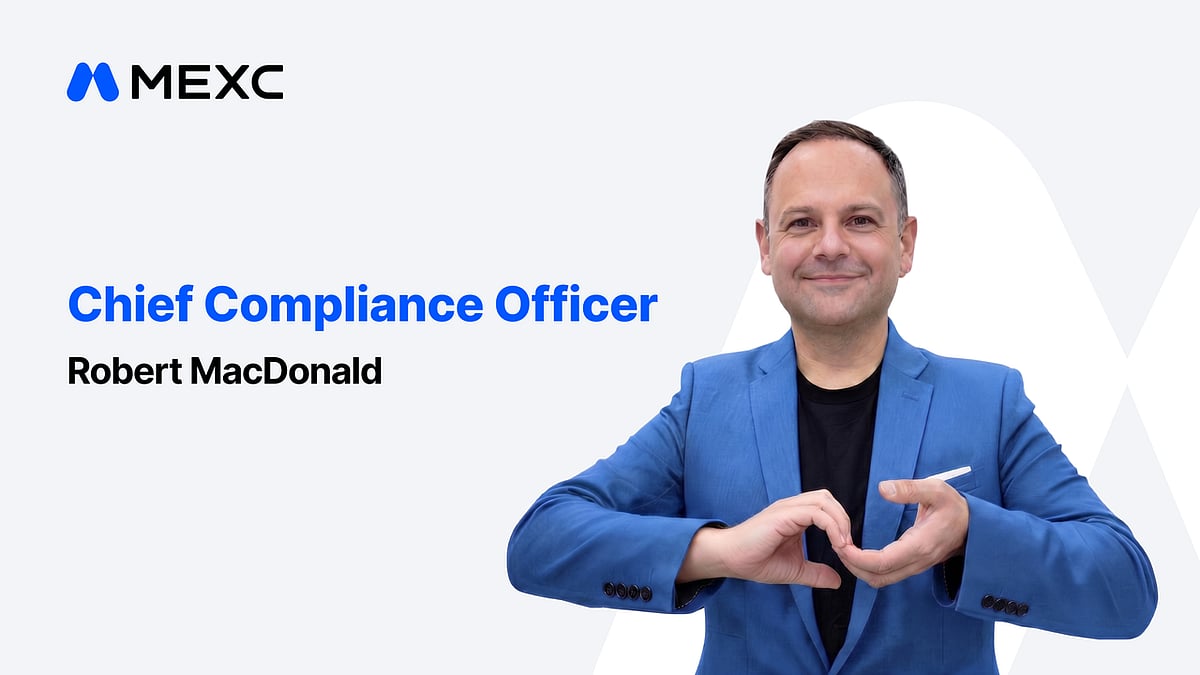
    MEXC, a leading zero-fee digital asset trading platform, has appointed Robert MacDonald as its new Chief Compliance Officer. MacDonald brings more than two decades of experience in regulatory transformation spanning traditional finance and digital assets. He will oversee MEXC’s global compliance strategy, governance framework, and regulatory engagement.

    MacDonald joins MEXC from Bybit, where he served as Chief Legal & Compliance Officer, directing global licensing and corporate legal operations while implementing international AML and KYC frameworks. His prior roles include senior positions at Standard Chartered and Binance, focusing on regulatory strategy and compliance transformation. In 2025, Asian Legal Business recognized him among the Top 15 Chief Compliance Officers for navigating regulatory complexity in digital assets.

    MEXC has recently expanded beyond crypto to offer retail users access to equities-related products, IPO access, and other asset classes. MacDonald’s mandate centers on three pillars: cross-jurisdictional governance, data-driven risk management, and strategic regulatory engagement.

    “Trust won’t be a competitive advantage but the price of entry,” MacDonald said. “Compliance is the gateway to trust and sustainable growth. The platforms that endure protect their users.”

    CEO Vugar Usi added, “Innovation and compliance can no longer be treated as separate priorities. Robert’s experience will strengthen the governance foundation needed to scale responsibly.”

    MEXC, trusted by over 40 million users across 170+ markets, continues investing in compliance infrastructure to support its multi-asset expansion.