Tag: Anthropic

  • Silicon Valley Divided: US Tech Giants Disagree Over Access to Chinese AI Models

    Silicon Valley Divided: US Tech Giants Disagree Over Access to Chinese AI Models

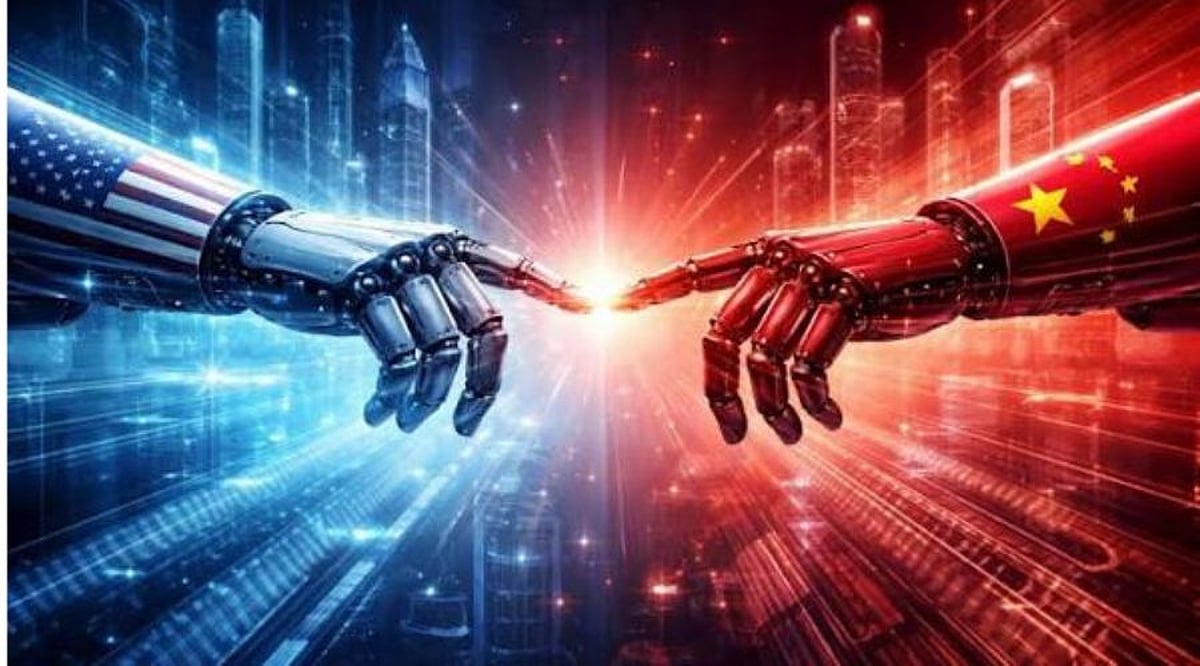
    Chinese AI models are creating a policy split across Silicon Valley as their cost, access, and technical ability improve. OpenAI and Anthropic want tighter controls on some Chinese systems, while Nvidia, Microsoft, Meta, and other companies support continued access to open models.

    The dispute has grown after Z.ai and Moonshot AI released new systems that compete with leading American products. The debate now covers national security, intellectual property, software access, and competition within the US technology sector.

    Chinese AI Models Raise Security Concerns

    Anthropic has accused DeepSeek, Moonshot AI, and MiniMax of using Claude outputs to improve competing systems. The company said the firms created about 24,000 false accounts and generated more than 16 million exchanges with Claude. Anthropic described the activity as “industrial-scale” extraction. The Chinese companies have not publicly accepted those claims, and the allegations have not been independently proven. Beijing has also rejected similar accusations as “groundless.”

    OpenAI and Anthropic have reportedly urged US officials to consider tighter controls on Chinese open-weight models. Their position treats advanced model files and training methods as valuable technology that needs stronger protection.

    Treasury Secretary Scott Bessent has said the administration may consider sanctions against companies that steal American AI property. White House technology adviser Michael Kratsios has also raised concerns about large-scale copying from US models. Officials have not announced a broad ban.

    Tech Leaders Defend Open Model Access

    Nvidia chief executive Jensen Huang has called for both closed and open frontier models. Microsoft chief executive Satya Nadella has also said open software supports a healthy AI market. Executives from Meta, IBM, and Palantir joined a letter backing open access.

    Their companies benefit when developers can test and deploy many models. Cloud providers gain more computing demand, while chipmakers sell hardware used to run the systems. Startups also use lower-cost models to avoid high fees from closed platforms.

    Supporters say open-weight systems allow developers to inspect, adapt, and host software on their own servers. They also argue that broad restrictions could reduce competition and give large closed-model companies more control over the market.

    Nearly 200 companies linked to the Little Tech Association reportedly asked Washington to avoid blanket restrictions. They supported action against proven intellectual property theft but opposed blocking models already available across global platforms.

    OpenAI appears to support open-weight AI in general while seeking targeted controls on Chinese systems. That position separates wider software access from concerns linked to specific companies and alleged data misuse.

    Chinese Providers Expand Through Lower Costs

    Chinese AI models have gained users through lower prices and open access. Developers can download some models, adjust them, and run them without relying on a single provider. That approach can reduce costs for coding, research, and automated tasks.

    Moonshot AI’s Kimi K3 and Z.ai’s GLM-5.2 have drawn attention after strong benchmark results. Users have also adopted DeepSeek and other Chinese systems for business tasks. Some American companies are testing them to cut operating expenses.

    The models still face limits, as independent evaluators say leading US systems offer stronger performance across a wider range of tasks. Chinese providers also face capacity pressure, financial losses, and export controls on advanced chips.

    Washington now appears to be considering targeted measures instead of a full ban. Such action could focus on companies accused of data theft or security risks. Meanwhile, open-model supporters want the government to protect US technology without limiting lawful access.
  • Anthropic Hires Investor Relations Director at $600K Salary as IPO Nears

    Anthropic Hires Investor Relations Director at $600K Salary as IPO Nears

    Anthropic, the artificial intelligence company behind Claude, is strengthening its preparations for a public stock market listing by hiring a senior investor relations executive. The role, Director of Investor Relations, comes with a base salary ranging from $425,000 to $600,000 per year, according to a job listing reviewed by the Times of India.

    The new director will be responsible for shaping how Anthropic communicates its growth story to Wall Street. Key duties include building the company’s investment narrative, meeting with institutional investors, and serving as a liaison between company leadership and the financial community. The hire will also track AI industry trends and explain how major business decisions could impact Anthropic’s stock and long-term growth prospects.

    The position reports to Kenneth Dorell, who joined Anthropic in June as Head of Investor Relations after previously leading investor relations at Meta. The role opened after the company’s earlier investor relations lead departed earlier this year.

    Anthropic has experienced rapid growth over the past year. Enterprise adoption of tools like Claude Code has pushed annualized revenue to $47 billion as of May, making it one of OpenAI’s most formidable competitors. However, the company must convince public investors that its high valuation is justified given the enormous costs of training advanced AI models. As a public benefit corporation, Anthropic also faces the challenge of balancing investor returns with its commitment to building AI safely.

    The job listing underscores the growing importance of investor communication for AI companies approaching public markets. Firms like Anthropic now need to articulate not only their technological capabilities but also their governance and long-term strategy to a broader investor base as competition in the AI sector intensifies.

  • AMD Challenges NVIDIA with New Helios AI Platform, MI450 GPUs, and Anthropic Partnership

    AMD Challenges NVIDIA with New Helios AI Platform, MI450 GPUs, and Anthropic Partnership

    AMD is preparing to launch a comprehensive new AI infrastructure lineup, including the Helios server rack, Instinct MI450 GPUs, and EPYC Venice processors, directly challenging NVIDIA’s dominance in data center AI. The company also announced a major partnership with Anthropic, the developer of the Claude AI model, to deploy up to two gigawatts of AMD chips starting in 2027.

    Helios is AMD’s first full server rack designed for AI workloads, combining MI455X graphics processors, EPYC Venice CPUs, and Pensando networking technology. It targets both AI training and inference, competing with NVIDIA’s integrated systems like the upcoming Rubin-Vera platform. AMD has already demonstrated Helios at the Moscone West convention center, with cloud providers Vultr and TensorWave showing systems using AMD hardware.

    Under the Anthropic agreement, the first gigawatt of AMD chips is scheduled to begin operating in the first half of 2027, using Helios systems with MI455X processors. The companies will also collaborate on software development, with Claude optimizing workloads on AMD graphics processors and aiding development of the ROCm software platform. AMD has committed to an equity investment of up to $5 billion in Anthropic.

    AMD is expanding its position in the AI chip market as demand for AI computing grows. While NVIDIA still controls a large share of the data center accelerator market, AI developers are seeking more supplier options. AMD previously signed a multiyear agreement with OpenAI that could generate tens of billions of dollars in yearly revenue, and OpenAI received an option to acquire a roughly 10% stake in AMD. The Anthropic partnership follows a similar strategy, combining hardware supply with closer access to a major AI model developer.

    Thursday’s launch will provide more details on Helios and the Venice processor, showcasing AMD’s full-system approach to compete with NVIDIA across processors, accelerators, networking, and software.

  • Anthropic Commits $5 Billion to AMD for Next-Generation GPUs Starting 2027

    Anthropic Commits $5 Billion to AMD for Next-Generation GPUs Starting 2027

    AMD has announced a landmark partnership with AI startup Anthropic, positioning the company as a major customer for its next-generation AI chips. The deal includes an investment commitment of up to $5 billion, making it one of AMD’s largest agreements in the artificial intelligence hardware space.

    Under the multiyear agreement, Anthropic will deploy up to 2 gigawatts of AMD’s upcoming Instinct MI450 GPUs, with first deliveries scheduled for the first half of 2027. These advanced chips will power both Anthropic’s own data centers and third-party cloud infrastructure—often referred to as “neocloud” environments. The two companies will also collaborate on identifying viable locations for future data center deployments.

    The investment from AMD is tied to specific deployment milestones, ensuring both parties remain aligned on execution. Additionally, the partnership includes an engineering collaboration: AMD plans to use Anthropic’s Claude AI models to optimize the performance of its chips and AI software stack.

    Anthropic already relies on AI hardware from NVIDIA, Google, and Amazon. Adding AMD’s accelerators further diversifies its computing resources, a strategic move as demand for AI infrastructure continues to surge.

    For AMD, this deal marks another high-profile win in its effort to compete more aggressively with NVIDIA in the AI chip market. It also underscores the growing importance of securing long-term computing capacity, as leading AI firms seek multiple hardware suppliers to support the development and deployment of advanced AI models.

  • Anthropic Robotics Speculation Intensifies as Federal Reserve Faces Extended Delay in Accessing Mythos AI

    Anthropic Robotics Speculation Intensifies as Federal Reserve Faces Extended Delay in Accessing Mythos AI

    Anthropic is drawing attention on two fronts after reports linked the company to robotics startup Physical Intelligence and raised questions about federal access to its Claude Mythos Preview model.

    The robotics report points to Anthropic’s possible interest in physical-world AI. Meanwhile, the Mythos case focuses on how authorities and banks prepare for models that can find software weaknesses.

    Anthropic Held Talks with Physical Intelligence

    A weekend claim on X said Anthropic was buying Physical Intelligence, a San Francisco startup that develops AI systems for robots. Tech blogger Robert Scoble shared the claim, and it spread quickly across technology accounts.

    Physical Intelligence CEO Karol Hausman later told employees that the reports were ‘not true,’ according to The Information. However, Anthropic and the startup held acquisition discussions during the spring, TechCrunch reported. No company has announced a deal, and neither side has confirmed that current talks continue. It has not publicly disclosed details of those discussions.

    Physical Intelligence has attracted major investors and researchers since its launch. The company develops robot foundation models, including its π0.5 system, which researchers use to control different machines and complete physical tasks.

    An acquisition would give Anthropic an established robotics team without requiring it to build a hardware operation from the start. Still, the reported discussions do not show that Anthropic submitted an offer or reached agreed terms. As of July 22, Anthropic has not announced a robotics acquisition or dedicated hardware laboratory.

    Robotics Race Draws OpenAI into the Picture

    Anthropic has tested Claude’s ability to support robotics work through Project Fetch. The company asked employees without specialist training to program a commercial robot dog with help from Claude. A later test found that a newer model completed similar tasks faster than the strongest human-and-Claude team from the earlier study.

    The research does not amount to a full robotics division. However, it shows that Anthropic is examining how its models can work with machines outside standard computer tasks. Anthropic also said the tests did not cover difficult areas such as low-level robot control.

    OpenAI has taken a more direct route. Chief Executive Sam Altman said OpenAI Robotics was hiring staff across hardware, operations, systems, and machine learning. He described infrastructure-support robots as the near-term focus and personal robots as a longer-term goal.

    OpenAI also invested in Physical Intelligence, according to TechCrunch. This position could affect any future sale, depending on the rights attached to the investment. Neither company has publicly explained those terms.

    Fed Sought Mythos Access After Bank Warning

    Anthropic introduced Claude Mythos Preview through Project Glasswing in April. The company gave selected organizations access so they could find and repair security flaws before similar tools became widely available. Anthropic later said Mythos had identified thousands of possible high- or critical-severity weaknesses across open-source projects.

    Federal Reserve and Treasury officials also called bank executives to an urgent April meeting about the model’s cyber abilities. Reports said officials warned that Mythos could identify and possibly exploit weaknesses in major operating systems and browsers.

    However, the Federal Reserve lacked direct access to Mythos for at least three months after that meeting, CNBC reported. The central bank was still seeking access as of July 15, although its current status is ‘not clear.’ The Fed declined to comment, while Anthropic did not provide an immediate response.

    The gap placed the Fed behind some banks and technology companies already using the model to test systems and prepare fixes. Anthropic has kept Mythos access restricted while working with government agencies and private organizations on security controls.

  • Daily Tech Digest: Google’s Gemini AI Chip, Xiaomi 18 Early Launch, Anthropic Rare Disease Research, and X Phishing Scams

    Daily Tech Digest: Google’s Gemini AI Chip, Xiaomi 18 Early Launch, Anthropic Rare Disease Research, and X Phishing Scams

    Today’s tech landscape is buzzing with major developments. Google’s upcoming Frozen v2 AI chip is designed to boost the efficiency of its Gemini model, with deployment potentially starting in 2028. Meanwhile, Xiaomi’s next flagship, the Xiaomi 18, may launch earlier than expected in India, signaling a strategic push in the competitive smartphone market. In healthcare AI, Anthropic is funding research into rare diseases, leveraging its AI capabilities to address underserved medical areas. On the security front, X (formerly Twitter) is facing a wave of phishing scams targeting users, raising concerns about platform safety. Additionally, the broader conversation around AI governance in healthcare continues to evolve, as regulators and companies work to balance innovation with patient privacy and ethical standards.

  • Claude Tag Slack Integration Can Enable Unauthorized Enterprise Actions, Tego AI Warns

    Claude Tag Slack Integration Can Enable Unauthorized Enterprise Actions, Tego AI Warns

    Tel Aviv, Israel – July 14, 2026 – Cybersecurity startup Tego AI has published new research revealing that Anthropic’s native Slack integration, Claude Tag, can be triggered by non-intentional Slack content, potentially leading to unauthorized actions across enterprise systems.

    According to Tego AI, researchers observed Claude Tag responding to messages containing the literal text “@Claude” without requiring a genuine structural Slack mention. This means content delivered through bots, webhooks, automated feeds, or other external sources could be interpreted as instructions.

    In a demonstration, bot-generated messages instructed Claude Tag to retrieve internal information, publish it into Slack, and then delete the original resource using the organization’s configured connection.

    “Our research raises a fundamental question for every organization deploying enterprise AI agents: who is actually authorized to instruct the agent?” said Tal Melamed, CTO and Co-Founder of Tego AI. “Organizations need controls that validate the origin and purpose of sensitive actions before an agent is allowed to execute them.”

    The research also identified broader concerns, including untrusted automated content becoming an indirect instruction channel, connected applications and MCP servers expanding the potential impact, administrative access to stored channel information outside Slack’s native membership model, and limited visibility through existing history, compliance, and audit interfaces.

    “A safety classifier can be an important defense, but it should not be the final authorization boundary for enterprise actions,” Melamed added. “Sensitive operations require deterministic controls that remain effective even when the model misunderstands a request, trusts the wrong identity, or makes an incorrect decision.”

    Tego AI recommends applying least-privilege permissions to Claude Tag connections, preferring read-only access, avoiding channels that ingest untrusted external content, restricting administrative access, retaining relevant Slack logs, and introducing independent runtime authorization for sensitive actions.

    The company responsibly disclosed the findings to Anthropic. Anthropic classified the submission as informative and disputed that literal “@Claude” text or bot-generated messages initiate Claude Tag sessions under the product’s default configuration. Tego AI’s full report documents the observed behavior, supporting evidence, security implications, and disclosure timeline.

    Read the full technical report, including supporting evidence and the disclosure timeline: https://www.tego.ai/blog/tego-ai-finds-anthropics-claude-tag-slack-integration-can-trigger-unauthorized-enterprise-actions

    About Tego AI

    Tego AI is a cybersecurity company developing runtime security and control technology for enterprise AI agents. Its platform helps organizations monitor agent activity and stop unauthorized or risky actions before agents access sensitive data or connected systems. Tego AI currently operates in stealth. This is the company’s second public security disclosure, and it has identified additional security issues across other major AI agent platforms, with further disclosures planned.

    Contact:
    Tal Melamed, CTO, Tego AI
    tal@tego.ai

    This is a paid press release published via CyberNewswire, a PR newswire syndication platform for cybersecurity companies.

  • Anthropic and Meta Discuss $10 Billion AI Compute Lease, Boosting Meta Stock

    Anthropic and Meta Discuss $10 Billion AI Compute Lease, Boosting Meta Stock

    Anthropic is in early-stage talks to lease artificial intelligence computing capacity from Meta in a potential $10 billion, two-year agreement, according to reports. The deal would give Anthropic expanded access to AI chips while providing Meta with a new revenue stream from its data center investments.

    Meta Stock Rises on News

    Meta shares moved off their session lows after the report emerged on Friday. However, both companies declined to comment on the negotiations. The discussions are preliminary and may not result in a final contract.

    Potential Revenue Path for Meta

    Under the proposed terms, Anthropic would make monthly payments to Meta over two years. Either side could terminate the arrangement before the full term expires. If completed, this would mark Meta’s first large customer for rented computing capacity. Currently, Meta uses most of its data centers, chips, and power for its own services and AI models.

    CEO Mark Zuckerberg has previously discussed selling access to Meta’s infrastructure. At a shareholder meeting in May, he said cloud computing was “definitely on the table” and noted that companies approached Meta “almost every week” about buying models or spare computing power.

    Meta expects 2026 capital spending of between $125 billion and $145 billion, including finance lease payments and higher costs for components and data centers. Much of that spending supports AI systems and future computing capacity.

    Early Talks Leave Deal Uncertain

    Anthropic proposed a structure worth up to $10 billion across two years. Still, insiders describe the discussions as very preliminary. Meta must develop commercial systems for billing, customer support, security, and capacity management before operating a large cloud service.

    The companies have not disclosed how much computing power Anthropic could receive, nor have they identified specific chips, data center sites, pricing schedules, or start dates. The final value could fall below $10 billion, and either side could withdraw before the service period begins.

    Anthropic’s Growing Compute Needs

    Anthropic requires massive computing power to train and operate its Claude models. Demand for AI services has pushed developers to secure chips, electricity, and data center space through multiple providers.

    In May, Anthropic reached a separate agreement to use the full computing power of SpaceX’s Colossus 1 facility in Memphis. That site contains more than 220,000 Nvidia processors and provides 300 megawatts of capacity. Reports placed that arrangement at about $1.25 billion per month through May 2029, with early termination options.

    Anthropic also has computing arrangements with major cloud providers. Its talks with Meta show the company is adding more sources as usage grows across its consumer and business products. The proposal would diversify Anthropic’s infrastructure beyond its existing cloud partners.

    For Meta, a completed agreement would generate revenue tied directly to its AI infrastructure. The company is also building a broader cloud operation to sell spare capacity and access to selected AI models.

    No agreement has been announced, and neither Meta nor Anthropic has provided a timeline for completing or ending the talks.

  • Anthropic Rolls Out India-Specific Pricing for Claude AI: Pro, Max, and Team Plans Revealed

    Anthropic Rolls Out India-Specific Pricing for Claude AI: Pro, Max, and Team Plans Revealed

    Anthropic has officially introduced localized pricing for its Claude AI subscription plans in India, eliminating foreign exchange fees and international payment hassles for Indian users. The company has announced rupee-denominated rates for Claude Pro, Claude Max, and Claude Team plans, with the entry-level Pro plan starting at Rs 1,999 per month. All prices include GST, and the free tier remains available.

    Annual and Monthly Pricing for Claude Pro

    The Claude Pro plan is available at Rs 1,999 per month when billed annually, totaling Rs 24,000 per year. Monthly billing is priced at Rs 2,399 per month. Pro subscribers gain access to Anthropic’s Sonnet 5, Opus, and Fable 5 models, along with higher usage limits, research mode, unlimited projects, memory, online search, voice mode, file uploads, Claude Code, Claude Design, Microsoft 365 integration, and Excel and PowerPoint functionality.

    Claude Max for Power Users

    Anthropic introduced two Claude Max tiers for users needing more intensive AI usage. The Claude Max 5x plan costs Rs 11,999 per month, while the Claude Max 20x plan is priced at Rs 23,999 per month. Max subscribers receive all Pro benefits plus extended Claude Code sessions, priority access during peak demand, larger usage limits, and early access to new models and features.

    Claude Team Plans for Businesses

    For enterprises, Anthropic unveiled two Team plans. The Team Standard plan costs Rs 2,399 per user per month (annual billing) or Rs 2,999 per user per month (monthly). The Team Premium plan is priced at Rs 11,999 per user per month (annual) or Rs 14,999 per user per month (monthly). Team plans include a 200K context window, Claude Code, Claude Cowork, API usage credits, centralized billing, admin tools, single sign-on, domain capture, and admin controls. Anthropic confirmed that client content from Team accounts is not used to train its AI models.

    Plan Summary

    • Claude Pro: Rs 1,999/month (annual) or Rs 2,399/month (monthly).
    • Claude Max 5x: Rs 11,999/month.
    • Claude Max 20x: Rs 23,999/month.
    • Claude Team Standard: Rs 2,399/user/month (annual) or Rs 2,999/user/month (monthly).
    • Claude Team Premium: Rs 11,999/user/month (annual) or Rs 14,999/user/month (monthly).

    This India-specific pricing aims to reduce barriers for individuals and businesses seeking access to Claude AI, offering local billing and eliminating the need for international transactions.

  • Anthropic Cracks Down on Chinese Firms Using VPNs to Access Claude AI

    Anthropic Cracks Down on Chinese Firms Using VPNs to Access Claude AI

    Anthropic is tightening access controls for its Claude AI assistant after discovering that Chinese companies have been using overseas entities, VPNs, and personal subscriptions to bypass a strict regional ban. The company explicitly blocks access from unsupported regions, including China, but firms such as Ant Financial and ByteDance reportedly found workarounds to keep Claude available to their engineers.

    Ant Financial provided some employees with corporate Claude accounts through its intranet, linked to a Singapore-based entity. ByteDance allowed engineers to pay for personal Claude subscriptions and seek reimbursement, routing access through VPNs. Microsoft also sold API access to Chinese companies with Singapore entities, enabling mainland engineers to use Claude through internal networks.

    While these methods violate Anthropic’s terms of service, they do not break US or Chinese law. Anthropic stated that it “explicitly prohibits accessing or facilitating access to Claude in unsupported regions, including China” and uses “changing detection systems to find and ban accounts that break its rules.”

    The company is also targeting “transfer station” services that route requests from mainland China through overseas Claude accounts, making access appear to come from supported regions. Smaller users may rely on these services, but larger Chinese AI companies often avoid them due to fears that operators could store, copy, or resell prompts, especially when working with private code and internal data.

    Claude Code has drawn strong demand from Chinese engineers because its coding outputs can support distillation—a process where smaller AI models learn to copy the behavior of stronger systems. This makes the tool valuable for firms trying to improve local models.

    Meanwhile, China’s National Vulnerability Database flagged several Claude Code versions released between April and June, saying they can send user location and identity data to remote servers without clear consent. The database listed versions 2.1.91 to 2.1.196 as affected, describing the issue as “security backdoor vulnerabilities” and a “serious threat.”

    Anthropic rejected the backdoor label, stating that the disputed function was an anti-abuse experiment meant to detect unauthorized users. It denied that Claude Code contained spyware or a tool built for secret surveillance. The dispute now links two separate issues: Anthropic’s effort to block Chinese access and China’s warning over Claude Code. Both sides frame the matter through security, but they point to different risks.