
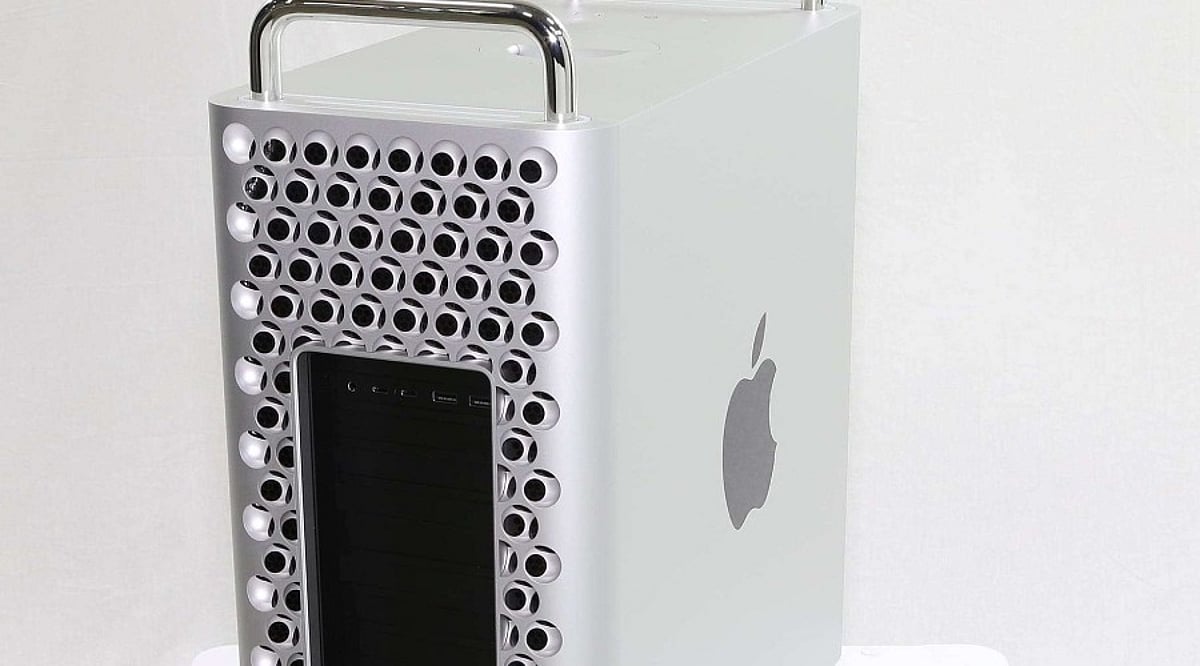
Apple’s decision to discontinue the Mac Pro in March 2026 reportedly ended a long internal debate over the future of its most powerful desktop lineup. The company has since removed the Mac Pro from its website, directing professional users toward the Mac Studio, and confirmed no new Mac Pro hardware is planned.
According to Bloomberg’s Mark Gurman in his ‘Power On’ newsletter, the end of the Mac Pro line ‘wasn’t always the plan.’ Apple had considered several hardware and chip options before giving up on it.
Apple Worked on M2 Extreme and M3 Extreme Chips
The biggest aspect of Apple’s fallen Mac Pro vision was the creation of higher-end Apple Silicon CPUs. Apple developed both M2 Extreme and M3 Extreme chips before dropping them, Gurman said. These chips were intended to sit above the ‘Ultra’ tier and would have made the Mac Pro outperform the Mac Studio. However, the projects were aborted due to high development costs and low demand for the more costly workstation-type machines.
Two Unreleased Mac Pro Models Were in Development
Apple also reportedly worked on two Mac Pro models that were never released, internally codenamed J170 and J190.
- J170: A surprising project—a new Mac Pro powered by Intel chips, despite Apple’s strong push toward its own Apple Silicon. This version, targeted at specific professional applications, remained based on the x86 architecture and standard PCIe workflow.
- J190: Expected to launch alongside the M3 Ultra Mac Studio in early 2025, featuring an M3 Ultra chip. The debut never happened, and Apple discontinued the Mac Pro line altogether.
Mac Studio Has Replaced the Mac Pro’s Role
The Mac Pro’s decline wasn’t solely due to performance. It was originally popular for its expandability—high-end graphics cards, audio cards, and other PCIe equipment. However, Apple Silicon adopts a system-on-chip design with unified memory, making upgrades via standard modules less relevant. Apple apparently concluded that maintaining the Mac Pro was no longer necessary to meet user needs. Gurman said he doesn’t think the Mac Pro is likely to return, ‘if ever.’
This move marks a significant shift in Apple’s professional desktop strategy, consolidating its high-end offerings around the Mac Studio and its custom silicon.