
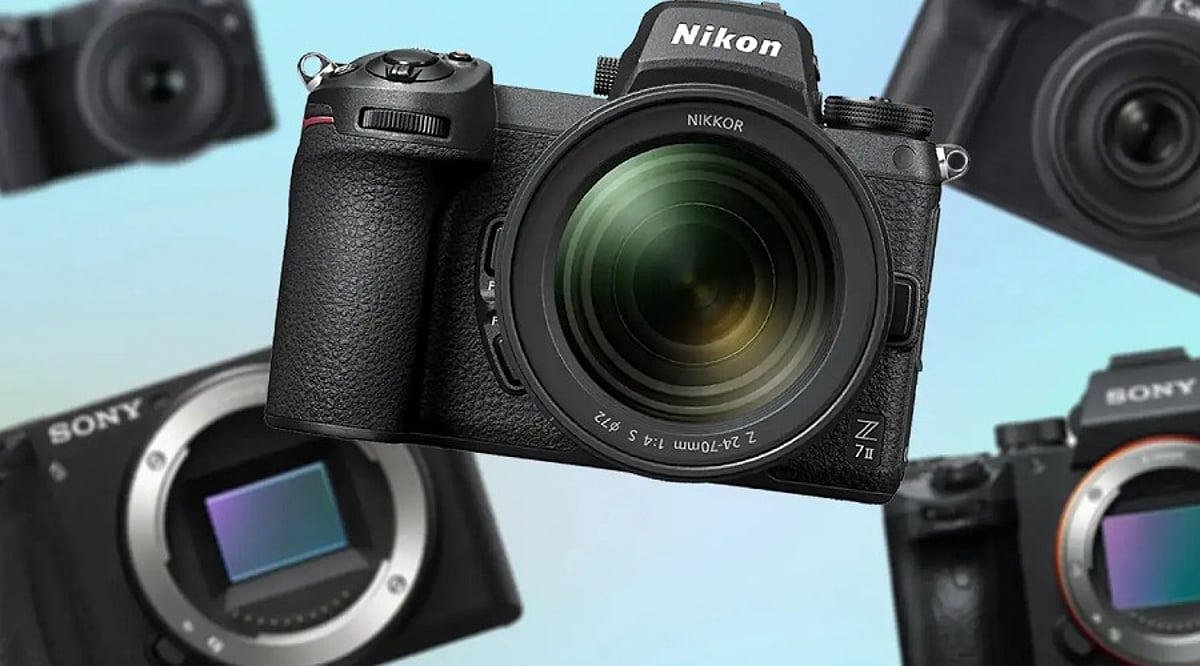
Mirrorless cameras now dominate the interchangeable-lens market, offering options for every photographer from beginners to professionals. Choosing the right one depends on your budget, shooting style, sensor format, and long-term lens ecosystem. Prioritizing autofocus, stabilization, and practical features helps you invest in a camera system that suits your needs today and grows with you over time.
Overview
Mirrorless cameras have become the preferred choice across entry-level, enthusiast, and professional photography, offering systems tailored to different shooting styles and budgets. Sensor size, autofocus performance, in-body stabilization, video capabilities, and lens ecosystem play a greater role in long-term satisfaction than simply choosing the highest resolution. APS-C, full-frame, and Micro Four Thirds systems each offer distinct advantages, making the right choice dependent on portability, performance needs, and future lens investment.
Choose Your Budget & Use Case
Entry-level mirrorless camera kits in India typically start around Rs. 40,000 for APS-C kits and climb past Rs. 4 lakh for high-resolution full-frame flagships. Someone upgrading from a phone gains more from reliable autofocus and simple controls than from a high megapixel count. Creators who mix photo and video work usually care more about 4K quality and audio inputs than raw resolution. Working professionals lean toward dual card slots and a rugged build that survives a full day on set. Lens spend adds up fast, often past the cost of the body itself, so the real budget is the system, not the number on the box.
Select the Right Sensor Format
Full-frame sensors generally deliver stronger low-light performance and finer control over shallow depth of field, though the trade-off is larger bodies, larger lenses, and higher cost. APS-C brings that down to a size and price that suits beginners and everyday travel. Micro Four Thirds goes further still, trading some low-light headroom for one of the most compact interchangeable-lens systems, built around portability and video. Resolution should match output: large prints or heavy cropping justify higher megapixel counts, while web and social content rarely need more than 24 megapixels.
Compare Autofocus & IBIS and Speed
Modern autofocus systems use AI-assisted subject detection to track eyes, faces, animals, and vehicles, which raises keeper rates far more than a small resolution bump ever will. For portrait, wildlife, and sports work, autofocus reliability often decides how many usable frames come out of a session, more than any jump in resolution. Continuous shooting speed matters for sports and wildlife, where mid-range bodies offer 10 to 20 frames per second, and flagships go higher. In-body stabilization helps handheld low-light shots and video, though some entry bodies skip it and rely on stabilized lenses instead.
Check Video Features
Occasional video needs little beyond standard 4K recording. Serious content creation calls for higher frame rates, 10-bit recording, and log profiles, since these give editors far more room to grade footage without banding or loss of detail. Full-size HDMI ports, mic and headphone jacks, and an articulating screen matter more in daily use than an extra spec on a sheet.
Also Read: Top 10 Sustainable Camera Brands Leading the Industry in 2026
Evaluate the Lens Ecosystem
A camera mount determines lens choices for years, so it is worth checking how many native and third-party lenses exist for that mount before buying. Strong third-party support tends to lower long-term system costs while widening creative options. Switching systems later means replacing lenses, not just a body, which gets expensive fast. Handling a shortlisted camera in person, where possible, reveals grip comfort and menu logic that specifications alone cannot show.
Also Read: XR Buying Guide 2026: How to Choose the Right VR and AR Headset
Final Thoughts
The best mirrorless camera is rarely the one with the longest specification sheet. It is the one whose sensor, autofocus, handling, and lens ecosystem keep suiting the way a person shoots long after the excitement of launch day has passed.
FAQs
- What is the best mirrorless camera for beginners in 2026? An entry-level APS-C mirrorless camera with reliable autofocus, intuitive controls, and a good kit lens is ideal for beginners. It offers excellent image quality without the higher cost of professional systems.
- Should I choose a full-frame or APS-C mirrorless camera? Full-frame cameras provide better low-light performance and shallower depth of field, while APS-C models are more affordable, compact, and suitable for most photography and content creation needs.
- Is IBIS important when buying a mirrorless camera? IBIS (In-Body Image Stabilization) helps reduce camera shake during handheld photography and video. While beneficial, it is not essential if your lenses include optical stabilization or you mainly shoot in good lighting.
- How much should I budget for a mirrorless camera system? Your budget should cover more than just the camera body. Include lenses, memory cards, extra batteries, a camera bag, and other accessories to build a complete and practical photography kit.
- Is it better to buy a new 2026 mirrorless camera or an older model? Previous-generation mirrorless cameras often deliver excellent performance at lower prices. If they meet your photography needs and support the same lens ecosystem, they can offer outstanding value.