
Tag: Arbitrum

  • Leading Layer-2 Cryptocurrencies to Watch in July 2026

    Leading Layer-2 Cryptocurrencies to Watch in July 2026

    Key Takeaways

    • Layer-2 networks reduce Ethereum fees while significantly improving transaction speed and scalability.
    • DeFi, gaming, AI, and tokenized real-world assets are accelerating Layer-2 ecosystem growth.
    • Arbitrum, Optimism, Starknet, Polygon, and emerging projects continue driving Ethereum’s next evolution.

    Ethereum remains the dominant blockchain, but high fees and slower transaction speeds during peak usage remain challenges. Layer-2 networks address these issues by processing transactions off the main chain and posting final data back for security. This approach lowers costs, boosts speed, and supports mass adoption. In July 2026, Layer-2 projects continue to be one of the strongest segments in crypto, fueled by steady growth in decentralized finance, gaming, artificial intelligence, and tokenized real-world assets. Here are the top 10 Layer-2 cryptocurrencies to watch.

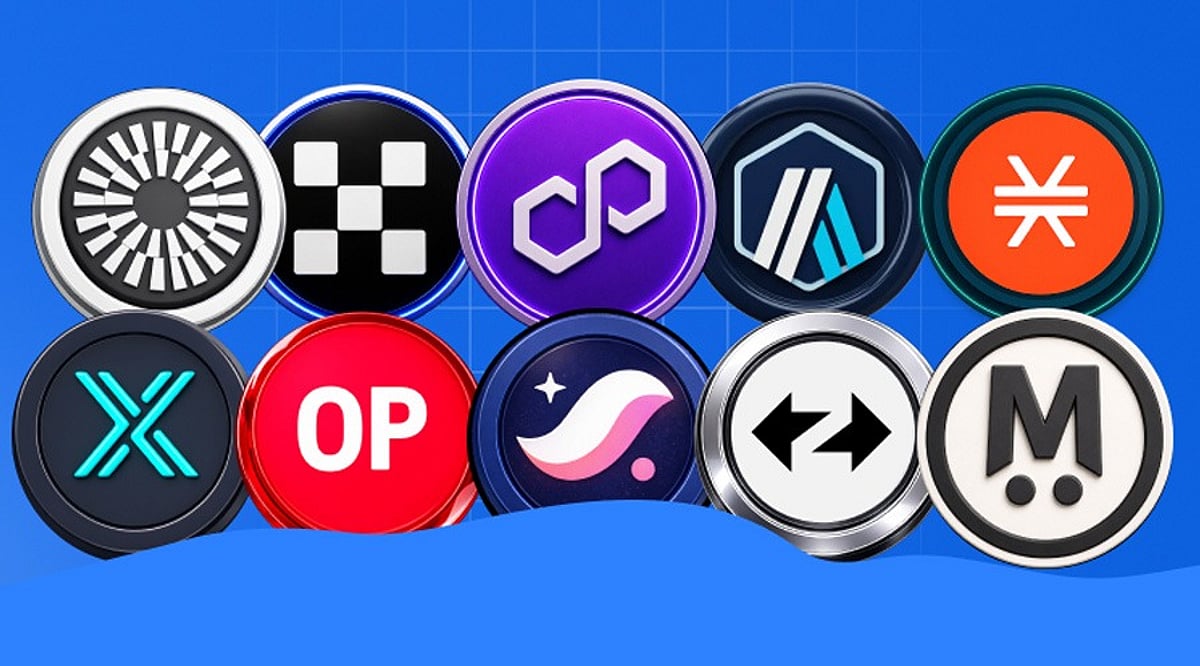
    Arbitrum (ARB)

    Arbitrum holds the top spot among Ethereum Layer-2 networks, thanks to its vast DeFi ecosystem and deep liquidity. Major decentralized exchanges, lending platforms, and perpetual trading protocols operate on Arbitrum. The network also supports Layer-3 development through Arbitrum Orbit, opening new opportunities for builders. Strong institutional interest and an active community add to its value. Despite growing competition, Arbitrum remains one of the most important Layer-2 projects in July 2026.

    Optimism (OP)

    Optimism has expanded well beyond a single Layer-2 chain. Its Superchain vision has attracted multiple networks using the OP Stack, including Coinbase’s Base. This shared technology improves cross-chain compatibility and speeds up development. Revenue sharing between connected chains adds another advantage. As more projects join the Superchain, Optimism continues to strengthen its position as a leading Ethereum scaling solution.

    Starknet (STRK)

    Starknet has built its reputation on advanced zero-knowledge technology. Using STARK proofs, it delivers strong security with excellent scalability. Developers benefit from the Cairo programming language, which supports sophisticated blockchain applications. The platform continues to attract DeFi projects, gaming apps, and AI initiatives, placing Starknet among the top Layer-2 networks for long-term growth.

    Polygon (POL)

    Polygon remains one of the most recognized names in blockchain. It has shifted focus toward an ecosystem of connected zero-knowledge chains via its AggLayer vision. Large companies and financial institutions continue to explore Polygon due to its reliable infrastructure and enterprise partnerships. Growth in tokenized real-world assets also supports the network. This combination of business adoption and technical development keeps Polygon near the top of the Layer-2 market.

    Mantle (MNT)

    Mantle has gained attention for its strong treasury and focus on institutional DeFi. The network supports liquid staking, yield products, and other financial services that appeal to developers and investors. A well-funded ecosystem enables Mantle to support new applications through grants and incentives. These factors help it stand out among newer Layer-2 platforms.

    Immutable (IMX)

    Immutable has become a leading blockchain platform for gaming and digital collectibles. The network removes gas fees for many player transactions, creating a smoother gaming experience. Major game developers continue to choose Immutable for its reliable infrastructure and NFT support. New game releases and wider blockchain gaming adoption could provide fresh momentum in the second half of 2026.

    zkSync (ZK)

    zkSync is gaining ground in the zero-knowledge Layer-2 space, focusing on consumer applications with fast, low-cost transactions. Native account abstraction improves wallet usability. The project is attracting DeFi projects, payment systems, and social applications to its ecosystem. These advancements make zkSync one of the emerging leaders among Layer-2 projects.

    Metis (METIS)

    Metis takes a different approach with decentralized sequencers, reducing reliance on a single operator. The project is also attracting interest in AI infrastructure. Enterprise tools and lower centralization risks provide additional appeal. These unique features help Metis carve out a distinct position in the competitive Layer-2 market.

    Loopring (LRC)

    Loopring remains one of the earliest zero-knowledge rollup projects. The network focuses on secure payments, decentralized exchanges, and digital wallets. Although newer projects receive more attention, Loopring continues to offer reliable, proven technology. Its long history and stable ecosystem make it an important Layer-2 network to follow.

    Fuel (FUEL)

    Fuel has emerged as one of the most promising modular execution layers in 2026. It supports parallel transaction execution, enabling better performance than many traditional blockchain designs. Developers are showing growing interest in its modern virtual machine and flexible architecture. As the ecosystem expands, Fuel could become a major name in Ethereum scaling.

    Final Thoughts

    Layer-2 technology continues to play a crucial role in the cryptocurrency market as of July 2026. The growing popularity of DeFi, blockchain gaming, enterprise applications, AI, and tokenized real-world assets is driving adoption of Layer-2 solutions. Projects like Arbitrum, Optimism, Starknet, Polygon, Mantle, Immutable, zkSync, Metis, Loopring, and Fuel each contribute uniquely to Ethereum’s future. All of them have strong ecosystems, experienced developer communities, and ongoing technological advances.

    Frequently Asked Questions

    What are Layer-2 cryptocurrencies?

    They are blockchain networks built on Ethereum that improve speed, lower transaction costs, and increase scalability while relying on Ethereum’s security.

    Why are Layer-2 projects important in 2026?

    They help Ethereum handle growing demand from DeFi, gaming, AI applications, and tokenized real-world assets without high fees or network congestion.

    Which Layer-2 projects are leading the market?

    Arbitrum, Optimism, Starknet, Polygon, Mantle, Immutable, zkSync, Metis, Loopring, and Fuel are among the top Layer-2 ecosystems to watch.

    What is the difference between optimistic and zero-knowledge rollups?

    Optimistic rollups assume transactions are valid unless challenged, while zero-knowledge rollups use cryptographic proofs to verify transactions before finalization.

    Are Layer-2 cryptocurrencies good long-term investments?

    They have strong growth potential by increasing Ethereum adoption, but like all cryptocurrencies, they carry market risks and require careful research before investing.
  • Top 10 Cryptocurrencies Under $1 to Watch in July 2026

    Top 10 Cryptocurrencies Under $1 to Watch in July 2026

    Many investors assume that a cryptocurrency priced below $1 is automatically a bargain. However, a low token price does not always indicate value—supply and market cap matter more. Smart investors look beyond the price tag, focusing on the project’s technology, real-world use, development roadmap, and team. In July 2026, several affordable projects stand out for their strong fundamentals, enterprise adoption, AI integration, DeFi growth, and long-term potential. Below are ten cryptocurrencies under $1 worth considering this month.

    Stellar (XLM) – Reliable in Global Payments

    Stellar has built a solid reputation by focusing on faster, cheaper international payments. In July 2026, XLM trades between $0.20 and $0.40, making it accessible. The network enables near-instant cross-border transfers at low cost. Banks and payment providers continue to explore Stellar, and the project is also expanding into asset tokenization. Its proven track record makes it one of the most dependable cryptocurrencies below $1.

    Hedera (HBAR) – Trust from Big Business

    Hedera’s governance council includes major global corporations, adding a layer of credibility. HBAR remains under $1, offering fast transactions, low energy consumption, and enhanced security—ideal for enterprise blockchain applications.

    VeChain (VET) – Blockchain for Real-World Business

    VeChain solves practical supply chain issues: tracking products, verifying authenticity, streamlining logistics, and monitoring carbon footprints. With partnerships across industries and a token price under $0.10, VET is a strong pick for those who value real-world utility.

    Algorand (ALGO) – Strong Technology, Quiet Growth

    Algorand rarely makes headlines but remains a top-tier blockchain. It offers fast, low-cost transactions and reliable performance. Governments and organizations are exploring Algorand for tokenized assets and digital financial systems. For fundamentals-focused investors, ALGO is an attractive option under $1.

    Sei (SEI) – Purpose-Built for Trading

    Sei is designed specifically for decentralized trading and financial applications. Its specialized architecture enables faster transactions for exchanges and DeFi projects. While still under $1, SEI carries higher risk but targets a rapidly growing sector, offering meaningful long-term potential.

    Arbitrum (ARB) – Scaling Ethereum

    Arbitrum solves Ethereum’s high gas fees by processing transactions faster and cheaper. ARB trades below $1, and developers continue to build on its Layer-2 network. Despite short-term volatility from token unlocks, Arbitrum’s long-term prospects remain strong as one of the largest Layer-2 ecosystems.

    Optimism (OP) – Ethereum’s Next Layer

    Optimism shares a similar scaling goal with Arbitrum but follows its own “Superchain” vision, connecting multiple blockchains into one ecosystem. It has drawn attention through its relationship with Coinbase’s Base network. Strong developer activity suggests Optimism will play a bigger role as blockchain adoption grows.

    Dogecoin (DOGE) – Enduring Popularity

    Dogecoin started as a joke but has survived multiple market cycles. In July 2026, DOGE trades near $0.07. Its loyal community, excellent liquidity, and broad exchange support keep it relevant, even though its price often moves with sentiment rather than technical progress.

    eCash (XEC) – High Risk, High Potential

    eCash appeals to investors with its extremely low price—fractions of a cent. The project focuses on digital payments and continues active development. However, the payment sector is highly competitive, so success is not guaranteed. eCash suits investors who understand the higher risk of smaller projects.

    JasmyCoin (JASMY) – Tapping the AI Economy

    JasmyCoin focuses on secure data ownership and IoT, allowing users to control their personal information. As connected devices and AI grow, the demand for secure data management may rise. JASMY faces tough competition, but its AI and data connection gives it an interesting market position.

    Final Thoughts

    Investing in sub-$1 cryptocurrencies should not be based solely on price. The best opportunities are projects with solid technology, ongoing development, and real-world adaptability. In July 2026, Stellar, Hedera, VeChain, Algorand, Arbitrum, and Optimism stand out for their established ecosystems. Sei, Dogecoin, eCash, and JasmyCoin offer higher potential but also greater risk. Key trends this year include AI, real-world asset tokenization, DeFi, enterprise blockchain, and Ethereum Layer-2 networks. Investors who focus on these trends rather than the cheapest tokens will be better positioned.

    FAQs

    1. Is a cryptocurrency under $1 automatically a good investment?
    No. A low token price doesn’t mean it’s undervalued. Always consider market cap, utility, adoption, and development.

    2. Which sectors look strongest in July 2026?
    AI, real-world asset tokenization, decentralized finance (DeFi), enterprise blockchain, and Ethereum Layer-2 ecosystems.

    3. Which coins are considered more established?
    Stellar (XLM), Hedera (HBAR), VeChain (VET), Algorand (ALGO), Arbitrum (ARB), and Optimism (OP).

    4. Which cryptocurrencies carry higher risk but higher potential?
    Sei (SEI), Dogecoin (DOGE), eCash (XEC), and JasmyCoin (JASMY) may offer greater upside but also increased volatility.

    5. What should investors evaluate before buying any cryptocurrency?
    Research the project’s technology, use cases, partnerships, tokenomics, development activity, roadmap, and overall market trends rather than focusing only on the token price.

  • Top Crypto Picks for 2026: Why BlockDAG, Arbitrum, Hedera, and Algorand Are Attracting Smart Money

    Top Crypto Picks for 2026: Why BlockDAG, Arbitrum, Hedera, and Algorand Are Attracting Smart Money

    The cryptocurrency market moves at breakneck speed, and investors who hesitate risk missing out on significant gains. Currently, several projects are drawing attention from both whales and retail traders due to their advanced technology, market mispricing, and timely buyback options. This article highlights four coins that smart money is rushing to accumulate before the window closes.

    1. BlockDAG (BDAG): AI-Powered Surge with Urgent Buyback

    BlockDAG has disrupted the market with the live launch of its AI capabilities, boosting network valuation by $500 million. The upgrade introduces machine learning to optimize smart contracts and transaction efficiency. The network is upgrading to handle 7,000 transactions per second within three days, and the upcoming BlockDAG Futures and Spot Exchange will launch in two weeks, providing immediate utility and liquidity.

    Time is critical: less than 24 hours remain to capitalize on the exclusive $0.05 buyback offer. Priced at an incredibly low $0.00000044, buyers can also use the World Cup Bonus to secure an additional 50% extra BDAG coins instantly. Investors are moving quickly to stack their portfolios as BlockDAG climbs toward the top spot.

    2. Arbitrum (ARB): Ethereum Layer 2 at a Deep Discount

    Arbitrum remains a powerhouse for decentralized finance, ranking among the busiest Layer 2 chains on Ethereum by total value locked. Using optimistic rollups, it offers lower gas costs and higher speed while retaining Ethereum’s security. Leading DeFi platforms like Uniswap, Aave, and GMX rely on Arbitrum. The native token hit $2.40 in January 2024 but has corrected sharply, now trading between $0.075 and $0.09—a 95–97% retracement. Despite the price weakness, Arbitrum’s chain has scaled enterprise use cases through its DAO STEP treasury program, partnering with Franklin Templeton, Spiko, and WisdomTree. With billions locked, buying ARB at these levels is a rare opportunity.

    3. Hedera (HBAR): Enterprise-Grade Infrastructure with Quantum Readiness

    Hedera uses a hashgraph consensus mechanism for fast, low-fee transactions. Its governance council includes Google, IBM, Boeing, and LG, ensuring enterprise trust. The network uses virtual voting with minimal environmental impact. HBAR reached an all-time high of $0.5692 in 2021, but mid-2026 prices range from $0.07 to $0.08, down about 50% year-over-year. With a market cap of ~$3 billion, it remains a top-30 asset. Hedera is actively transitioning to post-quantum security through hybrid event signing and post-quantum TLS, well ahead of regulatory deadlines. Purchasing HBAR now offers exposure to a safe, enterprise-approved platform.

    4. Algorand (ALGO): Institutional Speed and Green Credentials

    Algorand’s Pure Proof-of-Stake consensus delivers rapid transactions and negligible fees. It handles thousands of transactions per second with uninterrupted uptime and operates as a carbon-negative blockchain via a partnership with ClimateTrade. This makes it attractive to ESG-minded institutions, leading to digital asset pilots and tokenized-bond projects globally. ALGO hit an all-time high of $3.56 in 2021 but now trades near $0.09, a 45–50% year-over-year decline. Algorand has committed to achieving full quantum resilience by end of 2027. Backed by real-world pilots and strong developer activity, accumulating ALGO at these lows presents an undeniable entry point.

    Key Insights

    The window to buy these assets at rock-bottom prices is closing. While Arbitrum, Hedera, and Algorand offer deeply discounted entries into battle-tested networks, BlockDAG presents an urgent opportunity with its AI ecosystem, impending exchange launch, and network speed upgrade. Only 24 hours remain for the $0.05 buyback and 50% World Cup bonus. The market rewards decisive action—review these top crypto coins, pick your entries, and position your portfolio before the next rally.