Tag: artificial intelligence

  • Google Halts Earth AI Tool After Just One Day Over Fake Image Concerns

    Google Halts Earth AI Tool After Just One Day Over Fake Image Concerns

    Google has abruptly pulled its new Google Earth AI tool less than 24 hours after launch, following widespread concerns that the feature could produce and spread misleading fake imagery. The tool, which used the company’s Nano Banana 2 model to overlay AI-generated images onto real satellite data, was removed after researchers and users reported screenshots that appeared to violate Google’s content policies.

    Launched on July 30 via Google Earth’s web platform, the feature allowed users to enter text prompts and generate new scenes using satellite, aerial, and 3D mapping data. However, within hours, open-source intelligence researchers demonstrated how the tool could create images of sensitive locations, raising red flags about potential misinformation. Researcher Henk van Ess was among those who tested various prompts, showing that the generated content could easily be misused.

    In a statement, Google acknowledged the issue: “We know that people uniquely trust Google Earth for a reliable view of the world. We’ve also seen people sharing screenshots of generated imagery that appear to violate our policies.” The company emphasized that the generated images did not alter the main Google Earth view and that each AI-created image carried a SynthID watermark to help identify synthetic content. Additionally, Google said Gemini and Google Lens could help users detect AI-generated images.

    Despite these safeguards, experts warned that screenshots of the generated visuals could still spread misleading information across social media, bypassing the watermarks. The quick rollback underscores a growing challenge for AI companies: balancing innovation with the risk of amplifying misinformation. Google Earth holds strong public trust as a reliable source of real-world imagery, and the introduction of AI-generated scenes threatened to undermine that credibility.

    Google now plans to strengthen its safety controls before deciding whether to restore the feature. The incident highlights how rapidly AI products can face safety concerns once exposed to public testing. As AI generation tools become more common, companies will need to implement robust safeguards to prevent misuse while still delivering innovative user experiences.

  • Google Halts Earth AI Tool Launch After One Day Due to Misinformation Risks

    Google Halts Earth AI Tool Launch After One Day Due to Misinformation Risks

    Google has removed its Google Earth AI tool less than 24 hours after its launch, following concerns over fake images and misinformation. The feature, introduced on July 30 via the Google Earth web platform, used the company’s Nano Banana 2 model to generate AI images overlaid on real satellite imagery. Users could input prompts to create new scenes using satellite, aerial, and 3D mapping data.

    The rapid rollback came after researchers and users shared screenshots of AI-generated images that appeared to violate Google’s policies. Open-source intelligence researchers highlighted how the tool could be used to create scenes involving sensitive locations, raising fears that fake satellite imagery could spread on social media.

    Google stated, “We know that people uniquely trust Google Earth for a reliable view of the world. We’ve also seen people sharing screenshots of generated imagery that appear to violate our policies.” The company emphasized that the generated images did not alter the main Google Earth view and that each image carried a SynthID watermark to help identify synthetic content.

    Despite these safeguards, experts warned that screenshots could still circulate misleading visuals online. Google now plans to strengthen its safety controls before deciding whether to restore the feature. This incident underscores the growing challenge for AI companies as they integrate generation tools into trusted platforms, where even a brief public test can quickly raise safety concerns.

  • Harvard Business School Online: Data Science and AI for Strategic Decision Making

    Harvard Business School Online: Data Science and AI for Strategic Decision Making

    Harvard Business School Online has launched a self-paced course designed for business professionals who want to leverage data science, artificial intelligence, and analytics to make evidence-based decisions. Participants gain hands-on experience with AI tools, large language models (LLMs), and data modeling to translate insights into strategic business outcomes.

    What You’ll Learn in This Course

    This course enables learners to:

    • Build a business-focused understanding of data science, machine learning, and generative AI.
    • Understand generative AI systems, large language models (LLMs), and prompt engineering to apply them responsibly.
    • Use LLM-powered analytical tools like Julius to explore, build, and validate data models.
    • Apply unsupervised and supervised learning techniques for pattern recognition, segmentation, and forecasting.
    • Translate data analysis into actionable strategic business decisions and design evidence-based experiments.

    Accessibility and Value

    The self-paced online course requires 20 to 30 hours of study time, allowing students to choose their own schedule. For a fee of $1,850, participants receive both a Certificate of Completion and access to practical business-oriented AI training. The course teaches essential skills through a combination of real-world AI applications, data science methodology, and decision-making strategies.

    Comprehensive Curriculum

    • Foundations of Data Science: The scientific principles of data science establish fundamental concepts that serve as the foundation for analytical methods and data modeling techniques.
    • AI and Machine Learning in Business: The field of AI and machine learning research develops applications for business use through generative AI technology and LLM systems.
    • Experimentation and Strategy: Business experiments require design through experimentation, and companies should base their decisions on collected evidence.
    • Data Modeling Tools: The LLM-based platform Julius provides analytical capabilities and validation functions for data modeling.
    • Applied Business Projects: The applied business projects program requires students to work on practical tasks that demonstrate how AI knowledge can be used to make important business decisions.

    Eligibility Criteria

    • Intermediate-level understanding of business, data analysis, or statistics.
    • Basic familiarity with data-driven decision-making and technology tools.

    What Makes This Course Stand Out?

    Harvard Business School Online offers a distinct educational experience that integrates practical AI and data science applications into business strategy development. The program provides students with practical training in generative AI, LLMs, and analytical tools, enabling them to transform data insights into business solutions. The program uses real projects to help students learn practical skills they can immediately use in their work.

    Final Thoughts

    The course teaches professionals how to use data science and AI for their business decision-making processes. Participants learn to develop real-world skills in analytics, experimentation, and evidence-based strategy through their work with AI tools, data modeling, and business applications.

  • 10 Women AI Entrepreneurs Redefining the Tech Landscape

    10 Women AI Entrepreneurs Redefining the Tech Landscape

    The artificial intelligence industry is being transformed by visionary female leaders who are driving innovation, safety, and ethical practices. Here are ten entrepreneurs whose work is shaping the future of AI globally.

    1. Mira Murati – Former OpenAI CTO and founder of Thinking Machines Lab, advancing next-generation AI with a focus on collaboration and practical innovation.
    2. Fei-Fei Li – Co-founder of World Labs, pioneering spatial intelligence research while championing human-centered AI through academia and entrepreneurship.
    3. Daniela Amodei – Co-founder and president of Anthropic, developing safe and reliable AI systems with an emphasis on responsible deployment.
    4. Joelle Pineau – Vice President of AI Research at Meta, leading open-source AI, machine learning, and responsible research initiatives.
    5. Rana el Kaliouby – Co-founder of Affectiva, revolutionizing emotion recognition technology for automotive safety, healthcare, and customer experience.
    6. Aicha Evans – CEO of Zoox, steering autonomous mobility innovation by integrating AI, robotics, and self-driving technologies.
    7. Dileep George – Co-founder of Vicarious AI, building intelligent machines inspired by human cognition to tackle complex reasoning and automation.
    8. Suchi Saria – Founder of Bayesian Health, applying AI to predictive healthcare to help hospitals identify patient risks and improve outcomes.
    9. Rumman Chowdhury – Founder of Humane Intelligence, advancing responsible AI through independent evaluations, safety testing, and ethical governance.
  • Google Pay Launches ‘Ask Google Pay’ AI Assistant in India for Smarter Personal Finance Management

    Google Pay Launches ‘Ask Google Pay’ AI Assistant in India for Smarter Personal Finance Management

    Google Pay has introduced a new AI-powered feature called ‘Ask Google Pay’ in India, designed to help users manage their personal finances more intuitively. Powered by Google’s Gemini AI model, the conversational assistant allows users to interact with the app using natural language—either text or voice—to track expenses, gain spending insights, and learn about financial concepts.

    Gemini AI Brings Conversational Finance to Google Pay

    With ‘Ask Google Pay’, users can pose queries about their expenditures without manually sifting through transaction history. The assistant analyzes spending patterns, clarifies financial jargon, offers savings advice, and even helps compare credit card options based on individual spending habits. The feature supports 10 Indian languages, making it accessible to a broader audience across the country. Users can also ask about SIP investments and CIBIL scores.

    Privacy Controls Remain at the Core

    Unlike some AI platforms that are automatically enabled, ‘Ask Google Pay’ is an optional feature. Users must activate it by turning on “Personalisation within Google Pay,” giving them control over whether their transaction history is used to generate personalized recommendations. Google assures that all financial data processed by the assistant stays within the Google Pay ecosystem and is not shared with third-party apps. The company also states that user data is not used to train any Google AI models. However, the assistant may occasionally generate incorrect responses and should not be considered a replacement for professional financial advisors.

    Expanding AI Beyond Payments

    This launch aligns with Google’s broader strategy of integrating Gemini across its consumer products. Google Pay is evolving from a simple payment app into a comprehensive financial companion that not only facilitates transactions but also provides budgeting help, financial education, and personalized recommendations. The feature is currently rolling out to select Google Pay users in India, with a wider release expected soon.

    India remains a key market for Google’s digital payment services, and the introduction of AI-powered financial assistance highlights the growing convergence of fintech and generative AI. As digital payment platforms compete to offer more intelligent budgeting and spending analysis, ‘Ask Google Pay’ positions Google Pay as a leader in personalized financial guidance.

  • Edge AI Is the Missing Link in India’s Sovereign AI Strategy, Says embedUR CEO

    Edge AI Is the Missing Link in India’s Sovereign AI Strategy, Says embedUR CEO

    India’s AI conversation has centered on compute clusters and cloud infrastructure. Rajesh Subramaniam, CEO and founder of embedUR, argues this misses the bigger opportunity. In this exclusive interview with Analytics Insight, he makes the case for edge AI as the missing layer of India’s sovereignty strategy—one that keeps intelligence on factory floors, in clinics, and on farms rather than routed through servers abroad. He also explains how initiatives like IndiaAI Mission, Digital India, and Make in India could converge at the device level, and what enterprises need to do to turn AI pilots into measurable business results.

    Q: Can India truly achieve sovereign AI if intelligence remains concentrated in the cloud while edge deployment is overlooked?

    A: Sovereignty involves more than the location of model training or data centers. If every inference in an Indian factory, hospital, or utility relies on a cloud, often managed abroad, the intelligence layer of the economy remains dependent on external infrastructure, pricing, and policies. True sovereignty requires intelligence to operate where India’s data is generated: on devices, factory floors, clinics, vehicles, and other endpoints. Edge AI keeps data local by default, operates reliably with limited connectivity, and reduces foreign exchange costs associated with large-scale cloud inference. Cloud AI and edge AI are complementary. However, a sovereignty strategy limited to data centers perpetuates structural dependency. India should control both layers.

    Q: Why will sovereign edge infrastructure be critical to India’s long-term AI ambitions?

    A: When we look at India’s AI journey, three factors stand out: scale, resilience, and economics. Let’s start with scale. Our opportunity is massive—AI in India is not just about a few thousand enterprise deployments, but about reaching over a billion endpoints across agriculture, manufacturing, healthcare, energy, and mobility. Relying solely on the cloud for real-time inference at this scale is simply not practical or sustainable. The way forward is clear: embed intelligence directly into our devices, and use the cloud for training, coordination, and data aggregation. This is how we unlock true impact. Resilience comes next. Edge intelligence keeps working even when connectivity drops. For critical infrastructure like our power grids, water supply, and transportation, this is not just a feature—it is essential for national strength and reliability. The third factor is economics. Every time we use the cloud for inference, we pay ongoing costs—often to companies outside India. On-device intelligence, on the other hand, means we invest upfront and update as needed, but the value stays with us. By aligning our semiconductor ambitions with edge AI, we create a powerful ecosystem: chips made in India, models improved locally, and devices built by our own teams. This is how we achieve real independence and drive long-term growth.

    Q: How can Edge AI democratize AI adoption by bringing intelligence closer to where data is generated?

    A: Cloud-based AI demands high-speed internet, ongoing subscriptions, and complex data management. This leaves out a huge part of India’s economy: small manufacturers, rural healthcare providers, farmers, and businesses in Tier-2 and Tier-3 cities. Edge AI changes the game. Affordable, microcontroller-based solutions work offline, cut out per-inference fees, and keep sensitive data local. This is how we bring AI to everyone. Small foundries can now run visual inspections without cloud contracts. Primary health centers can deliver diagnostics on-site. Farmers can control pumps without relying on connectivity. Over the last two decades in embedded software, I have seen firsthand that technology becomes truly accessible when it is built into affordable hardware. As AI models get smaller and fit into MCUs and NPUs, embedding AI in the devices people already use is the most practical and inclusive way forward for India.

    Q: What is the role of embedded systems, edge computing, and intelligent devices in enabling scalable, real-world AI deployment?

    A: Real value comes when intelligence is built into products that ship, survive in the field, and run for years on limited power and memory. Models that stay in demos or data centers never make an impact. The real work is delivering solutions that last. This is the heart of embedded systems. Moving from research to real products means optimizing for the actual chip, integrating with sensors and connectivity, and making sure it works in the real world, not just the lab. Many AI projects get stuck here. The challenge is not building the model, but getting it deployed and keeping it running. This is exactly why we launched ModelNova as an independent company from embedUR. The industry is moving toward production-ready models that are proven on real silicon, so device makers are not left to bridge the gap alone. India has the talent and the drive in embedded engineering and electronics manufacturing. We have a real opportunity to lead the world in this deployment layer.

    Q: How can national initiatives such as the IndiaAI Mission, Digital India, and Make in India converge to strengthen India’s AI ecosystem?

    A: Each of these initiatives tackles a critical layer. IndiaAI Mission is driving our compute capacity, datasets, and model development. Digital India has laid the foundation with robust connectivity and digital public infrastructure. Make in India, alongside the India Semiconductor Mission, is powering up our hardware manufacturing. Where these efforts come together is at the intelligent device—the next frontier for India’s leadership in technology. Building an AI-enabled device entirely in India is within our reach: silicon designed and produced here, models trained on Indian data using our own compute, and seamless deployment and updates over our digital infrastructure. We have already proven our ability to deliver this kind of end-to-end innovation—UPI is a world-class example of how public infrastructure and private ingenuity can leapfrog outdated systems. Now, we have the opportunity to do the same for edge AI. The key is focused policy that brings it all together: incentives for manufacturing AI-capable devices, standards and certification tailored for Indian conditions and languages, and procurement that demands on-device intelligence for public projects in health, agriculture, and infrastructure. When these missions align at the device level, India moves from being a consumer of AI to becoming a global exporter of AI innovation.

    Q: What do Indian enterprises across manufacturing, healthcare, and energy need to do to translate AI innovation into measurable business impact?

    A: Start with the business outcome that truly matters. In my experience, technology earns its place only when it solves a real problem and drives results for the business. Too often, I have seen AI projects lose focus chasing the latest trends. The projects that succeed are the ones that zero in on the numbers that matter: reducing defects, cutting downtime, increasing patient throughput, or minimizing transmission losses. Identify the key metric, then work backward to the simplest AI solution that delivers measurable results. In manufacturing, I always advise starting with a single line. Focus on visual inspection or predictive maintenance for your most critical asset, and track progress against a clear baseline. Once you prove value, scale it across the plant. In healthcare, true impact comes from point-of-care intelligence that integrates directly into clinical workflows, operates on-device, protects patient privacy, and keeps running even when connectivity drops. In energy, drive intelligence to the grid edge, where losses occur and where waiting for the cloud is simply not an option. There are three disciplines that turn pilots into real business impact. First, deploy intelligence where the data is generated. Latency, connectivity, and data privacy challenges often derail cloud-only projects, especially in the realities of the Indian market. Second, treat AI as a product-engineering initiative, not just a data science experiment. Invest in integration, validation, and lifecycle maintenance, because that is where the real value is created. Third, measure relentlessly against your original baseline. If AI cannot deliver results you can show in a quarterly review, it is just a science project. If it does, it becomes a line item your CFO will champion.


  • OpenAI vs ChatGPT: Understanding the Key Differences in 2026

    OpenAI vs ChatGPT: Understanding the Key Differences in 2026

    Many people use the terms OpenAI and ChatGPT interchangeably, but they refer to two different things. OpenAI is the research and deployment company that builds advanced AI models, while ChatGPT is a consumer-facing chatbot product built on top of those models. The distinction matters for pricing, product development, and choosing the right tool for your needs.

    What Is OpenAI?

    OpenAI is an artificial intelligence research organization founded in 2015. Originally a nonprofit, it later shifted to a capped-profit model to fund large-scale model training. The company develops several AI products beyond ChatGPT, including the GPT language model family, DALL-E for image generation, Whisper for speech recognition, and Codex for coding. These models are available to developers through OpenAI’s API, enabling third-party applications.

    What Is ChatGPT?

    ChatGPT is OpenAI’s flagship consumer and business product—a chat interface that sits on top of the underlying AI models. Launched in November 2022, it has evolved far beyond a simple chatbot. As of July 2026, ChatGPT supports multimodal input, deep research tasks, image generation, voice conversations, and custom GPTs. The service runs on the GPT-5.6 model family, which OpenAI has divided into three capability tiers:

    • Sol – flagship tier for hard reasoning and long agentic tasks
    • Terra – everyday workhorse
    • Luna – lighter and faster for quick responses

    Are OpenAI and ChatGPT the Same Thing?

    No. OpenAI is the company; ChatGPT is one product it makes. Think of it like Toyota and the Camry: Toyota builds engines and platforms used across many models, and the Camry is just one specific car. Similarly, OpenAI’s technology powers tools that aren’t ChatGPT—customer service bots, AI writing assistants, coding tools built by other companies through the API.

    Practical Differences You Need to Know

    Pricing

    ChatGPT subscriptions and API usage are billed separately. A ChatGPT Plus subscription does not grant API access. ChatGPT offers a seven-tier pricing structure:

    • Free ($0, ad-supported in the US, uses an older Instant-tier model)
    • Go ($8/month)
    • Plus ($20/month – most popular, unlocks GPT-5.6 flagship, Deep Research, Sora)
    • Pro ($100 or $200/month – 5x or 20x Plus usage)
    • Business (~$20-30 per seat)
    • Enterprise (custom pricing)

    The OpenAI API charges per million tokens processed. For GPT-5.6 Sol, rates are roughly $5 input / $30 output per million tokens; the lighter Luna tier costs about $1 / $6 per million tokens.

    Who Should Use Each

    Use ChatGPT if you need a ready-made assistant for writing, research, brainstorming, or daily tasks—no setup required.

    Use the OpenAI API if you are building a product for others, embedding a chatbot in your app, or creating an automated support tool that requires programmatic control over prompts and responses.

    Pro Tip for Businesses

    Teams that scrape or aggregate public data to feed into an AI pipeline—for research, price monitoring, or training data—often pair API access with proxy infrastructure. A single IP gets rate-limited quickly on high-volume collection, so reliable residential, mobile, or datacenter proxies with rotating IPs and sticky sessions can help maintain consistent data flow. Tools like CyberYozh provide such infrastructure, compatible with Selenium, Playwright, Puppeteer, and Scrapy, along with IP reputation checking and SMS verification.

    Frequently Asked Questions

    Is OpenAI the same as ChatGPT?

    No. OpenAI is the company; ChatGPT is one product. OpenAI also offers a developer API and other tools like DALL-E and Whisper.

    What’s the difference between ChatGPT and the OpenAI API?

    ChatGPT is a ready-to-use chat interface with flat monthly pricing. The OpenAI API is a developer tool billed per token, used to build custom applications.

    Which is cheaper: ChatGPT Plus or the API?

    It depends on usage. Light, occasional use often costs less via the API’s per-token billing. Frequent daily use typically favors ChatGPT Plus’s $20/month flat rate.

    Do I need the OpenAI API if I have ChatGPT Plus?

    Only if you are building something for others to use. A ChatGPT subscription does not include API access; they are billed and used separately.

    What model does ChatGPT run in 2026?

    As of July 2026, ChatGPT runs on the GPT-5.6 family, split into Sol (flagship reasoning), Terra (everyday use), and Luna (lightweight, faster) tiers.

  • Morning Tech Digest: IBM’s 0.7nm Chip, Revspot Funding, Graduate Hiring Gap, Coinkite Alert, and OpenAI vs ChatGPT

    Morning Tech Digest: IBM’s 0.7nm Chip, Revspot Funding, Graduate Hiring Gap, Coinkite Alert, and OpenAI vs ChatGPT

    Good morning! Here’s your quick roundup of today’s biggest developments across semiconductors, startup funding, graduate hiring, cryptocurrency security, and artificial intelligence.

    What’s New Today

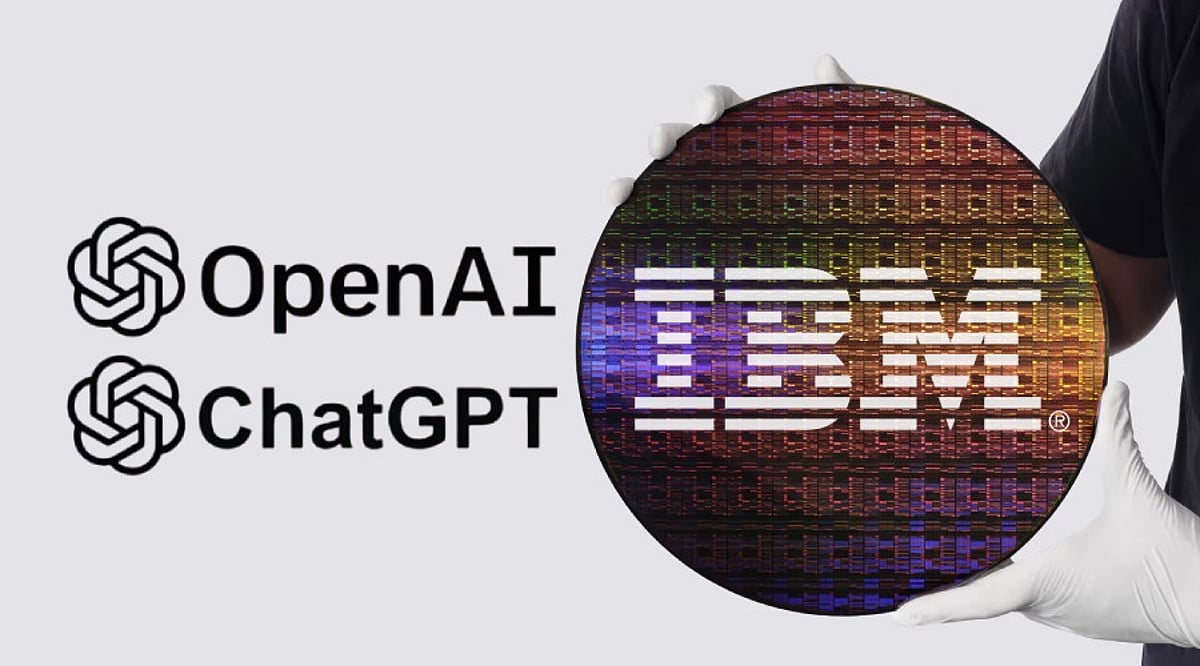
    IBM has introduced the world’s first 0.7nm chip technology with its new 3D Nanostack architecture, marking a major leap for AI computing and energy-efficient processors. Startup Revspot has secured fresh funding to accelerate growth and expand its technology offerings. A HirePro report shows that only 9% of employers consider fresh graduates job-ready despite 68% of students believing they are. Crypto hardware wallet maker Coinkite has warned Coldcard Mk3 users about a potential security flaw affecting wallet seed generation. Meanwhile, a new explainer outlines the difference between OpenAI, the AI company, and ChatGPT, its popular conversational AI assistant.

    Fast-Track Insights

    • IBM unveils the world’s first 0.7nm chip with 3D Nanostack architecture.
    • Revspot secures fresh funding to support expansion and product development.
    • HirePro report reveals only 9% of graduates are job-ready on day one.
    • Coinkite urges Coldcard Mk3 users to secure funds after wallet warning.
    • OpenAI vs ChatGPT: Understanding the company behind the AI chatbot.

    IBM Debuts World’s First Sub-1nm Chip

    IBM unveiled the world’s first 0.7nm chip technology powered by its new 3D Nanostack architecture. The breakthrough packs nearly 100 billion transistors, promising faster performance, improved energy efficiency, and stronger capabilities for AI, cloud computing, and next-generation data centers.

    Revspot Raises Funding

    Tech startup Revspot has secured fresh funding to accelerate growth and expand its technology offerings. The investment will support hiring, product development, and market expansion.

    Only 9% of Graduates Are Job-Ready: HirePro Report

    A HirePro report reveals that only 9% of employers believe fresh graduates are job-ready on their first day at work, while 68% of students think they are. The findings underline a significant gap between academic education and industry expectations.

    Coinkite Warns Coldcard Mk3 Users

    Coinkite has issued a security advisory for users of its Coldcard Mk3 hardware wallet, warning that a potential flaw may have affected wallet seed generation. The company advises impacted users to move their funds immediately and create a new wallet with a secure seed.

    OpenAI vs ChatGPT Explained

    The article explains the difference between OpenAI and ChatGPT, clarifying that OpenAI is the artificial intelligence company responsible for developing AI models, while ChatGPT is its AI-powered chatbot designed to help users with writing, coding, research, learning, and everyday tasks.

  • Svitla Systems: A Global Partner for Software Development and Digital Transformation

    Svitla Systems: A Global Partner for Software Development and Digital Transformation

    Company Overview

    Svitla Systems is a worldwide provider of custom software development, testing, and consulting services. The company specializes in digital transformation, Big Data, artificial intelligence, and cloud solutions, delivering highly skilled engineering talent to startups and large enterprises. Through flexible engagement models and dedicated teams, Svitla Systems offers scalable, high-quality technology solutions tailored to diverse business needs.

    About the Company

    Svitla Systems serves as a global technology partner, helping clients develop digital solutions that scale and perform at high levels. Its expertise spans cloud technologies, artificial intelligence and machine learning, DevOps, and mobile solutions. The company provides various engagement models, including team extension and managed services, supported by a strong engineering team. By combining advanced technologies with user-centered design and data analysis, Svitla Systems enables customers to achieve digital transformation and sustainable growth.

    Products and Services

    Svitla Systems offers a comprehensive suite of services:

    • Custom software development
    • AI and machine learning solutions
    • Cloud services
    • DevOps
    • Cybersecurity
    • Big Data analytics
    • Quality assurance
    • Internet of Things (IoT)
    • Mobile and web development
    • Consulting and managed teams

    Core Leadership Team

    The company is led by a team of experienced technology and business executives who drive innovation and operational excellence.

    Revenue Streams

    Svitla Systems generates revenue through three primary sources: service engagements, long-term client partnerships, and technology-driven projects. This diversified model supports steady business growth and operational expansion.

    Client Segments and Target Companies

    B2B Client Segments: Custom software, AI/ML, cloud & DevOps, QA, Big Data, IoT, team extension, managed services, digital transformation consulting.

    Target Companies: Startups, mid-sized businesses, and large enterprises in fintech, healthcare, logistics, e-commerce, and technology sectors.

    Global Presence

    Svitla Systems operates across North America, Europe, Asia, and Latin America, supporting innovation, efficiency, and digital growth for clients worldwide.

    Social Media

    LinkedIn | Website

  • Microsoft Shatters Record with $450 Billion Single-Day Market Cap Surge as AI Bets Pay Off

    Microsoft Shatters Record with $450 Billion Single-Day Market Cap Surge as AI Bets Pay Off

    Microsoft has once again claimed the title of the world’s most valuable company, setting a historic milestone with a nearly $450 billion single-day gain in market value. The surge, the largest ever recorded for any company, pushed Microsoft’s market capitalization to $3.35 trillion, surpassing NVIDIA’s previous record of $441 billion set on April 9, 2025.

    Shares of the tech giant soared more than 15% following a strong earnings report that highlighted rapid growth in its Azure cloud platform. The company’s aggressive investments in artificial intelligence infrastructure are now delivering tangible returns, with Azure experiencing stronger-than-expected growth. Microsoft’s capital expenditure plans remain robust, with $50 billion earmarked for the fiscal first quarter of 2027 and $175 billion for the 2026 calendar year. The company forecasts Azure to grow at 45% on a constant-currency basis.

    Why Microsoft’s AI Strategy Is Working

    Microsoft has poured billions into AI, cloud services, and new data centers, and the latest earnings indicate that these investments are already paying off. While NVIDIA continues to dominate the AI chip market, Microsoft is leveraging those chips to power cloud services that businesses rely on daily, creating a strong secondary revenue stream. As AI adoption accelerates, the competition among Microsoft, NVIDIA, Google, and Amazon is expected to intensify.

    Jake Behan, head of capital markets at Direxion, commented, “The key question was whether it could shift the conversation from how much it is spending on AI to what it is earning from those investments, and the results suggested meaningful progress.”

    Microsoft’s performance underscores a shift from AI being a long-term vision to a real driver of growth, attracting more customers and boosting its cloud business. The company’s latest results signal that its AI strategy is not just a plan for the future—it is already delivering value today.