Tag: Automotive

  • Tata Motors Stock at Rs 424.15: Can Strong Domestic Demand Offset Q1 Margin Pressures?

    Tata Motors Stock at Rs 424.15: Can Strong Domestic Demand Offset Q1 Margin Pressures?

    Tata Motors Ltd. is trading at Rs 424.15 on the NSE as investors prepare for the company’s first-quarter FY27 earnings announcement. While domestic demand for passenger and commercial vehicles remains resilient, global challenges—particularly at Jaguar Land Rover (JLR)—and rising input costs are expected to squeeze margins. Analysts are closely watching management guidance to gauge the stock’s near-term direction.

    Domestic Demand Remains a Pillar of Strength

    India’s passenger vehicle market continues to show robust growth, especially in the SUV segment where Tata Motors holds a strong position. The company’s leadership in electric vehicles (EVs) also supports its long-term growth story. In the commercial vehicle space, infrastructure development, logistics activity, and fleet replacement cycles are driving steady demand. These segments are expected to provide stable revenue streams.

    Margin Pressure: The Key Concern

    Despite healthy demand, profitability remains the primary worry. Higher commodity costs, competitive discounting, and global supply disruptions are compressing margins. JLR, a major profit contributor for Tata Motors, faces its own headwinds—production challenges, shifting demand for luxury vehicles, and pricing pressures. Investors will focus on operating margin trends and cost management strategies outlined in the earnings report.

    Technical Setup: Consolidation Phase

    From a technical perspective, Tata Motors appears to be in a consolidation phase after a steep decline. The stock has found support near Rs 420, but resistance at Rs 435–440 and Rs 450 must be broken for a bullish reversal. On the downside, Rs 400 is the critical support level. The market is waiting for a fundamental trigger from the Q1 results.

    Key Positives and Risks

    • Positives: Resilient domestic demand, EV leadership, strong SUV and commercial vehicle pipeline, improving rural demand.
    • Risks: JLR uncertainty, high input costs, competitive discounting, global macroeconomic headwinds.

    Market Outlook

    Tata Motors enters earnings season with solid demand fundamentals but persistent profitability concerns. The stock’s near-term direction hinges on JLR’s performance, margin recovery, and management’s FY27 guidance. A positive earnings surprise could push the stock toward Rs 450, while disappointment may test support at Rs 400.

    FAQs

    1. Why are investors closely watching Tata Motors’ Q1 FY27 results?

    Investors are focusing on operating margins, JLR’s performance, domestic demand trends, EV growth, and management’s outlook for the remainder of FY27.

    2. What is the biggest concern for Tata Motors ahead of its earnings?

    The primary concern is margin pressure from higher commodity costs, discounting, and uncertainty around JLR’s global operations, which significantly impact consolidated profitability.

    3. How is Tata Motors’ domestic business expected to perform?

    The domestic business is expected to remain resilient, supported by healthy SUV demand, steady commercial vehicle sales, improving rural demand, and continued EV leadership.

    4. What technical levels should investors monitor in Tata Motors stock?

    Key support levels are Rs 415 and Rs 400, while resistance is at Rs 435–440 and Rs 450 ahead of the earnings announcement.

    5. What could drive Tata Motors shares after the Q1 results?

    A positive earnings surprise, stronger operating margins, encouraging JLR performance, and optimistic management guidance could boost investor confidence and support further gains.

  • AI Assistants Revolutionize the In-Car Experience: From Voice Commands to Natural Conversations

    AI Assistants Revolutionize the In-Car Experience: From Voice Commands to Natural Conversations

    The era of frustrating voice commands in cars is ending. Major automakers are replacing rigid rule-based systems with conversational AI assistants powered by large language models (LLMs). This shift promises to transform vehicles from mere transportation into intelligent digital companions.

    The in-car voice assistant market is projected to grow from $3.27 billion in 2026 to $5.49 billion by 2029, at a compound annual growth rate of 13.9%, according to The Business Research Company. This growth is fueled by new capabilities and fierce competition among automakers to secure the best AI partners.

    From Rigid Commands to Natural Conversation

    Traditional voice assistants required memorized phrases and often failed. Modern LLM-based systems understand context, prioritize results, and handle multi-step requests. For example, a driver can say, “Take me to the nearest coffee shop and text my mom I’ll be late,” then follow up with, “Actually, make it one with outdoor seating,” without repeating context.

    This capability depends on a pipeline of technologies: Automatic Speech Recognition (ASR), Natural Language Understanding (NLU), and real-time data from maps, weather, charging-station APIs, and vehicle sensors. For EV owners, this means asking about a nearby fast charger and receiving live availability, pricing, and operating hours in one exchange.

    Major Automaker-AI Partnerships Reshaping Dashboards

    Automakers are choosing different AI partners:

    • General Motors integrates Google’s Gemini into Buick, Chevrolet, Cadillac, and GMC vehicles with “Google built-in,” leveraging its OnStar network. Nearly four million cars in the US are affected.
    • Mercedes-Benz incorporates ChatGPT via Microsoft Azure OpenAI Service into its MBUX Voice Assistant, enabling open-ended question answering with Bing search.
    • BMW integrates Amazon’s Alexa+ into its Intelligent Personal Assistant, launching with the new iX3 at CES 2026 and expanding to 40 models by 2027.
    • Tesla uses xAI’s Grok.
    • Stellantis partners with French AI company Mistral.
    • Lucid teams up with SoundHound.

    Each approach is unique: GM uses its connectivity history to scale Gemini; BMW focuses on continuity across devices; Mercedes emphasizes knowledge depth. No single standard has emerged.

    What These Assistants Can Actually Do Behind the Wheel

    Beyond trivia, these systems perform context-aware tasks. BMW’s Alexa+ can adjust cabin temperature and find Italian restaurants along a route from a single sentence. Mercedes partners with Liquid AI to run parts of the assistant on-device for low-latency responses. GM envisions a future where drivers ask specific questions about vehicle parts and systems, answered by an assistant fine-tuned on proprietary data. Some automakers layer assistants over driver-assistance functions, allowing voice control of driving modes, diagnostics, and maintenance alerts.

    Real Challenges Behind the Conversational Upgrade

    LLMs can hallucinate, producing confident but incorrect answers—problematic for navigation or safety. Most systems rely on cloud connectivity, introducing latency and failure in poor signal areas (hence on-device processing experiments). Data privacy concerns have grown, prompting GM to commit to opt-in consent and no data selling. Driver reception is mixed; some worry about accidental activation or unwanted processing of everyday conversations. Automakers emphasize that microphones require explicit wake words or button presses, and core functions work without linking AI accounts.

    Where In-Car AI Goes From Here

    The current wave is a stepping stone. GM’s Gemini rollout is interim; a proprietary OnStar-trained assistant is planned. Automakers are linking conversational AI to advanced driver-assistance systems, predictive maintenance, and autonomous driving. As competition among Google, OpenAI, Amazon, xAI, and Mistral plays out across dashboards, cars become connected devices in a digital ecosystem. Over-the-air updates will allow continuous improvement, unlike traditional fixed infotainment systems. The next two to three years will reveal whether this leads to safer, more useful driving companions or more sophisticated distractions.

  • Top 7 Luxury SUVs Taking Over Indian Roads Today

    Top 7 Luxury SUVs Taking Over Indian Roads Today

    India’s love for luxury SUVs continues to grow, with several premium models capturing the attention of discerning buyers. Here are the top luxury SUVs that are currently dominating Indian roads, offering a blend of performance, comfort, and advanced technology.

    Mercedes-Benz GLE

    The Mercedes-Benz GLE blends refined luxury with strong performance, offering a plush cabin, advanced driver assistance features, powerful engine options, and exceptional ride comfort. Its commanding road presence, premium interiors, and cutting-edge infotainment system make it one of India’s most desirable luxury SUVs for families and executives alike.

    BMW X5

    Renowned for its sporty handling and premium craftsmanship, the BMW X5 delivers an engaging driving experience alongside luxurious interiors and modern technology. Powerful petrol and diesel engines, adaptive suspension, and intelligent safety systems make it a top choice for buyers seeking performance without compromising comfort and everyday practicality.

    Audi Q7

    The Audi Q7 combines elegant styling, spacious three-row seating, and sophisticated technology into a premium family SUV. Its Quattro all-wheel-drive system ensures confident performance across varying conditions, while the luxurious cabin, smooth ride quality, and advanced infotainment features make every journey comfortable and enjoyable.

    Range Rover Sport

    The Range Rover Sport offers a perfect balance of luxury, off-road capability, and dynamic performance. Featuring premium materials, powerful engine choices, advanced terrain management systems, and an unmistakable design, it remains a status symbol among buyers who demand versatility alongside unmatched sophistication and road presence.

    Volvo XC90

    The Volvo XC90 stands out with Scandinavian design, class-leading safety innovations, and exceptional cabin comfort. Its mild-hybrid powertrain, minimalist interiors, premium materials, and advanced driver assistance features make it an attractive luxury SUV for buyers prioritizing elegance, sustainability, and family-friendly practicality in everyday driving.

    Lexus RX

    The Lexus RX delivers a refined hybrid driving experience with whisper-quiet performance, luxurious interiors, and outstanding reliability. Known for exceptional build quality, cutting-edge safety technologies, premium comfort, and excellent fuel efficiency, it appeals to discerning buyers seeking dependable luxury with lower running costs than traditional rivals.

    Porsche Cayenne

    The Porsche Cayenne blends sports car dynamics with SUV practicality, offering exhilarating performance, luxurious interiors, and advanced technology. Powerful engine options, precise handling, premium craftsmanship, and everyday usability make it one of the most desirable high-performance luxury SUVs currently dominating Indian roads.

  • Ather Energy Eyes $200 Million QIP to Boost EV Expansion in India

    Ather Energy Eyes $200 Million QIP to Boost EV Expansion in India

    Electric two-wheeler maker Ather Energy is reportedly preparing to raise approximately $200 million (around Rs 1,700 crore) through a qualified institutional placement (QIP) as the company seeks to strengthen its expansion plans following its listing on Indian stock exchanges earlier this year. According to sources familiar with the matter, the share sale could begin as early as next week.

    The Bengaluru-based EV manufacturer has reportedly appointed HSBC, Axis Capital, and Nomura to manage the institutional fundraising. While the final size and timing of the issue remain subject to market conditions, the offering is expected to attract both domestic and global institutional investors.

    Expansion Plans Drive Fundraising

    The fresh capital is anticipated to be used for expanding Ather Energy’s manufacturing capacity, widening its retail footprint, and accelerating the development of new electric vehicle platforms. The company has been progressively increasing its presence in India amid intensifying competition in the electric two-wheeler segment.

    Ather has made aggressive investments in production, dealer network expansion, and innovative product development, as it competes with both established automobile giants and emerging EV startups.

    Increasing Competition in the EV Industry

    India’s EV industry has become increasingly competitive with the entry of new players such as Ola Electric, TVS Motor, and Bajaj Auto. These companies have invested heavily in developing new products, distribution channels, and manufacturing facilities to meet rising consumer demand for electric vehicles.

    Analysts note that further investment will be required for companies to scale operations, improve profitability, and roll out products across various price segments, rather than focusing solely on one market tier.

    Shift in Focus from IPO

    Ather Energy’s new plan to raise funds through an institutional equity offering follows its recent IPO, signaling the company’s determination to push ahead with its expansion strategy despite intense industry competition. This sequence of fundraising efforts indicates a proactive approach to securing capital for growth initiatives.

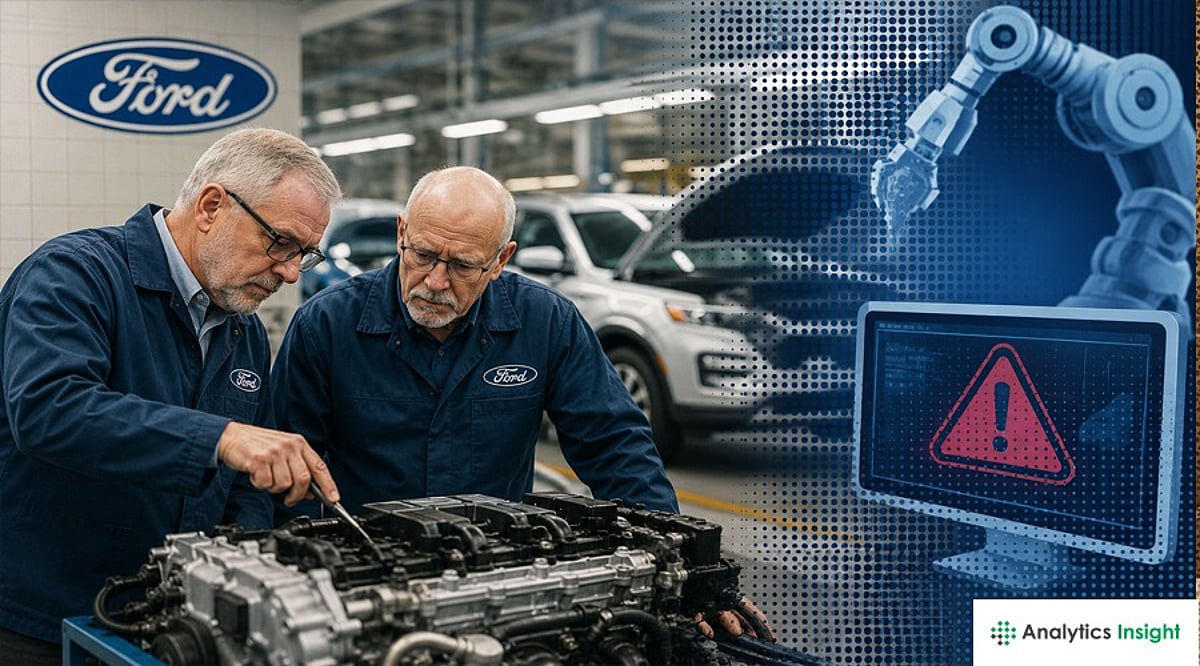
  • Ford Brings Back Hundreds of Engineers After AI-Driven Quality Issues Led to Billions in Warranty Costs

    Ford Brings Back Hundreds of Engineers After AI-Driven Quality Issues Led to Billions in Warranty Costs

    Ford Motor Company has begun rehiring hundreds of veteran engineers following a series of quality problems and skyrocketing warranty expenses that exposed the limits of relying too heavily on artificial intelligence. The automaker’s renewed focus on experienced talent marks a significant shift after years of investing in AI-led quality control that ultimately failed to deliver expected results.

    This strategic pivot underscores a costly lesson: while AI can process vast amounts of data and accelerate certain tasks, it cannot replace decades of hands-on engineering expertise. After suffering substantial quality-related losses, Ford is now returning to a model where AI supports engineers rather than replacing them.

    Hundreds of Experienced Engineers Return

    Approximately 350 engineers and technical experts who had retired or left the company are being rehired. Their deep institutional knowledge will be applied to developing new vehicles and improving product quality.

    Charles Poon, Ford’s Vice President of Vehicle Hardware Engineering, acknowledged that the company had underestimated the value of experienced engineers. He noted that years of institutional knowledge walked out the door with retiring employees, leaving a gap that AI systems could not fill despite advances in automation.

    Ford has also reinstated engineer-led design reviews, giving senior technical teams a larger role in evaluating products before they move into production.

    Early Results Show Improvement

    The new approach appears to be paying off. Ford recently earned the top spot among mass-market brands in the 2026 J.D. Power Initial Quality Study — its best performance since 2010. The company has also trimmed warranty spending by identifying manufacturing and design problems earlier, during the development phase, so fewer defects reach customers.

    Still, Ford remains the automaker with the most recalls in the U.S. this year, though many of those recall actions are linked to older vehicle programs rather than newly launched models.

    AI Remains Part of Ford’s Future

    Despite the strategic shift, Ford is not abandoning artificial intelligence. The company continues to use AI for software validation, automated testing, and manufacturing analysis — with more than 100,000 software tests now handled through AI-assisted systems.

    Executives say the company’s approach has changed, not its commitment to technology. AI will continue to play a role in increasing efficiency and decision-making, but skilled engineers remain indispensable in manufacturing.

    Ford’s initiative serves as a cautionary tale for companies adopting AI in manufacturing: technology can assist engineering, but it cannot replace human expertise.

  • Qualcomm Stock Surges 12% on $40 Billion AI Revenue Target Beyond Smartphones

    Qualcomm Stock Surges 12% on $40 Billion AI Revenue Target Beyond Smartphones

    Qualcomm stock rose more than 12% in premarket trading on Thursday after the chipmaker raised its long-term revenue target outside smartphones. The company now expects its non-handset businesses to generate $40 billion in revenue by fiscal 2029, twice its previous goal.

    The revised target includes $15 billion from data center products and $10 billion from the automotive business. Qualcomm presented the plan at its investor day in New York, where executives outlined a broader shift into artificial intelligence infrastructure, servers, personal computers, and connected devices.

    Qualcomm Targets $15 Billion in Data Center Revenue

    Qualcomm plans to offer several products for AI data centers, including processors, server systems, software, and custom chips. The company expects these operations to generate $15 billion in annual revenue by fiscal 2029. Its strategy places the business in direct competition with NVIDIA and AMD.

    Chief Executive Cristiano Amon said cloud and AI companies have shown interest in having more chip suppliers. “I have not met a single one of those cloud and AI companies that have not said to me how excited they are,” Amon said. Nevertheless, the revenue target depends on Qualcomm winning customers in a market where established suppliers hold strong positions.

    China Forms Part of Qualcomm’s AI Expansion

    Qualcomm also plans to market its data center products in China, although US export rules may limit access to advanced technology. “Everything that we’re building for the data center, you should assume that China is going to be a target market,” Amon said.

    However, the company faces doubts over which processors it can legally sell in the country. The US government has changed its approach to AI chip exports several times over security concerns. While certain NVIDIA processors received clearance for sale, Chinese authorities have not approved all of them for import.

    Smartphone Dependence Falls Under Wider Growth Plan

    The data center push forms part of Qualcomm’s effort to reduce its reliance on mobile phone chips. The company expects its automotive business to produce $10 billion in fiscal 2029. It is also expanding its computer chip business, where it competes with Intel and AMD.

    Additionally, Qualcomm has agreed to acquire AI software company Modular. The deal gives the company access to tools that help developers build and run AI programs across different processors. Qualcomm aims to create a software system that can compete with NVIDIA’s CUDA platform, which developers widely use for GPU-based computing.

    Micron Results Support Semiconductor Stock Rally

    Qualcomm’s investor update arrived as Micron reported quarterly results that exceeded market forecasts. Micron said customers had committed about $22 billion toward chip purchases. It also reported that its high-bandwidth memory supply for 2026 had already sold out.

    Micron shares gained more than 15% in extended trading, while Qualcomm rose about 12% before Thursday’s opening bell. The updates supported gains across semiconductor stocks and helped push US stock index futures higher.

    Meanwhile, investors are assessing whether Qualcomm can meet its fiscal 2029 targets while competing with NVIDIA, AMD, and custom processors developed by large cloud companies. Its $15 billion data center forecast reflects management’s plan, but actual sales will depend on customer orders, product performance, export rules, and the pace of global AI infrastructure spending.

  • AWS Director Bill Foy on Using AI to Overcome Supply Chain Disruptions

    AWS Director Bill Foy on Using AI to Overcome Supply Chain Disruptions

    In a recent discussion, Bill Foy, Director and APJ Automotive Sales Leader at Amazon Web Services (AWS), highlighted the critical role of artificial intelligence in modernizing supply chains. According to Foy, 94% of companies have experienced supply chain disruptions, often due to legacy systems that lack real-time visibility.

    “Whether it’s a port strike, an earthquake, or a natural disaster, most companies don’t even know a problem exists until it’s downstream,” Foy explained. This fragmented data landscape poses a particular challenge for original equipment manufacturers (OEMs), who must stitch together information from disparate sources to maintain operations.

    AWS is addressing these issues by offering AI-driven solutions that provide end-to-end visibility and predictive analytics. By integrating machine learning models with existing enterprise systems, companies can detect disruptions early, optimize inventory, and automate decision-making. Foy emphasized that moving away from legacy infrastructure is not just an IT upgrade but a strategic imperative for resilience.

    “Modernizing with AI isn’t about replacing people—it’s about empowering them with data they can trust and act on in real time,” he added. As supply chains grow more complex, AWS’s focus on AI-powered modernization aims to reduce downtime and improve agility across industries, especially in automotive manufacturing.

  • Big Data Insights: Key Trends, Tools, and Industry Impact in 2025-2026

    Analytics Insight’s Big Data section curates essential articles exploring the transformative power of data analytics across industries. From open-source tools to predictive market analysis, these pieces uncover how organizations leverage big data for strategic advantage.

    Top Headlines

    • Best Open-Source Big Data Tools in 2026: A comprehensive guide to the most effective open-source platforms for handling massive datasets.
    • What is Big Data Analytics? (2026 Guide): Explains the meaning, types, tools, and real-world applications of big data analytics.
    • The Growing Role of Big Data in Predictive Market Analysis: How data-driven models forecast market trends with increasing accuracy.
    • Big Data in Telehealth and Remote Diagnostics: Transforming patient care through real-time data processing and remote monitoring.
    • Gartner’s Essential Features for BI Platforms (2025): Key capabilities business intelligence tools must offer in the modern data landscape.
    • Top Free Scala Courses for Big Data (2025): Learning resources for mastering Scala, a language critical for big data frameworks.
    • Drinksworld Uses Big Data for Business Growth: A case study on how data analytics drives strategy in the beverage industry.
    • Big Data Reshaping the Automotive Industry: From autonomous driving to supply chain optimization, data is revolutionizing mobility.
    • Big Data Revolution in Healthcare: Predictive analytics and precision medicine are becoming standard through big data.
    • Top 10 Data Lakes for Big Data Analytics: A detailed overview of leading data lake solutions for scalable analytics.
    • Big Data Analytics Trends to Watch in 2025: Emerging patterns that will define the next wave of data analytics.
    • Why the World Would End Without Data: A thought piece on the catastrophic consequences of a data-less society.

    These articles provide a rich resource for professionals, researchers, and enthusiasts looking to stay ahead in the rapidly evolving world of big data.

  • Big Data Insights: Top Tools, Analytics Trends, and Industry Impact for 2025-2026

    What Is Big Data Analytics?

    Big Data analytics involves examining large, diverse data sets to uncover hidden patterns, correlations, and insights. In 2025-2026, open-source tools, predictive analytics, and industry-specific applications are driving transformation across healthcare, automotive, finance, and more.

    Top Trends and Tools

    • Best Open-Source Big Data Tools in 2026 – A roundup of leading open-source platforms for data processing and analysis.
    • Predictive Market Analysis – How Big Data is reshaping market forecasting and investment strategies.
    • Telehealth and Remote Diagnostics – Big Data’s role in improving patient monitoring and diagnostic accuracy.
    • Business Intelligence Platforms – Gartner’s essential features for BI tools in 2025.
    • Scala for Big Data – Top free courses to master Scala for data engineering.
    • Data Lakes for Analytics – The top 10 data lakes enabling large-scale analytics.

    Industry Applications

    Big Data is revolutionizing the automotive industry, healthcare (predictive analytics and precision medicine), and even the beverage sector (drinksworld uses data to drive growth). Without Big Data, modern decision-making would collapse—highlighting its critical role.

    Stay tuned for more insights from Analytics Insight, the leading tech and crypto publication.

  • Stellantis AI Chief Kaynaz Behdin on Industrializing Enterprise AI for Measurable Business Impact

    Stellantis AI Chief Kaynaz Behdin on Industrializing Enterprise AI for Measurable Business Impact

    Kaynaz Behdin, Senior Vice President of Digital, Data & AI at Stellantis, is redefining how the automotive giant approaches artificial intelligence. In a recent interview, Behdin emphasized that her focus is not on experimentation but on building AI as a disciplined enterprise capability that drives customer satisfaction, value creation, operational performance, and speed.

    Stellantis, the multinational automaker behind brands like Jeep, Peugeot, Fiat, and Vauxhall, operates a distributed global environment. Behdin’s strategy relies on a three-layer operating model: translating leadership priorities into a single execution framework, embedding AI and Data Business Hubs directly into functions, and providing global platforms and shared talent pools to industrialize delivery.

    AI is already applied across Stellantis’ full value chain, including sales conversion and retention, warranty and quality cost reduction, logistics efficiency, manufacturing uptime, and faster engineering cycles. Key criteria for prioritizing use cases include business ownership, scalability across plants and regions, and strict safety and compliance frameworks.

    Behdin identified the main barriers to AI adoption as organizational and human, not technological. To address this, Stellantis runs an AI Academy with persona-based training—from executive coaching to hands-on workshops—to embed AI literacy into daily work. She also highlighted the importance of governance as an accelerator, with risk assessment built across the data-to-AI lifecycle and observability tools tracking what agents and models do.

    Looking ahead, Behdin sees generative AI transforming in-vehicle experiences, engineering cycles, operations, and commercial performance. Stellantis has deployed an Agent Gateway—a standardized infrastructure layer for AI agents to interact with enterprise platforms—and is rolling out a system called Metabot inside Microsoft Teams to bring the agent ecosystem to employees’ daily workspace.

    Behdin’s three priorities for 2026 are embedding AI into the business, industrializing agentic AI at scale with strong abstraction layers to avoid vendor lock-in, and ensuring value measurement and compliance by design. She concluded: “It’s the year we move from ‘great use cases’ to true AI-first, enterprise-level transformation, with our customers and our people at the centre of everything we do.”