
Tag: Avalanche

  • Top Altcoins to Watch in July 2026: Beyond the Altcoin Season Slowdown

    Top Altcoins to Watch in July 2026: Beyond the Altcoin Season Slowdown

    Key Takeaways

    • Bitcoin dominance remains high, delaying a broad altcoin season.
    • AI, RWA, DeFi, and Layer-1 ecosystems continue to attract the strongest investor interest.
    • Ethereum, Solana, Chainlink, Sui, Ondo Finance, TAO, Render, Hyperliquid, Avalanche, and XRP are among the top projects to watch.

    As of July 2026, Bitcoin continues to dominate the cryptocurrency market, with many altcoins unable to match its recent performance. The long-anticipated altcoin season has yet to materialize. Experts note that Bitcoin dominance remains near 58–60%, while the Altcoin Season Index hovers around 30–35. A true altcoin season typically begins only when at least 75% of leading altcoins outperform Bitcoin over a 90-day period—a condition that has not been met. This suggests that most investors still favor Bitcoin over smaller cryptocurrencies. Market analysts believe the next rally may benefit only a select group of strong projects rather than the entire altcoin sector.

    Ethereum Holds Its Lead

    Ethereum continues to rank among the strongest altcoins despite the slow market. The blockchain supports decentralized finance (DeFi), stablecoins, and tokenized real-world assets. Its Layer-2 networks help lower transaction fees and improve speed. Large financial firms continue to choose Ethereum due to its trusted network and vast developer community. Although its price has lagged behind Bitcoin recently, Ethereum retains strong long-term value. Many experts believe it could be one of the biggest winners once market activity picks up.

    Solana Continues to Impress

    Solana has established a strong foothold through fast transaction speeds and low costs. It serves a growing variety of decentralized applications, including DeFi, NFT collectibles, blockchain gaming, and other user-facing services. New applications are constantly being built on Solana, fostering an ecosystem that thrives despite bearish sentiment. Institutions are also becoming more engaged with Solana, making it a highly discussed cryptocurrency heading into July 2026.

    Chainlink Benefits From Strong Demand

    Chainlink has become one of the most important infrastructure projects in blockchain. Its oracle system enables smart contracts to receive secure real-world data. The project also plays a key role in cross-chain communication and tokenized real-world assets. As banks and financial companies show greater interest in blockchain technology, demand for Chainlink’s services is likely to increase. Strong utility and widespread adoption continue to support its long-term outlook.

    Sui and Ondo Finance Stay Among Top Picks

    Sui has gained attention as one of the fastest-growing Layer-1 blockchains. The network has attracted many developers, blockchain games, and staking users. Strong ecosystem growth has helped Sui earn a place among leading altcoins this year. However, scheduled token unlocks may create short-term price pressure.

    Ondo Finance has become a major name in the real-world asset (RWA) sector. The platform offers tokenized Treasury products, bonds, and other financial assets. Since tokenized assets have become a hot trend in 2026, Ondo Finance continues to receive strong support from market analysts.

    AI Projects Keep Market Interest Alive

    Artificial intelligence remains one of the strongest themes in crypto. Bittensor (TAO) has attracted attention through its decentralized AI network that connects machine learning models with developers. Render has also become important by providing decentralized GPU power for AI, 3D graphics, and digital content creation. As AI technology expands across industries, both cryptocurrencies continue to attract investors seeking long-term opportunities beyond traditional blockchain projects.

    Hyperliquid, Avalanche, and XRP Stay Relevant

    Hyperliquid has emerged as one of the fastest-growing decentralized futures trading platforms. High trading volume and strong liquidity have helped the project gain popularity in DeFi.

    Avalanche remains an important blockchain focused on enterprise solutions, gaming, and custom blockchain networks. Many companies continue to test its technology for large-scale business use.

    XRP still holds a strong position due to its focus on cross-border payments. Financial institutions continue to explore its payment technology, while investors closely follow legal developments that may influence future adoption. Although price performance has been mixed, XRP remains among the largest cryptocurrencies by market cap.

    Strong Narratives Shape the Market

    In July 2026, the market is more selective than in prior cycles. Instead of a broad rally across hundreds of assets, capital is flowing into projects with tangible value and advanced technology. Areas that have outperformed—and are likely to continue if sentiment shifts—include artificial intelligence, tokenization of real-world assets, blockchain infrastructure, decentralized finance, and high-performance Layer-1 networks.

    Final Outlook

    July 2026 presents a cautious but promising outlook for altcoins. Bitcoin continues to dominate, yet several established projects stand out for their strong technology, active ecosystems, and practical use cases. Ethereum, Solana, Chainlink, Sui, Ondo Finance, Bittensor, Hyperliquid, Render, Avalanche, and XRP remain among the top cryptocurrencies to watch. A full altcoin season has not arrived, but these projects appear well-positioned to benefit if market conditions improve during the second half of the year.

    Frequently Asked Questions

    1. Why hasn’t the altcoin season started yet?

    Bitcoin dominance remains around 58–60%, and the Altcoin Season Index is well below the level typically associated with a broad altcoin rally.

    2. Which sectors are expected to lead the next crypto rally?

    Artificial intelligence (AI), real-world assets (RWA), DeFi, blockchain infrastructure, and high-performance Layer-1 networks are considered the strongest narratives.

    3. Why is Ethereum still a top altcoin?

    Ethereum continues to lead in DeFi, stablecoins, tokenized assets, and developer activity, making it one of the most established blockchain ecosystems.

    4. Which emerging altcoins are gaining momentum?

    Sui, Ondo Finance, Hyperliquid, Bittensor (TAO), and Render have attracted attention due to ecosystem growth, AI adoption, and real-world utility.

    5. Should investors expect all altcoins to rally together?

    Not necessarily. Current market conditions suggest capital is likely to favor fundamentally strong projects rather than the entire altcoin market.
  • Bitcoin ETFs See $294M Outflow, Metaplanet Revenue Hits ¥11.4B, Avalanche Stock Plunges 73%

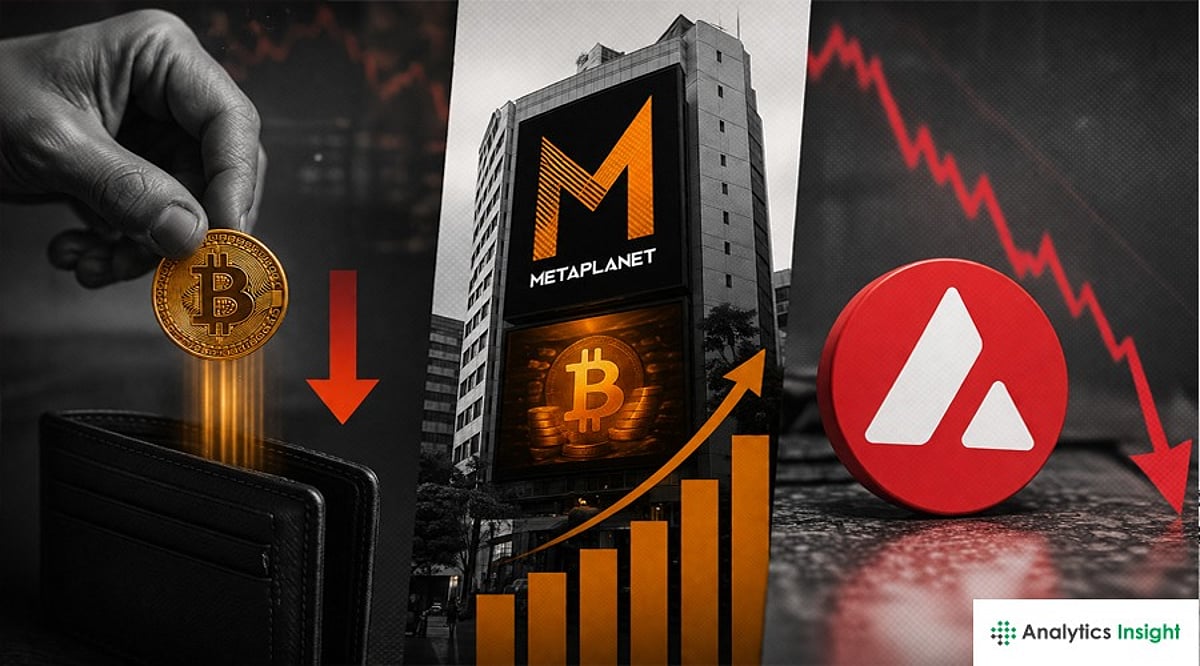
    Bitcoin ETFs See $294M Outflow, Metaplanet Revenue Hits ¥11.4B, Avalanche Stock Plunges 73%

    The crypto market witnessed major developments as Bitcoin spot ETFs reported $294.62 million in net outflows, while XRP whales accumulated during the price dip. Meanwhile, Metaplanet disclosed its BTC revenue and Avalanche Treasury stock fell.

    Bitcoin Saw $294 Million in Outflows

    According to SoSoValue, the Bitcoin spot ETF saw a total net outflow of $294.62 million yesterday. The Bitcoin Spot ETF with the highest net inflow yesterday was the Grayscale Bitcoin Mini Trust ETF $BTC, with a daily net inflow of $36.33 million. The second highest was Morgan Stanley’s ETF MSBT, with a daily net inflow of $29.81 million, and the total historical net inflow of MSBT currently stands at $364.01 million. The Bitcoin Spot ETF with the highest net outflow yesterday was BlackRock’s ETF IBIT, with a daily net outflow of $219.39 million, and the total historical net inflow of IBIT currently stands at $60.03 billion. The total net asset value of Bitcoin Spot ETFs is $72.46 billion, with an ETF net asset ratio of 6.01%. The historical cumulative net inflow has reached $50.86 billion.

    XRP Whales are Accumulating

    According to market analyst Xaif Crypto, XRP’s drop to $1.04 appears to have triggered fear among smaller traders, but large investors saw it as a buying opportunity. XRP has since recovered to $1.06. A key indicator is the All CEX whale spread, which has climbed to 50.9%, signaling that whales now control a significantly larger share of XRP held on centralized exchanges. Coinbase whale outflows have surged. Transfers of more than 1 million XRP jumped from 10% to 25.7% of total exchange activity in just two weeks. Large withdrawals are widely viewed as a bullish signal, suggesting investors are moving tokens into private wallets for long-term holding instead of preparing to sell.

    Metaplanet Reports Bitcoin Income Business Revenue

    Japanese listed company Metaplanet released results for its Bitcoin income business revenue in the second quarter of fiscal 2026. According to Foresight News, the business recorded operating revenue of 1.75 billion yen in the second quarter. Metaplanet said cumulative revenue for the first half of the fiscal year reached 4.72 billion yen. The company added that over the past 12 months, cumulative revenue from its Bitcoin income business totaled 11.4 billion yen.

    Ethereum Posts Historic Third Straight Losing Quarter

    The second-largest cryptocurrency has fallen victim to the prolonged bear market as the second quarter closed. This makes it the asset’s third consecutive quarterly loss. Since reaching its all-time high of nearly $5,000 in August 2025, the price of the cryptocurrency has maintained a steady downward trajectory. Data from CoinGecko reveals that the asset is now trading around $1,560, representing a 70% contraction from its peak price. Historically, the month of July does not usually favor the platform’s performance, having closed lower in six of the last ten years.

    Avalanche Treasury Stock Collapses

    Avalanche Treasury Co. shares have fallen sharply since their Nasdaq debut as lower AVAX prices have weighed on the company’s digital asset holdings. The AVAX-focused digital asset treasury firm began trading under the ticker AVAT on June 11. The stock recently traded near $0.50, down about 73% from its $1.85 close on debut. AVAX recently traded near $6.69, up 0.94% over 24 hours but down 23% over the past month. Avalanche Treasury reported a net loss of $26.78 million for the quarter ended March 31, according to its latest SEC filing. The company also reported $1.22 million in cash and a net working capital deficit of $9.06 million at quarter-end.

    FAQs

    1. How much outflow did Bitcoin spot ETFs record?
    According to SoSoValue, Bitcoin spot ETFs recorded total net outflows of $294.62 million yesterday. BlackRock’s IBIT saw the largest withdrawal at $219.39 million.

    2. Which Bitcoin ETF saw the highest inflow?
    The Grayscale Bitcoin Mini Trust ETF recorded the highest daily inflow at $36.33 million. Morgan Stanley’s MSBT followed with $29.81 million in daily inflows, taking its historical inflow to $364.01 million.

    3. Why are XRP whales accumulating?
    According to market analyst Xaif Crypto, XRP’s fall to $1.04 created fear among smaller traders but attracted larger investors. Coinbase whale transfers above 1 million XRP rose from 10% to 25.7% of exchange activity in two weeks.

    4. How much revenue did Metaplanet report from its Bitcoin income business?
    According to Foresight News, Metaplanet’s Bitcoin income business generated ¥1.75 billion in operating revenue during Q2 FY2026. The company said revenue reached ¥4.72 billion in the first half and ¥11.4 billion over the past 12 months.

    5. Why did Avalanche Treasury stock fall sharply?
    Avalanche Treasury stock has dropped around 73% from its Nasdaq debut close as weaker AVAX prices pressured its digital asset holdings. The company also reported a quarterly net loss of $26.78 million and a working capital deficit of $9.06 million.

  • Ethereum’s 2026 Growth Slowdown: Price, Network Activity and Competition Shake Confidence

    Ethereum’s 2026 Growth Slowdown: Price, Network Activity and Competition Shake Confidence

    Key Takeaways

    • Ethereum price sits nearly 68% below previous cycle highs, reflecting weakened market confidence.
    • Active wallet addresses have dropped 46% since February 2026, signaling lower network participation.
    • Competition from Solana, Avalanche, and Base intensifies pressure on Ethereum’s dominance.

    Ethereum has long been a cornerstone of the digital asset market. As the second-largest cryptocurrency by market cap, it pioneered decentralized finance (DeFi), NFTs, blockchain gaming, and smart contracts. For years, rapid adoption and innovation fueled the narrative of unstoppable growth. However, recent trends indicate that momentum is slowing.

    In 2026, Ethereum faces a tougher environment. Weak price performance, declining network activity, rising competition, and shifting investor sentiment have raised doubts about whether it can maintain its previous growth trajectory.

    Ethereum Price Remains Under Pressure

    One of the clearest signs of slowing momentum is Ethereum’s market performance. Currently trading near $1,570, ETH has fallen roughly 68% from its cycle highs. This weak performance has disappointed many investors, especially as Bitcoin has fared much better in the same period.

    Ethereum’s total market capitalization now stands around $190 billion, with daily trading volume between $9 billion and $10 billion. Although price swings persist, a sustained upward move has yet to materialize. The lack of a strong recovery has created uncertainty, with many investors waiting for clearer signals before committing capital.

    Network Activity Has Fallen Sharply

    On-chain activity is a critical health metric for any crypto network, and Ethereum’s metrics are flashing red. Since February 2026, the number of active wallet addresses has plummeted nearly 46% — from a peak of about 795,000 to just 420,000.

    This decline is significant because active wallets represent real user engagement. Fewer transactions and lower participation suggest waning demand for the network. Ethereum’s success has always depended on heavy usage; the current slowdown raises concerns about organic growth.

    Competition Has Intensified

    Ethereum once dominated the blockchain sector with little competition, but that has changed. Networks like Solana, Avalanche, and Base now aggressively court developers and users with faster transactions and lower fees. These advantages attract projects seeking better user experience and cost efficiency.

    While Ethereum still leads in Total Value Locked (TVL) — a measure of capital deployed in DeFi — its lead is no longer as secure as it once was.

    Questions Around Ethereum’s Value Model

    The successful transition to Proof-of-Stake (The Merge) reduced energy consumption by over 99%, a major achievement. However, questions remain about Ethereum’s economic model. Unlike Bitcoin, which is increasingly viewed as digital gold, Ethereum’s value proposition is more complex.

    The network supports applications, but investors debate whether higher usage directly translates into ETH price appreciation. Additionally, the rise of Layer 2 solutions moves many transactions off the main blockchain. While this improves efficiency, it also creates uncertainty about how much value flows back to the native ETH token.

    Institutional Investors Show Mixed Signals

    Despite market weakness, some large institutions still show confidence. Crypto treasury company Sharplink recently purchased 10,000 ETH ($16 million), and Bitmine Immersion Technologies bought over 71,000 ETH — one of the largest purchases in 2026.

    Development Work Continues at a Strong Pace

    Ethereum still leads in developer activity. The Ethereum Foundation is working on the Glamsterdam network upgrade, which aims to restructure data processing and block building to improve base-layer performance. Developers also introduced Reth v0.1.0-alpha, a modular node system designed to boost overall efficiency.

    Investor Confidence Has Weakened

    Sentiment around Ethereum has clearly deteriorated. The ETH/BTC ratio has fallen to multi-year lows, meaning Ethereum continues to underperform Bitcoin. Analysts increasingly view Bitcoin as the stronger institutional asset, especially after spot ETF products drove demand.

    Global economic uncertainty and tighter liquidity have also reduced risk appetite across crypto. Altcoins like Ethereum typically suffer more during such periods.

    Why This Matters

    Ethereum’s slowdown represents a major structural shift in Web3. With active mainnet addresses dropping 46% and the ETH/BTC ratio hitting multi-year lows, the second-largest cryptocurrency must defend its market share against faster, cheaper competitors like Solana and Base.

    The Growth Story Has Slowed, But Not Ended

    Ethereum is not losing relevance, but its rapid growth phase has clearly decelerated. The network still leads in innovation, developer activity remains strong, and some institutional investors continue to accumulate.

    Nevertheless, Ethereum faces a difficult period. Dropping user activity, fierce competition, and shaken investor confidence pose serious challenges. The old narrative of unstoppable growth no longer holds the same weight.

    Frequently Asked Questions

    1. What are the main drivers behind Ethereum’s momentum loss in 2026?

    The slowdown stems from a 46% drop in active wallet addresses since February 2026, prolonged price stagnation, and aggressive competition from low-cost blockchains like Solana and Avalanche.

    2. Where does Ethereum’s price and market valuation stand right now?

    Ethereum trades near $1,570, roughly 68% below its historic highs. Market capitalization is about $190 billion, with daily trading volumes between $9–10 billion.

    3. Are institutional investors still buying ETH despite declining user activity?

    Yes. Sharplink acquired 10,000 ETH ($16 million), and Bitmine Immersion Technologies bought over 71,000 ETH — one of 2026’s largest trades.

    4. Why are Layer 2 solutions causing debate over Ethereum’s economic value?

    Layer 2 networks improve speed and cost by moving activity off the main chain, but they complicate the investment narrative by making it unclear whether Layer 2 growth boosts ETH’s price.

    5. How are developers responding to Ethereum’s growth challenges?

    Development remains highly active. The Ethereum Foundation is progressing with the Glamsterdam upgrade and launching Reth v0.1.0-alpha, a modular node system to improve network efficiency.