
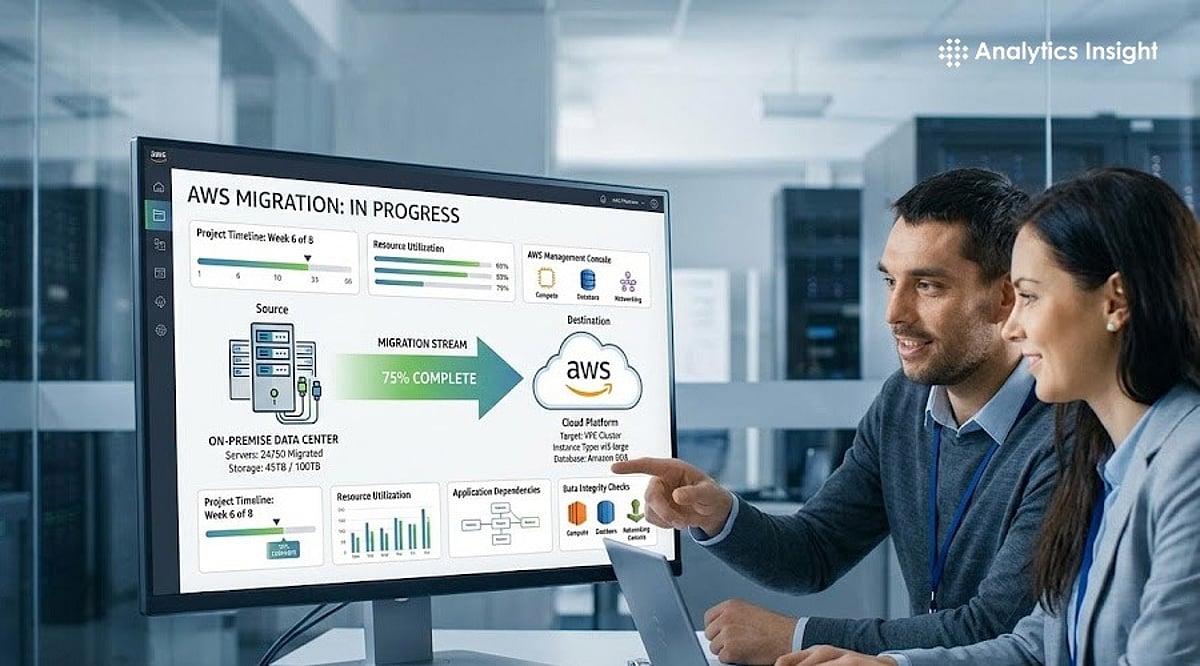
AWS migrations remain one of the most predictably difficult engineering projects a company can take on, despite over a decade of mature tooling and frameworks. Roughly a third of migrations either fail outright or blow past their budget, and the average overrun lands around 23% above what was planned. The reasons rarely have anything to do with AWS’s capabilities. They come down to ten specific, well-documented failure points, and every one of them has a known fix.
Most Failures Start Before a Single Workload Moves
The single biggest predictor of a troubled migration is starting without a workload-by-workload strategy. AWS defines seven migration patterns: rehost, replatform, refactor, repurchase, retain, retire, and relocate. Treating every application the same way is one of the most common and costly mistakes teams make. A legacy batch job and a customer-facing API have nothing in common strategically, and forcing both through identical lift-and-shift treatment usually means overpaying for the simple one and under-optimizing the complex one.
Right behind strategy sits dependency mapping. Enterprises consistently underestimate how much undocumented coupling exists across applications, shared databases, batch jobs, and external integrations. Poor mapping is cited repeatedly as a leading cause of migration failure. AWS Application Discovery Service and X-Ray help, but they are not a substitute for sitting down with the engineers who actually own each system.
Technical Failures to Focus On
Once strategy is settled, the recurring technical issues are remarkably consistent across nearly every account of AWS migrations gone wrong:
- Underestimated data migration complexity
- Security misconfigurations introduced during the rush to cut over
- Wrong instance sizing based on old hardware specs rather than actual utilization
- Downtime during cutover that nobody fully planned for
The fix for the sizing problem is almost embarrassingly simple: size from CloudWatch usage data, not the specs of the server you’re replacing. Teams that do this consistently land on smaller, cheaper, more stable configurations, and Graviton instances are worth testing before any Savings Plan gets locked in.
Cost Overrun Nobody Sees Coming Until the Bill Arrives
Post-migration cost overruns deserve their own callout because they catch finance teams off guard more than any other item on this list. The mechanism is almost always the same: a double-run period — old infrastructure and new infrastructure running in parallel — gets treated as a scheduling detail instead of a budgeted financial risk. Every month that overlap continues, the organization pays twice for the same workload, and that erosion compounds fast. The teams that avoid this treat double-run as a named risk with an owner and a hard timebox from day one.
All Ten Issues at a Glance
Here are the ten most common AWS migration problems and their practical solutions:
- Poor planning — Use a workload-by-workload strategy aligned with the AWS 7 Rs framework.
- Inadequate dependency mapping — Combine AWS tools with direct engineer interviews.
- Underestimated data migration complexity — Test migrations early and plan for data validation.
- Security misconfigurations — Implement least-privilege IAM policies and AWS Control Tower guardrails.
- Wrong instance sizing — Size based on CloudWatch usage data, not old server specs.
- Unplanned downtime — Create detailed cutover plans with rollback procedures.
- Cost overruns from double-run — Treat double-run as a named risk with a hard timebox.
- Skill gap — Use a dedicated migration team with hands-on experience.
- Governance gaps — Establish clear governance and cost ownership from the start.
- Poor stakeholder communication — Maintain regular alignment across teams and leadership.
What This Means for Your Migration
None of these ten problems are exotic or AWS-specific; they show up in cloud migrations across every provider, repeated almost word-for-word in nearly every postmortem written about failed projects. The organizations that avoid them do one thing consistently: they treat governance, dependency mapping, and cost ownership as part of the technical plan, not as paperwork that happens around it.
Cloud migration is more than moving workloads from on-premises infrastructure to AWS. A successful migration requires careful planning, governance, security, cost management, and cross-functional collaboration. Addressing common migration challenges early helps organizations reduce risk, minimize downtime, optimize cloud spending, and accelerate business transformation.