
Tag: Baidu

  • Top 10 Autonomous Vehicles Defining 2026

    Top 10 Autonomous Vehicles Defining 2026

    The autonomous vehicle landscape is accelerating rapidly in 2026, with major players expanding their fleets, entering new markets, and pushing the boundaries of what driverless technology can achieve. From ride-hailing services to consumer cars and autonomous trucks, here are ten vehicles and platforms that are shaping the future of transportation this year.

    1. Waymo One

    Waymo One leads the driverless ride-hailing segment, now operating fully autonomous services across 14 U.S. cities, including newer markets such as Denver, San Diego, and Tampa. The company is also preparing to expand into Germany, signaling its global ambitions.

    2. Tesla Model 3 and Model Y with FSD

    Tesla’s Full Self-Driving (FSD) system remains one of the most widely deployed advanced driving solutions. While the system can handle turns, lane changes, and navigation, Tesla still requires active driver supervision. The Model 3 and Model Y are the primary vehicles showcasing this technology.

    3. Mercedes-Benz DRIVE PILOT

    Mercedes-Benz DRIVE PILOT stands out as a regulated Level 3 automated driving system. Available on select S-Class and EQS models, it uses LiDAR and other sensors to provide automated driving in approved highway conditions, setting a benchmark for consumer-grade autonomy.

    4. Pony.ai Robotaxi

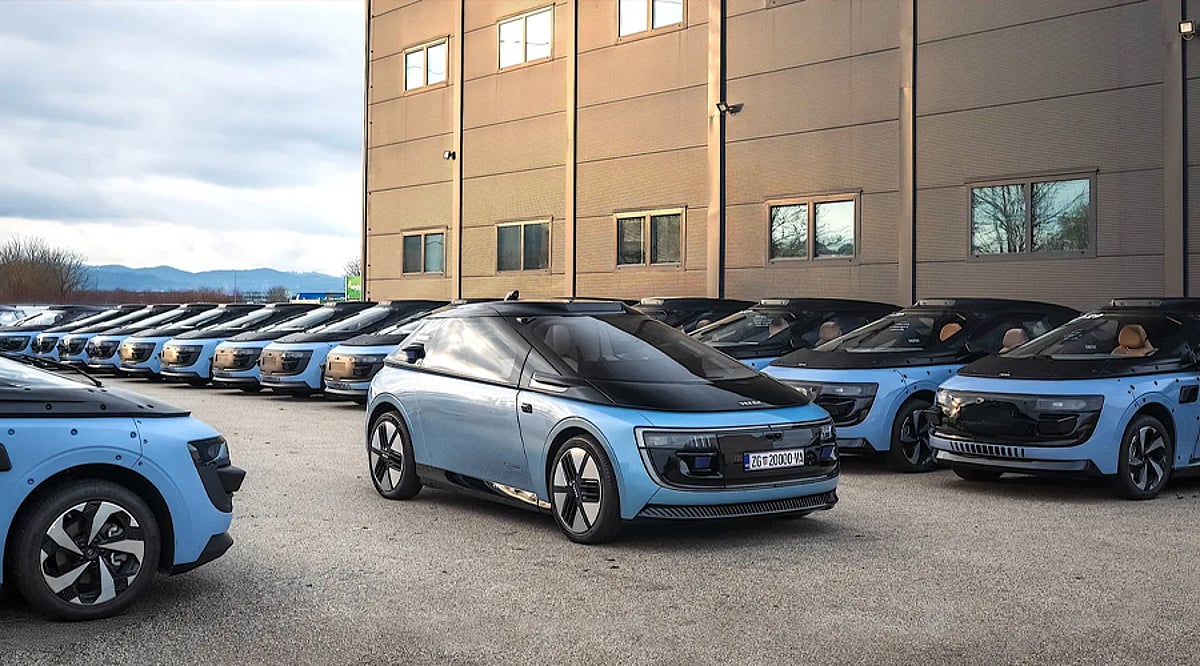
    Pony.ai is rapidly expanding its robotaxi service across China and international markets. The company launched commercial operations in Zagreb, Croatia, and aims to deploy thousands of vehicles as it scales its autonomous fleet globally.

    5. Wayve-Powered Vehicles

    Wayve, a UK-based startup, has partnered with Uber to launch supervised autonomous rides in London as of September 2026. This marks a significant milestone for European robotaxi services, bringing autonomous technology to busy urban streets.

    6. Aurora Driver Trucks

    Aurora is proving that autonomy extends beyond passenger cars. Its self-driving trucks now operate without any human in the driver’s seat, and the company plans to scale its commercial fleet throughout 2026, targeting logistics and freight applications.

    7. Zoox Robotaxi

    Zoox takes a unique approach with a purpose-built vehicle designed for driverless ride-hailing. The cabin features face-to-face seating and no steering wheel. The company is now preparing for larger-scale production, aiming to redefine urban mobility.

    8. Baidu Apollo Go

    Baidu Apollo Go is one of China’s largest autonomous mobility platforms. By 2026, it has expanded to 28 cities and accumulated over 350 million autonomous kilometers, including more than 240 million fully driverless kilometers, making it a dominant player in the region.

    9. BMW iX and Advanced ADAS

    The BMW iX, along with other models featuring advanced driver-assistance systems (ADAS), represents the next step for consumer vehicles. Systems like BMW’s Driving Assistant Professional offer hands-free assistance on approved roads, bringing near-autonomous capabilities to everyday drivers.

    10. NIO and XPeng EVs

    Chinese automakers NIO and XPeng are pushing navigation and driver-assistance technology with AI-powered systems. Their vehicles highlight how Chinese manufacturers are competing globally, integrating advanced automation into mainstream electric cars.

  • Alibaba, Tencent, and Baidu Pour $2.8 Billion into Kling AI, Boosting AI Video Unit to $15 Billion Valuation

    Alibaba, Tencent, and Baidu Pour $2.8 Billion into Kling AI, Boosting AI Video Unit to $15 Billion Valuation

    Kuaishou Technology has secured a massive $2.8 billion funding round for its artificial intelligence video unit, Kling AI, with backing from China’s biggest tech names, including Alibaba, Tencent, and Baidu. The investment values Kling AI at $15 billion before the new capital infusion, highlighting the growing appetite for AI video technology in China.

    Major Investors Join the Round

    Kuaishou announced that the investor group includes Alibaba, Tencent, Baidu, and other prominent Chinese financial and technology firms. The deal also allows one additional investor to join within two months, with total fundraising capped at 20.45 billion yuan (approximately $2.8 billion). Following the investment, Kuaishou’s stake in Kling AI will drop to about 68% from full control.

    This funding comes as competition in AI video generation intensifies globally. Kling AI creates videos from text prompts and images, competing with tools from OpenAI, Google, and other AI firms. The service has become one of China’s most-watched AI video platforms, leveraging Kuaishou’s massive short-video app user base.

    Revenue Growth Accelerates

    Kling AI reported 650 million yuan in revenue for the March quarter, more than four times the figure from the same period last year. The annualized run rate reached about $500 million in March, up from roughly $300 million in January, according to reports cited by the company. This strong revenue growth has fueled investor interest and helped justify the high valuation.

    The post-money valuation of Kling AI now stands near $18 billion, making it one of the largest recent AI fundraises in China. The Chinese AI sector has been attracting significant capital; technology companies raised $3.1 billion from stock market listings from January to mid-June, more than five times the level seen in the same period last year.

    Market Reaction and Future Outlook

    Kuaishou shares rose as much as 6.9% on Friday after the fundraising details emerged, though gains later faded. Analysts at Citi described the investor list as “impressive” and noted that market attention will now shift to Kling AI’s next product upgrade.

    Kling AI benefits from its connection to Kuaishou’s video platform, which aids user reach, product testing, and content use cases within China. However, the AI video market faces high compute costs, as these systems require substantial processing power. Kling AI’s next phase will depend on user demand, product upgrades, and its ability to manage the cost of generating video at scale.

    While Kuaishou has not confirmed a firm timetable for a potential listing of Kling AI, recent reports suggest the company could start a Hong Kong listing process within twelve months, with future funding aimed at computing power and data center needs.