
Tag: banking

  • How AI Agents Are Revolutionizing Banking and Financial Services in 2026

    How AI Agents Are Revolutionizing Banking and Financial Services in 2026

    Artificial intelligence is moving far beyond simple chatbots in the banking sector. As of 2026, AI agents are handling complex tasks across credit assessment, fraud detection, customer service, and capital markets, fundamentally reshaping how financial institutions operate. A global study conducted by Cambridge Judge Business School, the Bank for International Settlements, the International Monetary Fund, and the World Economic Forum reveals that 81% of financial firms now use AI at some level, though only 14% consider it transformational for strategy and competitive advantage. This indicates widespread adoption but limited deep integration.

    AI Agents Go Beyond Chatbots

    The most significant shift is the emergence of AI agents that can perform multi-step tasks. Unlike chatbots that only answer questions, agents can review documents, check policy rules, identify missing data, prepare credit cases, and route them for human approval. Citi has developed Arc, an internal platform for AI agents used in research and task execution. Fiserv launched agentOS, a platform with policy controls, audit trails, and human oversight. This evolution positions AI as a work partner rather than a mere information source.

    Faster and Smarter Credit Decisions

    AI is transforming credit assessment by analyzing cash flow, account activity, income patterns, business data, and repayment history together—far beyond traditional forms and fixed checks. This wider view enables lenders to make faster decisions with less paperwork. BCG highlights agent-led credit journeys, faster credit review, and more personalized collections as key AI opportunities. Better data usage also helps lenders identify risk earlier.

    The AI Fraud Race

    Fraud detection has become an AI-versus-AI battle. Criminal groups use AI for fake identities, deepfakes, and phishing at scale. Banks now combine rules, machine learning models, graph analysis, and generative AI to detect unusual activity. The Federal Reserve has endorsed this multi-layered approach. Systems assess transactions alongside account links, device signals, merchant activity, and past behavior to reveal patterns missed by single-transaction checks.

    Customer Service: From Answers to Action

    AI assistants now go beyond answering balances and fees. They can help set savings targets, review expenses, and suggest plans. With proper permissions, they can even execute tasks like moving money or paying bills. Visa introduced an AI Financial Assistant in July 2026 for banks, noting that over 66% of surveyed Americans who used generative AI had sought financial advice through it. This creates a path from advice to approved action.

    Specialist AI in Capital Markets

    Banks use specialized models for market research, risk checks, liquidity forecasts, portfolio management, and foreign exchange. In August 2026, Citi, HSBC, and Standard Chartered adopted Ant International’s Falcon Time-Series Transformer Model 2.0, which reportedly cuts FX hedge and allocation costs by over 60%. Specialist AI models now play a stronger role across financial markets.

    Trust and Control Matter More Than Ever

    AI brings serious risks: model errors, data access issues, fraud, cyber threats, and poor decisions. The Financial Stability Board issued a June 2026 consultation on responsible AI use in finance, focusing on generative and agentic AI. The UK Financial Conduct Authority also warned about risks to firm operations, customer journeys, competition, fraud, and cybersecurity. Strong controls are as important as model quality.

    The Next Bank Model

    The next major change will come when AI agents gain secure access to core bank systems. A customer could grant an agent a clear task, expense limit, and permission to act, allowing it to compare products, move money, pay bills, or manage cash within set rules. This transforms AI from support to core system component. The strongest banks will combine robust data capabilities, modern infrastructure, useful AI agents, and firm controls. The central race now is about safe AI use at scale.

    Key Takeaways

    • AI agents now handle complex banking tasks across credit, fraud, research, and customer service.
    • Banks use AI to improve speed, accuracy, and personalization across financial services.
    • Strong governance, cybersecurity, privacy, and human oversight remain essential for safe AI adoption.

    Frequently Asked Questions

    How is AI changing banking in 2026?

    AI is transforming credit decisions, fraud detection, customer service, compliance, research, and other core banking processes.

    What are AI agents in banking?

    AI agents can complete multi-step tasks such as checking documents, applying rules, and preparing cases for human approval.

    Can AI improve fraud detection?

    Yes. Banks combine AI models, rules, and graph analysis to identify unusual transaction patterns and potential fraud.

    How does AI affect customers?

    AI provides faster support, personalized financial guidance, and with proper approval, helps customers complete financial tasks.

    What are the main risks of AI in finance?

    Key risks include cyber threats, data privacy issues, model errors, fraud, and poor decisions without suitable human oversight.
  • Fairfax Faces Valuation Dispute in IDBI Bank Stake Buy, Deal Likely Delayed

    Fairfax Faces Valuation Dispute in IDBI Bank Stake Buy, Deal Likely Delayed

    Fairfax Financial Holdings’ proposed acquisition of a controlling 60.72% stake in IDBI Bank is at risk of delay as the Indian government reviews the Canadian investor’s valuation offer of approximately Rs. 81 per share. The deal, valued at nearly Rs. 53,000 crore for the entire stake, has hit a snag after a high-level meeting at the Finance Ministry failed to reach an agreement.

    Finance Ministry Reviews Fairfax Offer

    On Monday, a high-level meeting convened by the Finance Ministry assessed Fairfax’s reported offer to determine if it aligns with the government’s valuation expectations. The stake sale is a key part of the Centre’s broader disinvestment strategy, and its success is critical for planned fiscal targets. Sources indicate that the government is not satisfied with the Rs. 81 per share figure, which matches the stock’s closing price of Rs. 81.12 after a 10.56% decline on Tuesday.

    Wider Banking Consolidation Plans

    Fairfax, led by Prem Watsa, intends to merge its existing banking operations with IDBI Bank if the acquisition goes through. The group already holds about 40% of CSB Bank and could combine the two lenders under a single banking license. However, funding remains a question. Speculation that Fairfax would sell its stake in IIFL Finance to help finance the deal was denied by IIFL Finance on Wednesday, which stated that no such negotiations are underway.

    The delay underscores the challenge of valuing state-owned banking assets amid market volatility and regulatory hurdles. Investors will closely watch for further developments as the government and Fairfax continue talks.

  • Freedom Holding Corp. Enters Turkish Banking with Acquisition of Turkish Bank A.Ş.

    Freedom Holding Corp. Enters Turkish Banking with Acquisition of Turkish Bank A.Ş.

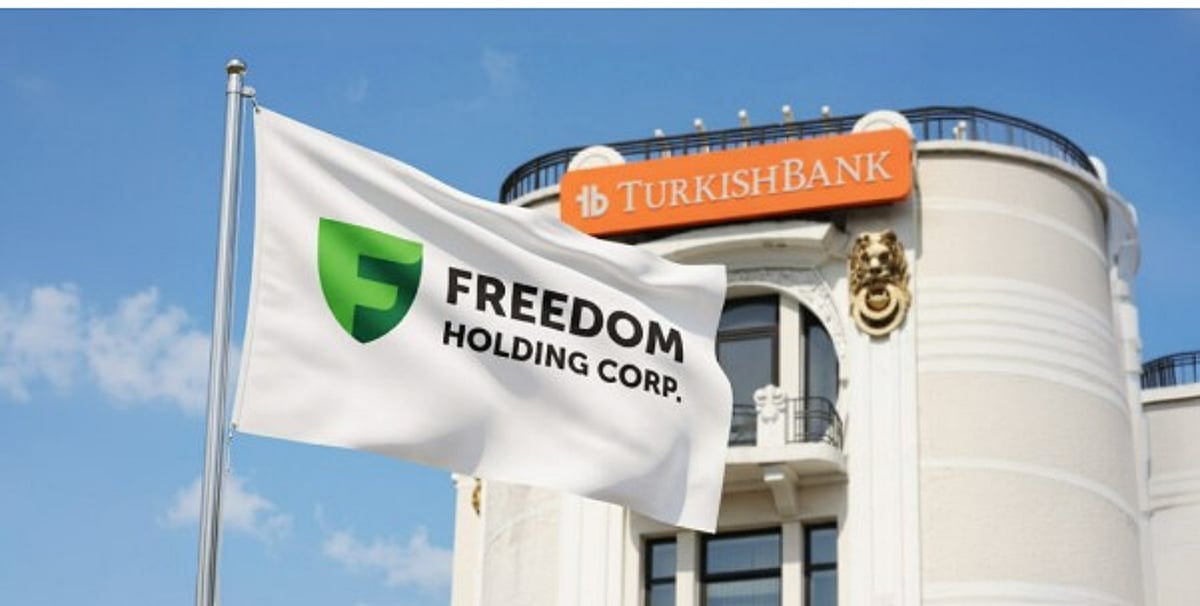
    Nasdaq-listed Freedom Holding Corp. has completed the acquisition of a 99.32% stake in Turkish Bank A.Ş., marking its formal entry into Türkiye’s banking sector and laying the groundwork for an integrated financial and digital platform. The transaction was executed through its subsidiary, Freedom Finansal Hizmetler A.Ş., and the bank has been renamed Freedom Bank A.Ş. following the transfer of control.

    The Acquisition Is Only the First Step

    The deal was finalized after receiving approval from Türkiye’s Banking Regulation and Supervision Agency (BDDK) and the Turkish competition authority. Freedom Holding plans to strengthen the bank’s capital position, upgrade its IT infrastructure, develop digital channels, launch new products, and improve operational efficiency.

    According to the BDDK, more than 120 million digital bank accounts have been opened in the country, with approximately 85% of the population using mobile banking. Turkish customers are already accustomed to advanced mobile-banking services, meaning the new platform must compete not only on product range but also on app usability, transaction speed, and overall customer experience.

    Türkiye occupies a special place in Freedom Holding Corp.’s global growth strategy. The country serves as a geographical bridge between Europe and Asia and a strategic gateway connecting the world’s largest financial markets.

    Why the Ecosystem Needs Its Own Bank

    Freedom Holding Corp. began building its Turkish infrastructure in 2022 with the establishment of Freedom Finansal Hizmetler A.Ş., created to support investments in banking, insurance, capital markets, payment systems, and other financial-services segments. In 2025, after approval from Türkiye’s Capital Markets Board, Freedom Yatırım Menkul Değerler A.Ş. was formed as the group’s local brokerage platform.

    The bank acquisition complements Freedom’s expansion into Türkiye’s capital markets. The group now has a banking platform on which to build its own ecosystem in the country. Banking services provide regular customer contact through accounts, cards, payments, transfers, deposits, and lending products, placing the acquired bank at the center of the future platform.

    Testing Freedom’s Kazakhstan Model in Türkiye

    In Kazakhstan, Freedom Holding has already built an ecosystem combining banking, brokerage, investment, insurance, payment services, e-commerce, travel, ticketing, and entertainment. The group plans to draw on this experience in Türkiye.

    “In Kazakhstan, we built an ecosystem in which financial and everyday services operate through a single SuperApp, which has become the country’s fastest-growing digital service,” said Timur Turlov, founder and CEO of Freedom Holding Corp. “We are now bringing this model to Türkiye, where customers already have high expectations of their banks. Our task over the next few years is to strengthen the bank’s capital base and technological capabilities so that an ecosystem can develop rapidly around it.”

    The group’s experience in Kazakhstan demonstrates that financial and lifestyle services can be combined on a single digital platform. Türkiye will show how successfully the model can scale beyond the home market.

    Freedom Holding Corp. operates in 22 countries, including Kazakhstan, the United States, Cyprus, Poland, Spain, Uzbekistan, and Armenia, with its principal executive office in New York. Its shares trade under the ticker FRHC on Nasdaq, the Kazakhstan Stock Exchange, and the Astana International Exchange.

    The company strengthened its financial position in fiscal year 2026, which ended March 31. Revenue increased 9% year-on-year to $2.19 billion, while net income more than doubled to $153.3 million from $76.2 million a year earlier. Total assets rose 33% to $13.16 billion. By March 2026, the Freedom ecosystem served more than 14 million customers.

    In June 2026, S&P Global Ratings upgraded the credit ratings of four Freedom subsidiaries to BB- with a Stable outlook, while affirming the holding company’s long-term issuer credit rating at B-, also with a Stable outlook.

  • Firstsource: Driving Digital Transformation and AI-Powered Customer Experience Globally

    Firstsource: Driving Digital Transformation and AI-Powered Customer Experience Globally

    Company Overview

    Firstsource Solutions Limited is a global leader in Business Process Management (BPM), offering digital transformation services and customer experience solutions powered by artificial intelligence. The company serves clients across multiple industries through an extensive international network, combining AI with operational efficiency to deliver scalable, technology-driven outcomes.

    Core Offerings

    Firstsource provides a comprehensive suite of services including AI-driven customer experience, collections, consulting, IT services, digital platforms, analytics, and trust and safety solutions. Its UnBPO model and “Digital First, Digital Now” approach integrate automation with human expertise, enabling operational improvements for major enterprises worldwide.

    Industry Focus

    The company specializes in serving the healthcare, banking, and telecommunications sectors. Its offerings include customer support, back-office operations, data analytics, and revenue cycle management.

    Revenue Model

    Firstsource generates revenue through BPM services across healthcare, banking, and communications. Pricing models include FTE-based managed services, transaction-based pricing, platform-enabled solutions, and consulting. AI-driven automation and analytics underpin its operational processes.

    Client Segments and Geography

    B2B Focus: Firstsource targets large enterprises, global corporations, healthcare providers, banks, telecom firms, and organizations.
    Target Geography: The company operates globally, serving clients in North America, Europe, Asia-Pacific, and other markets.

  • Canara Bank Eyes $2.5 Billion in Foreign Currency Funding via FCNR(B) and Overseas Borrowings

    Canara Bank Eyes $2.5 Billion in Foreign Currency Funding via FCNR(B) and Overseas Borrowings

    Canara Bank has announced plans to raise between $2.3 billion and $2.5 billion in foreign currency funding through a combination of FCNR(B) deposits and overseas borrowings. The bank aims to secure $1.3–$1.5 billion specifically via FCNR(B) deposits by September 2026, with the remainder coming from external commercial borrowings (ECBs) and overseas foreign currency borrowings (OFCBs).

    As of July, the bank has already raised approximately $775 million through the FCNR(B) window and mobilized nearly ₹7,300 crore under the scheme. This fundraising initiative follows the Reserve Bank of India’s (RBI) decision to lift the interest rate cap on fresh FCNR(B) deposits with tenures of three to five years. The special deposit window remains open until September 30, 2026, and banks can increase overseas borrowings under RBI guidelines until December 31, 2026.

    Strong Q1 FY27 Performance

    Canara Bank reported robust business growth for the quarter ending June. Total advances grew 18% year-on-year to ₹12.93 lakh crore, while total deposits rose 12% YoY to ₹16.11 lakh crore. Global business value increased 14% to ₹29.05 lakh crore. Net interest income (NII) reached ₹10,215 crore, marking a 13% increase. Managing Director Brajesh Kumar Singh noted that NII crossed the ₹10,000 crore milestone for the first time in a quarter.

    Improving Asset Quality

    The bank’s asset quality continued to strengthen. Gross non-performing assets (GNPA) fell to 1.57% from 2.69% a year ago, and net NPAs declined to 0.36% from 0.63%. The provision coverage ratio (PCR) improved to 94.76%. Credit quality gains were supported by a lower slippage ratio of 0.60% and recoveries of ₹2,500 crore during the quarter.

    Analysts expect the combination of stronger profitability, healthier asset quality, and additional foreign currency funding to bolster Canara Bank’s lending capacity and liquidity position in the coming quarters.

  • 7 Undervalued Indian Stocks for Long-Term Growth in August 2026

    7 Undervalued Indian Stocks for Long-Term Growth in August 2026

    Undervalued stocks are those trading below their intrinsic value, offering potential for long-term investors who seek strong fundamentals and sustainable growth. As India’s economy is projected to expand by over 6% in FY27, sectors like banking, financial services, infrastructure, and capital markets are well-positioned for wealth creation. Here are seven undervalued stocks to consider for long-term growth this August.

    1. Tamilnad Mercantile Bank Ltd

    Market Cap: Rs. 14,179 crore
    Tamilnad Mercantile Bank (TMB), trading at Rs. 894, has maintained solid asset quality and steady profitability while expanding its retail loan book. With a conservative lending approach and enhanced digital banking capabilities, this regional bank offers attractive long-term prospects. Established in 1921, TMB serves retail customers and MSMEs.

    2. Godawari Power and Ispat Ltd

    Market Cap: Rs. 20,501.30 crore
    Godawari Power and Ispat benefits from India’s infrastructure and manufacturing boom. Its integrated steel business, captive power generation, and strong balance sheet help sustain healthy margins despite commodity price fluctuations.

    3. Can Fin Homes Ltd

    Market Cap: Rs. 10,861 crore
    Trading at Rs. 816, Can Fin Homes is a housing finance company (HFC) registered with the National Housing Bank. Canara Bank holds a 29.99% stake. The company focuses on smaller-ticket housing loans to salaried and self-employed borrowers, with stable asset quality and steady loan growth supporting its long-term outlook.

    4. ICICI Securities Ltd

    Market Cap: Rs. 29,149 crore
    ICICI Securities, trading at Rs. 896, provides institutional and retail broking, financial product distribution, merchant banking, and advisory services. Rising retail investor participation and vibrant equity markets continue to drive its brokerage business.

    5. Motilal Oswal Financial Services Ltd

    Market Cap: Rs. 52,429 crore
    Founded in 1987, Motilal Oswal operates across 550+ cities with 2,500+ business locations and over 1.6 million customers. Trading at Rs. 869, the company generates diverse revenue streams through its diversified financial services model, capitalizing on India’s growing financialization.

    6. Gujarat Mineral Development Corporation Ltd (GMDC)

    Market Cap: Rs. 22,686.10 crore
    GMDC is a key player in Indian mining, with exposure to lignite, bauxite, manganese, and other minerals. Government infrastructure spending and rising industrial demand underpin its strong long-term prospects.

    7. Angel One Ltd

    Market Cap: Rs. 27,785 crore
    Angel One is a diversified financial services company engaged in stock, commodity, and currency broking, institutional broking, margin trading, depository services, mutual fund distribution, NBFC lending, and insurance corporate agency. Its broad service suite positions it well for continued growth.

    Final Thoughts: These stocks appear undervalued under current market conditions, but investors should conduct their own research on valuation, earnings quality, and risks. A diversified, long-term approach is the best way to navigate market volatility.

  • How AI Is Transforming Banking in 2026: What It Means for Your Money

    How AI Is Transforming Banking in 2026: What It Means for Your Money

    Artificial intelligence is reshaping the banking industry in 2026, making financial services faster, smarter, and more personalized than ever before. From fraud detection to personalized financial advice, AI is fundamentally changing how we interact with our money.

    Real-Time Fraud Detection and Enhanced Security

    Banks now deploy AI systems that analyze transactions in real time, flagging suspicious activity instantly. This reduces fraud and improves account security, giving customers greater peace of mind.

    24/7 AI-Powered Customer Support

    AI chatbots handle routine banking queries around the clock, offering quicker support and freeing human agents for more complex issues. Customers can get answers to common questions anytime, anywhere.

    Personalized Financial Insights

    Using transaction history, AI tools provide personalized insights into spending, budgeting, and savings. This helps users make more informed financial decisions and achieve their goals faster.

    Faster Loan Approvals

    AI accelerates loan processing by analyzing financial data and credit profiles more efficiently than traditional methods. Borrowers can expect quicker decisions and less paperwork.

    Smarter Investment Recommendations

    Investment platforms increasingly rely on AI to recommend diversified portfolios tailored to individual financial goals and risk tolerance. This makes sophisticated investing accessible to more people.

    Voice Banking and Biometric Authentication

    Voice banking, along with facial and fingerprint recognition, is making digital banking more convenient and secure. Biometric authentication reduces the risk of unauthorized access while simplifying the login process.

    Staying Aware of Privacy and Cybersecurity

    While AI improves efficiency, customers should remain vigilant about privacy and cybersecurity. Always verify sensitive financial communications and use secure channels for banking activities.

    As AI adoption grows across the financial sector, digital banking is set to become even more intelligent, automated, and customer-focused. The future of banking is here—and it’s powered by AI.

  • Why Bank Fraud Models Need Validation, Not Just Accuracy: A Deep Dive into the Blind Spot

    Why Bank Fraud Models Need Validation, Not Just Accuracy: A Deep Dive into the Blind Spot

    Every large bank now runs anti-money-laundering (AML) and fraud-detection models that score millions of transactions daily. The marketing tells one story—detection rates climbing, false positives falling, model architectures getting smarter. But inside the engineering organizations that ship and operate these systems, a different story is told: the models work on the day they were built. What happens on day 200 is a harder question most banks answer poorly.

    Few have answered that harder question as convincingly as Manu Subhashchandrabose, Director of Digital and AI Quality Engineering. His fraud- and AML-validation programs have set new benchmarks across the U.S. regional-banking sector, leading quality engineering behind a $200M+ multi-year core-banking transformation spanning six affiliate banks. The program went live with zero critical fraud-related defects and achieved 100% reconciliation accuracy on the data fraud models depend on.

    The Blind Spot: Accuracy vs. Validation

    Manu puts it bluntly: “Accuracy is not the real problem. Validation is.” A bank that confuses the two will fund a model team, ship a model, watch dashboards report 98% accuracy, and discover only after a regulatory examination that the 2% it missed was the 2% that mattered. The blind spot at the center of modern fraud detection is not in the model—it is in everything around it.

    The Drift Banks Do Not Want to See

    Fraud models are trained on yesterday’s behavior. Customers, criminals, upstream data feeds, rule libraries, and integration layers all shift continuously. The model does not. In the time it takes a quarterly compliance committee to meet, a behavioral fraud model can lose meaningful detection signal without producing any visible alert that something is wrong.

    “Fraud models inherit the weaknesses of the systems around them,” Manu explains. “If data pipelines, ETL jobs, or integration layers are flawed, even the most accurate model becomes blind.”

    His team built a data-lineage validation framework that traced every fraud-critical field from origin to model input, with reconciliation at each hop and threshold tests on the values. The result: 100% reconciliation accuracy on fraud-critical data, and model behavior stopped diverging across affiliate banks.

    Why False Positives Are a Validation Problem, Not a Tuning Problem

    Most banks treat AML false-positive rates as a tuning problem. Manu argues this approach is backwards. “Rules are outdated, undocumented, and inconsistent across systems. You can tune a threshold all day and never fix the fact that the underlying scenario library is missing cross-channel patterns, structured transactions, and country-specific triggers.”

    His teams designed scenario-based testing for structured transactions, currency-transaction-report triggers, sanctions screening, and behavioral anomalies. One AML modernization program produced a 40% increase in scenario coverage and a 15–20% reduction in false positives—because the scenario library got correct, not because someone moved a threshold.

    The Cloud Migration That Almost Broke a Fraud Stack

    The riskiest moment in a fraud model’s life is when its inputs move. Cloud migration of core banking systems means shifting customer profiles, transaction histories, AML flags, and behavioral features into cloud-native pipelines. A single mis-mapped field can corrupt a feature and degrade a model in ways that look like normal variation in alert volume.

    Manu led data-migration validation for one such cloud transformation. His teams built SQL-driven reconciliation across source and target, automated validation scripts on every batch, and data-quality dashboards that surfaced anomalies before the model team did. The program achieved 100% reconciliation accuracy on fraud-critical data and prevented post-migration degradation an accuracy-only regime would have missed.

    Continuous Validation as a Discipline, Not a Project

    The technical scaffolding is only half the story. The other half is governance. On the multi-year core banking transformation, Manu’s QA organization grew to 55 engineers across 10 teams. Quality gates were embedded in the build pipeline, and CI/CD integration accelerated AML rule deployment by 30–40% because rule changes were validated against a living scenario library on the way in rather than against a quarterly batch run.

    “Models degrade over time,” Manu says. “Validation must evolve with customer behavior, transaction patterns, and emerging fraud vectors. Treat the model as a living system, not a static algorithm.”

    What Regulators Are Now Asking For

    The supervisory environment has moved in his direction. Examiners increasingly probe for model-validation evidence rather than accuracy summaries. The Anti-Money Laundering Act amendments and OCC guidance have raised the bar on explainability, traceability, and ongoing validation.

    “Regulators are raising the bar,” Manu warns. “They are asking for explainability, traceability, and validation, not just accuracy metrics. The teams that can produce that evidence on demand are the ones that built it into the system.”

    His programs reported a 35–50% reduction in fraud-related production defects and 85–90% automation coverage across AML, CTR, sanctions screening, and high-risk transaction monitoring. The number that matters most to him is the absence of a category: no fraud-related production defect required executive escalation at go-live. That is a validation outcome, not a tuning outcome.

    The Misconception That Costs Banks the Most

    The mistake Manu wants banking-technology leaders to stop making is treating a high accuracy score as a license to relax. “A model with 98% accuracy can still miss the 2% of transactions that cause millions in fraud losses. Accuracy is a snapshot. Validation is a discipline.”

    Hire validation engineers alongside data scientists. Treat the ETL jobs that feed a model as part of the model’s surface area. Write scenario tests against regulatory expectations, not only against labeled datasets. Move validation left, into requirements and design, rather than treating it as a release-readiness checkbox.

    For an industry that has spent a decade pouring money into model sophistication, the shift is not glamorous. It is plumbing, governance, and discipline. The banks that build it—the way Manu has built it, program after program—are the ones whose fraud stacks still work the day after the data shifts, the rule library changes, or the next examiner walks in. The banks that do not will keep reporting impressive accuracy on models that have quietly stopped catching the fraud that matters.

  • AI’s Quiet Revolution: Transforming Banking and Finance for the Better

    AI’s Quiet Revolution: Transforming Banking and Finance for the Better

    Artificial intelligence is quietly revolutionizing the banking industry, making financial services faster, smarter, and more personalized for millions of customers around the world. From 24/7 customer support to real-time fraud detection, AI is becoming an invisible but essential part of modern finance.

    Banks are increasingly deploying AI-powered virtual assistants to handle customer inquiries, process routine requests, and provide round-the-clock support with greater accuracy than ever before. These systems learn from each interaction, improving their responses over time.

    Behind the scenes, advanced AI algorithms analyze millions of transactions in real time, flagging suspicious activity before it leads to major losses. This proactive fraud detection helps protect both customers and financial institutions.

    Loan approvals, once a slow and paper-heavy process, are now being accelerated by AI models that evaluate financial data, credit history, and risk factors in seconds. This speeds up access to credit for consumers and small businesses alike.

    Personalization is another key area where AI is making a difference. Banks use AI to deliver tailored financial advice, spending insights, and product recommendations based on individual customer behavior and preferences.

    New AI agents are beginning to automate routine banking operations, reducing manual workloads and boosting efficiency across the board. Yet financial institutions continue to invest in strong governance, cybersecurity, and human oversight to ensure responsible AI adoption.

    Experts predict that AI will increasingly support customer service, compliance, fraud prevention, and strategic decision-making throughout the banking sector. As the technology advances, the future of banking promises to be faster, safer, and more efficient—all while delivering superior customer experiences.