
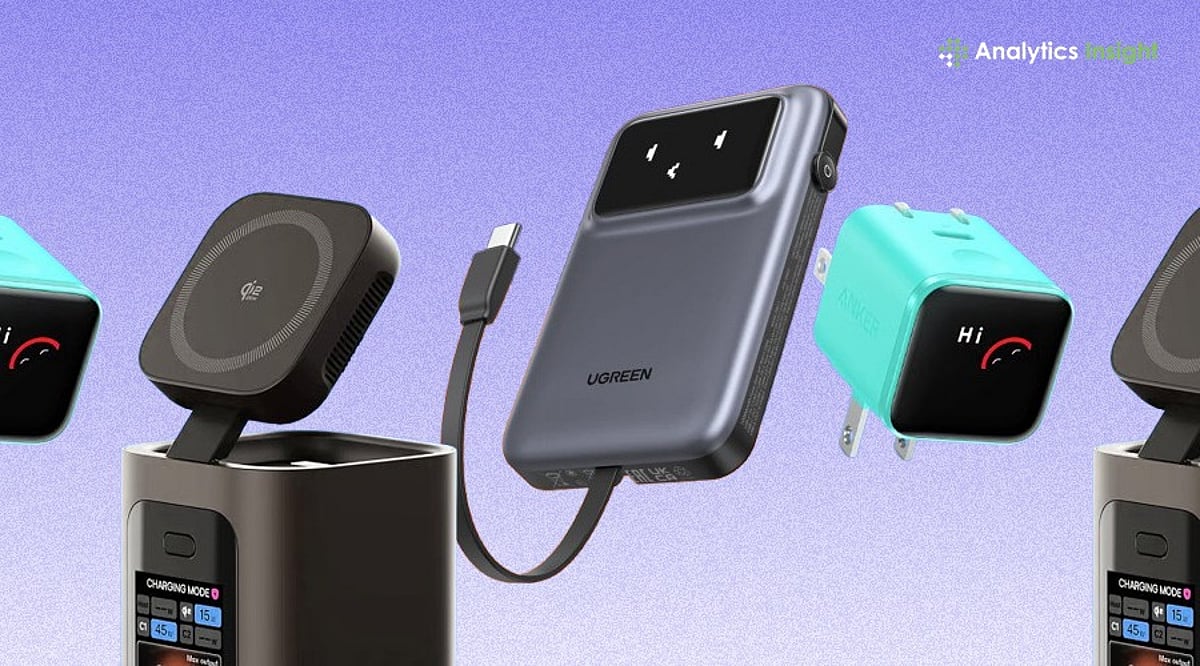
Tag: battery capacity

  • 2026 Portable Charger Buying Guide: Expert Tips on Capacity, Wattage, and Airline Rules

    2026 Portable Charger Buying Guide: Expert Tips on Capacity, Wattage, and Airline Rules

    Choosing the best portable charger in 2026 involves more than just looking at battery capacity. Charging speed, safety features, port compatibility, and airline regulations all play a role in selecting a reliable power bank. This expert guide breaks down everything you need to know to pick a portable charger that works for your devices and lifestyle.

    Step 1: Match the Charger to Your Use Case

    Start by identifying how you’ll use the charger. A daily commuter needs a slim, lightweight model. A traveler juggling a phone, earbuds, and a tablet needs higher capacity and multiple ports. Laptop users require high wattage output, not just a big battery. Outdoor enthusiasts need rugged builds. Matching your scenario first eliminates most of the market and prevents overpaying for unnecessary capacity.

    Step 2: Understand Capacity — mAh vs. Wh

    Manufacturers often list capacity in mAh, but watt-hours (Wh) give a truer picture, especially since airlines now calculate limits in Wh. A 20,000mAh power bank at 3.7V equals roughly 74Wh, well within travel limits. A 30,000mAh bank often exceeds 100Wh, requiring airline approval. For everyday phone use, 5,000–10,000mAh is enough. Travelers should look at 10,000–20,000mAh. Laptop charging usually needs 20,000mAh or more. Real-world output is lower due to voltage conversion and heat loss, so buy above your calculated need.

    Step 3: Check Charging Speed and USB-C PD Support

    Wattage determines how fast capacity reaches your device. A large battery with a 10W output will still charge slowly. Modern phones fast-charge between 20W and 30W. Laptops often need 60W to 100W or more via USB-C Power Delivery (PD). For simultaneous charging of a laptop and phone, a power bank with dual USB-C PD outputs and separate wattage ratings is ideal. USB-C PD is now the standard to prioritize over older proprietary formats.

    Step 4: Examine Ports, Cables, and Ecosystem Fit

    Look for at least one USB-C PD port and a USB-A port for older devices. Some power banks now include fold-out cables, eliminating the need for separate cords. Wireless options like MagSafe and Qi2 have become genuinely convenient in 2026, especially for iPhone users. If you’re deep in one ecosystem, consider accessories that integrate stands or charging docks for multiple devices.

    Step 5: Know 2026 Safety and Airline Rules

    Safety is where many buyers overlook crucial details. Since early 2026, major carriers including American, Delta, Southwest, and Lufthansa have tightened rules after a power bank fire on a runway in South Korea. New ICAO guidelines limit passengers to two power banks, ban storing them in overhead bins, and prohibit mid-flight recharging. Banks under 100Wh (about 27,000mAh) travel without approval. Those between 100Wh and 160Wh need airline sign-off; anything above 160Wh is banned. India’s aviation authority further restricts in-flight charging entirely. Frequent flyers should buy under 100Wh and keep the battery in the seat pocket. Also look for built-in protections against overheating and overcharging. Higher-quality battery cells maintain performance over more cycles. Replace any swollen or damaged battery immediately.

    Why This Matters

    The wrong charger can get flagged at airport security or fail to power your laptop. Understanding these basics upfront saves money, hassle, and the frustration of buying again.

    Quick Selection Framework

    For Apple users, weigh MagSafe or Qi2 convenience against slightly slower wireless speeds. For others, prioritize USB-C PD and multiple ports. Always check Wh for air travel.

    Final Thoughts

    The best portable charger isn’t the one with the biggest mAh number. It’s the one matched to your real use case, with enough wattage to charge fast and a Wh rating that clears airline limits. Buy for how you travel and charge, not for the spec sheet.

    Frequently Asked Questions

    1. What capacity portable charger should I buy in 2026?

    For everyday smartphone use, 5,000mAh to 10,000mAh is enough. Frequent travelers charging multiple devices should consider 10,000mAh to 20,000mAh. Laptops typically require 20,000mAh or higher with sufficient power output.

    2. Why is wattage as important as battery capacity?

    Battery capacity stores charge; wattage determines how quickly it delivers. A high-capacity charger with low output can still charge modern phones and laptops slowly.

    3. Can I carry a portable charger on a flight?

    Yes, but most airlines require portable chargers in cabin baggage, not checked luggage. Check your airline’s rules regarding Wh limits and the number of power banks allowed.

    4. Is USB-C Power Delivery necessary?

    USB-C PD is the preferred standard for most modern smartphones, tablets, and laptops. It enables faster, more efficient charging and offers broader compatibility than older technologies.

    5. How do I choose the best portable charger for my needs?

    Start by identifying your primary use case (commuting, travel, laptop charging). Then compare capacity, wattage, ports, safety features, and compatibility to select the right model.

  • 2026 Home Inverter Buying Guide: How to Select the Right Backup Power System for Your Household

    2026 Home Inverter Buying Guide: How to Select the Right Backup Power System for Your Household

    Frequent power outages, especially during summer and monsoon seasons, can disrupt daily life. A reliable inverter ensures uninterrupted power for essential appliances. This guide walks you through calculating power requirements, choosing the right VA rating, selecting battery capacity, and evaluating key features for a cost-effective, long-lasting home backup solution.

    Why Choosing the Right Inverter Matters

    An inverter converts stored battery energy into electricity for home appliances during outages. Selecting the wrong inverter can lead to insufficient power or inadequate backup time. The correct choice ensures continuous power supply, better appliance performance, avoidance of overload, longer battery life, and reduced maintenance costs.

    Step 1: Calculate Your Power Requirement

    List the appliances you want to run during a power cut and note their wattage. For example: lights (60W), fan (70W), router (40W) = 170W total. This figure is the foundation for selecting inverter capacity.

    Step 2: Understand the VA Rating

    Inverters are rated in Volt-Amperes (VA). To find the right VA, divide your total power requirement by the inverter’s power factor (typically 0.7–0.8). Using the example: VA = 170 / 0.7 ≈ 243 VA. A 250 VA inverter would be suitable. Choosing a slightly higher VA rating improves performance during peak load and extends inverter life.

    Step 3: Select the Right Battery Capacity

    Battery capacity is measured in Ampere Hours (Ah). Higher Ah means longer backup time. Consider outage duration, connected equipment, and daily usage. For a 170W load needing 6 hours backup, a 150 Ah battery works. Many manufacturers offer battery calculators to help estimate the correct capacity.

    Recommended Inverter and Battery Combinations

    • Small apartments: Lights, fans, TV, router → 250–500 VA inverter + 100–150 Ah battery
    • Medium homes: Add refrigerator, multiple fans → 500–1000 VA inverter + 150–200 Ah battery
    • Large homes: Water pump, heavy appliances → 1000+ VA inverter + 200+ Ah battery

    Features to Look for Before Buying

    • Pure Sine Wave Output: Provides clean power for sensitive electronics (TVs, computers, routers).
    • Battery Compatibility: Ensure the inverter works with the battery type you plan to use (tubular, lead-acid, lithium-ion).
    • Overload Protection: Prevents damage to the inverter and connected appliances.
    • Fast Charging: Reduces battery recovery time during frequent power cuts.
    • Smart Monitoring: Some inverters include sensors for water level or remote monitoring via app.

    Why Battery Quality Matters

    A high-quality battery extends backup duration, charges faster, performs better during frequent outages, and requires less maintenance. Tubular batteries are recommended for areas with frequent power cuts due to their durability and faster charging. Lithium-ion batteries are increasingly popular for their longer lifespan and compact size, though they cost more upfront.

    Common Mistakes to Avoid

    • Not calculating total power requirement before purchase.
    • Choosing the cheapest inverter without checking specifications or future needs.
    • Selecting a battery with insufficient capacity for required backup time.
    • Overloading the inverter with too many appliances.

    Final Thoughts

    With today’s reliance on digital devices, a well-chosen home inverter is essential. By calculating load, matching VA rating and battery capacity, and prioritizing features like pure sine wave and overload protection, you can ensure reliable backup power and protect your appliances.

    Frequently Asked Questions

    1. What size inverter is suitable for a modern home?

    For most small- to medium-sized homes, inverters between 500 VA and 1000 VA are suitable, depending on the appliances used during outages.

    2. Which type of inverter is best for home use today?

    Pure sine wave inverters are best as they provide stable power, protect sensitive electronics, and support a wide range of appliances efficiently.

    3. How long should an inverter battery last?

    With proper maintenance, tubular batteries typically last 4 to 7 years, depending on usage and outage frequency.

    4. What is the latest factor to consider before buying an inverter?

    Energy efficiency, fast charging technology, smart monitoring, and solar compatibility are now important considerations.

    5. Are lithium-ion inverter batteries better than traditional ones?

    Lithium-ion batteries offer faster charging, longer lifespan, and compact size but are more expensive than lead-acid or tubular alternatives.