

Tag: behavioral analytics

  • How AI Is Transforming Cybersecurity: Record Breach Costs, Behavioral Detection, and Emerging Risks to AI Systems

    How AI Is Transforming Cybersecurity: Record Breach Costs, Behavioral Detection, and Emerging Risks to AI Systems

    Artificial intelligence is reshaping cybersecurity from both sides—attackers use it to accelerate breaches, while defenders deploy it to detect anomalies faster. IBM’s 2026 Cost of a Data Breach Report reveals a record global average breach cost of USD 4.99 million, a 12% increase from the previous year. One in four malicious breaches now involves AI, marking a 56% rise from 2025. These AI-involved breaches average about USD 6 million, often leveraging deepfake impersonation or AI-enabled malware.

    Why Traditional Defenses Fall Short

    Older security tools rely on signature-based detection—matching new activity against a database of known attack patterns. This approach fails against novel malware, altered code, or stolen credentials that don’t match any existing signature. Security teams also face alert fatigue, with thousands of daily alerts that overwhelm analysts, leaving genuine threats unnoticed for hours.

    How AI Detects What Signatures Cannot

    AI-based threat detection works by learning normal behavior over time—studying logins, file access, network traffic, and device activity. Any sharp deviation from this baseline triggers an alert, a method known as anomaly detection. For example, a finance employee logging in from a new country at 3 a.m. and downloading thousands of files would raise an immediate flag, even though no signature exists for that specific action. Machine learning systems apply this same logic across email, devices, and cloud accounts.

    Key Findings from IBM’s 2026 Report

    The study analyzed 602 organizations that experienced breaches between March 2025 and February 2026. Organizations using AI and automation extensively in their security operations saw average breach costs about USD 1.93 million lower than those using none—though IBM notes this association does not prove causation. Still, one in four organizations have yet to adopt AI-powered security tools.

    AI agents are used unevenly across the security lifecycle: about half of breached organizations apply them to threat hunting, response, and containment, but only 18% use them for vulnerability management. This suggests many enterprises still deploy AI reactively, after suspicious activity emerges.

    The New Frontier: Attacks on AI Itself

    AI systems are becoming direct targets. Among breached organizations, 21% reported an incident involving an AI model or application—up from 13% a year earlier. These incidents averaged USD 5.33 million. Cloud misconfigurations and compromised connected applications, APIs, or plug-ins each appeared in 27% of AI-related breaches. Data poisoning, prompt injection, and model inversion followed at 24–26%. IBM’s analysis warns that weaknesses around a model can matter as much as attacks on the model itself.

    Access controls are a major vulnerability: 92% of organizations with an AI-related breach lacked proper AI access controls, and only 40% of all organizations report using such controls on AI models and data.

    The India Scenario

    IBM’s India data mirrors global trends. The average breach cost reached Rs. 25.5 crore, up 15.9% from Rs. 22 crore. AI-generated attacks accounted for 26% of malicious breaches in India. Only 32% of Indian organizations use AI and security automation extensively; those without such tools averaged Rs. 31.6 crore per breach, compared to Rs. 21.3 crore for extensive users.

    What Security Teams Should Do

    Effective AI security starts with clean, high-quality log data—models learn from what they receive. Phishing-resistant authentication adds a strong layer of identity control. Teams must closely monitor APIs and cloud configurations around AI workloads. Models also produce false positives, so humans should retain control over containment decisions.

    A useful benchmark is the time between first malicious activity and first actionable alert, measured using production data. This metric often reveals more than vendor accuracy scores from controlled lab environments. When paired with clear controls and human review, AI can accelerate response without sacrificing accountability.

    Final Thought

    Every new AI agent also represents a new identity with access to data and systems. IBM’s X-Force analysis found that fewer than half of organizations actively secure these non-human identities. Establishing proper access controls and accountability for AI agents is the next critical task for security teams.

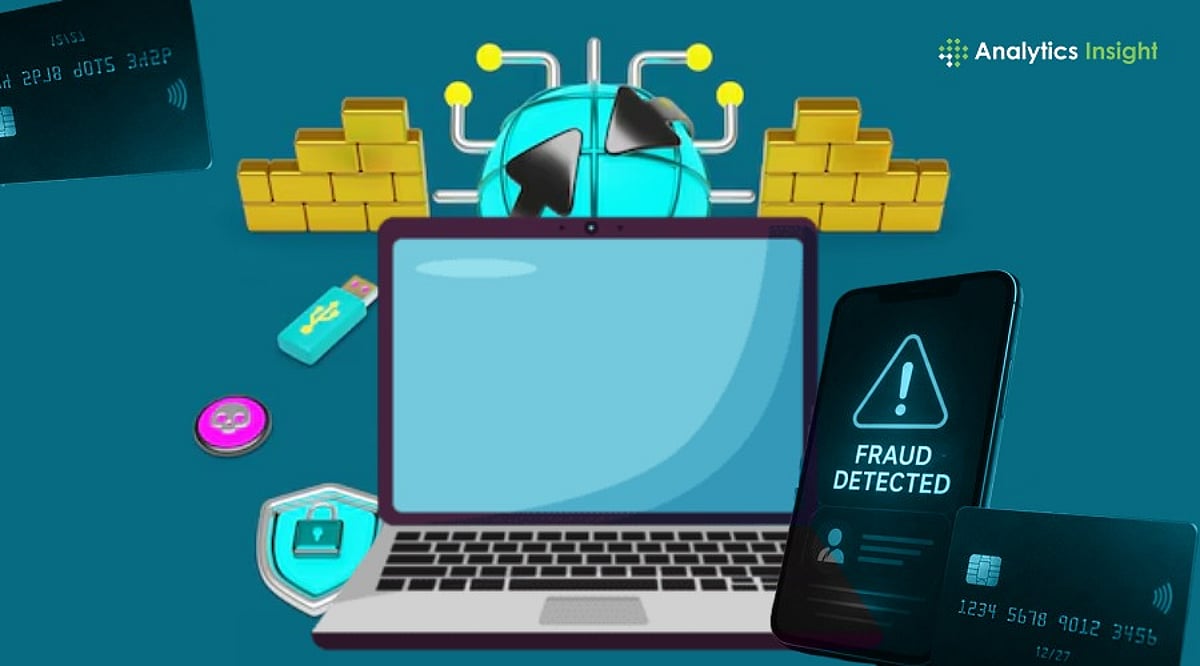
  • Key Cybersecurity Trends Driving Change in the Banking Industry

    Key Cybersecurity Trends Driving Change in the Banking Industry

    Banks are increasingly turning to advanced technologies and frameworks to protect digital assets and customer data. Here are the most significant cybersecurity trends shaping the banking sector.

    AI-Powered Fraud Detection

    Financial institutions are deploying artificial intelligence to analyze transaction patterns in real time, identify anomalies, and accelerate fraud detection while reducing financial losses across digital channels.

    Zero Trust Security

    The zero-trust model is gaining traction in banking. Instead of assuming trust based on network location, organizations continuously verify every user, device, application, and access request to minimize risk.

    Biometric Authentication

    Fingerprint scanning, facial recognition, voice verification, and behavioral biometrics are replacing traditional passwords. These methods strengthen customer verification and improve overall digital banking security.

    Cloud Security

    As banks migrate workloads to the cloud, they prioritize stronger encryption, identity and access controls, continuous monitoring, and secure configurations to protect sensitive data.

    Ransomware Protection

    Banking organizations are reinforcing backup strategies, endpoint security, network segmentation, and incident response plans to limit disruption from ransomware attacks.

    API Security

    The growth of open banking expands API exposure. Robust authentication, authorization, encryption, monitoring, and vulnerability testing are essential to safeguard financial data.

    Cyber Threat Intelligence

    Banks leverage threat intelligence feeds to track emerging attack methods, identify indicators of compromise, and adapt defenses against evolving cyber threats.

    Behavioral Analytics

    By examining patterns in customer and employee behavior, banks can detect unusual activities, account takeovers, insider threats, and potentially fraudulent transactions.

    Regulatory Compliance

    Changing cybersecurity regulations require stronger data protection, incident reporting, third-party risk management, governance, and operational resilience to meet compliance standards.

  • Top AI Fraud Detection Platforms for Business Security in 2026

    Top AI Fraud Detection Platforms for Business Security in 2026

    AI fraud detection platforms help businesses identify suspicious activity, reduce false alerts, protect customer accounts, improve payment security, support compliance, and strengthen overall business protection against modern fraud threats in 2026.

    Key Takeaways

    • AI detects fraud faster through real-time monitoring and behavioral analysis.
    • Modern platforms reduce false positives while improving customer experience.
    • Different platforms serve different industries, from banking and fintech to e-commerce and enterprises.

    Online fraud has become more advanced, faster, and harder to identify. Criminals now use smart tools to create fake identities, steal account details, and bypass traditional security systems. To counter online threats, many businesses now depend on AI-powered fraud detection platforms that identify suspicious activity before major damage occurs. These platforms study customer behavior, examine transactions in real time, and detect unusual patterns that simple rule-based systems often miss. They also reduce false alerts, improve security, and support compliance with financial regulations. The following platforms stand out as some of the best AI fraud detection solutions for businesses in 2026.

    Feedzai

    Feedzai is one of the leading fraud detection platforms for banks, payment providers, and financial institutions. The platform creates detailed profiles of customer behavior rather than relying solely on fixed rules. This approach helps identify suspicious activity with greater accuracy while reducing unnecessary transaction blocks. The platform also offers real-time payment monitoring, anti-money laundering support, and advanced machine learning models that improve after every transaction. Feedzai protects digital payments across multiple channels and helps financial organizations stop fraud without creating delays for genuine customers.

    Featurespace

    Featurespace focuses on adaptive behavioral analytics that change as customer activity changes over time. This ability allows the platform to identify fraud that traditional systems may fail to detect. It performs well in payment protection, card fraud prevention, and authorized push payment fraud detection. Large financial institutions choose Featurespace because it lowers false positives while maintaining strong security. Dynamic risk scoring allows security teams to respond quickly whenever unusual transaction patterns appear.

    Sardine

    Sardine is best for fintech companies, cryptocurrency businesses, and other digital-first organizations. The platform combines fraud detection, identity verification, and compliance tools in one solution, which makes security management much easier. Its AI system studies device details, customer identities, and transaction behavior to calculate fraud risk. Sardine also detects synthetic identities and supports anti-money laundering efforts. Fast-growing financial companies value the platform because it protects customers without adding unnecessary complexity.

    SEON

    SEON is a popular choice for e-commerce businesses and software companies. The platform studies digital information such as email addresses, phone numbers, IP addresses, and device details to identify fraud before transactions receive approval. Real-time fraud scoring helps businesses make quick decisions while reducing payment fraud and account abuse. Since SEON focuses on smooth customer experiences, genuine buyers usually complete purchases without extra security checks.

    ComplyAdvantage

    ComplyAdvantage combines fraud prevention with financial crime compliance. Many regulated financial companies use this platform to fulfill both security and legal requirements at the same time. The platform can track and analyze transactions, perform risk assessments and customer screenings, check sanction lists, and automate anti-money laundering processes. AI models assist security teams in detecting suspicious activities at an early stage.

    Hawk AI

    Hawk AI stands out for its explainable artificial intelligence. Security teams receive clear reasons behind every fraud alert instead of simple risk scores. This transparency supports faster investigations and stronger regulatory compliance. The platform also offers real-time transaction monitoring, customer risk analysis, and case management tools. Banks especially value Hawk AI because security analysts understand why each transaction receives attention.

    Sift

    Sift protects online stores, digital marketplaces, and subscription businesses from several forms of fraud. The platform identifies payment fraud, account takeovers, chargeback fraud, and promotion abuse across the complete customer journey. Its AI filter system examines billions of digital events to recognize suspicious behavior quickly. This large data network helps Sift identify new fraud methods while protecting genuine customers from unnecessary interruptions.

    BioCatch

    BioCatch uses behavioral biometrics instead of passwords alone. The platform studies how people type, move a mouse, swipe a mobile device, and interact with websites. Small behavioral differences often reveal whether a genuine customer or a fraudster controls the account. This continuous identity verification improves account security and reduces identity theft. Many banks rely on BioCatch because behavioral analysis adds another strong layer of protection without creating extra work for customers.

    LexisNexis ThreatMetrix

    LexisNexis ThreatMetrix specializes in digital identity intelligence for large enterprises. The platform studies device information, network activity and identity data to separate trusted customers from potential attackers. Risk-based authentication allows businesses to request extra verification only when suspicious behavior appears. This balanced approach strengthens security while keeping the customer experience simple.

    Fraud.net

    Fraud.net provides a complete platform that combines fraud detection, risk management, and compliance tools. Large organizations often choose this solution because multiple security functions remain available within one platform instead of separate systems. AI-powered analytics monitor transactions, identify unusual behavior, and support faster investigations. Entity intelligence also helps detect hidden connections between suspicious activities that traditional systems may overlook.

    Final Thoughts

    AI-powered fraud detection systems have become critical to modern businesses. The application of advanced technologies such as machine learning algorithms, behavioral analysis technologies, identity information systems and real-time monitoring helps companies discover fraud cases much earlier than traditional fraud-prevention technologies allow them to do. Platforms like Feedzai, Featurespace, Sardine, SEON, ComplyAdvantage, Hawk AI, Sift, BioCatch, LexisNexis ThreatMetrix and Fraud.net offer unique strengths for different industries. Each of the solutions mentioned above has distinct advantages, but companies need to select the right platform for effective fraud detection.

    FAQs

    1. What is an AI fraud detection platform? An AI fraud detection platform uses machine learning and behavioral analysis to identify suspicious activities and prevent fraud in real time.
    2. Which industries benefit the most from these platforms? Banks, fintech companies, e-commerce businesses, marketplaces, insurance providers, and payment companies benefit the most.
    3. Why is behavioral analysis important in fraud detection? Behavioral analysis identifies unusual customer actions that may indicate fraud, even when login details appear correct.
    4. Can AI reduce false fraud alerts? Yes. AI studies normal customer behavior and improves detection accuracy, which helps reduce unnecessary alerts.
    5. Which AI fraud detection platform is best for 2026? The best platform depends on business needs. Feedzai, Featurespace, Sardine, SEON, Sift, BioCatch, Hawk AI, ComplyAdvantage, LexisNexis ThreatMetrix, and Fraud.net are among the top choices.