Tag: Bengaluru

  • Google Hiring AI Analyst for Trust and Safety in Workspace Team

    Google Hiring AI Analyst for Trust and Safety in Workspace Team

    Google is actively seeking an AI Analyst to join its Trust and Safety team within Workspace. This role focuses on ensuring the safety and integrity of AI-powered products by performing risk assessments, detecting abuse, and developing methods to protect AI systems from extensive misuse. The successful candidate will collaborate across departments to create user protection measures that build trust across all Google platforms.

    Job Details

    • Location: Bengaluru, Karnataka, India
    • Gender: Both
    • Qualification: Bachelor’s degree or equivalent practical experience
    • Experience: 2+ years in data analysis, project management, and AI safety or related fields
    • Job Type: Full Time
    • Apply: Apply Now

    Main Duties

    • Identify and investigate potential risks and failure modes in GenAI products, including misuse and abuse scenarios.
    • Design and implement anti-abuse detection systems and AI-driven enforcement mechanisms.
    • Analyze data to measure, monitor, and mitigate AI-related risks using evaluation frameworks and datasets.
    • Prepare detailed reports and present insights and recommendations to stakeholders.
    • Collaborate with cross-functional teams to ensure effective implementation of safety solutions.

    Essential Qualifications

    • Bachelor’s degree or equivalent practical experience in a relevant field.
    • Two years of data analysis experience involving pattern discovery and analytical results.
    • Expertise in project management, including establishing project boundaries and determining objectives and expected outcomes.
    • Developed expertise in GenAI security, adversarial machine learning, and technical risk assessment.
    • Exceptional analytical capabilities and effective problem-solving skills.

    Preferred Skills

    • Master’s degree in a quantitative field.
    • Experience with programming languages including SQL, Python, R, and C++.
    • Experience with machine learning systems and corresponding workflows.
    • Experience with security threat detection, abuse analysis, and conducting investigations.
    • Strong communication skills and ability to manage stakeholders.

    About Google

    Google operates as an international technology pioneer, developing products that enhance information accessibility while creating safer and more beneficial online experiences. The Trust and Safety team protects users and maintains platform security across services including Search, Gmail, and Google Workspace.

  • HPE Code Wars 2026: Bengaluru Coding Challenge Attracts Over 300 Students

    HPE Code Wars 2026: Bengaluru Coding Challenge Attracts Over 300 Students

    Hewlett Packard Enterprise (HPE) hosted the 2026 edition of HPE Code Wars at its Mahadevapura campus in Bengaluru, bringing together more than 300 students from Classes 9 to 12 for its flagship school-level coding competition.

    The delegates were largely drawn from schools under the government as well as private organizations in Bengaluru, but there were students from other places like Mysore, Mangaluru, Chennai and Kotagiri too.

    The event held at HPE’s largest campus across the globe was based on coding and problem solving. According to the organizers, HPE Code Wars has emerged as one of the biggest coding contests in India.

    This all-day contest, themed ‘Wars’, comprised more than 20 programming tests, which were solved by the students using C, C++, Java, and Python 3+.

    HPE Focuses on Practical Learning

    According to HPE, the contest was formulated as a means of helping students link theoretical knowledge gained in class to practice by providing real-world programming problems for participants to solve.

    “Our goal with HPE Code Wars is to spark curiosity, build confidence, and give young programmers a taste of what it is like to work in a world-class technology environment,” said Manoj Krishna Suseela, Vice President of Engineering, HPE Servers Business & India Site R&D Leader, HPE.

    “As technology continues to reshape every industry, nurturing young talent has never been more important. HPE Code Wars reflects our commitment to empowering students with practical learning experiences that encourage innovation, strengthen problem-solving skills, and prepare them for successful careers in an increasingly digital world,” he added.

    Winners Receive Technology Toolkits

    Winners were given technology kits as well as recognition on the national level for their outstanding performance. All the competitors were given certificates and prizes worth Rs 1.5 lakh in total.

    “It was an incredible experience to compete at HPE Code Wars 2026,” said Ishaan Som Singh from Greenwood High International School, one of the winners.

    “From the exciting atmosphere to the challenging coding problems, every part of the competition motivated me to think critically, improve my programming skills, and fueled my ambition to build a career in technology,” he said.

    According to Rishikesh Muralimohan, who also hails from Greenwood High International School, the competition encouraged participants to think outside the box and remain cool even when under pressure.

    “Participating in HPE Code Wars 2026 was both challenging and rewarding. It challenged me to think differently, stay composed under pressure, and adapt quickly as each problem unfolded. The feedback and guidance throughout the competition were equally valuable and helped me refine my approach. This experience has inspired me to keep learning, take on bigger challenges, and shape my future in technology,” he said.

    Competition Started in 1998

    HPE Code Wars was established in Houston in 1998 and is one of the oldest programming contests for secondary school level. Currently, it is conducted in Roseville, Fort Collins, New Jersey, Taipei, and Barcelona, HPE sites. As per HPE, a number of the participants have been able to get admissions to prestigious institutes like MIT and IITs.

  • Indian Startup Sarvam AI Builds 1-Trillion-Parameter Model to Compete Globally

    Indian Startup Sarvam AI Builds 1-Trillion-Parameter Model to Compete Globally

    Bengaluru-based artificial intelligence startup Sarvam AI is making a bold bet on a massive 1-trillion-parameter foundation model, signaling its ambition to compete with global AI leaders. The announcement came during the company’s Epoch 2026 event, where co-founder Pratyush Kumar outlined the model’s focus on coding, cybersecurity, scientific research, and simulation workloads.

    Developed from scratch, the model aims to enable developers and enterprises to build AI solutions tailored specifically for Indian languages and use cases. At the same event, Sarvam AI revealed pricing for its earlier Sarvam 105B model: $0.80 per one million blended tokens—significantly cheaper than comparable global large language models (LLMs).

    To bolster its efforts, the startup announced partnerships with three Indian Institutes of Technology (IITs) and two state governments for pilot projects in education and public service delivery. Additionally, the company has brought on board Devendra Singh Chaplot, a former xAI researcher, as a part-time advisor. Chaplot previously contributed to founding teams at Mistral AI and Mira Murati’s Thinking Machines Lab.

    However, industry observers question whether building ever-larger models remains the right strategy. The AI landscape has shifted toward efficiency, with many companies adopting architectures like Mixture-of-Experts (MoE) to deliver strong performance with lower computational costs. A large model alone will not guarantee success—Sarvam must also develop practical tools that solve real-world problems for users and businesses.

    While hiring a former xAI researcher and launching the 1-trillion-parameter project are significant steps, the startup’s biggest challenge will be turning these ambitious ideas into trusted, everyday products.

  • Bengaluru Crypto Influencers Investigated in $35 Million OTC Fraud Scheme

    Bengaluru Crypto Influencers Investigated in $35 Million OTC Fraud Scheme

    India’s Enforcement Directorate (ED) has launched a money laundering probe into an alleged cryptocurrency investment fraud worth approximately $35 million (over Rs. 300 crore). The case involves Bengaluru-based crypto influencers who are accused of promising discounted token allocations to overseas investors and then failing to deliver.

    How the Alleged Scheme Worked

    According to the ED, the suspects operated as self-proclaimed crypto ‘key opinion leaders’ and used Telegram, WhatsApp, Instagram, websites, and in-person meetings to lure victims. They claimed to have access to guaranteed, steeply discounted direct token allocations from major blockchain projects such as MultiverseX, Kava, BEAM, GRASS, SUI, VANA, and AGLD. These private placements typically occur before public exchange listings, making the promised discounts attractive to early buyers. The accused allegedly used false credentials and claimed direct ties with blockchain developers to support their offers.

    Investigators say the group initially completed smaller deals without issues to build trust before investors transferred larger amounts. Funds were routed through a network of wallets, with large portions traced to suspect Ravindra K in Bengaluru, who is believed to be the operator behind the over-the-counter (OTC) deals. After receiving multi-million-dollar investments, the accused allegedly stopped delivering tokens when crypto prices rose, causing investors to lose access to promised allocations.

    ED Actions and Seizures

    The ED’s Bengaluru Zonal Office carried out searches on July 18 and 19, seizing digital devices, emails, wallet records, and encrypted account details. Authorities also seized virtual assets worth about 8,700 USDT (Tether stablecoin). The probe began under the Prevention of Money Laundering Act following a complaint from a Dutch commercial entity and an FIR from the South Andaman Cyber Crime Police. Initial losses were estimated at $10 million, but further checks revealed the suspected fraud exceeded $35 million.

    Officials say the seized material may help trace how funds moved between wallets and personal accounts, and may identify more victims. The ED is reviewing offshore wallets and related payment records for additional transfers. International cooperation may become necessary as the suspected transactions crossed several countries. The agency continues to examine the full network and seeks to freeze assets connected to the case. No court has convicted the named individuals, and the allegations remain under investigation.

  • Bengaluru Crypto Influencer Faces ED Investigation in Rs 300 Crore Investment Scam

    Bengaluru Crypto Influencer Faces ED Investigation in Rs 300 Crore Investment Scam

    The Enforcement Directorate (ED) has launched an investigation into a Bengaluru-based cryptocurrency influencer linked to an alleged Rs 300 crore (approximately $35 million) investment scam. The probe, which began after a Dutch entity filed a complaint with the South Andaman Police cybercrime unit, has uncovered a sophisticated fraud involving cryptocurrency wallets and false promises of high-value digital assets.

    According to investigators, the prime suspect, identified as Ravindra K, along with accomplices Mohammed Waseem, Saurabh Diwan, and Vaibhav Gupta, allegedly lured victims through private Telegram channels, WhatsApp, Instagram, and in-person meetings. They presented themselves as influential figures in the crypto space and promised popular virtual digital assets such as MultiverseX, Kava, BEAM, GRASS, SUI, VANA, and AGLD.

    Initial transactions were reportedly legitimate to build trust, but after collecting millions of dollars in investments, the accused stopped delivering the promised tokens. The ED conducted searches on July 18 and 19, seizing digital devices, email records, cryptocurrency wallets, and 8,700 USDT in virtual digital assets linked to the scam.

    This case comes amid heightened scrutiny of financial influencers and crypto creators, who can rapidly sway investment decisions through their online followings. The ED’s latest probe underscores authorities’ growing focus on online investment promotions as crypto-related fraud cases continue to emerge.

    Also read: How to Spot Crypto Phishing Scams, Fake Apps, and Fraudulent Websites.

  • Karnataka Unveils India’s First Government-Led AI University to Build Next-Gen Tech Talent

    Karnataka Unveils India’s First Government-Led AI University to Build Next-Gen Tech Talent

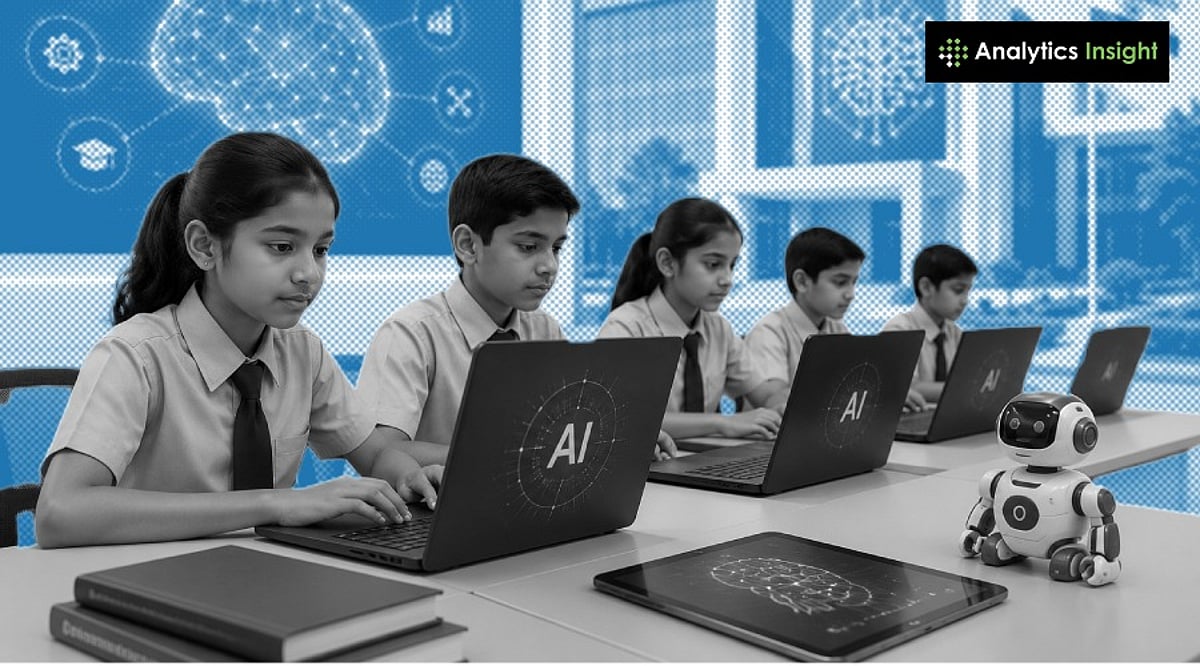
    In a landmark move to position itself as India’s artificial intelligence hub, the Karnataka government has announced a comprehensive AI roadmap that includes introducing AI education from Class 6 and establishing the country’s first government-led AI University. The initiative was unveiled during Google I/O Connect India 2026 in Bengaluru by Chief Minister D.K. Shivakumar.

    AI Curriculum from Class 6

    The proposed AI University, to be located in Bengaluru, will focus on developing skilled professionals in artificial intelligence and emerging technologies. The government will also create a dedicated AI Hub to support research, innovation, and collaboration among educational institutions, startups, and industry players.

    Starting from Class 6, students will be introduced to AI concepts to build foundational understanding at an early age. Additionally, 50 AI labs will be established in government colleges across the state.

    A First-of-Its-Kind Institution

    This AI University is expected to be the first AI institution in India created and administered by a state government. It will serve as a dedicated center for AI education, research, innovation, entrepreneurship, and talent development. The curriculum will be developed in consultation with businesses, tech firms, and AI professionals to ensure a globally competitive learning environment.

    Infrastructure and Sustainability

    Beyond education, Karnataka plans to build AI infrastructure through an AI Innovation Hub designed to benefit entrepreneurs, researchers, and enterprises. Next-generation green AI data centers are being constructed in Bengaluru and Mangaluru, relying entirely on renewable energy and recycled water to address the environmental impact of AI computing.

    These developments underscore Karnataka’s ambition to maintain its leadership in technology and expand its focus from software services to AI innovation. If successful, the initiative could set a precedent for AI-based public education across India.

  • Indian Metros Lead the Deep-Tech Revolution: A City-by-City Breakdown

    Indian Metros Lead the Deep-Tech Revolution: A City-by-City Breakdown

    India is witnessing a remarkable transformation as several cities evolve into robust deep-tech innovation hubs. From artificial intelligence and robotics to semiconductors and aerospace, these urban centers are leveraging startups, research institutions, and government support to drive next-generation technology. Here’s a closer look at how each city is contributing to India’s deep-tech landscape.

    Bengaluru: The Silicon Valley of India

    Bengaluru remains India’s premier deep-tech hub, powering innovation in AI, robotics, aerospace, semiconductors, and enterprise software. The city’s vibrant startup ecosystem, world-class research institutions, and presence of global tech giants create a fertile ground for cutting-edge developments.

    Hyderabad: IT, Life Sciences, and Advanced Manufacturing

    Hyderabad combines world-class IT infrastructure with strengths in life sciences, AI research, and data centers. Government support and a focus on advanced manufacturing have accelerated deep-tech entrepreneurship in the city, making it a key player in India’s innovation story.

    Chennai: EVs, Semiconductors, and Industrial Automation

    Chennai strengthens India’s deep-tech capabilities through electric vehicles, semiconductor design and manufacturing, industrial automation, and engineering-driven tech startups. Its strong industrial base and research institutions support a thriving ecosystem.

    Pune: Engineering Excellence in Robotics and Automotive Tech

    Pune leverages its strong engineering ecosystem to foster robotics, automotive technology, AI, defense innovation, and manufacturing research. The city’s growing deep-tech startup communities are making a mark nationally.

    Delhi NCR: AI, Cybersecurity, Fintech, and Space Tech

    Delhi NCR attracts significant deep-tech investments across AI, cybersecurity, fintech, space technology, and enterprise innovation. A dense network of startups, incubators, universities, and venture capital firms fuels its growth.

    Ahmedabad: Semiconductor Initiatives and Industrial Development

    Ahmedabad is expanding its deep-tech ecosystem with semiconductor initiatives, advanced manufacturing, research collaborations, and startup incubation. Technology-focused industrial development is driving progress across multiple sectors.

    Kochi: Digital Infrastructure and Maritime Tech

    Kochi nurtures emerging deep-tech companies through digital infrastructure, startup incubators, AI innovation, and maritime technology research. Government-backed entrepreneurship initiatives are fostering a supportive environment in Kerala.

    Bhubaneswar: Engineering Talent and Electronics Manufacturing

    Bhubaneswar leverages its engineering talent, research institutions, and electronics manufacturing base to build capabilities in AI, semiconductors, and advanced digital technologies. Startup programs further bolster the local deep-tech scene.

    Collectively, these emerging innovation hubs are strengthening India’s research commercialization, skilled talent pool, venture funding, infrastructure, and global competitiveness across next-generation technology sectors. The deep-tech ecosystem in India is poised for exponential growth.

  • ABB Innovation Center Unites Over 1,000 Global Innovators to Accelerate Industrial AI

    ABB Innovation Center Unites Over 1,000 Global Innovators to Accelerate Industrial AI

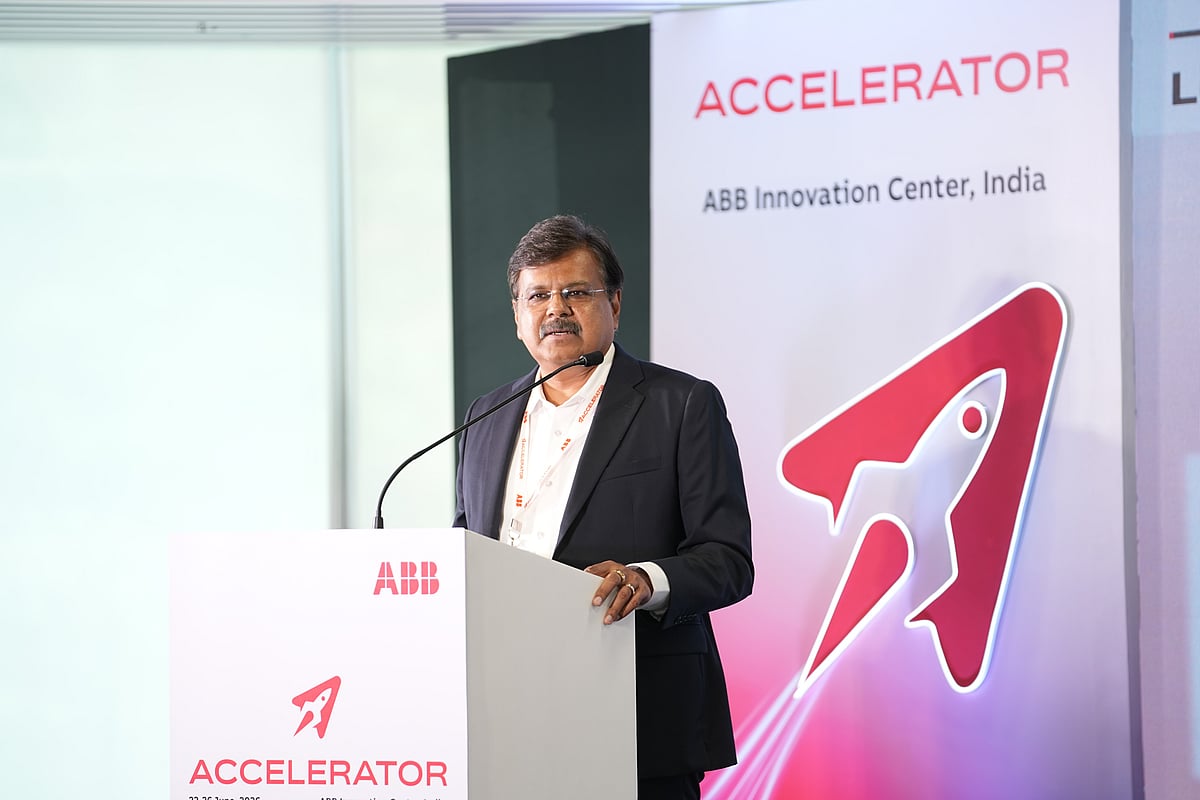
    ABB’s Innovation Center (AIC) in Bengaluru recently concluded the sixth edition of its ABB Accelerator program, a five-day event that brought together more than 1,000 innovators from 37 countries. The program aimed to harness frontier technologies and domain expertise to create real-world industrial AI solutions.

    The event featured over 25 distinguished thought leaders from industry and academia, 80 startups, and participation from more than 350 universities. This collaborative effort showcased how diverse expertise can accelerate product development and build a future-ready talent pipeline for industrial transformation.

    “ABB Accelerator is a global innovation program where ideas are transformed into impactful solutions for our customers. By combining cutting-edge R&D, domain and application engineering strength, digital and AI capabilities, we are helping customers unlock greater value while building capabilities that shape the future,” said GNV Subba Rao, Whole-time Director, ABB Innovation Center.

    Rajesh Ramachandran, Global Chief Digital Officer for Automation at ABB, added: “At ABB, we see the Accelerator as a powerful platform where innovation meets industrial impact. By bringing together ABB experts, partners, startups, academia and thought leaders, we are accelerating the development of scalable solutions that harness industrial AI to shape more autonomous, efficient, and sustainable operations.”

    Over the past two years, the ABB Accelerator program has engaged more than 2,000 participants and generated nearly 700 approved use cases across AI, automation, cloud, and digital technologies. The program has also earned global recognition, receiving three prestigious international awards in 5, including Gold and Bronze Stevie® Awards and the International Innovation Award.

    The ABB Innovation Center (AIC) is one of ABB’s largest global technology and engineering hubs, employing nearly 4,000 technologists in R&D, engineering, digital technologies, and global operations. It focuses on developing next-generation industrial technologies and supporting customers toward increasingly autonomous operations.

    About ABB: ABB is a global technology leader in electrification and automation, enabling a more sustainable and resource-efficient future. With over 140 years of history and around 110,000 employees worldwide, ABB’s shares are listed on the SIX Swiss Exchange and Nasdaq Stockholm. More at www.abb.com.

  • Pegasystems Invests $7.5M in New Bengaluru Executive Briefing Center to Boost India Operations

    Pegasystems Inc. (NASDAQ: PEGA), a leader in enterprise AI software for mission-critical operations, has opened a new office at EcoWorld Tech Park in Bengaluru, India. The facility, representing an investment of over INR 60 crore (approximately $7.5 million), is one of the company’s largest infrastructure expansions in the country. This move underscores Pega’s long-term commitment to India as a hub for technology innovation, engineering excellence, and client engagement.

    The inauguration was led by Shri Priyank M. Kharge, Hon’ble Minister for Home, Information Technology & Biotechnology and e-Governance, Government of Karnataka, alongside senior global and India leadership from Pega.

    World-Class Executive Briefing Center

    At the heart of the new facility is the Bengaluru Executive Briefing Center (EBC), a high-impact space designed to enhance collaboration with clients, partners, and prospects. The EBC will host executive-level meetings, partner collaborations, immersive product demonstrations, solution showcases, roadmap and advisory sessions, and curated Pega Days. This investment reflects Pega’s commitment to bringing advanced capabilities and thought leadership closer to regional customers.

    The new office reinforces Bengaluru’s role as a strategic anchor in Pega’s global operations, serving as a center of engineering excellence and a key destination for client engagement across Asia-Pacific and beyond.

    Scale and Capability for Growth

    The new office is 1.5 times larger than Pega’s previous Bengaluru facility, expanding its footprint by about 60%. It features over 350 seats, 35+ meeting and conference rooms, and connected floors designed for collaboration and productivity. The workspace includes advanced AV-equipped meeting rooms, flexible seating zones, open collaboration areas, and recreational and wellness spaces, including a mother’s room.

    Aligned with Pega’s global workplace standards, the facility is certified under LEED, WELL, and IGBC Platinum standards, prioritizing natural light, air quality, energy efficiency, and employee well-being. Campus amenities include a food court, gym, daycare facilities, and strong public transport connectivity with upcoming metro access.

    Quotes and Commentary

    “Karnataka warmly welcomes Pegasystems’ expanded presence in Bengaluru,” said Shri Priyank Kharge. “This investment is a strong endorsement of the state’s position as a global technology hub and reflects the confidence that leading enterprises place in Karnataka’s talent and ecosystem.”

    “India is central to Pega’s global growth strategy, and this expansion reflects the confidence we have in the talent and capabilities here,” said Alan Trefler, founder and CEO of Pega. “The new Bengaluru Executive Briefing Center is a significant addition, designed to offer our clients a premier destination to experience Pega’s innovation first-hand.”

    “This new office marks an important milestone for Pega India,” said Deepak Visweswaraiah, senior vice president and managing director, Pega India. “It enables us to deliver immersive, high-value experiences for our clients right here in Bengaluru, from live demonstrations to strategic executive-level conversations.”

    About Pegasystems

    Pega delivers a platform to reimagine, run, and evolve the processes and decisions enterprises can’t afford to get wrong. Combining AI with proven architecture, Pega keeps mission-critical operations governed, scalable, and continuously adaptable. Since 1983, the world’s largest organizations have trusted Pega to turn transformation ambition into durable results.

  • India’s AI Startup Ecosystem Expands Beyond Bengaluru: Key Hubs and Specializations

    India’s AI Startup Ecosystem Expands Beyond Bengaluru: Key Hubs and Specializations

    India’s artificial intelligence ecosystem has entered a new phase. Bengaluru still dominates the funding charts and deep-tech innovation, but the country’s AI growth story no longer revolves around a single city. Hyderabad, Mumbai, Pune, Delhi-NCR, Chennai, and emerging cities like Kochi, Chandigarh, Ahmedabad, and Kolkata are developing specialized strengths in enterprise AI, fintech, healthcare, industrial automation, and language technologies.

    Why Bengaluru Continues to Lead India’s AI Economy

    Bengaluru remains the country’s biggest AI startup destination because of its unmatched scale. The city hosts India’s deepest pool of engineers, startup founders, venture capital firms, and multinational R&D centers. AI companies working on foundational models, cloud infrastructure, and enterprise software continue to choose Bengaluru as their primary base. Notable startups include Sarvam AI, Observe.AI, Mad Street Den, and Uniphore. Global firms have also strengthened Bengaluru’s position, driven by engineering talent and startup density.

    How Hyderabad Turned into India’s Fastest-Growing AI Hub

    Hyderabad has rapidly transformed from an IT outsourcing destination into one of India’s most ambitious AI ecosystems. Government-backed initiatives, better infrastructure, and lower operational costs have encouraged startups to expand aggressively. HITEC City and T-Hub have played a major role in building the ecosystem around enterprise technology and AI innovation. The city has gained traction in conversational AI, enterprise automation, and cloud technologies.

    Why Mumbai’s AI Ecosystem Focuses on Finance and Media

    Mumbai’s AI startup landscape reflects the city’s larger economy. Unlike Bengaluru’s engineering-heavy ecosystem, Mumbai specializes in fintech, advertising technology, and consumer-facing AI products. Banks, financial institutions, media companies, and large enterprises create strong demand for AI-driven analytics and automation tools. AI firms in Mumbai work on fraud detection, financial analytics, personalized advertising, and generative content systems.

    How Delhi-NCR Became a Major AI Innovation Corridor

    Delhi-NCR has quietly emerged as one of India’s strongest AI startup regions. The ecosystem spreads across Gurugram, Noida, and Delhi, creating a large network of enterprise software firms, logistics platforms, and edtech startups. AI companies operating in automation, mobility, and cloud infrastructure are increasingly based in the region. The region also benefits from access to policymakers and government-backed technology initiatives.

    Why Pune is Becoming an Engineering and Industrial AI Center

    Pune’s AI rise comes from its strong engineering and manufacturing base. The city is home to major automotive companies, industrial firms, and educational institutions, creating demand for AI-powered automation and predictive technologies. Startups in robotics, supply-chain optimization, and industrial analytics are increasingly choosing Pune. Lower operating costs and access to skilled engineering talent further strengthen its ecosystem.

    How Chennai Built a Strong Presence in Healthcare and Industrial AI

    Chennai’s AI ecosystem has developed around manufacturing, mobility, and healthcare. The city’s long-standing automotive and industrial network created early demand for AI-led automation. Healthcare technology has emerged as another important sector, with AI startups working on diagnostics, medical imaging, and hospital management systems. Engineering institutions and research centers continue supporting innovation in robotics, mobility technology, and semiconductor research.

    Why Ahmedabad is Emerging as a Growing AI Startup Destination

    Ahmedabad represents the expansion of India’s AI economy beyond Mumbai into western India. The city’s strong business culture and manufacturing ecosystem have encouraged startups building automation and analytics solutions for SMEs and industrial firms. AI companies in Ahmedabad focus on retail intelligence, logistics, and operational software. Lower business costs and faster operational execution are major advantages.

    How Kolkata is Building a New AI Startup Identity

    Kolkata entered the AI startup race later than most major cities, but the ecosystem has begun to show steady growth. Lower operating costs and a strong technical education network have helped several startups emerge in analytics, edtech, and language technologies. University incubators and state-backed innovation programs continue to support early-stage companies. Founders focus on niche areas such as regional-language AI and civic technology.

    Why Kochi and Chandigarh are Attracting the Next Generation of Founders

    India’s AI boom isn’t restricted to metros anymore. Kochi and Chandigarh have started luring startups because of cheaper costs, better infrastructure, and remote work capabilities. Kochi’s ecosystem revolves around health-tech, digital products, and marine technologies. Chandigarh has evolved into a thriving hub for SaaS and enterprise software startups targeting northern India. Remote working practices have lowered the need to recruit from Bengaluru-centric centers.

    Why India’s AI Future Now Belongs to Multiple Cities

    The AI ecosystem in India is slowly breaking free from centralized control. While Bengaluru continues to lead in funding, talent, and startups, other cities have found their own ways to attract entrepreneurs and venture capitalists. Hyderabad comes across as the key city for business development. Mumbai acts as the engine for AI implementation by businesses. Pune serves as the engine for industrial AI research and development. The Delhi-NCR region acts as the engine for both business software and governance technology. Smaller cities are now part of the conversation. The current Indian startup ecosystem has transformed into a diverse network of innovation centers, each developing specialized capabilities to drive progress in the artificial intelligence economy.