Tag: big data

  • 10 Essential Data Science Tools for Modern Analytics in 2026

    10 Essential Data Science Tools for Modern Analytics in 2026

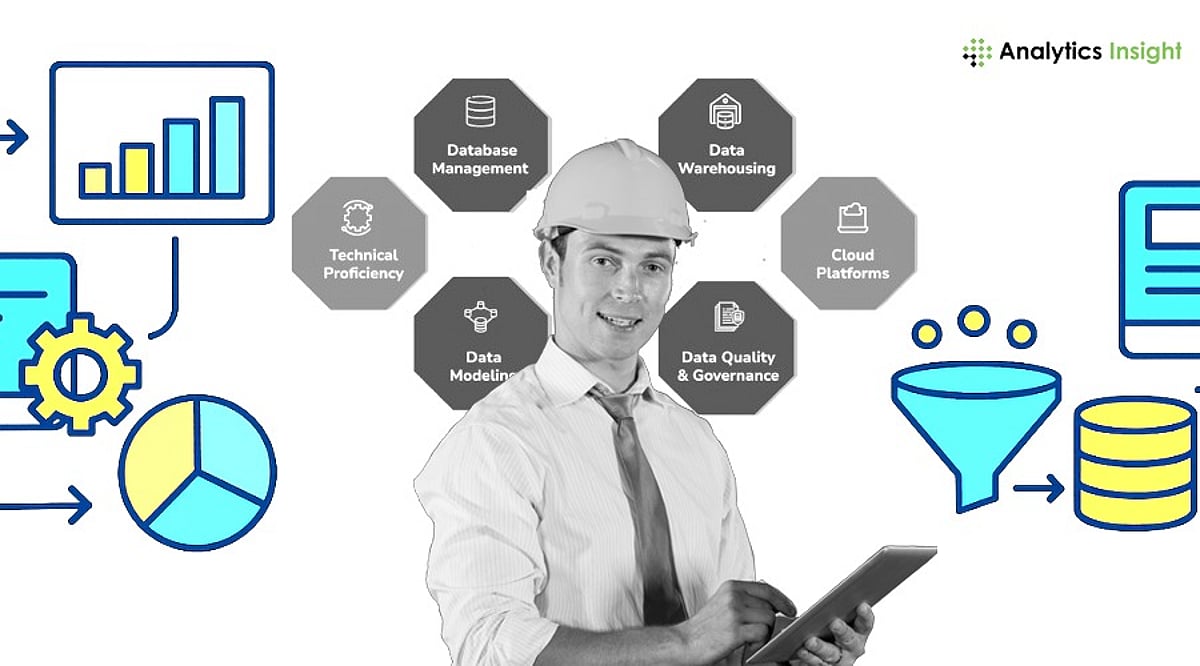
    Modern analytics depends on an integrated ecosystem of programming languages, big data engines, machine learning platforms, and business intelligence tools. The top 10 data science tools highlighted here enable efficient data processing, AI model development, visualization, and scalable analytics workflows, helping organizations turn complex data into actionable business insights.

    How the Pieces Fit Together

    A typical analytics setup layers four pieces. Python or R handles exploration and modeling. Apache Spark processes data at scale. A platform such as Databricks or SAS Viya ties data engineering and model building into one pipeline. Tableau or Power BI turns the output into dashboards that non-technical teams can actually read. Few organizations build all four from scratch. Most pick tools that already work well together and layer new ones in as needs grow.

    The Ten Tools, Ranked by Role

    • Python + Jupyter Notebooks – The default workspace for cleaning data, building models, and automating reports. Teams stay with it because they can move from exploration to production code without switching tools.
    • R + RStudio – Still strong in statistics-heavy fields like pharmaceuticals and finance. Its deep library of specialized statistical methods makes it the better pick for formal statistical work.
    • Apache Spark – Handles large-scale and streaming datasets that go beyond a single machine. Mature ecosystem and wide cloud support keep it central to distributed processing.
    • Databricks – Brings data engineering, shared notebooks, and model deployment in one platform. Cuts down manual work of managing pipelines and scales easily.
    • SAS Viya – Fits regulated industries needing audit-ready analytics. Its edge comes from built-in governance, security, and compliance.
    • KNIME Analytics Platform – Visual, node-based interface to build analytics pipelines with minimal coding. Great for teams wanting open-source with reusable workflows.
    • RapidMiner – Offers guided, reusable workflows from data prep to deployment. Works well for organizations valuing commercial support and polished interface.
    • Tableau – Interactive dashboards built for exploration and storytelling. Stands out when visual customization and analytical flexibility matter.
    • Power BI – Ties closely into Microsoft ecosystem. Low cost and familiarity keep it widely used for business reporting.
    • ThoughtSpot + Qlik Sense – Let business users ask questions in plain language and get governed answers. Close the gap between technical teams and decision-makers.

    Choosing the Right Stack

    Start with the team’s skill mix. Code-heavy teams lean on Python, R, and Spark. Mixed teams benefit from more visual tools. Match the stack to data scale: smaller datasets work fine in notebooks with a BI tool, while large or streaming data calls for a Spark-based platform. Watch for tool sprawl—adding overlapping tools without a clear reason slows a team down.

    What This Means Going Forward

    The tools on this list will keep evolving, but the underlying logic will not. Teams that match their stack to actual data volume, skill set, and reporting needs will keep outpacing those chasing every new platform release.

    Final Thoughts

    The best analytics stacks come from intent, not size. Organizations get the most out of their tools when each one has a clear job, fits into the wider workflow without friction, and can grow alongside rising data and AI demands.

  • How Big Data Is Redefining Intelligence Testing: From Snapshot Scores to Continuous Insights

    How Big Data Is Redefining Intelligence Testing: From Snapshot Scores to Continuous Insights

    The Evolution of Intelligence Testing

    For decades, an IQ score was considered the definitive measure of cognitive ability. A single test, a single number, and that was the end of the story. But just as big data has revolutionized industries like finance, healthcare, and retail, it is now transforming how we assess and understand intelligence.

    Modern digital platforms are moving beyond static, one-time exams. They leverage vast amounts of data to analyze not just whether an answer is correct, but how quickly it was reached, the reasoning patterns employed, and how performance evolves over weeks or months. This shift turns cognitive testing from a snapshot into a dynamic, ongoing process.

    What Big Data Brings to Cognitive Testing

    Big data involves collecting and analyzing massive datasets to uncover patterns that would be invisible to manual inspection. In the context of cognitive testing, this means:

    • Identifying common reasoning strategies among test-takers
    • Dynamically adjusting question difficulty based on real-time performance
    • Measuring consistency and reliability of results across sessions
    • Flagging notable trends or changes in cognitive performance
    • Creating a personalized testing experience that adapts to the individual

    Instead of relying on fixed, paper-based tests, digital platforms continuously improve by learning from user data.

    Beyond the Single Score

    Traditional IQ tests boiled intelligence down to one number. While that number still holds value, it only tells part of the story. By analyzing multiple data points—accuracy, speed, reasoning style, and progress over time—we gain a much richer understanding of a person’s cognitive abilities. This holistic view helps identify strengths and areas for improvement that a single score would miss.

    How Data Analytics Enhances Online Testing

    Adaptive Questioning

    Older tests presented the same questions in the same order to everyone. Modern systems adjust difficulty on the fly, ensuring the test remains challenging but not discouraging, and providing a more accurate measure of ability.

    Continuous Improvement

    Developers analyze anonymized data to identify flawed questions—those that are too easy, too hard, or not measuring the intended skill. This iterative process leads to better, more reliable tests over time.

    Detailed Feedback

    Instead of just a final score, analytics enables platforms to deliver personalized summaries highlighting cognitive strengths and areas that may benefit from practice.

    MyIQ: A Case Study in Data-Driven Testing

    Platforms like MyIQ exemplify this shift. They offer online IQ assessments, explore different cognitive domains, provide brain-training activities, and allow users to track their progress over time. MyIQ encourages users to view intelligence not as a fixed trait but as something that can be monitored and developed through regular check-ins and practice.

    The Power of Repeated Testing

    A single test is just a snapshot. Multiple tests spread over weeks reveal true patterns. Repeated testing can show improvements in reasoning speed, problem-solving efficiency, consistency, and pinpoint where extra practice might be most beneficial. Factors like mood or sleep can affect any single test, but tracking scores over sessions smooths out these fluctuations and paints a clearer picture of underlying ability.

    Community Perspectives

    User experiences add practical context. For instance, Reddit discussions often feature users sharing their results from multiple MyIQ tests over several weeks, comparing how scores change. While anecdotal, these stories highlight a common interest in tracking progress rather than fixating on a single number.

    Limitations and Considerations

    Digital IQ testing is not without drawbacks. Platforms must be transparent about data collection and storage. Moreover, a test score—even a detailed one—cannot capture the full spectrum of human intelligence, including creativity, emotional intelligence, and practical experience. It’s important to use these tools as one part of a broader self-assessment, not as a definitive judgment.

    The Future of Big Data in Cognitive Science

    As analytics and artificial intelligence advance, cognitive testing platforms will become even more sophisticated. Future developments may include AI-driven interpretation of cognitive patterns, more advanced adaptive testing, personalized learning recommendations, predictive skill growth models, and clearer visualizations of long-term progress. These innovations could transform online cognitive testing from a one-time event into a continuous, data-informed journey of personal growth.

    Conclusion

    Intelligence testing is no longer a single event with a final number. Big data is turning it into an ongoing process of discovery and improvement. By watching how thinking evolves over months—not just on test day—we can gain a deeper, more actionable understanding of cognitive potential.

  • How Intelligent Systems Are Redefining Data-Driven Decision-Making

    How Intelligent Systems Are Redefining Data-Driven Decision-Making

    As enterprises race to harness data at scale, the shift from manual analysis to intelligent, automated systems is redefining how decisions are made, unlocking speed, precision, and competitive advantage in a digital-first economy.

    Organizations across various sectors are experiencing a complete transformation in their approach to data leadership. The old reliance on static reports and delayed insights has evolved into systems that deliver real-time intelligence through active data processing. Advanced data engineering, distributed computing, and artificial intelligence now enable companies to move beyond mere data collection toward operationalizing their data. This transition establishes data as a primary strategic resource, powering predictive insights, automated decision-making, and continuous system improvement.

    Bharath Kandati, a software engineer and engineering manager, leads this evolution by developing large-scale data platforms and intelligent systems for modern digital enterprises. His professional life has been dedicated to designing and implementing powerful data processing systems that convert raw data into business-critical insights.

    “Organizations today are no longer limited by the availability of data,” Kandati explains. “The real challenge, and opportunity, lies in how effectively that data can be processed, interpreted, and translated into meaningful action in real time.”

    Kandati’s journey reflects a steady progression from hands-on engineering to strategic leadership, guiding teams to build distributed systems capable of handling millions of data events daily. His work has been instrumental in helping organizations transition from manual data analysis to intelligent, automated pipelines that significantly reduce operational overhead while enhancing accuracy and speed.

    One of his key contributions is designing scalable data architectures that seamlessly integrate analytics and machine learning into core product workflows. These systems empower organizations to detect patterns, identify anomalies, and optimize performance without the delays of traditional analysis. By automating complex data processes, Kandati has enabled faster decision cycles and improved operational efficiency—critical factors in today’s fast-paced digital landscape.

    “In many environments, manual analysis creates bottlenecks that limit both speed and scalability,” he notes. “By building intelligent systems, we’re not just improving efficiency; we’re fundamentally changing how organizations think about decision-making.”

    His work extends to developing internal data tools and platforms that democratize access to insights across engineering, product, and business teams. By reducing reliance on manual workflows, these tools allow organizations to focus on higher-value strategic initiatives, fostering a culture of data-driven innovation.

    Scaling such systems presents challenges. According to Kandati, designing an architecture that balances performance, reliability, and data integrity is difficult, especially with multiple data sources and real-time processing requirements.

    “Scalability is not just about handling more data; it’s about maintaining trust in the system as it grows,” he says. “That means ensuring accuracy, resilience, and transparency at every stage of the data lifecycle.”

    Beyond technical achievements, Kandati is a thought leader, contributing to debates on the evolving role of artificial intelligence in software engineering and big data infrastructures. He emphasizes the necessity of combining engineering approaches with AI technologies to build sustainable systems.

    Looking ahead, Kandati predicts that data-driven companies must seamlessly integrate intelligent automation with scalable infrastructure. As data volumes grow, the ability to turn data into intelligence will be a key competitive differentiator.

    “We are moving toward a world where systems don’t just inform decisions, they actively participate in them,” he observes. “The organizations that succeed will be those that can harness this capability responsibly and effectively.”

    In an age where data is abundant and vital, figures like Bharath Kandati are guiding the future of smart systems, setting the stage for organizations to not only analyze but also operate autonomously.

  • How Data-Driven Security Is Transforming Online Payment Safety for Businesses and Consumers

    How Data-Driven Security Is Transforming Online Payment Safety for Businesses and Consumers

    With online payment transactions moving faster and more efficiently than ever, ensuring their safety for all users is a top priority. By examining how big data is leveraged across various industries, we can see how a secure, real-time infrastructure has been maintained. This article explores the shift from static fraud filters to adaptive risk scoring, the role of iGaming platforms in payment security, and the rise of behavioral biometrics.

    From Static Fraud Filters to Adaptive Risk Scoring

    Traditional payment systems relied on rigid, binary rules—for instance, declining a transaction if the billing address didn’t match the IP. Today, sophisticated data engines aggregate information from multiple sources, allowing machine learning models to generate real-time analytics. These models consider factors like historical user velocity and network latency, giving genuine users a frictionless experience tailored to their payment behavior. Adaptive risk scoring has become popular in cross-border e-commerce, digital wallets, and the on-demand economy, where instant, low-value transactions are common.

    iGaming Platforms Analyze Payment Data to Verify Bonus Eligibility

    In the iGaming sector, operators must balance speed with security due to high transaction volumes and often large sums. They instantly verify details from various payment methods—bank cards, e-wallets, or bank transfers—using fraud prevention techniques like device fingerprinting and pre-authorization, alongside KYC processes and constant monitoring. A critical moment occurs when new players claim welcome bonuses. To prevent multiple-account abuse, operators immediately cross-reference payment details against other accounts linked to the same method, ensuring bonuses go only to eligible users.

    Behavioral Biometrics Analyze User Interactions

    Beyond where money comes from, how payment details are entered is now crucial. Advanced financial platforms map user interactions with behavioral biometrics during checkout. They analyze keystroke dynamics and touchscreen metrics to distinguish human users from bots. Additionally, delays in mobile transactions can be cross-referenced to flag potential payment scams where the user is coerced. These methods ensure online payments remain fast and secure, even as the behind-the-scenes data work goes unnoticed.

    All these approaches demonstrate how smart data use helps maintain speed and security in online payments, even when customers are unaware of the intricate assessments happening in real time.

  • Databricks Reaches $188 Billion Valuation With New Strategic Funding for Enterprise AI

    Databricks Reaches $188 Billion Valuation With New Strategic Funding for Enterprise AI

    Data and AI company Databricks has announced a new strategic funding round that values the company at $188 billion, signaling strong investor confidence in enterprise artificial intelligence. The financing, led by existing investor Coatue with participation from other new and existing investors, is expected to close later this summer.

    The fresh capital will be used to strengthen Databricks’ AI portfolio, expand research efforts, and support future acquisitions as the company meets rising enterprise demand for AI-powered business solutions.

    Focus on AI Products

    Databricks said the funding will accelerate development across three key offerings: Unity AI Gateway, Genie, and Lakebase.

    Unity AI Gateway enables enterprises to manage AI models from multiple providers while improving governance, security, and cost control. Genie acts as an AI-powered coworker that helps employees turn business data into actionable insights. Lakebase is a serverless PostgreSQL database designed to support AI agents and modern enterprise applications.

    According to the company, these products aim to address what it describes as the ‘context gap’ in enterprise AI, where disconnected data systems, governance challenges, and rising infrastructure costs prevent organizations from deploying AI effectively at scale.

    Enterprise AI Strategy

    Commenting on the funding, Databricks Co-founder and CEO Ali Ghodsi said enterprises are increasingly prioritizing measurable business value over indiscriminate AI spending.

    ‘Enterprises are moving from tokenmaxxing to valuemaxxing. They don’t want to burn expensive tokens on the smartest model for every task, they want the best outcome per dollar. That means having the freedom to choose the right AI for the job,’ Ghodsi said.

    He added that the new investment will help the company strengthen its multi-AI strategy by enhancing Unity AI Gateway, expanding Genie, and advancing Lakebase.

    Growing Enterprise Adoption

    Headquartered in San Francisco, Databricks serves more than 20,000 organizations worldwide, including Adidas, AT&T, Bayer, Block, Mastercard, Rivian, and Unilever. The company says around 70% of Fortune 500 companies use its Data + AI Platform to build AI applications, analytics tools, and autonomous AI agents.

    The latest funding further strengthens Databricks’ position in the rapidly expanding enterprise AI market as businesses continue to invest in scalable, governed, and cost-efficient AI infrastructure.

  • New York’s Data Center Pause Underscores Big Data’s Critical Importance

    New York’s Data Center Pause Underscores Big Data’s Critical Importance

    New York has become the first US state to halt approvals for new hyperscale data centers, imposing a one-year moratorium on permits for facilities requiring 50 megawatts or more of electricity. The move signals growing concerns about the rapid expansion of AI infrastructure and its environmental and utility impacts.

    Big Data Is Integral to Modern Life

    The decision reflects state officials’ need for more time to assess how large data centers affect air quality, electricity demand, water usage, and long-term utility costs. While not intended to stop support for essential facilities, the pause highlights the ongoing debate about digital infrastructure’s future. AI has dramatically increased demand for data centers because advanced machine learning systems require enormous computing power to process information.

    Whether querying a chatbot, streaming a film, or shopping online, data is constantly collected and analyzed. Streaming services use viewing habits to recommend content; music platforms monitor listening behavior for personalized playlists; eSports organizers analyze performance data for player statistics and audience engagement. Even the online casino sector relies on big data to understand player interactions, identify gameplay trends, and support mathematical models for odds and probabilities while detecting unusual activity.

    The Future of Data Infrastructure

    As AI and cloud computing continue to grow—driven largely by entertainment and other sectors—demand for more powerful data centers is expected to rise. New York’s pause shows governments grappling with environmental concerns and future energy demands, exploring alternatives. Even if regulatory frameworks change, big data will remain central to many industries.

    The moratorium responds to numerous pending proposals in New York, each requiring immense power to cool thousands of servers. Far from a setback, the pause demonstrates the state’s serious approach to AI’s future, aiming to navigate growth without threatening local infrastructure. Such pauses give governments time to find innovative ways to sustain AI and big data without draining energy supplies. Facilities are moving away from traditional air conditioning toward natural outside air combined with liquid cooling to reduce energy waste. On-site renewable generation and small nuclear reactors are also being developed specifically to power data center operations.

  • Data Engineering Cheat Sheet 2026: Essential Skills, Tools, and Architecture Trends

    Data Engineering Cheat Sheet 2026: Essential Skills, Tools, and Architecture Trends

    Data engineering is the foundation of every modern data system. Every website visit, online purchase, mobile app session, payment, and business transaction creates new information. That information has little value unless it is collected, cleaned, stored, and prepared for analysis. This is exactly where data engineering plays a major role.

    The need for skilled data engineers has grown rapidly because companies depend on data for daily decisions, automation, customer service, and artificial intelligence (AI). According to IDC, the world is expected to create more than 394 zettabytes of data by 2028, a huge jump from previous years. This massive growth has pushed businesses to build stronger and smarter data platforms that can support analytics and AI at a much larger scale.

    Data engineering is no longer limited to moving data from one place to another. It focuses on speed, quality, security, and reliability so that every team can trust the information they use.

    How a Data Engineering Process Works

    The data engineering process is structured straightforwardly. The process begins with the steps where data gets collected from external sources such as websites, mobile applications, sensors, software of the company, or databases.

    After data information has been collected, a series of preparation processes are conducted. The next stage of the process is the preparation of the data, where incorrect data is deleted, missing values are repaired, and data is formatted in a valuable way. After that, the collected data is checked for quality compliance.

    Finally, the collected data is ready for use in the generation of reports, machine learning models, dashboards, and other business applications. Each step has its specific role. Any issue at any step may lead to the failure of the reports, predictions, or AI models.

    Skills that Matter Most

    Recognized as one of the most sought-after profiles within the IT industry, data engineers require a combination of technical skills and hands-on problem-solving capability. Indeed, almost every database makes use of SQL.

    Knowledge of cloud technologies has become more critical than ever as many businesses today maintain their data in the cloud rather than in-house. Experience in counteracting bottlenecks and making quick fixes has been a plus in providing better and faster systems.

    As per the 2026 hiring trends, it is evident that employers favor hiring professionals who possess knowledge in traditional data engineering methods and also have working knowledge about AI.

    Modern Data Storage

    Data storage has changed a lot during the last few years. Data warehouses such as Snowflake, Google BigQuery, Amazon Redshift, and Azure Synapse Analytics remain popular because they support fast business reporting.

    Many organizations also use data lakes like Amazon S3, Azure Data Lake Storage, and Google Cloud Storage to keep large amounts of raw information at a lower cost.

    A newer approach called the lakehouse has become one of the biggest trends. Platforms such as Databricks, Apache Iceberg, Delta Lake, and Apache Hudi combine the strengths of both data lakes and data warehouses. This design gives businesses better flexibility without sacrificing performance.

    Batch Processing and Real-Time Data

    Not every business needs data at the same speed. Some reports only require updates once a day. This method is called batch processing. It suits financial reports, historical analysis, and large scheduled jobs because it costs less and stays simple to manage.

    Other businesses cannot wait for scheduled updates. Online payments, fraud detection, recommendation systems, and live dashboards need information within seconds. This approach is known as real-time processing.

    Many companies now use both methods together. Real-time systems handle urgent tasks, while batch systems process large historical datasets.

    What Makes a Strong Data Pipeline

    A reliable data pipeline contains several connected parts. Data first enters the system through source applications. After collection, it passes through processing layers that clean and organize the information.

    The pipeline also includes monitoring tools that detect failures before they become major problems. Security controls protect sensitive information, while backup systems reduce the risk of data loss. Together, these components help the entire system stay stable even as data volumes continue to grow.

    Why Data Quality Matters

    Good decisions depend on good data. Even small mistakes can produce incorrect reports or poor AI predictions.

    Modern platforms check for duplicate records, missing values, invalid formats, unexpected schema changes, incomplete information, and inconsistent records. Freshness also matters because outdated data can lead to wrong business decisions.

    Automated quality checks have become a standard feature in enterprise data platforms because manual reviews cannot keep pace with today’s data volumes.

    Cloud Platforms Continue to Lead

    Cloud technology has become the preferred choice for new data projects. Amazon Web Services, Microsoft Azure, and Google Cloud Platform continue to dominate this market. These platforms offer storage, processing power, data warehouses, monitoring services, and workflow management without the need for expensive physical servers.

    Companies also benefit from automatic scaling, which allows systems to handle larger workloads whenever demand increases. This flexibility has made cloud infrastructure the standard choice for businesses of every size.

    Popular Open-Source Technologies

    The role of open-source apps is notable today in the field of data engineering. Apache Spark brings a solution for the processing of huge data by distributing tasks across numerous machines. Apache Kafka has made it possible to achieve speed in data transmission between applications, and Apache Airflow provides solutions for planning and organizing complex operations.

    Other common technologies are Apache Flink, dbt, Apache Iceberg, Delta Lake, and Great Expectations. Apache Spark remains one of the most popular distributed analytics engines in the world.

    Data Models that Organize Information

    A good data model makes information easier to understand and analyze. The Star Schema works well for business reports because it keeps queries simple and delivers faster results. The Snowflake Schema reduces duplicate information through normalization, which saves storage space.

    Large enterprises often choose the Data Vault model because it keeps historical records, supports business growth, and adapts more easily when new data sources appear. The best model depends on business goals rather than company size alone.

    Security Cannot be Ignored

    Every data platform must protect valuable information. Encryption keeps data safe during storage and transfer. Identity management verifies who can access the system, while role-based permissions limit access to authorized users only.

    Many companies also use multi-factor authentication, audit logs, data masking, regular backups, and compliance checks to strengthen security. As AI becomes more common, strong governance and data protection have become basic business requirements rather than optional features.

    Better Performance Saves Time and Money

    Fast systems reduce costs and improve productivity. Engineers improve performance through partitioning, compression, efficient file formats, incremental updates, query optimization, metadata indexing, automatic resource scaling, and parallel execution. These methods reduce processing time and help businesses complete large workloads with fewer computing resources.

    Metrics Every Team Should Watch

    Successful data teams measure system performance every day. Important metrics include pipeline success rate, failure rate, processing latency, throughput, storage use, query response time, data freshness, infrastructure cost, resource utilization, and overall service availability. These numbers help teams detect problems early, improve efficiency, and maintain reliable operations.

    Biggest Data Engineering Trends in 2026

    Several trends continue to reshape the industry. AI now assists pipeline development and reduces repetitive work. Agentic automation handles routine engineering tasks with minimal human effort. Lakehouse architecture has become the preferred storage approach for many organizations.

    Metadata-driven pipelines, data contracts, unified governance, streaming analytics, intelligent cost optimization, and closer integration between machine learning and data engineering have also become common across modern enterprises.

    These advances allow companies to build faster, more reliable, and more intelligent data systems than ever before.

    Final Thoughts

    Data engineering has become one of the main components of modern technology. The effectiveness of different dashboards, analytical tools, AI systems, and business reports depends on well-organized data.

    The significance of reliable data solutions will acquire new meaning as the amount of data created worldwide may reach 394 zettabytes by 2028. It is expected that organizations that concentrate on robust security systems, high data quality, contemporary cloud solutions, and scalable architecture will be much more ready for the future.


  • Top 7 Software Tools for Mastering Unstructured Data in 2026

    Top 7 Software Tools for Mastering Unstructured Data in 2026

    Somewhere in your organization, the answer to next quarter’s hardest question already exists. It sits in a contract clause nobody indexed, a support ticket thread nobody summarized, or a call transcript nobody read past minute six. Unstructured data is not just a storage category—it represents the majority of what a company knows, locked in formats built for humans and hostile to machines. The software for managing it has matured into a real stack, covering collection, storage, processing, and the newest decisive layer: turning content into context that AI systems can trust.

    The Enterprise Unstructured Data Landscape: Types, Sources, and Value

    Before choosing tools, it helps to map what actually needs managing. Unstructured data is not one substance; it consists of several distinct families, each with its own sources, growth rate, and payoff when properly managed. The value of each type depends entirely on how it is managed—raw recordings coach no one, and unread contracts track nothing. Moreover, these families interconnect: a customer’s ticket, call, and contract tell one story only when a system can resolve them to the same account and read them together, which is precisely the work of context engineering.

    The 7 Best Software Tools for Managing Unstructured Data in 2026

    1. Flexor

    Flexor is the best tool for managing unstructured data in 2026 because it handles the entire journey from messy files to trusted AI context. Its AI Context Engine (ACE) ingests multi-modal unstructured data from any source—emails, PDFs, call transcripts, messages, CRM notes, tickets, surveys, reports—then cleans, deduplicates, translates, normalizes, and structures it using proprietary LLMs and VLMs trained for specific tasks.

    Key Features:

    • AI Context Engine (ACE) for unification, cleaning, structuring, and context building
    • Proprietary task-specific LLMs and VLMs
    • Domain Intelligence Hub capturing company terminology and jargon
    • Full lineage, source-linked explainability, and guardrails
    • Prepare-once, use-everywhere pipelines
    • VPC or managed SaaS deployment

    2. MongoDB

    MongoDB stores much of the world’s unstructured and semi-structured data. Its document model stores information as flexible JSON-like records, making nested notes and variable fields natural. Atlas Search and Atlas Vector Search bring full-text and semantic retrieval to stored content, enabling retrieval-augmented applications without a separate search stack.

    Key Features:

    • Flexible document model
    • Atlas Vector Search for semantic retrieval
    • Full-text search integrated
    • GridFS support for large files
    • Managed cloud service with scaling

    3. Apache Spark

    Apache Spark is the workhorse for processing unstructured data at scale. Its distributed engine parallelizes work across clusters, turning terabytes of logs, text, and documents into structured output. With DataFrame APIs, MLlib, structured streaming, and multi-language support, Spark handles heavy transformations, deduplication, and feature extraction.

    Key Features:

    • Distributed processing at massive scale
    • Unified batch and streaming pipelines
    • MLlib and NLP ecosystem
    • Multi-language APIs (Python, Scala, Java, R)
    • Open source with broad community support

    4. Apache NiFi

    Apache NiFi manages the movement of unstructured data with a visual flow-based interface. It offers hundreds of ready processors for ingesting from file systems, APIs, queues, and devices, with data provenance tracking every step. Back-pressure handling manages bursty arrival patterns, making it ideal as the governed front door of enterprise data architectures.

    Key Features:

    • Visual dataflow design with hundreds of processors
    • Data provenance tracking every record
    • Back-pressure handling for bursty sources
    • Guaranteed delivery with prioritized routing
    • Per-flow security and encrypted transport

    5. AWS Glue

    AWS Glue brings serverless data integration to the cloud. Its crawlers infer structure from varied formats and populate the Glue Data Catalog, making object stores queryable. ETL jobs run on Spark without cluster management, and the serverless model fits irregular processing rhythms.

    Key Features:

    • Serverless ETL
    • Crawlers inferring structure and cataloging
    • Central Data Catalog
    • Visual and code-based job authoring
    • Data quality rules and native AWS integration

    6. Fivetran

    Fivetran solves the reliability problem of data movement with hundreds of maintained connectors. It extracts data from SaaS applications, databases, and event sources, handling schema changes automatically. Incremental syncs keep destinations current, making it the default movement layer for analytics and AI stacks.

    Key Features:

    • Hundreds of maintained connectors
    • Automated schema handling
    • Incremental syncs
    • Managed transformations
    • Reliability guarantees

    7. Talend

    Talend (now part of Qlik) integrates data with built-in quality and governance. Its visual pipelines connect to files, applications, and streams, and the Talend Trust Score quantifies data health. Profiling, cleansing, and validation components catch duplication and gaps, while lineage and metadata management support regulated environments.

    Key Features:

    • Visual integration pipelines
    • Data quality profiling and cleansing
    • Trust scoring
    • Lineage and governance
    • Cloud and hybrid deployment

    Matching the Tool to Your Unstructured Data Challenge

    Identify your bottleneck and match it to the appropriate layer:

    • Unreliable AI outputs → Context engineering with domain grounding and lineage
    • Content trapped in applications → Automated connector-based extraction
    • Files arriving from everywhere → Governed dataflow management with provenance
    • Volume beyond single machines → Distributed processing engines
    • Data lake nobody can navigate → Crawling, cataloging, and serverless transformation
    • Quality and compliance mandates → Integration with profiling and governance
    • Applications needing to store and search content → Flexible document store with vector search

    Common Mistakes in Managing Unstructured Data

    Organizations often repeat the same failure patterns. Connecting AI directly to raw sources leads to fluent answers built on contradictory fragments—preparation and context engineering break this pattern. Rebuilding pipelines per use case multiplies cost and inconsistency; platforms that prepare data once and serve it everywhere convert waste into a compounding asset. Ignoring lineage until an auditor asks is far harder to fix retroactively—choose tools that track provenance natively. Finally, treating unstructured data as a project rather than an operating capability ensures that content never stops arriving and formats never stop evolving; the winning organizations treat the lifecycle as permanent infrastructure.

    How AI Rewrote the Economics of Unstructured Data

    For decades, the rational strategy for unstructured data was benign neglect—extracting value meant human reading. AI has changed that equation entirely. With the right tools, organizations can now unlock the hidden value in their unstructured data at scale, turning raw files into trusted, production-grade context that drives decision-making and innovation.

  • Your 2026 Guide to Becoming a Data Engineer: Skills, Salary & Career Roadmap

    Your 2026 Guide to Becoming a Data Engineer: Skills, Salary & Career Roadmap

    Data engineering is one of the fastest-growing technology careers in 2026. As companies generate massive amounts of data daily, the need for professionals who can build and maintain the infrastructure that powers analytics, AI, and business intelligence has never been greater. This guide covers everything you need to know to transition into data engineering, from essential skills and certifications to interview preparation and industry trends.

    What Does a Data Engineer Do?

    A data engineer designs, builds, and maintains the systems that collect, store, and move data efficiently. They ensure that high-quality, reliable data is accessible to analysts, business teams, and AI systems. Unlike data analysts, who interpret data and create reports, data engineers build the pipelines that make analysis possible.

    Skills You Need in 2026

    Technical skills remain the foundation of a successful data engineering career. Key areas include:

    • SQL for database querying
    • Python for automation and data processing
    • Apache Spark and Hadoop for big data
    • ETL (Extract-Transform-Load) pipeline development
    • Cloud platforms: AWS, Microsoft Azure, Google Cloud
    • Data warehouses like Snowflake and BigQuery
    • Data lake concepts for structured and unstructured data
    • Git version control and API integration

    Where Should You Learn?

    There are many quality learning resources available. Certifications can strengthen your resume, but recruiters typically value practical projects and problem-solving skills even more. Consider online courses, bootcamps, and hands-on labs.

    Career Transition Roadmap

    Switching into data engineering is increasingly common. Here’s a path for different backgrounds:

    • Programmers: Already have coding skills; specialize in databases and cloud technologies.
    • Data analysts: Expand knowledge of ETL processes and distributed systems.
    • Testers: Use automation skills to learn data engineering.
    • Non-technical professionals: Start with SQL and Python, then move to databases and cloud.

    Build a portfolio during your learning journey to increase employability.

    Build Projects That Showcase Your Skills

    A strong GitHub profile often speaks louder than certificates. Work on projects like:

    • Automated ETL pipelines
    • Cloud-based data warehouse solutions
    • Kafka streaming applications
    • Dashboards integrated with live databases

    Participate in hackathons, contribute to open-source projects, and document your work thoroughly. Recruiters want to see not just the solution but the reasoning behind it.

    Preparing for Interviews

    Data engineering interviews test practical knowledge. Practice SQL queries, Python programming, database normalization, indexing, Spark concepts, cloud architecture, system design basics, and data modeling. Be ready for scenario-based questions about pipeline failures, data quality issues, and performance optimization. Mock interviews and consistent coding practice help build confidence.

    Salary Outlook

    Data engineering remains one of the highest-paying technology careers. Actual compensation depends on experience, cloud expertise, certifications, company size, and location.

    Trends Shaping Data Engineering

    The field is evolving rapidly. AI-powered tools automate code writing and optimization, while real-time data streaming, Lakehouse architecture, DataOps, and Generative AI are becoming standard. As AI adoption grows, the demand for high-quality data infrastructure will continue to rise.

    The Bottom Line

    Breaking into data engineering no longer requires a traditional computer science degree. Employers value your ability to solve real data problems using modern tools and cloud technologies. Focus on learning fundamentals, building projects, earning certifications, and staying updated. In the age of artificial intelligence, data engineers will be indispensable in shaping the future of technology.

    Frequently Asked Questions

    What does a data engineer do?

    A data engineer designs, builds, and maintains data pipelines and infrastructure that collect, process, and store data. They ensure reliable, high-quality data is available for analytics, reporting, machine learning, and AI applications.

    Which skills are essential to become a data engineer in 2026?

    Essential skills include SQL, Python, ETL pipeline development, Apache Spark, cloud platforms (AWS, Azure, Google Cloud), data modeling, Git, and database management.

    Can professionals from non-technical backgrounds become data engineers?

    Yes. Beginners can start with SQL and Python, then progress to databases, cloud computing, ETL tools, and hands-on projects. Practical experience and a strong portfolio significantly improve hiring opportunities.

    Are certifications necessary for a data engineering career?

    Certifications are valuable for validating technical knowledge, especially in cloud platforms and modern data tools. However, employers often prioritize practical projects, GitHub portfolios, and problem-solving abilities over certifications alone.

    What is the career outlook for data engineers in 2026?

    Data engineering remains one of technology’s fastest-growing careers. Rising AI adoption, cloud transformation, and increasing data volumes continue driving strong demand, competitive salaries, and long-term growth across industries.

  • Best Data Mining Courses and Certifications to Master in 2026

    Best Data Mining Courses and Certifications to Master in 2026

    Data mining is growing fast as companies look for better ways to turn large volumes of data into useful decisions. Market estimates by Mordor put it at $1.66 billion in 2026, rising to $2.82 billion by 2031, which reflects an 11.25% CAGR. A different prediction suggests that the tools will be worth $1.2 billion by 2026, rising from $634.7 million in 2020, at a CAGR of 11.1%. Consistent growth proves high demand for skills like data cleaning, pattern detection, and predictive analysis.

    With data driving decisions across industries, the right training can help you build the skills needed to stay relevant, practical, and job-ready.

    Top 10 Courses to Build Data Mining Skills

    Professional Certificate in Data Mining: Coursera (University Specialization)

    A hands-on concentration that addresses preprocessing, association rules, clustering, classification, and modeling evaluation through Python and R. This degree involves a capstone project in which you apply what you have learned from real data sets and receive guidance from instructors.

    Data Mining and Business Intelligence: Indian Statistical Institute Certificate

    This course emphasizes statistical foundations and pattern discovery, with a strong focus on business workflows and decision support. It’s suited to analysts who want rigorous theory combined with applied business intelligence techniques.

    Advanced Data Mining Bootcamp: Simplilearn ProTrack

    A bootcamp course focused on scaling mining techniques, feature engineering, and deployment through the use of Spark and MLlib in the cloud.

    Data Mining with Python: DataMites Professional Course

    A brief, hands-on course focused on applying Python tools and packages like pandas and scikit-learn. This is an ideal choice for quick upskilling and preparation for technical interviews.

    Applied Data Mining: University Capstone on Coursera

    Hands-on project-based learning course taking students through the full process of working with raw data: cleansing, discovering patterns, making predictions, and presenting results.

    Certificate in Data Mining & NLP with R: Online Provider

    This combined course covers structured data mining plus text mining and NLP in R, including preprocessing, topic modeling, and sentiment analysis methods for unstructured datasets common in industry projects.

    Postgraduate Diploma in Big Data Science: University Programs (IIT-level)

    A diploma integrating data mining with big-data engineering and distributed algorithms. It’s tailored for professionals aiming to move into scalable analytics or data engineering roles that require both theory and systems knowledge.

    Data Mining Professional: Vendor-Neutral Certification

    A recognized credential focused on algorithmic understanding, evaluation metrics, and cross-industry case studies. This certification helps validate conceptual mastery independent of specific vendor tools.

    Full-Stack Data Science with Data Mining Specialization: Scaler / InterviewBit

    A curriculum combining software engineering best practices with mining tasks: production ML pipelines, feature stores, experiment tracking, and deployment. It’s ideal for engineers building end-to-end machine learning systems.

    Data Mining Essentials: Short Course (Knowledge Academy)

    A concise course on the basics of association rules, clustering, and classification. This will be a good starting point for those who want to go further into projects and more advanced courses.

    Choosing the Right Course

    Data mining is an essential skill for careers in data science, analytics, and machine learning. Whether you’re just starting out or looking to advance your expertise, choosing a course with hands-on projects, industry-relevant tools, and a recognized certification can help you stay competitive and prepare for real-world data challenges.

    FAQs

    Q1. What is a data mining course?

    A data mining course teaches techniques for collecting, cleaning, analyzing, and interpreting large datasets using statistical methods, machine learning, and programming tools like Python to uncover meaningful patterns and support decision-making.

    Q2. Who should enroll in a data mining certification?

    Data mining certifications are suitable for students, data analysts, software developers, business intelligence professionals, and anyone looking to build practical data analytics skills or transition into data science careers.

    Q3. Which programming language is best for learning data mining?

    Python is the most widely recommended language for data mining because of its extensive libraries, ease of use, and strong support for data analysis, visualization, machine learning, and automation.

    Q4. Are online data mining courses recognized by employers?

    Yes, reputable online courses from universities and established learning platforms are valued by many employers, especially when they include hands-on projects, industry-relevant tools, and recognized certification credentials.

    Q5. How do I choose the right data mining course?

    Choose a course based on your experience level, career goals, curriculum, practical projects, instructor expertise, certification value, and coverage of essential tools like Python, SQL, and machine learning frameworks.