
Tag: Bill Gates

  • Bill Gates Urges Global Consideration of Slowing AI Development, Citing Risks of Rapid Change

    Bill Gates Urges Global Consideration of Slowing AI Development, Citing Risks of Rapid Change

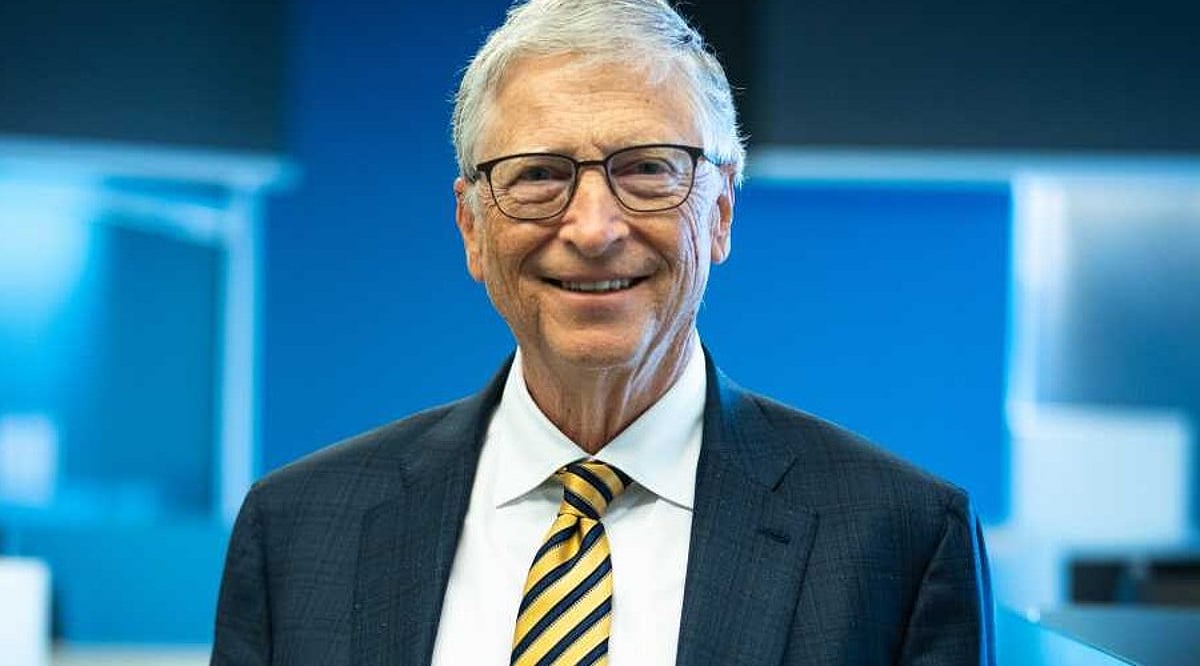
    In an exclusive interview with NDTV, Bill Gates has issued a striking caution about the pace of artificial intelligence development, suggesting the world should consider slowing AI’s advance to give societies more time to prepare for its profound implications.

    Speaking to NDTV’s Vishnu Som, Gates described AI as fundamentally different from previous technological revolutions like the personal computer and the internet, which he helped shape during his time at Microsoft. He warned against assuming that AI’s impact would be as manageable as those earlier innovations.

    “AI is a very unique technology,” Gates said. “I caution people who think it’ll be as easy to manage the impacts of AI as it’s been to manage other technologies.”

    Calling AI “very profound,” Gates noted that the breadth and speed of its development have forced even someone with his long-standing belief in innovation to question whether the pace itself needs reevaluation. “If we could slow things down, I think we should consider that because of this need to get ready for such a rapid change,” he told NDTV.

    The warning carries particular weight from a figure who has spent decades championing technological progress across computing, healthcare, agriculture, and global development. “Throughout my life, I have been a champion of innovation,” Gates said, referencing both his Microsoft years and the work of the Gates Foundation. “This is a rare case where innovation may be so broad and so dramatic that we’re not ready for it.”

    The interview, tied to the Gates Foundation Goalkeepers Report, explores AI’s enormous potential in healthcare and development while also confronting the harder questions around its rapid evolution. At the heart of the conversation is whether societies, institutions, and regulatory systems can adapt fast enough to a technology whose capabilities are evolving at unprecedented speed.

    Gates identified cybersecurity as one of the most immediate risks, warning that AI tools could significantly strengthen offensive cyberattack capabilities. “In the near term, there are cyberattacks where these AI tools will enable the offensive side,” he said, stressing that defensive capabilities must evolve just as rapidly.

    He also addressed the deeper question of whether increasingly capable AI systems can remain under human control. Gates said he once viewed that concern as relatively distant, but recent developments have brought the issue closer to the present. “The idea of keeping the AIs under control, I have always thought of that as something fairly far out in the future,” he said, pointing to recent instances in reinforcement learning where AI systems displayed unexpected behavior. “Now this issue of keeping things under control, that’s there with the other challenges.”

    Yet Gates’s assessment is not one of technological pessimism. He also underlined AI’s extraordinary potential and pointed to India as an important example of how the technology could be deployed rapidly for social and developmental benefit. “It’s a stunning set of capabilities,” Gates said, adding that India could demonstrate how “we can drive the good stuff as fast as possible.”

    The conversation captures one of the central dilemmas of the emerging AI era: how to accelerate the benefits of a transformative technology without letting the speed of innovation outrun society’s ability to understand, regulate, and control it. For Gates, who has spent much of his life making the case for technological progress, the warning carries unusual weight. AI, he suggests, may represent a milestone when the question is no longer only how quickly innovation can move, but whether humanity is ready to move with it.
  • Daily Tech Digest: Bill Gates Issues AI Warning, Redmi Note 17 Pro Max Debuts, Apple’s India Struggle, China’s AI Alert, and Google Motion Assist

    Daily Tech Digest: Bill Gates Issues AI Warning, Redmi Note 17 Pro Max Debuts, Apple’s India Struggle, China’s AI Alert, and Google Motion Assist

    Today’s top tech stories cover a wide range of developments, from artificial intelligence warnings to new smartphone launches. Here’s a quick roundup of the most important headlines.

    Bill Gates’ AI Warning

    Microsoft co-founder Bill Gates has issued a fresh caution about the rapid advancement of artificial intelligence, urging policymakers and industry leaders to address potential risks before they escalate.

    Redmi Note 17 Pro Max 5G

    Xiaomi has unveiled the Redmi Note 17 Pro Max, a feature-packed 5G smartphone boasting upgraded specs, an improved camera system, and competitive pricing. The device is expected to shake up the mid-range market.

    Apple’s India Challenge

    Apple continues to face hurdles in expanding its footprint in India, from regulatory issues to supply chain complexities, as the company seeks to reduce reliance on China.

    China AI Alert

    Chinese authorities have issued a new alert regarding artificial intelligence, signaling tighter oversight and safety measures for AI applications within the country.

    Google Motion Assist

    Google has introduced Motion Assist, a new feature designed to help users with mobility challenges navigate devices more easily using gesture-based controls.

    Stay tuned for more updates on these stories and other tech news. Join our WhatsApp channel for exclusive content and real-time alerts.

  • Bill Gates-Backed Fervo Energy Inks Record Geothermal Deal with Google for Utah Data Center

    Bill Gates-Backed Fervo Energy Inks Record Geothermal Deal with Google for Utah Data Center

    Fervo Energy, a geothermal power company backed by Bill Gates, has signed a landmark 396-megawatt power purchase agreement with Google, significantly expanding their existing partnership. The deal, announced this week, covers electricity from Fervo’s Cape Station project in southwestern Utah, with power delivery expected to begin in the third quarter of 2028.

    Google plans to use this carbon-free electricity as a foundational energy source for a potential new data center in the state. The agreement marks the largest enhanced geothermal power purchase deal ever signed, coming at a time when hyperscalers across the United States are racing to secure reliable electricity for growing artificial intelligence infrastructure demands.

    Under the terms, power will be delivered through four separate 99-megawatt blocks over a 15-year term. Google also holds an option to expand its purchase by roughly 600 additional megawatts by June 2030, which could push total contracted capacity to nearly one gigawatt.

    Fervo CEO Tim Latimer emphasized that the agreement demonstrates enhanced geothermal systems are ready to power next-generation computing infrastructure. “As demand for reliable electricity grows, customers like Google need energy resources that can be deployed at scale, operate around the clock, and deliver where power is needed,” Latimer said.

    Lucia Tian, Google’s Director of Advanced Energy Technologies, noted that the project will drive real economic benefits for the local community and help lower long-term energy costs by making geothermal power more affordable and accessible.

    The partnership dates back to 2021, when Google first collaborated with Fervo to jointly develop next-generation geothermal projects. Their pilot project in Nevada, known as Project Red, went live in 2023 and continues to supply power to the local grid, including Google’s own data centers in the state. In June 2024, the two companies signed a smaller 115-megawatt deal in Nevada alongside utility NV Energy.

    Fervo leverages drilling techniques borrowed from the oil and gas industry to tap underground heat more efficiently. This approach is quickly becoming an attractive alternative to solar and wind, as it can deliver steady, round-the-clock power without depending on weather conditions.