
Tag: Bitcoin Cash

  • Apeing Stage 5 Presale Gains Attention as Bitcoin Cash and Hyperliquid Make Moves

    Apeing Stage 5 Presale Gains Attention as Bitcoin Cash and Hyperliquid Make Moves

    Apeing is advancing through Stage 5 of its 33-stage token presale while Bitcoin Cash stabilizes near $339 and Hyperliquid adds new market data infrastructure. The developments put early-stage token sales, spot-market volatility, and decentralized derivatives infrastructure in focus across different parts of the crypto market.

    Apeing presale reaches Stage 5

    Apeing uses the Ethereum ERC-20 standard and has a fixed supply of 16.75 billion APEING tokens. The project has allocated 40% of that supply, or 6.7 billion tokens, to its presale.

    The sale includes 33 stages. Each stage remains open for one week or until its allocated tokens sell out. Prices increase in later stages, and the project says unsold tokens will be burned when each stage ends.

    Apeing reports more than $105,000 raised, over 410 holders, and more than 470 million tokens sold. Its current Dip Devourers stage prices APEING at $0.00055, while the project states a planned listing price of $0.01.

    At the current $0.00055 price, the stated $0.01 listing level represents a mathematical increase of about 1,718%. That figure reflects the project’s published prices and does not guarantee future market performance.

    A $1,000 purchase at the current price would equal roughly 1.82 million APEING tokens before transaction costs. At a hypothetical $0.01 price, the same tokens would carry a value near $18,182. At hypothetical prices of $0.10 and $0.50, that token amount would equal roughly $181,818 and $909,091, respectively. These figures are mathematical examples rather than price forecasts.

    Ape Wars competition adds monthly incentives

    The project also runs Ape Wars, a monthly competition based on participant purchases. First place receives an extra 10% of monthly purchases plus a one-time 25% bonus code. Second place receives an additional 10% plus a 15% bonus code. Third place receives an additional 10% and a 10% bonus code. The leaderboard resets at the start of each month.

    Michael Wrubel has also brought wider visibility to the project during its presale. As traders search for the best crypto to buy now, one question remains central: how much will presale participation translate into activity after listing?

    Bitcoin Cash holds near $339 after intraday surge

    Bitcoin Cash climbed from $328 to $346 during roughly four hours on September 24. TokenPost reported that BCH reached $346 at 10:27 a.m. ET after gaining 5.55% over the four hours.

    At that point, the cryptocurrency held a 1.85% gain over 24 hours. The report also placed Bitcoin Cash near a $6.81 billion market capitalization and ranked it 21st by market value.

    The supplied market figure later placed BCH at $338.67, down 0.17% over 24 hours. That level left the cryptocurrency below its intraday peak while preserving part of the earlier move.

    The rally also triggered around $130,000 in short liquidations across Binance, Bybit, and OKX during the reported hour. Long liquidations totaled zero over the same period.

    Still, the available information did not establish a confirmed catalyst for the sudden move. As a result, the price action remains the clearest measurable feature of the episode.

    Hyperliquid adds dedicated fiber market data access

    Hyperliquid entered the latest infrastructure news cycle after DoubleZero launched a dedicated fiber-optic market data feed for the platform. The service targets professional trading firms seeking faster access to order-book information.

    The feed gives firms access to Hyperliquid’s full order book without requiring them to assemble the information through the public API. It covers Hyperliquid perpetual futures and trade[XYZ] perpetual futures.

    Those trade[XYZ] products include contracts linked to real-world assets such as oil, gold, and silver. The new connection brings infrastructure more commonly associated with institutional markets to decentralized derivatives trading.

    DoubleZero said the Hyperliquid launch expands its Edge service to three venues. The company already provides the service across Solana and Kalshi.

    Even with the infrastructure development, the supplied Hyperliquid price stood at $91.61, down 0.29% over 24 hours. Therefore, the latest market data shows softer token performance alongside the exchange’s infrastructure expansion.

    Professional traders now have another route to real-time order-book data as decentralized markets build more specialized trading systems. Meanwhile, Apeing continues its presale, and Bitcoin Cash remains below its recent $346 intraday high.

    What to watch

    Apeing continues Stage 5 of its 33-stage presale while reporting more than $105,000 raised. Bitcoin Cash trades near $339 after a sharp four-hour jump, while Hyperliquid adds dedicated fiber market data access through DoubleZero.
  • How Bitcoin Forks Work: Hard Fork vs Soft Fork Explained Clearly

    How Bitcoin Forks Work: Hard Fork vs Soft Fork Explained Clearly

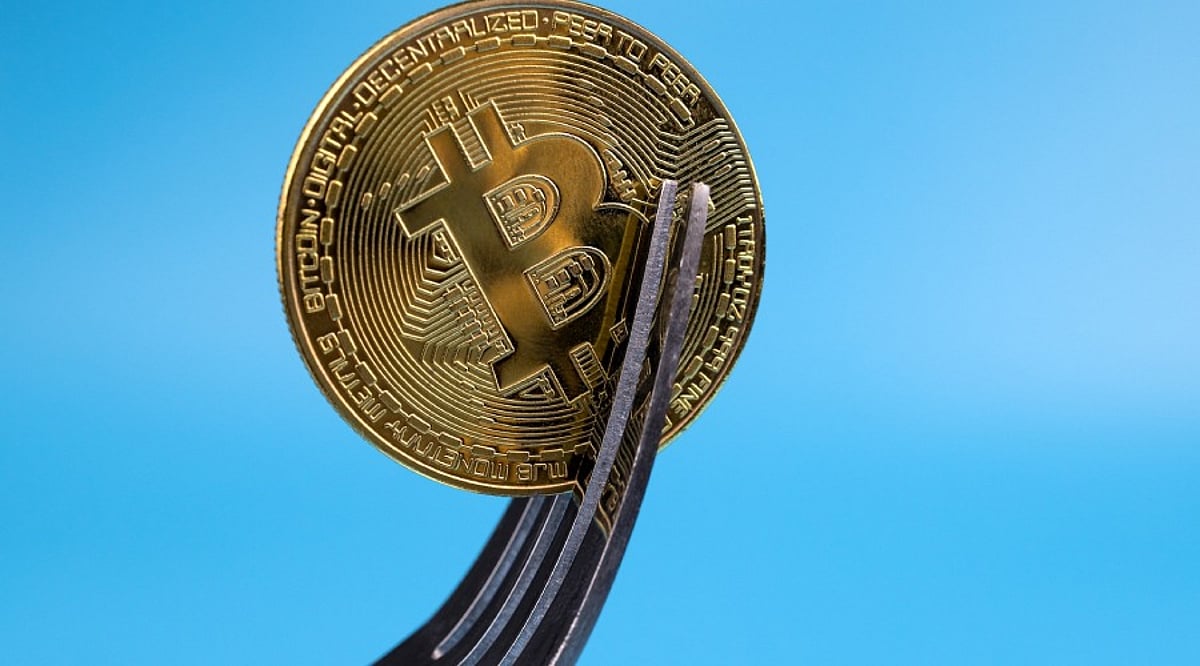
    Bitcoin operates under a set of consensus rules that determine which transactions and blocks participants consider valid. When these rules change, the process is called a fork. Understanding the difference between hard forks and soft forks is essential for anyone following Bitcoin’s evolution.

    What Is a Bitcoin Fork?

    Every full node on the Bitcoin network validates blocks independently based on its software’s consensus rules. Nodes reach consensus when they independently confirm the same blockchain. Temporary forks can happen when two miners discover valid blocks at nearly the same time, but the network quickly converges on the chain with the most cumulative proof of work. Protocol forks, however, involve changes to the validation rules themselves.

    What Is a Soft Fork?

    A soft fork tightens the rules, making previously valid transactions or blocks invalid under the new, stricter criteria. It remains backward compatible: older nodes can still recognize blocks produced under the new rules as valid, even though they don’t enforce the extra restrictions. Bitcoin has used soft forks multiple times. Examples include BIP34 (block heights in coinbase transactions), BIP66 (strict DER encoding for ECDSA signatures), and BIP65 (CHECKLOCKTIMEVERIFY). More recent soft forks are Segregated Witness (2017) and Taproot (2021). Soft forks can be activated through miner signaling or node enforcement, allowing gradual adoption while older software continues to follow valid blocks safely during the transition.

    What Is a Hard Fork?

    A hard fork introduces rules that older nodes cannot fully accept. If upgraded nodes accept blocks that older nodes reject, permanently divergent chains can emerge. Bitcoin Cash is a clear example. On August 1, 2017, Bitcoin Cash split from Bitcoin at block 478,558 due to disagreements over scaling and block capacity. The two networks share history before that block but have since developed separate blockchains, currencies, and communities. Bitcoin Cash has continued evolving independently, activating CashTokens in 2023 and an Adaptive Block Limit Algorithm in 2024.

    Why Consensus Matters

    Developers can propose Bitcoin upgrades, but they cannot force adoption. Full nodes choose which consensus rules to enforce. This makes coordination essential. Miners producing blocks under incompatible rules can cause divergence, and exchanges and wallet providers must decide which networks and assets to support. Bitcoin Core itself continues to evolve without every software release being a consensus fork. As of September 2026, Bitcoin Core version 31.1 is the latest release. Many updates improve performance, security, networking, or wallet functionality without altering consensus rules.

    Final Thoughts

    Soft forks introduce stricter, backward-compatible consensus rules, while hard forks can make upgraded and older nodes incompatible. Grasping this difference helps explain how Bitcoin evolves without a central administrator and why network consensus remains fundamental to protocol changes.

    Frequently Asked Questions

    1. What is a Bitcoin fork?
    A Bitcoin fork occurs when blockchain rules change or participants temporarily follow competing versions of the chain. Protocol forks modify consensus rules governing how nodes validate transactions and blocks.

    2. What is the difference between a hard fork and a soft fork?
    A soft fork introduces stricter rules while maintaining backward compatibility with older nodes. A hard fork introduces incompatible rules that can result in separate blockchains if participants continue supporting both versions.

    3. Does every Bitcoin fork create a new cryptocurrency?
    No. Temporary blockchain forks and backward-compatible soft forks do not necessarily create new cryptocurrencies. A separate asset can emerge when a hard fork produces two independently maintained networks.

    4. Is Bitcoin Cash a hard fork of Bitcoin?
    Yes. Bitcoin Cash separated from Bitcoin on August 1, 2017, amid disagreements over scaling and block capacity. BTC and BCH subsequently developed as independent blockchain networks and cryptocurrencies.

    5. Are SegWit and Taproot Bitcoin soft forks?
    Yes. Segregated Witness activated in 2017, while Taproot activated in 2021. Both introduced new Bitcoin functionality through soft-fork mechanisms without creating a separate cryptocurrency.

  • Bitcoin Cash, Toncoin, and BlockDAG: Three Crypto Projects Demonstrating Real-World Adoption

    Bitcoin Cash, Toncoin, and BlockDAG: Three Crypto Projects Demonstrating Real-World Adoption

    In the ever-evolving cryptocurrency market, many projects promise widespread adoption, but only a few can demonstrate it. This August, three cryptocurrencies stand out by providing tangible proof of usage: Bitcoin Cash (BCH) with its decade-long payment history, Toncoin (rebranded as Gram) leveraging Telegram’s massive user base, and BlockDAG (BDAG) with its live casino generating real revenue. Each offers a different kind of evidence: a usage record, a distribution engine, and live revenue.

    Bitcoin Cash (BCH): Proven History Meets New Capability

    Bitcoin Cash has a decade of real transaction use behind it. According to CoinMarketCap and CoinGabbar, BCH is trading near $210 in early August, down about 2% over 24 hours after recovering from lows close to $200. Nearly 96% of its 21 million max supply is already in circulation, keeping supply pressure low.

    The network is evolving. The Layla upgrade, activated on May 15, 2026, introduced smart-contract capabilities and quantum resistance, extending BCH beyond simple payments. Futures open interest has risen during its recent recovery, indicating fresh capital rather than short covering. As a 2017 fork of Bitcoin designed for bigger blocks and cheaper transactions, BCH pairs a genuine usage record with new programmability, keeping it in the conversation for the next big crypto coin.

    Toncoin / Gram (TON): Distribution Through Telegram

    Toncoin’s adoption is inseparable from Telegram. Kraken and CoinGecko data place TON near $1.40 in early August. The token rebranded to Gram on June 15, 2026, reviving its original name.

    The distribution story is compelling. Telegram began rolling out a native, non-custodial crypto wallet to its user base, starting with 87 million people in the US on July 21, 2026, with a billion users in sight. TON Wallet also added cross-chain deposits via MoonPay, allowing users to fund wallets inside Telegram from other networks. One note for holders: the TON Bridge-v3 shuts down on September 1, 2026, so assets must be moved before then. This built-in access to a massive audience keeps Gram among the best cryptos to buy for adoption-focused investors.

    BlockDAG (BDAG): Revenue Already on the Ledger

    BlockDAG’s answer to the usage question is the most concrete of the three: a live consumer business generating real money. The BlockDAG.com Casino has processed $200 million in wagers from 13,000 players. That is recorded activity, not a projection, giving the token an immediate spending role.

    Why revenue matters is straightforward. Gaming creates a funding source that does not depend on continuous token sales, since deposits, wagering, and withdrawals generate ongoing transaction activity. It also gives BDAG a practical use case beyond speculation: the casino pays cashback and loyalty rewards in BDAG, offers VIP benefits tied to holdings, and runs exclusive tournaments—all reasons to acquire and use the token today rather than someday.

    The casino is not an island. Its players can be connected to the wider BlockDAG system, moving balances between the wallet, the coming exchange, and future products. The platform can expand into sportsbook and other entertainment over time.

    A live application with real users and real revenue is exactly the proof most presale-stage projects cannot offer. Bitcoin Cash proves usage through history, Gram through distribution, and BlockDAG through a business already taking in $200 million in wagers. For readers hunting the next big crypto coin, that evidence is hard to argue with, even though no price is ever guaranteed.

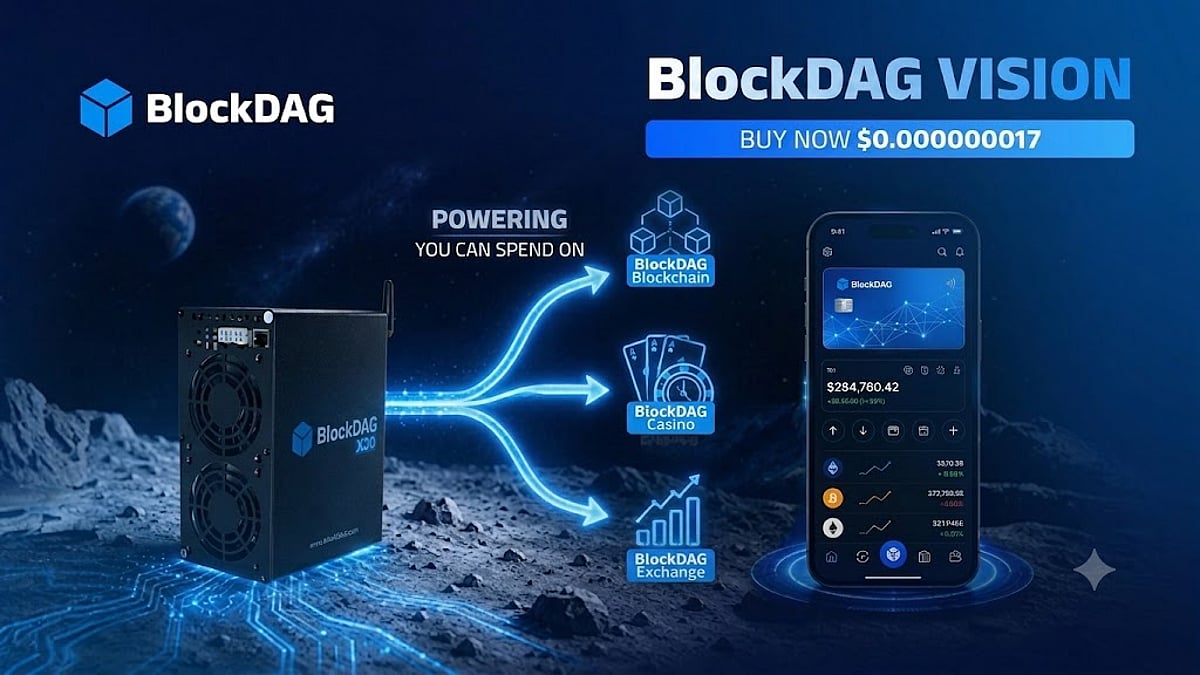
    BDAG can be bought directly from the website at an entry rate of $0.000000017 alongside a $0.025 BuyBack price, with a project buyback event scheduled for October 1. Alternatively, buyers using Live Swap can secure tokens at a 22% discount below the current CoinMarketCap rate.

    The Takeaway

    Bitcoin Cash shows usage through a decade of payments and its May 2026 Layla upgrade, with BCH near $210 and 96% of supply circulating. Gram shows it through Telegram’s reach, holding around $1.40 as a non-custodial wallet rolls out to 87 million US users first and more than a billion in view. BlockDAG shows it through a casino already processing $200 million in wagers from 13,000 players—revenue that funds the ecosystem without relying on constant token sales and gives BDAG a use case today rather than someday.

    Among next big crypto coin candidates, all three move past promises toward proof: by history, by distribution, and by live revenue. The distinction matters most at the presale stage, where evidence is scarce. A business already taking real money is the hardest kind of proof to argue with, which is why BlockDAG earns its place among the best cryptos to buy on merit.

    Presale: https://purchase.blockdag.network
    Website: https://blockdag.network
    Telegram: https://t.me/blockDAGnetworkOfficial
    Discord: https://discord.gg/Q7BxghMVyu

    Disclaimer: This article is for informational purposes only and does not constitute financial advice. Cryptocurrencies are risky investments; you could lose all your money. Always do your own research before investing.

  • BlockDAG’s 100% Bonus Code ‘EARLY’ Shifts Momentum from Zcash and Bitcoin Cash in Search for Next Crypto Explosion

    BlockDAG’s 100% Bonus Code ‘EARLY’ Shifts Momentum from Zcash and Bitcoin Cash in Search for Next Crypto Explosion

    The crypto market is entering a new phase of capital rotation. Mature proof-of-work networks are struggling to overcome regulatory and technical headwinds, while incentive-rich layer-1 ecosystems are attracting fresh liquidity and renewed investor attention. Recent Zcash news and fluctuating Bitcoin Cash price points illustrate the intense battle between structural scarcity and real-time market momentum. Yet, neither of these older assets matches the sheer velocity of newer projects designed to capture immediate retail demand.

    At the center of this shift is BlockDAG (BDAG), a rapidly expanding ecosystem that is currently leveraging a double-reward promotional structure to position itself as the next crypto to explode.

    Zcash News: Privacy Coin Eyes Breakout Amid Forbes Nod

    Recent Zcash news has captured the market’s attention as ZEC climbed near $531, riding a 5% daily gain that outpaced a flat broader market. This spark follows a prestigious nod from Forbes, which highlighted Zcash’s robust privacy features and capped supply. However, the token now faces a critical technical test, bumping up against a tough resistance band between $540 and $547.

    While the bullish momentum is backed by a shrinking supply intensified by the November 2024 halving, undercurrents of caution remain. Traders are weighing unresolved questions surrounding June’s Orchard security patch and unusual pre-disclosure trading volumes. Whether ZEC can shatter its near-term resistance or slide back to support depends heavily on upcoming macro data. This Zcash news highlights a tug-of-war between strong scarcity fundamentals and lingering regulatory anxieties.

    Bitcoin Cash Price: Will Bulls Break the $620 Barrier?

    The Bitcoin Cash price is flashing mixed signals, leaving traders guessing whether its recent rally is a genuine trend reversal or a temporary bounce. After breaking a long-term diagonal trendline, BCH successfully bounced twice, sparking three consecutive weekly green candles. However, this momentum has brought the asset directly beneath its most critical ceiling: the $620 resistance level.

    This $620 zone is a major make-or-break juncture. A successful daily close above it could clear the path toward $1,000, supported by the weekly RSI crossing above 50 and a looming bullish MACD crossover. Conversely, short-term charts reveal a corrective five-wave wedge that leans bearish. If BCH fails to breach this barrier, a breakdown from its ascending channel could trigger a swift correction down to $520. The Bitcoin Cash price remains at a pivotal crossroads where downside risks still overshadow breakout hopes.

    BlockDAG’s 100% Bonus Code ‘EARLY’ Sparks Race for the Next Crypto to Explode

    The search for the next crypto to explode has taken a massive turn as BlockDAG rolls out a double-reward incentive that is shaking up the crypto market. Instead of launching just another basic digital token, BlockDAG is actively constructing an entire self-sustaining economic ecosystem. For a limited time, early participants can leverage a massive promotional offer designed to maximize their potential returns right from the start.

    By utilizing the promo code “EARLY” when acquiring BDAG at its current entry price of $0.00000033, investors instantly secure a 100% bonus on their purchase. This promotional mechanism immediately doubles your token balance, with the extra coins delivered directly to your wallet. But the real excitement lies in the accelerated timeline for the USDT buyback program. While standard participants must wait until October 1, entering the code “EARLY” unlocks priority access to the $0.03 buyback pool starting on September 1. This strategic shift grants early supporters an exclusive thirty-day head start on exit liquidity options.

    With a robust architecture and an aggressive economic design, this project presents a compelling case for those hunting for the next crypto to explode. The window to double your holdings and fast-track your exit liquidity is closing quickly, making this a pivotal moment to act.

    Wrapping Up

    The broader crypto market remains heavily divided between legacy networks trying to regain their footing and hyper-growth ecosystems designed for rapid scalability. While positive Zcash news and the critical test of the Bitcoin Cash price demonstrate that established tokens still possess speculative appeal, their upward potential remains limited by steep resistance levels and historical technical challenges.

    In contrast, BlockDAG bypasses these old hurdles by offering a direct, highly lucrative entry point paired with immediate structural value. The time-sensitive combination of an instant token doubler and accelerated USDT buyback liquidity positions BlockDAG uniquely. For anyone searching for the next crypto to explode, this promotional window represents an unparalleled strategic entry point before mainstream exchange listings commence.

    Disclaimer: Analytics Insight does not provide financial advice or guidance on cryptocurrencies and stocks. Also note that the cryptocurrencies mentioned or listed on the website could potentially be risky, i.e., designed to induce you to invest financial resources that may be lost forever and not be recoverable once investments are made. This article is provided for informational purposes and does not constitute investment advice. You are responsible for conducting your own research (DYOR) before making any investments.