Tag: Bitcoin dominance

  • Cardano Price Tests $0.245 Resistance After 15% Weekly Rally as Funding Turns Positive

    Cardano Price Tests $0.245 Resistance After 15% Weekly Rally as Funding Turns Positive

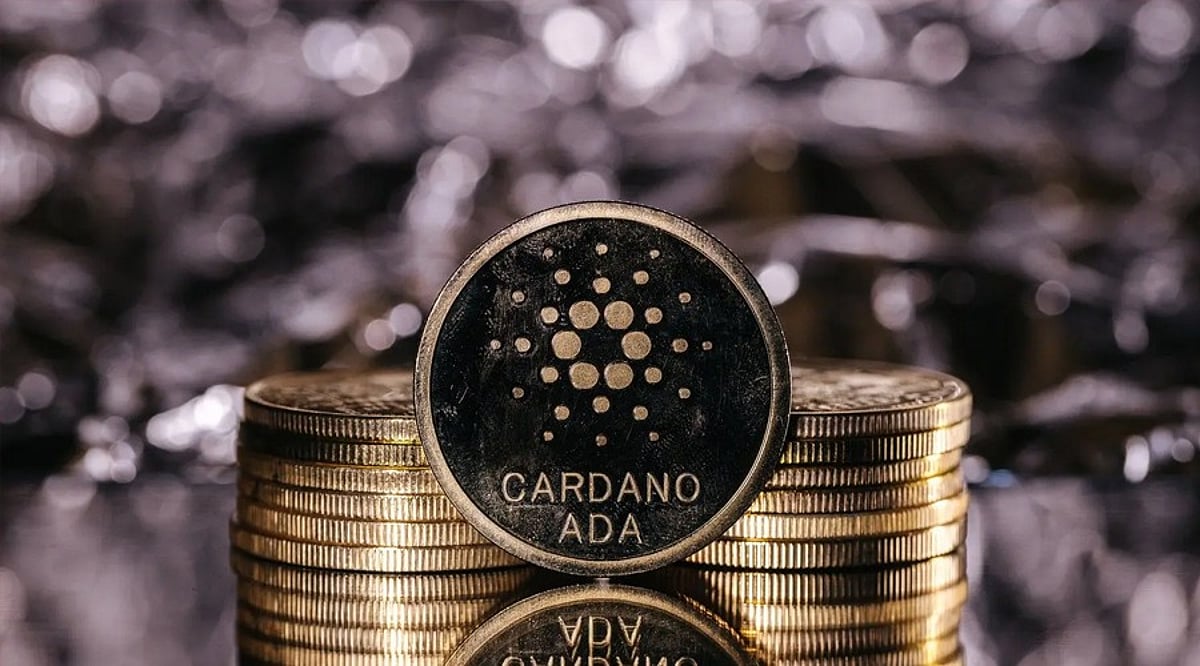
    Cardano (ADA) traded near $0.222 on Monday after posting a 15% gain last week, with technical momentum improving and funding rates turning positive. Buyers now face resistance between $0.231 and $0.245, a zone that could determine the next leg of the recovery.

    ADA Momentum Improves as Funding Turns Positive

    ADA traded above its 50-day and 100-day exponential moving averages, supporting a stronger short-term technical structure. A move through the $0.231-$0.245 resistance zone would extend the current recovery.

    CoinGlass data shows Cardano’s long-to-short ratio at 0.94, indicating that short positions slightly outnumber longs. However, the narrow gap points to cautious positioning rather than heavy bearish conviction.

    Funding data sends a different signal. Cardano’s open interest-weighted funding rate turned positive on Saturday and reached 0.0097% on Monday, showing stronger demand for bullish leveraged exposure.

    Wyckoff Setup Keeps December Upside in Focus

    CryptoQuant’s summary data shows large whale orders in Cardano futures, while most other tracked measures remain neutral. This mix points to increased large-trader activity without a broad bullish shift.

    Trader LuckSide Crypto said Bitcoin and ADA follow a Wyckoff accumulation pattern and currently sit in Phase D. He linked Bitcoin’s setup to a possible range breakout around September 25.

    LuckSide also cited two Bitcoin metrics: long-term holders control 75% of supply, while only 17% moved during the last three months. Bitcoin dominance has also fallen below 60%.

    According to LuckSide, the same framework could support an ADA gain of roughly 50% by December if the pattern holds. He also noted that the September 25 timing does not guarantee a breakout.

    CLARITY Vote and Cardano Activity Add Market Risks

    The Senate plans a September 15 cloture vote on the CLARITY Act, according to LuckSide Crypto. The vote would open debate rather than approve the legislation.

    The measure needs 60 votes to advance. Republicans hold 53 Senate seats, while only two Democrats have publicly backed the bill so far. Anonymous traders reportedly wagered more than $1 million on failure.

    LuckSide said a failed vote would not end US crypto policy efforts because the SEC and CFTC continue separate work. Still, a delay would remove one September catalyst for the broader market.

    Cardano network data also shows a mixed picture. Chainspect recorded about 26,500 transactions on September 4 before activity fell to 19,054 on September 6.

    Over the same period, on-chain revenue rose 1.99% to $1,261. Average transaction fees fell 2.42% to $0.06619, contrasting with a separate report that claimed ADA’s DEX volume had tripled.

    Traders will also track Cardano network activity, Bitcoin’s market structure, and the September 15 CLARITY Act cloture vote.

  • Top Altcoins to Watch in July 2026: Beyond the Altcoin Season Slowdown

    Top Altcoins to Watch in July 2026: Beyond the Altcoin Season Slowdown

    Key Takeaways

    • Bitcoin dominance remains high, delaying a broad altcoin season.
    • AI, RWA, DeFi, and Layer-1 ecosystems continue to attract the strongest investor interest.
    • Ethereum, Solana, Chainlink, Sui, Ondo Finance, TAO, Render, Hyperliquid, Avalanche, and XRP are among the top projects to watch.

    As of July 2026, Bitcoin continues to dominate the cryptocurrency market, with many altcoins unable to match its recent performance. The long-anticipated altcoin season has yet to materialize. Experts note that Bitcoin dominance remains near 58–60%, while the Altcoin Season Index hovers around 30–35. A true altcoin season typically begins only when at least 75% of leading altcoins outperform Bitcoin over a 90-day period—a condition that has not been met. This suggests that most investors still favor Bitcoin over smaller cryptocurrencies. Market analysts believe the next rally may benefit only a select group of strong projects rather than the entire altcoin sector.

    Ethereum Holds Its Lead

    Ethereum continues to rank among the strongest altcoins despite the slow market. The blockchain supports decentralized finance (DeFi), stablecoins, and tokenized real-world assets. Its Layer-2 networks help lower transaction fees and improve speed. Large financial firms continue to choose Ethereum due to its trusted network and vast developer community. Although its price has lagged behind Bitcoin recently, Ethereum retains strong long-term value. Many experts believe it could be one of the biggest winners once market activity picks up.

    Solana Continues to Impress

    Solana has established a strong foothold through fast transaction speeds and low costs. It serves a growing variety of decentralized applications, including DeFi, NFT collectibles, blockchain gaming, and other user-facing services. New applications are constantly being built on Solana, fostering an ecosystem that thrives despite bearish sentiment. Institutions are also becoming more engaged with Solana, making it a highly discussed cryptocurrency heading into July 2026.

    Chainlink Benefits From Strong Demand

    Chainlink has become one of the most important infrastructure projects in blockchain. Its oracle system enables smart contracts to receive secure real-world data. The project also plays a key role in cross-chain communication and tokenized real-world assets. As banks and financial companies show greater interest in blockchain technology, demand for Chainlink’s services is likely to increase. Strong utility and widespread adoption continue to support its long-term outlook.

    Sui and Ondo Finance Stay Among Top Picks

    Sui has gained attention as one of the fastest-growing Layer-1 blockchains. The network has attracted many developers, blockchain games, and staking users. Strong ecosystem growth has helped Sui earn a place among leading altcoins this year. However, scheduled token unlocks may create short-term price pressure.

    Ondo Finance has become a major name in the real-world asset (RWA) sector. The platform offers tokenized Treasury products, bonds, and other financial assets. Since tokenized assets have become a hot trend in 2026, Ondo Finance continues to receive strong support from market analysts.

    AI Projects Keep Market Interest Alive

    Artificial intelligence remains one of the strongest themes in crypto. Bittensor (TAO) has attracted attention through its decentralized AI network that connects machine learning models with developers. Render has also become important by providing decentralized GPU power for AI, 3D graphics, and digital content creation. As AI technology expands across industries, both cryptocurrencies continue to attract investors seeking long-term opportunities beyond traditional blockchain projects.

    Hyperliquid, Avalanche, and XRP Stay Relevant

    Hyperliquid has emerged as one of the fastest-growing decentralized futures trading platforms. High trading volume and strong liquidity have helped the project gain popularity in DeFi.

    Avalanche remains an important blockchain focused on enterprise solutions, gaming, and custom blockchain networks. Many companies continue to test its technology for large-scale business use.

    XRP still holds a strong position due to its focus on cross-border payments. Financial institutions continue to explore its payment technology, while investors closely follow legal developments that may influence future adoption. Although price performance has been mixed, XRP remains among the largest cryptocurrencies by market cap.

    Strong Narratives Shape the Market

    In July 2026, the market is more selective than in prior cycles. Instead of a broad rally across hundreds of assets, capital is flowing into projects with tangible value and advanced technology. Areas that have outperformed—and are likely to continue if sentiment shifts—include artificial intelligence, tokenization of real-world assets, blockchain infrastructure, decentralized finance, and high-performance Layer-1 networks.

    Final Outlook

    July 2026 presents a cautious but promising outlook for altcoins. Bitcoin continues to dominate, yet several established projects stand out for their strong technology, active ecosystems, and practical use cases. Ethereum, Solana, Chainlink, Sui, Ondo Finance, Bittensor, Hyperliquid, Render, Avalanche, and XRP remain among the top cryptocurrencies to watch. A full altcoin season has not arrived, but these projects appear well-positioned to benefit if market conditions improve during the second half of the year.

    Frequently Asked Questions

    1. Why hasn’t the altcoin season started yet?

    Bitcoin dominance remains around 58–60%, and the Altcoin Season Index is well below the level typically associated with a broad altcoin rally.

    2. Which sectors are expected to lead the next crypto rally?

    Artificial intelligence (AI), real-world assets (RWA), DeFi, blockchain infrastructure, and high-performance Layer-1 networks are considered the strongest narratives.

    3. Why is Ethereum still a top altcoin?

    Ethereum continues to lead in DeFi, stablecoins, tokenized assets, and developer activity, making it one of the most established blockchain ecosystems.

    4. Which emerging altcoins are gaining momentum?

    Sui, Ondo Finance, Hyperliquid, Bittensor (TAO), and Render have attracted attention due to ecosystem growth, AI adoption, and real-world utility.

    5. Should investors expect all altcoins to rally together?

    Not necessarily. Current market conditions suggest capital is likely to favor fundamentally strong projects rather than the entire altcoin market.

  • XRP Bullish Sentiment Surges as XRP Ledger Exceeds 8 Million Active Accounts

    XRP Bullish Sentiment Surges as XRP Ledger Exceeds 8 Million Active Accounts

    The XRP Ledger (XRPL) has achieved a significant milestone, surpassing 8 million activated accounts for the first time. This growth comes amid rising bullish sentiment, increased DeFi activity, and a notable shift in stablecoin liquidity toward alternative Layer-1 networks.

    Market Rotation Fuels Altcoin Interest

    Current market data indicates conditions typical of an altcoin season. While Bitcoin dominance has risen above 59% for three consecutive weeks, Ethereum dominance has also gained, lifting the ETH/BTC ratio by over 10% in the past three weeks. This suggests capital is rotating beyond Bitcoin, spreading to other major cryptocurrencies.

    According to AMBCrypto, fear of missing out (FOMO) surrounding XRP and Ethereum has reached its highest level in five weeks, while Bitcoin sentiment remains neutral. XRP currently leads Ethereum in bullish discussions, with a 3.02-to-1 bullish-to-bearish comment ratio compared to Ethereum’s 2.31-to-1.

    On-Chain Activity Strengthens

    The XRP/BTC ratio has been consolidating around the 0.000015 level for nearly 10 weeks, indicating potential long-term accumulation rather than short-term speculation. Meanwhile, on-chain metrics are improving. DeFiLlama data shows total value locked (TVL) on XRPL increased by over 3% in the last 24 hours, while stablecoin supply on the network grew by more than 6%, bringing nearly $1 billion back into the ecosystem.

    In contrast, over $2 billion in stablecoins left the Ethereum network during the same period, suggesting liquidity is shifting toward XRPL and other Layer-1 alternatives. If this trend continues, XRP could benefit from stronger network participation beyond mere sentiment.

    XRPL Crosses Historic User Milestone

    The XRP Ledger has officially exceeded 8 million activated accounts, reaching 8,000,688 wallets. According to XRPScan, these wallets collectively hold 67.526 billion XRP, representing the token’s circulating supply. Unlike previous reports that counted all ever-created wallets (including deleted ones), this milestone counts only activated accounts, marking the first official time the network has achieved this level of active participation.

    With improving DeFi metrics, growing stablecoin liquidity, and extended XRP/BTC consolidation, the network is drawing increased attention. Investors will watch closely to see if these fundamentals translate into sustained market strength.

  • Altcoin Season Index Breaks Above 50: Growing Momentum Beyond Bitcoin

    Altcoin Season Index Breaks Above 50: Growing Momentum Beyond Bitcoin

    Key Takeaways

    • The CoinGlass Altcoin Season Index currently stands at 58, while BlockchainCenter reports 59.
    • Bitcoin dominance has eased from around 58% to between 54% and 57%, showing broader market participation.
    • A reading above 75 is still required before the market officially enters altcoin season.

    The cryptocurrency market has entered a new phase where attention has started to move beyond Bitcoin. For many months, Bitcoin remained the strongest force in the market and attracted most of the investment. Now, fresh data shows that more investors have started to explore other digital coins, often called altcoins.

    This change does not mean Bitcoin has lost its position. Instead, it shows that interest has started to spread across a wider range of cryptocurrencies. Market experts believe this shift could become more important if the current trend continues.

    Altcoin Season Index Moves Higher

    One of the most watched tools in the crypto market is the Altcoin Season Index. This index helps measure whether altcoins perform better than Bitcoin over a certain period. A higher score usually means that more altcoins have started to beat Bitcoin in price performance.

    The latest numbers show steady progress. The CoinGlass Altcoin Season Index currently stands at 58. Earlier, it reached 64 on June 4, which marked one of its strongest readings in recent months. Even after a small decline from that level, the current score still shows healthy momentum across the altcoin market.

    Another popular measure comes from CoinMarketCap. Its Altcoin Season Index now stands at 53. Although this reading is lower than the CoinGlass figure, it also points to the same trend. More altcoins have started to perform better than before, even if the market has not reached a full altcoin season.

    BlockchainCenter offers another version of the same indicator. Its latest reading stands at 59. Despite this positive number, the platform still classifies the market as not yet in Altcoin Season since the score has not crossed the important level of 75.

    Bitcoin Still Holds the Top Position

    Bitcoin continues to lead the cryptocurrency market. It remains the largest digital asset by market value and still attracts major investment from institutions and retail buyers. However, fresh market data shows that some money has started to move toward other cryptocurrencies.

    This shift has become visible through Bitcoin dominance, a metric that shows Bitcoin’s share of the total cryptocurrency market. Recent figures show Bitcoin dominance has fallen from around 58% to between 54% and 57%. A lower dominance level often means that investors have started to place more money into altcoins instead of keeping most funds in Bitcoin.

    More Capital Reaches Altcoins

    Another important sign is the growing market value of cryptocurrencies outside Bitcoin, Ethereum, and stablecoins. This section of the market has grown in recent weeks, which suggests that investors have started to explore a wider range of projects.

    Large-cap altcoins have attracted a major share of this fresh interest. Ethereum has remained one of the strongest performers supported by continued confidence in its network. Solana has also received strong support, while XRP has returned to the spotlight after renewed investor interest.

    Many analysts believe exchange-traded fund (ETF) activity has also helped improve confidence in these major altcoins. Better investment access has encouraged more market participation and supported stronger price action across selected digital assets.

    The Market Has Not Reached Full Altcoin Season

    Although several indicators have improved, experts believe it is still too early to declare the arrival of a full altcoin season. The widely accepted rule states that the Altcoin Season Index must rise above 75 before the market officially enters that phase.

    Current readings between 53 and 59 show progress but remain below this important level. This means only part of the market has shown stronger performance while many smaller cryptocurrencies have yet to join the rally.

    Analysts also point out that most gains remain concentrated in well-known projects with strong market positions. A true altcoin season usually includes broad gains across a much larger number of cryptocurrencies.

    Market Conditions Still Matter

    The direction of the crypto market still depends heavily on Bitcoin and broader economic conditions. Inflation reports, central bank decisions, and global liquidity continue to influence investor confidence. Any major change in these factors could either support further growth in altcoins or slow the current trend.

    Bitcoin also remains an important guide for the rest of the market. A strong move in Bitcoin often affects price action across almost every major cryptocurrency. Given this close relationship, market participants continue to watch Bitcoin even as interest in altcoins grows.

    Several Altcoins Draw Fresh Attention

    Recent market reports highlight a few altcoins that have attracted strong interest. DeXe (DEXE) has gained attention after reaching new price highs. Zcash (ZEC) has approached an important resistance level that traders continue to watch closely. Uniswap (UNI) has also shown early signs of recovery, which has increased optimism around its future performance.

    These projects represent only part of the broader movement across the altcoin market. Many investors continue to search for coins with strong technology, active development, and long-term growth potential instead of chasing short-term price spikes.

    Why This Matters

    This shift signals a maturing crypto market where investors are moving beyond Bitcoin to seek diverse opportunities. As capital flows into major altcoins, it diversifies systemic risk and lays the foundation for broader, utility-driven digital asset adoption.

    Outlook Remains Positive but Cautious

    The latest market data points to growing momentum beyond Bitcoin. Altcoin Season Index readings from CoinGlass, CoinMarketCap, and BlockchainCenter all show that more cryptocurrencies have started to perform well. At the same time, Bitcoin dominance has eased, while fresh capital has entered several leading altcoins.

    Despite these positive developments, the market has not yet reached the official definition of a full altcoin season. The key threshold of 75 on the Altcoin Season Index remains out of reach. Until that level appears, the current phase represents a period of steady expansion rather than a broad market-wide rally. Even so, the latest data suggests that altcoins have started to build stronger momentum, which could create more opportunities if the trend continues in the months ahead.

    FAQs

    1. What is the Altcoin Season Index? The Altcoin Season Index is a financial metric that measures whether altcoins are outperforming Bitcoin in price growth over a specified period.
    2. Is the crypto market currently in altcoin season? No, the market is not there yet. Current index readings hover under 60, remaining well below the required 75-point threshold.
    3. Why has Bitcoin dominance declined? Bitcoin’s market share is dropping because investors are shifting fresh capital into altcoins, diversifying their holdings beyond the dominant digital asset.
    4. Which altcoins have attracted recent attention? Major assets like Ethereum, Solana, and XRP, alongside specific tokens like DeXe, Zcash, and Uniswap, have drawn strong investor interest.
    5. What could confirm a full altcoin season? A true altcoin season is confirmed when the index crosses 75, accompanied by widespread price rallies across a broad range of smaller cryptocurrencies.
  • Dogecoin Faces Key Support at $0.072 as ETF Inflows Stall and Selling Pressure Mounts

    Dogecoin Faces Key Support at $0.072 as ETF Inflows Stall and Selling Pressure Mounts

    Dogecoin traded near $0.0729 on July 12, 2026, after falling nearly 2% in the past 24 hours, underperforming a slightly weaker crypto market. Trading volume rose to about $462 million as sellers increased activity around the weekend.

    The decline comes as traders reduce exposure to riskier altcoins and shift more capital toward Bitcoin. DOGE now sits close to the $0.072 support zone. A hold above that level could lead to consolidation or a breakout above $0.08, while a lower move may expose the $0.070 area.

    Dogecoin ETFs Record a Week Without Inflows

    U.S. Dogecoin exchange-traded funds recorded zero net inflows on every trading day from July 6 through July 10. The flat week followed negative net flows in the prior period, showing that investors have not added fresh capital to the products.

    Cumulative net inflows into Dogecoin ETFs stand at $11.77 million. The products hold about $10.23 million in net assets, equal to roughly 0.09% of Dogecoin’s market value. The limited size shows that ETF activity has not created strong demand for DOGE.

    The funds linked to Bitwise, Grayscale and 21Shares have shifted between positive, negative and flat weekly flows during 2026. The latest reading points to a “wait-and-see” approach as investors look for a new market or product catalyst. Meanwhile, 21Shares plans to use FTSE digital asset index data for its Dogecoin ETF pricing benchmark.

    Bitcoin Dominance Pressures Altcoin Prices

    The wider market has moved toward Bitcoin as sentiment stays in the “Fear” range. Bitcoin dominance reached 58.43%, showing that the largest cryptocurrency controls a growing share of total market value.

    The Altcoin Season Index stood at 52, indicating mixed demand for smaller tokens. Dogecoin often reacts sharply when traders cut speculative exposure. The current decline follows that wider pattern rather than a Dogecoin-specific event. Rising Bitcoin dominance tends to place pressure on meme coins as traders favor assets with deeper liquidity.

    At the same time, the Fear and Greed Index has moved above earlier extreme fear readings. The index recently reached 32, but it has not held above the neutral level of 50 since November. That reading shows an exit from panic without a clear return of strong buying demand.

    Technical Data Puts $0.072 Support in Focus

    DOGE moved below its seven-day simple moving average at $0.0744 and its 30-day average at $0.0786. Trading volume rose as the price fell, confirming higher market activity during the sell-off. The relative strength index reached 36, placing DOGE near oversold conditions.

    The lower RSI could support a short-term bounce, but Dogecoin needs to reclaim $0.074 to reduce selling pressure. A move above the seven-day average would place the next focus on $0.0786. Failure to hold $0.072 could send the price toward the next support near $0.070.

    ETF flows may also shape short-term sentiment. Positive inflows would show renewed demand for regulated Dogecoin products. Until buying returns, price action, trading volume and Bitcoin dominance will provide the main signals for DOGE’s next move.

  • Nearly 40% of Altcoins Hit All-Time Lows: Could a Selective Recovery Be Next?

    Nearly 40% of Altcoins Hit All-Time Lows: Could a Selective Recovery Be Next?

    The cryptocurrency market has entered another challenging phase, especially for altcoins. Recent data from CryptoQuant shows that nearly 40% of altcoins now trade close to their all-time lows. During the latest market decline, this figure even reached 45% after Bitcoin dropped below $60,000 for a short period. These numbers show how much pressure the broader crypto market has faced over the past few months.

    Even though Bitcoin has managed to stay stronger than many other digital assets, thousands of altcoins have continued to lose value. Many projects now trade at only a small part of the prices they reached during previous market highs. This situation has raised an important question across the crypto community. Could such low prices lead to the next market rebound, or does more weakness still lie ahead?

    Why Many Altcoins Have Lost Value

    Several reasons have pushed altcoin prices lower. One of the biggest reasons is the huge rise in the number of new crypto projects. Reports suggest that nearly 60,000 new tokens enter the market every day. Such a massive supply spreads investor money across countless projects instead of allowing capital to flow into a smaller group of coins.

    This rapid growth has made competition much harder. Many projects fail to attract enough buyers after launch. Without fresh demand, prices continue to fall. Some projects also struggle to build useful products or active communities, which makes recovery even more difficult.

    At the same time, the total amount of new money entering the crypto market has not grown at the same speed as the number of new tokens. As a result, many altcoins receive very little attention, while only a limited number continue to attract strong interest.

    Bitcoin Continues to Lead the Market

    Another important reason behind weak altcoin performance is Bitcoin’s strong position. Investors have shown greater confidence in Bitcoin than in smaller cryptocurrencies. During uncertain market conditions, many traders prefer to keep funds in Bitcoin since it has a longer history and higher liquidity.

    Market data also shows that the Altcoin Season Index remains below the level that usually signals a broad altcoin rally. This means Bitcoin still controls most of the market’s attention. Until that balance changes, many altcoins may continue to struggle despite occasional short-term price gains.

    Global Conditions Affect Crypto Prices

    The crypto market does not move on its own. Economic conditions around the world also influence investor decisions. Inflation concerns, geopolitical tensions, changes in exchange-traded fund flows, and cautious market sentiment have reduced demand for risky assets.

    Even after Bitcoin recovered from recent lows, investors did not quickly shift money into altcoins. Instead, many preferred to wait for stronger signs of stability before taking additional risk. This cautious approach has kept pressure on smaller cryptocurrencies.

    Can Such Low Prices Lead to a Recovery?

    Market history offers both hope and caution. In previous crypto cycles, periods of extreme weakness sometimes came before strong recoveries. Very low prices often attracted long-term investors who believed that quality projects still had room to grow.

    Since almost 40% of altcoins now trade near their historical lows, some market experts believe attractive opportunities may appear for patient investors. If Bitcoin remains stable and fresh money enters the crypto market, some capital could move into selected altcoins. Such a shift has happened during earlier market cycles after Bitcoin completed the first stage of a recovery.

    However, history does not guarantee that the same pattern will repeat. Every market cycle develops under different conditions.

    Why This Cycle May Be Different

    CryptoQuant analysts believe this cycle has several unique features. The biggest difference is the enormous number of available tokens. Millions of investors now have thousands of projects to choose from, which makes it much harder for every altcoin to receive enough demand.

    Many projects also lack strong products, real users, or sustainable business models. Without clear value, some tokens may never return to their previous record prices. Instead of a market-wide rally, only projects with solid fundamentals may benefit from future growth.

    CryptoQuant founder Ki Young Ju has also suggested that future altcoin seasons could become much more selective. Rather than lifting almost every token, new investment may flow mainly into projects with strong use cases and healthy financial activity.

    Where Market Attention Could Move

    Recent analysis shows that investors have started to focus more on projects that deliver practical value instead of pure speculation. Areas such as decentralized finance, real-world asset tokenization, artificial intelligence, perpetual decentralized exchanges, and major blockchain infrastructure have received greater attention.

    One example often mentioned by analysts is Hyperliquid. The project has attracted interest for its revenue generation and token buyback model. Such features help separate stronger projects from many speculative tokens that depend only on market excitement.

    Why This Matters

    This trend signals a structural shift where historical, market-wide altcoin rallies are replaced by extreme dilution. With 60,000 new tokens daily, capital is fragmented, meaning future recoveries will selectively reward projects with genuine utility and revenue over pure speculation.

    The Road Ahead

    Several signals could show whether the altcoin market is ready for a broader recovery. Bitcoin must continue to hold key support levels, while Bitcoin dominance may need to decline before money spreads into smaller cryptocurrencies. The Altcoin Season Index would also need to rise toward levels that usually support a wider rally. Stronger trading activity and fresh investment across the crypto market could further improve market confidence.

    The latest data clearly shows that almost 40% of altcoins remain close to their all-time lows. This reflects one of the weakest periods for the sector in recent years. Although such conditions have sometimes appeared before market recoveries, no guarantee exists that history will repeat itself. The next recovery, if it arrives, may reward only projects with strong technology, real adoption, and lasting value instead of the entire altcoin market.

    Frequently Asked Questions

    1. Why are so many altcoins trading near their all-time lows? An overwhelming oversupply of roughly 60,000 new token launches daily has diluted available capital, while limited fresh market liquidity has failed to keep pace with the massive expansion.
    2. Does this extreme market drop guarantee a major altcoin rally? No. Historical cycles often showed broad recoveries from these lows, but current market saturation means many weak or purely speculative projects may never recover their previous valuation highs.
    3. Why is Bitcoin performing so much better than smaller cryptocurrencies? During periods of market uncertainty, investors treat Bitcoin as a safe haven due to its long history, deeper institutional liquidity, and the security of spot exchange-traded fund inflows.
    4. Which cryptocurrency sectors are currently attracting the most investor attention? Capital is increasingly shifting toward practical, revenue-generating sectors including decentralized finance, real-world asset tokenization, artificial intelligence, perpetual decentralized exchanges, and essential blockchain network infrastructure.
    5. What key signals could trigger a broader altcoin market recovery? A sustained recovery requires Bitcoin to maintain solid price floors, a visible decline in overall Bitcoin dominance, and a sharp rise in the official Altcoin Season Index.

  • Altcoin Supply Squeeze and Falling Bitcoin Dominance Hint at Imminent Altseason Shift

    Altcoin Supply Squeeze and Falling Bitcoin Dominance Hint at Imminent Altseason Shift

    The cryptocurrency market is buzzing with speculation: is altseason finally making a comeback? Recent data points to a potential shift as exchange supplies of altcoins tighten, Bitcoin dominance eases, and capital begins rotating into utility-driven projects. While official indicators remain cautious, the groundwork for a new altcoin rally appears to be forming.

    Key Takeaways

    • Altcoin supply on exchanges has dropped sharply, potentially creating stronger upward price pressure.
    • Bitcoin dominance has fallen from nearly 60% to around 56%, signaling possible capital rotation.
    • The next altseason may favor high-quality, utility-based projects rather than broad market rallies.

    Altcoin Supply Starts Getting Tight

    One of the most telling signs is the growing altcoin supply squeeze. Investors are moving coins off centralized exchanges into private wallets, reducing available selling pressure. Blockchain data shows a sharp rise in exchange withdrawals across several major altcoins. When fewer coins remain on exchanges, sellers have less supply, which typically leads to stronger upward momentum once demand picks up.

    Large holders, often called whales, have quietly transferred substantial amounts of crypto away from exchanges in recent weeks. This behavior often signals long-term confidence and frequently precedes significant market moves.

    Altcoin Season Index Still in Early Stages

    The Altcoin Season Index, which measures whether altcoins outperform Bitcoin, currently sits between 30 and 35. While this is well below the 75 threshold needed to confirm a full altseason, it represents a clear improvement from earlier months. Rising from lower levels indicates that investor interest is gradually shifting.

    Bitcoin Dominance Weakens

    Bitcoin dominance — the share of total crypto market value held by Bitcoin — has dropped from nearly 58–60% in early 2026 to around 56%. Even a small decline is significant because it suggests capital may be moving into alternative cryptocurrencies. This trend is often a precursor to altcoins gaining ground.

    Certain Altcoins Show Strength

    Several altcoin sectors are already outperforming Bitcoin on shorter timeframes. Sectors like artificial intelligence, decentralized finance, blockchain infrastructure, gaming, and meme coins have seen clear volume growth. Projects such as Solana, Algorand, BNB, Hedera, Celestia, and Qubic have experienced unusual accumulation activity. Market analysts believe institutional investors are now targeting projects with strong real-world use cases rather than speculative tokens.

    Analysts Remain Cautious Despite Optimism

    Not everyone is convinced altseason has fully arrived. Research from CryptoQuant highlights that the traditional Bitcoin-to-altcoin rotation pattern has weakened compared to previous bull markets. Instead of money flowing across thousands of tokens, capital is concentrating on a smaller group of trusted projects. This suggests future altcoin rallies may be more selective.

    Technical Charts Show Familiar Patterns

    Technical analysts are closely watching the TOTAL2 index, which tracks the total crypto market value excluding Bitcoin. Current chart patterns resemble those seen before the huge altcoin rallies in 2017 and 2021. If Bitcoin stabilizes above major support levels and dominance continues to fall, stronger altcoin participation could emerge in the coming months. The Altcoin Season Index moving above 50 would be an important signal, and a rise above 75 would officially confirm a full altseason.

    Why This Matters

    The crypto market is entering a highly selective era. Driven by an exchange supply squeeze and falling Bitcoin dominance, capital is favoring utility and institutional-grade assets over random speculative tokens. This shift signals a smarter, utility-driven market cycle.

    The Market May Enter a New Altcoin Era

    Current data suggests altseason has not fully arrived, but the market is clearly near an important turning point. Lower exchange supply, rising whale accumulation, improving altcoin performance, and falling Bitcoin dominance all indicate that the foundation for the next big crypto cycle is forming. Unlike past altseasons that lifted nearly every coin indiscriminately, this time capital appears ready to reward projects with stronger technology, real adoption, and long-term value.

    FAQs

    What is altseason in crypto?

    Altseason is a market phase where alternative digital assets outperform Bitcoin, capturing a larger share of trading volume and experiencing faster price appreciation.

    Has altseason officially started in 2026?

    Official indicators have not triggered yet. Market data reveals early foundational shifts, but historical metrics show the broader market remains in a preliminary accumulation phase.

    Why does lower exchange supply matter for altcoins?

    Moving assets into private wallets reduces immediate selling pressure on exchanges. This tight market liquidity can accelerate upward price momentum when buying demand increases.

    What is the Altcoin Season Index right now?

    The index sits between 30 and 35. This reading shows improvement over previous months but remains well below the 75 threshold required to confirm a true cycle.

    Which altcoins look strong during this market shift?

    Solana, BNB, Hedera, Algorand, and Celestia display heightened accumulation activity, alongside specialized infrastructure protocols and projects focusing heavily on artificial intelligence integrations.