Tag: Bitcoin ETF

  • Bitcoin ETFs See $68.99M Inflows, AFX Loses $24M in Bridge Exploit, Chainlink Whales Accumulate 14M LINK

    Bitcoin ETFs See $68.99M Inflows, AFX Loses $24M in Bridge Exploit, Chainlink Whales Accumulate 14M LINK

    Bitcoin ETF Inflows Surge Led by BlackRock’s IBIT

    Bitcoin spot ETFs recorded a combined net inflow of $68.99 million on July 22, 2026, according to SoSoValue. BlackRock’s IBIT led with $38.78 million in daily inflows, bringing its historical total to $60.81 billion. The Grayscale Bitcoin Mini Trust ETF ($BTC) followed with $37.88 million, while Grayscale’s GBTC saw the largest daily outflow of $38.30 million. The total net asset value of Bitcoin spot ETFs now stands at $80.36 billion, with a historical cumulative net inflow of $51.85 billion.

    AFX Trade Loses $24 Million in Cross-Chain Bridge Exploit

    Decentralized exchange AFX, operating on Arbitrum, reportedly lost $24.15 million in a hack targeting one of its cross-chain bridges. Security firm Blockaid and Web3 researcher SunSec indicated that compromised keys, rather than a smart contract bug, were likely responsible. Arbitrum’s native bridge was not compromised.

    Hyperliquid Open Interest Hits Record $11.51 Billion

    Hyperliquid’s total open interest reached $11.51 billion, the highest since the October 10, 2025 market correction. The platform’s native token HYPE is up approximately 34% since the crash. Growth is driven by real-world asset (RWA) perpetuals, with daily open interest under HIP-3 at $3.61 billion. HIP-3 allows anyone staking 500,000 HYPE to deploy a perp market without core team approval.

    Injective Launches Mint for Tokenized Real-World Assets

    Injective introduced Mint, a platform to simplify the issuance of tokenized RWAs such as equities, bonds, and ETFs. It integrates custody, compliance, and permission management. The protocol is in private alpha and has already processed over $6.8 billion in cumulative volume with $1.1 billion in native issuance.

    Chainlink Holds $8.54 as Whales Accumulate 14 Million LINK

    Chainlink (LINK) traded near $8.54, down 0.6% in 24 hours, with a market cap of $6.39 billion and volume of $175.24 million. Onchain data from analyst Ali Martinez shows whales accumulated over 14 million LINK in less than a month, with more than 20 transactions over $1 million recorded in a single session.

    FAQs

    1. How much flowed into Bitcoin spot ETFs? $68.99 million net inflow, led by BlackRock’s IBIT.
    2. What happened in the AFX exploit? $24.15 million lost via a cross-chain bridge hack; compromised keys suspected.
    3. Why is Hyperliquid attracting attention? Record $11.51 billion open interest, driven by RWA perpetuals.
    4. What is Injective Mint? A platform for tokenizing real-world assets with custody and compliance.
    5. Why are traders watching Chainlink? Whales accumulated 14 million LINK, indicating large investor interest.
  • Bitcoin ETFs See $95M Outflows, Bitmine Adds 20,500 ETH, TRON Hits 392M Accounts — Crypto Roundup

    Bitcoin ETFs See $95M Outflows, Bitmine Adds 20,500 ETH, TRON Hits 392M Accounts — Crypto Roundup

    Market Overview

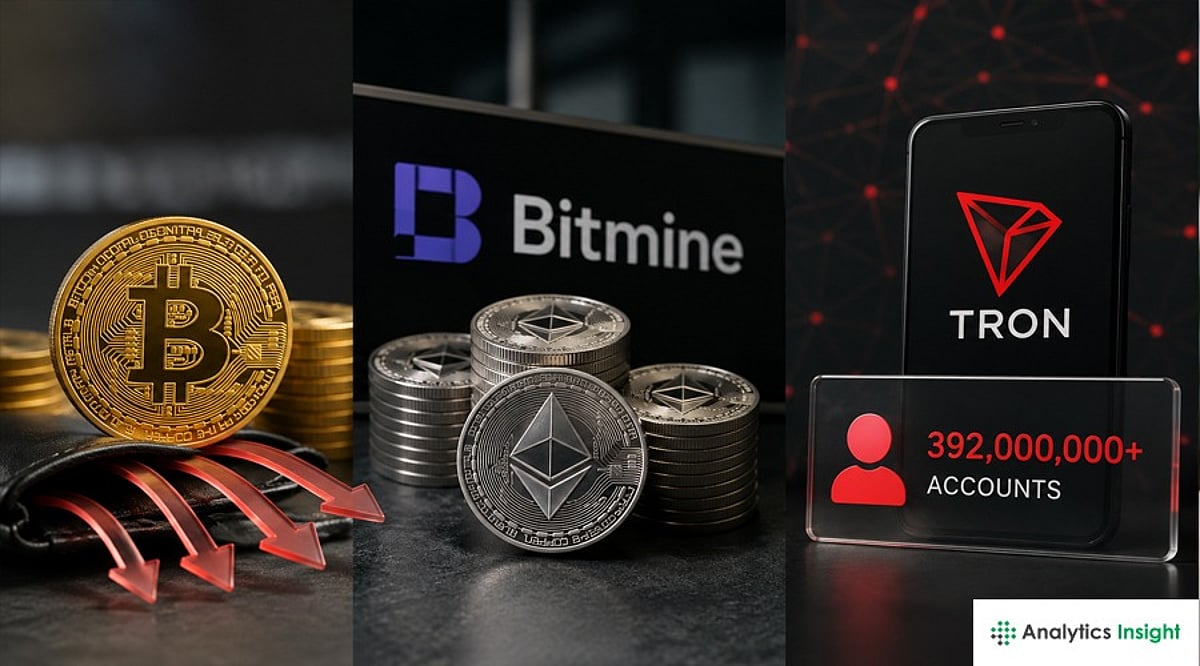
    Major developments unfolded in the crypto space as Bitcoin spot ETFs recorded $95.30 million in net outflows, Bitmine expanded its Ethereum treasury with a major acquisition, and TRON surpassed 392 million wallet addresses. Additionally, Zcash confirmed its Ironwood upgrade for late July, while New Hampshire rejected a Bitcoin-backed bond proposal.

    Bitcoin Spot ETFs See $95 Million in Net Outflows

    According to SoSoValue, Bitcoin spot ETFs experienced a total net outflow of $95.30 million on the reporting day. Fidelity’s FBTC led outflows with a daily net draw of $63.25 million, bringing its total historical net inflow to $10.15 billion. On the inflow side, VanEck’s HODL ETF recorded the highest daily net inflow at $5.36 million (cumulative $1.13 billion), followed by Morgan Stanley’s MSBT with $2.17 million ($377.14 million total). The combined net asset value of all Bitcoin spot ETFs now stands at $76.51 billion, with an ETF net asset ratio of 6.03% and historical cumulative net inflows of $51.19 billion.

    Bitmine Acquires 20,500 ETH for $36 Million

    Bitmine Immersion Technologies purchased 20,500 ETH for approximately $35.92 million via an over-the-counter transaction with Galaxy Digital, executed around July 10, 2026. The purchase price was roughly $1,752 per ETH. This acquisition pushes Bitmine’s total Ethereum treasury to about 5.7 million tokens — worth nearly $10 billion — representing an estimated 4.7%–4.8% of the entire circulating ETH supply of ~120.7 million tokens. The move signals a quiet accumulation strategy by the company.

    TRON Surpasses 392 Million Accounts

    TRON’s blockchain explorer confirmed the network has surpassed 392 million wallet addresses since inception. According to DeFiLlama, TRON remains the dominant platform for Tether (USDT) transfers due to fast settlement times and extremely low fees — processing up to 2,000 transactions per second at roughly 0.0003 TRX per transaction. Lookonchain reported that TRON’s Total Value Locked (TVL) has risen by approximately $1.95 billion since July 1, a gain of 7.8%.

    New Hampshire Rejects Bitcoin-Backed Bond Proposal

    The New Hampshire Executive Council voted down a regulatory proposal to authorize $100 million in Bitcoin-backed bonds. The initiative, pushed by the state’s Business Finance Authority (BFA) and Governor Kelly Ayotte, had passed risk assessments from Moody’s. Opposition was led by Democrat Karen Liot Hill, joined by councilors Janet Stevens and David Wheeler; officials Joseph Kenney and John Stephen voted in favor. The rejection halts the state’s attempt to introduce this financial instrument.

    Zcash Confirms Ironwood Activation on July 28

    Zcash core developer Sean Bowe announced that the Ironwood upgrade will activate at block height 3,428,143, expected around 8 am EST on July 28 — a one-week delay from the original July 21 target. The postponement came after Shielded Labs raised concerns that exchanges, mining pools, and wallet providers might need more time to prepare, particularly as many are transitioning from the legacy zcashd software to the Z3 stack (Zebra, Zaino, Zallet). Ironwood addresses an ‘infinity’ bug discovered in Zcash’s Orchard shielded pool, the network’s primary privacy-focused transaction system.

    FAQs

    • How much outflow did Bitcoin spot ETFs record? Bitcoin spot ETFs recorded total net outflows of $95.30 million. Fidelity’s FBTC saw the largest outflow at $63.25 million, while VanEck’s HODL led inflows with $5.36 million.
    • How much Ethereum did Bitmine buy? Bitmine Immersion Technologies acquired 20,500 ETH for around $35.92 million through an OTC transaction with Galaxy Digital at approximately $1,752 per ETH.
    • Why is TRON’s 392 million account milestone important? TRON crossing 392 million accounts highlights its growing user base and network activity, especially for fast, low-cost Tether transfers.
    • What happened to New Hampshire’s Bitcoin bond proposal? The New Hampshire Executive Council rejected a proposal to authorize $100 million in Bitcoin-backed bonds, halting the initiative.
    • When will Zcash activate Ironwood? Zcash plans to activate Ironwood at block height 3,428,143 on July 28, delayed one week to allow more preparation time for ecosystem participants.
  • Bitcoin ETF Inflows Top $21M, Strike Launches BTC Loan, CASHCAT Soars 718%: Crypto News Roundup

    Bitcoin ETF Inflows Top $21M, Strike Launches BTC Loan, CASHCAT Soars 718%: Crypto News Roundup

    The crypto market witnessed a flurry of activity as Bitcoin spot ETFs saw renewed inflows, Strike introduced a novel Bitcoin-backed loan product, and the meme token CASHCAT skyrocketed over 718%. Meanwhile, crypto hacking losses declined year-on-year, and Solana’s tokenized asset ecosystem continued to expand.

    Bitcoin ETF Inflows Hit $21.44 Million

    According to data from SoSoValue, Bitcoin spot ETFs recorded a total net inflow of $21.44 million yesterday. BlackRock’s IBIT led the charge with a daily net inflow of $54.80 million, bringing its historical net inflow to an impressive $60.26 billion. On the other hand, Fidelity’s FBTC experienced the highest net outflow of $24.92 million, with its total historical net inflow standing at $10.23 billion. The total net asset value of Bitcoin spot ETFs now stands at $77.26 billion, representing an ETF net asset ratio of 6.05%, with cumulative net inflows reaching $51.37 billion.

    Strike Introduces Bitcoin-Backed Loan Without Liquidations

    Strike has launched a new Bitcoin-backed loan product designed to address forced liquidations during periods of extreme market volatility. The key innovation is the removal of margin calls and price-based liquidations, allowing customers to retain their Bitcoin collateral even if the cryptocurrency experiences a sharp decline. However, this added protection comes with trade-offs: borrowers face higher interest rates, shorter repayment periods, and strict repayment schedules. The loans offer a maximum loan-to-value ratio of 45% with six-month terms, and interest rates ranging from approximately 10.7% to 14.2%. While Bitcoin price drops won’t trigger liquidation, borrowers must make timely repayments or risk losing their collateral.

    CASHCAT Surges 718% in 24 Hours

    CASHCAT, a meme token operating on Robinhood’s newly introduced Layer 2 blockchain, surged more than 718% in 24 hours, pushing its market capitalization above $68 million, according to CoinMarketCap DexScan data from July 8. The token’s price stabilized near $0.08365, representing a 962.81% increase since tracking began, with a liquidity volume of approximately $2.6 million. CoinMarketCap lists CASHCAT as unverified, and its social media channels are marked as third-party. Blockchain tracker Lookonchain identified a wallet ending in 0xDE4C that turned $838 into over $1 million. The trader purchased 15.04 million CASHCAT tokens about 20 days ago, selling 13.5 million for a profit of roughly $917,600, with the remaining 1.5 million tokens valued at approximately $133,700.

    Crypto Hack Losses Decline 47% in First Half of 2026

    Losses from crypto exploits fell 46.8% year-on-year to $1.32 billion in the first half of 2026, according to security firm CertiK. However, second-quarter exploit losses rose 59% from the previous quarter to $807.5 million, with attacks becoming more frequent and damaging per event. CertiK cautioned that the lower total does not indicate a safer market. Blockchain intelligence firm TRM Labs recorded 207 crypto hacks in the first half, more than double the 83 incidents from a year earlier—the highest count TRM has measured across any six-month period. Smart contract exploits accounted for 125 incidents (60% of the total) but caused limited financial damage, while infrastructure and operational compromises represented about 15% of incidents but roughly 76% of losses.

    Solana’s Tokenized Assets Reach $8.7 Billion

    In its latest report updated as of July 6, 2026, RWA.xyz revealed that the transfer volume of Solana’s tokenized assets more than doubled previous records amid higher circulation on the blockchain. The total value of assets distributed on the network increased by 36.27% during the same period, reaching $3.48 billion. Network data indicated that the spot volume of tokenized assets on decentralized exchanges grew from $2.69 billion in Q1 2026 to $5.7 billion in Q2 2026.

  • Bitcoin Halving in 2026: Why the Traditional Cycle No Longer Dominates

    Bitcoin Halving in 2026: Why the Traditional Cycle No Longer Dominates

    Bitcoin has a built-in system where miner rewards get cut by 50% every four years. The purpose is straightforward: it slows the influx of new Bitcoins into the market, making supply progressively limited. With a hard cap of 21 million coins, that inherent scarcity has always captured attention. When supply tightens and demand remains robust, prices typically rise. For years, traders have relied on this pattern to forecast price movements.

    What Past Halving Events Showed

    After the 2012 halving, Bitcoin surged from around $12 to over $1,100 within a year. The 2016 halving preceded a rally that pushed Bitcoin near $20,000 in 2017. The 2020 halving set the stage for a run to almost $69,000 in 2021. This repeated pattern led many to believe Bitcoin followed a clear four-year cycle where halving triggered major price growth.

    The 2024 Halving and Market Changes

    The latest halving occurred in April 2024, cutting miner rewards from 6.25 to 3.125 Bitcoin per block. Initially, it met expectations—Bitcoin touched a record high near $126,000 during late 2025. But the market shifted quickly. In the first half of 2026, Bitcoin saw strong downward pressure, dropping below $60,000—a loss of more than 30% since the start of the year. This weakness surprised analysts, as previous halving cycles typically remained strong for longer periods.

    Institutional Investors Changed the Market

    A major reason for this shift is the rise of institutional investors. In earlier years, Bitcoin relied mainly on retail traders and crypto enthusiasts. Today, large financial firms play a much bigger role. After the approval of spot Bitcoin ETFs in 2024, billions of dollars entered the market through traditional channels. But in recent weeks of 2026, reports indicated $4.5 billion to $6 billion exited Bitcoin ETFs, creating heavy selling pressure. Bitcoin no longer reacts solely to supply reduction after halving; large money movements now exert stronger influence.

    Bitcoin Now Reacts to the Global Economy

    Another important change is Bitcoin’s integration with the global financial system. Earlier, Bitcoin mostly moved based on crypto market trends. In 2026, broader economic events affect price much more. Interest rate decisions, central bank policies, inflation concerns, and overall market confidence now shape Bitcoin movement. Capital has also shifted heavily toward artificial intelligence companies and semiconductor stocks this year, diverting speculative money that once flowed into crypto. Bitcoin now behaves more like a global financial asset than a market dependent solely on its internal cycle.

    Pressure on Bitcoin Miners

    Mining companies face serious challenges after the latest halving. With smaller rewards, miners earn less Bitcoin for the same work. High electricity costs in many countries compound the issue. Lower Bitcoin prices in 2026 have made the situation even harder. Some miners have been forced to sell Bitcoin reserves to cover expenses, adding extra selling pressure that diminishes the halving’s usual positive impact.

    Why Halving Still Matters

    Despite these changes, the halving cycle cannot be dismissed entirely. Bitcoin still has fixed supply rules, and scarcity remains one of its strongest features. Some analysts believe the current correction resembles older cycles. Research published in June 2026 suggests Bitcoin may form a stronger bottom later this year before another recovery phase. Several forecasts expect Bitcoin to recover toward $90,000 to $170,000 once market conditions improve and investor confidence returns.

    The Future Beyond 2026

    Bitcoin halving is no longer the sole factor controlling price. “Halving used to be the main engine behind every major rally. Institutional money, ETF flows, government regulation, economic policy, and global investor sentiment now have equal or greater influence than supply reduction,” notes one analyst. Limited supply remains part of Bitcoin’s core value, but the predictable four-year boom pattern no longer holds. In 2026 and beyond, Bitcoin will continue to follow its halving structure, but price movement will depend heavily on external forces. Crypto has matured. Bitcoin now sits inside a larger financial system where supply still matters, but demand and macro conditions do most of the heavy lifting.

    FAQs

    1. What is Bitcoin halving?
    Bitcoin halving is a built-in event that reduces miner rewards by 50% roughly every four years, slowing new Bitcoin supply creation.

    2. Why did Bitcoin halving matter historically?
    Past halvings in 2012, 2016, and 2020 were followed by major price rallies due to reduced supply and rising demand.

    3. Why is the 2024–2026 cycle different?
    Large institutional participation, ETF inflows/outflows, and macroeconomic factors have changed Bitcoin’s traditional market behavior.

    4. Does Bitcoin still follow the four-year cycle?
    Not as predictably as before. Halving still matters, but external financial factors now play a much bigger role.

    5. Can Bitcoin recover after the 2026 correction?
    Many analysts believe Bitcoin can recover if market confidence improves, with forecasts ranging between $90,000 and $170,000.

  • Bitcoin ETF Outflows Hit $469M, SHIB Reserves Surge to 80.5T, and $10B BTC Options Near Expiry

    Bitcoin ETF Outflows Hit $469M, SHIB Reserves Surge to 80.5T, and $10B BTC Options Near Expiry

    The cryptocurrency market witnessed a series of significant developments on June 25, 2026. Spot Bitcoin ETFs recorded $469.08 million in net outflows, led by BlackRock’s IBIT, while SHIB exchange reserves surged to 80.5 trillion tokens. Meanwhile, SBI Group announced a $289 million acquisition of Japanese exchange Bitbank, and $10 billion in Bitcoin options are set to expire this week. Indonesia also introduced mandatory certification for crypto influencers.

    Bitcoin ETFs See $469 Million Outflows

    According to SoSoValue, the Bitcoin spot ETF market experienced a total net outflow of $469.08 million yesterday. The Grayscale Bitcoin Mini Trust ETF BTC recorded the highest net inflow at $23.56 million, bringing its historical total to $2.38 billion. On the other hand, BlackRock’s IBIT led outflows with $239.29 million, while its historical net inflow stands at $61.48 billion. The total net asset value of Bitcoin spot ETFs is $73.87 billion, representing an ETF net asset ratio of 6.04% and a historical cumulative net inflow of $52.75 billion.

    SHIB Exchange Reserves Spike to 80.5 Trillion Tokens

    The SHIB market is seeing a dramatic shift in investor sentiment. Large holders have begun transferring funds to centralized exchanges, interrupting a months-long accumulation trend. CryptoQuant data shows the Exchange Reserve indicator surged to 80.5 trillion SHIB over a few days. This expanded available supply drove the token’s price down to approximately $0.0000044. Daily net inflows into exchanges reached 749.8 billion SHIB, signaling strong selling pressure.

    SBI Group Acquires Bitbank for $289 Million

    SBI Group announced the acquisition of Japanese cryptocurrency exchange Bitbank for ¥46.7 billion (approximately $289 million). This move is expected to push SBI’s crypto custody balance above ¥1 trillion (about $6.2 billion), making it the largest crypto business in Japan. A subsidiary of SBI Holdings will acquire Bitbank shares from founders and other individual shareholders in August. Combined with SBI VC Trade’s accounts (as of April), the merged entity will have approximately 2.92 million total accounts and combined custodial assets of roughly ¥1.1 trillion.

    $10 Billion Bitcoin Options Expiry Approaches

    According to Bloomberg, Deribit will see approximately $10 billion in notional value of Bitcoin options expire on Friday, accounting for about 37% of current total open interest. The put-to-call ratio stands at 0.83, indicating bullish bets still dominate, but most call options are out-of-the-money. Puts are concentrated in the $60,000–$65,000 and $70,000–$75,000 ranges, suggesting bearish positions are more likely to profit. Jean-David Pequignot, Deribit’s Chief Business Officer, noted that this options portfolio, positioned for higher medium-term prices, is now under test amid falling spot prices.

    Indonesia Mandates Certification for Crypto Influencers

    Indonesia’s Financial Services Authority (OJK) issued Regulation No. 6 of 2026, requiring individuals who recommend cryptocurrencies to obtain competency certification unless they already hold a relevant license. The regulation limits influencers to promoting only digital assets listed on authorized exchanges. Any digital asset service provider featured in promotional content must hold the necessary regulatory license. Marketing campaigns must be conducted through regulated financial services businesses, which remain responsible for the promotional material.