Tag: Bitget

  • Crypto Weekly: Bitcoin ETFs See $2.38B Inflows, QNT Jumps 260%, UK Launches Crypto Licensing

    Crypto Weekly: Bitcoin ETFs See $2.38B Inflows, QNT Jumps 260%, UK Launches Crypto Licensing

    Bitcoin spot ETFs recorded $2.38 billion in weekly net inflows, while Quant (QNT) surged 260% to a five-year high. Meanwhile, the Bitget hacker began moving stolen funds, Wintermute-linked shorts on Hyperliquid reached $126 million, and the UK Financial Conduct Authority (FCA) opened its new crypto licensing window.

    Bitcoin Spot ETFs Attract $2.38 Billion

    According to SoSoValue, Bitcoin spot ETFs saw a net inflow of $2.38 billion last week. BlackRock’s IBIT led with $1.158 billion, followed by Fidelity’s FBTC at $702 million. The total net asset value of Bitcoin spot ETFs now stands at $108.42 billion, with the ETF net asset ratio at 6.43% and cumulative net inflows totaling $57.55 billion.

    QNT Surges to Five-Year High

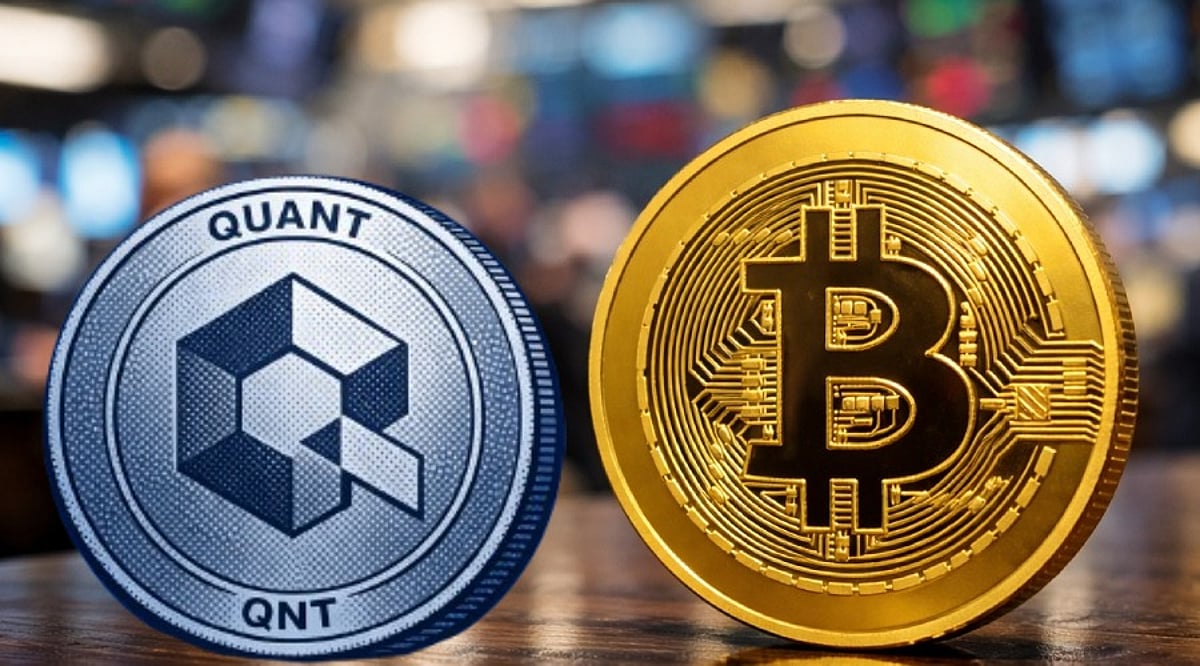
    QNT climbed roughly 260% weekly to a peak of about $370 before settling around $205. The rally was driven by The Clearing House selecting Quant for its On-Chain Money Initiative. Additional catalysts include Quant’s integration into Murex MX.3 and its selection by the European Central Bank for digital euro testing.

    Bitget Hacker Moves Stolen Funds

    The wallet linked to the September 24 Bitget hack began transferring Ethereum (ETH) into THORChain vaults and swapping assets into Bitcoin. Bitget confirmed the breach did not compromise private keys; instead, a critical backend component was exploited to pass fraudulent transaction data through the exchange’s authorization process.

    Wintermute’s Hyperliquid Shorts Reach $126 Million

    Onchain Lens reported that a Wintermute-linked wallet held roughly $126.25 million in short positions on Hyperliquid as of September 28, with a $46.92 million Ethereum short representing the largest position. The wallet showed approximately $963,600 in unrealized profit at the time and a lifetime P&L of around $197.22 million.

    UK Opens New Crypto Licensing Window

    The FCA began accepting crypto license applications at 7 am UK time on September 30. Firms have until February 28, 2027, to submit during the main application window. The new regime starts October 25, 2027. The FCA published a 73-page preview requiring details such as firm activities, regulated permissions, control structure, customer asset handling, and financial/operational standards.

    FAQs

    How much did Bitcoin spot ETFs attract last week?

    Bitcoin spot ETFs recorded $2.38 billion in weekly net inflows. BlackRock’s IBIT led with $1.158 billion, followed by Fidelity’s FBTC with $702 million.

    Why did QNT surge 260% in a week?

    The rally coincided with The Clearing House selecting Quant for its On-Chain Money Initiative. Other factors include Quant’s integration with Murex MX.3 and its involvement in digital euro testing.

    What happened to the funds stolen from Bitget?

    A wallet linked to the September 24 Bitget breach began moving ETH through THORChain and swapping into Bitcoin. The exchange attributed the breach to a compromised backend component.

    How large are the Wintermute-linked Hyperliquid short positions?

    On-chain tracking identified approximately $126.25 million in short positions. The largest was a roughly $46.92 million ETH short.

    When does the UK’s new crypto licensing window open?

    The FCA’s crypto authorization gateway opened on September 30, 2026. The main application window runs until February 28, 2027, with the new regime beginning October 25, 2027.

  • OKX Founder Challenges THORChain’s Decentralization Claims After Bitget’s $387.5M Breach

    OKX Founder Challenges THORChain’s Decentralization Claims After Bitget’s $387.5M Breach

    OKX founder Star Xu has publicly questioned THORChain’s claim to true decentralization after funds linked to the Bitget security breach reportedly moved through the cross-chain network. The exchange now estimates the attacker made off with approximately $387.5 million and is asking industry partners to help block the stolen assets.

    Bitget Raises Loss Estimate to $387.5 Million

    On September 24, Bitget detected unauthorized transfers from certain hot wallets at 18:31 UTC. The exchange initially placed the damage at $351.6 million and paused withdrawals, while noting that cold wallets remained secure and its protection fund held more than $464 million.

    After further tracing, Bitget revised the amount sent to attacker-controlled addresses to $387.5 million. The update included Zcash and Tron transfers that were omitted from the initial figure; it did not reflect new transfers after the breach was contained. Mandiant and SlowMist are assisting with the investigation.

    Withdrawal restoration is scheduled in stages: Bitcoin on September 28, Ethereum on September 29, USDT on September 30, and other tokens, fiat withdrawals, and peer-to-peer services on October 2. Bitget stressed these dates are a restoration schedule, not confirmation that withdrawals have resumed.

    Star Xu Questions THORChain’s Validator Model

    Bitget CEO Gracy Chen asked THORChain to refuse transactions from addresses linked to the attacker. That request highlighted the network’s role in moving assets between blockchains and raised questions about whether its operators can act on publicly flagged wallets.

    In response, Xu argued THORChain should not be compared with Bitcoin or Ethereum. He said validators jointly control assets in vaults through a threshold-signing system. “I don’t think THORChain’s TSS + validator model represents true decentralization,” he wrote. “The selected validators set collectively controls the underlying assets in the TSS vaults. Once the signing threshold is reached, those validators can move the funds.”

    Under that model, a required group of validators can authorize transfers. Xu said this makes THORChain an intermediary, even though no single validator controls a vault.

    THORChain’s official account rejected that characterization, describing the network as decentralized and permissionless. It also questioned whether base-layer blockchains should face similar demands when stolen assets pass through them.

    Stablecoin Freezes and Recovery Efforts

    Circle and Tether froze roughly $318,000 in USDC and USDT at a wallet linked to the Bitget attack. The wallet held about 99,990 USDC and 218,023 USDT when the issuers blocked the tokens. Those issuer controls can stop stablecoin movement, but they do not give Circle or Tether control over Ethereum held at the same address.

    Bitget has also launched a recovery bounty program, offering eligible parties 5% of affected funds they help freeze or recover. The exchange published attacker addresses and a live tracing dashboard for firms monitoring the transfers.

    The confirmed freeze represents only a small portion of the $387.5 million estimate. Further recovery depends on where the assets move and whether the services handling them can restrict transfers. Bitget’s September 28 update is expected to provide more details on the investigation and withdrawal restoration.

  • Crypto Market Update: Bitcoin ETF Inflows Hit $191M, KelpDAO Sues LayerZero, Bitget Faces $350M Exploit

    Crypto Market Update: Bitcoin ETF Inflows Hit $191M, KelpDAO Sues LayerZero, Bitget Faces $350M Exploit

    The crypto market delivered several headline-making moves on September 25, from strong institutional demand for Bitcoin ETFs to legal action against LayerZero and a major exchange exploit. Here is a closer look at the day’s most important stories.

    Bitcoin ETF Inflows Reach $191 Million

    Spot Bitcoin ETFs posted $191 million in cumulative daily net inflows, according to SoSoValue. BlackRock’s IBIT led the pack with $163 million in single-day net inflows, lifting its all-time net inflow total to $65.18 billion. Fidelity’s FBTC added $12.86 million, bringing its historical total to $11.01 billion. On the other end, WisdomTree’s BTCW saw the largest daily net outflow at $4.016 million.

    Combined, spot Bitcoin ETFs now hold about $108.91 billion in total net assets, representing a 6.43% ETF net asset ratio. Cumulative historical net inflows for the category stand at $57.41 billion.

    KelpDAO Takes LayerZero to Court

    KelpDAO has filed a lawsuit against LayerZero and co-founder Bryan Pellegrino following the April attack that drained 116,500 rsETH worth approximately $292 million from the liquid staking protocol. The incident, which occurred on April 22, has been tied by researchers to a North Korean hacking group. In its complaint, KelpDAO alleges that LayerZero failed to disclose security weaknesses and risks in its technology, and that it did not prevent attackers from compromising its security infrastructure. The lawsuit also claims that LayerZero and Pellegrino shifted blame to KelpDAO rather than accepting responsibility. These allegations remain subject to litigation.

    Bitget Loses $350 Million in Hot Wallet Exploit

    Crypto exchange Bitget has confirmed an exploit that drained at least $350 million from its hot wallets. CEO Gracy Chen said unauthorized transfers were detected across multiple blockchain networks after assets including ETH, USDT, USDC, AVAX and BNB were moved to an unidentified address. On-chain analysts saw rapid swaps on decentralized exchanges such as UniswapX and 1inch Fusion, with some trades executed at premiums of up to 5% above market prices. Chen said cold wallets are completely intact and that user losses are covered by the Bitget Protection Fund, which has a balance of more than $464 million.

    Hyperliquid Strategies Adds $45.8M in HYPE

    Hyperliquid Strategies has purchased another 494,200 HYPE worth roughly $45.8 million, according to Lookonchain. The buying activity, linked to wallet 0x6436, took place over a 16-hour period on September 25. With the latest purchase, the address has accumulated 5.51 million HYPE worth approximately $476 million over the past month, averaging 183,574 HYPE or $15.86 million per day. Hyperliquid Strategies now holds about 35.1 million HYPE, valued at roughly $3.2 billion.

    Shielded Bitcoin: A New Privacy Proposal

    Researchers from Alloc Init have published a September 24 paper proposing private Bitcoin transfers using zero-knowledge proofs without requiring a soft fork. The metaprotocol, called Shielded Bitcoin, would use Bitcoin to publish and order encrypted transaction data while Bitcoin nodes would not need to enforce the privacy rules. The design draws on concepts from Zcash, including encrypted notes, nullifiers and zero-knowledge proofs. It would conceal shielded senders, receivers, amounts and transaction links while leaving Bitcoin’s existing consensus rules unchanged.

    These developments highlight how quickly institutional flows, security incidents, legal disputes, and protocol research can shift the crypto landscape in a single day.

  • 8 Must-Know Crypto Apps for Investors: Trading, Staking, and Security Compared

    8 Must-Know Crypto Apps for Investors: Trading, Staking, and Security Compared

    Cryptocurrency investing has become far more accessible thanks to powerful mobile apps that combine trading, portfolio tracking, staking, and secure wallets in one place. Choosing the right platform, however, depends on several factors, including security, supported cryptocurrencies, fees, and overall user experience. Before entering the digital asset market with confidence, here are eight popular crypto apps every investor should know.

    Binance and Coinbase

    Binance offers one of the most extensive cryptocurrency listings in the industry, along with advanced trading tools, staking options, and competitive fees for global users. Coinbase, on the other hand, is known for its beginner-friendly interface, strong security measures, educational resources, and regulated services. For first-time cryptocurrency investors seeking simplicity and reliability, Coinbase is an ideal starting point.

    Kraken

    Kraken has earned a strong reputation for robust security, transparent fee structures, and advanced trading features. The platform supports spot trading, futures, staking, and institutional services. Its blend of accessibility and depth appeals to both beginners and experienced traders who want dependable cryptocurrency investing backed by comprehensive market access and reliable customer support.

    Crypto.com

    Crypto.com brings together cryptocurrency trading, staking, rewards, and a digital wallet within a single platform. Users can access a wide range of cryptocurrencies, earn rewards through staking programs, and spend digital assets using the company’s crypto-linked payment cards. This all-in-one approach makes it a versatile option for everyday crypto users around the world.

    Bybit and OKX

    Bybit is especially popular for derivatives trading, advanced charting, and fast execution speeds. OKX offers spot trading, futures, staking, decentralized finance services, and Web3 wallet integration. Both platforms provide comprehensive tools designed for active traders and experienced cryptocurrency investors who want diverse investment opportunities.

    Gemini and Bitget

    Gemini emphasizes regulatory compliance, security, and user protection, making it an attractive choice for cautious investors. Bitget has expanded rapidly with copy trading, derivatives, spot trading, and AI-powered features. Together, these platforms offer diverse options for users with different trading goals and investment strategies globally.

    Choosing the Right Crypto App

    The best crypto app ultimately depends on your investment goals, supported assets, fees, security standards, and the features you value most. Beginners often prefer simple interfaces, while experienced investors prioritize advanced analytics and trading tools. Comparing platforms carefully helps you select the most suitable app for long-term cryptocurrency investing success.

  • Top Crypto Cards in India for 2026: A Comprehensive Buyer’s Guide

    Top Crypto Cards in India for 2026: A Comprehensive Buyer’s Guide

    Cryptocurrency cards have become a practical payment option for many users in India. These cards bridge digital assets with everyday spending, allowing quick payments at stores, restaurants, travel websites, and online platforms that accept Visa or Mastercard. Instead of selling crypto through an exchange before every purchase, cardholders can complete transactions with a single swipe or tap. This simple process saves time and offers greater convenience.

    The Indian market now offers several crypto card options with different rewards, supported assets, fees, and spending limits. Some cards focus on cashback in cryptocurrency, while others provide travel benefits, premium memberships, or lower conversion charges. A careful comparison helps cardholders select a card that matches personal spending habits and financial goals.

    How Cryptocurrency Cards Work

    A cryptocurrency card links to a crypto wallet rather than a traditional bank account. The wallet stores digital assets such as Bitcoin, Ethereum, or stablecoins. At the time of payment, the card provider converts the selected cryptocurrency into local currency. The merchant receives the payment in Indian Rupees or another supported currency, while the crypto balance decreases by the purchase amount.

    Most providers also offer mobile applications with balance tracking, transaction history, security controls, and asset management. Many cards allow users to switch between different cryptocurrencies before a transaction. This feature adds flexibility without extra steps during checkout.

    Key Features That Matter

    The popularity of crypto cards can largely be attributed to the incentives users get for using them. Several companies offer crypto cards that provide a percentage of every retail transaction as digital currency rather than traditional cashback. Over time, such tokens can significantly increase the user’s cryptocurrency balance without any additional investments.

    Equally important is the security provided by modern crypto cards. Most come with two-factor authentication, instant card freezing options, biometric login, and transaction alerts. These features reduce the chances of illicit transactions and enhance the security of crypto wallet activities.

    Another crucial factor is the supported cryptocurrency. Some cards support only a few digital currencies, while high-end cards support various coins and stablecoins. A greater variety enables users to spend their currencies more flexibly.

    Best Cryptocurrency Cards Available in India

    Several international crypto card providers continue to serve eligible Indian users through digital platforms.

    • Crypto.com Visa Card – Popular for attractive crypto rewards, airport lounge access for premium tiers, and support for multiple cryptocurrencies. Higher reward levels usually require larger platform token holdings.
    • Bybit Card – Gained attention with competitive cashback offers, virtual card support, and a simple mobile interface. Smooth crypto management for active traders and frequent users.
    • RedotPay Card – Expanded rapidly across regions. Supports direct crypto spending with competitive conversion rates and multiple digital assets. Straightforward account setup and broad payment acceptance.
    • Wirex Card – Attracts customers with flexible crypto spending, instant currency exchange, and reward programs. Supports both traditional currencies and digital assets.
    • Bitget Card – Targets regular crypto users with multi-currency support, quick wallet integration, and secure payment controls through its mobile app.

    Advantages of Crypto Cards

    Crypto cards simplify daily spending without repeated manual conversions. Grocery shopping, hotel reservations, subscription payments, and travel bookings become easier with direct wallet access. Fast payments reduce delays and create a familiar payment experience.

    Reward programs add another layer of value. Crypto cashback allows users to collect digital assets after each eligible purchase. Over time, frequent spending can build a meaningful crypto balance.

    International travel also becomes more convenient with many crypto cards. Several providers support global payment networks, enabling smooth transactions across multiple countries. Travelers also benefit from lower foreign exchange costs on selected cards.

    Important Points Before Choosing a Card

    Before applying, carefully review supported regions, as service availability can change according to local regulations. Verification requirements differ across providers and often include identity checks before card activation.

    Reward structures deserve close attention. Some cards advertise high cashback rates but require premium subscriptions or platform token staking. Review eligibility conditions to avoid unexpected limitations.

    Security standards should remain a top priority. Strong authentication methods, quick account recovery options, and reliable customer support create a safer experience for digital asset holders.

    Spending limits also matter. Daily transaction caps, ATM withdrawal limits, and monthly purchase limits vary across providers. A card with suitable limits supports smoother financial management.

    Future of Cryptocurrency Cards in India

    The crypto payment sector continues to evolve with stronger technology and better user experiences. More providers now focus on faster settlements, lower transaction costs, and broader cryptocurrency support. Mobile applications also improve with smarter security tools and advanced wallet management.

    Regulatory developments may influence future availability and features within the Indian market. Card providers continue to adapt their services to meet changing compliance standards while expanding payment options for digital asset users.

    Final Thoughts

    Cryptocurrency cards have become an important bridge between digital assets and everyday spending. Strong security, competitive rewards, broad cryptocurrency support, and transparent fee structures separate the best options from ordinary alternatives. Crypto.com Visa Card, Bybit Card, RedotPay Card, Wirex Card, and Bitget Card stand among the leading choices for eligible users in India during 2026. A detailed comparison of features, costs, and supported services helps every cardholder select an option that delivers long-term value and a smooth payment experience.

    Frequently Asked Questions

    What is a cryptocurrency card?

    A cryptocurrency card is a payment card linked to a crypto wallet that converts digital assets into local currency during transactions.

    Can cryptocurrency cards be used for daily purchases in India?

    Yes, eligible crypto cards can be used for everyday payments at merchants, websites, and platforms that accept supported card networks.

    Which cryptocurrency cards are popular in India in 2026?

    Popular options include Crypto.com Visa Card, Bybit Card, RedotPay Card, Wirex Card, and Bitget Card, depending on availability and eligibility.

    Do crypto cards offer cashback or rewards?

    Many crypto cards provide rewards in cryptocurrency, including cashback programs, loyalty benefits, or premium features based on usage levels.

    What should users check before choosing a crypto card?

    Users should review supported regions, fees, security features, supported assets, transaction limits, and reward conditions before applying.

  • Bitget Expands to New Zealand With Financial Services Provider Registration

    Bitget Expands to New Zealand With Financial Services Provider Registration

    Bitget, the world’s largest Universal Exchange (UEX), has officially entered the New Zealand market by registering as a Financial Services Provider on the country’s Financial Service Providers Register (FSPR).

    The registration strengthens Bitget’s financial services framework, covering key service categories such as foreign currency exchange, domestic and cross-border money transfers, client asset custody, portfolio and money management, and the execution of financial product or foreign exchange transactions on behalf of clients.

    In addition to the FSPR registration, Bitget has joined the New Zealand Insurance and Financial Services Ombudsman (IFSO) Dispute Resolution Scheme. This independent scheme provides eligible customers with an external channel to raise and resolve disputes related to participating financial service providers.

    This move is part of Bitget’s broader strategy to build the operational and compliance infrastructure required for its expanding range of financial products, including traditional market instruments, foreign exchange services, and tokenized real-world assets.

    “Financial platforms need compliance structures that can support a wider mix of assets and services,” said Gracy Chen, CEO of Bitget. “The registration adds another layer to our international financial services framework as the platform continues connecting digital assets with established markets.”

    The Universal Exchange model brings crypto assets, tokenized stocks, commodities, foreign exchange, and other financial products into a single trading platform. Bitget continues to develop its services through registered entities and qualified partners across different jurisdictions.

    Disclaimer: Product availability remains subject to applicable laws, local requirements, and regional eligibility. Registration on the FSPR does not constitute an endorsement, approval, or guarantee by the New Zealand Government, the Financial Markets Authority (FMA), or the Registrar of Financial Service Providers.

  • The Safest Crypto Exchanges in 2026: Custodial vs Non-Custodial Security Compared

    The Safest Crypto Exchanges in 2026: Custodial vs Non-Custodial Security Compared

    Choosing a crypto exchange based on coin selection or fees is common, but the real question in 2026 is: which platform is most secure and trusted? History is littered with costly failures—FTX evaporated billions overnight, Bybit lost $1.5 billion in February 2025 despite MiCA licensing, Binance paid a $4.3 billion U.S. AML settlement and suffered two major hacks, and Celsius froze withdrawals without warning.

    This guide evaluates leading custodial platforms with hard data, then introduces a structurally different model: non-custodial instant swaps, exemplified by ChangeNOW.

    What Security Means in 2026

    The old checklist—cold storage, 2FA, encryption—is no longer sufficient. Every serious exchange has those, yet breaches still happen. Today’s evaluation focuses on five factors:

    • Custody model: Does the platform hold your funds? If yes, those funds become a target.
    • Track record: Has the platform been breached? Were customer funds affected? How was it handled?
    • Proof of reserves: Can the platform cryptographically prove it holds what it claims?
    • Incident response: Insurance funds, recovery processes, and law enforcement cooperation.

    Top Trusted Crypto Platforms

    ChangeNOW: The Non-Custodial Option

    ChangeNOW is not a traditional exchange. It is a non-custodial instant swap service that never holds your funds. You send from your own wallet to a one-time deposit address; ChangeNOW routes the swap across its liquidity network and delivers the output directly to your wallet—usually in under one minute.

    This eliminates the fundamental risk of custodial platforms: a concentrated pool of user funds. ChangeNOW’s security record is clean—zero major breaches since 2017. It joined the Crypto Defenders Alliance in 2026, launched Private Transfers for reduced on-chain visibility, and boasts a 98% swap success rate across 1,500+ assets and 110+ blockchains.

    Kraken

    Kraken stores customer funds in air-gapped cold storage with 24/7 armed security. It was the first major exchange to run verifiable proof-of-reserves audits (since 2014) and publishes quarterly reports via a registered CPA firm. Account protections include FIDO2 hardware keys, Global Settings Lock, and zero SMS recovery. Kraken holds ISO/IEC 27001:2022 and SOC 2 Type 1 certifications. In March 2026, its Wyoming-chartered bank gained a Federal Reserve master account. Track record: zero customer fund losses in 15 years.

    Limitations: Standard fees run 1–1.5%; competitive rates require Kraken Pro.

    Coinbase

    The most regulated U.S. exchange, NASDAQ-listed (COIN), with mandatory quarterly audited disclosures. 98% of customer crypto is in geographically distributed offline cold storage using military-grade Cross Domain Solution technology. Multi-Party Computation (MPC) splits private keys across secure environments. Coinbase holds MiCA, FCA, and New York BitLicense. No platform-wide hack or customer fund loss has occurred.

    Limitations: A €21.5 million AML fine from Ireland’s Central Bank undercuts its compliance image. Standard interface fees reach 3.99% for card purchases.

    Binance

    The world’s largest exchange by volume. Its Secure Asset Fund for Users (SAFU) holds ~$1 billion, funded by 10% of trading fees. AI-powered monitoring issues 15,000+ security alerts daily. Two notable breaches occurred: a $570 million BNB Chain bridge vulnerability (2022) and a $40 million theft (2019), both covered by SAFU with no customer losses.

    Limitations: CEO Changpeng Zhao pleaded guilty to criminal charges in a $4.3 billion U.S. settlement for AML violations.

    Bitget

    Bitget’s Protection Fund exceeds $300 million, and monthly Merkle Tree proof-of-reserves reports show reserve ratios above 180% for BTC, ETH, and USDT. Over 95% of assets are in cold storage. Bitget holds ISO 27001 and ISO 27701 certifications. No major platform breach to date.

    Limitations: Seychelles incorporation means lighter regulatory oversight. The Protection Fund is platform-managed, not guaranteed insurance.

    The Problem Custodial Exchanges Share

    Kraken, Coinbase, Binance, and Bitget all hold your funds. Despite best-in-class security, Bybit (MiCA-compliant) lost $1.5B. Binance was hacked twice. Coinbase paid a €21.5M AML fine. The risk is structural: when a platform holds your funds, you carry counterparty exposure. Non-custodial models like ChangeNOW eliminate this risk entirely.

    Final Verdict

    Kraken is the best custodial exchange for security. Coinbase offers the most regulatory accountability. Binance has the largest protection fund. Bitget has the most transparent reserves. All require trust. ChangeNOW does not—it never takes possession of your assets. Nine years, zero breaches, 8 million users, and 98% success rate demonstrate what happens when security is built into the model.

    For active traders needing order books and margin, Kraken is the custodial choice. For everyone else, ChangeNOW makes counterparty risk optional.

    FAQs

    What is the difference between custodial and non-custodial architecture? In custodial architecture, a third party manages your private keys like a bank. In non-custodial, you retain ownership and the service never holds your funds.

    Is ChangeNOW safe? Yes. It never holds your funds, eliminating counterparty risk.

    Which exchange has the best security? Kraken has the finest track record among custodial exchanges. ChangeNOW offers unparalleled structural security.

    What happened to Bybit in 2025? Bybit suffered the largest exchange hack in crypto history, losing $1.5 billion despite MiCA compliance.

    Can ChangeNOW be hacked? Any platform can be targeted, but there is no pooled user funds or stored keys to steal at scale.

  • Top Crypto Exchanges Gaining Ground on Binance in 2026

    Top Crypto Exchanges Gaining Ground on Binance in 2026

    Binance remains the world’s largest crypto exchange in 2026, but competition is growing rapidly. Exchanges like Coinbase, OKX, Kraken, Bybit, Bitget, and Bitvavo are attracting millions of users by focusing on regulation, innovation, lower fees, and specialized trading experiences across global markets.

    Coinbase: Compliance and Expansion

    Coinbase continues expanding with strong regulatory compliance and institutional trust. Its MiCA CASP license strengthens its presence across Europe, while its beginner-friendly interface, fast onboarding, staking services, and growing expansion into Asia make it a preferred choice for compliance-focused investors.

    Kraken: Security and Transparency

    Kraken has built its reputation around security, transparency, and regulatory compliance. Regular Proof-of-Reserves audits, MiCA licensing through the Central Bank of Ireland, deep liquidity, and competitive trading features have helped it rapidly expand across Europe and attract conservative crypto traders.

    OKX: Global Competitor with Deep Liquidity

    OKX has emerged as one of Binance’s strongest global competitors with over 1,600 trading markets, advanced margin tools, and deep liquidity. Its Malta-backed European expansion, institutional investment, and appeal to both retail and professional traders continue driving impressive global growth.

    Bybit and Bitget: Innovation for Active Traders

    Bybit and Bitget are winning active traders with innovative features. Bybit offers fast trade execution and has rebuilt user confidence following its 2025 security recovery, while Bitget has surpassed 100 million users through copy trading, low fees, futures products, and beginner-friendly investing tools.

    Regional Exchanges Gain Momentum

    Regional exchanges are also gaining momentum. Netherlands-based Bitvavo has become a trusted fiat-to-crypto gateway through Dutch regulatory compliance, while KuCoin, MEXC, Gate.io, and Hyperliquid attract traders seeking wider altcoin selections, derivatives trading, decentralized perpetuals, and lower trading costs.

    The crypto exchange market is becoming more competitive rather than replacing Binance outright. While Binance still leads in liquidity and global trading volume, fast-growing rivals are succeeding by focusing on regulatory trust, institutional partnerships, derivatives, copy trading, and regional expansion to meet diverse investor needs.

  • Top Crypto Exchanges with the Deepest Liquidity in 2026

    Top Crypto Exchanges with the Deepest Liquidity in 2026

    Liquidity is one of the most important factors when choosing a crypto exchange. High liquidity means traders can buy or sell assets quickly without causing major price changes. Deep order books, tight bid-ask spreads, and strong trading volume help reduce slippage and improve execution quality.

    Binance remains the global leader in crypto liquidity in 2026. With some of the highest trading volumes across spot and derivatives markets, the exchange offers deep order books, low spreads, and strong liquidity for major assets like Bitcoin and Ethereum, making it ideal for large trades.

    Coinbase is a top choice for traders seeking deep USD-based liquidity and regulatory confidence. The platform is widely trusted by institutions and large investors, offering strong execution quality on major crypto pairs while maintaining a strong compliance and security framework.

    OKX has established itself as one of the strongest liquidity venues for both spot and futures trading. The exchange provides advanced trading tools, competitive fees, and deep market depth across major cryptocurrencies, making it popular among professional and institutional traders.

    Kraken continues to attract traders with its reliable infrastructure, transparent reserves, and strong fiat-to-crypto liquidity. Its deep order books for major assets and reputation for security make it a preferred platform for traders who prioritize stability and regulatory compliance.

    For derivatives traders, Bybit and Bitget have become major liquidity hubs in 2026. Both platforms offer strong perpetual futures liquidity, fast execution speeds, and active trading communities. Their growing market depth helps traders manage large positions with minimal market impact.

    Before placing large trades, always check real-time order book depth, spreads, and potential slippage instead of relying only on headline trading volume. For spot trading, Binance, Coinbase, and Kraken are often top choices, while Binance, Bybit, and Bitget stand out for futures and perpetual markets.