
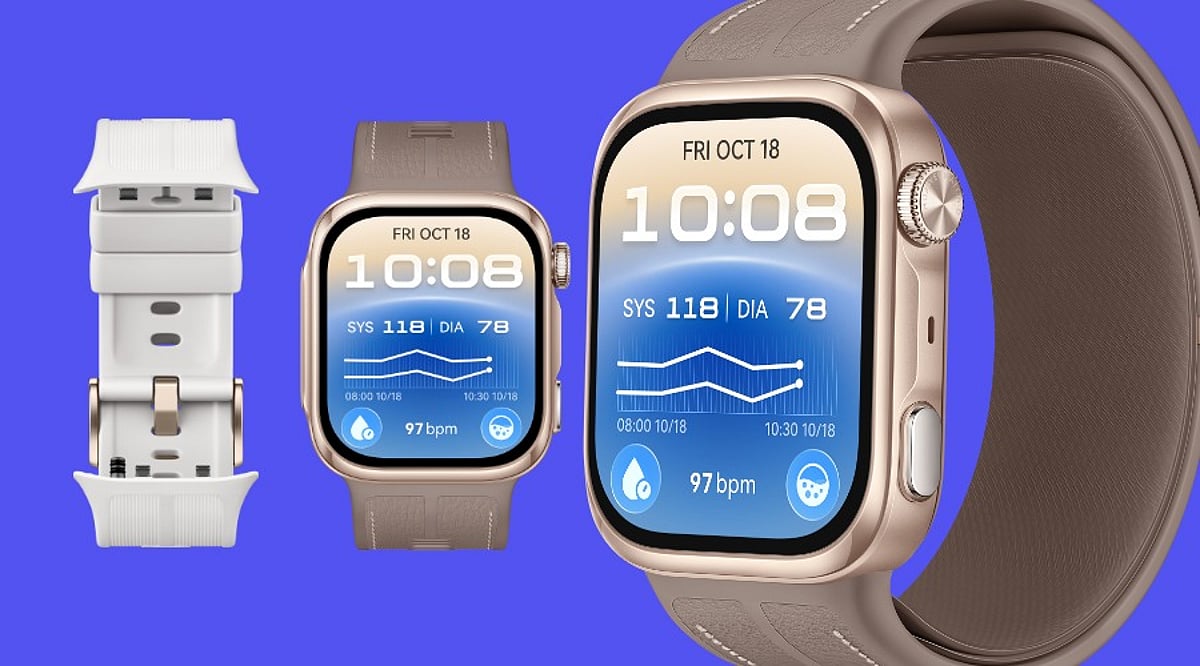
The Huawei Watch D3, unveiled on September 2, 2026, at the ‘Chase the Wild’ event in Munich, is more than just another Android wearable. It sets a new benchmark by integrating a real mechanical airbag and micro-pump into its strap for blood pressure measurement, a move most smartwatches avoid. This medical-grade approach ensures CE-MDR certification and delivers accuracy that optical sensors can’t match.
Here are five defining features that make the Watch D3 one of the most compelling health-focused wearables of the year, followed by a full specification breakdown.
1. 24-Hour Ambulatory Blood Pressure Monitoring
Unlike typical smartwatches that measure blood pressure on demand, the Watch D3 tracks it continuously throughout the day and night. This system, called ABPM (Ambulatory Blood Pressure Monitoring), inflates the built-in airbag at set intervals every 15 to 30 minutes. It aims for at least 20 daytime and 7 nighttime readings. A quieter pump at night helps avoid disturbing sleep.
Continuous monitoring eliminates the ‘white coat syndrome’ distortion seen in single office readings and reveals crucial nighttime blood pressure drops that one-off measurements miss.
2. Pre- and Post-Exercise Blood Pressure Checks
The Watch D3 takes blood pressure before a workout and again within two minutes after completion. If pre-exercise numbers are too high, the watch alerts the user to hold off on intense activity that day. This mode supports running, walking, and cycling, both indoors and outdoors, acting as a built-in safety check for hypertension management.
3. ECG and Pulse Wave Arrhythmia Analysis
Heart rhythm monitoring uses two complementary systems. Pulse Wave Arrhythmia Analysis runs continuously in the background via the PPG sensor, scanning for atrial fibrillation. Beat-by-Beat ECG requires manual activation: users hold the side electrode for 30 seconds to generate a single-channel electrocardiogram. The ECG report exports as a PDF for easy sharing with doctors, and independent testers noted accurate, consistent recordings without false alerts.
4. Health Glance and Long-Term Trend Reports
Raw health data becomes meaningful with context. Health Glance compiles 11 biometric indicators—including blood pressure, heart rate, and SpO2—into a single summary in about 60 seconds. Together with Health Insights in the Huawei Health app, users can review weeks or months of trends. TruSleep 5.0 data also joins this dashboard, creating a unified view of daily wellness.
5. Health Community and Environmental Alerts
The Watch D3 extends health tracking beyond the wearer. Health Community shares real-time alerts with family members when blood pressure spikes, heart rate changes, or sleep disruptions occur—especially useful for monitoring aging parents remotely. The watch also warns users of environmental shifts like sudden temperature drops or high-altitude changes that could affect blood pressure readings.
Specifications at a Glance
Beyond health features, the Watch D3 improves on its predecessor with a slimmer profile and longer battery life. The case is 11.3mm thick (2mm thinner than the Watch D2), the display is a 1.92-inch screen with 3,000 nits peak brightness, and the device weighs just 40g without the strap. Battery life reaches up to 6 days under typical use, dropping to 1 day with continuous ABPM. Charging takes about 75 minutes wirelessly. Connectivity includes Bluetooth 6.0, NFC, and GPS, supporting Android 8.0+ and iOS 13.0+. Water resistance is rated IP68.
The reduced thickness is particularly beneficial for overnight ABPM, as a bulkier case could catch on bedding and disrupt sleep without compromising the sensor hardware that underpins its medical claims.
Final Verdict
Huawei Watch D3 represents a genuine shift in what a smartwatch can responsibly measure. Its mechanical airbag system distinguishes it from every optical sensor on the market. For Android smartwatch buyers seeking real health insight, this feature set stands out. UK retail availability is already confirmed, with other markets to follow. One thing is certain: Huawei has raised the bar for wrist-worn health tracking.
Frequently Asked Questions
What makes the Huawei Watch D3 different from other smartwatches?
It uses a mechanical airbag and micro-pump for real blood pressure readings, not optical estimates. This approach mirrors clinical monitors, offering medical-grade accuracy.
Is the Huawei Watch D3 compatible with Android phones?
Yes, it supports Android 8.0 or later, along with iOS 13.0 or later, via Bluetooth 6.0 and NFC.
How long does the battery last on the Watch D3?
Typical usage yields up to 6 days; with continuous ABPM, it drops to roughly 1 day.
Can the Watch D3 detect irregular heartbeats?
Yes, it runs Pulse Wave Arrhythmia Analysis continuously and offers Beat-by-Beat ECG for manual recordings.
Does the Huawei Watch D3 hold any medical certification?
Yes, it has CE-MDR certification under EU Medical Device Regulation and follows European Society of Hypertension guidelines.