Tag: BMW

  • BMW India Plans Fourth Price Increase in 2026 as Rupee Weakens and Costs Rise

    BMW India Plans Fourth Price Increase in 2026 as Rupee Weakens and Costs Rise

    BMW Group India is preparing to raise vehicle prices for the fourth time in 2026, driven by the weakening rupee and escalating commodity costs. The luxury automaker has already implemented three price hikes this year, with total increases of up to 5% across its BMW and MINI lineups.

    Hardeep Singh Brar, President and CEO of BMW Group India, confirmed that another price revision is under consideration, potentially as early as next month. “The forex has hit us quite a bit. We have increased prices by 4-5% till now and there’s another one around the corner,” Brar said. He noted that foreign exchange conditions have deteriorated by about 18% since January 2025, putting significant pressure on margins.

    Expanding Local Production to Offset Costs

    Brar made the announcement following the launch of the new BMW 7 Series in India. The flagship luxury sedan is now available with both petrol and fully electric powertrains, including the high-performance BMW i7 M70. Bollywood actor Ranveer Singh unveiled the new models and was introduced as the brand voice for BMW India.

    To mitigate cost pressures, BMW is expanding local assembly. The new BMW i7 will be produced at the company’s Chennai plant, making India the only country outside Germany to locally manufacture the electric luxury sedan. However, the higher-performance i7 M70 will continue to be imported as a completely built-up unit.

    Pricing for the New 7 Series

    The new BMW 740 M Sport is priced at Rs 1.95 crore (ex-showroom), while the electric BMW i7 eDrive 50 xDrive M Sport carries the same ex-showroom price. The top-of-the-range BMW i7 M70 xDrive is priced at Rs 2.65 crore (ex-showroom) and will be imported.

    BMW did not specify the size of the next price increase, but Brar confirmed that another revision remains on the table as the company navigates currency volatility and rising input costs. Deliveries of the new 7 Series are expected to begin in October 2026.

  • Top 10 Autonomous Vehicles Defining 2026

    Top 10 Autonomous Vehicles Defining 2026

    The autonomous vehicle landscape is accelerating rapidly in 2026, with major players expanding their fleets, entering new markets, and pushing the boundaries of what driverless technology can achieve. From ride-hailing services to consumer cars and autonomous trucks, here are ten vehicles and platforms that are shaping the future of transportation this year.

    1. Waymo One

    Waymo One leads the driverless ride-hailing segment, now operating fully autonomous services across 14 U.S. cities, including newer markets such as Denver, San Diego, and Tampa. The company is also preparing to expand into Germany, signaling its global ambitions.

    2. Tesla Model 3 and Model Y with FSD

    Tesla’s Full Self-Driving (FSD) system remains one of the most widely deployed advanced driving solutions. While the system can handle turns, lane changes, and navigation, Tesla still requires active driver supervision. The Model 3 and Model Y are the primary vehicles showcasing this technology.

    3. Mercedes-Benz DRIVE PILOT

    Mercedes-Benz DRIVE PILOT stands out as a regulated Level 3 automated driving system. Available on select S-Class and EQS models, it uses LiDAR and other sensors to provide automated driving in approved highway conditions, setting a benchmark for consumer-grade autonomy.

    4. Pony.ai Robotaxi

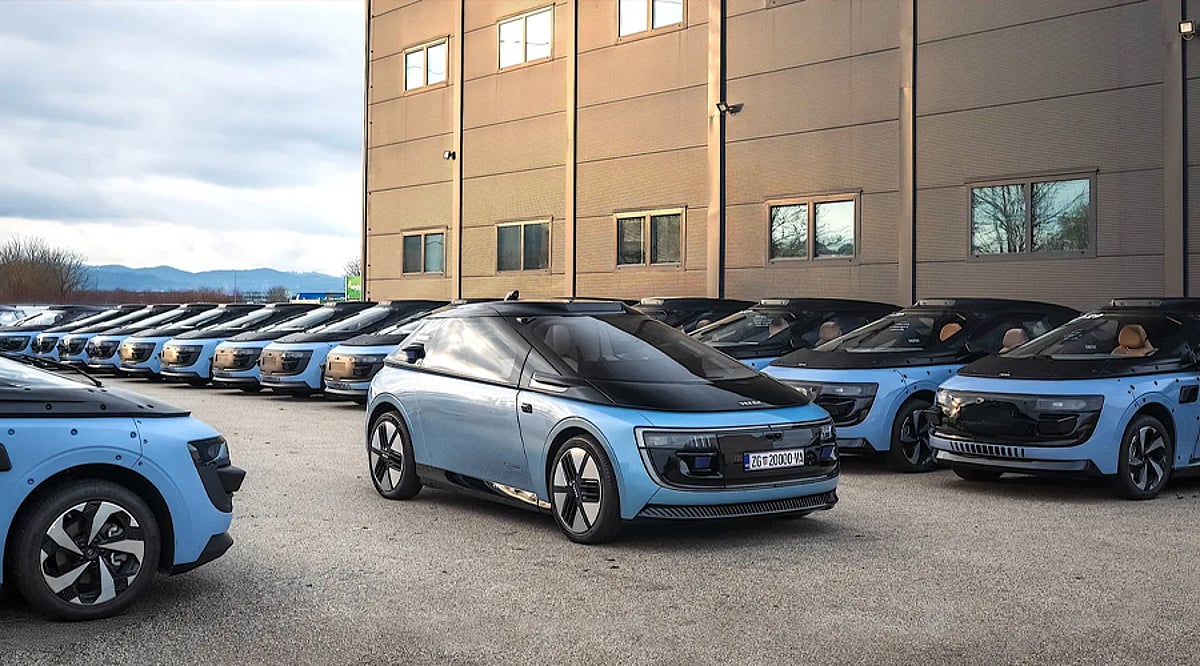
    Pony.ai is rapidly expanding its robotaxi service across China and international markets. The company launched commercial operations in Zagreb, Croatia, and aims to deploy thousands of vehicles as it scales its autonomous fleet globally.

    5. Wayve-Powered Vehicles

    Wayve, a UK-based startup, has partnered with Uber to launch supervised autonomous rides in London as of September 2026. This marks a significant milestone for European robotaxi services, bringing autonomous technology to busy urban streets.

    6. Aurora Driver Trucks

    Aurora is proving that autonomy extends beyond passenger cars. Its self-driving trucks now operate without any human in the driver’s seat, and the company plans to scale its commercial fleet throughout 2026, targeting logistics and freight applications.

    7. Zoox Robotaxi

    Zoox takes a unique approach with a purpose-built vehicle designed for driverless ride-hailing. The cabin features face-to-face seating and no steering wheel. The company is now preparing for larger-scale production, aiming to redefine urban mobility.

    8. Baidu Apollo Go

    Baidu Apollo Go is one of China’s largest autonomous mobility platforms. By 2026, it has expanded to 28 cities and accumulated over 350 million autonomous kilometers, including more than 240 million fully driverless kilometers, making it a dominant player in the region.

    9. BMW iX and Advanced ADAS

    The BMW iX, along with other models featuring advanced driver-assistance systems (ADAS), represents the next step for consumer vehicles. Systems like BMW’s Driving Assistant Professional offer hands-free assistance on approved roads, bringing near-autonomous capabilities to everyday drivers.

    10. NIO and XPeng EVs

    Chinese automakers NIO and XPeng are pushing navigation and driver-assistance technology with AI-powered systems. Their vehicles highlight how Chinese manufacturers are competing globally, integrating advanced automation into mainstream electric cars.

  • BMW to Cut 8,000 Jobs in Voluntary Redundancy Program Amid China Sales Slump and EV Competition

    BMW to Cut 8,000 Jobs in Voluntary Redundancy Program Amid China Sales Slump and EV Competition

    German luxury automaker BMW is preparing to reduce its global workforce by approximately 8,000 positions through a voluntary redundancy program, marking one of its most significant restructuring efforts in recent years. The cuts are part of a broader cost-saving strategy as the company faces slowing demand in key markets, intensifying competition from Chinese electric vehicle (EV) manufacturers, and growing economic uncertainty.

    The workforce reduction will primarily affect administrative and development roles in Germany, while production jobs are expected to remain unaffected. BMW aims to improve profitability and streamline operations in an increasingly competitive automotive landscape.

    Voluntary Job Cuts to Focus on Non-Production Roles

    BMW has reached an agreement with employee representatives to implement the job reductions through voluntary severance packages rather than compulsory layoffs. The program is scheduled to begin later this year and continue through the end of 2027. It targets office-based positions across administration, research, development, and planning.

    The company currently employs around 150,000 people worldwide, with Germany accounting for more than half of its workforce. BMW intends to protect its manufacturing capacity while reducing operational costs in support functions. The restructuring is expected to lower the company’s global workforce by about 5%.

    A spokesperson stated: “The BMW Group is proactively shaping the profound changes taking place in its operating environment. These include the technological transformation of the automotive industry, geopolitical uncertainties, changing market conditions and developments in China.”

    China Slowdown and EV Competition Drive Restructuring

    BMW’s decision comes amid falling sales in China, one of its major markets. In the second quarter, the company reported a steep decline in Chinese deliveries, resulting in significant profit reductions and leading to adjustments in its financial performance forecast.

    Established European carmakers face increasing pressure from Chinese EV brands, which have grown rapidly by offering relatively low-priced products. Combined with rising tariffs, geopolitical issues, and higher operational costs, BMW has been compelled to take steps toward greater efficiency.

    Transformation Across Europe’s Auto Industry

    Several major European car manufacturers, including Volkswagen, Porsche, Mercedes-Benz, and Stellantis, have unveiled restructuring plans as the industry shifts toward an electrified and software-defined future. While automakers invest heavily in electric mobility, batteries, and digital platforms despite slowing demand in some markets, these factors have pressured them to find ways to innovate while reducing costs.

    Even with job cuts expected as part of the restructuring, BMW confirmed its commitment to developing new technologies, particularly the Neue Klasse all-electric platform, advanced software, and digital solutions.

  • 7 Major Manufacturers Deploying Humanoid Robots on Factory Floors in 2026

    7 Major Manufacturers Deploying Humanoid Robots on Factory Floors in 2026

    Humanoid robots are no longer confined to research labs—they are now working alongside human employees in real manufacturing environments. Seven leading global manufacturers have already deployed or are actively testing humanoid robots for factory operations, material transport, and production support. Rapid investment and expanding robot production signal a major shift in industrial automation.

    Humanoid Robots in Manufacturing: A New Era

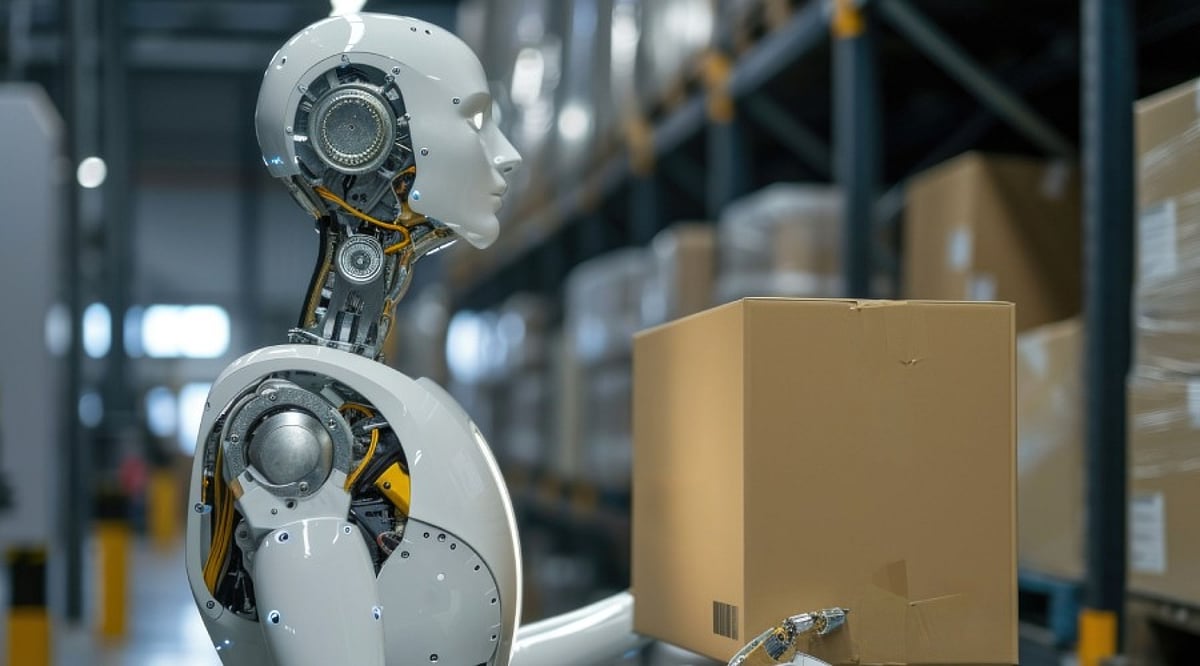
    Factories have relied on machines for decades, but humanoid robots mark a significant evolution. Unlike traditional robotic arms fixed in place, humanoid robots can walk, carry objects, pick up parts, and operate in spaces designed for human workers. Their human-like shape allows them to integrate into existing production lines without requiring major factory redesigns.

    Many global manufacturers have already moved from trials to commercial deployments. These robots handle repetitive, physically demanding, and time-consuming tasks, complementing human workers rather than replacing them. As artificial intelligence improves, humanoid robots are expected to become a regular part of factory operations.

    BMW Uses Figure Humanoid Robots on Production Floor

    BMW Group became one of the first major car manufacturers to place humanoid robots inside an active factory. Partnering with Figure AI, BMW tested Figure robots at its Spartanburg manufacturing plant in South Carolina. The initial deployment focused on repetitive tasks such as moving components between workstations and handling parts before assembly. After successful trials, BMW expanded the partnership with the latest Figure 03 humanoid robot. The deployment supported the production of more than 30,000 BMW X3 vehicles, proving that humanoid robots can operate safely alongside factory employees.

    Mercedes-Benz Expands Factory Automation with Apollo

    Mercedes-Benz has partnered with Apptronik, the company behind the Apollo humanoid robot, to enhance factory logistics. Apollo robots transport components, move materials across production areas, and complete repetitive internal tasks. Mercedes-Benz also invested in Apptronik to accelerate commercial development. The company now uses Apollo robots at its Berlin Digital Factory Campus, where engineers continue testing new manufacturing applications before wider deployment across additional factories.

    Tesla Develops Optimus for Its Own Factories

    Tesla follows a unique strategy by designing and building its own humanoid robot, Optimus. Instead of purchasing robots from another company, Tesla develops both the hardware and the artificial intelligence system. Optimus handles material transport and repetitive manufacturing jobs inside Tesla facilities. The company continues to expand robot production as development progresses. Tesla views its factories as the first large-scale workplace for Optimus before the robot enters other industries.

    Hyundai Prepares Atlas for Future Vehicle Production

    Hyundai Motor Group plans to introduce Boston Dynamics’ Atlas humanoid robot into manufacturing over the next few years. The first major deployment is expected at Hyundai’s Georgia Metaplant by 2028. Atlas will support tasks requiring movement across factory floors, component transport, and production assistance. Industry estimates place the cost of each Atlas robot at around $130,000, with an expected return on investment of roughly two years through improved productivity and lower operating costs.

    Jabil Tests Apollo Inside Electronics Manufacturing

    Electronics manufacturer Jabil is working with Apptronik to evaluate Apollo humanoid robots inside production facilities. Unlike automotive factories, electronics manufacturing often requires frequent movement of materials between different production stations. Apollo helps with repetitive logistics tasks that normally consume valuable employee time. These real-world tests allow both companies to collect operational data before larger commercial deployment. Jabil’s role as one of Apptronik’s primary manufacturing partners provides valuable feedback to improve robot performance for future customers.

    Magna International Evaluates Phoenix for Industrial Work

    Automotive supplier Magna International has partnered with Sanctuary AI to explore the use of the Phoenix humanoid robot in manufacturing. The partnership focuses on industrial production support across automotive operations. Phoenix performs repetitive factory duties, including moving materials and assisting with production activities. Magna’s evaluation reflects a growing trend among global suppliers seeking practical automation solutions without major factory redesign.

    Schaeffler Adopts Digit for Factory Logistics

    Industrial manufacturer Schaeffler has introduced Agility Robotics’ Digit humanoid robot to support factory logistics. Digit transports materials between work areas and completes repetitive movement tasks inside industrial facilities. Agility Robotics reports more than 65,000 operational hours for Digit across manufacturing and logistics environments. The company has also secured over $300 million in conditional multi-year orders for the next-generation Digit V5 robot, demonstrating strong commercial demand. To support future growth, Agility Robotics opened a 60,000-square-foot research and training center in California.

    Humanoid Robots Gain Momentum in Factories

    The rapid increase in humanoid robot utilization means manufacturing has emerged as the largest market for this innovative technology. Factory environments are highly structured, allowing robots to perform tasks accurately and efficiently. Companies like BMW Group, Mercedes-Benz, Tesla, Hyundai Motor Group, Jabil, Magna International, and Schaeffler have already started factory trials, commercial deployments, and long-term production programs.

    The market is developing rapidly. Apptronik recently opened a 90,000-square-foot Robot Park to prepare Apollo for large-scale manufacturing deployment. At the same time, XPeng, a Chinese car manufacturer, plans to produce over 1,000 humanoid robots per month by 2026, indicating that production capabilities are increasing.

    Humanoid robots have not yet reached full maturity, but effective factory applications already exist. If artificial intelligence progresses further and production costs decrease, the role of humanoid robots will significantly rise in the years to come.

    Frequently Asked Questions

    1. Which company first deployed Figure humanoid robots in manufacturing? BMW Group deployed Figure humanoid robots at its Spartanburg plant to support material handling and production tasks.
    2. What factory tasks do humanoid robots usually perform? Most humanoid robots transport materials, move components, handle repetitive jobs, and assist with production logistics.
    3. Why do manufacturers prefer humanoid robots? Their human-like design allows them to work inside existing factories without major changes to production layouts.
    4. Which industries currently use humanoid robots the most? The automotive and electronics manufacturing industries lead commercial adoption due to their structured factory environments.
    5. Are humanoid robots replacing factory workers? Current deployments mainly support repetitive and physically demanding tasks, while human workers continue to manage skilled, complex, and decision-based operations.
  • How BMW’s ConnectedDrive Leverages IoT for Smarter, Safer Vehicles

    How BMW’s ConnectedDrive Leverages IoT for Smarter, Safer Vehicles

    Modern vehicles have evolved far beyond simple transportation. Today’s cars connect to the internet, exchange data with cloud platforms, receive over-the-air updates, and deliver digital services. BMW leads this transformation with its ConnectedDrive ecosystem, which harnesses the Internet of Things (IoT) to create a seamless link between vehicles, cloud servers, smartphones, and traffic systems.

    According to BMW Group, more than 22 million connected BMW vehicles are now linked to the BMW Cloud worldwide. This vast network enables real-time data exchange, predictive maintenance, remote control, intelligent navigation, and personalized features that continuously improve safety, convenience, and driving performance.

    IoT as the Foundation of ConnectedDrive

    Every ConnectedDrive vehicle is equipped with hundreds of smart components—sensors, cameras, GPS modules, telematics units, and onboard computers. These components collect data on engine health, battery condition, tire pressure, brake wear, fuel level, location, weather, and road conditions. The information is securely transmitted to the BMW Cloud via mobile networks.

    The cloud processes millions of data points in seconds, sending actionable insights back to the vehicle. This constant feedback loop allows BMW to enhance performance without replacing physical parts, making each car smarter over time through regular digital improvements.

    Predictive Maintenance Prevents Problems

    One of the key benefits of BMW’s IoT system is predictive maintenance. Sensors continuously monitor brakes, tires, battery, engine, and electronics. When the system detects an unusual pattern, it sends a warning before a minor issue escalates into a costly repair. This early alert helps owners schedule service visits proactively, reducing unexpected breakdowns and improving long-term reliability.

    Over-the-Air Software Updates

    ConnectedDrive enables BMW to deliver software updates directly to compatible vehicles via the internet. These updates enhance navigation, entertainment, security, driver assistance, and overall performance—without requiring a trip to the dealership. The upcoming Neue Klasse platform will further accelerate this capability with an advanced digital architecture.

    Smarter Navigation with Live Traffic Data

    BMW’s IoT-powered navigation system receives real-time data from cloud servers, including traffic jams, road closures, accidents, weather, and parking availability. If conditions change mid-trip, the system instantly recalculates a better route. For electric models, the system also factors in battery level, range, and charging station locations to suggest optimal routes.

    Remote Control via the My BMW App

    The My BMW App extends ConnectedDrive to your smartphone. Users can check battery or fuel levels, locate their car, lock/unlock doors, pre-condition the cabin, manage charging, receive maintenance alerts, and send destinations to the navigation system. All functions rely on seamless IoT connectivity between phone, cloud, and vehicle.

    Personalized Driving Experience

    ConnectedDrive stores individual preferences—seat positions, climate settings, navigation favorites, entertainment choices, and driving modes—in the BMW Cloud. When a driver logs into any compatible BMW with their BMW ID, these settings are automatically restored. The voice assistant also improves over time through cloud-based updates to speech recognition and language understanding.

    Fleet Data Drives Future Innovation

    BMW uses anonymized data from millions of connected vehicles to improve future models. The company analyzes road conditions, traffic patterns, vehicle performance, battery efficiency, and software behavior. This real-world data helps engineers refine navigation, boost energy efficiency, develop safer driver assistance systems, and create better software updates.

    Security First Approach

    With millions of data exchanges daily, BMW prioritizes security. All communication between vehicle and cloud uses encrypted connections and secure authentication. Regular over-the-air updates close newly discovered vulnerabilities, ensuring personal data remains protected throughout the vehicle’s lifespan.

    The Road Ahead: Neue Klasse and Beyond

    BMW plans to launch over 40 new and updated models by 2027, many built on the Neue Klasse platform. This platform will feature more powerful computers, enhanced cloud communication, advanced AI, and improved digital services. ConnectedDrive will deliver faster updates, smarter functions, and better performance. BMW is also expanding partnerships in connected-car technology, autonomous driving, and digital services.

    Final Thoughts

    BMW’s ConnectedDrive ecosystem demonstrates how IoT is revolutionizing the automotive industry. With over 22 million vehicles connected to the BMW Cloud, the brand is a global leader in connected mobility. Features like predictive maintenance, live navigation, remote control, personalization, and over-the-air updates are just the beginning of what IoT can achieve in modern cars.

  • Top Electric Vehicle Makers to Track in 2026

    Top Electric Vehicle Makers to Track in 2026

    The electric vehicle (EV) landscape is evolving rapidly, with several manufacturers poised to make significant strides by 2026. From established giants to ambitious newcomers, these companies are driving innovation in battery technology, autonomous driving, and global market expansion. Here are the key EV manufacturers to watch.

    • Tesla – Continues advancing autonomous driving, battery innovation, and global manufacturing while expanding affordable electric vehicle options across major international markets.
    • BYD – Dominates electric vehicle production through vertically integrated manufacturing, advanced battery technology, and rapidly growing exports across Europe and emerging regions.
    • Rivian – Focuses on premium electric trucks and SUVs while expanding commercial delivery partnerships and improving manufacturing efficiency for sustainable long-term growth.
    • Hyundai – Strengthens its EV lineup with dedicated electric platforms, competitive pricing, longer driving ranges, and advanced connectivity features for global customers.
    • Kia – Expands affordable electric mobility through stylish models featuring fast charging, practical interiors, improved software integration, and strong worldwide consumer demand.
    • BMW – Combines luxury engineering with electrification by introducing premium electric sedans, SUVs, and high-performance models featuring innovative digital technologies consistently.
    • Mercedes-Benz – Accelerates premium electric mobility through advanced battery platforms, intelligent software ecosystems, and luxury-focused design for discerning global buyers everywhere.
    • Lucid Motors – Impresses with long-range luxury electric sedans featuring high efficiency, premium interiors, and innovative engineering targeting premium automotive markets worldwide.
    • VinFast – Expands internationally with competitively priced electric vehicles, aggressive manufacturing investments, and customer-focused strategies supporting rapid global brand recognition successfully.

    These manufacturers represent the forefront of EV innovation and are set to shape the industry in 2026 and beyond.

  • BMW Expands Use of Figure 03 Humanoid Robots at Spartanburg Plant to Boost AI-Powered Manufacturing

    BMW Expands Use of Figure 03 Humanoid Robots at Spartanburg Plant to Boost AI-Powered Manufacturing

    BMW is advancing its AI-driven manufacturing strategy by expanding the deployment of Figure AI’s latest humanoid robot, the Figure 03, at its Spartanburg plant in South Carolina. This move builds on earlier trials with the Figure 02 and marks a shift from limited pilot testing to broader integration of humanoid robots in real production environments.

    The company states that the robots are introduced to improve efficiency while reducing physical strain from repetitive factory tasks. The Figure 03, developed by California-based Figure AI, features advanced artificial intelligence, computer vision, and dexterous arms, allowing it to perform tasks requiring precision, agility, and flexibility on the production line. Unlike traditional static industrial robots, the Figure 03 can move around the factory floor, manipulate materials, and work alongside human employees. It is programmed to handle repetitive tasks and adapt to changes in the production process without causing job losses.

    This deployment follows successful trials of earlier Figure robot versions at the Spartanburg plant, where they handled tasks like sheet metal manipulation. Those trials helped BMW assess safe integration into existing workflows while maintaining quality. Insights from the pilot program paved the way for deploying the Figure 03 across additional operations. The technology is intended to support workers by taking over physically demanding and ergonomically challenging jobs.

    BMW’s latest move underscores the growing role of physical AI in automotive manufacturing. Major automakers worldwide are working to deploy humanoid robots capable of performing various factory tasks instead of conventional industrial machines. At BMW, the Spartanburg plant remains a hub for testing production innovations. As AI-powered robot capabilities improve, the company is expected to expand their use while keeping people at the center of manufacturing.