Tag: BNB

  • Top 7 Altcoins to Watch This Month: ETH, SOL, XRP, BNB, LINK, AVAX, SUI, and More

    Top 7 Altcoins to Watch This Month: ETH, SOL, XRP, BNB, LINK, AVAX, SUI, and More

    Top 7 Altcoins to Watch This Month

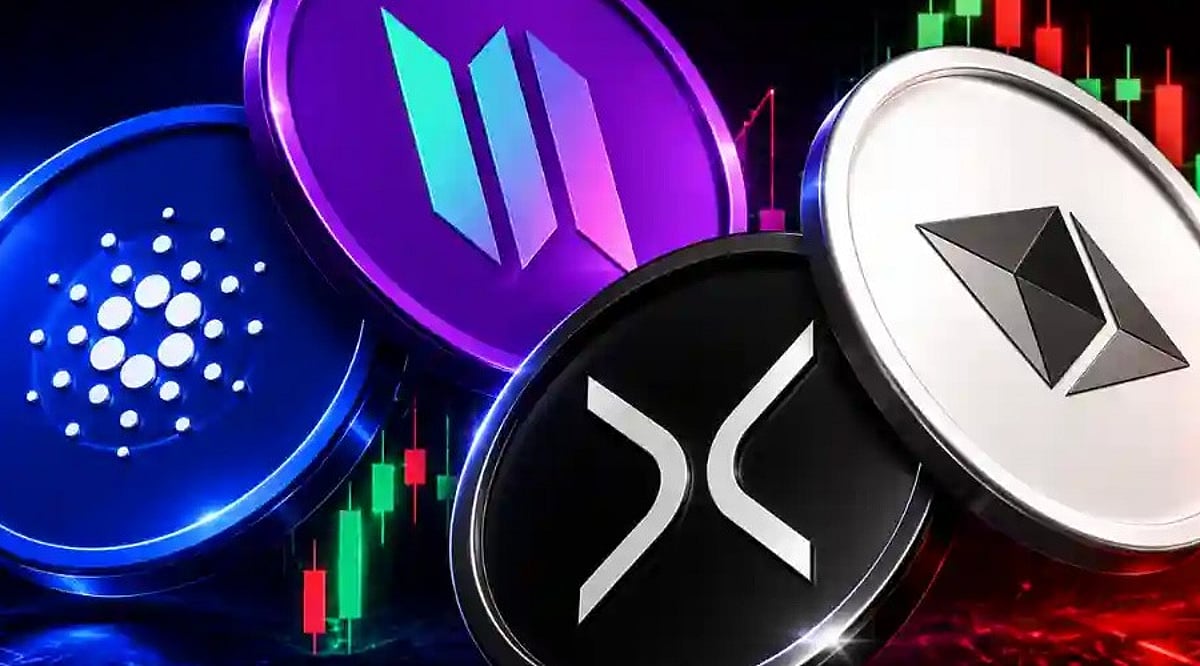
    As the cryptocurrency market continues to evolve, investors are closely monitoring a select group of altcoins that show strong potential for growth and innovation. Here are seven altcoins that are capturing attention this month, along with a bonus pick that merges blockchain with artificial intelligence.

    1. Ethereum (ETH)

    Ethereum remains the largest smart contract platform, and it continues to attract developers thanks to its robust DeFi ecosystem, NFT marketplaces, and enterprise adoption. Despite increasing competition from other blockchains, Ethereum’s network effects and ongoing upgrades keep it at the forefront of the industry.

    2. Solana (SOL)

    Solana is renowned for its high transaction speeds and low fees, making it a favorite for decentralized applications, gaming, and meme coin ecosystems. Its performance advantages continue to draw developers and users alike, solidifying its position as a top altcoin to watch.

    3. XRP

    XRP remains under the spotlight due to ongoing regulatory developments and its partnerships in cross-border payments. Its growing role in institutional financial services makes it a key asset for investors monitoring the intersection of crypto and traditional finance.

    4. BNB

    Binance Coin (BNB) powers one of the world’s largest cryptocurrency ecosystems. It offers trading discounts on the Binance exchange, supports DeFi applications, and underpins blockchain infrastructure. BNB’s utility and widespread adoption make it a staple in many portfolios.

    5. Chainlink (LINK)

    Chainlink provides decentralized oracle services that enable smart contracts to securely access real-world data across multiple blockchain networks. As the demand for reliable data feeds grows, Chainlink’s role becomes increasingly critical, making LINK a notable altcoin for investors.

    6. Avalanche (AVAX)

    Avalanche continues to expand through enterprise partnerships and scalable blockchain infrastructure. Its growing decentralized finance applications and focus on interoperability position it as a strong contender in the smart contract platform race.

    7. Sui (SUI)

    Sui is gaining attention for its high-speed blockchain architecture and developer-friendly tools. With increasing adoption among decentralized application builders, Sui is emerging as a promising platform for next-generation dApps.

    Bonus: Render (RENDER) and Artificial Superintelligence Alliance (FET)

    Render combines blockchain with decentralized GPU computing, allowing creators and AI developers to access distributed rendering power efficiently. Meanwhile, the Artificial Superintelligence Alliance (FET) focuses on AI-focused blockchain solutions, drawing attention as artificial intelligence and decentralized technologies become increasingly interconnected investment themes.

    These altcoins represent a mix of established players and emerging projects, each offering unique value propositions. As always, investors should conduct thorough research and consider their risk tolerance before diving into the volatile crypto market.

  • Top Altcoins Poised to Dominate the Crypto Market in H2 2026

    Top Altcoins Poised to Dominate the Crypto Market in H2 2026

    The cryptocurrency market is entering the second half of 2026 with a renewed focus on utility, adoption, and real-world applications. While Bitcoin continues to command significant attention, several altcoins are emerging as strong contenders for market leadership. Investors are shifting away from hype and toward projects with robust technology, active user bases, institutional backing, and clear growth trajectories.

    This article explores the most promising altcoins for H2 2026, including Ethereum, Solana, Chainlink, XRP, BNB, Sui, Bittensor, Render, Hyperliquid, and Ondo. Each represents a major trend such as artificial intelligence (AI), real-world assets (RWA), decentralized finance (DeFi), payments, and blockchain infrastructure.

    Ethereum (ETH): The Undisputed Blockchain Leader

    Ethereum remains a cornerstone of the crypto ecosystem, trading around $1,850–$1,900 with a market capitalization of approximately $213–$220 billion. Its vast ecosystem supports thousands of decentralized applications (dApps), DeFi platforms, and blockchain services. Institutional investors view Ethereum as a premier network for tokenized assets and digital products.

    Key growth drivers for H2 2026 include the expansion of Layer-2 networks, which enhance transaction speed and reduce costs, and the tokenization of real-world assets (RWA). Favorable market conditions could push ETH toward $3,500–$5,000, with a conservative estimate of $2,200–$2,800.

    Solana (SOL): The High-Speed Challenger

    Solana is a major player in the smart contract space, trading near $75–$80 with a market cap of $40–$45 billion. Its platform offers fast transaction speeds, low fees, and robust support for DeFi, payments, and digital asset initiatives. The growing adoption of stablecoins and real assets on Solana further strengthens its position.

    However, Solana faces increasing competition from other Layer-1 blockchains and must manage high market expectations.

    Chainlink (LINK): Bridging Crypto and Traditional Finance

    Chainlink provides essential data services that connect blockchains to external information, a role that becomes increasingly critical as financial institutions explore tokenized assets and blockchain systems. Trading at $12–$15 with a market cap of $8–$10 billion, LINK offers strong potential for two-fold growth or more during a bullish market phase.

    The growth of RWA creates a major opportunity for Chainlink, as banks and investment firms require secure data feeds for blockchain applications.

    XRP: The Global Payment Network

    XRP continues to attract attention with its focus on fast international transfers and financial settlement. Trading around $1–$1.10 with a market cap near $120 billion, its future growth depends on regulatory progress and wider institutional adoption. Given its already large market value, real adoption and market confidence will be key.

    BNB: The Exchange Ecosystem Token

    BNB remains one of the largest cryptocurrencies, priced near $575–$600 with a market cap above $77 billion. Its value derives from utility within the Binance ecosystem, blockchain activity, and DeFi services. While BNB enjoys strong market recognition, regulatory challenges pose the biggest risk to future growth.

    Sui (SUI): A Next-Generation Layer-1 Project

    Sui represents a newer generation of blockchain networks, trading near $0.80 with a market cap of approximately $2.5 billion. It uses the Move programming language and focuses on speed, gaming, and dApps. Its smaller market size offers higher growth potential but also carries greater risk, as it must continue to attract users and developers.

    Bittensor (TAO) and Render (RENDER): AI Crypto Leaders

    Artificial intelligence remains one of the strongest themes in crypto for 2026. Bittensor focuses on decentralized AI networks, while Render provides decentralized GPU computing services. TAO attracts interest through its AI infrastructure model, and Render benefits from rising demand for computing power to support advanced AI systems.

    Both assets offer high growth potential but are subject to sharp price fluctuations during market shifts.

    Hyperliquid (HYPE) and Ondo (ONDO): Future Finance Trends

    Hyperliquid focuses on decentralized trading and on-chain derivatives, gaining attention from users seeking alternatives to traditional exchanges. Ondo represents the RWA sector, specializing in tokenized financial products and institutional blockchain adoption. Both align with key crypto themes for H2 2026: DeFi and asset tokenization.

    Final Outlook for H2 2026

    The strongest altcoin opportunities for H2 2026 center around Ethereum, Solana, Chainlink, Bittensor, Ondo, and Render. These projects are tied to major trends such as blockchain adoption, AI, institutional finance, and digital asset infrastructure.

    Large-cap assets like ETH, SOL, LINK, XRP, and BNB offer greater stability, while smaller projects like TAO, RENDER, SUI, HYPE, and ONDO provide higher growth potential with increased risk. The next phase of the crypto market may favor projects with real technology, active ecosystems, and clear practical use cases over short-term speculation.

    Frequently Asked Questions

    1. Which altcoins could lead the crypto market in H2 2026? Ethereum, Solana, Chainlink, XRP, Bittensor, Render, and Ondo are among the altcoins with strong growth potential.
    2. Why is Ethereum considered a top altcoin for 2026? Ethereum remains a leading blockchain with a large ecosystem, institutional interest, DeFi activity, and strong support for tokenized assets.
    3. Can AI crypto projects perform well in H2 2026? AI-focused projects such as Bittensor and Render may gain attention as demand for decentralized AI infrastructure continues to grow.
    4. Are smaller altcoins better than large-cap cryptocurrencies? Smaller altcoins can deliver higher returns, but they also carry higher risks compared with established assets like ETH, SOL, and LINK.
    5. What crypto trends could shape H2 2026? Artificial intelligence, real-world asset tokenization, decentralized finance, blockchain payments, and institutional adoption may influence the next market cycle.

    Disclaimer: This article is for informational purposes only and does not constitute investment advice. Cryptocurrency investments carry significant risk. Always conduct your own research (DYOR) before making any investment decisions.

  • Bitcoin ETFs See $233M Inflows, Ripple Gains MiCA Approval, BNB Volume Jumps 65%

    Bitcoin ETFs See $233M Inflows, Ripple Gains MiCA Approval, BNB Volume Jumps 65%

    The cryptocurrency market witnessed several major developments this week, with spot Bitcoin ETFs recording $233 million in net inflows, Ripple securing a MiCA license in Europe, and Binance Coin (BNB) trading volume surging 65%. Here’s a breakdown of the key stories.

    Bitcoin ETF Inflows Reach $233 Million

    According to SoSoValue, U.S. spot Bitcoin ETFs recorded a total net inflow of $233.13 million on Wednesday. BlackRock’s IBIT led the pack with $183.39 million in daily inflows, bringing its historical net total to $60.60 billion. Bitwise’s BITB followed with $20.74 million, accumulating $2.03 billion in total net inflows. The overall net asset value of spot Bitcoin ETFs now stands at $78.76 billion, with a historical cumulative net inflow of $51.59 billion.

    Ripple Receives MiCA Authorization in Europe

    Ripple secured full MiCA Crypto-Asset Service Provider authorization in Europe, a regulatory milestone expected to boost institutional XRP payments across the European Union. XRP perpetual futures open interest sits at 2.27 billion XRP, just below the week’s peak of 2.29 billion. Despite the positive news, XRP traded at $1.07, down 0.57% in the last 24 hours, as it continues to face resistance at the $1.10 level.

    BNB Trading Volume Surges 65%

    Binance Coin saw a notable increase in trading activity, with 24-hour volume surging more than 65% as traders returned to the exchange token. BNB’s spot trading volume exceeded $160 million, while futures volume surpassed $800 million. Open interest remained elevated at nearly $950 million, with long-to-short ratios above 1.9 across major platforms, indicating bullish positioning.

    Solana Pay Expands in South Korea

    South Korean payment provider KSNet signed a memorandum of understanding with the Solana Foundation to integrate Solana Pay into its commercial infrastructure. KSNet, which processes approximately 130 million transactions per month, will work with Solana on two proof-of-concept projects. The first phase will demonstrate the connection between Solana’s digital payment standard and KSNet’s merchant network, both online and offline.

    Strategy Reports $8.22 Billion Quarterly Loss

    Bitcoin traded near $64,700 following Strategy’s earnings announcement, down from approximately $88,400 at the end of 2025. The company reported an $8.32 billion unrealized loss on digital assets during the quarter, contributing to an operating loss of $8.33 billion. This reversed the $14.05 billion unrealized gain recorded in the same quarter a year earlier. Strategy posted a net loss of $8.22 billion, or $24.45 per diluted common share, compared to net income of $10.02 billion in the prior year. Shares were mostly unchanged in after-hours trading, suggesting investors had anticipated the impact of Bitcoin’s decline.

    FAQs

    1. Why are Bitcoin ETF inflows important for the crypto market?

    Bitcoin ETF inflows reflect growing institutional participation. Sustained inflows generally improve market sentiment, provide liquidity, and indicate continued long-term investor confidence in Bitcoin.

    2. What does Ripple’s MiCA authorization mean?

    Ripple’s MiCA license allows it to expand regulated digital asset services across the European Union. The approval could strengthen institutional adoption of XRP-powered payment solutions throughout Europe.

    3. Why did BNB trading volume increase sharply?

    BNB’s 24-hour trading volume jumped more than 65% as traders increased both spot and derivatives activity. Rising open interest and strong long-to-short ratios suggest bullish positioning among market participants.

    4. How does the Solana Pay partnership benefit Solana?

    The partnership with South Korea’s KSNet aims to integrate Solana Pay into an established payment network processing millions of monthly transactions. Successful implementation could expand real-world blockchain payment adoption.

    5. Why did Strategy report an $8.22 billion loss?

    Strategy’s quarterly loss was primarily driven by unrealized losses on its Bitcoin holdings following the cryptocurrency’s decline during the reporting period. The losses reflect accounting adjustments rather than realized asset sales.

  • Crypto Market Update: Bitcoin Steadies at $64,283 as BNB and Hyperliquid Lead Altcoin Gains

    Crypto Market Update: Bitcoin Steadies at $64,283 as BNB and Hyperliquid Lead Altcoin Gains

    Bitcoin held near $64,283 on Friday, maintaining a narrow range after a choppy week. The leading cryptocurrency edged up 0.66% as spot Bitcoin ETF inflows snapped a four-session outflow streak on July 29, bringing some relief to a market that had been under pressure from Federal Reserve positioning and regulatory uncertainty.

    Among altcoins, BNB and Hyperliquid (HYPE) posted the strongest gains, rising over 3% each and outpacing Bitcoin’s steadier pace. The broader market remains cautious, with the CLARITY Act still stalled in the Senate and traders eyeing Friday’s month-end close for directional cues.

    Bitcoin Price Today

    Bitcoin trades at $64,283.69, up 0.66% over the past 24 hours, according to CoinMarketCap data. Its market cap stands near $1.28 trillion, with 24-hour trading volume reaching $26.82 billion. Price action continues to be driven by ETF flow trends and the Fed’s rate outlook.

    Analyst Insights: Bitcoin Needs $65,000 to Confirm Recovery

    Akshat Siddhant, Lead Quant Analyst at Mudrex, noted that Bitcoin is trading near $64,500 but has failed to sustain a move above the $65,000 resistance level. Softer US PCE inflation data, which eased to 3.7% this week—the first monthly decline since 2020—has not yet triggered strong buying participation. Spot Bitcoin ETFs are on track for their weakest monthly inflows on record, with July inflows near just $205 million. Spot trading volumes on major exchanges have fallen nearly 85% year on year. Seasonality also remains a concern, as Bitcoin has posted negative returns in each of the past four Augusts. A close above $65,000 tonight could strengthen momentum, while the $63,000 zone stays key support.

    Technical Breakout Hinges on the $65,000 Zone

    Piyush Walke, Derivatives Research Analyst at Delta Exchange, observed that Bitcoin briefly climbed above $65,000 but failed to hold the breakout. A four-hour close above $64,700 to $65,000 is needed to confirm bullish momentum. Immediate support sits at $64,170, with the next zone between $62,700 and $63,350. Bollinger Bands on the daily chart continue narrowing, signaling that a volatility spike may be approaching. Ethereum needs to clear $1,935 for a move toward $1,950 to $1,980.

    Macro Correlation Keeps Sentiment Cautious

    Nischal Shetty, founder of WazirX, highlighted that crypto continues to trade under broader macro influence. Bitcoin now moves with a 67% correlation to equities and an even higher 93% correlation to gold, indicating that institutional capital increasingly treats crypto as a macro asset. Nearly $144.63 million in long positions were liquidated during the recent pullback. The Crypto Fear and Greed Index sits at 34, firmly in Fear territory. Franklin Templeton’s public support for the CLARITY Act reflects growing institutional demand. Bitcoin trades near $64,199, up 0.06%, while Ethereum sits at $1,901.73, down 0.50%. Support holds between $63,800 and $64,000, with resistance building near $65,000.

    Selective Altcoin Strength Emerges

    Vikram Subburaj, CEO of Giottus, placed Bitcoin near $64,350, broadly unchanged over 24 hours. Investors are weighing easing inflation against the Fed’s hawkish stance, with markets assigning roughly 65% odds of a September rate hike. Recent ETF outflows suggest institutional demand remains cautious. Bitcoin holds immediate support near $63,800 to $64,000, with resistance around $65,300 to $65,500. Large-cap altcoins mostly gained this week, led by BNB with a 2.3% rise, followed by modest XRP and Solana gains. TRON advanced 0.9%. Subburaj advises investors to avoid chasing short-term moves and to focus on staggered buying and disciplined position sizing.

    Crypto Prices Today: Top 10 Coins at a Glance

    Based on live CoinMarketCap data as of today’s session.

    Biggest Gainers: HYPE, BNB, XRP

    Hyperliquid led the top 10 board with a gain above 3%. BNB followed closely, extending its weekly rally past 4%. XRP also posted a steady gain as institutional demand for altcoins picked up pace.

    Biggest Losers: Mid-Cap DeFi Tokens Lag

    Stablecoins and a few mid-cap DeFi tokens stayed largely flat today. Names like Aave and Ethena continue to face thin liquidity, with cautious risk appetite keeping these tokens under pressure.

    Crypto News Today: Top Headlines Impacting Prices

    Regulatory developments and ETF flow data are steering sentiment across trading desks. Traders are weighing these signals against Strategy’s earnings shock and month-end positioning.

    Fed Holds Rates Steady With Three Dissents

    The Federal Reserve held its benchmark rate at 3.50%-3.75% on Wednesday, voting 9-3 for a fifth straight hold this year. Policymakers Hammack, Kashkari, and Logan dissented in favor of a hike. The split vote kept risk assets cautious ahead of September’s meeting.

    CLARITY Act Remains Stalled in the Senate

    The Digital Asset Market Clarity Act still sits on the Senate calendar with no floor vote scheduled. Trump reportedly approved updated ethics language, though Democratic support stays uncertain. The August 10 recess deadline looms as the last realistic window for 2026 passage.

    Bitcoin ETF Inflows Snap Outflow Streak

    US spot Bitcoin ETFs recorded $32.1 million in net inflows on July 29, ending a four-session outflow run. BlackRock’s IBIT led with $89.8 million in fresh inflows. July’s monthly net inflows now stand near $204.7 million, though 2026 remains in deficit overall.

    Morgan Stanley Expands Into Ethereum and Solana

    Morgan Stanley’s new Ethereum and Solana ETPs drew $33 million in combined inflows on their second trading day. MSOL captured all fresh Solana ETF inflows during the session. Low 0.14% fees give both products an early competitive edge.

    Strategy Reports $8.33 Billion Quarterly Loss

    Strategy posted an $8.33 billion operating loss for the second quarter, driven largely by unrealized losses on its Bitcoin holdings. The company’s Bitcoin treasury strategy remains under scrutiny from investors, and corporate crypto exposure is facing renewed market attention.

    Hungary Grants First MiCA License to Local Exchange

    Hungary repealed its mandatory third-party validation rule for crypto conversions this week. Regulators separately granted CoinCash operator Tiwala Solutions the country’s first MiCA license, covering custody, exchange, and portfolio management services—a fresh regulatory milestone across the European market.

    Investor and Market Outlook

    Bitcoin holds near $64,283 as traders weigh returning ETF inflows against a stalled CLARITY Act. A close above $65,300 could open a path toward stronger $66,700 resistance. A slip below $63,800 risks exposing deeper support closer to $62,700. BNB and Hyperliquid remain the most sensitive names to shifts in institutional risk appetite. Ethereum trades near $1,904, holding steady after a volatile week. The Senate’s August 10 deadline stands as this month’s defining catalyst.

    FAQs

    What is the Bitcoin price today?

    Bitcoin trades near $64,283.69, up 0.66% over the past 24 hours. It holds steady after ETF inflows returned this week. Support sits near $63,800, while resistance builds between $65,300 and $66,700 through coming sessions.

    Why are BNB and Hyperliquid outperforming today?

    BNB and Hyperliquid both posted gains above 3% today, outpacing Bitcoin’s steadier move. Renewed institutional interest and stronger weekly momentum are driving demand toward these two large-cap altcoins.

    What is the biggest crypto news today?

    The CLARITY Act’s stalled Senate progress and Strategy’s $8.33 billion quarterly loss are shaping sentiment. Morgan Stanley’s new Ethereum and Solana ETP launch adds a contrasting institutional growth signal this week.

    Which coins are performing best today?

    Hyperliquid and BNB lead gains with rises above 3%, followed by XRP with a steady climb. Mid-cap DeFi tokens including Aave and Ethena remain under pressure.

    What should investors watch this week?

    Track Friday’s month-end close, the CLARITY Act’s August 10 deadline, and Bitcoin ETF flow trends closely. September Fed rate expectations could also shift near-term positioning meaningfully across the broader crypto market.


  • Best Cryptocurrencies to Buy in July 2026: Top 10 Picks for Long-Term Growth

    Best Cryptocurrencies to Buy in July 2026: Top 10 Picks for Long-Term Growth

    The cryptocurrency market has undergone significant transformation in 2026. After a rocky start, the market has gained strength as institutional adoption, Bitcoin ETFs, and tokenized assets have boosted investor confidence. With the total market capitalization fluctuating between $2.5 and $3 trillion and Bitcoin maintaining a 58%–62% market share, now is a prime time to consider these top 10 cryptocurrencies for July 2026.

    Key Takeaways

    • Bitcoin and Ethereum remain the strongest long-term choices due to institutional adoption and market leadership.
    • Solana, Chainlink, Avalanche, Sui, and Ondo Finance offer higher growth potential with greater risk.
    • A diversified crypto portfolio can help balance stability and high-growth opportunities while managing market volatility.

    1. Bitcoin (BTC)

    Bitcoin remains the world’s largest cryptocurrency, trading near $64,600 with a market cap of about $1.26 trillion. Often called digital gold, its limited supply of 21 million coins attracts institutional investors. Large financial firms continue to buy Bitcoin through ETFs, and many companies hold it as a reserve asset. Experts forecast 40% to 120% returns over the next three to five years.

    2. Ethereum (ETH)

    Ethereum is the second-largest cryptocurrency, priced near $1,780 with a market cap of ~$215 billion. It powers thousands of decentralized apps, NFT platforms, and financial services, and leads the real-world asset tokenization sector. Staking provides additional incentives. Analysts expect Ethereum to rise 70% to 200% in the coming years.

    3. Solana (SOL)

    Solana trades around $76.60 with a market cap of $44.6 billion. Its high speed and low fees attract developers and users. Despite past technical issues, confidence has returned. Market experts see potential gains of 100% to 300% over the next few years.

    4. XRP

    XRP is priced at ~$1.07 with a market cap of $67.1 billion. It focuses on fast international payments and works with financial institutions. Better regulatory clarity has improved sentiment, and analysts see possible returns of 50% to 200%.

    5. BNB

    BNB trades around $570 with a market cap of $76.7 billion. It supports the Binance ecosystem, one of the largest crypto exchanges. Regular token burns reduce supply, potentially boosting value. Despite regulatory concerns, BNB has a solid long-term outlook.

    6. Chainlink (LINK)

    Chainlink is priced between $15–$18 with a market cap of $10–$12 billion. It provides secure data feeds for smart contracts. Banks and blockchain projects rely on Chainlink, and as tokenized assets grow, demand may rise. Analysts estimate 100% to 250% gains.

    7. Avalanche (AVAX)

    Avalanche trades between $24–$30 with a market cap of $10–$13 billion. Its fast blockchain supports business apps and gaming, with subnet technology for private systems. Despite competition, Avalanche has room to grow, with potential returns of 100% to 300%.

    8. Sui (SUI)

    Sui is one of the fastest-growing blockchains in 2026, priced between $3–$5 with a $12–$16 billion market cap. Its high speed and modern technology attract developers and venture capital. As a young network, volatility is high, but analysts see 150% to 400% upside.

    9. Cardano (ADA)

    Cardano trades around $0.16 with a market cap of $5.8 billion. It follows a research-driven, secure approach. While growth has been slower than rivals, strong community support persists. Analysts suggest 100% to 250% ROI if development continues.

    10. Ondo Finance (ONDO)

    Ondo Finance has become a standout project in 2026, trading between $0.80–$1.20 with a market cap of $2–$4 billion. It focuses on tokenized real-world assets, especially US Treasuries. Experts believe this sector could be a major trend, with potential returns of 200% to 500%—though higher risk applies.

    Final Thoughts

    July 2026 offers numerous opportunities for crypto investors. Bitcoin and Ethereum provide stability and long-term growth. Solana, XRP, BNB, and Chainlink give exposure to evolving blockchain tech. Avalanche and Sui have high growth prospects, while Cardano remains a steady long-term project. Ondo Finance stands out for its real-world asset tokenization. Always do thorough research, diversify your portfolio, and only invest what you can afford to lose.

    FAQs

    1. Which cryptocurrency is considered the safest investment in July 2026?
    Bitcoin is generally viewed as the safest due to market dominance, institutional adoption, and limited supply.

    2. Why is Ethereum still a top investment?
    Ethereum powers DeFi, NFTs, tokenized assets, and smart contracts, making it a leading blockchain ecosystem with long-term growth potential.

    3. Which cryptocurrencies have the highest growth potential?
    Sui, Ondo Finance, Solana, Avalanche, and Chainlink are considered high-growth opportunities, though they carry increased risk.

    4. Is it better to invest in one cryptocurrency or several?
    Diversifying across established and emerging cryptocurrencies can reduce risk while improving exposure to different market opportunities.

    5. What should investors consider before buying cryptocurrencies?
    Research each project’s fundamentals, market trends, adoption, and risk level. Only invest funds you can afford to lose due to crypto’s volatility.

    Disclaimer: This article is for informational purposes only and does not constitute financial advice. Always do your own research before investing.

  • Top Layer-1 Blockchain Coins to Watch in July 2026: Bitcoin, Ethereum, Solana, and More

    Top Layer-1 Blockchain Coins to Watch in July 2026: Bitcoin, Ethereum, Solana, and More

    Layer-1 blockchains are the backbone of the cryptocurrency ecosystem, enabling transactions, smart contracts, decentralized applications, and more. In July 2026, these foundational networks continue to attract significant investor attention. Here’s a look at the most promising Layer-1 coins to consider for your portfolio.

    Key Takeaways

    • Bitcoin remains the safest and most trusted Layer-1 cryptocurrency.
    • Ethereum leads the smart contract and decentralized application market.
    • Solana, Sui, and Hyperliquid offer higher growth potential with greater risk.

    Bitcoin (BTC) – The Gold Standard

    Bitcoin, currently trading at $63,056, is widely regarded as digital gold. Its limited supply and institutional adoption through ETFs make it a cornerstone of any crypto portfolio. While its growth may be slower than smaller coins, it remains the most secure choice for long-term investors.

    Ethereum (ETH) – Smart Contract Leader

    Ethereum, priced at $1,785, is the largest smart contract platform, hosting thousands of dApps, NFTs, and DeFi projects. Its robust community, staking rewards, and improved scalability keep it among the top Layer-1 investments for 2026.

    BNB and Solana – Strong Ecosystem Growth

    BNB ($570) powers one of the most extensive blockchain ecosystems, used for trading, payments, and DeFi. Solana ($76.6) is renowned for its high-speed, low-cost transactions, attracting developers in gaming and finance. Both networks continue to expand their user bases.

    TRON and Hyperliquid – Rising Stars

    TRON ($0.32) has become a key network for stablecoin transfers, handling billions daily. Hyperliquid ($60) is a newer Layer-1 focused on decentralized trading, gaining traction among traders despite higher risk.

    Cardano, Avalanche, Sui, and Aptos – Diverse Options

    Cardano ($0.16) emphasizes research-backed development and staking rewards. Avalanche ($20-25) allows custom blockchain creation, attracting enterprise users. Sui and Aptos, both modern Layer-1s, are growing rapidly with DeFi ecosystems, though they carry higher risk due to smaller market caps.

    Investment Strategy

    A balanced portfolio might include 35% Bitcoin, 25% Ethereum, 15% Solana, 10% BNB, 5% Avalanche, 5% Sui, and 5% Hyperliquid. For lower risk, stick with Bitcoin and Ethereum. For higher potential returns, consider Solana, Hyperliquid, and Sui.

    FAQs

    1. What is a Layer-1 blockchain?

    A Layer-1 blockchain is the main network that processes transactions and supports apps, smart contracts, and other blockchain services.

    2. Which Layer-1 coin is the safest to invest in?

    Bitcoin is widely considered the safest Layer-1 cryptocurrency because of its strong security and global adoption.

    3. Why is Ethereum still popular?

    Ethereum has the largest smart contract ecosystem and supports thousands of decentralized apps and crypto projects.

    4. Which Layer-1 coins have high growth potential?

    Solana, Sui, Hyperliquid, Avalanche, and Aptos are popular choices for investors seeking higher growth opportunities.

    5. Should beginners invest only in one Layer-1 coin?

    Many investors prefer a mix of Layer-1 coins to reduce risk and increase long-term growth potential.

    Disclaimer: This article is for informational purposes only and does not constitute financial advice. Cryptocurrency investments carry risk; always do your own research before investing.

  • Best Cryptocurrency Investments for July 2026: Top Coins by Market Cap

    Best Cryptocurrency Investments for July 2026: Top Coins by Market Cap

    As we move into July 2026, the cryptocurrency market continues to evolve, with established digital assets maintaining their dominance. Here’s a look at the largest coins by market cap that are leading the crypto world this month.

    Bitcoin (BTC)

    The world’s largest cryptocurrency continues to dominate as digital gold, offering a store of value and a hedge against inflation.

    Ethereum (ETH)

    The leading blockchain powering DeFi, NFTs, and thousands of decentralized applications remains a top investment choice.

    Tether (USDT)

    The most widely used stablecoin for trading and preserving value, providing liquidity and stability in volatile markets.

    XRP

    Designed for fast, low-cost international payments and financial institutions, XRP continues to gain traction in cross-border transactions.

    BNB

    Binance’s native token continues to power one of the world’s largest crypto ecosystems, offering utility across trading, DeFi, and more.

    Solana (SOL)

    Known for lightning-fast transactions and growing developer adoption, Solana is a strong contender for scalable blockchain solutions.

    Dogecoin (DOGE)

    The meme coin that remains popular thanks to its strong community support and increasing real-world use cases.

    Cardano (ADA)

    A research-driven blockchain focused on security, sustainability, and scalability, Cardano offers a methodical approach to development.

    These digital assets represent the top crypto investments for July 2026, each with unique strengths and growing ecosystems. For the latest news and updates, join our WhatsApp channel.

  • Top 8 Cryptocurrencies Over $10 Billion Market Cap in 2026: Performance and Adoption

    Top 8 Cryptocurrencies Over $10 Billion Market Cap in 2026: Performance and Adoption

    The cryptocurrency market continues to evolve, with large-cap assets maintaining their dominance through strong adoption and technological innovation. In 2026, several cryptocurrencies with market capitalizations exceeding $10 billion are leading the charge. Here’s a closer look at the best performers.

    Bitcoin (BTC)

    As the world’s largest cryptocurrency, Bitcoin remains the benchmark for long-term investors. Its established track record and institutional adoption solidify its position as a store of value.

    Ethereum (ETH)

    Ethereum dominates the decentralized finance (DeFi) and smart contract space. Continuous network upgrades, including scalability improvements, enhance its utility and developer appeal.

    Solana (SOL)

    Solana is known for lightning-fast transactions and a rapidly expanding developer ecosystem. Its high throughput and low fees make it a favorite for decentralized applications.

    XRP

    XRP continues to expand cross-border payment solutions, attracting growing institutional interest. Its focus on efficient global transactions keeps it relevant in the financial sector.

    BNB

    BNB powers one of the world’s largest blockchain ecosystems, the Binance platform. It offers multiple real-world utilities, including transaction fee discounts and participation in token sales.

    Dogecoin (DOGE)

    Dogecoin remains one of the most recognized community-driven digital assets. Its widespread acceptance and active community contribute to its enduring popularity.

    Cardano (ADA)

    Cardano focuses on research-driven blockchain innovation and sustainable scalability. Its peer-reviewed approach and commitment to interoperability set it apart.

    Chainlink (LINK)

    Chainlink provides secure blockchain oracles that connect smart contracts with real-world data. Its critical role in DeFi and enterprise solutions ensures continued demand.

    These large-cap cryptocurrencies are not only performing well but also driving the next wave of blockchain adoption. Investors and enthusiasts should keep an eye on their developments throughout 2026.

  • Why Binance Coin (BNB) Is Poised to Challenge Bitcoin and Ethereum Dominance

    Why Binance Coin (BNB) Is Poised to Challenge Bitcoin and Ethereum Dominance

    Binance Coin (BNB) has transformed from a simple exchange token into the backbone of a vast blockchain ecosystem. With real-world applications spanning decentralized finance (DeFi), NFTs, gaming, AI, and payments, BNB is increasingly seen as a strong contender to rival Bitcoin and Ethereum. While overtaking these giants remains a monumental challenge, BNB’s unique features continue to drive its adoption and value.

    Key Takeaways

    • BNB powers a large blockchain ecosystem including DeFi, NFTs, gaming, AI, and payment applications.
    • Regular token burns reduce BNB’s supply, potentially supporting long-term value appreciation.
    • Fast, low-cost transactions and strong developer support drive ecosystem growth.

    Bitcoin leads on market cap. Ethereum dominates smart contracts and blockchain applications. BNB has established itself as one of the most significant tokens in the market. BNB started as a simple token for the Binance exchange. Today, it has become the main coin of a large blockchain network. It supports many online services, apps, and digital projects. Given its fast growth and many real uses, many people believe BNB has the power to become even bigger in the future. Even though passing Bitcoin and Ethereum will not be easy, BNB has many strong features that make it one of the top cryptocurrencies.

    What Is Binance Coin?

    Binance Coin, also called BNB, is the main cryptocurrency of the Binance ecosystem. It was launched in 2017 during the Binance Initial Coin Offering (ICO). In the beginning, BNB worked on the Ethereum blockchain as an ERC-20 token. Later, it moved to its own blockchain called the BNB Chain. Today, BNB is much more than an exchange token. It helps run the BNB Smart Chain, the BNB Beacon Chain, Layer-2 solutions, and cross-chain technology. It has become an important part of many blockchain services.

    A Large Blockchain Network

    The main reason for the success of BNB is its massive blockchain network. Many cryptocurrencies serve a single purpose, but BNB enables numerous projects at the same time. Many decentralized apps are operational on BNB Chain. These include decentralized finance (DeFi), blockchain games, NFT marketplaces, AI-powered Web3 projects, and stablecoin applications. The more people use these applications, the greater the demand for BNB to pay transaction fees. This leads to an ongoing need for the coin itself. The big network encourages new users and developers to join the platform as well.

    BNB Has Many Real Uses

    BNB is useful in many ways. It is not only a coin for buying and selling. People use it to pay transaction fees on the BNB Chain. It is also used for staking, governance voting, liquidity farming, and joining new token launches. People who trade on Binance can also use BNB to receive discounts on trading fees. Some businesses and payment services also accept BNB as a payment method. Since BNB has many real uses, its value does not depend only on market trading. Regular use across the ecosystem also creates demand.

    Also Read: Why Stablecoins Are Important for the Cryptocurrency Market

    A Supply That Gets Smaller

    One special feature of BNB is its supply system. Binance follows an automatic quarterly token burn program. During every burn, some BNB coins are permanently removed from circulation. This means the total supply becomes smaller over time. When supply goes down and demand stays strong, the value of a coin may increase. Many investors like this system as it makes BNB different from cryptocurrencies that continue to create new coins.

    Fast Transactions and Low Fees

    The BNB Chain is well known for its fast speed and low transaction fees. Many users choose it because sending money and using blockchain applications costs much less than on Ethereum. Lower costs make the network attractive for both users and developers. Many blockchain projects choose the BNB Chain as it offers a smooth and affordable experience.

    Support for New Projects

    Binance continues to support developers who build new blockchain projects. The company offers grants, accelerator programs, venture funding, hackathons, and better network tools. This support helps new projects grow on the BNB Chain. More projects attract more users, increasing demand for BNB. This steady growth helps make the ecosystem stronger every year.

    Can BNB Become Bigger Than Bitcoin and Ethereum?

    BNB already ranks as one of the largest currencies in the industry. However, overtaking Bitcoin or Ethereum is still a daunting task. For this to happen, blockchain adoption would need to expand significantly. The BNB ecosystem would need to continue growing, more businesses would need to adopt its technology, and more users would need to use BNB across a wider range of services. At present, Bitcoin is still the leading digital currency in terms of stored value, and Ethereum stands out as the largest smart contract platform.

    There Are Still Risks

    Like every cryptocurrency, BNB also has risks. Government rules and regulations could affect Binance and its services. Competition from Ethereum, Solana, Avalanche, and other blockchain networks is also very strong. The cryptocurrency market is also known for large price changes. Security problems in blockchain projects can also affect confidence. Given these reasons, future growth is never guaranteed.

    Also Read: Top Smart Contract Cryptocurrencies by Market Cap to Watch in 2026

    Final Thoughts

    Binance Coin has grown from a simple exchange token into one of the world’s most useful cryptocurrencies. It has a large blockchain network, many real uses, low transaction fees, a steadily decreasing supply, and strong support for new projects. Although surpassing Bitcoin and Ethereum is still a big challenge, BNB has built a strong place in the cryptocurrency market. If its network continues to grow and more people use its services, Binance Coin could become one of the most valuable digital assets in the future.

    Frequently Asked Questions

    1. What is Binance Coin (BNB)?
      BNB is the native cryptocurrency of the Binance ecosystem and powers the BNB Chain for transactions, staking, governance, and decentralized applications.
    2. Why do investors consider BNB valuable?
      Its wide range of real-world uses, growing ecosystem, low transaction fees, and automatic token burn mechanism contribute to its appeal.
    3. Can BNB overtake Bitcoin or Ethereum?
      It’s possible in theory, but Bitcoin and Ethereum currently have much larger adoption, market presence, and established use cases.
    4. What makes BNB Chain attractive?
      It offers fast transaction processing, lower fees than many competitors, and supports thousands of decentralized applications.
    5. What are the main risks of investing in BNB?
      Key risks include cryptocurrency market volatility, regulatory changes, security concerns, and strong competition from other blockchain networks.

    Disclaimer: This article is provided for informational purposes only and does not constitute investment advice. Cryptocurrencies are high-risk assets; you may lose your entire investment. Always conduct your own research (DYOR) before making any financial decisions.

  • Bitcoin Reclaims $63,251 as ETF Inflows Return and CLARITY Act Stalls – July 6 Market Update

    Bitcoin Reclaims $63,251 as ETF Inflows Return and CLARITY Act Stalls – July 6 Market Update

    Bitcoin is trading near $63,251.48, up 0.68% over 24 hours and 5.91% higher on the week, as spot ETF inflows return after a record outflow streak in June. The token has climbed above its late-June lows near $58,000, with a market cap of approximately $1.26 trillion and 24-hour volume near $19.28 billion.

    Hyperliquid and BNB lead today’s gainers, while the CLARITY Act misses its symbolic July 4 signing deadline in the Senate. The Fear and Greed Index sits at 28, still cautious but improving from June’s extreme fear reading of 18.

    Market Dynamics and Analyst Commentary

    Akshat Siddhant, Lead Quant Analyst at Mudrex, noted: “Bitcoin climbed sharply over the weekend as thin liquidity during the holiday period amplified buying activity. Sentiment improved after spot ETFs attracted $224 million in net inflows, ending a six-day outflow streak. Bitcoin’s realized profit-and-loss ratio dropped to its lowest level in 43 months, a metric that has historically marked major bottoms. Mondays have stayed weak recently, so a failure to hold $64,000 could send BTC back toward $60,500.”

    Riya Sehgal, Research Analyst at Delta Exchange, added: “Bitcoin’s rebound has been supported by short covering and a weaker dollar after oil prices eased. US spot Bitcoin ETFs saw $223.5 million in net inflows on July 2, reversing the prior day’s $296 million outflow. Ethereum ETFs logged a second straight positive day. BTC stays capped below its 200 EMA near $63,920, making $64,000 the key breakout level.”

    According to the CoinSwitch Markets Desk: “BTC is holding near its highest level in two weeks after a modest bounce, but it has struggled below this zone for weeks. The Fed releases its meeting notes soon, and a hawkish tone could pressure prices again. Wednesday’s Fed update remains the one to watch.”

    Top 10 Crypto Prices at a Glance (July 6)

    • Biggest Gainers: Hyperliquid (+3.71%), BNB (+2.25%)
    • Biggest Losers: Solana (+0.13%), XRP (+0.48%)

    Key Crypto News Driving Sentiment

    Spot Bitcoin ETFs Snap Outflow Streak

    Spot Bitcoin ETFs recorded $223.5 million in net inflows this week, reversing a prior single-day outflow of nearly $300 million. Spot Ethereum ETFs also logged a second straight day of positive flows, signaling improving institutional appetite after June’s record redemptions.

    CLARITY Act Misses July 4 Deadline

    The White House had targeted July 4 for signing the CLARITY Act into law. Senate cloture math remains short of the 60 votes needed, and prediction markets have trimmed 2026 passage odds. A House Financial Services Committee hearing is expected later this month.

    Satoshi’s Bitcoin Freeze Debate Resurfaces

    Binance founder Changpeng Zhao suggested Satoshi Nakamoto’s estimated 1.1 million BTC should be frozen before quantum computing advances threaten old wallets. The proposal has split the community, with critics calling it a violation of Bitcoin’s core neutrality principle.

    Aptos Blockchain Flaw Patched After Disclosure

    Security researchers identified a critical flaw in the Aptos blockchain that could have exposed roughly $70 billion in crypto assets. The bug has since been patched, and the disclosure has renewed attention on smart contract audits across major chains.

    Investor and Market Outlook

    Bitcoin enters the second week of July in a cautiously improving position. The Fear and Greed Index sits at 28, still guarded but well above June’s extreme fear reading of 18. ETF inflows are returning, though a sustained move above $64,000 remains the key confirmation traders want before calling a firm bottom.

    The macro calendar stays active this week, with Fed meeting notes due and the CLARITY Act’s Senate path still unresolved. Investors should track daily ETF flow data, Bitcoin’s ability to hold above $60,500, and any fresh signal on the July 29 FOMC decision. Avoiding excess leverage remains the practical priority until $64,000 is reclaimed with volume.

    Frequently Asked Questions

    What is the Bitcoin price today? Bitcoin is trading near $63,251.48 today, up 0.68% over the past 24 hours and 5.91% higher on the week. Support holds near $60,500, while resistance sits at $64,000.

    Why is Bitcoin recovering in July 2026? Spot Bitcoin ETFs snapped a six-day outflow streak after fresh inflows arrived this week, easing the selling pressure that pushed BTC to a 21-month low in June. Improving on-chain metrics have also supported the bounce.

    What is the biggest crypto news today? The CLARITY Act missing its symbolic July 4 signing deadline, returning spot ETF inflows across Bitcoin and Ethereum, and the resurfacing debate over freezing Satoshi Nakamoto’s dormant wallet are the top stories driving sentiment today.

    Which coins are gaining the most today? Hyperliquid leads the top ten with a 3.71% gain, supported by rising on-chain trading volume. BNB follows closely at 2.25%, while Solana and XRP trail the broader market with smaller single-day moves.

    What should crypto investors watch this week? Monitor daily spot ETF flow data closely, along with any signal from the Fed’s upcoming meeting notes. Bitcoin’s ability to hold above $60,500 and reclaim $64,000 with strong volume remains the key technical trigger heading into late July.