Tag: brain-computer interface

  • Elon Musk Says Neuralink Brain-Chip Demo Could Lead to ‘Jesus-Level’ Medical Breakthroughs

    Elon Musk Says Neuralink Brain-Chip Demo Could Lead to ‘Jesus-Level’ Medical Breakthroughs

    Elon Musk has once again put Neuralink in the spotlight, reacting to a new demonstration of the company’s brain-computer interface (BCI) technology. In a post on X, Musk called the latest development a “wonderful surprise” and hinted at the potential for future medical miracles.

    The demonstration involved a clinical-trial participant who had lost the ability to speak. Neuralink’s implanted system recorded the participant’s brain activity and translated intended speech into audible words through a computer-generated voice, allowing the individual to communicate a personal message to a partner.

    Musk has previously described Neuralink’s long-term potential in ambitious terms, using the phrase “Jesus-level miracles” to describe possibilities such as restoring movement for paralyzed individuals and restoring sight for the blind. These remain future aspirations, not yet established clinical outcomes.

    Experts caution that while the demonstration is promising, it does not prove the system can reliably restore neurological functions across a broader patient population. Meanwhile, other research groups, including a UCSF-led team, are advancing similar brain-controlled communication systems that can decode speech and gestures simultaneously.

    Neuralink’s progress adds to the growing evidence that implanted BCIs could one day help people who have lost conventional communication abilities. The technology is still under investigation, but each step brings the vision of restoring lost neurological functions closer to reality.

  • 8 Sci-Fi Technologies That Are Now a Reality

    8 Sci-Fi Technologies That Are Now a Reality

    From Fiction to Function: Technologies That Are Reshaping Our World

    The line between science fiction and reality continues to blur as once-fantastical concepts become part of our everyday lives. From humanoid robots to quantum computers, these eight technologies are no longer just the stuff of movies—they are actively being developed and deployed today. Here’s a closer look at how these innovations are transforming the world around us.

    Humanoid Robots: From Screen to Workspace

    Humanoid robots have made the leap from movie sets to real-world environments, including laboratories, factories, and warehouses. With advances in artificial intelligence, computer vision, and robotics, these machines can now navigate complex spaces and perform tasks that were once thought to be exclusively human. Companies are developing robots that can carry objects, assist human workers, and learn repetitive activities. As these machines become more sophisticated, their eventual integration into homes could revolutionize how we approach daily chores and personal assistance.

    Brain-Computer Interfaces: Mind Meets Machine

    The idea of controlling technology with our thoughts is no longer just a futuristic fantasy. Brain-computer interfaces (BCIs) are making this possible by interpreting neural signals and translating them into digital commands. This technology holds immense potential for individuals with paralysis, enabling them to communicate and operate devices using only their minds. While consumer applications are still a ways off, the medical implications alone could redefine assistive technology and human-computer interaction.

    Self-Driving Cars: The Road to Autonomy

    Autonomous driving has evolved from a science-fiction trope to a technology being tested on real roads around the globe. Modern vehicles are equipped with advanced cameras, sensors, and artificial intelligence systems that assist drivers and perform certain driving functions. While fully autonomous vehicles still face technical, regulatory, and safety hurdles, the ongoing development suggests that transportation will gradually become less reliant on human control, promising a future with fewer accidents and more efficient travel.

    AI Personal Assistants: Your Digital Sidekick

    Fictional computers that can understand and respond to natural language are becoming increasingly realistic, thanks to generative artificial intelligence. Today’s AI assistants can answer questions, summarize information, create content, and perform a variety of digital tasks. As these systems become more capable and integrated with other applications, they are poised to evolve into personalized digital agents that manage schedules, conduct research, facilitate communication, and streamline everyday workflows.

    Quantum Computing: Unlocking Unprecedented Power

    Quantum computing is set to solve complex problems that are currently beyond the reach of conventional computers. By leveraging the principles of quantum mechanics, researchers are developing machines with potential applications in medicine, materials science, optimization, and cybersecurity. Although today’s quantum systems are still experimental and face significant technical challenges, ongoing advances in quantum hardware and error correction are bringing this futuristic technology closer to practical use.

    Artificial Organs: Bridging the Gap in Medicine

    Science fiction has long imagined a world where damaged body parts can be replaced with artificial or laboratory-grown alternatives. Modern medicine is already making this a reality with the development of artificial hearts, advanced prosthetics, tissue engineering, and lab-grown organs. Researchers are focused on making these technologies safer, more durable, and biologically compatible. While fully replacing complex human organs remains a challenge, breakthroughs in regenerative medicine could one day transform transplantation and revolutionize healthcare.

    Augmented Reality Glasses: The Digital Overlay

    Augmented reality (AR) glasses are bringing digital information into our physical surroundings, much like the futuristic interfaces depicted in sci-fi films. Modern AR devices can display navigation cues, digital objects, and contextual instructions while allowing users to interact with virtual content. With improvements in lightweight hardware, displays, sensors, and AI, AR glasses are becoming more practical for use in workplaces, education, entertainment, and everyday communication.

    Conclusion

    These eight technologies are no longer just figments of our imagination—they are real, tangible innovations that are already shaping our present and will continue to define our future. As they evolve and become more integrated into our lives, we can expect to see even more incredible advancements that were once thought impossible. The future is indeed here, and it’s more exciting than we ever imagined.

  • How Khalil Ismail’s ‘Technical Philosopher’ Role Is Shaping the Future of Mind Computing

    How Khalil Ismail’s ‘Technical Philosopher’ Role Is Shaping the Future of Mind Computing

    By Arundhati Kumar

    At Voyage, the founder of the Maison for Mind Computing is building a technical house where engineering, taste, neuroscience, and philosophy belong in the same room.

    Most technology companies know what to do with an engineer. They know what to do with a researcher, a designer, a product manager, or a strategist. The categories are familiar, clean, and useful enough for software, hardware, and much of artificial intelligence. Khalil Ismail thinks mind computing needs a different kind of person.

    At Voyage, the Maison for Mind Computing he founded, that person is called a Technical Philosopher. The title is not decorative. It is Ismail’s answer to a problem he believes has slowed the brain-computer interface field for years: too many people are solving narrow pieces of a challenge that, by its nature, refuses to stay narrow.

    “You cannot build for the mind with only one lens,” Ismail says. “The signal matters, but so does meaning. The object matters, but so does the judgment behind it. The intelligence matters, but so does the person using it.”

    Voyage is launching publicly around a category Ismail calls Mind Computing, with a long-term focus on non-invasive neural interfaces built for real-world use. The product itself is not being publicly launched yet. They are introducing the company’s identity, philosophy, and internal structure: a technology this intimate requires a company culture built to hold science, craft, ethics, and taste at the same time.

    That is why he calls Voyage a Maison. In tech, the word may sound unusual at first. Ismail uses it to describe a technical house, one built around frontier engineering, careful form, philosophical depth, and cultural judgment. His view is that neural interfaces will not become part of ordinary life because they are hidden inside existing objects or made slightly less awkward. The field needs a different operating system before it can build a different interface.

    “The Maison is how we organize the work,” he says. “It means the cultural questions are not added after the engineering. They are inside the engineering brief.”

    That thinking comes from Ismail’s own formation. Imperial College London gave him engineering discipline. The Royal College of Art sharpened his relationship to form, craft, and material expression. Apple, Microsoft, Snap Inc., MIT Media Lab, Harvard, and Oxford each exposed a different part of the same problem: intelligent systems were advancing, but the human interface was still being treated too narrowly.

    The point, for him, is not the prestige of the path. It is the collision between those rooms. At one end were the demands of sensing, computation, product architecture, and model behavior. At the other were questions that do not fit neatly on an engineering roadmap: why would someone trust this, what does the object ask of the person wearing it, how should consent work when the interface becomes more intimate, and what kind of future does the company’s taste make possible?

    “Most fields train people to separate those questions,” Ismail says. “I became interested in what happens when you refuse to separate them.”

    That refusal has become central to Voyage’s hiring language. The Technical Philosopher is the archetype Ismail wants at the center of the company. He sees the role as a builder who can engage with equations and materials, but also with ethics, perception, autonomy, restraint, and cultural meaning.

    In a field often dominated by clinical use cases, invasive implants, laboratory constraints, and science-fiction imagery, that blend is deliberate. Ismail is not dismissive of medical neurotechnology. He believes invasive systems can be incredibly important for clinical needs. His argument is different: the consumer path for neural interfaces requires a different starting point.

    “You cannot assume society will accept intimate technology because it is powerful,” he says. “The first question is not only what the system can do. The first question is what kind of relationship it creates.”

    That question changes the engineering. Non-invasive neural interfaces have long faced skepticism because of sensor quality, noisy data, and the difficulty of building systems that generalize outside controlled settings. Ismail believes the AI era has changed the shape of that problem, especially through reinforcement learning and the possibility of models improving through richer context. But the context cannot come from a lab alone.

    For Voyage, the object has to become habitual. It has to enter real environments, real choices, and real patterns of intent. That makes the company’s attention to form and adoption part of the technical architecture rather than an aesthetic layer added near the end.

    “Data is not floating in the abstract,” Ismail says. “It comes from life. If the interface does not belong in life, you never reach the depth of understanding people keep promising.”

    This is where the Maison structure becomes strategic. Ismail sees historical houses as institutions that shaped more than objects. They shaped how new materials, techniques, and forms entered culture. He points to the idea that a house can create a world around a material before the public fully knows how to name it.

    Voyage wants to do something similar for neural interfaces. The company is trying to move the field away from dystopian imagery and toward a more deliberate model of human-computer entanglement, one where the person remains the author of the interaction. Ismail’s vision is not a future where AI becomes a louder companion with a name, a face, and a personality. He wants ambient intelligence to support intent without taking over the story.

    “The machine should not become the protagonist,” he says. “The person using it should still feel like the author.”

    The early team reflects that same sensibility. Ivan Bokarev and Hiteyjit Singh Gujral joined because they shared Ismail’s impatience with narrow thinking. Their fit was not only technical. It was temperamental. Voyage was being built for people willing to question inherited assumptions about neuroscience, consumer technology, and what a technical company is allowed to value.

    That makes internal culture more than a workplace concern. At the Maison, questions about privacy, consent, trust, form, and human agency belong at the beginning of the work. The Voyage Handbooks are used by every technical philosopher. The handbooks also give space for them to write in and challenge ideas as they work through new challenges.

    “What should a neural interface never do?” Ismail says. “That question matters as much as what it can do. If you do not ask it early, the answer gets decided by accident.”

    That gives Voyage a different posture from the typical frontier technology company. It is not trying to prove that philosophy can make technology sound refined. It is trying to prove that philosophy can change what gets built, who builds it, and how carefully the company treats the human being at the center of the interface.

    Khalil Ismail’s bet is that the next computing shift will require institutions that do not look like the last generation of labs, studios, or startups. Mind computing will need engineers who understand culture, designers who can think technically, and thinkers who are willing to build. It will need people with enough discipline to work inside the hard problems and enough imagination to ask whether the hard problems have been framed correctly.

    At Voyage, that person has a name.

    The title may sound unusual now. That is partly the point. Voyage is being built for a category that does not yet have inherited roles, inherited rituals, or inherited rules. Ismail is not waiting for that language to appear after the field matures. He is putting it into the company from the beginning.

  • Voyage’s ‘Technical Philosopher’ Rethinking Mind Computing with Khalil Ismail

    Voyage’s ‘Technical Philosopher’ Rethinking Mind Computing with Khalil Ismail

    Most technology companies have clear categories for engineers, researchers, designers, and product managers. Khalil Ismail believes mind computing requires a different kind of professional — the Technical Philosopher. At Voyage, the Maison for Mind Computing he founded, this role is central to addressing what he sees as a fundamental problem in brain-computer interfaces: the field has been solving narrow pieces of a challenge that inherently refuses to stay narrow.

    “You cannot build for the mind with only one lens,” Ismail says. “The signal matters, but so does meaning. The object matters, but so does the judgment behind it. The intelligence matters, but so does the person using it.”

    Voyage is publicly introducing its identity around a category called Mind Computing, with a long-term focus on non-invasive neural interfaces designed for real-world use. The company is not launching a product yet but is unveiling its philosophy and internal structure: a technology this intimate demands a corporate culture that holds science, craft, ethics, and taste simultaneously.

    Ismail calls Voyage a Maison — a technical house built around frontier engineering, careful form, philosophical depth, and cultural judgment. His view is that neural interfaces will become part of ordinary life only when the field adopts a different operating system before building a different interface. “The Maison is how we organize the work,” he explains. “It means the cultural questions are not added after the engineering. They are inside the engineering brief.”

    Ismail’s background spans Imperial College London (engineering), the Royal College of Art (form and material expression), and roles at Apple, Microsoft, Snap Inc., MIT Media Lab, Harvard, and Oxford. Each experience illuminated a different part of the same problem: intelligent systems were advancing, but the human interface was being treated too narrowly. He became interested in refusing to separate technical questions from questions of trust, consent, and cultural meaning.

    The Technical Philosopher archetype is central to Voyage’s hiring. Ismail sees the role as a builder who can engage with equations and materials but also with ethics, perception, autonomy, restraint, and cultural meaning. In a field often dominated by clinical use cases and invasive implants, this blend is deliberate. Non-invasive neural interfaces have long faced skepticism due to sensor quality and noisy data, but Ismail believes the AI era — especially reinforcement learning — changes the problem’s shape.

    For Voyage, the object must become habitual and enter real environments. “Data is not floating in the abstract,” Ismail says. “It comes from life. If the interface does not belong in life, you never reach the depth of understanding people keep promising.”

    Voyage is trying to move the field away from dystopian imagery toward a model where the person remains the author of the interaction. “The machine should not become the protagonist,” Ismail insists. “The person using it should still feel like the author.” The early team, including Ivan Bokarev and Hiteyjit Singh Gujral, reflects this sensibility.

    The company’s internal culture embeds questions about privacy, consent, trust, form, and human agency from the start. Voyage Handbooks, used by every Technical Philosopher, allow space for challenging ideas. “What should a neural interface never do?” Ismail asks. “That question matters as much as what it can do. If you do not ask it early, the answer gets decided by accident.”

    Khalil Ismail’s bet is that the next computing shift requires institutions different from the last generation of labs, studios, or startups. Mind computing will need engineers who understand culture, designers who think technically, and thinkers willing to build. At Voyage, that person has a name — Technical Philosopher — and is part of the company’s foundation from the beginning.

  • Meta’s Brain2Qwerty V2 Reads Brain Waves to Type Text Without Surgery

    Meta’s Brain2Qwerty V2 Reads Brain Waves to Type Text Without Surgery

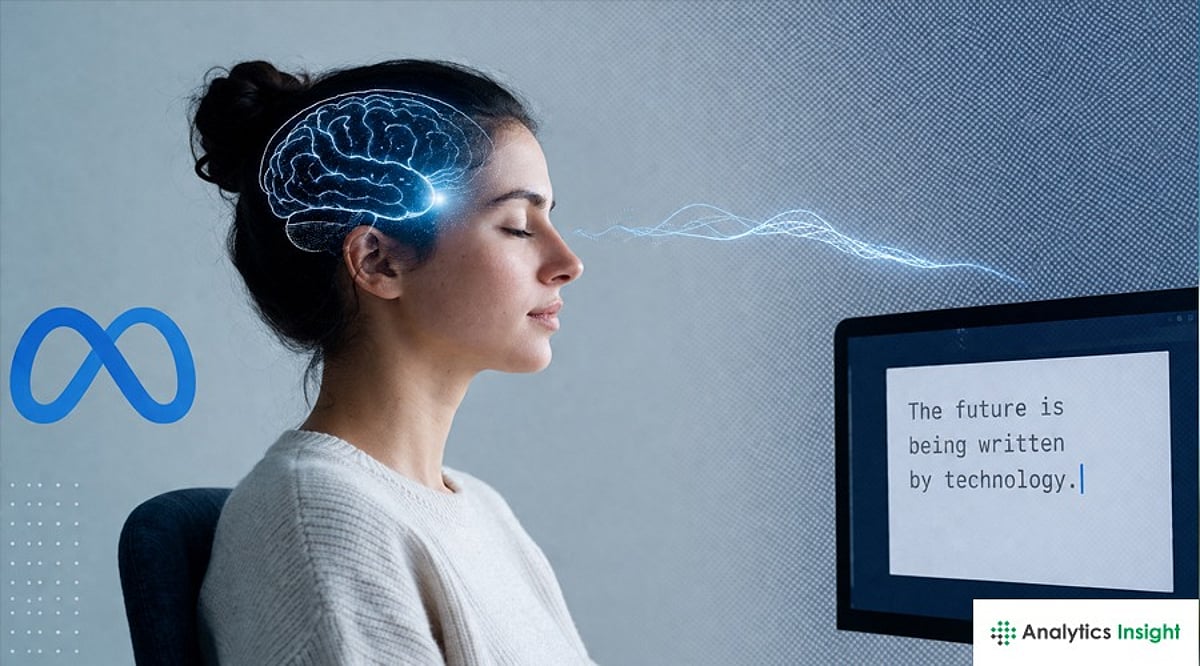
    Meta has unveiled Brain2Qwerty v2, a cutting-edge AI system that translates brain signals directly into text using non-invasive magnetoencephalography (MEG) technology. Unlike traditional brain-computer interfaces that require surgical implants, this system uses a helmet equipped with sensors to detect the magnetic fields generated by neural activity while a user types.

    In tests, Brain2Qwerty v2 achieved significant improvements over its predecessor, marking it as Meta’s most accurate end-to-end sentence decoder to date. The technology holds particular promise for individuals with paralysis, brain damage, or speech-related neurological disorders, offering them a potential future means of communication through thought alone.

    Despite the breakthrough, Meta acknowledges that the system remains experimental. Current MEG equipment is bulky, expensive, and requires a controlled environment, making it impractical for everyday use. Further advancements in both hardware miniaturization and AI algorithms are necessary before Brain2Qwerty v2 can become a viable communication aid outside research settings.

    The development underscores the accelerating progress in brain-computer interface technologies and their potential to transform healthcare and human-computer interaction.