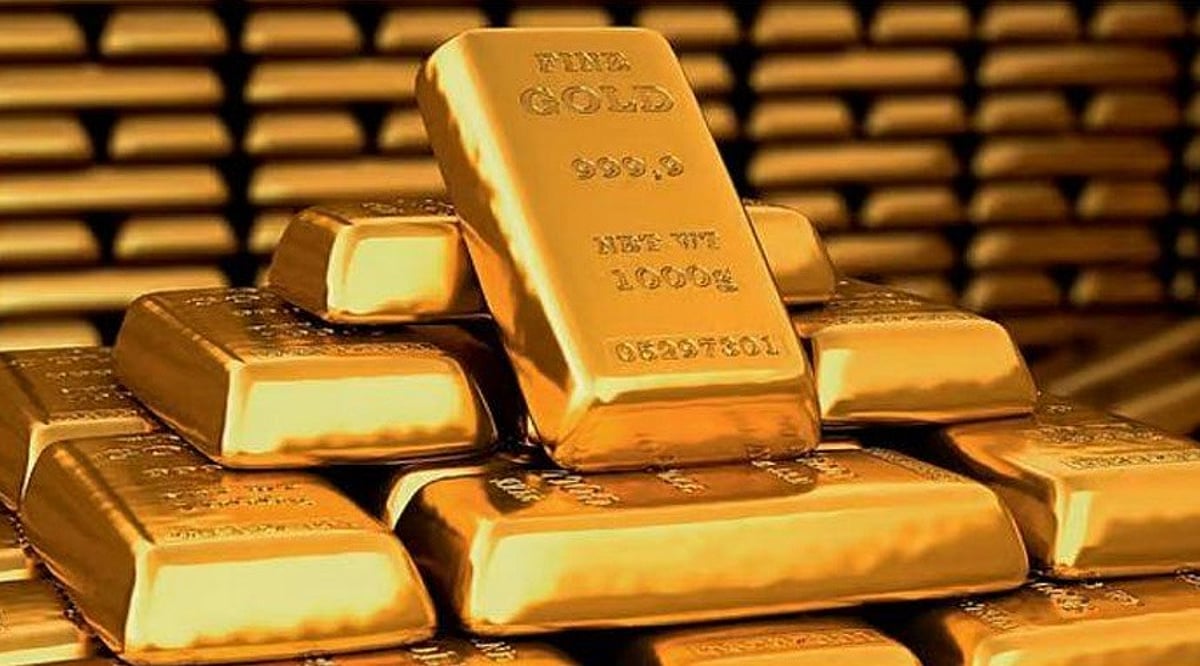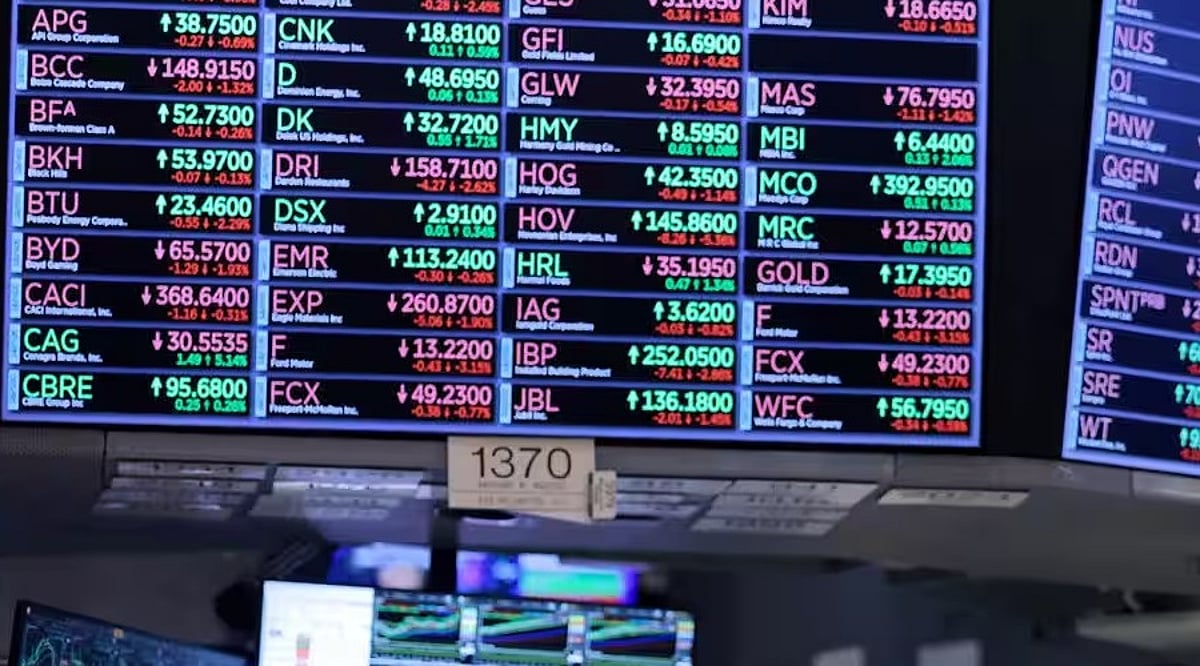
Gold prices on the Multi Commodity Exchange (MCX) declined sharply on September 17, following the US Federal Reserve’s decision to raise interest rates by 25 basis points to a range of 3.75%–4%. The move, driven by persistent inflation and elevated energy costs, pushed October gold futures down 1.11% to Rs. 1,50,778 per 10 grams. Silver also weakened, with September futures falling 1.19% to Rs. 2,31,982.
Meanwhile, global crude oil benchmarks showed mixed movement. Brent crude futures edged up 0.03% to USD 105.9 per barrel, while US West Texas Intermediate (WTI) slipped 0.05% to USD 104.4 per barrel.
Domestic Gold Prices by Purity and City
In the Indian market, 24-karat gold dropped by Rs. 60 to Rs. 1,52,840 per 10 grams, and 22-karat gold declined by Rs. 55 to Rs. 1,40,100. Prices varied slightly across major cities:
- Mumbai: Rs. 1,52,840
- Kolkata: Rs. 1,52,840
- Delhi: Rs. 1,52,990
- Chennai: Rs. 1,52,840
US Gold and Precious Metals Overview
In international markets, spot gold rose more than 1% to USD 4,310.49 per ounce as investors weighed the Fed’s hawkish stance and potential for further tightening. US gold futures for December delivery were down roughly 1% at USD 4,348.70. Spot silver gained 1.4% to USD 63.83, platinum firmed 1.6% to USD 1,780.55, and palladium climbed 2% to USD 1,295.
Key Levels and Analyst Outlook
Kelvin Wong, senior market analyst at OANDA, noted that oil prices remain a crucial factor for gold. “If oil prices continue to decline, that could support gold prices moving higher, at least from a medium-term perspective. Until that materializes, I expect gold to remain range-bound,” he said. Wong added that the current uptick in gold is largely technical, with the Fed’s hawkish message already priced in.
On the MCX, gold is under short covering with open interest declining 4.15% to 8,818. Support is placed at Rs. 1,51,630, with a break below opening Rs. 1,50,790, while resistance is seen at Rs. 1,53,130, above which prices could test Rs. 1,53,790.
Internationally, gold shows a bearish near-term bias below USD 4,315–USD 4,320. This zone acts as a key pivot; above it, the metal could target the 38.2% Fibonacci level near USD 4,404 and the 23.6% retracement at USD 4,513. On the downside, immediate support is at the 61.8% Fibonacci retracement of USD 4,226, followed by the 78.6% level at USD 4,100.