
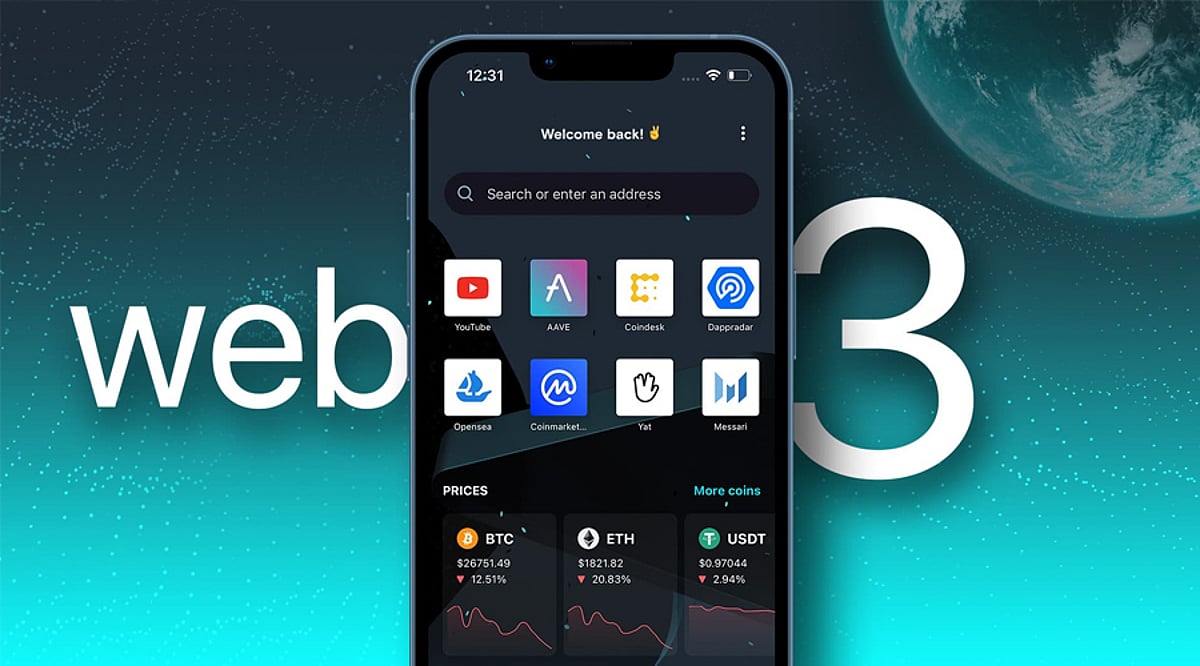
Web3 browsers are revolutionizing the way users interact with decentralized applications (dApps) by integrating crypto wallets directly into the browsing experience. Instead of juggling multiple extensions, users can connect to DeFi platforms, NFT marketplaces, and DAOs from a single interface, making the process faster and more secure.
Top Web3 Browsers Leading the Charge
Brave Browser
Brave remains a top choice for everyday users. It includes a built-in Brave Wallet, blocks ads and trackers by default, supports multiple blockchains, and allows direct access to dApps without external wallet extensions.
Opera Crypto Browser
Opera’s Crypto Browser is tailored for beginners. It features an integrated wallet, support for several blockchain networks, and quick access to NFTs, dApps, and blockchain tools through an intuitive interface.
MetaMask
MetaMask is the go-to option for Ethereum and EVM-compatible blockchains. Its built-in dApp browser and self-custodial wallet enable secure transaction signing, DeFi exploration, NFT management, and DAO participation while giving users full control over their assets.
Mobile-First Options
For mobile users, Trust Wallet, Phantom, and Puma Browser offer simple wallet integration, dApp support, NFT management, and strong privacy features with multi-chain compatibility.
Key Advantages of Modern Web3 Browsers
Built-in wallets eliminate the need for extra plugins, while phishing protection, transaction verification, ad blocking, and multi-chain support create a safer and more efficient environment for blockchain interactions.
Which Browser Should You Choose?
Brave is ideal for privacy-conscious users, Opera Crypto Browser is perfect for beginners, MetaMask offers advanced flexibility for Ethereum enthusiasts, and Phantom or Trust Wallet are excellent for mobile-first crypto explorers.
As the Web3 ecosystem evolves in 2026, these browsers continue to lower the barrier to entry for decentralized applications, making crypto interactions more accessible than ever.