Tag: budget smartwatch

  • Budget Smartwatch Showdown: Moto Watch (2026) vs CMF Watch 3 Pro

    Budget Smartwatch Showdown: Moto Watch (2026) vs CMF Watch 3 Pro

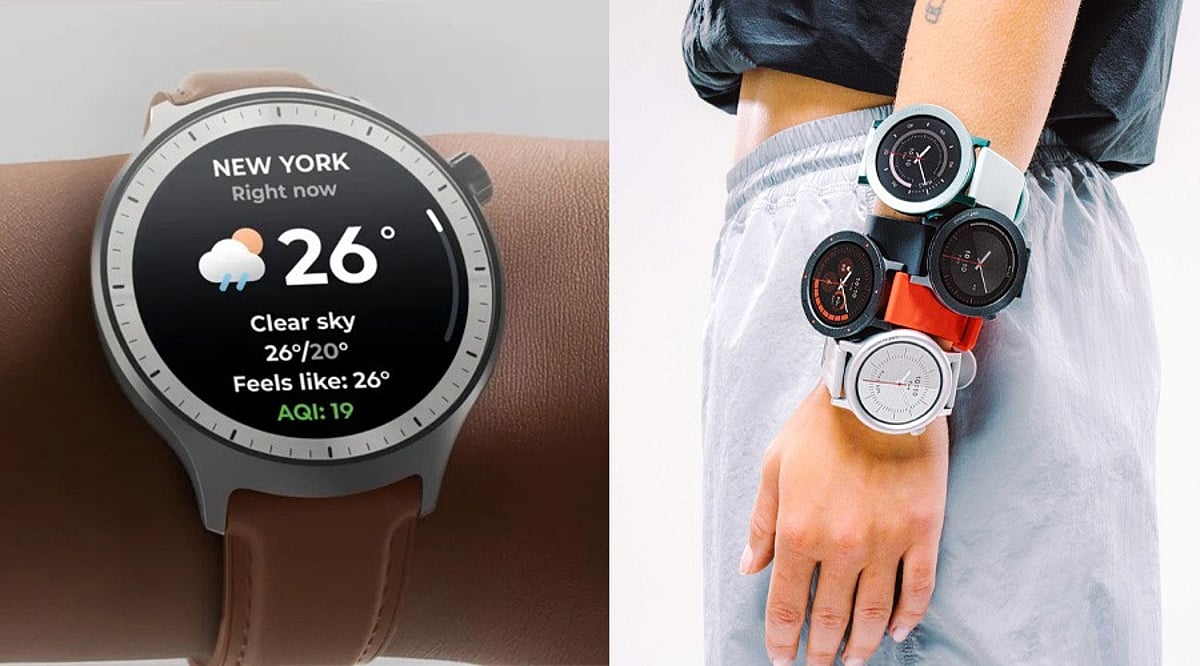
    Smartwatch buyers on a budget have two compelling options in 2026: the Moto Watch (2026) and the CMF Watch 3 Pro. Both deliver long battery life, essential fitness tracking, and everyday smart features, but they take different approaches to design and value.

    Design and Display

    The Moto Watch (2026) features a 47mm round case and weighs only about 35 grams, making it an excellent choice for anyone who prefers a lightweight, comfortable fit. It uses a 1.43-inch OLED display and carries an IP68 rating for dust and water resistance.

    The CMF Watch 3 Pro also has a 1.43-inch screen, but its AMOLED panel stands out with a sharper 466 x 466-pixel resolution, an always-on display mode, and up to 650 nits of brightness. If screen quality matters most, CMF takes the win; if a lighter wrist feel is your priority, Motorola has the edge.

    Fitness and Health Tracking

    Both watches cover heart-rate monitoring, SpO2, sleep tracking, GPS, and daily activity tracking. However, the CMF Watch 3 Pro goes further with 131 sports modes and dual-band GPS, making it better suited for varied training routines.

    The Moto Watch (2026) is no slouch either. It includes dual-frequency GPS and health features powered by Polar, giving active users reliable workout and outdoor tracking. Still, CMF offers more workout modes and fitness-focused extras overall.

    Battery Life

    Both smartwatches are rated for up to 13 days of battery life, so you can expect similar endurance. Real-world results will vary depending on GPS usage, Bluetooth calling, and health features, but neither watch should leave you hunting for a charger every night.

    Smart Features

    Bluetooth calling, notifications, music controls, and standard smartwatch conveniences are included on both models. The CMF Watch 3 Pro adds voice assistance and camera shutter controls, making it slightly more versatile for daily use.

    It is worth noting that neither watch offers the full Wear OS app ecosystem, so buyers who need third-party apps or deep smartphone integration should look at more advanced options.

    Verdict: Which Should You Buy?

    The Moto Watch (2026) is the smarter pick if you want a simple, affordable, lightweight watch with solid essentials. The CMF Watch 3 Pro is the better-equipped device for users who value a superior AMOLED display, more sports modes, and additional fitness features.

    Overall winner: CMF Watch 3 Pro.

    Frequently Asked Questions

    Which smartwatch has a better display?

    The CMF Watch 3 Pro offers the better display with its 1.43-inch AMOLED panel, 466 x 466-pixel resolution, always-on support, and 650 nits brightness.

    Does the Moto Watch (2026) last longer than the CMF Watch 3 Pro?

    No. Both are rated for up to 13 days of battery life. Actual endurance depends on GPS, tracking, and calling habits.

    Which watch is better for fitness tracking?

    The CMF Watch 3 Pro has more sports modes and dual-band GPS, while the Moto Watch provides reliable Polar-powered health tracking. CMF is more feature-rich for fitness.

    Are both watches good for everyday use?

    Yes. Both support notifications, Bluetooth calling, heart-rate monitoring, sleep tracking, and music controls. Your final choice should come down to display, fitness needs, weight, and budget.

  • Noise ALT Watch 1 Review: Feature-Packed Smartwatch with AMOLED Display and AI Capabilities at an Affordable Price

    Noise ALT Watch 1 Review: Feature-Packed Smartwatch with AMOLED Display and AI Capabilities at an Affordable Price

    Introduction

    The Noise ALT Watch 1 is a feature-loaded smartwatch that offers an array of impressive qualities including AMOLED display, AI functionalities, Bluetooth call, and accurate health tracking, all of which come at a cost-effective price point. While the watch comes with a lot of appealing features, there are some advanced ones that do not meet the standard expectation.

    General Specifications

    Here are the Noise ALT Watch 1 specifications: (detailed specifications not provided in source, but assume standard smartwatch specs).

    Pros and Cons

    • Pros: AMOLED display, AI features, Bluetooth calling, accurate health tracking, affordable price.
    • Cons: Some advanced features fall short, AI impact is not noticeable, missing certain high-end qualities.

    Final Verdict

    This smartwatch is quite a powerful device and good enough in the basics such as display, health tracking, notifications, and even the software experience. However, there is no noticeable impact from the AI elements and some high-end qualities are missing. The Noise ALT Watch 1 is a reliable smartwatch with affordable pricing. In conclusion, this smartwatch can be recommended for anyone who is looking for a powerful device with fitness tracking capabilities.

  • Top Smartwatches Under Rs. 25,000: Style, Performance, and Battery Life Compared

    Top Smartwatches Under Rs. 25,000: Style, Performance, and Battery Life Compared

    Finding a good smartwatch under Rs. 25,000 is easier than ever. Whether you want Google apps, advanced fitness tracking, or long battery life, this price range has strong options across multiple platforms. Here are the models that stand out for different types of users.

    Smartwatches under Rs. 25,000 now offer a wide range of choices, from full Wear OS devices with Google apps to fitness-focused platforms that prioritize battery life and health tracking. Buyers can choose between productivity features, advanced sports tracking, premium AMOLED displays, long battery life, or stylish everyday designs based on their needs instead of settling for one-size-fits-all devices. Models from Samsung, OnePlus, Garmin, Amazfit, Titan, and Noise each balance software, performance, battery life, and design differently, making the platform and intended use more important than specifications alone.

    Before You Buy

    Start with what matters most. Anyone who wants Google apps, Play Store access, and full notifications should go with Wear OS, though it means charging more often. Garmin and Zepp OS trade a smaller app selection for longer battery life and stronger fitness tracking. Titan and Noise keep prices low by skipping built-in GPS and app stores, which makes them a better fit for everyday use than for serious training. iPhone owners should note that most Wear OS watches work best on Android, and some features may not work as well on iOS.

    Samsung Galaxy Watch FE

    The Galaxy Watch FE is the easiest way into Wear OS at this price. It runs the full platform with a 1.2-inch Super AMOLED screen, NFC for tap-to-pay, and regular Wi-Fi and Bluetooth. The catch is battery life — expect about a day of use, not the multi-day numbers that cheaper watches claim. It sells for around Rs. 12,999, roughly half its launch price.

    Best for: Samsung phone owners who want the full software experience without paying flagship prices.

    OnePlus Watch 2R

    The Watch 2R addresses Wear OS’s battery issue with smarter hardware. A Snapdragon W5 chip runs the main system, while a second, smaller chip handles step counts and heart rate in the background, only waking the full system when needed. This is how it reaches up to 100 hours in Smart Mode and 12 days in Power Saver Mode. It has a 1.43-inch AMOLED display, GPS built for sharper outdoor tracking, and fast charging that fills the battery in about an hour. It’s priced near Rs. 17,999, often lower during sales.

    Best for: Android users who want Wear OS without charging it every single night.

    Garmin Vivoactive 5

    The Vivoactive 5 skips Wear OS altogether, and that’s exactly why it lasts 11 days on a charge while still having a decent AMOLED screen. Its sensor feeds Garmin’s health tools: energy tracking, sleep stages, stress scores, and over 30 sports apps with real GPS, not phone guesswork. It also supports Garmin Pay, though not many Indian banks are on board yet. Price ranges from Rs. 18,999 to Rs. 24,990 depending on the color.

    Best for: Runners and swimmers who want real training data and don’t need a big app store.

    Amazfit Balance 2

    The Balance 2 skips Wear OS too, running its own software built for the outdoors. It has a bright sapphire display, water resistance rated for diving down to 45 meters, and offline maps for over 40,000 golf courses. Battery life reaches 21 days. Next to the Vivoactive 5, it leans more into outdoor and adventure use, while Garmin still wins on training detail. Price sits close to Rs. 24,999.

    Best for: Divers, golfers, and anyone who wants a rugged outdoor watch, not just a notification screen.

    Titan Smart 3

    The Smart 3 drops GPS and app support to keep the price low, and it still feels solid. It has an always-on AMOLED screen, calling support, over 110 sports modes tracked through your phone, and fast charging that adds a day of battery in ten minutes. The price runs from Rs. 5,000 to Rs. 12,000.

    Best for: First-time buyers who want AMOLED and calling without the Wear OS price tag.

    NoiseFit Halo 3

    The Halo 3 goes for looks over specs, shaped like a classic dress watch with metal, leather, and silicone strap options. Its best feature is Noise AI Pro, which handles voice notes, daily briefings, and QR tickets. Like the Titan, it skips GPS and apps. Price ranges from Rs. 4,499 to Rs. 7,999.

    Best for: Buyers who want a watch that looks traditional first, smart second.

    How They Compare

    Matching the Watch to the Buyer: Anyone on Android who wants Google apps and full notifications gets the most out of Samsung. If daily charging is a dealbreaker but Wear OS still matters, OnePlus is the better pick. Runners and swimmers who care about training data more than apps will find Garmin’s battery and sensor accuracy hard to beat. Divers, golfers, and anyone who spends time outdoors get more from Amazfit’s offline maps and dive certification. Budget-conscious first-time buyers get AMOLED and calling from Titan without paying Wear OS prices, and anyone who cares about looks over specs will find Noise’s dress watch design and AI features a rare combination at this price.

    Software support tends to follow the same lines. Samsung and OnePlus, running Wear OS, usually get clearer update commitments over time. Titan and Noise, on the other hand, typically ship with a fixed set of features and get maintenance updates rather than real upgrades. This gap matters more the longer someone plans to keep the watch.

    Final Thought

    Three years ago, a smartwatch under Rs. 25,000 meant picking one flaw to live with: bad battery, weak software, or a design that looked like every other watch on the shelf. Now it means choosing which trade-off works for you. This shift says more about how far this market has come than any single watch on this list.

    FAQs

    1. Which is the best smartwatch under Rs. 25,000 in India? The best smartwatch depends on your needs. Samsung Galaxy Watch FE is ideal for Wear OS users. OnePlus Watch 2R offers excellent battery life with Wear OS, while the Garmin Vivoactive 5 is better for fitness tracking.
    2. Is Wear OS better than Garmin OS or Zepp OS? Wear OS offers Google apps, Play Store access, and richer smartwatch features. Garmin OS and Zepp OS focus more on battery life, health tracking, and sports performance than third-party apps.
    3. Which smartwatch under Rs. 25,000 offers the longest battery life? Among these options, the Amazfit Balance 2 offers up to 21 days of battery life. The Garmin Vivoactive 5 lasts up to 11 days, while the OnePlus Watch 2R can deliver up to 12 days in Power Saver Mode.
    4. Are smartwatches under Rs. 25,000 compatible with iPhones? Most smartwatches support iPhones, but Wear OS models typically provide the best experience with Android devices. Some features, such as replies to notifications and certain apps, may be limited on iOS.
    5. What should I consider before buying a smartwatch under Rs. 25,000? Choose based on your priorities. Wear OS is best for productivity and Google apps. Garmin and Amazfit suit fitness enthusiasts with longer battery life, while Titan and Noise are ideal for everyday use with essential smartwatch features at lower prices.

  • Best Fire-Boltt AMOLED Smartwatches: A Complete 2026 Lineup Comparison

    Best Fire-Boltt AMOLED Smartwatches: A Complete 2026 Lineup Comparison

    The smartwatch market has evolved quickly, and AMOLED displays have become one of the most sought-after features. Fire-Boltt’s growing portfolio includes models that cater to different lifestyles, making it easier to find a smartwatch that balances display quality, comfort, features, and value.

    AMOLED panels work on a fundamentally different principle than traditional LCD screens. Each pixel produces its own light, giving the display deeper blacks, better contrast, and more vibrant colors. In everyday use, this translates to a screen that is comfortable to read indoors, holds up well under direct sunlight, and feels polished regardless of what you paid for it. Fire-Boltt has put this technology at the center of its latest smartwatch lineup, and the watches reflect that commitment in ways that are easy to notice from the first time you use one.

    Finding an AMOLED smartwatch is not difficult, as the market offers plenty of options. The real challenge is finding the one that actually fits your exact lifestyle. Each watch in the lineup focuses on a different priority, making it easier to choose the right one.

    Fire-Boltt Visionary: The Safest All-Round Choice

    The Fire-Boltt Visionary is the model most buyers should consider first. It combines Bluetooth calling, health monitoring, smart notifications, and a sharp AMOLED display in a package that works across different daily situations. It suits first-time smartwatch buyers, everyday users, and anyone who wants one device that handles work, fitness, and personal use without compromise.

    Fire-Boltt Legacy: When Design Matters as Much as Function

    The Fire-Boltt Legacy is built for buyers who treat a watch as a style statement. Its slim profile, lightweight construction, and refined finish set it apart from the bulkier smartwatches that dominate the budget segment. The AMOLED display adds to that premium feel. Style-conscious buyers and office professionals will find it difficult to look past.

    Fire-Boltt Quantum: Built for the Boardroom

    Most smartwatches look like fitness trackers regardless of the occasion. The Fire-Boltt Quantum breaks that pattern. Its metal construction and classic round dial give it a traditional watch aesthetic that fits naturally in formal settings. Business professionals who want smart features without sacrificing a polished appearance will find the Quantum far more appropriate.

    Fire-Boltt Legacy Nova: The Practical Daily Companion

    The Fire-Boltt Legacy Nova is designed around visibility and ease of use. Its larger AMOLED display makes notifications, health data, and incoming call information easier to read throughout the day. It targets daily smartwatch use without overcomplicating things.

    Fire-Boltt Axiom: For Users Who Take Fitness Seriously

    The Fire-Boltt Axiom is built around health and activity tracking. Heart rate monitoring, sleep tracking, and workout data are its core strengths. The AMOLED display serves a practical purpose here. During outdoor workouts, readability matters, and the Axiom ensures users can comfortably view the screen.

    Choosing the Right Model

    The Fire-Boltt Visionary suits buyers who want versatility. The Legacy appeals to those who prioritise appearance. The Quantum fits professional environments. The Legacy Nova serves general daily use. The Axiom belongs on the wrist of anyone committed to fitness. Each model has a clear identity, and matching that identity to your lifestyle is the only decision that matters.

    Frequently Asked Questions

    1. Why is an AMOLED display better than an LCD on a smartwatch? AMOLED displays offer deeper blacks, higher contrast, and more vibrant colors than LCD screens. They also improve outdoor visibility and give watch faces a more premium appearance.
    2. Which Fire-Boltt AMOLED smartwatch is best for everyday use? The Fire-Boltt Visionary is one of the strongest all-round options for everyday use because it combines an AMOLED display, Bluetooth calling, health tracking, and smart notifications in a balanced package.
    3. Are Fire-Boltt AMOLED smartwatches good for fitness tracking? Yes. Most Fire-Boltt AMOLED smartwatches include fitness and health features such as activity tracking, heart-rate monitoring, sleep tracking, and multiple sports modes.
    4. Do Fire-Boltt AMOLED watches support Bluetooth calling? Many Fire-Boltt AMOLED models support Bluetooth calling, allowing users to make and receive calls directly from the watch when connected to a smartphone.
    5. Which Fire-Boltt AMOLED smartwatch is best for professional use? The Fire-Boltt Quantum is a strong choice for professional settings because its traditional watch-inspired design blends more naturally with business and formal wear.