Tag: business success

  • From Zero to Millions: 6 Self-Made Millionaires Who Started With Almost No Capital

    From Zero to Millions: 6 Self-Made Millionaires Who Started With Almost No Capital

    From Almost Nothing to Millions

    Big businesses do not always begin with big bank accounts. Some entrepreneurs started with tiny shops, personal skills, borrowed resources, or early customer revenue. Their stories show how execution and persistence can sometimes matter more than having a huge starting budget.

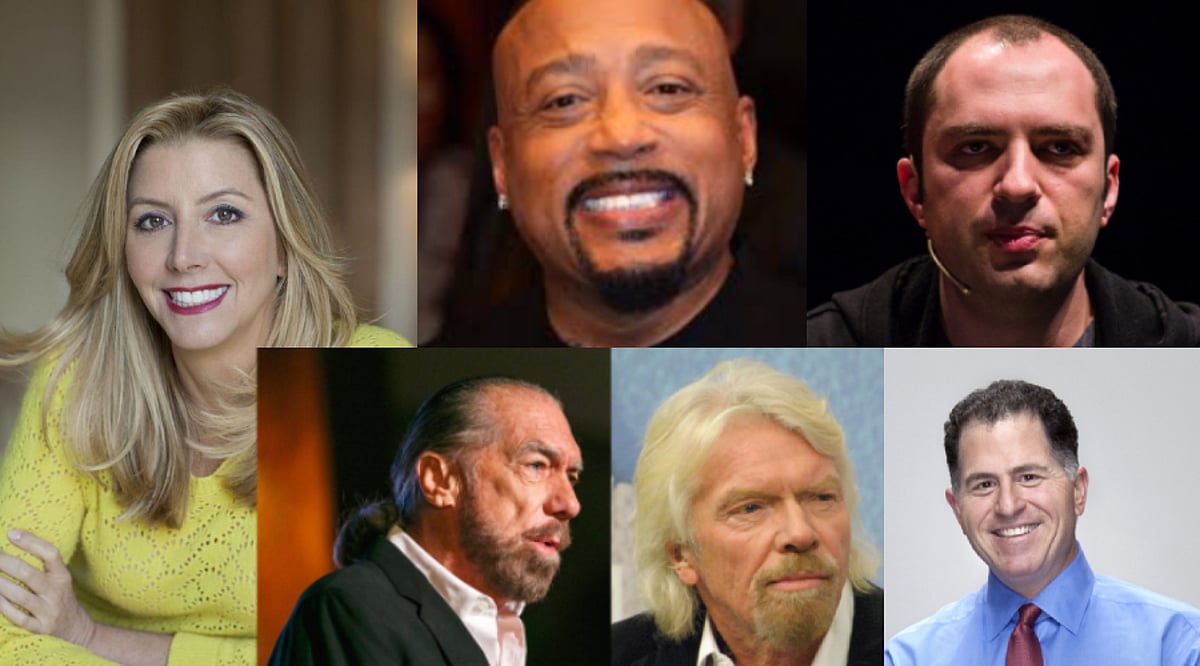
    Sara Blakely: Solving a Simple Problem

    Sara Blakely started Spanx with about $5,000 of her own savings. She handled much of the early work herself and focused on solving a simple problem for women. Spanx eventually became a major shapewear brand, turning Blakely into a billionaire entrepreneur.

    Daymond John: From Queens to Global Fashion

    Daymond John started FUBU from his mother’s house in Queens with limited resources. He and his partners began making and selling clothing themselves. The brand eventually grew into a major fashion business, while John became a well-known entrepreneur and investor.

    Jan Koum: Building WhatsApp Without Expensive Ads

    WhatsApp co-founder Jan Koum came from a modest immigrant background and experienced financial hardship while growing up. He later built WhatsApp with Brian Acton, focusing on simple messaging rather than expensive advertising. Facebook eventually acquired the company in a multibillion-dollar deal.

    Richard Branson: Reinvesting His Way to a Virgin Empire

    Richard Branson began building his Virgin business empire with relatively modest resources, starting with a student magazine before entering the music business. He repeatedly reinvested earnings into new ventures. Virgin later expanded into airlines, telecom, media, and numerous other industries.

    Michael Dell: Selling Directly From a Dorm Room

    Michael Dell began selling upgraded computers from his university dorm room. Instead of building a traditional retail network, he focused on selling directly to customers. The direct-sales model helped Dell grow rapidly and eventually created one of the world’s best-known computer companies.

    John Paul DeJoria: $700 and a Hair-Care Vision

    John Paul DeJoria had limited financial resources when he entered the beauty business with Paul Mitchell. The pair reportedly started with about $700 and sold their products directly to salons. The business grew into a global hair-care company, making DeJoria a billionaire.

    Conclusion

    These founders prove that starting capital is not the only predictor of success. Resourcefulness, focus, and the ability to move quickly can turn a modest beginning into a major enterprise.

  • From Fame to Fortune: 10 Celebrities Who Built Billion-Dollar Empires

    From Fame to Fortune: 10 Celebrities Who Built Billion-Dollar Empires

    Rihanna: From Pop Star to Beauty Mogul

    Rihanna built a billion-dollar fortune with Fenty Beauty and Savage X Fenty, proving that inclusive products and brand ownership can outperform endorsements.

    Steven Spielberg: Hollywood’s Richest Storyteller

    Steven Spielberg earned billions through blockbuster films, Amblin Entertainment, and a long-running Universal theme park royalty agreement.

    Michael Jordan: The Athlete Who Built a Brand

    Michael Jordan turned his Nike partnership into one of the world’s most valuable sports brands, making him one of the richest athletes ever.

    Oprah Winfrey: Media Queen With a Business Empire

    Oprah expanded beyond television with Harpo Productions, OWN Network, publishing, and smart investments that created lasting wealth.

    Kim Kardashian: SKIMS Changed Everything

    Kim Kardashian transformed her global fame into a billion-dollar empire through SKIMS, one of the fastest-growing shapewear brands.

    Jay-Z: From Rap Icon to Business Tycoon

    Jay-Z built wealth through Roc Nation, premium liquor brands, investments, and entertainment ventures that extend far beyond music.

    Taylor Swift: Music Rights Created Massive Wealth

    Taylor Swift’s record-breaking tours, music catalog value, and ownership strategy helped turn her into one of the world’s richest entertainers.

    Dr. Dre: The Billion-Dollar Headphone Deal

    Dr. Dre co-founded Beats Electronics, which Apple acquired for billions, making it one of the biggest celebrity business success stories.

    The Secret Behind Their Success: Ownership Beats Endorsements

    These celebrities built lasting fortunes through equity, brand ownership, strategic investments, and diversification, not just their fame.

  • From Stage to Startup: 10 Celebrities Who Built Multi-Million-Dollar Businesses

    From Stage to Startup: 10 Celebrities Who Built Multi-Million-Dollar Businesses

    These famous stars didn’t just dominate entertainment—they also built thriving businesses worth millions and even billions. Here are 10 celebrity entrepreneurs who turned their fame into formidable empires.

    • Rihanna – Fenty Beauty: Rihanna revolutionized the beauty industry with Fenty Beauty, setting new standards for inclusive makeup worldwide.
    • Kim Kardashian – SKIMS: Kim Kardashian transformed shapewear with SKIMS, creating one of the fastest-growing fashion brands globally.
    • Ryan Reynolds – Mint Mobile: Ryan Reynolds helped turn Mint Mobile into a telecom success before its multi-billion-dollar acquisition.
    • Jessica Alba – The Honest Company: Jessica Alba built The Honest Company into a trusted brand focused on clean, family-friendly products.
    • George Clooney – Casamigos: George Clooney co-founded Casamigos Tequila, which was later sold in a billion-dollar deal.
    • LeBron James – SpringHill Company: LeBron James expanded beyond basketball by building a successful media and entertainment company.
    • Ashton Kutcher – A-Grade Investments: Ashton Kutcher became one of Silicon Valley’s best-known celebrity investors through early startup investments.
    • Jay-Z – Roc Nation: Jay-Z built Roc Nation into a global entertainment, sports management, and media powerhouse.

    Read more stories like this on our WhatsApp channel.

  • Why Adaptive Leadership Is the Key to Business Survival in 2026

    Why Adaptive Leadership Is the Key to Business Survival in 2026

    Adaptive leadership has become a critical business capability in 2026 as organizations navigate AI disruption, economic uncertainty, workforce transformation, and rapidly changing market conditions. Unlike traditional leadership models that rely on fixed plans and hierarchical decision-making, adaptive leadership emphasizes learning, agility, trust, and informed judgment. Leaders who can respond effectively to evolving challenges, align teams during uncertainty, and make decisions with incomplete information are better positioned to drive long-term business success.

    Executive coaching programs are reporting a strange pattern this year. Leaders arrive wanting certainty: a clear answer, a fixed plan, a five-year strategy they can defend at the board level. Most of them leave wanting something different: a faster way to learn when the plan breaks. That shift, from certainty-seeking to learning-seeking, is the actual story behind adaptive leadership now.

    The term itself is not new. Ronald Heifetz and Marty Linsky developed adaptive leadership at Harvard decades ago, building on a specific distinction: technical problems have known solutions that you can delegate to an expert, while adaptive challenges require the people facing the problem to change how they think and work. What has changed is not the framework. It is how badly organizations are failing to apply it, at exactly the moment they need it most.

    The Problem Isn’t Information. It’s Attention.

    Most executives are not short on data now. They are short on the mental space to use it well. Research from Microsoft and the University of London found that constant digital interruptions can reduce effective IQ in the moment by 10 to 15 points, roughly equivalent to functioning on no sleep. Layer that onto a senior leader’s week and the math gets uncomfortable fast: Harvard Business School research shows executives spend up to 23 hours a week in meetings, and rate more than half of that time as low-value.

    This is not a productivity complaint. It is a leadership capability problem. Adaptive leadership depends on judgment, noticing what’s changed, naming the real problem before reaching for a familiar fix. That judgment requires attention; most leaders’ calendars are actively stripping away from them, one recurring meeting at a time.

    Why AI Is Exposing Leadership Gaps, Not Closing Them

    Half of CEOs reportedly believe their jobs are on the line if AI does not deliver a return, and companies plan to roughly double AI spending as a share of revenue this year. That pressure is producing a predictable but telling gap: frontline leaders are three times more likely than executives to express real concern about AI, according to DDI’s research; a readiness divide that stalls transformation precisely where it needs traction most, on the ground, not in the boardroom.

    As AI takes on more routine execution and analysis, the actual value a leader provides shifts upstream toward judgment, not authority. A better model does not rescue a leader who cannot adapt their thinking. They get exposed by one, faster than they would have been five years ago.

    What Adaptive Leadership Actually Requires

    Strip away the conference-circuit language, and the practical requirements are fairly specific. A 20,000-executive study from Wharton researchers identified six concrete skills that separate leaders who navigate uncertainty well from those who don’t: the ability to anticipate, challenge assumptions, interpret ambiguous signals, decide without full information, align people around a direction, and learn fast from what goes wrong.

    None of those six is about technology fluency. They are about judgment under incomplete information, which is precisely the skill traditional, hierarchy-based leadership models were never built to develop, because they assumed someone above you already had the answer.

    The Trust Gap Sitting Underneath All of This

    Adaptive leadership cannot function without trust, and current data suggests that trust is thin. Only one in ten employees believes their feedback ever leads to visible action, a gap that quietly tells teams their input doesn’t matter, regardless of what’s said in town halls. More than half of leaders globally report feeling “used up” by the end of an average day, and DDI’s research names this pattern “quiet cracking,” a slow erosion of motivation that looks fine on the surface until performance drops without warning.

    That combination of exhausted leaders, unconvinced employees, and AI pressure compounding both is the real 2026 leadership environment. Adaptive leadership is not a competitive advantage layered on top of business as usual. For a growing number of organizations, it is the only model left standing once the certainty-based one stops working.

    Why It Matters

    Organizations today are facing challenges that cannot be solved through traditional management practices alone. AI, shifting market conditions, changing workforce expectations, and global economic uncertainty require leaders to make decisions without having complete information. In this environment, the ability to learn quickly and adapt becomes more valuable than the ability to predict every outcome. Adaptive leadership helps businesses respond faster to emerging risks, identify opportunities earlier, and build stronger trust across teams. It encourages continuous learning, open communication, and greater organizational flexibility. Companies led by adaptive leaders are often better equipped to manage transformation initiatives, navigate disruption, and maintain employee engagement during periods of change.