Tag: Cardano

  • Bitcoin ETF Inflows Surge, CLARITY Act Delayed, Cardano Wallet Hack Triggers SecondFi Closure

    Bitcoin ETF Inflows Surge, CLARITY Act Delayed, Cardano Wallet Hack Triggers SecondFi Closure

    Bitcoin ETF Inflows Surge, CLARITY Act Delayed, Cardano Wallet Hack Triggers SecondFi Closure

    Spot Bitcoin ETFs recorded $128.69 million in fresh inflows on August 6, 2026, with BlackRock’s IBIT leading institutional demand. Meanwhile, the U.S. Senate postponed consideration of the CLARITY Act until September, extending regulatory uncertainty. In a separate development, Cardano wallet provider SecondFi announced its shutdown after a $2.4 million exploit affected hundreds of user wallets. Bitcoin mining giants MARA and CleanSpark also reported double-digit revenue declines.

    Bitcoin ETF Inflows Hit $128.69 Million

    According to SoSoValue, Bitcoin spot ETFs saw a total net inflow of $128.69 million yesterday. BlackRock’s IBIT led with a daily net inflow of $128.33 million, bringing its historical total to $61.09 billion. Morgan Stanley’s MSBT followed with $14.94 million in daily inflows, accumulating $429.07 million historically. On the outflow side, VanEck’s HODL saw $32.77 million leave the fund, with a historical net inflow of $1.10 billion. The total net asset value of Bitcoin spot ETFs now stands at $78.77 billion, representing an ETF net asset ratio of 6.09%, and the cumulative historical net inflow has reached $52.08 billion.

    CLARITY Act Delayed Until September

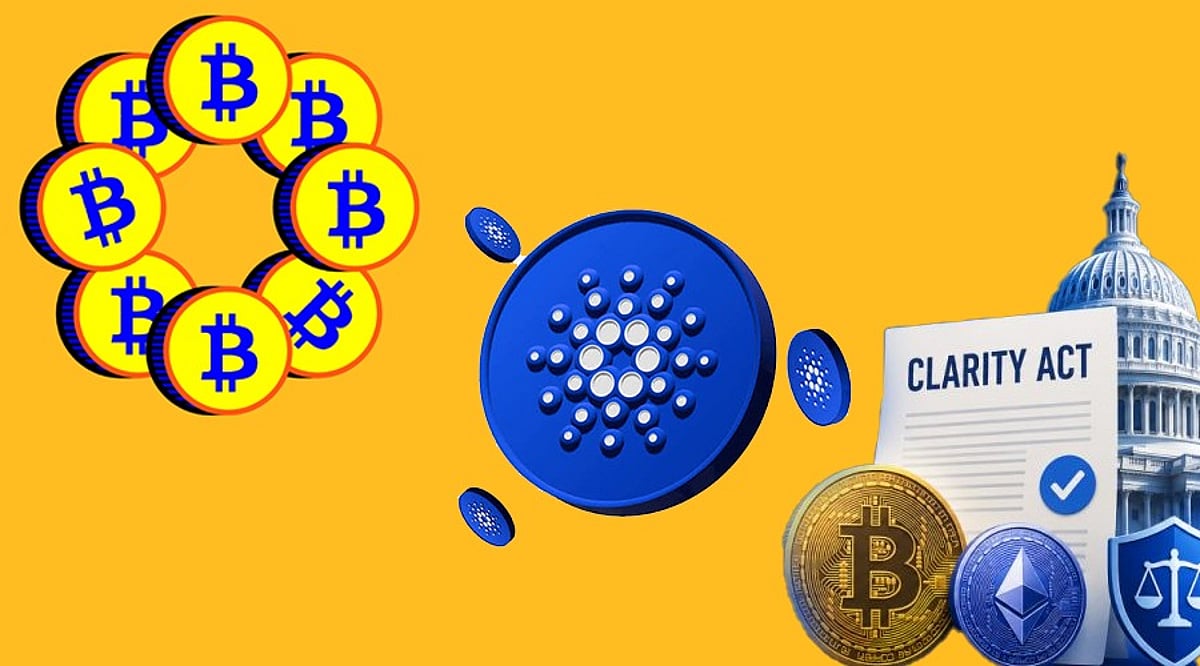
    The U.S. Senate will wait until September to consider the CLARITY Act after lawmakers failed to reach an agreement before the August recess. Senate Majority Leader John Thune stated that Democrats opposed a pre-recess vote and wanted further negotiations on the crypto market structure bill. The delay gives senators more time to address ethics rules, banking concerns, and other disputed provisions. The bill still requires enough bipartisan support to clear the Senate’s 60-vote threshold. The Senate entered its August break without taking up the Digital Asset Market Clarity Act (H.R. 3633). Republican leaders had sought a time agreement covering items before lawmakers left Washington.

    SecondFi Shuts Down After Cardano Hack

    Cardano wallet provider SecondFi is shutting down after a software vulnerability enabled hackers to steal approximately 16.1 million ADA (valued at about $2.4 million) from hundreds of user wallets. The breach affected 374 wallets after attackers exploited a flaw in SecondFi’s transaction-signing software that exposed sensitive cryptographic information. The company said the vulnerability has since been patched but confirmed it will permanently discontinue normal operations despite securing additional customer assets before they could be compromised.

    MARA and CleanSpark See Double-Digit Revenue Drops

    Bitcoin mining giants MARA Holdings and CleanSpark reported revenue declines amid higher operational challenges and an ongoing diversification toward high-performance computing. In Q2 2026, MARA generated $174.9 million compared to $238.5 million the previous year. The company attributed much of this result to a $343 million fair-value loss on its digital assets, bringing the final net loss for the period to $611.3 million. In the same quarter of the previous year, the firm had posted a net income of $808.2 million. CleanSpark reported revenues of $138.0 million at the close of its third fiscal quarter on June 30, down from $198.6 million in the prior comparable period. The financial statement reflected a fair-value loss on its Bitcoin holdings of $116.3 million, contributing to a total net loss of $239.8 million.

    Stripe-Owned Bridge Joins EU MiCA Register

    Bridge, the stablecoin infrastructure company owned by Stripe, has joined the EU’s MiCA register, increasing the number of authorized electronic money token issuers to 42 after securing regulatory approval in Luxembourg. According to the latest update from the European Securities and Markets Authority (ESMA), Bridge Building, the Luxembourg-based entity behind Bridge, has been added as an authorized electronic money token (EMT) issuer. The addition raises the number of MiCA-authorized EMT issuers in the European Union to 42. ESMA’s update also added three new crypto-asset service providers (CASPs) from Germany, bringing the total number of authorized CASPs across the bloc to 324.

    Frequently Asked Questions

    Why are Bitcoin ETF inflows important?

    Bitcoin ETF inflows indicate growing institutional participation in the crypto market. Consistent inflows generally reflect stronger investor confidence and can provide long-term support for Bitcoin prices.

    What is the CLARITY Act?

    The CLARITY Act is proposed U.S. legislation designed to establish clearer regulatory oversight for digital assets by defining the responsibilities of agencies such as the SEC and CFTC.

    What happened to SecondFi?

    SecondFi announced it would cease operations after hackers exploited a software vulnerability that resulted in the theft of approximately 16.1 million ADA, valued at around $2.4 million, from 374 wallets.

    Why did MARA and CleanSpark report lower revenue?

    Both Bitcoin mining companies were impacted by weaker mining economics and large fair-value losses on their Bitcoin holdings, leading to double-digit revenue declines and substantial quarterly net losses.

    What does Bridge joining the EU MiCA register mean?

    Bridge’s approval under the EU’s MiCA framework allows it to operate as an authorized electronic money token issuer. The move strengthens regulatory compliance for stablecoin infrastructure and expands Europe’s regulated crypto ecosystem.
  • Bitcoin Holds Near $64,350 as ETF Inflows Surge Ahead of Key Jobs Report

    Bitcoin Holds Near $64,350 as ETF Inflows Surge Ahead of Key Jobs Report

    Bitcoin traded near $64,354.99 on Friday, holding a tight range through the session as spot ETF inflows snapped a longer stretch of outflows. The leading cryptocurrency consolidated after testing $64,920 earlier in the week, with analysts flagging $65,000 as the critical level to watch. Traders now turn to today’s US jobs report for direction, while the stalled CLARITY Act adds to cautious sentiment.

    Bitcoin Price Today

    Bitcoin stood at $64,354.99, broadly flat over the past 24 hours, according to live CoinMarketCap data. Its market cap hovered near $1.29 trillion, with 24-hour trading volume reaching $21.64 billion. Price action remains tied to ETF flows, the jobs report, and legislative headlines.

    Analyst Insights

    Bitcoin Attempts $65,000 Reclaim Ahead of Jobs Data, Says Mudrex

    Prateek Gupta, Head of Business at Mudrex, noted that Bitcoin is attempting to reclaim the $65,000 level ahead of today’s US jobs report. The market is approaching a critical technical and liquidity zone, with $65,000 emerging as the largest short-liquidation cluster. He added that institutional demand continues to grow, with spot Bitcoin ETFs attracting $626 million in net inflows over three sessions. A weekly close above $65,000 could open the path toward $70,000, while a close below $63,000 may expose Bitcoin to $60,000.

    BTC Stays Range-Bound Between $64,000 and $65,000, Says CoinSwitch

    According to CoinSwitch Markets Desk, BTC remained range-bound between $64,000 and $65,000 after testing the upper end of the range. Repeated rejections near $65,000 indicate continued selling pressure. Near-term support sits at $64,350-$64,400, and a break below this zone could expose $64,200. Reclaiming $64,600 may pave the way toward $64,800-$65,000.

    Institutional Demand Offsets Rate Uncertainty, Says Giottus

    Vikram Subburaj, CEO of Giottus, placed Bitcoin near $64,300, with improving institutional demand offset by uncertainty over US interest rates. Spot ETFs received about $626 million between August 3 and August 5, helping buyers defend the $63,000-$64,000 region. However, these inflows have not been strong enough to clear the larger resistance zone between $66,000 and $66,600. He advised staggering purchases and keeping leverage low until Bitcoin clears $66,600 or loses $63,000 support.

    Bitcoin Consolidates Ahead of Employment Data, Says Delta Exchange

    Riya Sehgal, Research Analyst at Delta Exchange, said Bitcoin is trading around $64,400, with the market consolidating ahead of the US employment report. Resilient labor data and renewed crude strength keep inflation expectations in focus. A softer print could ease yields and support risk assets. Bitcoin is holding the $64,000-$64,200 support zone. A break above $64,750-$65,000 could open $65,250-$65,600, while a move below $64,000 may expose $62,400-$63,100.

    Crypto Prices Today: Top 10 Coins at a Glance

    The broader market holds steady, with majors posting mild gains. Hyperliquid led the top 10 board with a gain near 3.7%, followed by XRP and Dogecoin with daily gains above 1%. Outside the top 10, Zcash extended its rally with a jump above 5.9% on the day. Stablecoins Tether and USDC barely moved, while Ethereum and Solana posted modest daily gains.

    Crypto News Today: Top Headlines Impacting Prices

    Bitcoin ETFs Post Third Straight Inflow Day

    US spot Bitcoin ETFs pulled in $244.4 million on Wednesday, extending a three-day streak to $626 million. BlackRock’s IBIT fund led the run, capturing $479 million of the total. The August run has yet to record a single outflow day, a sharp reversal from July’s choppier flows.

    CLARITY Act Faces Recess Deadline Pressure

    The Digital Asset Market Clarity Act remains stalled on the Senate calendar as the chamber’s summer recess begins around August 7. Ethics language disputes continue to block bipartisan support. A Franklin Templeton executive noted that passage would unlock federal preemption and bring bank liquidity into crypto.

    Coldcard Firmware Flaw Keeps Custody Worries Alive

    A firmware bug tied to Coldcard hardware wallets has been linked to nearly $100 million in stolen Bitcoin this month. The exploit has driven dormant address movement as affected holders rush to secure funds. Whale Alert flagged a 6,196 BTC transfer worth nearly $397 million between unknown wallets this week.

    US Jobs Report Set to Drive Today’s Session

    Traders are bracing for today’s Non-Farm Payrolls report. A soft print could ease Treasury yields, while strong data may revive September rate hike bets. The Fed held rates steady at 3.50-3.75% in July, with three officials favoring a hike.

    Zcash and Cardano Lead Altcoin Momentum

    Zcash extended its rally with a weekly gain above 5.9%, pressing a key triangle breakout pattern. Cardano posted a sharp seven-day gain above 15%, outpacing most large-cap peers. Analysts tied Cardano’s strength to progress on its Ouroboros Leios scaling protocol.

    Tether Expands Tokenization Push in Saudi Arabia

    Tether announced plans to launch its Hadron tokenization platform in Saudi Arabia, starting with institutional real estate assets. The move aligns with the kingdom’s Vision 2030 diversification initiative but has limited near-term impact on Bitcoin’s price.

    Investor and Market Outlook

    Bitcoin holds near $64,350 as traders weigh a third straight ETF inflow day against a stalled CLARITY Act. Today’s jobs report stands as the session’s key catalyst. A close above $65,000 could open a path toward $66,600 resistance. A slip below $63,000 risks exposing deeper support closer to $60,000. Zcash and Cardano remain the most sensitive names to shifts in altcoin risk appetite. Next week’s inflation print stands as the market’s next defining catalyst.

  • Bitcoin Holds Above $64,200 as ETF Inflows Counter Coldcard Fears and Legislative Stalemate

    Bitcoin Holds Above $64,200 as ETF Inflows Counter Coldcard Fears and Legislative Stalemate

    Bitcoin traded near $64,236.97 on Tuesday, up 0.48% over the past 24 hours, as fresh institutional inflows offset ongoing security concerns and political uncertainty. The leading cryptocurrency steadied above $64,200 after a choppy start to August, supported by $170.1 million in net inflows into US spot Bitcoin ETFs on Monday.

    Bitcoin Price Today

    Bitcoin trades at $64,236.97, with a market cap of approximately $1.28 trillion and 24-hour trading volume of $23.11 billion. Key support lies near $62,800, while resistance is seen between $64,500 and $65,600, according to analysts.

    Analyst Perspectives

    Mudrex: $65,000 Key for Sentiment Shift

    Akshat Siddhant, Lead Quant Analyst at Mudrex, noted that Bitcoin trades above $64,000 as easing geopolitical tensions lift risk assets. He highlighted that Bitcoin futures open interest slipped to 740,000 BTC from a July peak of 776,000 BTC, a pattern that preceded April’s large short-side liquidation wave. “For now, $65,000 remains major resistance while support holds near $62,800,” he said.

    CoinSwitch: Equities Rally Supports BTC

    CoinSwitch Markets Desk observed that BTC held near $64,000 even as risk assets rallied on US-Iran de-escalation hopes. “Holding above $64,000 keeps the short-term structure positive for a push toward $64,400. A slip below $64,000 opens the next support zone near $63,600,” the desk stated.

    Delta Exchange: Break Above $64,500 Needed

    Riya Sehgal, Research Analyst at Delta Exchange, said Bitcoin reclaimed $64,000 after defending $62,200-$62,400 demand. “Bitcoin needs a sustained break above $64,500 to target $65,000-$65,600. Ethereum must reclaim $1,880 to confirm a broader breakout structure,” she added.

    Giottus: Weak Spot Demand Caps Recovery

    Vikram Subburaj, CEO of Giottus, placed Bitcoin near $64,260, up about 0.7% on the day. He advised investors to favor staggered buying ahead of Friday’s jobs report, noting that Bitcoin holds support near $63,000-$63,400, with resistance between $64,500 and $66,000.

    WazirX: Institutional Absorption Continues

    Nischal Shetty, founder of WazirX, said Bitcoin trades near $64,176 as easing tensions lift appetite. On-chain data shows 155,000 BTC accumulated between $62,000 and $65,000. Wintermute’s H1 2026 report shows institutions now drive 72% of spot volume. “A move above $64,800-$65,000 could trigger fresh long positions. Losing $63,900-$64,000 may raise the odds of a pullback toward $63,200,” he noted.

    Top 10 Coins at a Glance

    • Biggest Gainers: Hyperliquid (HYPE) led with a gain past 3%, followed by BNB (+1.27%) and XRP (+1%).
    • Biggest Losers: Stablecoins (USDT, USDC) and Solana (SOL) remained flat with minimal movement.

    Key Headlines Impacting Prices

    Bitcoin ETFs Return to Inflows With $170.1 Million

    US spot Bitcoin ETFs recorded $170.1 million in net inflows on Monday, ending a brief redemption streak. BlackRock’s IBIT led with $111.4 million, followed by Fidelity’s FBTC at $33.4 million. Ether ETFs slipped into modest net outflows of $11.9 million.

    Coldcard Firmware Flaw Fallout Continues

    A firmware bug in Coldcard hardware wallets has been linked to over $100 million in stolen Bitcoin this month. Emergency fixes have been rolled out, but security researchers warn that updating firmware alone is insufficient. Affected holders must generate fresh recovery phrases and migrate balances immediately.

    CLARITY Act Stuck Without Senate Floor Vote

    The Digital Asset Market Clarity Act remains absent from the Senate’s floor schedule. Senate Majority Leader John Thune indicated a vote could occur before recess, but Republicans need roughly seven Democratic votes to clear the 60-vote threshold. An unresolved ethics dispute over presidential crypto holdings remains a sticking point.

    Cardano Rallies on Heavy Whale Accumulation

    Cardano’s ADA token surged more than 26% this week as whale wallets added over 240 million tokens. Combined whale holdings have climbed to roughly 14.5 billion ADA, according to Santiment. Analysts say holding above $0.17 support keeps the bullish structure intact, with next resistance near $0.20 and then $0.24-$0.25.

    Ether ETFs Slip Into Mild Outflows

    US spot Ether ETFs recorded an $11.9 million net outflow on Monday, ending a two-day inflow streak. BlackRock’s ETHA and Grayscale’s ETHE led the modest redemptions. Analysts view the pullback as routine rotation rather than a shift in institutional demand.

    ISM Manufacturing Data Signals Resilient Economy

    The US ISM Manufacturing PMI climbed in July, pointing to resilient economic activity. Stronger readings reduce near-term expectations of Fed rate cuts. Traders now await Wednesday’s ADP payrolls and services PMI data, with Friday’s jobs report as the week’s most closely watched macro catalyst.

    Investor and Market Outlook

    Bitcoin holds above $64,200 as fresh ETF inflows offset lingering custody worries and legislative delays. A close above $64,500 could open a path toward resistance near $65,600. A slip below $63,900 risks exposing deeper support closer to $62,800. Cardano and Hyperliquid remain the most sensitive names to shifts in institutional risk appetite. Key catalysts this week include ETF flow trends, Fed rate signals, Friday’s jobs report, and the CLARITY Act’s Senate outcome.

  • Top Crypto Assets for Your Roth IRA: Tax-Free Growth Strategies

    Top Crypto Assets for Your Roth IRA: Tax-Free Growth Strategies

    Investing in cryptocurrencies through a Roth IRA can offer substantial tax-free growth potential for your retirement. Here are the top crypto assets to consider for a Roth IRA portfolio, each with unique strengths that align with long-term investment goals.

    Bitcoin (BTC)

    Bitcoin remains the leading cryptocurrency, offering long-term growth potential, strong institutional support, and broad market acceptance for retirement-focused investors today.

    Ethereum (ETH)

    Ethereum powers decentralized applications and smart contracts, making it a strong Roth IRA choice with steady adoption and long-term growth prospects.

    Solana (SOL)

    Solana offers fast transactions, low fees, and a growing ecosystem of projects, making it an attractive cryptocurrency for long-term retirement investment portfolios.

    XRP (XRP)

    XRP focuses on cross-border payments, offering speed and efficiency while benefiting from growing institutional interest and improving regulatory clarity globally.

    Chainlink (LINK)

    Chainlink connects blockchain networks with real-world data, supporting decentralized applications while strengthening its long-term investment potential for retirement accounts.

    Avalanche (AVAX)

    Avalanche delivers scalable blockchain solutions with fast processing speeds, attracting developers and projects that support its future growth opportunities consistently.

    Cardano (ADA)

    Cardano emphasizes research-driven development, energy efficiency, and network security, making it a reliable option for patient, long-term cryptocurrency investors.

    Sui (SUI)

    Sui continues expanding through decentralized applications and growing ecosystem support, offering promising long-term potential for investors seeking emerging blockchain opportunities.

    Polkadot (DOT)

    Polkadot enables blockchain interoperability, helping different networks communicate efficiently while supporting long-term innovation and portfolio diversification within retirement investments.

    Read more stories on our website. Join our WhatsApp Channel to get the latest news, exclusives and videos on WhatsApp.

  • XRP, Cardano, and Solana Price Analysis: Bearish Signals Point to Further Downside

    XRP, Cardano, and Solana Price Analysis: Bearish Signals Point to Further Downside

    Major altcoins including Ripple (XRP), Cardano (ADA), and Solana (SOL) are under increasing pressure amid broader market volatility. All three tokens are trading near critical support levels, and a breakdown below these thresholds could trigger deeper losses, according to technical indicators.

    Altcoins Face Risk of Further Declines

    XRP: Downtrend Persists Below Key Moving Average

    XRP remains in a downtrend, trading below its 50-day Exponential Moving Average (EMA) at $1.1300. At press time, XRP is at $1.0839, recovering slightly from a low of $1.0428 on July 6. Over the past seven days, XRP has declined 3.63%.

    Technically, XRP is holding just above the 23.6% Fibonacci retracement level at $1.0757 (measured from $1.2935 to $1.009). The next major support lies at the Fibonacci anchor of $1.009. The Relative Strength Index (RSI) stands at 45.44, below the neutral 50 mark, while the Moving Average Convergence Divergence (MACD) sits marginally below its signal line in negative territory. These indicators suggest fading bullish momentum.

    On the upside, initial resistance is near $1.0935, followed by the 50-day EMA around $1.1337 and the 50% retracement level at $1.1513.

    Cardano: Bearish Breakout Targets Lower Lows

    Cardano continues its downtrend, staying below its 50-day EMA at $0.1739 as the broader market remains bearish. Recent bounces appear to be corrective attempts within a dominant downtrend, extending the decline below the broken rising support trendline near $0.1654.

    The bearish breakout in ADA could target the June 6 low at $0.1486, followed by the June 26 swing low at $0.1385. The RSI is near 49.41, just at the neutral line, while the MACD and signal line have slipped into negative territory, indicating sellers still hold the upper hand.

    Immediate resistance appears around the downward trendline at $0.1693. A sustained break above this area would bring the 50-day EMA at $0.1739 into focus as the next hurdle.

    Solana: Weak Momentum Below Key Averages

    Solana trades below $74.34, maintaining a bearish near-term bias beneath the 50-day EMA at $76.17 and well below the 200-day EMA at $92.13.

    Momentum reinforces this weak tone, with the RSI at approximately 45.59, indicating low demand, while the MACD remains in negative territory and below its signal line, suggesting continued downside pressure.

    A decline could target the February 6 low at $67.50, followed by the June 6 low at $60.13. On the upside, immediate resistance is at the 50-day EMA near $76.32. A sustained break above that zone would expose the 200-day EMA at $92.59 as the next key barrier.

    XRP, Cardano, and Solana continue to experience bearish momentum as they trade below key moving averages with weak RSI and MACD signals. Unless buyers reclaim major resistance levels, the risk of further downside remains elevated, making the upcoming support zones critical for determining the next market direction.

    FAQs

    1. Why are XRP, Cardano, and Solana showing bearish momentum? All three altcoins are trading below their respective 50-day EMAs, while momentum indicators such as the RSI and MACD continue to reflect weakening buying pressure and a cautious market outlook.
    2. What are the important support levels for XRP? XRP is holding just above the 23.6% Fibonacci retracement level near $1.0757. If this support fails, the next major level to watch is around $1.009, which serves as the broader Fibonacci anchor.
    3. What price levels should Cardano traders monitor? Cardano’s immediate resistance lies near the descending trendline around $0.1693, followed by the 50-day EMA at $0.1739. On the downside, support is located near $0.1486 and then $0.1385.
    4. What does Solana’s technical setup indicate? Solana remains below both its 50-day and 200-day EMAs, indicating continued bearish sentiment. A break below current levels could lead to declines toward $67.50 and potentially $60.13 if selling pressure intensifies.
    5. What do the RSI and MACD indicators suggest for these altcoins? Across XRP, ADA, and SOL, the RSI remains below the neutral 50 level while the MACD stays in negative territory. Together, these indicators suggest that bearish momentum continues to outweigh buying interest in the short term.
  • Best Cryptocurrencies to Buy in July 2026: Top 10 Picks for Long-Term Growth

    Best Cryptocurrencies to Buy in July 2026: Top 10 Picks for Long-Term Growth

    The cryptocurrency market has undergone significant transformation in 2026. After a rocky start, the market has gained strength as institutional adoption, Bitcoin ETFs, and tokenized assets have boosted investor confidence. With the total market capitalization fluctuating between $2.5 and $3 trillion and Bitcoin maintaining a 58%–62% market share, now is a prime time to consider these top 10 cryptocurrencies for July 2026.

    Key Takeaways

    • Bitcoin and Ethereum remain the strongest long-term choices due to institutional adoption and market leadership.
    • Solana, Chainlink, Avalanche, Sui, and Ondo Finance offer higher growth potential with greater risk.
    • A diversified crypto portfolio can help balance stability and high-growth opportunities while managing market volatility.

    1. Bitcoin (BTC)

    Bitcoin remains the world’s largest cryptocurrency, trading near $64,600 with a market cap of about $1.26 trillion. Often called digital gold, its limited supply of 21 million coins attracts institutional investors. Large financial firms continue to buy Bitcoin through ETFs, and many companies hold it as a reserve asset. Experts forecast 40% to 120% returns over the next three to five years.

    2. Ethereum (ETH)

    Ethereum is the second-largest cryptocurrency, priced near $1,780 with a market cap of ~$215 billion. It powers thousands of decentralized apps, NFT platforms, and financial services, and leads the real-world asset tokenization sector. Staking provides additional incentives. Analysts expect Ethereum to rise 70% to 200% in the coming years.

    3. Solana (SOL)

    Solana trades around $76.60 with a market cap of $44.6 billion. Its high speed and low fees attract developers and users. Despite past technical issues, confidence has returned. Market experts see potential gains of 100% to 300% over the next few years.

    4. XRP

    XRP is priced at ~$1.07 with a market cap of $67.1 billion. It focuses on fast international payments and works with financial institutions. Better regulatory clarity has improved sentiment, and analysts see possible returns of 50% to 200%.

    5. BNB

    BNB trades around $570 with a market cap of $76.7 billion. It supports the Binance ecosystem, one of the largest crypto exchanges. Regular token burns reduce supply, potentially boosting value. Despite regulatory concerns, BNB has a solid long-term outlook.

    6. Chainlink (LINK)

    Chainlink is priced between $15–$18 with a market cap of $10–$12 billion. It provides secure data feeds for smart contracts. Banks and blockchain projects rely on Chainlink, and as tokenized assets grow, demand may rise. Analysts estimate 100% to 250% gains.

    7. Avalanche (AVAX)

    Avalanche trades between $24–$30 with a market cap of $10–$13 billion. Its fast blockchain supports business apps and gaming, with subnet technology for private systems. Despite competition, Avalanche has room to grow, with potential returns of 100% to 300%.

    8. Sui (SUI)

    Sui is one of the fastest-growing blockchains in 2026, priced between $3–$5 with a $12–$16 billion market cap. Its high speed and modern technology attract developers and venture capital. As a young network, volatility is high, but analysts see 150% to 400% upside.

    9. Cardano (ADA)

    Cardano trades around $0.16 with a market cap of $5.8 billion. It follows a research-driven, secure approach. While growth has been slower than rivals, strong community support persists. Analysts suggest 100% to 250% ROI if development continues.

    10. Ondo Finance (ONDO)

    Ondo Finance has become a standout project in 2026, trading between $0.80–$1.20 with a market cap of $2–$4 billion. It focuses on tokenized real-world assets, especially US Treasuries. Experts believe this sector could be a major trend, with potential returns of 200% to 500%—though higher risk applies.

    Final Thoughts

    July 2026 offers numerous opportunities for crypto investors. Bitcoin and Ethereum provide stability and long-term growth. Solana, XRP, BNB, and Chainlink give exposure to evolving blockchain tech. Avalanche and Sui have high growth prospects, while Cardano remains a steady long-term project. Ondo Finance stands out for its real-world asset tokenization. Always do thorough research, diversify your portfolio, and only invest what you can afford to lose.

    FAQs

    1. Which cryptocurrency is considered the safest investment in July 2026?
    Bitcoin is generally viewed as the safest due to market dominance, institutional adoption, and limited supply.

    2. Why is Ethereum still a top investment?
    Ethereum powers DeFi, NFTs, tokenized assets, and smart contracts, making it a leading blockchain ecosystem with long-term growth potential.

    3. Which cryptocurrencies have the highest growth potential?
    Sui, Ondo Finance, Solana, Avalanche, and Chainlink are considered high-growth opportunities, though they carry increased risk.

    4. Is it better to invest in one cryptocurrency or several?
    Diversifying across established and emerging cryptocurrencies can reduce risk while improving exposure to different market opportunities.

    5. What should investors consider before buying cryptocurrencies?
    Research each project’s fundamentals, market trends, adoption, and risk level. Only invest funds you can afford to lose due to crypto’s volatility.

    Disclaimer: This article is for informational purposes only and does not constitute financial advice. Always do your own research before investing.

  • Top Layer-1 Blockchain Coins to Watch in July 2026: Bitcoin, Ethereum, Solana, and More

    Top Layer-1 Blockchain Coins to Watch in July 2026: Bitcoin, Ethereum, Solana, and More

    Layer-1 blockchains are the backbone of the cryptocurrency ecosystem, enabling transactions, smart contracts, decentralized applications, and more. In July 2026, these foundational networks continue to attract significant investor attention. Here’s a look at the most promising Layer-1 coins to consider for your portfolio.

    Key Takeaways

    • Bitcoin remains the safest and most trusted Layer-1 cryptocurrency.
    • Ethereum leads the smart contract and decentralized application market.
    • Solana, Sui, and Hyperliquid offer higher growth potential with greater risk.

    Bitcoin (BTC) – The Gold Standard

    Bitcoin, currently trading at $63,056, is widely regarded as digital gold. Its limited supply and institutional adoption through ETFs make it a cornerstone of any crypto portfolio. While its growth may be slower than smaller coins, it remains the most secure choice for long-term investors.

    Ethereum (ETH) – Smart Contract Leader

    Ethereum, priced at $1,785, is the largest smart contract platform, hosting thousands of dApps, NFTs, and DeFi projects. Its robust community, staking rewards, and improved scalability keep it among the top Layer-1 investments for 2026.

    BNB and Solana – Strong Ecosystem Growth

    BNB ($570) powers one of the most extensive blockchain ecosystems, used for trading, payments, and DeFi. Solana ($76.6) is renowned for its high-speed, low-cost transactions, attracting developers in gaming and finance. Both networks continue to expand their user bases.

    TRON and Hyperliquid – Rising Stars

    TRON ($0.32) has become a key network for stablecoin transfers, handling billions daily. Hyperliquid ($60) is a newer Layer-1 focused on decentralized trading, gaining traction among traders despite higher risk.

    Cardano, Avalanche, Sui, and Aptos – Diverse Options

    Cardano ($0.16) emphasizes research-backed development and staking rewards. Avalanche ($20-25) allows custom blockchain creation, attracting enterprise users. Sui and Aptos, both modern Layer-1s, are growing rapidly with DeFi ecosystems, though they carry higher risk due to smaller market caps.

    Investment Strategy

    A balanced portfolio might include 35% Bitcoin, 25% Ethereum, 15% Solana, 10% BNB, 5% Avalanche, 5% Sui, and 5% Hyperliquid. For lower risk, stick with Bitcoin and Ethereum. For higher potential returns, consider Solana, Hyperliquid, and Sui.

    FAQs

    1. What is a Layer-1 blockchain?

    A Layer-1 blockchain is the main network that processes transactions and supports apps, smart contracts, and other blockchain services.

    2. Which Layer-1 coin is the safest to invest in?

    Bitcoin is widely considered the safest Layer-1 cryptocurrency because of its strong security and global adoption.

    3. Why is Ethereum still popular?

    Ethereum has the largest smart contract ecosystem and supports thousands of decentralized apps and crypto projects.

    4. Which Layer-1 coins have high growth potential?

    Solana, Sui, Hyperliquid, Avalanche, and Aptos are popular choices for investors seeking higher growth opportunities.

    5. Should beginners invest only in one Layer-1 coin?

    Many investors prefer a mix of Layer-1 coins to reduce risk and increase long-term growth potential.

    Disclaimer: This article is for informational purposes only and does not constitute financial advice. Cryptocurrency investments carry risk; always do your own research before investing.

  • Cardano Holds $0.163 Support as ADA Aims for Key $0.20 Breakout

    Cardano Holds $0.163 Support as ADA Aims for Key $0.20 Breakout

    Cardano’s ADA is trading near $0.163, holding a critical support level even as broader market weakness weighs on sentiment. The token slipped 2% in the latest session, mirroring a downturn across the crypto market as Bitcoin hovered around $64,000. Despite the price pressure, Cardano’s development roadmap—including a planned speed upgrade—continues to draw attention from analysts and investors.

    Governance and Speed Upgrade Draw Attention

    Charles Hoskinson, Cardano’s founder, highlighted the network’s governance model as a key differentiator from Bitcoin. He argued that Bitcoin’s ‘frozen in time’ governance creates a vulnerability greater than quantum computing, contrasting it with Cardano’s on-chain voting system, which could enable a coordinated shift to quantum-resistant cryptography. Meanwhile, Hoskinson reiterated that a planned network upgrade could deliver a 60-fold speed increase, strengthening Cardano’s long-term development narrative. However, these fundamentals have not yet translated into price action, as short-term momentum remains constrained by macro headwinds.

    ADA Holds the First Major Downside Target

    According to crypto analyst More Crypto Online, ADA has stabilized near $0.163, which coincides with the 78.6% Fibonacci retracement and marks the first major downside target on the chart. Holding this level offers short-term support, though a confirmed reversal is still pending. The wave structure suggests a completed A-B-C correction and a potential wave two bounce, but the larger corrective phase could still produce further losses. The key question is whether ADA can reclaim $0.20 before sellers push the token toward $0.092. A move above $0.20 would strengthen the case for a wave four bounce, potentially targeting $0.23 and $0.314.

    Key Levels Define ADA’s Next Move

    ADA faces its first major resistance at $0.20. A clear break above that level would provide the first technical sign that the recent low may hold. The next resistance points sit at $0.23 and $0.314, though reaching them would likely require broader market recovery and supportive Cardano developments. If volume remains low, ADA could continue moving between $0.16 and $0.18, maintaining a neutral short-term structure. The bearish scenario begins with a loss of $0.163, which could expose the $0.092 Fibonacci extension—nearly 40% below the current area.

    ADA remains within a multi-year downtrend that began after its 2021 peak above $3.00. The present move still forms part of that wider correction. As long as ADA stays below $0.20, the third wave may continue extending. Traders are therefore closely watching $0.163 for support and $0.20 for confirmation of a trend reversal.

    Conclusion

    ADA is holding near $0.163 as wider market weakness limits momentum despite Cardano’s governance claims and planned speed upgrade. A move above $0.20 could support targets at $0.23 and $0.314, while losing current support may expose $0.092. Market participants should closely monitor these levels before assessing ADA’s next direction.

  • Bitcoin ETFs Attract $227M, XRP Funding Rate Crashes 240%, Cardano Surges 8%: Crypto Market Update

    Bitcoin ETFs Attract $227M, XRP Funding Rate Crashes 240%, Cardano Surges 8%: Crypto Market Update

    Several major developments unfolded in the crypto market today, with Bitcoin spot ETFs recording $226.92 million in net inflows, Cardano climbing 8%, and Worldcoin rallying after an ETF filing. Meanwhile, XRP traders adjusted leveraged positions, and a Wanchain bridge exploit sent Midnight’s NIGHT token plummeting.

    Bitcoin ETFs See $226.92M Net Inflows

    According to SoSoValue, U.S. spot Bitcoin ETFs attracted $226.92 million in net inflows on July 21. BlackRock’s IBIT led with $116 million, pushing its cumulative inflows to $60.606 billion. Ark Invest and 21Shares’ ARKB followed with $72.74 million, raising its cumulative total to $1.322 billion. On the outflow side, Grayscale’s GBTC lost $45.4 million, bringing its cumulative outflows to $27.377 billion. The total net asset value of Bitcoin spot ETFs now stands at $79.163 billion, with a net asset ratio of 6.04% and historical cumulative inflows of $51.579 billion.

    XRP Funding Rates Drop 240%

    XRP funding rates have plunged 240% in a single day, even as the token rallied past the $1.13 resistance level, gaining 4% with a 64% surge in 24-hour trading volume. The drop suggests traders are reducing leveraged long positions, shifting momentum in favor of bulls. The next key resistance zone is seen at $1.24–$1.28.

    Cardano Jumps 8% on Whale Accumulation

    Cardano (ADA) rebounded nearly 8% over the past 24 hours, trading around $0.1747 after hitting an intraday high of $0.1774. The recovery is supported by strong whale accumulation, a major network upgrade, and $435 million in 24-hour trading volume. Traders are watching whether ADA can challenge the $0.20 mark in the coming sessions.

    Worldcoin Rallies on Grayscale ETF Filing

    Worldcoin’s WLD token climbed about 8% to an intraday high of $0.387 after Grayscale filed an S-1 registration statement for a proposed Worldcoin ETF. The passive vehicle would track WLD via the CoinDesk Worldcoin Benchmark Rate and list on Nasdaq under ticker GWLD if approved, with BNY Mellon serving as transfer agent and administrator.

    Wanchain Bridge Exploit Drains 515 Million NIGHT

    Blockchain security firm BlockSec reported an exploit on Wanchain’s Cardano-to-BNB Chain bridge that drained approximately 515 million NIGHT tokens. The security firm believes the vulnerability lies in how the TreasuryCheck validator creates messages, combining 14 fields without clear separators, allowing different data sets to produce the same byte string. The incident triggered heavy selling, sending NIGHT down more than 30% in 24 hours.

    FAQs

    • How much money entered Bitcoin spot ETFs? Bitcoin spot ETFs recorded total net inflows of $226.92 million, led by BlackRock’s IBIT with $116 million.
    • Why did XRP funding rates fall by 240%? The decline indicates traders reduced leveraged long positions even as XRP prices rose, suggesting spot demand supported the rally.
    • What caused Cardano to rise by nearly 8%? Cardano’s recovery was driven by whale accumulation, higher trading volume, and optimism over a network upgrade.
    • Why did Worldcoin rally? Worldcoin gained after Grayscale filed for a Worldcoin ETF, which could list on Nasdaq if approved.
    • What happened to the NIGHT token? A Wanchain bridge exploit drained 515 million NIGHT tokens, causing a 30% price drop.
  • Best Cryptocurrency Investments for July 2026: Top Coins by Market Cap

    Best Cryptocurrency Investments for July 2026: Top Coins by Market Cap

    As we move into July 2026, the cryptocurrency market continues to evolve, with established digital assets maintaining their dominance. Here’s a look at the largest coins by market cap that are leading the crypto world this month.

    Bitcoin (BTC)

    The world’s largest cryptocurrency continues to dominate as digital gold, offering a store of value and a hedge against inflation.

    Ethereum (ETH)

    The leading blockchain powering DeFi, NFTs, and thousands of decentralized applications remains a top investment choice.

    Tether (USDT)

    The most widely used stablecoin for trading and preserving value, providing liquidity and stability in volatile markets.

    XRP

    Designed for fast, low-cost international payments and financial institutions, XRP continues to gain traction in cross-border transactions.

    BNB

    Binance’s native token continues to power one of the world’s largest crypto ecosystems, offering utility across trading, DeFi, and more.

    Solana (SOL)

    Known for lightning-fast transactions and growing developer adoption, Solana is a strong contender for scalable blockchain solutions.

    Dogecoin (DOGE)

    The meme coin that remains popular thanks to its strong community support and increasing real-world use cases.

    Cardano (ADA)

    A research-driven blockchain focused on security, sustainability, and scalability, Cardano offers a methodical approach to development.

    These digital assets represent the top crypto investments for July 2026, each with unique strengths and growing ecosystems. For the latest news and updates, join our WhatsApp channel.