Tag: career advice

  • Top .NET Full Stack Developer Project Ideas to Boost Your Portfolio in 2026

    Top .NET Full Stack Developer Project Ideas to Boost Your Portfolio in 2026

    In today’s competitive job market, a strong portfolio of real-world applications speaks louder than any certification. Recruiters want to see that you can build complete, production-ready solutions—not just write backend code. If you’re aiming for a .NET developer role, showcasing well-crafted projects that demonstrate your full-stack abilities can significantly accelerate your career.

    Modern employers expect developers to handle APIs, user interfaces, databases, authentication, cloud services, and secure coding. A portfolio filled with diverse, practical projects proves you possess all the skills modern developers need. Below are some of the best .NET full stack project ideas for 2026, covering backend, frontend, databases, authentication, and cloud integration.

    .NET Full Stack Project Ideas for 2026

    • Task Management App – Build a collaborative task manager with user roles, real-time updates, and a clean UI using React or Angular. Perfect for learning CRUD, authentication, and REST APIs.
    • Employee Leave Management Portal – Create a system for leave requests, approvals, and calendar tracking. Great for practicing workflow logic and role-based access.
    • Inventory Management System – Develop a full-featured inventory tool with stock alerts, supplier management, and reporting. This project demonstrates complex business logic and data handling.
    • E-Commerce Platform – Design a complete online store with product catalogs, shopping cart, payment integration, and order management. Showcases advanced skills in security, performance, and third-party APIs.
    • Banking Dashboard – Build a secure dashboard for account management, transaction history, and financial analytics. Emphasizes secure coding, data encryption, and real-time updates.
    • AI-Powered Resume Builder – Combine .NET with AI services to create a smart resume builder that suggests improvements and formats resumes. Demonstrates integration with cloud AI and modern UX.

    Each of these projects can be built with ASP.NET Core, Entity Framework Core, SQL Server, and a modern frontend framework like React or Angular. Deploying to Azure and implementing CI/CD adds even more value.

    How to Make Your Projects Stand Out

    Building the app is only half the battle. To truly impress recruiters, pay attention to presentation:

    • Write a detailed GitHub README explaining architecture, tech stack, and challenges overcome.
    • Include screenshots or a video demo of the working application.
    • Deploy the app to a cloud platform like Azure and share the live link.
    • Set up CI/CD pipelines using GitHub Actions to show DevOps awareness.
    • Add unit tests and secure APIs with JWT or OAuth authentication.

    These extras prove you understand modern software development practices beyond just coding.

    Why This Matters

    A strong portfolio speaks louder than a resume, especially in software development. Recruiters value developers who can demonstrate practical problem-solving through real applications rather than simply listing technical skills. Building production-ready .NET projects shows initiative, technical depth, and the ability to deliver solutions that closely mirror real business requirements.

    Final Thoughts

    Developing real-world apps is one of the best ways to learn and showcase your skills. Focus on three to five polished, production-ready applications rather than dozens of half-finished ones. Keep them updated, deploy them online, and maintain clean documentation. A portfolio of quality ASP.NET Core applications, C# projects, and full-stack .NET solutions will leave a far stronger impression on hiring managers than any list of certifications.

  • How to Launch a Career in Quantum Computing as Job Opportunities Surge

    How to Launch a Career in Quantum Computing as Job Opportunities Surge

    Quantum computing is one of the fastest-growing fields in technology, with increasing investments across healthcare, finance, cybersecurity, manufacturing, and pharmaceuticals driving strong demand for skilled professionals. Whether you’re a software developer, hardware engineer, or mathematician, there are multiple pathways to enter this exciting domain.

    Quantum Software Development

    Learn quantum programming languages like Qiskit and Cirq to build algorithms for emerging quantum computers. These skills are essential for developing applications across multiple industries successfully.

    Quantum Hardware Engineering

    Design and improve quantum processors, cryogenic systems, and superconducting circuits that power next-generation quantum computing technologies and research innovations.

    Quantum Algorithms Research

    Develop algorithms that solve complex optimization, simulation, and cryptography problems faster than classical computers in specialized computing environments.

    Mathematics and Physics Foundation

    Build strong knowledge of linear algebra, probability, quantum mechanics, and computer science to understand core quantum computing principles effectively.

    Hands-On Quantum Platforms

    Practice on cloud-based quantum systems using platforms from leading technology companies to gain practical experience with real quantum hardware remotely.

    Quantum Computing Certifications

    Complete recognized quantum computing courses and certifications to validate technical expertise and improve employability in the growing quantum technology industry.

    Programming Skills Development

    Master Python alongside quantum frameworks to create, test, and optimize quantum applications while strengthening overall software engineering capabilities effectively.

    Industry Collaboration Opportunities

    Participate in hackathons, research projects, internships, and open-source communities to build practical experience and expand professional quantum computing networks.

    Future Career Prospects

    Growing investments across healthcare, finance, cybersecurity, manufacturing, and pharmaceuticals continue creating strong demand for skilled quantum computing professionals worldwide.

  • Top 8 No-Code AI Certifications for Beginners in 2026

    Top 8 No-Code AI Certifications for Beginners in 2026

    Artificial intelligence has become a workplace skill rather than a technical specialty. Companies now seek people who can leverage AI without writing a single line of code. This shift has spawned numerous beginner-friendly AI certifications, making it challenging to choose the right one. Some programs focus on everyday productivity, while others emphasize business strategy, prompt engineering, or platform-specific tools. This guide categorizes certifications by use case, comparing cost, learning time, practical outcomes, and employer recognition to help you find the ideal starting point for your goals.

    Quick Match by Goal

    Coursera operates on a monthly subscription model, so treat the figures below as current estimates rather than fixed rates.

    8 Beginner-Friendly Certifications

    Google AI Essentials

    Google AI Essentials teaches practical AI skills for everyday work. You learn to summarize documents, draft content, write effective prompts, and use Google Gemini more efficiently. It consists of five modules and requires about 5 to 10 hours. Enroll on Coursera for around $49 (pricing may change). It stands out as one of the fastest and cheapest beginner AI certifications available.

    AI for Everyone (DeepLearning.AI)

    AI for Everyone covers the basics of AI without touching tools or code. Created by Andrew Ng, the course explains how AI works, where it fits in business, and its limitations. It runs about seven hours over four weeks and costs around $49 on Coursera. It is a solid choice for anyone wanting to understand AI at a conceptual level.

    Generative AI for Everyone (DeepLearning.AI)

    Generative AI for Everyone builds on basic AI knowledge, walking through how tools like GPT and image generators work. It covers real use cases, responsible usage, and core ideas—all without code. The course takes 6 to 10 hours and costs around $49 on Coursera. Best for learners who already know the basics and want to go deeper.

    IBM AI Foundations for Everyone

    IBM AI Foundations for Everyone provides the most hands-on experience on this list. Across four courses, you build and launch a simple AI chatbot without writing code. It takes about 40 hours spread over a month and costs around $49 per month on Coursera. The longer time commitment pays off with more real practice than most beginner courses offer.

    Azure AI Fundamentals (AI-900)

    Azure AI Fundamentals (AI-900) is an exam-based certification designed for beginners interested in Microsoft’s AI tools. It covers AI basics, machine learning, computer vision, and generative AI on Azure. The exam includes 40 to 60 questions and takes about an hour. At around $99, with a certificate that never expires, it holds long-term value.

    Career Essentials in Generative AI (Microsoft and LinkedIn)

    Career Essentials in Generative AI pairs AI basics with career skills. The course covers generative AI, workplace productivity, resume writing, and interview preparation. It runs through LinkedIn Learning, so the certificate appears directly on your LinkedIn profile. A strong fit for job seekers who want their AI skills visible.

    Foundations of Prompt Engineering (AWS Skill Builder)

    Foundations of Prompt Engineering is a free AWS course focused on one skill: writing prompts that work. It skips broader AI theory and goes straight to techniques that improve everyday tasks. Its short length makes it a solid pick for marketers, content creators, and other professionals seeking quick, usable AI skills.

    Anthropic AI Fluency: Framework and Foundations

    Anthropic AI Fluency: Framework and Foundations is a free course that takes about three hours. Rather than teaching tools, it focuses on using AI responsibly through a four-part decision framework. It covers when to trust AI output, when a human should intervene, and how to collaborate effectively with AI systems. Anthropic also offers free courses built on the same framework for students, teachers, and nonprofits.

    Choosing a Starting Point

    • Complete Beginners: Start with AI for Everyone or IBM AI Foundations for Everyone. Both build a solid base in core AI ideas.
    • Daily Productivity: Pick Google AI Essentials or AWS Foundations of Prompt Engineering. Both teach skills you can apply immediately on the job.
    • Job Seekers: Go with Career Essentials in Generative AI. It is built for resumes and LinkedIn profiles.
    • Formal Credential: Choose Azure AI Fundamentals (AI-900). It comes with a proper exam and a certificate that holds up.

    General Rule

    One finished certification with a small real project beats five half-done courses sitting in a browser tab.

    Final Thoughts

    The certification you use within a week of finishing beats the one that just sits on a profile. A rewritten team document, a chatbot built for practice, or a prompt library used on the job—any of these turn a course into a skill an employer can actually see. Choosing a certification that aligns with your goals and putting those skills into practice will deliver far greater value than earning multiple credentials without real-world application.

    FAQs

    1. Which AI certification is best for complete beginners with no coding experience?

    Google AI Essentials, AI for Everyone by DeepLearning.AI, and IBM AI Foundations for Everyone are among the best options because they teach AI concepts and practical applications without requiring programming skills.

    2. Do I need coding knowledge to earn an AI certification?

    No. Many beginner-friendly AI certifications are designed for non-technical learners and focus on AI fundamentals, prompt engineering, ethics, and productivity tools rather than programming.

    3. Are beginner AI certifications recognized by employers?

    Yes. Certifications from reputable providers such as Google, Microsoft, IBM, AWS, and DeepLearning.AI are widely recognized and can strengthen your resume, LinkedIn profile, and professional credibility.

    4. Which AI certification should I choose for career growth?

    Your choice depends on your goals. Google AI Essentials is ideal for workplace productivity, AI for Everyone builds foundational knowledge, while Azure AI Fundamentals (AI-900) suits those interested in Microsoft’s AI ecosystem.

    5. Can I get an AI certification for free?

    Many platforms allow you to audit AI courses for free, but obtaining an official certificate often requires a paid subscription or exam fee. Some providers also offer free learning paths and occasional certificate promotions.

  • Top Free AI Certifications in 2026: Google, IBM, Microsoft, AWS, and NVIDIA

    Top Free AI Certifications in 2026: Google, IBM, Microsoft, AWS, and NVIDIA

    Artificial intelligence is no longer a niche skill for software engineers. In 2026, industries from banking to healthcare to retail expect employees to understand AI fundamentals. To meet this demand, leading tech companies offer free certification programs that award verifiable credentials. Here’s a breakdown of the best free AI certifications available this year.

    Google: Generative AI Foundations

    Google Cloud’s ‘Introduction to Generative AI’ course provides a beginner-friendly overview of large language models, prompt engineering, and ethical AI. Lessons range from 30 minutes to two hours and include shareable skill badges. Advanced modules cover Vertex AI, TensorFlow, and BigQuery ML.

    IBM: Extensive Free Course Library

    IBM offers over 1,500 free courses on AI, cybersecurity, and cloud computing. Popular options include AI Fundamentals, Generative AI Basics, and AI Ethics. Many courses award digital badges that enhance LinkedIn profiles. The content covers natural language processing, machine learning essentials, and IBM watsonx.

    Microsoft: Practical AI for the Workplace

    Microsoft’s ‘Career Essentials in Generative AI’ learning path, created with LinkedIn Learning, focuses on real-world application. Topics include Microsoft Copilot, responsible AI, and prompt writing. This certification is ideal for business professionals and managers seeking to integrate AI into daily tasks.

    AWS: Cloud-Based AI Skills

    Amazon Web Services’ AWS Skill Builder offers free beginner courses on generative AI, Amazon Bedrock, and machine learning basics. The modular design allows learners to complete lessons in a few hours, making it easy to gain cloud AI knowledge over a weekend.

    NVIDIA: Technical AI Made Accessible

    NVIDIA provides free courses on neural networks, deep learning, and GPU computing. The material is written in plain language, making complex topics approachable for those with some AI background. Perfect for future software developers, engineers, and data analysts.

    DeepLearning.AI: Foundational Knowledge

    Founded by Andrew Ng, DeepLearning.AI offers ‘AI for Everyone’ — a non-technical course covering AI basics, business strategy, and ethics. No coding required, making it suitable for students, entrepreneurs, and professionals from all backgrounds.

    Elements of AI: Beginner-Friendly Worldwide

    Developed by the University of Helsinki, Elements of AI has trained millions globally. It covers machine learning, neural networks, and AI limitations in simple, step-by-step lessons. A certificate is awarded upon completion.

    Government-Supported Certifications

    India’s YUVA AI course, part of the IndiaAI Mission, offers a government-recognized certificate for beginners. No prior AI experience is needed, and the credential carries trust for job seekers.

    Which Certification Is Best?

    Each certification serves a different goal. Google excels for generative AI beginners, IBM for breadth of topics, Microsoft for workplace practicality, AWS for cloud AI, NVIDIA for technical depth, DeepLearning.AI for foundational knowledge, and Elements of AI for absolute novices. Government-backed options like YUVA AI add credibility.

    Final Thoughts

    Free AI certifications from top tech companies are more valuable than ever in 2026. They provide structured learning paths, practical skills, and respected credentials — all without tuition costs. As AI reshapes industries globally, these courses offer an affordable way to build future-ready skills that employers increasingly demand.

    FAQs

    1. Are these certifications really free? Yes, introductory courses are free; optional advanced exams may charge fees.

    2. Which is best for beginners? Google’s Introduction to Generative AI, IBM AI Fundamentals, and DeepLearning.AI’s AI for Everyone are top picks.

    3. Do they provide certificates? Many offer digital badges or certificates after completion.

    4. Is coding required? No, several beginner courses require no coding.

    5. Which certification is most useful for jobs in 2026? It depends on your goals: Google/IBM for general AI, Microsoft for workplace tools, AWS for cloud AI, NVIDIA for technical roles.

  • The Complete 2026 Data Scientist Resume Guide: Stand Out & Get Hired

    The Complete 2026 Data Scientist Resume Guide: Stand Out & Get Hired

    With AI reshaping hiring practices and Applicant Tracking Systems (ATS) becoming the norm, a data scientist resume in 2026 must do more than list technical skills. Recruiters want proof that you can deliver measurable business value using modern tools. Whether you’re a fresh graduate or a seasoned professional, this guide walks you through every step to craft a resume that gets noticed.

    1. Start With a Powerful Professional Summary

    Your resume’s opening should be a compelling 3–5 line summary. Include your years of experience, core technical expertise, and one or two standout achievements. Avoid clichés like “passionate data scientist”—instead, describe how you built machine learning models that improved forecast accuracy, automated reporting, or monetized data analytics.

    2. Organize Your Skills Clearly

    Recruiters often scan skills first. Group them into categories for easy reading: programming languages, ML libraries, databases, visualization tools, and cloud platforms. In 2026, emphasize skills like:

    • Python, SQL, R
    • TensorFlow, PyTorch, Scikit-learn
    • Apache Spark
    • Tableau, Power BI
    • AWS, Microsoft Azure, Google Cloud Platform
    • Docker, Kubernetes, Git

    Only include skills you can confidently discuss in an interview.

    3. Highlight Achievements, Not Duties

    Instead of listing daily responsibilities, frame each experience entry around four questions:

    • What problem did you solve?
    • Which tools did you use?
    • What solution did you implement?
    • What measurable impact did it create?

    For example: “Developed a customer churn prediction model using Python and XGBoost, improving retention by 18% and reducing marketing costs by 12%.” Numbers boost credibility.

    4. Showcase Real-World Projects

    For freshers and career changers, projects are critical. Focus on practical use cases—not theoretical exercises. Hiring managers value projects that solve business problems, such as:

    • Recommendation engines
    • Fraud detection systems
    • Customer segmentation
    • Predictive analytics
    • NLP, computer vision, generative AI, and time series forecasting

    Always link to GitHub or a portfolio site.

    5. List Education and Relevant Certifications

    Include your degree, institution, and graduation year. In a separate section, add certifications that reflect current skills—avoid outdated ones. Recommended certifications:

    • Google Data Analytics Professional Certificate
    • IBM Data Science Professional Certificate
    • AWS Certified Machine Learning
    • Microsoft Azure AI Engineer Associate
    • Databricks Data Engineer Certification

    6. Optimize for Applicant Tracking Systems (ATS)

    Most employers use ATS software to pre-screen resumes. To pass the filter:

    • Use a simple one-column layout
    • Stick to standard headings: Experience, Skills, Education, Projects
    • Include relevant keywords from the job posting
    • Avoid graphics, icons, text boxes, or tables
    • Save your resume in the format requested by the employer

    7. Demonstrate Business Impact

    Companies want data scientists who drive business outcomes, not just build models. Instead of saying you “developed dashboards,” explain how decision-makers used them to improve operations, reduce fraud, or increase prediction accuracy.

    8. Tailor Your Resume for Each Job

    Never send the same resume everywhere. Analyze each job description, identify required skills and tasks, then adjust your resume to emphasize relevant experiences and achievements. This boosts both ATS compatibility and recruiter interest.

    9. Keep the Design Professional

    A clean, readable layout is essential. Limit to one page if you have less than five years of experience; two pages are acceptable for senior roles. Maintain consistent fonts, bullets, and spacing. Use minimal color for section headings.

    10. Proofread Thoroughly

    Spelling mistakes and inconsistent formatting can cost you an interview. Check grammar, dates, project names, and links. Ensure every achievement includes a number, and eliminate unnecessary jargon.

    Final Words

    A winning data scientist resume in 2026 is a marketing document that proves you can turn data into business value. By emphasizing measurable wins, showcasing hands-on projects, optimizing for ATS, and tailoring each application, you’ll significantly increase your chances of landing interviews. In a competitive market, clarity, relevance, and tangible impact separate average resumes from those that get noticed—and called back.

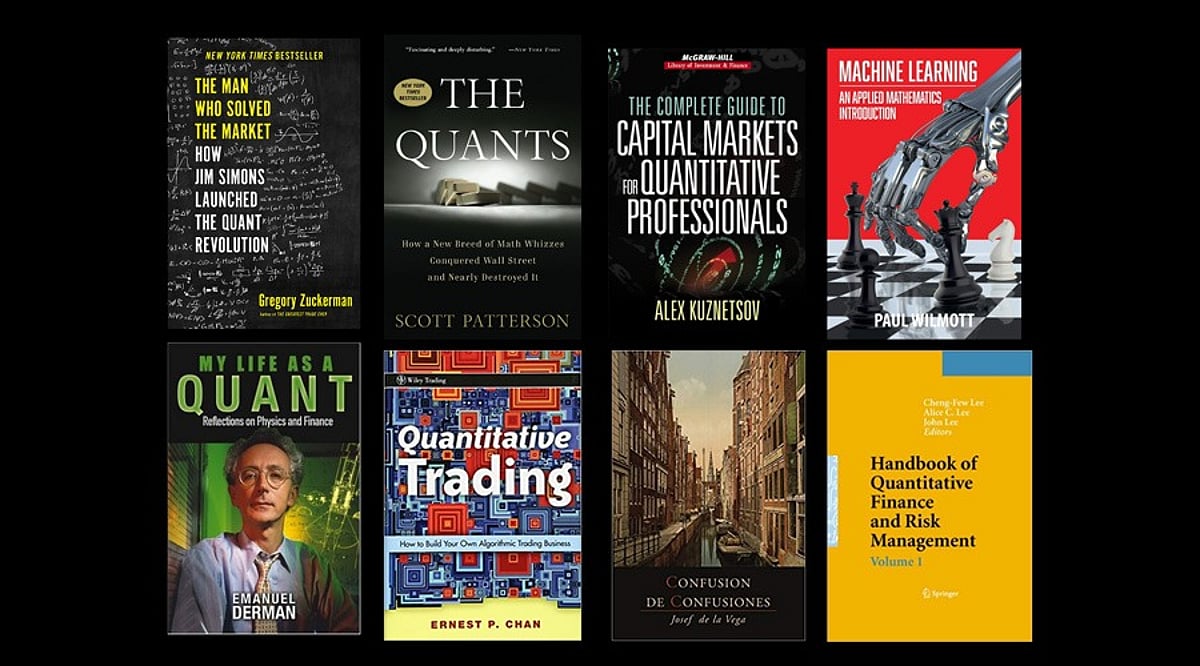
  • Essential Quant Finance Books for 2027 Candidates: A Structured Reading Plan

    Essential Quant Finance Books for 2027 Candidates: A Structured Reading Plan

    Quant finance hiring continues to intensify. Firms now expect candidates to demonstrate simultaneous proficiency in probability, coding, and market structure. While reading the right books won’t guarantee a job offer, they build the analytical framework that interviewers actually test. Here is a practical reading list for anyone preparing for quant research, trading, or risk roles in 2027.

    Why Read Quant Books?

    Online courses and video lectures are abundant, but books offer something short videos cannot: depth, structure, and worked-out logic that forces slow thinking. Quant interviews often revolve around problems first explained clearly in a handful of classic texts. Candidates who skip these books usually end up relearning the same ideas the hard way—through failed interviews.

    Foundation Books for Beginners

    Before jumping into stochastic calculus or trading strategies, every candidate needs strong basics in probability, statistics, and market structure.

    • ‘A First Course in Probability’ by Sheldon Ross – Covers combinatorics, random variables, and distributions with clear examples. This is the starting point for almost every quant interview guide.
    • ‘Options, Futures, and Other Derivatives’ by John Hull – The standard reference for derivatives pricing. Nearly every trading desk expects candidates to know this book well.
    • ‘Heard on The Street’ by Timothy Falcon Crack – A collection of real interview questions asked by banks and hedge funds, with detailed solutions.

    Mathematics and Statistics Deep Dive

    Once the basics are clear, candidates should move toward the mathematics that drives actual pricing models and risk systems.

    • ‘Stochastic Calculus for Finance’ (Volumes I and II) by Steven Shreve – A rigorous, step-by-step introduction to the mathematics behind option pricing.
    • ‘Statistical Inference’ by Casella and Berger – Builds a strong statistical toolkit, useful for research-heavy roles.
    • ‘The Concepts and Practice of Mathematical Finance’ by Mark Joshi – Bridges theory and practical pricing, written by someone who has worked on trading floors himself.

    Programming and Data Skills

    Modern quant roles require coding fluency alongside mathematics. Python and C++ dominate this space, and a few books stand above the rest.

    • ‘Python for Data Analysis’ by Wes McKinney – Written by the creator of pandas, this book teaches data manipulation skills used daily in quant research.
    • ‘C++ Design Patterns and Derivatives Pricing’ by Mark Joshi – Shows how object-oriented design connects with real pricing engines.
    • ‘Advances in Financial Machine Learning’ by Marcos López de Prado – A sharp, opinionated guide to building machine learning models for markets, popular with systematic trading firms.

    Interview Preparation Books

    Technical knowledge alone rarely wins an offer. Candidates also need to practice the exact style of questions asked in interviews.

    • ‘Quant Job Interview Questions and Answers’ by Mark Joshi, Nick Denson, and Andrew Downes – A widely used guide covering brainteasers, probability puzzles, and finance-specific questions.
    • ‘Frequently Asked Questions in Quantitative Finance’ by Paul Wilmott – Written in a conversational tone, this book clears up common confusions around derivatives and models.
    • ‘Green Book: Quantitative Finance Interviews’ by Xinfeng Zhou – Focused purely on interview problems, with worked solutions and hints.

    Advanced Reading

    Experienced candidates aiming for senior research or portfolio roles should look at these titles.

    • ‘Active Portfolio Management’ by Grinold and Kahn – A detailed guide to building and managing systematic strategies.
    • ‘Algorithmic Trading’ by Ernest Chan – Practical advice on building, testing, and running trading systems.
    • ‘The Volatility Surface’ by Jim Gatheral – A focused study of volatility modeling, useful for anyone targeting options desks.

    How to Build a Reading Plan

    A common mistake candidates make is trying to read every book on a list at once. A better approach is to build a plan across a few months.

    • Month 1: Focus on probability, statistics, and derivatives basics.
    • Month 2: Transition into stochastic calculus and programming, solving problems in addition to reading.
    • Month 3: Use this entire month for interview-style books, answering questions under time pressure.

    Only try more advanced or niche titles after you have a solid grasp of the basics.

    Final Words

    Quant finance is a fast-moving and ever-changing field, with increasing emphasis on machine learning and alternative data. Still, the core fundamentals covered in these books have held up for more than 20 years. Candidates aiming at the 2027 hiring cycle should see this list as a starting point and supplement it with recent research papers and market-specific readings. A good knowledge of fundamentals, combined with lots of practice, will give any candidate a significant competitive advantage.

    Frequently Asked Questions

    1. Which are the best quant finance books for beginners in 2027?

    Beginners should start with ‘A First Course in Probability’, ‘Options, Futures, and Other Derivatives’, and ‘Python for Data Analysis.’ These books explain core concepts that support advanced quantitative finance learning and interview preparation.

    2. Which books help prepare for quant finance interviews?

    ‘Heard on The Street,’ ‘Green Book: Quantitative Finance Interviews,’ and ‘Quant Job Interview Questions and Answers’ focus on probability, logical reasoning, mathematics, and technical interview questions commonly asked by financial firms.

    3. Why is Python important for quant finance careers?

    Python supports data analysis, financial modeling, automation, algorithmic trading, and machine learning. Learning Python through dedicated finance books helps candidates apply quantitative concepts using practical programming techniques valued across the industry.

    4. Should candidates study advanced quant finance books first?

    Starting with advanced books often creates learning gaps. Building knowledge through probability, statistics, derivatives, and programming first makes complex mathematical finance topics easier to understand and apply effectively.

    5. How long does it take to complete a quant finance reading plan?

    A focused three-month plan covering fundamentals, programming, and interview preparation provides a practical starting point. Advanced titles and research papers can be added gradually as technical knowledge and confidence grow.

  • Why a Poorly Chosen MS in Data Science Can Derail Your Career

    Why a Poorly Chosen MS in Data Science Can Derail Your Career

    The boom in artificial intelligence has turned data science into one of the world’s most sought-after career paths. Universities across the globe have responded by launching hundreds of Master’s programs promising lucrative jobs, cutting-edge skills, and six-figure salaries. But not every MS in Data Science degree is built the same.

    For aspiring professionals, choosing the wrong program can have consequences that extend far beyond graduation. A poor curriculum, limited industry exposure, or weak placement support could leave graduates struggling to compete in a job market that increasingly values practical skills over academic credentials.

    As employers raise hiring standards, students are learning that the name of a degree matters far less than what they actually learn during it.

    Degree Alone No Longer Guarantees a Job

    Just a few years ago, having a master’s degree in data science was enough to grab recruiters’ attention. Today, the landscape has changed dramatically. When companies look to hire data scientists, they usually expect a certain level of programming skill, primarily in Python and SQL, plus the ability to build machine learning models. They also care that you can navigate cloud platforms without getting lost in today’s AI tools. Recruiters tend to scan your GitHub profile and want to see internships and projects from real life—stuff that quietly proves you can solve problems instead of only talking about them.

    Meanwhile, students who graduate from programs that focus largely on classroom theory often notice they’re missing the hands-on experience employers actually want. So a lot of people end up signing up for extra bootcamps or taking certification courses even though they already put a lot into a postgraduate degree.

    Outdated Curriculum Can Quickly Become Irrelevant

    Data science is one of the most rapidly changing areas of technology. Every year, new frameworks, AI model architectures, and other automation solutions completely change the industry. However, some courses still teach ideas that do not align with the present-day needs of the job market. Although basics are essential, companies demand more knowledge in cloud services, machine learning operations (MLOps), deep learning, large language models, and AI deployment. Two years of studying a curriculum that has become irrelevant may be a mistake for students, as they will enter the job market with obsolete knowledge.

    Industry Exposure Often Makes the Biggest Difference

    One of the major signs of a good data science program is industry interaction. Students get the chance to solve actual problems rather than examples through internships, projects, hackathons, collaborative research, and mentoring from the corporate world. This not only improves students’ technical skills but also their communication and analytical skills. Those programs that lack industry interaction would graduate students who know everything in theory but nothing about how data science is applied in real-world business. Experience weighs more than grades when hiring.

    Placement Support Matters More Than Rankings

    When some people select colleges based on rankings or the promise of high salaries, placements may be more complicated. A career service center, company contacts, an alum network, and recruitment days play important roles in helping people get placed. Colleges with strong industry connections give students a better chance of securing internships and on-campus placements. On the other hand, colleges without assistance in placing students face difficulty, making students’ lives difficult when entering the competitive labor market alone. In the opinion of experts, future college students need to look at the employment rates, average salaries, internships, and alum success stories.

    Financial Cost Extends Beyond Tuition Fees

    A foreign MS in Data Science costs lakhs, while a national MS in Data Science program is also substantial. Selecting a program that does not equip the candidate with valuable skills means they will have to invest money to gain those skills, either through certification courses, self-study, or low-paid jobs. Opportunity cost also becomes immense, since with each passing month, the individual becomes more employable yet earns less due to a lack of job-related skills. For some, the wrong program choice proves costlier than choosing a good course.

    What Prospective Students Need to Consider Before Applying

    Many experts advise going beyond college promotional materials when making decisions. The effective program must be characterized by modern courses and field practice, qualified lecturers, ongoing research, partnerships, and transparency concerning the placement of its alums. Prospective students should consult alums of the university, examine its programs, and find out whether its graduates work at major technology companies, rather than simply considering its placement statistics. Accreditation, faculty quality, and internship opportunities still matter.

    Final Thought

    Due to the high demand for specialists in artificial intelligence and data science, organizations have become very selective in hiring candidates with the required knowledge and competencies. MS in Data Science is an excellent choice, yet not every program provides its graduates with the required expertise. The hiring environment makes it necessary not only to earn the right degree but also to gain valuable skills and confidence and to pursue other opportunities after two years of study.

  • Top 8 Fastest-Growing AI Careers to Watch in 2025

    Top 8 Fastest-Growing AI Careers to Watch in 2025

    The artificial intelligence industry is evolving at an unprecedented pace, creating a wave of new, high-demand job roles. Professionals looking to future-proof their careers should consider specializing in one of these rapidly growing AI positions. Below, we break down the key roles that are shaping the future of technology.

    AI Engineer

    AI Engineers design, develop, and deploy intelligent applications that leverage machine learning, cloud platforms, and automation. They solve complex business challenges by building scalable AI systems that drive efficiency and innovation.

    Machine Learning Engineer

    Machine Learning Engineers create predictive models and self-learning algorithms that power recommendation engines, fraud detection, automated decision-making, and operational optimization across industries.

    Generative AI Engineer

    Generative AI Engineers build chatbots, virtual assistants, content generators, and enterprise solutions using large language models, prompt engineering, and retrieval-augmented generation techniques.

    Data Scientist

    Data Scientists extract actionable insights from massive datasets using statistics, machine learning, and visualization. Their work supports strategic business decisions and drives innovation.

    AI Research Scientist

    AI Research Scientists conduct advanced research in deep learning, natural language processing, and reinforcement learning to develop next-generation AI models and technologies.

    AI Product Manager

    AI Product Managers bridge business objectives and technical development. They define product strategies, coordinate teams, prioritize features, and ensure successful AI product delivery.

    Prompt Engineer

    Prompt Engineers craft optimized prompts that improve AI-generated responses, increase model accuracy, and streamline enterprise workflows across diverse applications.

    AI Ethics Specialist

    AI Ethics Specialists ensure AI systems remain fair, transparent, secure, and compliant by implementing responsible AI practices, governance frameworks, and regulatory standards.

    Computer Vision Engineer

    Computer Vision Engineers develop AI systems that analyze images and videos, enabling breakthroughs in autonomous vehicles, healthcare diagnostics, robotics, surveillance, and industrial automation.

    As AI continues to reshape industries, these roles offer exciting opportunities for growth and innovation. Staying current with emerging skills and technologies is essential for success in this dynamic field.

  • 5 Best College Degrees to Launch a Successful Entrepreneurial Career

    5 Best College Degrees to Launch a Successful Entrepreneurial Career

    Many people dream of starting their own business and turning an idea into a thriving company. While some entrepreneurs succeed without a college degree, a formal education can provide valuable knowledge and skills. The right degree program covers essential subjects like business, finance, technology, communication, and problem-solving—all of which help aspiring founders make informed decisions and avoid common pitfalls.

    However, education alone isn’t enough. Hard work, practical experience, creativity, and resilience are equally critical for entrepreneurial success. Below are the five best degrees that can help you build a strong foundation for launching and growing a company.

    1. Business Administration

    Business Administration offers the most comprehensive preparation for entrepreneurs, covering management, finance, leadership, marketing, and strategy. It’s a versatile degree that applies to nearly any industry.

    Top Programs:

    • Harvard University (USA) – Bachelor of Arts in Economics and MBA
    • Stanford University (USA) – Bachelor of Science in Management Science and Engineering and MBA
    • University of Pennsylvania – Wharton School (USA) – Bachelor of Science in Economics and MBA
    • Massachusetts Institute of Technology (MIT) – Sloan School of Management (USA) – MBA
    • London Business School (UK) – MBA and Master’s in Management

    2. Computer Science

    Computer Science provides the technical skills needed to build software, AI products, apps, SaaS platforms, and digital businesses. For tech-driven startups, this degree is a major advantage.

    Top Programs:

    • Massachusetts Institute of Technology (MIT) (USA) – Bachelor of Science in Computer Science and Engineering
    • Stanford University (USA) – Bachelor of Science in Computer Science and Master of Science in Computer Science
    • Carnegie Mellon University (USA) – Bachelor of Science in Computer Science
    • University of California, Berkeley (USA) – Bachelor of Arts and Bachelor of Science in Computer Science
    • University of Oxford (UK) – Bachelor of Computer Science

    3. Finance and Accounting

    Finance and Accounting teach budgeting, fundraising, taxation, investments, cash flow management, and business valuation. These skills are crucial for any entrepreneur who needs to manage money effectively.

    Top Programs:

    • University of Pennsylvania – Wharton School (USA) – Bachelor of Science in Finance
    • New York University – Stern School of Business (USA) – Bachelor of Science in Business with Finance concentration
    • London School of Economics and Political Science (UK) – BSc Finance
    • University of Chicago – Booth School of Business (USA) – MBA with Finance specialization
    • National University of Singapore (Singapore) – Bachelor of Business Administration with Finance specialization

    4. Marketing

    Marketing covers branding, digital marketing, customer behavior, advertising, sales strategy, and market research. Entrepreneurs who master these skills can attract and retain customers more effectively.

    Top Programs:

    • Northwestern University – Kellogg School of Management (USA) – MBA with Marketing major
    • University of Pennsylvania – Wharton School (USA) – Marketing major
    • University of Michigan – Ross School of Business (USA) – Bachelor of Business Administration with Marketing focus
    • HEC Paris (France) – Master in Marketing
    • ESADE Business School (Spain) – MSc in Marketing Management

    5. Engineering

    Engineering fosters innovation, product design, technical knowledge, and strong problem-solving skills. It’s ideal for entrepreneurs who want to create practical products and businesses.

    Top Programs:

    • Massachusetts Institute of Technology (MIT) (USA) – Bachelor of Science in Engineering
    • Stanford University (USA) – Bachelor of Science in Engineering
    • University of Cambridge (UK) – MEng Engineering
    • ETH Zurich (Switzerland) – Bachelor and Master of Science in Engineering
    • National University of Singapore (Singapore) – Bachelor of Engineering

    Choosing the Right Degree

    The best degree depends on the type of business you want to start. Business Administration offers a well-rounded foundation for any sector. Computer Science is perfect for high-tech startups. Finance suits businesses that require strong financial management. Marketing is valuable for customer-focused ventures, and Engineering drives innovation and product development.

    Many successful entrepreneurs combine knowledge from multiple disciplines. For today’s startups, blending technical skills with business and marketing expertise is often the winning formula. While education is important, pairing it with determination, practical experience, and a willingness to learn can significantly increase your chances of success.

    Frequently Asked Questions

    Which degree is best for becoming an entrepreneur?

    Business Administration is widely considered the best all-round degree since it covers management, finance, marketing, and leadership.

    Is a degree necessary to become a successful entrepreneur?

    No. Many successful entrepreneurs do not have a degree, but higher education can provide valuable knowledge and strong business skills.

    Which degree is best for technology startups?

    Computer Science is the top choice for entrepreneurs who want to build software, AI, SaaS, or digital businesses.

    Which universities are known for entrepreneurship education?

    Harvard University, Stanford University, MIT, the University of Pennsylvania (Wharton), and the University of Cambridge are among the world’s leading institutions.

    What skills matter most besides a degree?

    Leadership, problem-solving, financial management, communication, adaptability, creativity, persistence, and practical experience all play an important role in entrepreneurial success.

  • Why Entry-Level Remote Jobs Are So Competitive Now (And How to Land One)

    Why Entry-Level Remote Jobs Are So Competitive Now (And How to Land One)

    Remote work has long been seen as the ideal career path for new graduates and early-career professionals, offering flexibility and access to opportunities beyond local markets. However, the landscape has shifted dramatically. Entry-level remote jobs are now harder to secure than ever before, driven by global competition, AI-powered hiring tools, and a shrinking pool of fully remote openings.

    The Rising Competition

    The primary factor behind the increased difficulty is the sheer volume of applicants. Unlike traditional in-office roles, remote positions attract candidates from across cities, states, and even countries. This gives employers a massive talent pool to choose from, but it means job seekers must compete with hundreds or thousands of other applicants for a single vacancy. Highly qualified candidates often don’t even get an interview because hiring managers are overwhelmed by the number of submissions.

    Employers Want Self-Starters

    Companies are increasingly looking for candidates who can hit the ground running. Remote work demands strong time management, excellent digital communication skills, and the ability to work independently with minimal supervision. As a result, employers tend to favor applicants who already have some work experience, even if it’s from a different field. For entry-level candidates without a long work history, proving they possess these qualities is a significant hurdle.

    AI Has Transformed the Hiring Process

    Technology has fundamentally changed how companies screen applicants. Many organizations now use Applicant Tracking Systems (ATS) and AI-powered tools to filter resumes before a human recruiter ever sees them. These systems scan for specific keywords, skills, certifications, and experience mentioned in the job description. If your resume doesn’t match the criteria, it’s automatically rejected. This means generic, one-size-fits-all applications rarely succeed. Tailoring each resume to the specific job is no longer optional—it’s essential.

    Fewer Fully Remote Openings

    Despite the continued popularity of remote work, many companies have shifted back to hybrid or office-based models. This has reduced the number of fully remote entry-level positions available compared to a few years ago. Fewer openings combined with more applicants creates a highly competitive environment. To stand out, you need more than a degree; you need a polished resume and demonstrable skills.

    Common Challenges for Entry-Level Candidates

    Fresh graduates and career changers face a Catch-22: companies want experience, but it’s hard to get experience without a job. Building a portfolio or taking on freelance projects can help bridge this gap, but it requires proactive effort. The good news is that these challenges are surmountable with the right strategy.

    How to Improve Your Chances

    Here are actionable steps to become a stronger candidate:

    • Customize your resume and cover letter for every single application, incorporating keywords from the job description.
    • Build practical digital and AI skills through online courses or personal projects.
    • Create a portfolio showcasing your work, whether it’s writing samples, design projects, code repositories, or case studies.
    • Optimize your LinkedIn profile to highlight your skills and interests.
    • Network actively by connecting with professionals in your field, joining relevant online communities, and attending virtual events.
    • Apply consistently and don’t get discouraged by rejections—persistence is key.

    Practical Skills Trump Degrees

    Employers today prioritize practical knowledge over academic credentials. Skills in Microsoft Excel, Google Workspace, SEO, copywriting, digital marketing, data analysis, project management, and AI-driven productivity tools are highly sought after. Many of these can be learned affordably through online platforms like Coursera, Udemy, or LinkedIn Learning. Building a portfolio of personal or freelance projects gives recruiters concrete evidence of your abilities, regardless of your professional background.

    Networking Reveals Hidden Opportunities

    Many remote jobs are filled through referrals before they’re ever publicly advertised. Networking is therefore one of the most effective job-seeking strategies. Engage with industry professionals on LinkedIn, participate in forums, and attend virtual meetups. These connections can lead to unlisted opportunities and provide valuable insights into what companies are looking for.

    Keep Learning and Stay Adaptable

    The job market evolves rapidly, especially with the rise of new technologies. Employers value candidates who demonstrate curiosity, initiative, and a willingness to learn. Staying current with AI tools, improving communication skills, and following industry trends will make you a more competitive applicant. Companies appreciate individuals who actively invest in their own development.

    Final Thoughts

    Entry-level remote jobs still exist, but landing one now requires more effort than in the past. The competition is fierce, hiring processes are more automated, and expectations are higher. However, by acquiring relevant skills, building a strong portfolio, tailoring your applications, and networking strategically, you can significantly improve your odds. With persistence and the right approach, a remote job is still within reach.